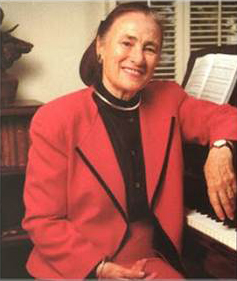
Edith Schaeffer, 1914-2013. Expressing a heart for Christ, warts and all, and shaping several generations of Christians.
Edith Schaeffer died earlier this year, on March 30, so I would be remiss to let 2013 pass without remembering the life of this remarkable woman. Known to most people as the wife of influential evangelical philosopher and pastor Francis Schaeffer, Edith has had her own contribution to make to the life of the evangelical Christian church: mother, devoted wife, gracious host, prolific author, and creative artist, among other things.
To my knowledge, the only time a woman has ever occupied the pulpit to deliver a sermon in our church in over some thirty plus years was when Edith Schaeffer came to town in March of 1994…. and boy, was it a doozie!! Apparently, Edith (at age 79 back then!) had no concept of time and she kept going on… and on… and on. After well over an hour plus after she had started, our senior pastor was still sitting there sweating bullets as he watched couple after couple after couple get up and leave, all frustrated that she had gone on so terribly long and our pastor had done nothing to stop her! But how could you interrupt the wife of one of evangelicalism’s most influential voices of the 20th century?
When you are in church singing a hymn or contemporary worship song, how often do you think about what the words mean? Music is a powerful vehicle for expressing praise to God, no matter what the style or genre is. But it is the lyrics in the song that have the greatest importance.
Perhaps one of most illuminating controversies in 2013 was over one particular contemporary hymn, In Christ Alone, written by Stuart Townend and Keith Getty. Several years ago, a Baptist group put out a hymnal, Celebrating Grace, including the song by Townend and Getty. The Baptist hymnal read verse 2 like this:
In Christ alone who took on flesh Fulness of God in helpless babe This gift of love and righteous-ness Scorned by the ones He came to save Till on the cross as Jesus died The love of God was magnified For every sin on Him was laid Here in the death of Christ I live
In early 2013, the hymnal revision committee of the Presbyterian Church U.S.A (PCUSA), the largest mainline Presbyterian denomination in America, liked this version and asked the original songwriters if they could put the song in their new hymnal. Unfortunately, there was a “small” problem. It appears that the Baptist group had altered verse two (note the line in bold above), and they had failed to tell Townend and Getty about the modification. The original version was actually this:
Till on the cross as Jesus died The wrath of God was satisfied
The songwriters would grant permission to the Presbyterians to use the song so long as they would keep the original wording. The Presbyterian hymnal committee refused the songwriters’ conditions and therefore dropped the song from the new hymnal.
You will not be singing In Christ Alone from any PCUSA hymnal anytime soon.
But for you Presbyterian “rebels” out there who “can’t get no satisfaction”, you can clandestinely sing along with it here (I promise not to tell your pastor) 😉
(SIDE NOTE: Kristyn Getty, married to Keith Getty, the songwriter, is a niece to Irish/British apologist John Lennox who teaches at Oxford).
So what’s the big deal? Brewing in our churches today is a theological controversy regarding the nature of the atonement: When Jesus died on the cross for our sins, what was that all about? What did Jesus accomplish? Continue reading
Dick Woodward’s ministry partner, businessman Dois Rosser, asked Dick to write a how-to manual for:
Leading a secular person to Christ,
Discipling someone who has come to faith, and
Turning every day you spend in the marketplace into an adventure with Christ.
After reading the final product, I’m certain Dois would agree that he got more than he hoped for.
Marketplace Disciples succeeds beyond the ‘marketplace’ where most of us earn a paycheck. In a greater sense it succeeds in the marketplace of ideas, wherethere is no shortage of ideas about how to live your life. Atheism, agnosticism, skepticism, religious ideologies, post-modernism, apathy, self-centeredness—you name it.
But here is the big idea: Until Jesus Christ is everything in your life, He really isn’t anything in your life. Dick learned this basic truth from his mother. It doesn’t take long to figure out that Dick takes discipleship very seriously. The difference between Dick and someone like David Platt is that, like the apostle Paul, Dick bears the marks of Jesus on his body.
Dick can’t type. He can’t move his fingers. Or sit up in bed, or scratch his nose. If his head slides off his pillow someone else has to prop him back up. You get the picture—it takes enormous energy and determination to produce even a small amount of text, let alone this 324-page book, using speech recognition software. His voice-control skills are quite impressive. I wouldn’t want to be Dick’s editor—he is a strict grammarian and a meticulous writer.
Pastor Dick Woodward
So why should you read Marketplace Disciples? Dick has 50 years of discipleship experience. The man knows what he is talking about, what works, why it works, and most importantly why it matters. He has walked with a lot of people, and has clearly earned his credentials. Even Ravi Zacharias has been deeply moved by Dick’s ministry.
But if I were to get to the heart of the matter, the best reason is that Dick is one of the most joy-filled people I know. You would be hard pressed to find anyone with a brighter outlook, or anyone who could offer more encouragement to those needing a kind word. Continue reading
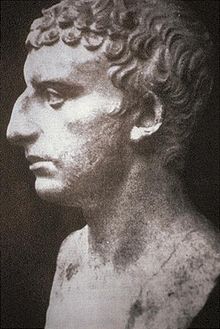
Titus Flavius Josephus, 37 – c. 100 A.D. (Wikipedia). Primary historical source for establishing Quirinius as Governor of Syria in the time of the census according to the Gospel of Luke at 6 A.D. But was Josephus confused on his dates?
One of the more problematic issues with the Christmas story is the question of the Census of Quirinius in Luke 2:2. According to the Jewish historian, Josephus, there was indeed a Quirinius who served as governor in Syria starting in 6 A.D., and in that year there was a Roman census during the time of Jesus’ birth by Luke’s testimony. However, then compare this to the infancy narrative in Matthew and try to line it up with the record of Josephus concerning Herod’s death around 4 B.C., which Matthew says is after Jesus’ birth. This gives you about a ten year discrepancy regarding the actual date of the birth of Jesus. Was Jesus born around 6 A.D. according to Luke or before 4 B.C. according to Matthew? What are we to make of this?
We already know that the Christian calendar, which has no year “0” in it, was orginally meant to be started in agreement with Jesus’ birth prior to the death of Herod, but that appears to be off by a few years. We can thank “Dennis the Dwarf”, a 6th century monk, for getting us sidetracked with that one (look here for more nerdy details about the story of the Anno Domini system). But most Bible scholars agree that Luke’s apparent birthdate for Jesus in 6 A.D. is far too late to be correct. What then do you do with the census of Quirinius?
This Advent season, we sang the English version of the great German carol, Es ist ein Ros entsprungen, more commonly known to English speakers as Lo! How A Rose E’er Blooming.
No one knows who originally wrote it, though it appeared in a German hymnal in Cologne in 1599. The familiar tune was written by Michael Praetorius in 1609. Many hands have been involved in the development of this carol over the years. Having up to 23 stanzas at one point, an American, Theodore Baker, originally translated the first two stanzas into English in 1894. Several other verses in English were added by others later to give us this:
Lo, how a Rose e’er blooming from tender stem hath sprung! Of Jesse’s lineage coming, as men of old have sung. It came, a floweret bright, amid the cold of winter, When half spent was the night.
Isaiah ’twas foretold it, the Rose I have in mind; With Mary we behold it, the virgin mother kind. To show God’s love aright, she bore to men a Savior, When half spent was the night.
The shepherds heard the story proclaimed by angels bright, How Christ, the Lord of glory was born on earth this night. To Bethlehem they sped and in the manger found Him, As angel heralds said.
This Flower, whose fragrance tender with sweetness fills the air, Dispels with glorious splendor the darkness everywhere; True Man, yet very God, from sin and death He saves us, And lightens every load.
O Savior, Child of Mary, who felt our human woe, O Savior, King of glory, who dost our weakness know; Bring us at length we pray, to the bright courts of Heaven, And to the endless day!
And who is this “Rose”, you might ask? You could rightly say “Jesus”, but in the original German version, the “Rose” was understood to be “Mary”. Some medieval interpreters of the Bible understood the “Rose of Sharon” in Song of Solomon 2:1 to be an allegorical representation of Mary. But presumably through the influence of Michael Praetorius, a moderate Lutheran who had an interest in improving relations between Protestants and Catholics, and others like him, the carol gradually shifted its focus to center on Christ. As is made explicit in verse 2 above, the prophet Isaiah in chapter 11 speaks to Jesus as being the fruit derived from the stump of Jesse. Mary’s role is clear as the Christ-Bearer.
As with many carols, they often take on different expressions. I have included three below: The first version is our church band’s rather avante-garde bluegrass interpretation, loosely based on the second brilliant version by Sufjan Stevens. Our band here includes my friends: Doug Deberry on acoustic guitar, Peter Budnikas on banjo and singing, and our fearless leader, Glenn Lavender, on portable upright bass and singing. Glenn is the worship leader for our church, formerly the bass player with the internationally popular band, Downhere. The mandolin player is some guy they found in between writing blog posts on something called “Veracity” 😉 . If you are looking for a more traditional rendering, have a listen at the majestic, classical version at the bottom by opera legend Ren´ee Fleming singing with the Mormon Tabernacle Choir.