
Dating the Adam Thoroughgood House …. (And While We Are At It,… the Earth, Too)

Adam Thoroughgood House. An historic colonial home in Virginia Beach, Virginia, but how old is it? (credit: Frances Benjamin Johnston)
I write this post in memory of my dad, who died one year ago today. My dad was a brilliant man, an architectural historian by trade, who inspired in me the desire to pursue the knowledge of the truth, even if that truth might challenge popular convictions. So while there is an application towards Christian apologetics here, I want to frame it within the context of one particular fascinating mystery in the history of colonial Virginia, a mystery that captivated the thought and imagination of my dad….
Let me take you back to Princess Anne County, a few hundred years ago, in the Tidewater of the Virginia Colony…
Adam Thoroughgood was a 17th century English Puritan (roughly equivalent to an evangelical Christian today), who obtained his passage to Virginia as an indentured servant, in the 1620s. After paying off his indentured servitude, Throughgood returned to England, married a wealthy woman, and came back to eastern Virginia, in modern day Virginia Beach, to become one of the most prominent land owners in the colony.
The traditional story was that Adam Thoroughgood built a brick home, in 1636, thought to be one of earliest structures of its kind in North America. None of the other surrounding structures, such as the slave quarters, have survived, but the Adam Thoroughgood house became one of the great prides of the area, as a U.S. National Historic Landmark, to boot, with all of its unique history…. or so it seemed. Continue reading
Reza Aslan, CNN, and World Religions
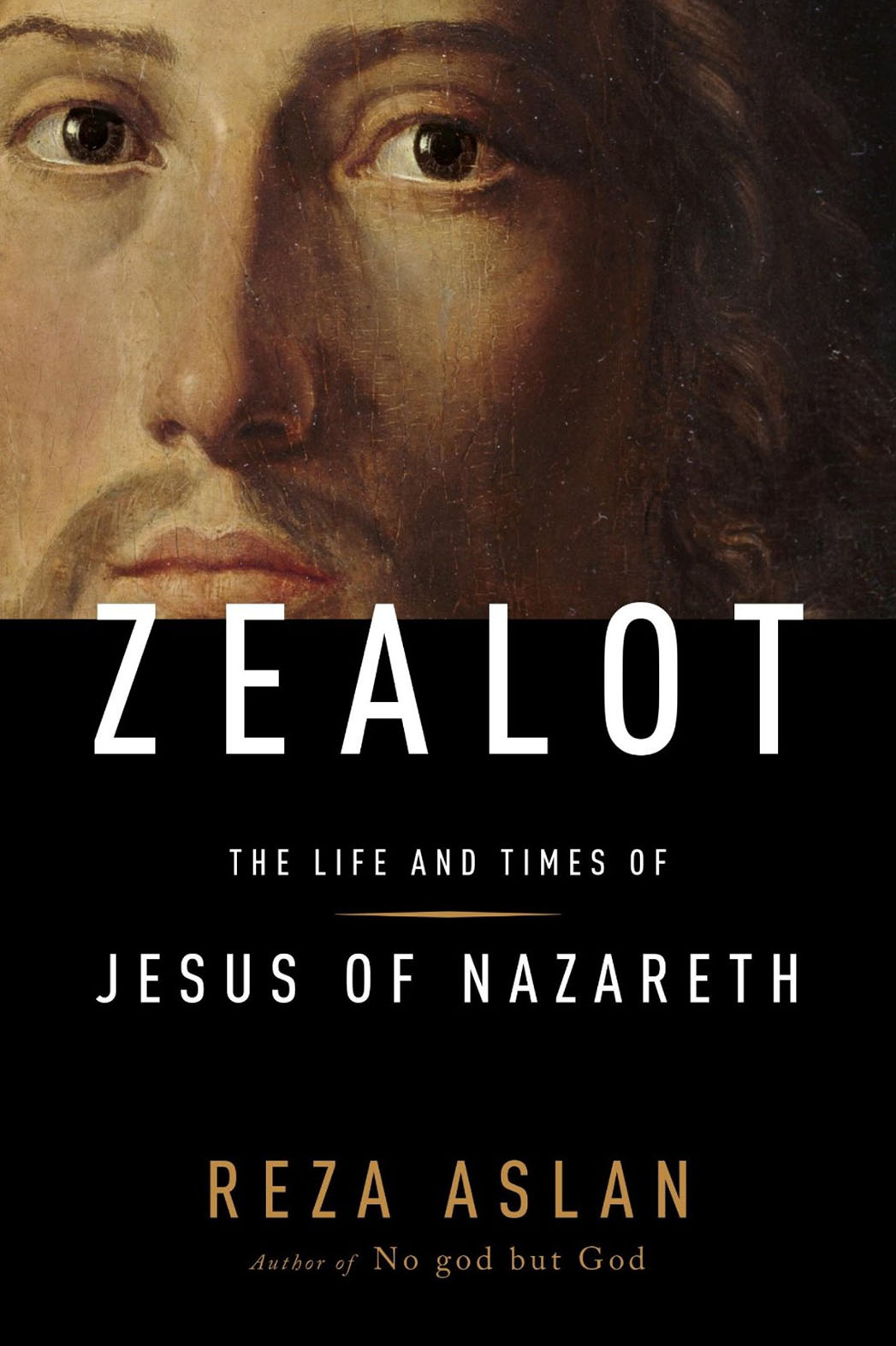
Reza Aslan, film maker and author of Zealot: The Life and Times of Jesus of Nazareth, makes another go at informing(???)/entertaining(???) television audiences about the nature of faith (his last big media splash did not turn out too well).
Filmmaker Reza Aslan is once again in the popular culture limelight, hosting a new CNN documentary series, “Believer,” about the religions of the world, including Christianity. Aslan came onto my radar a few years ago, with his New York Times bestseller, Zealot: The Life and Times of Jesus of Nazareth, a book addressed a few years ago here on the Veracity blog. Aslan’s popularity was given a major boost after a FOX television network interview with correspondent Lauren Green, gone awry, went viral across social media.
Reza Aslan came from a somewhat nominally Muslim background before converting to an evangelical Christian faith as a teenager, albeit briefly. Aslan abandoned his newfound faith while attending college in a secularized academic environment, and he now describes himself as a Sufi Muslim. But Aslan’s brand of Sufi Islam is a highly Americanized version of faith that sounds awfully reminiscent of the New Age Movement, and other popular beliefs that contend that all religions are basically the same. In a recent CNN opinion piece, Aslan says:
“My goal — as a scholar, as a person of faith, and now as the host of “Believer” — is to be the linguist, to demonstrate that, while we may speak in different religions, we are, more often than not, often expressing the same faith.”
Aslan’s linguistic demonstration is far from convincing. The problems with Aslan’s statement are multiple, but it is more correct to say that Aslan is a popularizer of scholarship instead, the kind of popularizing where the line between scholarship and entertainment is easily blurred, where ironically much of the scholarship is dated, according to New Testament scholar, Craig Evans. Aslan takes the doctrine of religious pluralistic experimentalism, championed by the late scholar of religions, Huston Smith, quite a bit further. Aslan interviews the kooky and wacky extremes of all various forms of religiosity, in turn subtly opting for some type of vague notion of spirituality, a “roll your own” type of religion, that panders to the individualism of American culture.
As John Stonestreet of the Chuck Colson Center for Christian Worldview notes, Aslan’s “spiritual adventure series” does not accurately represent the very real differences between various religions. Even Hindus are offended at how Aslan portrays their beliefs. So, it should not be surprising to discover that Aslan presents a rather caricatured impression of the Christian faith in his media efforts.
That being said, Christians should not be so smug in completely dismissing Reza Aslan outright. According to Becky Castle Miller’s review of Zealot, on the Jesus Creed blog, Aslan ultimately rejected what he thought was historic, orthodox Christianity, when he discovered that his early Bible teachers from his teenage years were wrong. Having observed such irresponsible handling of the Scriptures with young people myself, this type of admission makes me cringe. As with evangelical-turned-agnostic, Bart Ehrman, evangelicals have a lot to learn from Reza Aslan’s story.
Folks, though we as Christians need some admonishment here, we alternatively need not blindly consume what documentary series like these try to dish out for us. Part of me sees that Reza Aslan has a genuine, well-meaning fascination with all things “religious.” But another part of me thinks that Reza Aslan is taking viewers to the zoo, bringing the camera even into the cages to see the “wild animals.” Nevertheless, he eventually goes back to the safety of his sanctuary home in academia, lies down at night, saying to himself, “Man, that was crazy.”
As I have viewed the CNN promo for the series below, billed for the “spiritually curious,” it seems like what Aslan wishes to give us is a rather sensationalist type of theological voyeurism, primed to feed into our culture’s general cynicism towards absolute truth claims.
CNN: You can probably do better than this.
Should Christians Go See The Shack, the Movie?
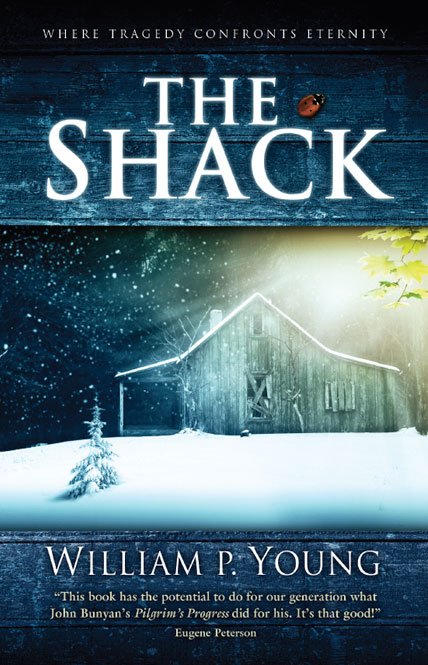
William Paul Young’s New York Times bestselling novel about how a terrible family tragedy led to an encounter with God, is now a movie. But given the controversy over the book, should Christians go see the film?
A few years ago, W. Paul Young’s novel, The Shack, was all the rage among evangelical Christians. “You gotta read this book!”
Fans of the book hailed it as a great story, family-friendly, and suitable for starting discussions about God. Even Eugene Petersen, the Bible scholar behind The Message translation of the Bible, endorsed it (check out who else is on the endorsement list). However, critics, like this one at the Mereorthodoxy.com blog, contend that The Shack promotes a rather unorthodox view of the Triune God, one that can not be supported by the teaching of the Bible. Southern Baptist leader, Al Mohler, thought it as lacking in Biblical discernment, with a troubling tendency towards universalism. Trevin Wax, a Gospel Coalition blogger, gave it a very mixed review. Nearly ten years later, the book has now hit the “big screen.” What are Christians to think of this controversial film? How do you cut through the confusion?
My concern, about Christian books (and movies) like The Shack, is not their entertainment value. I like a good story. My main problem is about how well the message lines up with Scripture.
I have a confession to make: For years, my understanding of the Trinity was pretty messed up. As a young Christian, I was taught that the relationship between the Father, the Son, and the Holy Spirit was like the different states of water: liquid water, a gas (like water vapor or steam), or a solid (like ice). The problem with this easy-to-understand, yet misleading, analogy is that it follows the treacherous shoreline of modalism, a heresy from the days of the early church. Critics argue that The Shack reinforces this type of erroneous theology. It took me years until I finally engaged in a detailed study of the Scriptures to realize that I was believing a heresy.
I am not alone in my confession, which is partly why the story that Paul Young crafted has resonated so well with people. It fills a void left by our churches that find it difficult to effectively and faithfully communicate certain doctrines of the Bible.
When we read what the Bible has to say about the nature of the Triune God, it is not a topic that you can learn by simply falling off of a log. Sadly, most Christians get their theology from popular books like The Shack, instead of making the investment into an in-depth study of the Scriptures themselves…. and I am just as guilty as the next person.
On the other hand, an engaging story like The Shack can help to stimulate thought that can drive us to investigate what the Bible rightly teaches on the nature of who God is: One God, in Three Persons, as opposed to the modalism view critics contend is portrayed in The Shack; a picture of God as one Person, playing three different Roles in history. To that extent, I would hope that The Shack, the movie, will help motivate folks to really dive into God’s Word, to learn from the Bible, what the truth is, and not settle for anything less. A good book to read after or before viewing movie, like Randal Rauser’s Finding God in the Shack, written by a skilled theologian, can help both the believer and the seeking non-believer process what they see in the movie.
What would be a mistake is to think that spending a night at the movie theater is an adequate substitute for actually reading the Bible, taking a theology class at your Bible-honoring church, and/or having a small group Bible discussion that addresses the topics from the movie. Given the choice between the movie versus reading the Bible, you are much better off cracking open the text of Holy Scripture.
The movie trailer is below, followed by a brief clip from a Ravi Zacharias Q&A session, that summarizes the main positive and negative elements of the book.
Ambassador: Doug Coe

Doug Coe (credit: A. Larry Ross)
I want to tell you a little bit about one of the most influential, Spirit-led men, that most people will never know. Doug Coe, a leader behind the annual National Prayer Breakfast, and mentor to countless national and world leaders, for the sake of Jesus Christ, died on February 21, 2017.
Doug Coe’s ministry was simple: to help point people towards Jesus. His strategy was simple: to meet with people one-on-one and in small groups, to point people towards Jesus. What made Doug Coe unique was that he did this very quietly, with politicians and other leaders-and-shakers, for over 50 years, in the halls of Congress and the White House, in Washington, D.C. In 2005, TIME magazine labeled Doug Coe as one of the 25 most influential evangelical leaders in America, as the “Stealth Persuader.”
The TIME article needlessly overreaches in describing Doug Coe. But there have been a number of Christians who have had their suspicions, too. The cynicism is to be expected, but in the high-pressure, high-stakes, high-visibility political world of Washington, D.C., Doug Coe was a man that Congressmen and Presidents could simply trust, a man who gently pointed some of the most powerful people on the planet to take small, yet ultimately significant, steps towards Jesus.
No political boundary was too wide to prevent Doug Coe from sharing his message. Hilary Clinton often attended a weekly prayer meeting on Capital Hill, led by Doug Coe, when she was a Senator. Doug Coe brought together the warring leaders of Congo and Rwanda, after building years of friendships with other African leaders. Two years later, Congo and Rwanda, signed a peace treaty. To this day, the National Prayer Breakfast, that Coe helped to run through a movement called the “Fellowship Foundation,” brings together leaders from all over the world to consider the teachings and person of Jesus, connecting these leaders with the inner-city poor and disenfranchised, through service activities.
I had the privilege of meeting Doug Coe in the late 1980s, not too long after I became friends with one of his sons, Jonathan, who helped some of my friends at my college build an off-campus Christian community. Doug Coe avoided public attention, keeping a very low profile, with the Fellowship Foundation, networking people together in quiet ways.
Running a ministry like this, beneath the radar, creates a safe environment for leaders under the scrutiny of the press, and it has led to extraordinary, wonderful spiritual transformations, for which the public is mostly unaware.
However, on a few isolated occasions, the low profile of the ministry that Doug Coe gently facilitated, has had its disadvantages, too. Sadly, when a relative handful of participants in these small, quiet networks have veered off the “straight and and narrow,” either morally or doctrinally, the Fellowship Foundation really has had no effective means to discipline their “black sheep,”to get them back on the right path. But that probably is the price you pay when working with people with names like Eisenhower, Kennedy, Johnson, Nixon, Ford, Carter, Reagan, Bush, Clinton and Obama. While I am confident that Doug Coe stayed above the fray, the lure of corruption and hubris for those who intermingle with the rich and powerful is a difficult drug to lay aside.
Aside from those who have met him, very few will soon remember the soft-spoken Doug Coe, but he would rather it be that way. In his obituary, Doug Coe was quoted as saying, “I am called simply to be an inclusive ambassador of Jesus Christ’s love. Early on I thought the work of God was evangelism, but I soon realized the only person I could evangelize or disciple was myself. I learned from Billy Graham that the Gospel isn’t three or five points; it’s a Person – Jesus. God is love, and since Jesus is God, then the Gospel is also love.”
A quiet, inclusive ambassador, indeed. Thank you, Lord, for Doug Coe’s quiet legacy.
Feel free to share our book…

Join the Conversation
Clarke Morledge on The Stain of Antisemitism in… Clarke Morledge on The Septuagint: What It Is and… Did God Crush His On… on Did God Kill Jesus? The Cross… Did God Crush His On… on Authorized: The Use and Misuse… Did God Crush His On… on Reviewing Bart Ehrman’s… Did God Crush His On… on The Septuagint and the Origina… Did God Crush His On… on The Septuagint: What It Is and… Clarke Morledge on Does Science Make the Biblical… Clarke Morledge on From Genesis to Junia: An Hone… Clarke Morledge on What About Those “Lost S… jdelias on Did Kirk Cameron Just Deny the… Clarke Morledge on “Inconceivable” Fa… 
Document everything… on Paul, A Biography, by N.T. Wri… Clarke Morledge on Christianity Along the Rhine:… Build A Hooper on Christianity Along the Rhine:…


 Veracity