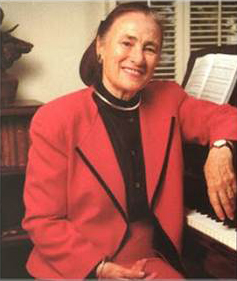
Edith Schaeffer, 1914-2013. Expressing a heart for Christ, warts and all, and shaping several generations of Christians.
Edith Schaeffer died earlier this year, on March 30, so I would be remiss to let 2013 pass without remembering the life of this remarkable woman. Known to most people as the wife of influential evangelical philosopher and pastor Francis Schaeffer, Edith has had her own contribution to make to the life of the evangelical Christian church: mother, devoted wife, gracious host, prolific author, and creative artist, among other things.
To my knowledge, the only time a woman has ever occupied the pulpit to deliver a sermon in our church in over some thirty plus years was when Edith Schaeffer came to town in March of 1994…. and boy, was it a doozie!! Apparently, Edith (at age 79 back then!) had no concept of time and she kept going on… and on… and on. After well over an hour plus after she had started, our senior pastor was still sitting there sweating bullets as he watched couple after couple after couple get up and leave, all frustrated that she had gone on so terribly long and our pastor had done nothing to stop her! But how could you interrupt the wife of one of evangelicalism’s most influential voices of the 20th century?
Dick Woodward’s ministry partner, businessman Dois Rosser, asked Dick to write a how-to manual for:
Leading a secular person to Christ,
Discipling someone who has come to faith, and
Turning every day you spend in the marketplace into an adventure with Christ.
After reading the final product, I’m certain Dois would agree that he got more than he hoped for.
Marketplace Disciples succeeds beyond the ‘marketplace’ where most of us earn a paycheck. In a greater sense it succeeds in the marketplace of ideas, wherethere is no shortage of ideas about how to live your life. Atheism, agnosticism, skepticism, religious ideologies, post-modernism, apathy, self-centeredness—you name it.
But here is the big idea: Until Jesus Christ is everything in your life, He really isn’t anything in your life. Dick learned this basic truth from his mother. It doesn’t take long to figure out that Dick takes discipleship very seriously. The difference between Dick and someone like David Platt is that, like the apostle Paul, Dick bears the marks of Jesus on his body.
Dick can’t type. He can’t move his fingers. Or sit up in bed, or scratch his nose. If his head slides off his pillow someone else has to prop him back up. You get the picture—it takes enormous energy and determination to produce even a small amount of text, let alone this 324-page book, using speech recognition software. His voice-control skills are quite impressive. I wouldn’t want to be Dick’s editor—he is a strict grammarian and a meticulous writer.
Pastor Dick Woodward
So why should you read Marketplace Disciples? Dick has 50 years of discipleship experience. The man knows what he is talking about, what works, why it works, and most importantly why it matters. He has walked with a lot of people, and has clearly earned his credentials. Even Ravi Zacharias has been deeply moved by Dick’s ministry.
But if I were to get to the heart of the matter, the best reason is that Dick is one of the most joy-filled people I know. You would be hard pressed to find anyone with a brighter outlook, or anyone who could offer more encouragement to those needing a kind word. Continue reading
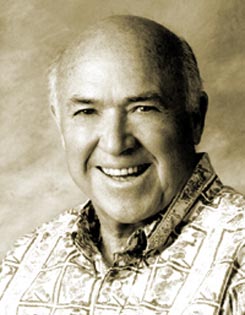
When an older member of the church posted a sign in the sanctuary with “no bare feet allowed”, Smith ripped it down. Smith believed that the church was called to reach out to the counter-culture community, even if it meant exchanging the standard suit and tie of the evangelical preacher for a more casual dress.
Chuck Smith’s critical moment came unexpectedly when he befriended a long-haired, bearded hippie teenager, Lonnie Frisbee. Frisbee became a pastor himself in Chuck Smith’s Calvary Chapel in Costa Mesa. From there, by the sheer providence of God, the Jesus Movement was born. Continue reading
I was just a few months old when the death of President John F. Kennedy shook our nation 50 years ago. But everyone who knew of the Kennedy assassination at that time knows exactly where they were at the moment when they heard the news. Like 9/11 in our day, the story of the Kennedy tragedy shaped a generation. However, there was another cultural event on November 22, 1963 that was overshadowed by the Kennedy shooting: the death of C. S. Lewis.
Clive Staples “Jack” Lewis: famous Christian of the 20th century, influential apologist, and still today a popular author of children’s fantasy… and yet, I often wonder how much the Christian church has truly been been shaped by the life and work of this Oxford don.
What does Lewis have to say? If I had to sum it up in one word, it would be imagination. It was a vision of a Biblically-informed imagination that brought this atheist to faith, a man filled with animosity towards his father, and who had a very odd, even scandalous relationship with a much older woman. Lewis endured the mindless insanity in the French trenches of World War I, but he rarely talked about it. Lewis, like any human that I know, had moral failures and terrible skeletons haunting him in his closet. But it was the creative energy of thinking about the love story of the Bible, God’s relentless pursuit of bringing a rebellious and alienated people into relationship with Himself, that broke through Lewis’ cynicism, despair, and denial.
We need more of C. S. Lewis’ vision of a Christian imagination today in Christ’s church. Many Christians get so absorbed by the literal truth of the Scriptures that they forget about the revelatory power of the figurative, the transcendent beauty of a turn of a phrase, the deep wisdom of Biblical poetry, the whoop and wharf of story, and the subtle Truth of myth.
I think Lewis can still help us with that.
I have been listening to a wonderful and provocative audio book by Alister McGrath,C. S. Lewis – A Life: Eccentric Genius, Reluctant Prophet. In promoting the book, McGrath gave a series of lectures, including the following sponsored by the Lanier Theological Library in Houston, Texas in the spring of 2013.
May we as followers of Jesus be shaped by the imaginative vision of C. S. Lewis. His friends knew him as “Jack”.
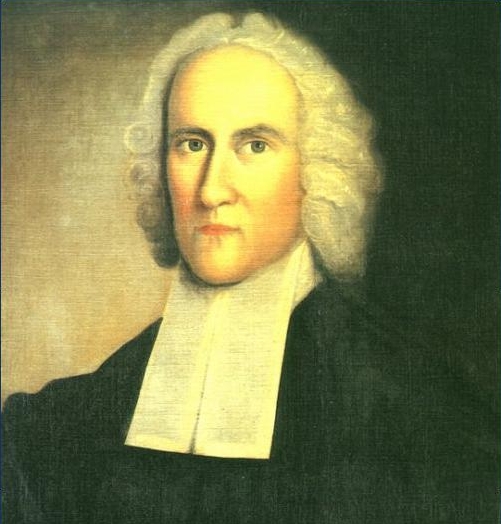
Jonathan Edwards (1703-1758), pastor, theologian, philosopher, and …. advocate for a biblical social justice??
Most people know of Jonathan Edwards as the colonial American preacher of hell-fire and brimstone. I remember reading the mandatory “Sinners in the Hands of an Angry God” in high school and thinking that this guy had an unhealthy, morbid fascination with damnation. This narrow view of Edwards I had for years is a real tragedy, as this unfairly diminishes the extraordinary intellectual and spiritual contribution of perhaps America’s greatest philosopher.
Perry Miller, an influential Harvard historian and prominent atheist of the mid-20th century, practically rescued Jonathan Edwards from the dustbin of American cultural history. In an age when colonial American Puritans like Edwards were treated with “fundamentalist” disdain, Miller saw in Edwards perhaps one of the most perceptive and wide ranging thinkers America has ever produced. What was it about the 18th century Edwards the Christian that fascinated Miller the atheist? Continue reading






 Veracity