Category Archives: Witnesses

Bishop Robert Barron at the Graves of Tolkien and Lewis

Happy Reformation Day!…. which is a not-so-subtle reminder that I am not a Roman Catholic.

But I have a great appreciation for so many of my Roman Catholic friends, and particularly an admiration for a number of great Roman Catholic thinkers. Bishop Robert Barron is one name that comes to mind.

Father Barron has dialogued with the Canadian “Intellectual Dark Web” phenomenal figure and psychologist Jordan Peterson, as well as with Protestant evangelical apologist, William Lane Craig. Even as a “son of the Reformation,” I personally get an education from one of the most articulate and winsome Roman Catholic minds, whenever I heard Father Barron speak. Recently, Father Barron participated in England, as part of the beautification ceremony of John Henry Newman, the 19th century Anglican priest turned Roman Catholic apologist, perhaps the greatest Roman Catholic mind of the 19th century.

While in England, Father Barron stopped to visit the graves of C.S. Lewis and J.R.R. Tolkien. Below are two short, 3-minute videos that give you a flavor of Father Richard Barron. Finally, I included a clip of Father Barron’s Word on Fire episode, discussing the canonization of John Henry Newman, from Rome, with St. Peter’s in the background. I recall many fond memories from my trip to Rome, almost exactly a year ago. For those who appreciate “The Great Tradition,” that folks like Lewis articulated so well, enjoy:

Even though more people convert from Roman Catholicism to Evangelical Protestantism, a surprising number of Evangelical Protestants move in the opposite direction, and “cross the Tiber,” so to speak, and join the communion in Rome. This can be quite puzzling for some.

If Roman Catholicism is like a “black box” to you, and you really do not understand much about it, you might want to investigate some of the videos put out by Ascension Presents. Father Michael Schmitz is a very gifted, dynamic, young priest and communicator, who knows how to explain the intricacies of Roman Catholic doctrine, to younger audiences. As opposed to Father Richard Barron, who can be academic at times, Father Michael Schmitz is very good at making Roman Catholic teaching accessible, to just about anyone. You may not be convinced about purgatory, but perhaps you will understand a little bit better what purgatory is all about.


Netflix Goes Conspiracy Theory With The Family

While we are talking about conspiracy theories….

Some of the buzz this past month in social media is about the docu-series by Netflix, The Family. The Family purports to tell the story of Doug Coe, who died a couple of years ago. He was the leader of a pretty amorphous group that has sponsored the National Prayer Breakfast, for decades, attended by Presidents, Congressmen, and other world leaders.

The whole objective? According to “The Family,” otherwise known as the “Fellowship Foundation,” they are about introducing “the person and principles of Jesus, which are at the core of our mission and message,” to men and women in the halls of political power, bridging the divides that separate and alienate people.

But apparently the writers behind the Netflix production see something more sinister at work. A review of the docu-series, at Vermont Public Radio, contends that “a secretive group has been grooming young, Christian men for leadership positions in American politics for decades, all the while ingratiating itself with presidents and congressmembers of both parties — and sidling up to some dictators around the world.

Say wha???

Doug Coe (credit: A. Larry Ross)

I met Doug Coe’s son, Jonathan, while I was in college, just a year or two before Jonathan died of cancer. His enthusiasm for knowing Jesus was infectious, and he and some other friends encouraged me, and some of my other college buddies, to see what they were doing in Northern Virginia.

I had nearly zero interest in politics, and in the post-Watergate era, I disliked politicians generally. But in such a divided world, where it seemed like Republicans and Democrats were at one another’s throats all of the time, in the midst of international tensions surrounding the waning years of the Cold War, perhaps some time in Washington D.C. would give me a more positive view of how Christian faith might make a difference for good, in the public sphere.

I lived at Ivanwald, a house where young Christian men live in Arlington, run by “The Family,” for about a month after college. There I attended Bible study meetings, washed dishes, pruned some shrubbery at another home that serves as an informal retreat center, and got to meet a few Congressmen. Some were Republicans. Some were Democrats. I actually was privileged to pray with them. It was encouraging to see how these political figures, who could be so acrimonious in public, were also able to find common ground in private, by discussing the leadership principles of Jesus Christ.

Quite a few of these Congressmen seemed quite sincere in their faith. Some others, I were not entirely sure about. And one or two of my fellow Ivanwald housemates knew very little about the Bible, spouting some ideas that lacked theological depth and cohesion. But the odd apples were rare. Most everyone else was great to be around.

It was all very low-key. I also played lots of volleyball. After my few weeks there, I started my new job after college, and said goodbye to many of those new friends. I have kept up with several of them, on and off over the years, drifting away somewhat as we all got involved with our families, other friends, and jobs, among other things.

Wow. I never would have thought that I had been part of some “secretive group,” doing something so insidious as praying together and playing volleyball.

Jeff Lucas, a Christian reviewer of the film, put it this way at Premier Christianity magazine, over in the U.K., and he expresses the problem with the film exactly:

So how do you attack a group for showing love and support? First of all, cue spooky music throughout the docudrama, a cheap stunt. Put a frightening stanza as a background to shots of Julie Andrews running up a hill declaring that those hills are alive, and you can easily give the impression that that singing nun might be a serial killer and a member of the illuminati. The haunting chords create a conspiratorial atmosphere, which colours everything that is said.

But then in this series, not much is said. The notion seems to be that all influence is conspiratorial, and collaboration is criminal, a laughable notion not only in DC, but in any political arena, which is all about impact and partnership. And in this gospel according to Netflix, Christian influence is especially evil.

I shake my head in disbelief. It really makes me wonder. Why even bother to put the money into making a film series like this, supposedly “exposing” how political leaders, across political divides, come together around events like the National Prayer Breakfast?

Journalist Jeff Sharlet, who wrote the two books that served as the basis for the film series, also lived at Ivanwald, though I never overlapped with him. I am not sure what really got him there to Ivanwald in the first place, and what made him so ultimately hostile to it all, but he sure has a creative imagination.

While some people like conspiracy theories regarding how scientists, government educators and agencies, and museum curators have duped the public for decades regarding science, others like conspiracy theories about spiritually-minded people trying to manipulate Congressmen to think about God more over bacon and eggs, to impose some sort of “theocracy” on an unsuspecting public.

Cue the spooky music again.

Yeah, yeah, yeah.

That kind of narrative is really ridiculous.

Alas, with every conspiracy theory there is a grain of truth to it. As any Christian can tell you, sharing your faith with another person involves some risk. You never know absolutely or completely if that person you are befriending might betray your trust, and use you for ulterior motives. Those involved with “The Family” have sought to reach out to some rather unsavory characters, just as Jesus sought to do with tax collectors and prostitutes. Furthermore, some drawn into those outreach efforts have had their faith built on shaky ground.

Some political elites can be really nasty people. Even spiritual sounding ones. As a result, Christians can be easily manipulated themselves by those who are solely motivated by the thirst and intoxicating lure of power. Christians are not immune from such temptation. As Sophie Gilbert writes in this mixed review for The Atlantic, there are people in the halls of political power who have exposed some in “The Family” to the darkest side of the political world.

NEWSFLASH: Political elites can cheat on their spouses, look for inappropriate favors, etc., just as easily as your unsuspected neighbor who hates politics can, too. Betrayal hurts people, no matter where it is.

If there is anything of value in the Netflix feature, it will hopefully serve as a wake-up call to Christians, to remind us of the seductive nature of power, particularly political power, that we might proceed with extreme caution when dealing with matters of state. In that sense, Jeff Sharlet has a valid point. The low-key nature of “The Family” has made it difficult to instill the most proper level of accountability, in those outreach efforts.

Yet what worries Jeff Sharlet, and his cohorts behind the Netflix production, is the fear that Christians have been working secretly behind the scenes to pull the levers of power, as a way of subverting American democracy. In other words, there is a conspiracy afoot, and concerned Americans need to put a stop to this. The silliest thing about this narrative is that it completely ignores the evidence, that trying to get a bunch of diversely-minded Christians together, to conspire much of anything is really difficult to do.

I see the problem very, very differently. The more insidious reality is that by trying to reach out to the political elites, the powers that seek to destroy the Kingdom of God will draw unsuspecting Christians into their sphere of influence, corrupting those Christians who seek to reach out to those political elites, and thus compromising their witness for Christ.

Surely, some viewing The Family will view all Christians with the deepest suspicion, fully consistent with conspiracy theory thinking. Likewise however, many people of various outlooks and perspectives will continue to look upon any and everyone in the political realm (and one another) with similar fear and mistrust, regardless of how spiritual faith plays into the mix.

So while The Family rightly observes how Christians can get their spiritual interests over-entangled, into the affairs of state, the whole conspiratorial flavor of the film merely reinforces they type of mistrust that continues to divide Americans from one another. The Family missed an opportunity to effectively engage in substantive issues of church-state relations, to create room for having conversations that matter, in a truly pluralistic society. Instead, it leaves the viewer anxious to demonize their ‘religious” neighbor, and shut down conversations.

This is all terribly sad.

Would it ever be possible to find a way to break down the barriers of mistrust that divides us all from one another? Is there anyone able to bridge those gaps that separate us?

Perhaps there is someone who has already done that.

I can think of one.

His name is Jesus.


Kissing the “Purity” and “Courtship” Culture Goodbye??

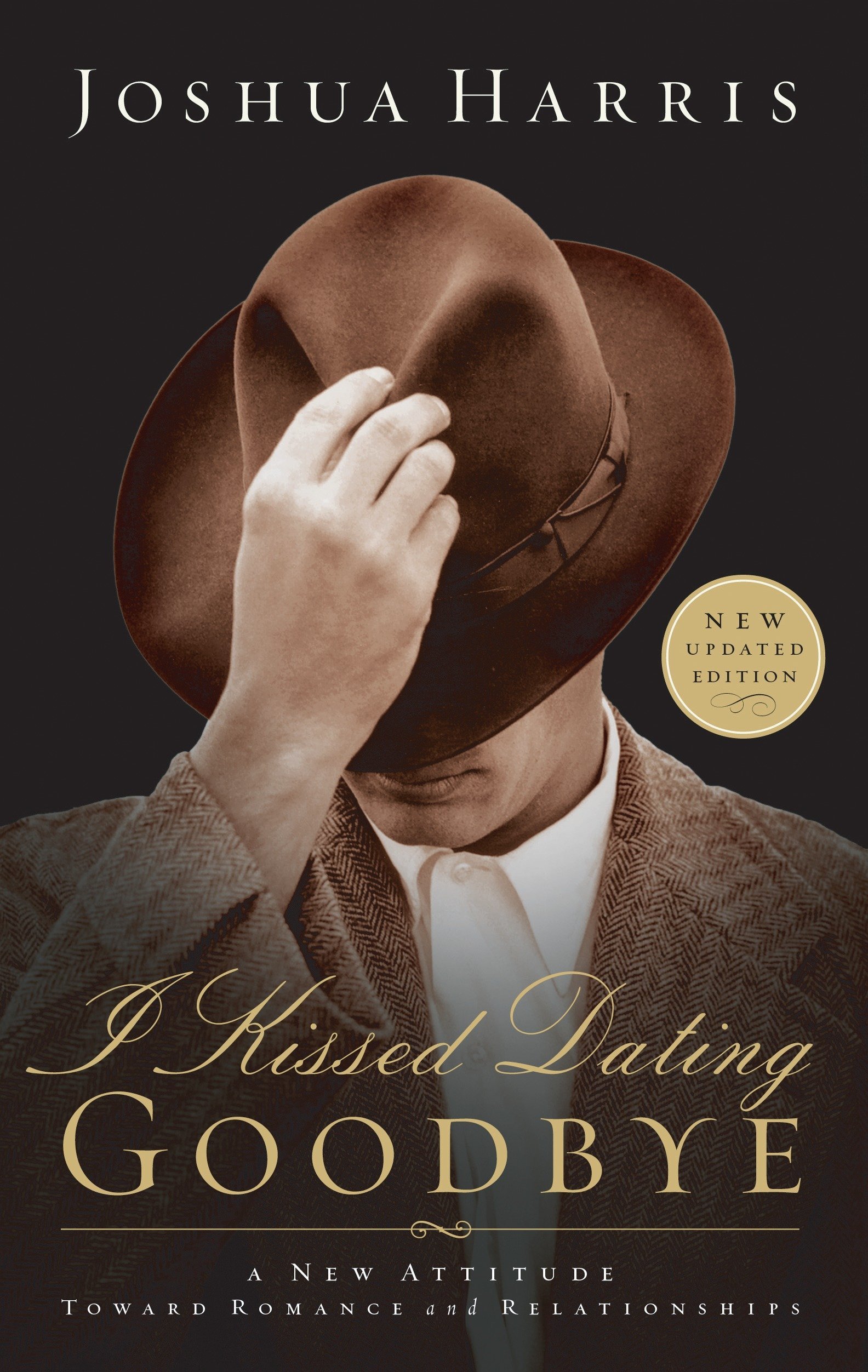
Joshua Harris was only 21-years old when his blockbuster, best-seller I Kissed Dating Goodbye was published. The book spread like wildfire through evangelical churches. “Purity” and “courtship” were the watchwords of the day.

So, what do you do when 22 years later, the much acclaimed author informs his followers that he and his wife are pursing separation? (ALSO: See update near the end of this post, made after this blog post was originally posted)
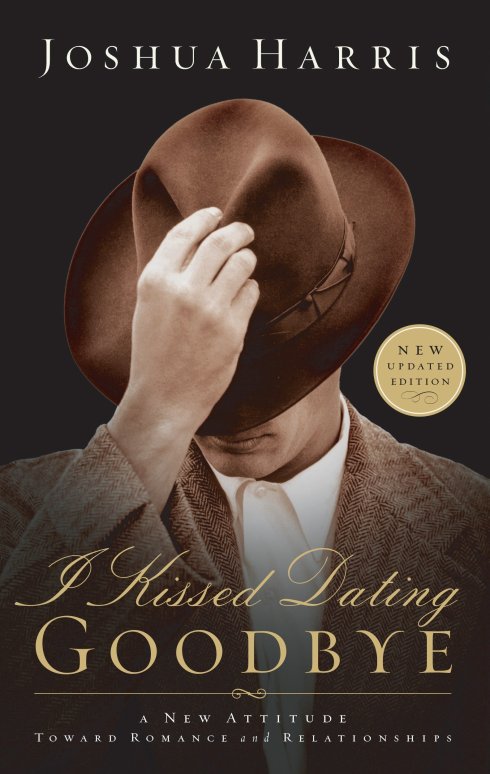
This book will soon be a collectors item, as the publisher will cease further printings, per the request of the author.

In the mid-to-late 1990s, Harris’ message was that young, single people should avoid the modern practice of dating, and pursue “courtship” instead. In courtship, single people should only pursue a relationship with a member of the opposite sex, with the intention of becoming married.  Modern dating had simply become a training ground for divorce. Therefore, if you want a successful marriage, casual dating should be avoided.

In those years, just as it still is today, the Christian emphasis on avoiding the dangers of sexual relations outside of marriage was being disregarded, in the wider culture. Premature physical intimacy, and lack of boundaries in dating, was dehumanizing, thereby confusing self-gratification with intimacy, and eventually destroying marriages.

Harris’ solution was to “avoid everything that leads up to that consequence.” Part of that included the advice, that you should not even kiss your prospective mate until your wedding day. Holding hands? Forget that, too.

What about emotional intimacy, characteristic of dating? That should be avoided as well, as “giving your heart away” before you get married, to someone else, only decreases your ability to give fully to the one you end up marrying.

I had been single for a long time before Harris’ book ever came out, but I could appreciate its appeal, when it eventually did. There had been infamously little published by Christian authors, about dating, throughout the 1980s into the early 1990s…. and I had made a series of mistakes. Sadly, the confusing and conflicting advice I got in my twenties, in those years, from other sincere Christians, did not help very much.

However, there was Elisabeth Elliot‘s 1984 book, Passion and Purity: Learning to Bring Your Love Life Under Christ’s Control, that got passed around in my InterVarsity Christian Fellowship circles. Elliot, the surviving spouse of the martyred missionary in Ecuador, Jim Elliot, sought to address issues of the cultural obsession with dating, sex, and intimacy, with direct boldness. It was a message that many Christian young people, in my generation, needed to hear.

I was gripped with her message. Elisabeth Elliot wrote with confident authority, but there were a few things that were nagging in my mind, that I was not completely sure about. Reruns of Elliot’s radio programs are still available at the Bible Broadcasting Network.

As a teenager, Joshua Harris made some mistakes of his own. Reading Elliot’s book emboldened him to radically change course, and try to retell Elliot’s message for a new generation. Nervously, Joshua Harris even sent a copy of his yet unpublished manuscript for I Kissed Dating Goodbye to Elisabeth Elliot, to get her impressions. Harris was elated to hear back from Ms. Elliot, who affirmed Harris for writing a “worthwhile book.” Harris sent his manuscript out to be published shortly thereafter. In 2013, Harris returned the favor by writing the forward to a reprint edition of Passion and Purity, in which he tells the story I just summarized.

The success of I Kissed Dating Goodbye, was founded upon a hard-hitting, counter-cultural message. On the positive side, I Kissed Dating Goodbye affirmed God’s good purposes for marriage, and for reserving sexual relations within the context of marriage. But on the controversial side, those Christians who still practiced “dating” were treated with spiritual contempt, among other things. Plus, and sadly, a number of those marriages, founded upon Harris’ principles of “courtship,” ended in divorce anyway.

Harris for years overlooked the views of his detractors. Harris went onto become an instant evangelical celebrity, following the amazing popularity of his book. While still in his twenties, Harris got married, started a family, and soon became a pastor of a mega-church, at age 30. He took on this pastoral responsibility, without ever having had any seminary-level, advanced, theological training.

The Sovereign Grace Ministries network of churches, of which he was a pastor of one, got embroiled in a controversy, over claims of child and sexual abuse, in the churches’ ministry programs.  The incidents that started the controversy happened prior to Harris’ tenure, but the issue was never adequately resolved. The controversy eventually led Joshua Harris to step down as lead pastor, in 2015, in order to pursue advanced theological training at Regent College, in British Columbia, Canada.

It was roughly during this time that Harris began to have second thoughts about the message of his book. Some tied the criticisms of his book with his belief in complementarianism, that men and women are different, emphasizing male-only leadership in churches, combined with the particular, extreme slant that Harris had been promoting. In an interview with Sojourner’s magazine, Harris concedes:

  • I think in our setting, though, the thing that I would say is that we had a very restricted view of the role of women. That’s one of the biggest things I regret in my time of being a pastor is the way we taught about women in the church, women in leadership, in the home, and so on. And I think there are massive indications when you don’t have a female perspective in in policymaking and decisions related to something like that. Like, I think that we would have made better decisions if there had been women in on those moments.But it’s not quite as simple as saying that … I think there were also theological problems related to our view of the role of pastors and our view of the role of the faith and ways that were, in our case, unique to our movement: the low view of psychiatry or therapists and those types of things, and the idea that pastors should be able to help you with any kind of life issue that you’re facing.When it comes to something like sex abuse, we just did not have the training. We needed to be calling in other people, we needed to be, obviously, making sure that — and we did report many cases of sexual abuse, but in some cases obviously we made huge mistakes.

    So there’s sort of a web of problems. But I do think that a very patriarchal, male-centered, low view of women has connections to sexual abuse in different cases.

Harris began to interact with readers of his book, listening to their stories. He chronicled his journey, in a documentary film entitled I Survived I Kissed Dating Goodbye. If you were ever troubled by Harris’ book, you would do well to watch this film and discuss it with others.

His conclusion? Josh Harris came to admit that he gave millions of people the wrong advice. Harris had condemned dating as being “unbiblical,” despite the fact that the Bible nowhere addresses the topic of dating. In an effort to try to help people live lives of purity, Harris ultimately realized that his solution was heaping toxic doses of legalism and fear, upon the consciences of his readers.

Josh Harris still believes in abstinence before marriage. But Josh Harris now believes that healthy dating can be a good thing, recommending books like Dr. Henry Cloud’s Boundaries in Dating, and Debra Fileta’s True Love Dates, instead of his own.

Reactions to Harris’ rethinking about his book have ranged the gamut. Some believe Harris has gone too far in condemning his own book, believing that “courtship” is still the way to go, and giving up too easily on otherwise good and sound principles.

Others believe that Harris did not go far enough, in making an apology. Nevertheless, Josh Harris made the decision to ask the publisher to discontinue the publication of I Kissed Dating Goodbye, along with two other books, that stress the same themes.

The popular conservative, and indeed, Reformed, Christian blogger, Tim Challies, interestingly agrees with Josh Harris’ critical analysis of his own book:

  • There are times when a kind of weirdness settles over evangelicalism, when for a while people are swept away by strange and flawed ideas. This usually happens when Christians are attempting to counter ideas that are prevalent outside the church. Instead of reacting in a measured way, we collectively over-react.

The type of self-chastisement that Josh Harris has been going through, despite being so confident in his previous views for so long, buoyed by constant affirmations of others who wanted to think the same way, can have devastating consequences.

Sadly, Josh Harris announced in July, 2019 that he and his wife are separating, after 20 years of marriage.

In thinking about the story of Josh Harris and I Kissed Dating Goodbye, I can think of several lessons for Christians:

  • Relationships are hard. While indeed helpful to many, there was nevertheless a subtle, deceptive allure to Josh Harris’ book, that sought to bypass that truth: Relationships are hard.
  • Friendships with members of the opposite sex are a good thing.
  • Doing fun things together is great, particularly in a group. Setting boundaries in relationships is essential. Avoid late-night solo dates. Revive the art of letter writing. An extreme focus on purity can actually backfire.
  • One can take to heart Josh Harris’ self-critical reflections of his own book, without abandoning a commitment to traditional, Scriptural sexual ethics.
  • The “purity” movement and the “courtship” movement have had some good things about them. But even the best of ideas can descend into an unhealthy form of legalism.
  • Christians may have good intentions in rejecting certain cultural trends, but we must caution against accepting ideas that are reading modern concepts into the Bible.
  • The “courtship” movement can set people up to have the wrong expectations about marriage, that are completely unrealistic, just as much as “dating” can do.
  • The idea of “courtship” works best when you have people in your life, who know you well, and who also know your potential spouse well. Such people can point out blindspots that you and your potential mate may miss. But cultivating the type of community, where such people can exist in your life, can be a difficult task, in and of itself. Ideally, such community should be experienced within a local church (but a lot of these points can apply to “dating,” too).
  • Churches should avoid recruiting young people, in their twenties, into becoming pastors of mega-churches, at such young ages, and they should make sure that whoever pastors their churches have adequate theological training, before assuming such leadership positions… also, getting advice from a 21-year old on how to prepare for, build and sustain a life-long marriage is rather insane.
  • Mentoring younger singles, and even young couples, by older, more mature married believers, is a critical need in our day.
  • The local church surely has a business-side to it, but first and foremost, a local church is a family, and not a business. Churches are ultimately families, governed by seasoned fathers and mothers, and not by corporately-minded CEOs.
  • There are good forms of complementarianism, and there are bad forms of complementarianism.
  • A lot of egalitarian types of thinking are, in reality, over-reacting towards such bad forms of complementarianism.

I happen to hold to a moderate form of complementarianism, but there are bad forms of complementarianism, that should be rejected. For example, there are those who teach that women are not to be in spiritual authority over men, because in their reading of 1 Timothy 2:11-15, such teachers contend that Eve was deceived; that is, from the text, “Adam was not deceived, but the woman was deceived, ” because women are inherently more susceptible to becoming deceived than men. And because women are more deceivable, women should not be entrusted in positions of spiritual authority.

A more moderate approach to complementarianism will affirm that only men are to serve as elders/pastors in a local church. But this does NOT mean that this has anything to do with women being more susceptible to becoming deceived, than men. If anything, a healthy approach to complementarian theology would encourage women to give their perspective to men in the spiritual leadership of the church, while encouraging such men to receive such input gladly, with ready hearts and minds. Women and men can help one another see things that the other can not see.

The text of 1 Timothy 2:11-15 simply states an observation as to what happened in Creation. To try to read into the text some type of innate characteristic, created by God, that distinguishes men from women, as to their intellectual or spiritual capabilities, is an abuse of Scripture, reading something into the Bible that simply does not exist. To put it bluntly, the Bible does not teach that women are more spiritually gullible than men. This is an example of the type of patriarchal, bad complementarian theology that Josh Harris is now against. I have tried to articulate a more sacramentally-informed, non-authoritarian-istic perspective on complementarian theology in a twenty-part blog post series.

Such bad theology has inflicted an untold amount of pain and suffering in evangelical churches today. Josh Harris is surely working through a lot of the guilt and shame associated with his own promotion of such bad theology.

It might be best for Christians, who know of Josh Harris, to remember Josh and his wife in your prayers. This is a difficult time for the both of them.

I am sure that Josh Harris and his wife are both wonderful people, and I do hope the best for them. If there is any good news to come out of this whole story, it is this: It takes a lot of courage to admit that you were wrong. Josh Harris has displayed this courage, and I commend him for it. Would we all have such courage.

UPDATED: Monday, July 29, 2019

After posting this a few days ago, I have learned today, that along with Josh Harris’ announcement about his separation, he also announced that he no longer considers himself to be a Christian. In particular, he announced on Instagram that he regrets his previous posture regarding the LGBTQ community, and that he now fully affirms “marriage equality.” Christianity Today magazine has a very helpful followup essay, on this topic. According to Harris, “Many people tell me that there is a different way to practice faith and I want to remain open to this, but I’m not there now.⁣⁣” I pray that Josh Harris finds his way back onto the path, in God’s timing, and more deeply experiences the grace of God.



Was Von Braun a “Creationist?”

In reliving the historic Apollo 11 moon landing this past week (see the PBS American Experience, Chasing the Moon film), it came to mind that the Apollo 11 team of Armstrong, Aldrin, and Collins would never have made it there, if it had not been for the rocketry skills of Wernher Von Braun. In his earlier years, Von Braun built rockets, for Adolph Hitler, that threatened the city of London, during the latter stages of World War 2.

A former Nazi, Wernher Von Braun came to the United States, to eventually gain the confidence of President John F. Kennedy, encouraging that the Americans could actually beat the Russians to the moon. Von Braun’s Saturn V rocket sent the astronauts to the moon, to make their historic, televised visit, on July 20, 1969.

Towards the last portion of his life, Von Braun revealed that he believed in God, and that God’s design could be seen in creation. So, it would appear that Wernher Von Braun was a “Creationist.” But what kind of “Creationist” was he? Was he a Young Earth Creationist? An Old Earth Creationist? Or an Evolutionary Creationist?

Many Christians are deeply divided on this issue.

Both the Institute for Creation Research and Answers in Genesis, make the claim that Von Braun was indeed a Young Earth Creationist.  Such sources contend that Von Braun criticized the teaching of evolution only in public schools. In defense of his view, Von Braun stated in a letter, that was read in a California court case, over Young Earth Creation being taught in schools:

for the amazing string of successes we had with our Apollo flights to the moon … was that we tried to never overlook anything. It is in that same sense of scientific honesty that I endorse the presentation of alternative theories for the origin of the universe, life and man in the science classroom. It would be an error to overlook the possibility that the universe was planned rather than happening by chance

It would appear, also, that Von Braun did write a forward to a book, endorsing Young Earth Creationism. But as a blogger for the National Center for Science Education (NCSE) reports, Von Braun later clarified the meaning of this letter:

“1. If fundamentalistic religion means belief that the book of Genesis gives a correct scientific account of how the world came into being; that 4004 BC is the date of the origin of the earth, and that all living things were “created” in their final form rather than developed through evolutionary, “survival-of-the-fittest” processes, then I am most emphatically not a believer in fundamental religion.
2. If, however, the question is whether behind the many random processes which are operating in nature, there is a “divine intent”, my answer is an equally emphatic “yes.” With this position I am only sharing and accepting the views expressed by giants of science such as Newton, Kepler, Faraday, Pascal[,] and Einstein.”

It would appear that the Young Earth Creationist claim, of Von Braun believing in an earth that is less that 6,000 years old, is complicated by Von Braun’s later clarification. He would more than likely be somewhere between an Old Earth Creationist and an Evolutionary Creationism.

Either way, Von Braun was clearly a “Creationist,” in the sense that he was a Christian. But the specific belief he held, as to the age of the earth, along with the related age of the universe, where the scientific consensus holds as being about 13.799 billion years old, and not 6,000 years old, according to Young Earth Creationists, appears to have been in some measure of flux, during his life.

But something tells me that the specific details of Von Braun’s beliefs, and their relationship with the beliefs of most scientists today, who hold to the scientific consensus, might not gain that much interest among many Christians today, at least, not as much as it should. Yet perhaps, it is better to focus on the fundamental belief that God created the universe, the “who” of Creation, and not get so hung up on the exact timing and mechanical detail as to how God created the universe.

I take to heart, that the inventor of the awe-inspiring, massive Saturn V rocket, that put a “man on the moon,” looked to the God of the Bible, for his own inspiration.


Paul, A Biography, by N.T. Wright, A Review

Reading N.T. Wright is delightfully invigorating. He is surely the most influential, and perhaps the most prolific, living New Testament scholar of our day, and an evangelical Christian to boot.

This has made Wright into the darling of millennial Christian thinkers, who look to someone like an N. T. Wright, as having the academic smarts, challenging the critical voices against Christianity in the 21st century, as well as possessing a cheerful, pastoral giftedness. N.T. Wright puts the often complex world of contemporary scholarship closer near the “bottom shelf,” where mere mortal, everyday Christians can appreciate and apply a more learned approach to the New Testament, as opposed to simply reading the Bible on their own, with little to no oversight to guide them.

Nicholas Thomas Wright. British New Testament scholar, retired Anglican bishop, … and agitator among more than a few conservative, evangelical Protestants. Now, with an outstanding biography of the Apostle Paul.

N.T. Wright: Scholar, Pastor and Popularizer

Otherwise known as “Tom” Wright, in his more popular writings, it has been often said that N.T, or Tom, Wright writes faster than most people can read. How he has found time to write as much as he has, while at one time serving as an active Anglican bishop, who only in recent years is now focused again on scholarship, is a wonder on its own.

Beleaguered by top notch critical scholars for several generations now, that appear to want to rip the Bible to shreds, thoughtful evangelicals take comfort in the fact that N.T. Wright has gone up against the brightest and best in the world of academia, and he has come out relatively unscathed. Even more so, he stands out with his good-natured, jolly British demeanor, as he declares his scholarly view of a wholly trustworthy and reliable Holy Bible. For a younger generation of evangelicals, N.T. Wright makes you feel like, intellectually, he has your back.

Wright earns the respect of non-believing and believing intellectuals alike, being read by everyone from British historian Tom Holland, to former editor-in-chief at Newsweek, Jon Meacham, just to name a few. Aside from Michael Licona’s brilliant work, The Resurrection of Jesus: A New Historiographical Approach, N.T. Wright remains today’s most capable defender of the bodily resurrection of Jesus Christ, through his highly cited academic work, The Resurrection of the Son of God. Culminating in Wright’s multivolume, comprehensive series Christian Origins and the Question of God, we find the “go-to” academic, contemporary treatment of critical issues in New Testament scholarship, correcting misguided efforts among intellectuals to take down historic Christian faith, starting with the infamous “Jesus Seminar” of the early 1990s.

I remember twenty years ago reading N.T. Wright’s written dialogue with liberal scholar Marcus Borg, The Meaning of Jesus. Borg was known for dismissing every miracle of Jesus in the New Testament as fictitious, and yet, Wright had an answer for him at every turn. Still, the two men remained friends. I was left thinking, “Evangelical Christians need more scholars like N.T. Wright!

N.T. Wright is also a popularizer, engaging well with the wider culture, relating particularly to a more skeptical crowd, like a modern day C.S. Lewis. Along with New York City PCA pastor, Timothy Keller, N.T. Wright has been a featured speaker at Google’s headquarters, capable of speaking Christian truth to a largely sophisticated, unbelieving audience. Never parochial, always irenic, Wright receives invitations to speak at places, where more explosive and abrasive evangelical figures, such as an Answers in Genesis’ Ken Ham, would never find a welcoming reception.

Rudolph Bultmann, the German liberal scholar, who would have us “demythologize” the New Testament, was the most important New Testament scholar of the 20th century. Yet it would be fair to say that N.T. Wright enjoys the same stature, as Bultmann’s, for the early 21st century.

There is evidence to support this claim. N.T. Wright delivered the esteemed Gifford Lectures in Natural Theology, in 2018, an academic honor in Scotland. Wright is the only New Testament scholar to have delivered those lectures, since Rudolph Bultmann did so in 1954 to 1955.

Like Bultmann, who was regarded as having the preaching ability of a Billy Graham, despite Bultmann’s complete rejection of the supernatural claims of the New Testament, N.T. Wright has an appeal in his delightful written prose and public preaching persona. In a world where orthodox Christian faith appears to be being pushed to the side, in a secularizing society, on an almost daily basis, Wright’s presence as a public intellectual, engaging the toughest critics of Christian faith, is a welcoming sign that the Gospel is not completely lost in the era of post-modernity.

N.T. Wright’s greatest expertise is in the life and theology of the apostle Paul, which makes it a wonderful treat to finally have from Wright a popular level biography of the great apostle, Paul: A Biography. In Paul: A Biography, Wright constructs for the reader a very illuminating, and even quite entertaining, portrait of Paul. Wright follows the path of Paul’s career, along the contours of the Book of Acts, while interacting with the best of today’s scholarship of the first century. Wright places the writing of each of Paul’s New Testament letters, within this narrative, serving as an introduction to the entire range Paul’s writings in the Christian Bible. Nevertheless, despite the accolades, Wright’s superstar status has raised questions, particularly among his own evangelical brethren, as will be discussed in this review.

N.T. Wright’s Delightful and Engaging Portrait of Paul

I can not improve upon the excellent review given by British pastor-teacher, Andrew Wilson, at The Gospel Coalition website. But I can add some commentary on what I learned the most from Wright, in this sweeping biography, while registering a few cautions here and there.

For example, I have always been a bit bothered about the reigning academic consensus, that contends that several of the letters traditionally attributed to Paul in the New Testament, were not actually written by him, such as Colossians and Ephesians. Yet I have never fully understood the evidence used to support this consensus view.

Wright cheerfully dismantles such claims against Pauline authorship, but does so by advancing Wright’s own provocative argument, that these letters, along with Philemon, were written while Paul was in prison in Ephesus. Most scholars have traditionally believed that Paul wrote these letters while in prison in Rome, or perhaps Caesarea in Palestine, if he wrote them at all. But Wright’s proposal of an Ephesian imprisonment, a minority view for decades among scholars, actually makes better sense of the available historical data.

An Ephesian imprisonment implies that the letter “to the Ephesians” (Ephesians 1:1) could have been more of a circular letter, distributed among the small church communities, that were growing and adding new members in and near Ephesus (Ephesians 1:15), the second largest city in the ancient Roman empire. Likewise, with Colossians, the letter to the church in Colossae, a city no more than a 100 miles from Ephesus, it stands to reason that Colossians, too, could have been easily written from an Ephesian prison, as both Ephesians and Colossians share similar characteristics, along with Philemon.

Wright’s adoption of an Ephesian imprisonment for Paul is based on his reading of 2 Corinthians 1:8-9, which speaks of Paul’s despairing affliction that he experienced in Asia. But there is more here to suggest that an imprisonment in Ephesus makes for a substantially better case for the location of where these letters were written, as opposed to a Roman imprisonment. With respect to the written style of these letters, something that most lay persons who do not understand New Testament Greek would never know, the evidence indicates a certain Asiatic style of writing, common around Ephesus, as opposed to a more Roman style of writing.

A more clear cut piece of evidence surrounds Paul’s relationship with Aristarchus and Epaphras. In Colossians 4:10, Paul records that Aristarchus was a “fellow prisoner” with Paul. The evidence here leans away from a Roman imprisonment, as Acts 19:29 tells us that the mob that seized Paul also seized Aristarchus, in Ephesus. Furthermore, the likelihood of Aristarchus even going to Rome is reduced when we consider Acts 27:2, where we learn that Aristarchus is from Macedonia, and that he accompanies Paul on a ship which stops at ports in Asia. This particular detail suggests that Aristarchus is on the ship on his way home to Macedonia. While it is still possible for Aristarchus to continue onto Rome with Paul, Aristarchus simply disappears from the story after this point.

We also know that Epaphras, who is from Asia (Colossians 4:12), was also a fellow prisoner of Paul’s (Philemon 1:23). It would have been more likely for Epaphras to have been imprisoned with Paul there in Ephesus, as opposed to Rome, considering that we have no evidence of Epaphras making any journey to Rome. Furthermore, even if both Aristarchus and Epaphras accompanied Paul to Rome, there is nothing in the New Testament to suggest that either one of them were actually imprisoned with Paul there in that city (A cumulative case is laid out for an Ephesian imprisonment more fully in Benjamin W. Robinson’s essay, _An Ephesian Imprisonment of Paul_.)

However, the strongest argument for me is the unlikelihood that Onesimus, the runaway slave of Philemon, would have been able to travel such a long distance from Colossae (most probably Philemon’s home) all the way to Rome to meet up with Paul, and not get caught. It is much more likely for Onesimus to travel that one hundred miles to hide in a big city like Ephesus, instead of risking capture crossing the Ionian sea. In Philemon, we also read that Paul was making plans to send Onesimus back to Asia to be with Philemon. The effort in sending a runaway slave back to their master would be far more difficult if Onesimus had actually made it to Rome, as opposed to traveling the much shorter distance, with less obstacles, to Ephesus.

On the other hand, the biggest drawback to Wright’s proposal is that Luke in Acts does not mention Paul being in prison in Ephesus. Nevertheless, Wright is able to put the pieces together, in a manner that explains why liberal, critical scholars of previous generations have erred in thinking that Paul could not have written Colossians nor Ephesians. Simply brilliant.

Here is another example: The intriguing “man of lawlessness” in 2 Thessalonians has often been interpreted in evangelical circles as a future coming “antichrist” figure. But Wright places 2 Thessalonians within the context of Roman history, within about a decade of the letter being written, when the Roman emperor Caligula, an utterly insane, autocratic ruler, sought to have statues of himself placed within the Temple compound in Jerusalem, reminding the Jews that the Roman emperor is to be worshipped as supreme.

Caligula’s reign was cut short by his death in 41 C.E., aborting Caligula’s attempt to profane the Temple, but it made many of Thessalonika’s Jews worried that another “man of lawlessness,” like Caligula, might rise up again against the Jews and those early Christians. Was this a prophetic reference to the coming emperor Nero, in Paul’s own day, …. or some future antichrist figure, yet to emerge in our present 21st century day?

While such questions often preoccupy curious American believers, Wright tells his readers that Paul’s intent in 2 Thessalonians, was not to set up speculation as to who a future “man of lawlessness” might be, but rather to say that Jesus is still Lord, over even the most blasphemous of Roman emperors, a warning that might benefit Christians today, who tend to obsess over “all things End Times.”

It is page after page of insights such as these that make Paul: A Biography a rewarding investment of one’s time to better understand the world of the apostle Paul. I truly enjoyed this book, and I commend it to others, even if “theology” or “history” books are not your thing.

That being said, N.T. Wright does have his critics, even among evangelicals, and not all are convinced by Wright’s attempts to chronicle the life of Christianity’s greatest apostle. Wright may be able to make the world of contemporary scholarship more understandable to the average Christian reader, but perhaps not understandable enough. And what is understandable draws some rather awkward, unfamiliar conclusions, that cast some doubts on certain features of Wright’s theological project.

N.T. Wright: The Cheerful Polemicist

For example, James Goodman, a British evangelical follower of the great 20th century Welsh preacher, Martyn-Lloyd Jones, gives Paul: A Biography a mere “one-star” review, believing that Wright is a type of trojan horse scholar, smuggling in the unbelieving errors of what Goodman contends is the radical New Perspective in Paul, that seeks to undermine the classic Reformation view of Paul’s teachings, of justification by faith alone. In a more generous and balanced review for Ligonier Ministries, New Testament professor David Briones, while finding many excellent and good things in Paul: A Biography, ultimately finds Wright to be unpersuasive, offering a caricature of the classic, evangelical understandings of Paul, traceable back to the leading lights of the Reformation, like Martin Luther and John Calvin.

So, why the bad marks from defenders of the evangelical Reformed tradition, for Paul: A Biography? For those who believe in the imputation of Christ’s righteousness, N. T. Wright sends up red flags. This “righteousness of God,” which is alien to fallen humans, is applied, or “imputed,” to the Christian believer, as an expression of the love of God, through Jesus’ sacrificial death at Calvary. We as fallen, sinful human creatures, stand condemned before a Holy God, unless this Holy God, does something new on our behalf. The teachers of the Reformation contended that Christ indeed did such a thing, through this concept of the righteousness of God, being imputed to us. This righteousness thus declares the undeserving sinner to be justified by faith and faith alone, through grace and grace alone. Imputation is therefore considered to be the hallmark of true Gospel doctrine.

To Wright’s most conservative critics, Wright’s casually dismissive attitude towards this doctrine of imputation makes him just as complicit in attacking the Bible, as Wright’s liberal critics! To be fair, Wright does not hammer on this “anti-imputation” theme, as much as he has often expounded it in his more academic writings.

But neither does Wright, even in Paul: A Biography, seek to offer much irenic comfort to his Reformed critics, a recurring weakness in Wright’s work, in my view, though Roman Catholic and Eastern Orthodox readers will find some reassurance in N.T. Wright, in their respective understandings of Paul. Wright’s approach is not completely of disagreement with, but rather one of relative indifference to, classic Reformation theology, which is enough to isolate N.T. Wright from the most conservative corners of the evangelical movement. Though greatly softened in Paul: A Biography, there is still a polemical edge in this popular work of Wright’s, that seeps through from time to time. As Briones argues in his review, hyperlinked above, Wright often redefines the meaning of classic Reformed Scriptural terminology, in a way that can easily confuse the reader. Furthermore, Charles Lee Irons, under supervision by my New Testament instructor at Fuller Seminary, Donald Hagner, has issued a significant challenge to Wright’s definition of “the righteousness of God” as being nearly exclusively synonymous with God’s “covenant faithfulness.

If imputation is not critical for Paul’s message of the Gospel, then what does N.T. Wright say is critical for Paul’s message? For N.T. Wright, Paul’s central theme is that God, through His faithfulness to His covenant with Israel, has now extended that same covenant, with those same covenant promises, to the Gentiles, in Jesus Christ. For Wright, the Reformation emphasis on the human sinner, receiving a declaration of being made righteous, so that we might be reconciled to God, is a fine message, and does play some type of role in Paul’s thought, but it is not the central idea that catapults Paul’s ministry. Instead, the Good News of the Gospel that Paul preaches is grounded upon the reality that God faithfully keeps his promises to the covenant people of Israel, and then brings the Gentiles in, to enjoy those same promises as well.

Some readers will take N.T. Wright as therefore actually down playing the central doctrine of the Protestant Reformation, namely of justification by faith and faith alone, through the imputation of Christ’s alien righteousness to the lost sinner. Concerned evangelicals, like pastor John Piper, at Desiring God ministries, and even more moderate voices, like that of the late John R.W. Stott, take Wright’s tendency to introduce false dichotomies into his work to task, while still greatly appreciating the positive work that Wright is truly offering the church.

Another example may help to explain unease about Wright, in certain evangelical quarters. Wright does exceptionally well in Paul: A Biography, in defending Paul against the common claim that Paul was a misogynist, that he “hated” women. Wright wonderfully shows that women were some of Paul’s most trusted colleagues in ministry, and that Paul valued having women in church leadership. But does this more egalitarian, sympathetic view towards women really undercut Paul’s (often disputed) teaching in the pastoral letters, that the office of overseer, in the local church, is to be reserved for men only? Is there not a possible both/and solution here, as opposed to an either/or, pick-your-side approach to be considered, as offering critical insight into the temperament and teaching of the great apostle? Wright skirts around this most important issue, just as he does in the justification debate, that might offer a third-way rapprochement in the controversial “women in ministry” debate, that divides evangelical churches today.

Wright does a much better job in Paul: A Biography, of establishing a view of Paul as being thoroughly Jewish, as opposed to critics who believe Paul to be the “inventor of Christianity,” one in direct opposition to historic Judaism. Wright’s study of Second Temple Judaism offers a vivid appreciation for Paul’s Jewishness, that previous generations of scholars, both liberal and conservative, have often never fully considered.

Nevertheless, Wright does not fully satisfy his critics in Paul: A Biography, by not adequately addressing the question of what promises in the Hebrew Scriptures, specifically to the Jewish people, if any, remain as valid possibilities for future fulfillment, in the mind of Paul. For example, many conservative evangelical Bible teachers would insist that Romans 11 envisions, at the very least, a great mass turning of Jews towards the Gospel, prior to Christ’s second coming. In Paul: A Biography, Wright does not even provide a hint of anything like that to be the case, proving to be a frustration to at least a few evangelical scholars and Bible teachers.

Towards the end of Paul: A Biography, Wright drops what some might consider to be a bombshell, regarding how one should think of the “End Times,” and beyond. Gone from Wright’s prose is the misty vision of believers, in white robes, with halos over their heads, in a blissful yet ultimately boring heaven, that characterizes many popular views of the Christian afterlife.

Wright brushes this kind of otherworldliness aside. Wright believes this view of a heaven above, as well as its damnation alternative below; that is, hell, to be a product of the Middle Ages, and not something that goes back to the mind of Paul. Rather, Wright sees Paul envisioning a type of new heavens and a new earth, a restoration of what God originally created, to be the future of a redeemed humanity. Wright is surely writing of a necessary corrective here, as millennial author and pastor Joshua Ryan Butler agrees, along with an older evangelical, Randy Alcorn, (see Veracity blogger, John Paine’s review of Randy Alcorn), but is Wright overcorrecting too much?

The vast majority of evangelical Christians today, along with the skeptics who mock them, attribute the “end of the world” language, used in much of the New Testament, to be speaking of a literal conflagration of the space-time existence of this present world. In contrast, N.T. Wright sees this “end of the world” language as mostly about anticipating the destruction of the Jewish Temple in Jerusalem, something that actually did take place in 70 C.E.

Wright understands Paul as surely believing in a future bodily resurrection of the dead, as well as a physical future return of the Lord Jesus, but pretty much everything else with respect to the “End Times” was fulfilled shortly after Paul’s death, presumably sometime in the decade of the 60’s C.E., or shortly thereafter.

This “partial preterist” position, regarding the “End Times,” is held by a few other evangelicals, such as the late R.C. Sproul, but Wright does relatively little in Paul: A Biography to fully dissuade the vast majority of evangelicals today, who foresee a future apocalyptic ending of the world, following the script of the popular “Left Behind” films and books. You would have to look to some of Wright’s other books, to learn what he is really talking about, particularly when it comes to the afterlife, which is more along the lines of what you find in something like C.S. Lewis’ The Great Divorce.

A Recommended Biography of Paul, and an Introduction to N.T. Wright’s Grand Theological Project

Though I enjoyed Wright’s book tremendously, there are two, broadly cautionary notes I have with Paul: A Biography, as I reflect on some of the more controversial ideas put forward by this brilliant Anglican scholar. One is the tendency of Wright to possibly overreach in giving the reader a psychoanalytic evaluation of Paul’s mindset. There is simply too much that we do not know about Paul’s inner workings for us to fully evaluate what was really going on inside Paul’s head.

This does not mean that we can not probe. Informed by his competent grasp of Greco-Roman history and Second Temple Judaism, Wright does a masterful job of teasing things out of Paul’s letters, that a casual reading might probably miss. Nevertheless, sparks of insight should not allow us to become too carried away. We still need to be measured and cautious in our judgments, of what Paul really said, and not read certain speculative perspectives in unnecessarily.

Secondly, Wright is driven firmly by his narrative, formed by his moderate New Perspective in Paul paradigm, that focuses so much on the theme of Jewish exile, in a political world at odds with pagan Rome. As a result, Wright fails to adequately point out the gravity of the spiritual dimension of human lostness, as taught by Paul. To be fair, as an evangelical, Wright does not deny the spiritual import of Paul’s message, to the individual; that is, our need for a personal Savior, which Wright surely affirms. But neither does Wright emphasize this as much as he could.

As Susan Grove Eastman comments in her review for The Christian Century, “Wright mutes Paul’s radical diagnosis of the human condition.That diagnosis is far more global than simply viewing Rome as the enemy. In fact, Paul talks very little, if any, about Rome or Caesar. They are not worth his notice, and they are not in view when he uses the language of bondage and freedom. Whereas Wright emphasizes Jewish antipathy to Rome and posits that Paul wanted to plant his gospel of Christ’s lordship in opposition to the imperial claims of Caesar, Paul sets his sights on enemies far greater than any human power or institution. The enemies, as he repeatedly says, are sin and death, and it is the brutal reign of these suprahuman powers that Christ overthrew on the cross, thereby setting humanity free. That is the regime change that truly liberates.” If such a pointed critique came from a stalwart evangelical magazine, like a Christianity Today, that would be one thing. But to hear this from a Protestant mainline publication is unexpected, to say the least.

Still, despite some of the above concerns, many others find Paul: A Biography as being a delightful introduction into the life and ministry of Paul. Robert C. Trube’s review of Paul: A Biography, is a fine example of a Christian reviewer, who enjoys Wright’s captivating portrait of Paul, in terms of illuminating the human side of the man, often obscured by centuries of intractable theological debate.

This is what I appreciated most about N.T. Wright’s vivid portrait of Paul, a description of a man with shortcomings and human limitations, with whom I can relate. This, more humanized side of Paul, typically gets brushed under the rug, when many Christians consider that Paul was also the writer of a large portion of Sacred Scripture. Paul was surely one of the greatest servants of God, but he was still a flawed human being, in need of a Savior, just like you and me.

Wright’s Paul: A Biography may not completely supersede F. F. Bruce’s 20th century classic evangelical biography, Paul, Apostle of the Heart Set Free, but it succeeds in a way that F.F. Bruce’s work does not. Bruce’s Paul, Apostle of the Heart Set Free is more technical in his documentation, whereas I listened to Wright’s Paul: A Biography as an audiobook, and I never felt burdened once while listening.

F.F. Bruce is very solid, and far less controversial in his critical judgments, whereas Wright’s book flows better as great historical literature, with loads of valuable and fresh insights. Time after time, I simply had to stop listening to the audiobook version of Wright’s book and go, “Wow. I have never, ever thought of that before! This is great!So, despite the above noted cautions, Wright’s Paul: A Biography serves a dual purpose, of being one of the finest biographical surveys of Paul’s life and writings, along with being perhaps the best introduction to the theology of N.T. Wright, an invitation to explore the rest of Wright’s more scholarly work.

Eric Metaxas interviews N.T. Wright on this video podcast: