In early 17th century Jamestown, both the English and Native Americans used children to try to improve inter-cultural relations between the two groups. Young people were able to pick up new languages more quickly than adults, and such young people proved to be a useful means of acquiring information about the other side. But often, they had divided loyalties, which could put them in difficult situations.
In Pocahontas and the English Boys: Caught between Cultures in Early Virginia, Historian Karen Ordahl Kupperman tells the story of four such young people, three of them English boys who lived among the Native Americans, and Pocahontas, the prized daughter of Powhatan, who became fascinated with the English, and lived among them.
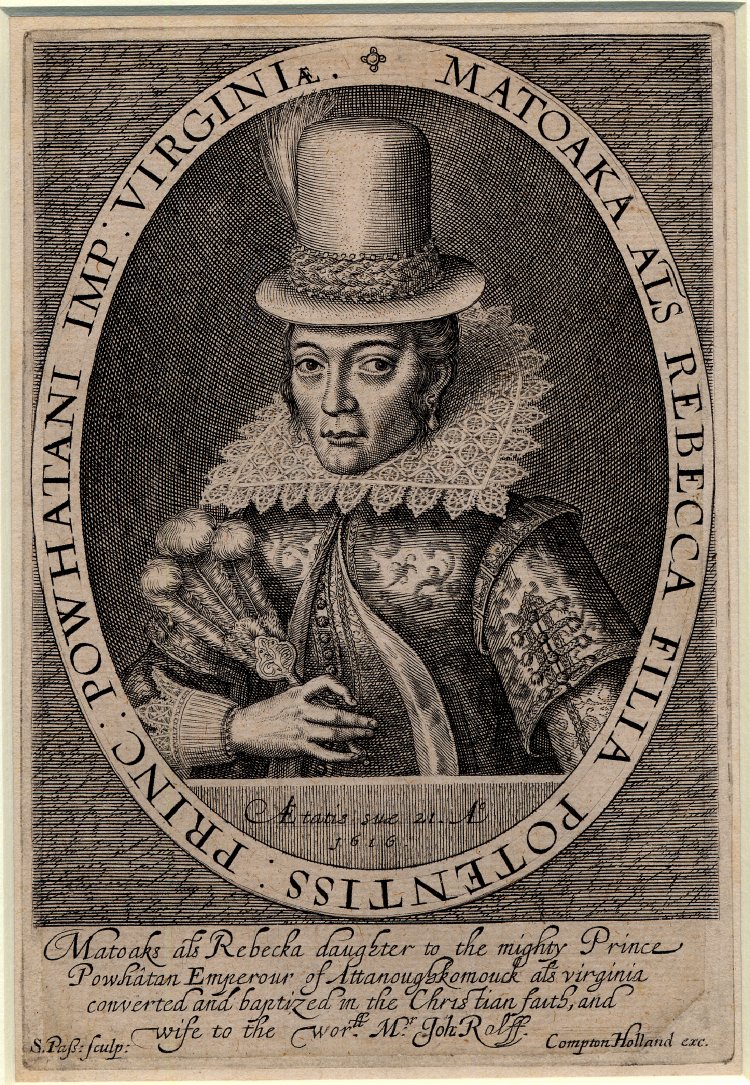
Portrait of Pocahontas by Simon van de Passe, in 1616, when she made her journey to England. This was within about a year, prior to her death.
Secondly, there was Christopher Tolkien, the son of one of the Inklings, J.R.R. Tolkien. The elder Tolkien had written much of his works on Middle Earth, with his son, Christopher, in mind. Christopher Tolkien managed his father’s literary estate, after his father’s death, publishing previously unpublished J.R.R. Tolkien’s works, including The Silmarillion.
As part of a focus on American Church History, over the next few months, I will blog my way through a book that I found both thoughtful and enthralling. I read it as I sat with my mother, a little over four years ago, when she dying of cancer.
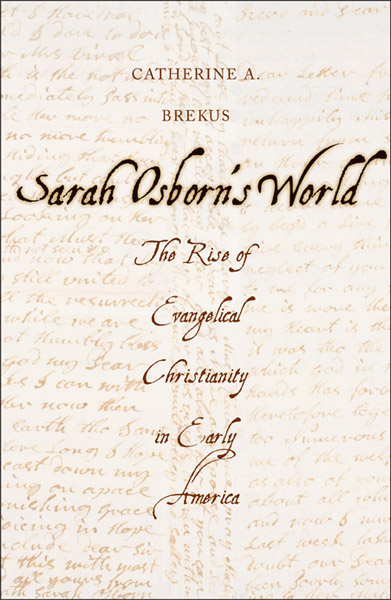
The history of Christianity has been dominated by male voices. Some of the most profound literary contributions of women have simply remained forgotten. So when someone rediscovers a woman’s voice of faith from the past, it can be a real treasure to find.
Harvard Divinity School religious historian, Catherine Brekus, has given us a remarkable gift by recovering for us the lost story of Sarah Osborn (1714-1796), a poor woman from New England who met Jesus during the great revivals of the mid-18th century. It was during this “First Great Awakening” where the English speaking world was greatly impacted by the dynamic preaching of George Whitefield and John Wesley, which helped to define contemporary evangelicalism. I hope you enjoy her story as much as I did as I post up various blog summaries of Brekus’ wonderful book. Better yet, read the book yourself!
When I was a college student, on those days jam packed with classes, labs, and the stresses of deadlines, I would take a few minutes, towards the latter part of the afternoon, and veg out watching Mister Rogers Neighborhood. It was a few minutes of respite, and Reverend Fred Rogers was always there to bring me down to earth, before I had to run off to the library to read another 100 pages of assignments.
The new movie, A Beautiful Day in the Neighborhood, starring Tom Hanks, has received a variety of reviews in Christian circles. Rebecca Davis’ review for the American Family Association tells us that “Mister Rogers Movie Gets Mixed Reviews,” noting on the positive side, a candid interview with Fred Rogers’ surviving wife, Joanne, while on the other side, observing that the film has some difficult material, including some mild language, and pointing out that “Everything about the film points to man’s goodness – the goodness of Mister Rogers and the innate goodness in all people – as the foundation for a transformed life. Believers know that type of transformation is contrary to Scripture, yet the faith-based promotion of the film may cause viewers to mistake goodness for the gospel.”
While Davis’ remarks are theologically correct, it bears emphasizing that what made Fred Rogers, Fred Rogers, truly was a profound intimacy with God. In a post-Christian age, where orthodox Christian faith gets sidelined in the culture, we must not underestimate the potential for such a film to carry on Fred Rogers’ work, to “make goodness attractive,” as his wife, Joanne, says.
Ryan Pemberton, in his review for Christianity Today magazine, writes of “The Quiet Liturgy of Fred Rogers,” and observes that “Fred Rogers was a pioneer in recognizing television as a powerful vehicle of formation.” Pemberton reminds us that Rogers did everything he did with radical intentionality, allowing the message of the Gospel to penetrate the viewer’s heart, as opposed to merely appealing to the mind.
The challenge for those of us in the Internet age of the 24-hour news cycle and social media is see if God might raise up a Christian in this generation to realize the potential of these newer forms of media, to spark a spiritual transformation of people in our day. That is something to think and pray about.
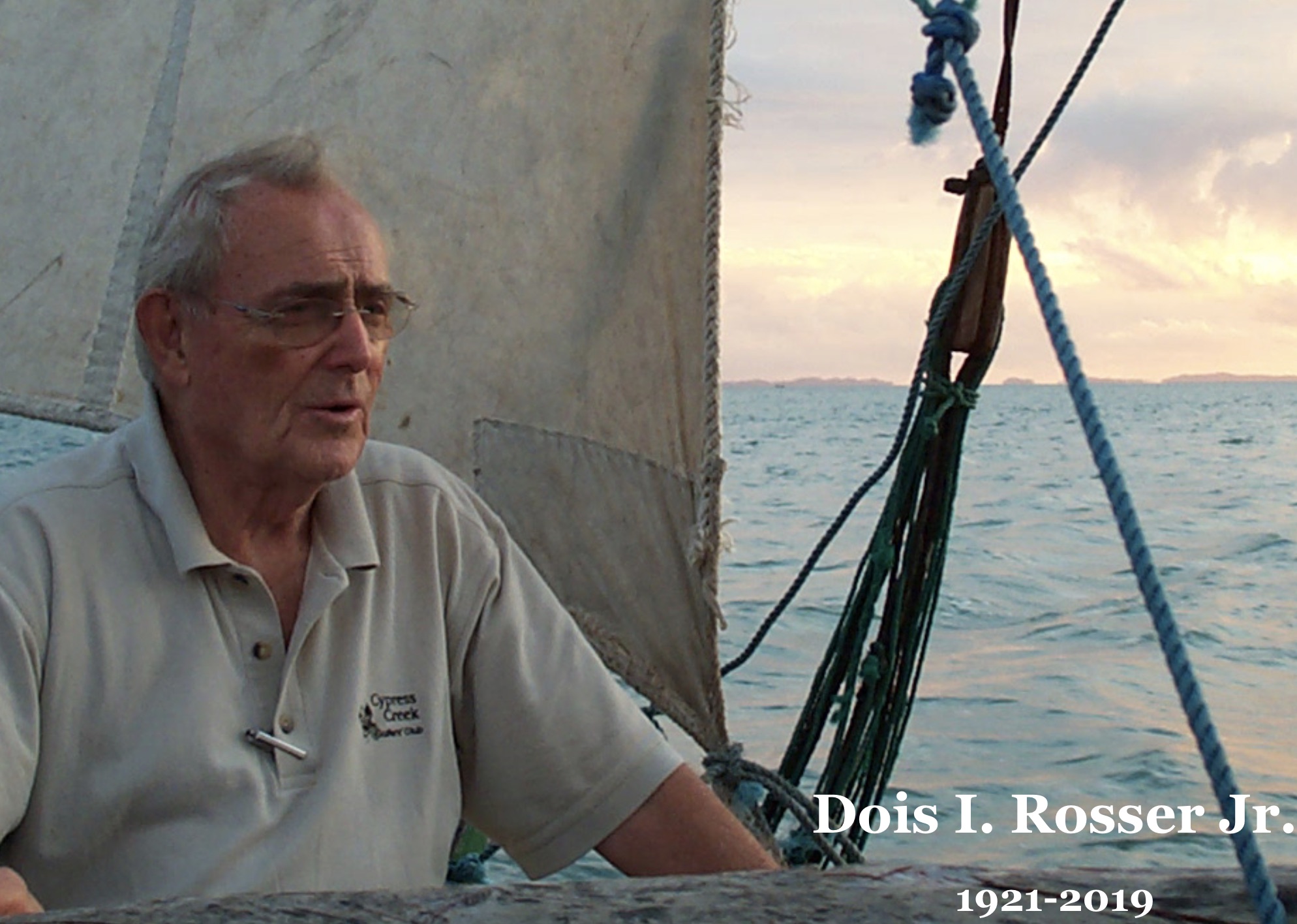
Dois I. Rosser Jr., the 98-year-old founder of International Cooperating Ministries, died yesterday (November 12, 2019).
It was a unique partnership. Dois Rosser was a businessman, a Hampton Roads car dealer, when he met Dick Woodwood, pastor emeritus of my church. Dick was teaching at a men’s Bible breakfast, making the Bible accessible to many people in our local community, and Dois Rosser listened intently as Dick teached the Bible, week after week. Dois encouraged Dick to assemble his teachings into something called the Mini Bible College, and the teachings of the Mini Bible College were shared across the globe, via Trans World Radio.
Dois Rosser soon learned that many of Dick’s worldwide listeners did not have a church building to meet in. So, in 1986 Dois founded International Cooperating Ministries, whose purpose was and still is to help churches, grounded in the teachings of the Mini Bible College, to build church meeting places, within walking distances of their homes. By 2019, over 8,000 churches have been built, or are under construction, in nearly 90 countries, while the Mini Bible College has been translated into 56 different languages.