Category Archives: Topics

Was Luther’s Bible the First German Language Bible?

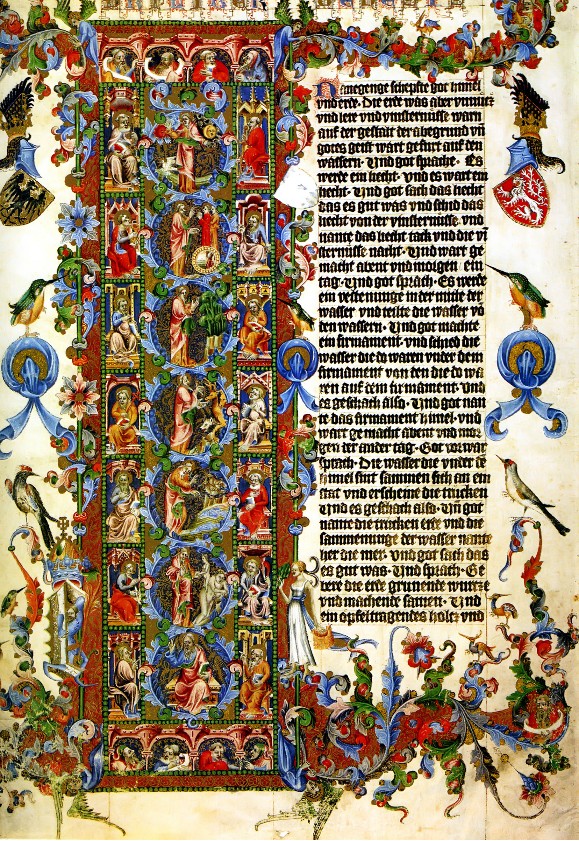
A German language Bible, authorized by “Good King Wenceslas,” predated Luther’s German translation of the Bible by over one hundred years.

The story may sound familiar. Martin Luther had been condemned as a heretic and traitor, after standing before the emperor, with his legendary, “Here I stand, I can do no other” speech, at the Diet of Worms, in 1521. He managed to leave Worms, only to be abducted by friendly supporters, and hidden in the Warburg Castle, for two years. There Luther, who had taken on the name of “George,” was able to complete his translation of the New Testament in German.

Finally, the German people had a Bible, in their own language, in which they could read and study the truths contained in God’s Word…. or so, many people think. This narrative is based on the common, yet mistaken impression, that no vernacular Bibles existed in medieval Europe, prior to the Reformation. But the story is not quite that simple, and Martin Luther himself is partly to blame for this misinformation.

As evangelical apologist and theological Alister McGrath writes, “no universal or absolute prohibition of the translation of scriptures into the vernacular was ever issued by a medieval pope or council, nor was any similar prohibition directed against the use of such translations by the clergy or laity.” (The Intellectual Origins of the European Reformation, p. 124). Rather, the difficulty was that the medieval church frowned upon unsupervised access to the Bible in native languages.

Think of it like the challenge of making a small modification to a home in many localities in America today. Sure, you can add an extra small room to your house, but the process of getting a building permit, in some places, can be a real hassle. You originally thought that adding some lumber and drywall here and there would be no big deal. But after you have spent hours and hours, dealing with the building inspector, your homeowner’s association, etc., you begin to wonder, why bother with it? Just leave the house well enough alone!

Likewise, in the medieval period, getting access to a German language translation of the Bible could be a real pain. Unlike outright bans to vernacular Bibles in England, that even there were not always successfully enforced, you could legally get access to a German Bible, but only if the church hierarchy approved of it. Plus, there was always the de facto Bible translation of medieval Europe, the Latin Vulgate, that you could read…. assuming you had some proficiency at Latin, which was relatively rare.

The printing press revolution of using movable type changed the situation, in the decades prior to Luther’s first German New Testament. Texts like the famous Gutenberg Bible, though still in Latin, were becoming increasingly available. But some early German translations, such as the Wenceslas Bible of the 1390s, and the 1466 Mentelin Bible, were becoming more readily available, too. Some scholars say as many as 18 German translations of the Bible were available to German Christian readers before Luther.

In Luther’s characteristically immoderate, over-stated fashion, you get the idea that German Bibles before his time, as a Bible professor, were hard to come by. This may have been Luther’s personal experience, but it hardly reflected the actual facts of history, broadly across medieval Europe. Looking back on his life as a monk, in a 1538 sample of Luther’s “Table Talk,” the great Reformer claimed this:

“Thirty years ago, no-one read the Bible, and it was unknown to all. The prophets were not spoken of and were considered impossible to understand. And when I was twenty years old, I had never seen a Bible. I thought that the Gospels or Epistles could be found only in the postills [lectionaries] for the Sunday readings. Then I found a Bible in the library, when I first went into the monastery, and I began to read, re-read and read it many times over and reread the Bible many times.”

By the time Luther had finished his complete Bible, including the Old Testament, in 1534, Luther’s celebrity status had totally undercut the efforts of Rome to control “supervised” access to the German Bible. Furthermore, unlike previous German translations, that relied on translating from the Latin Vulgate to the vernacular German, Luther made use of new reference works, such as Erasmus’ Greek New Testament. Luther was able, to at least partly, translate the Bible from the original languages, such as Greek, directly into German.

Luther’s campaign to “get back to the Bible,” in order to correct the contradictions of the papacy and church councils, is what generated a greater interest in reading vernacular Bibles. Luther’s “revolution” broke the default trust the average Christian had with papal and church authority, in medieval Europe. Instead, Luther encouraged Christians to read the Bible, and trust the Bible only as the authoritative source for Truth. As a result, the Reformation encouraged people to read and study the Bible for themselves, and they did so using newer, vernacular Bibles.

It is this effort to appeal to the original languages and earlier texts, driven along by Martin Luther’s popularity as a public figure, that helped Luther’s Bible to essentially become THE Bible for many German-speaking Christians. Western civilization has not been the same since.

For a rather contrarian take on Luther’s influence on the German language, and the priority of his translation, read this essay by the University of Alberta’s Albert C. Gow. A nice, 1-minute summary of Luther’s impact, through his translation of the Bible into German, is given here, in this video by the Museum of the Bible.


2017 Year in Review

2017. The year that marked the 500th anniversary of the start of Martin Luther’s Protestant Reformation.

As 2017 comes to a close, I thought it would helpful to highlight some of year’s most profound stories, as they impact the Christian faith. The message of the Gospel does not change, but events in the church and surrounding culture have a major impact in how that message is received, both among believers and among those who do not yet believe.

  • Racism: The American Sin That Does Not Seem to Go Away. Events in nearby Charlottesville, Virginia reminded me that the tensions between black and white people in America, even among Christians, are still present. What do we do with the legacy of racial-based slavery and segregation, that many American Christians were complicit in perpetuating? I read an excellent book The Religious Life of Robert E. Lee, by R. David Cox, that tells another side of the story of the iconic Confederate general, whose image remains at the heart of the Charlottesville controversy.


  • The Resurgence of the Prosperity Gospel. The year 2017 witnessed several tragic natural disasters that will continue to impact many Americans for years to come, from Hurricane Harvey’s devastation of Houston, Texas, to other hurricanes smashing through the Caribbean, to terrifying fires destroying many hundreds of homes in Southern California. Many struggle to make sense of natural evil and how God relates to it all. But for a popular band of Bible preachers, these tragedies are merely temporary setbacks that anticipate a time when God promises to grant great material prosperity and success, to those who put their trust in God. But is this message really consistent with what the true message of the Bible teaches? The fact that one of these preachers, whom many say is associated with the Prosperity Gospel movement, was invited to pray at the U.S. Presidential Inauguration, demonstrates that confusion still abounds as to what truly constitutes authentic, orthodox biblical faith.


  • Young Earth Creationism Tells an Engaging, Winsome, and Yet Still Provocative Story. Many Christians believe in a literal six 24-hour day story of creation, but have found it difficult to express that belief in a winsome manner, in a culture that is mystifyingly awed by scientific progress. Nevermind that nearly 99% of the scientific community, including both Christian believers and non-believers, accepts that the earth is some 4.5 billion years old.  Filmmaker Thomas Purifoy Jr. and Del Tackett put together a cinematographically stunning film, bathed with the politeness of a fireside chat, that suggests that the scientific consensus is simply wrong. Purifoy and Tackett’s Is Genesis History? profiles the work of serious, PhD-credentialed scientists, who believe that the traditional interpretation of Genesis 1 and 2,  of a 6,000 year old earth, is convincing enough to rebuild the foundations of modern science, and reverse the trend towards Christian unbelief, in an increasingly secularized society. This high quality production film promises certainty, in a world in turmoil generated by claims of “alternative facts” and “fake news,” that pervade an increasingly beleaguered mainstream media. But are Purifoy and Tackett fighting the right battle? Do they have their facts right? Who should Christians trust when it comes to science, those within mainstream science, or the renegade few who challenge the mainstream story? Should Christians divide over the age of the earth?


  • Who is the God of The Shack? William Paul Young’s book, that just became a movie in 2017, was a huge fictional best seller among evangelical Christians, a good ten years ago. But his recent non-fiction book, Lies We Believer About God, raises serious questions as to the author’s theological orthodoxy. Has William Paul Young become the new Rob Bell?


  • The Bible Answer Man Goes Eastern Orthodox.  Evangelical apologist and Bible teacher Hank Hanegraaff shocked radio listeners when he announced that he had been received into the Greek Eastern Orthodox Church. Why are some evangelical Christians drawn to Eastern Orthodoxy?


  • Has Historic Christian Belief Become Unpatriotically Un-American Veracity blogger, John Paine, asks the question, in view of how former Presidential-contender Bernie Sanders grilled Russell T. Vought, on Vought’s belief in the uniqueness of Christ, in an interview for a job with the Office of Management and Budget. Meanwhile, just down the street, the finishing touches were being put upon the new Museum of the Bible.


  • Apologist Ravi Zacharias Defends His Reputation. Veteran apologist, Ravi Zacharias, answers critics over concerns about his academic credentials and use of technology in a personal relationship. No matter what your view is of the controversy, it serves as a cautionary tale to guard against the unreflective elevation of a Christian celebrity.


  • The Loss of Nabeel Qureshi and R. C. Sproul. The evangelical Christian movement lost at least two major movers and shakers in 2017. Nabeel Qureshi was a young apologist, who left Islam to follow Jesus. Qureshi represented a new breed of Christian apologists, who confidently engage the culture with the claims of Christ.  Beloved Bible teacher R. C. Sproul died in the 500th year of the Protestant Reformation. R. C. Sproul was probably the closest you could get to a modern-day Martin Luther, raising questions as to what it really means to be a Protestant, evangelical Christian. Among some of the other influential evangelical Christians, who died in 2017, include Robert L. Thomas, one of the older defenders of traditional dispensationalism, and a leading scholar for the New American Standard Bible translation; and charismatic author John Sherrill, who co-authored some of the most influential Christian books in recent generations, including David Wilkerson’s The Cross and the Switchblade, Corrie Ten Boom’s The Hiding Place, and Brother Andrews’ God’s Smuggler.

“Theistic Evolution:” Was Everything Perfectly Good Before the Fall?

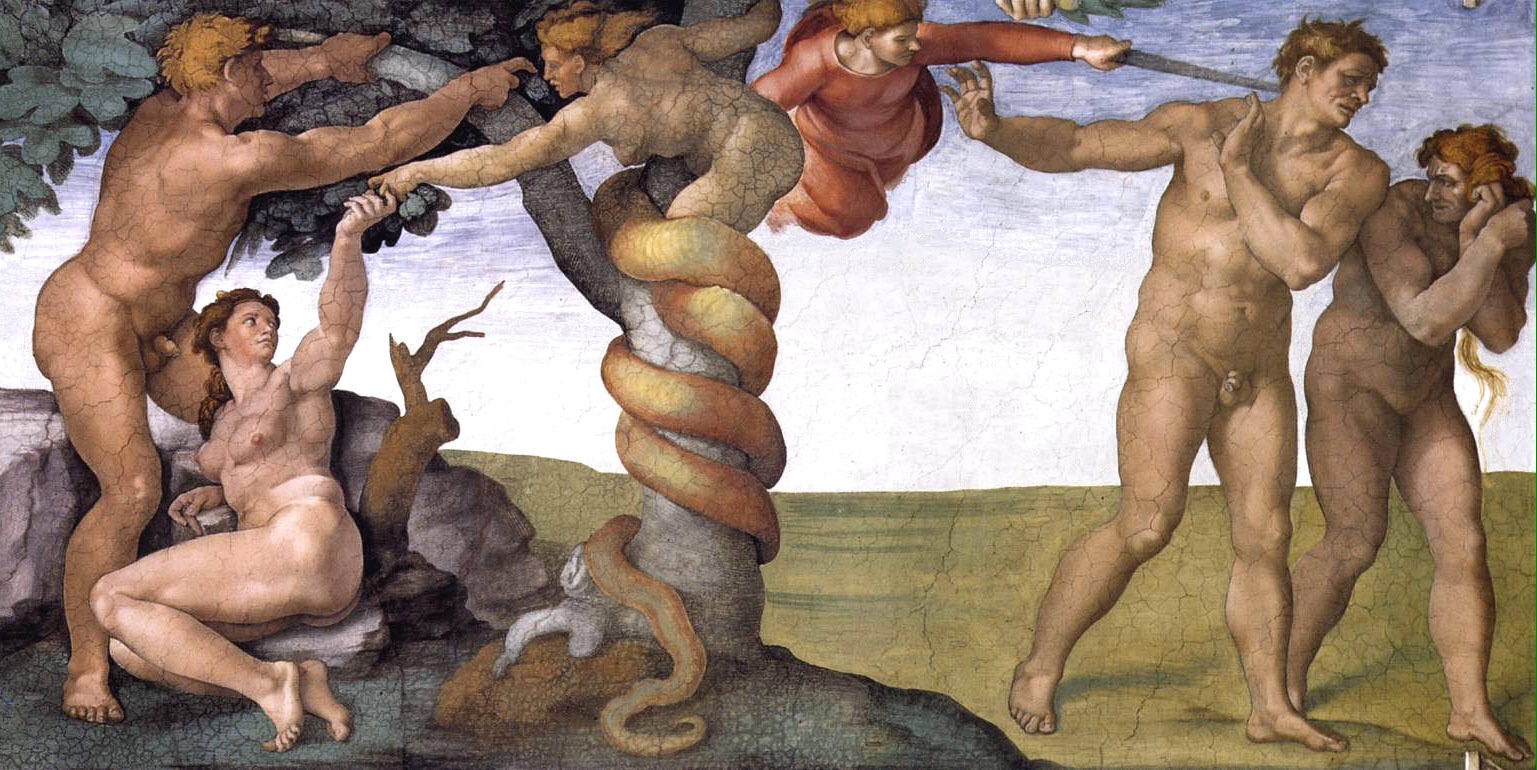
Micheangelo’s depiction of the Fall of Humanity, in the Sistine Chapel. Did evil enter the world, when Adam and Eve sinned, or did evil sneak its way into the world prior to the Fall?

A new 2017 book released by Crossway publishers, Theistic Evolution: A Scientific, Philosophical, and Theological Critique, is an array of essays meant to discourage Christians from embracing so-called “theistic evolution.” But what exactly is “theistic evolution?”

I have never been happy with the term, as it leaves the question of, “who is this particular God?,” up in the air. Is the theos in “theistic” referring to the God of the Bible, or some other divine concept? A lot of people believe in “God,” but that does not mean that they embrace the God as revealed in Jesus Christ.

Instead of “theistic evolution,” the name “evolutionary creationism,” embraced by the folks at Biologos.org, an organization started by Francis Collins, one of the scientists behind the Human Genome Project, is a specifically Christian description, as it grounds the concept of evolution within a biblical concept of creation. But is evolution really compatible with the Bible’s teaching on creation? Do the authors of this new book succeed in promoting its thesis, in dismantling “theistic evolution“? Or to put it another way, in the authors’ efforts to take down materialistic evolutionary philosophy, and its influence on evangelical Christianity, have they set up a straw man?

Theistic Evolution: A Scientific, Philosophical, and Theological Critique contends that the prevailing biological theory of evolution should not be accepted whole-heartedly by Christians, as it works to undermine certain traditional biblical ideas about creation. It is a challenging argument, that the thoughtful Christian, engaging with scientifically-informed skeptics, must wrestle with.

Presumably the authors all hold to an Old-Earth Creationist viewpoint, one that accepts the well-attested antiquity of the earth, while denying macro-evolution. Young Earth Creationists, to the contrary, believe the earth to be less than 10,000 years old. But according to reviews I have surveyed, nowhere does the 1,000-plus page book actually take a stand on the age of the earth.

ReasonsToBelieve president, Hugh Ross, has written a thoughtful (partial) review of the book. Ross, an Old Earth Creationist himself, broadly accepts the book’s thesis, but he also points out some weaknesses. For example, at least one essay proposes that the natural order of the world only became corrupted after the Fall of Adam and Eve in the garden. It is true that God was originally pleased with what he created, declaring it to be all “good.” But does that tell the whole story of what we read in Genesis 1-3? The text also gives some indication that all was not completely hunky-dory by the time Adam and Eve first arrive on the scene.

What does one make of the presence of a crafty serpent in the garden? (Genesis 3:1) If all was created “good,” how did such a deceptive creature make its way into God’s “good” world? Furthermore, did not God command the first humans to “fill the earth and subdue it?” (Genesis 1:28) Why would God insist that the earth be subdued, or domesticated, if there was not some form of elusive chaos permeating God’s good world, that needed to brought under the Creator’s control?

These observations within the biblical text do not necessarily take away from the goodness of creation. Nevertheless, they are there in the text. If we take biblical inspiration seriously, we must still account for all of what the text says. As I understand the term “Evolutionary Creationism,” those who advocate for it are trying to grapple with these biblical observations.

C. S. Lewis put it this way, in The Problem of Pain (p. 134-135)

“It seems to me, therefore, a reasonable supposition, that some mighty created power had already been at work for ill on the material universe, or the solar system, or at least, planet Earth, before ever man came on the scene; and that when man fell, someone had, indeed, tempted him.”

The authors of Theistic Evolution go to great lengths to say that “Neo-Darwinism” subverts the Scriptural witness, and there is much to commend this view. But do these criticisms fairly apply to “Evolutionary Creationism?” If I understand Lewis correctly, then it would appear that at least some of the authors of Theistic Evolution may have chosen to ignore the above uncomfortable, Scriptural observations.

As evidenced by the recent furor over Pope Francis’ critique of the traditional translation of the Lord’s Prayer, God’s role in temptation, is indeed a difficult biblical topic. However,the Book of James teaches that God could not have tempted Adam and Eve to sin, so it must have been some force of evil, present in the world prior to the Fall:

“Let no one say when he is tempted, “I am being tempted by God,” for God cannot be tempted with evil, and he himself tempts no one.” (James 1:13 ESV)

Furthermore, the Apostle Paul in the Book of Romans tells us:

“For the creation waits with eager longing for the revealing of the sons of God.” (Romans 8:19 ESV)

But when did this agonizing wait from creation start? Was it after humanity’s fall or prior to the fall?

I do not necessarily agree with all of Hugh Ross’ critique, but I think his review is very much worth reading. If someone has read Theistic Evolution: A Scientific, Philosophical, and Theological Critique, please leave your thoughts in the comments section below, as I would like to know what you think.  Here is the trailer for the book.


Mission for Rohingya

For the Rohingya refugees, some are calling it genocide….

Nearly five centuries ago, the French word, refugee, entered the English language. Almost a quarter of a million French Protestants fled religious persecution, in the wake of Martin Luther’s reformation, that many Christians have remembered this year, the 500th anniversary of the beginning of the Protestant Reformation. Some of those French Protestants, the Huguenots, made their way first to England, and then finally, to Chesterfield County, just west of Richmond, Virginia.

I am a descendant of some of those French Protestant refugees.

The Rohingya people are an ethnic group, many living in Myanmar (formerly Burma), that I have never heard of before this year. But since August, 2017, nearly half a million people have fled on foot or by boat to neighboring Bangladesh. Most Rohingya are Muslim, though a small percentage are Hindu, and even a few Christians, but they all face intense persecution from Myanmar’s Buddhist majority.

Elsewhere in the world, Muslims are turning to Christ in record numbers. Some sources indicate that more Muslims have come to faith in Jesus within the last 14 years, than in the previous 14 centuries that Islam has been in existence.

A good friend of mine, who loves Jesus, is planning to go on a missions trip, within the next month, to see if he, and some friends, can help the Rohingya out, during this time of crisis. If you would like to help out financially, please get in contact with me, or else leave a comment in the comment section of the blog, and I can get the information to you, as to how you can help.

Love the sojourner, therefore, for you were sojourners in the land of Egypt.” (Deuteronomy 10:19)


The Reformation… For Your Christmas Book List

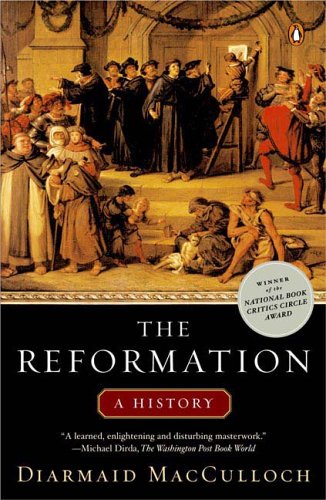
Diarmaid MacCulloch’s The Reformation is my top pick for understanding the Reformation of the 16th and 17th centuries, but requires solid intellectual investment to benefit the most from it.

I am just finishing teaching an Adult Bible Class on the Protestant Reformation, this fall, commemorating the 500th anniversary of Martin Luther’s Ninety-Nine Theses. As a way to round out the class, I thought I would share some books and other resources I have found helpful in learning about the Protestant Reformation…. all for your Christmas reading.

There are a ton of good books out there now on Martin Luther, particularly in view of the 500th anniversary. The classic book I really like is still Roland Bainton’s Here I Stand, though in some respects, it is becoming dated. However, it makes for a perfect audiobook, for a long drive in the car.

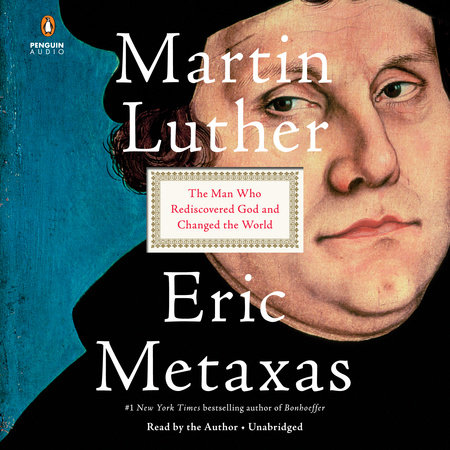
The most accessible book for evangelicals, that I would recommend, is going to be Eric Metaxas’ Martin Luther: The Man Who Rediscovered God and Changed the WorldMetaxas is a very, very entertaining and cheerful writer, and you will learn a lot from him, but there is some caution. Having read his book on Bonhoeffer, and read some parts of If You Can Keep It (that I reviewed last year on Veracity, a review that was oddly controversial to some), it is clear that Eric Metaxas is a popularizer of scholarship, but not really a scholar in these areas himself. To his credit, Metaxas has admitted that much. Metaxas’ occasional mishandling of some facts here and there can be aggravating to those who know a subject fairly well. On the other hand, it is possible that Metaxas has made a better effort here with Luther, than in his previous volumes. The sheer pleasure of reading Metaxas will make up for any nitpicking errors.

I would not want to take away from those who really enjoy Eric Metaxas, but if you are really looking for a serious work of scholarship, that is still very readable, many historians in the field prefer one of Martin Marty’s books, like October 31, 1517: Martin Luther and the Day that Changed the World, or Lyndal Roper’s Martin Luther: Renegade and Prophet. If I was reading about Luther (or the Reformation, in general) for the first time, I would start with Metaxas first, to really get into it, as with an audiobook. Then, go for either Bainton, Marty, or Roper, for the print or Kindle versions, to explore in-depth, and to correct any errors made by Metaxas.

Another old classic I read this year, having extensive excerpts from Luther’s writings, is Preserved Smith’s The Life and Letters of Martin Luther. For recommended newer titles, I have also heard good things about Andrew Pettegree’s Brand Luther,as well as Herman Selderhuis’ Martin Luther: A Spiritual Biography (Christianity Today magazine awarded Selderhuis with a Book of Year Award for 2018, in History/Biography). The next Reformation audiobook I hope to listen to is written from a Roman Catholic point of view, by a scholar at Notre Dame, Brad S. Gregory’s Rebel in the Ranks: Martin Luther, the Reformation, and the Conflicts That Continue to Shape Our World.

For the “number two man” of the Reformation, John Calvin, I have enjoyed reading the French historian, Bernard Cottret’s Calvin: A Biography. Cottret gives you a genuine flavor of Calvin, the man, warts and all. My only regret with Cottret is that he did not get into the theological and exegetical issues that Calvin faced, in doing his work, as much as I would have liked.

To get a comprehensive overview of the theology of the Reformation, in general, there is no better resource than Alister McGrath’s Reformation Thought: An Introduction.  McGrath knows his stuff, and communicates ideas really well. Just be sure to get the Fourth Edition. I read McGrath’s book for the second time this year (but as an audiobook), and everything just seemed to make sense. McGrath covers everything from Luther, to Zwingli, to Calvin, to the English Reformation, to the Catholic Reformation. Superb.

However, the cream of the crop when it comes to grappling with the Reformation, as a whole, is Diarmaid MacCulloch’s The Reformation. The man is a rock star. Comprehensive. Thorough. Authoritative. Provocative. Entertaining. Engaging. It is all there. From the 16th to 17th centuries, he really packs it in at 884 pages. It took me almost a year to listen to it as an audiobook, to take it all in. My only caveat with MacCulloch is that he leans sorely to the left theologically, having publicly professed being a gay man, and has sadly felt like he has been treated badly at times by the church. There are little sarcastic jabs here and there where you can feel the sting. But I would not let that deter those who persevere with MacCulloch, as he dearly loves his subject, so a critical reader will be abundantly well-rewarded for making an investment in MacCulloch.

As a type of addendum, Diarmaid MacCulloch compiled a series of book reviews and essays, All Things Made New: The Reformation and Its Legacy. You will learn bits and pieces of things normally skipped over by other treatments of the Reformation. It all creates a fascinating narrative, except that a couple of the essays tend to be rather tedious. MacCulloch is particularly strong on the English Reformation, being a Brit himself.

Well, that should keep you busy this Christmas!