Category Archives: Topics

Does N. T. Wright Deny Penal Substitutionary Atonement??

Aside from the question, “Who is N.T. Wright?”, the rest of the title of the post might scare you, with the phrase: “penal substitutionary atonement?” What is that all about? A brief illustration might help.
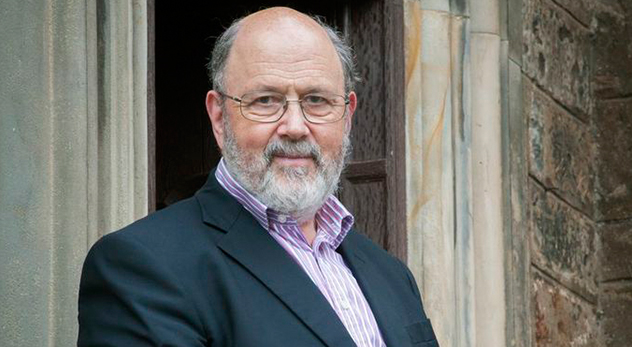
Nicholas Thomas Wright. British New Testament scholar, retired Anglican bishop, … and agitator among more than a few conservative, evangelical Protestants.

A rather popular Christian worship song, “In Christ Alone,” is sung in many churches today. One of the verses goes like this, and chimes in well with the Advent season:

In Christ alone, Who took on flesh,
Fullness of God in helpless babe!
This gift of love and righteousness,
Scorned by the ones He came to save.
‘Til on that cross as Jesus died,
The wrath of God was satisfied
For ev’ry sin on Him was laid
Here in the death of Christ I live.

A few years ago, a worship committee in a mainline denomination decided to try to change the lyrics of that highlighted line, from “the wrath of God was satisfied,” to “the love of God was magnified.” There is nothing theologically wrong with the phrase, “the love of God was magnified,” with respect to Christ’s death on the cross. The idea of Jesus dying for others, out of God’s great love for humankind, is a well established idea in biblical thought.

The problem comes with removing the language of “the wrath of the God was satisfied.” Stuart Townend and Keith Getty, the writers of the song, refused to give the denomination permission to change the lyrics. As a result, “In Christ Alone” was dropped from that church body’s hymnal.

So, what was wrong with removing the wording, “the wrath of the God was satisfied?” Well, the concept of the wrath of God being satisfied by Christ’s death on the cross is tied to the doctrine of penal substitutionary atonement. I can try to define this in one sentence, put backwardly: Jesus died to deal with the problem of human sin (the “atonement” part), by standing in our place (the “substitutionary” part), to take the penalty of human sin (the “penal” part), upon himself, so that His death would bear the just penalty of our sin, allowing us to be healed and to become reconciled with God. Reconciliation with God is the goal of the Gospel. Therefore, to deny penal substitutionary atonement is essentially to deny the Gospel.

For many evangelicals, them be fightin’ words: You do not mess with the doctrine of penal substitutionary atonement! The problem is that my long sentence in the previous paragraph requires a whole lot of unpacking, and unfortunately, sometimes the unpacking of that sentence gives a misleading caricature of what the death of Christ is all about. Critics of the doctrine of penal substitutionary atonement say that this gives us a rather paganized view of God: an angry, barbaric, capricious, and blood-thirsty God. But does this criticism apply merely to the caricature of penal substitutionary atonement, or to the very doctrine itself? Are “Bible-believing” Christians Scripturally aware enough to be able to tell the difference?

Along comes N.T. Wright, a British evangelical theologian, influential among many young pastors today, well known for his work to defend the essential historicity of the Gospels, against the infamous “Jesus Seminar,” and his work to defend the bodily resurrection of Jesus Christ, against detractors. Wright argues that a misuse of the doctrine of the atonement, leads to a sad caricature of what Christ really accomplished by his death on the cross. This caricature paints a picture that Wright describes in the following sermon, of:

….an angry God and a loving Jesus, with a God who demands blood and doesn’t much mind whose it is as long as it’s innocent. You’d have thought people would notice that this flies in the face of John’s and Paul’s deep-rooted theology of the love of the triune God: not ‘God was so angry with the world that he gave us his son’ but ‘God so loved the world that he gave us his son’. That’s why, when I sing that interesting recent song and we come to the line, ‘And on the cross, as Jesus died, the wrath of God was satisfied’, I believe it’s more deeply true to sing ‘the love of God was satisfied’, and I commend that alteration to those of you who sing that song…

N.T. Wright, therefore, would have us substitute the “wrath” of God with the “love” of God, in Townsend and Getty’s now-classic worship song, as a way of moving us along in the debate over penal substitutionary atonement.

But is N.T. Wright himself rejecting merely the caricature of penal substitutionary atonement, or the full content of the doctrine itself? Some evangelicals, such as The Gospel Coalition blogger, Trevin Wax, believe that N.T. Wright is only rejecting the caricature, and not the very doctrine itself, thus affirming Wright’s orthodoxy.

Some other critics however, within evangelicalism, are convinced of the latter. For example, Southern California pastor, John MacArthur openly says that while he is not sure as to what N.T. Wright exactly affirms, he is completely sure as to what Wright denies; namely, that Wright denies penal substitutionary atonement, and therefore, Wright denies the Gospel (link to YouTube video). Whew!!

I do find it rather startling that a pastor of MacArthur’s prominence, would be so bold to denounce another bible teacher, while at the same time admitting that he does not understand what that other bible teacher is actually teaching! Nevertheless, it does raise the question: Trevin Wax wrote his defense of N.T. Wright, linked above, in 2007. Has N.T. Wright shifted his position since then? In criticizing the caricature of penal substitution, is N.T. Wright now chipping away too much at the very doctrine itself?

Perhaps the best way to resolve this dispute is to allow N.T. Wright to answer the question directly, as he did in a recent interview with Justin Brierley, the host of the Unbelievable podcast. Ultimately, it matters not what N.T. Wright thinks, nor what Trevin Wax thinks about N.T. Wright, nor what John MacArthur thinks about N.T. Wright. What matters most is what the Holy Scriptures teach. N.T. Wright gives his view in 10 minutes below, to the question: “Do you believe in penal substitution?” How would you respond to that question?

For more on why N. T. Wright both fascinates and frustrates other evangelical Christians, read this Veracity post from several years ago. As I argued in that blog post, the problem with Wright is not so much in what he affirms, but in what he denies. Perhaps in arguing for what he affirms, which we should make a concerted effort to properly understand, before jumping in too quickly to criticize, Wright makes too much out of what he denies (or he is not as clear as he could be). To get a more critical engagement with Wright, particularly on one of his most recent books, The Day the Revolution Began, consider the following two reviews: by Dane Ortlund and by Michael Horton. For the record, I have no problem singing “the wrath of God is satisfied,” as I view there to be a clear distinction between the classic doctrine of penal substitutionary atonement and its caricature, as John R.W. Stott carefully explains in his masterpiece, The Cross of Christ


Why Keep the King James Version? (… Or Why the “Thee’s” and “Thou’s” Are More Important Than You Think)

I am a big advocate for modern English Bible translations. However, even though I am not a “King James Only” Bible person, I do think there is a good argument for hanging onto a copy of the King James Version for Bible study.

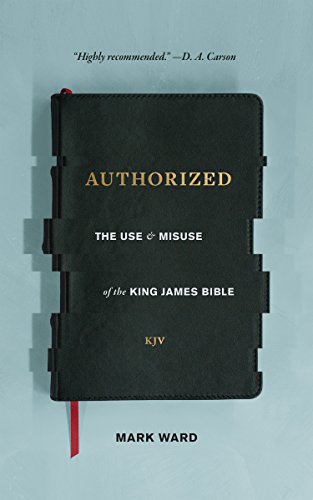
I read Mark Ward’s marvelous Authorized: The Use and Misuse of the King James Bible recently, and he makes a very gentle and persuasive case for using multiple Bible translations when studying the Bible. It is perfectly fine to have one Bible version as your “Go-To” translation of choice. But, if possible, we should make use of several versions when doing in-depth Scriptural study, to give us insight that our favorite translation might be missing.

For example, some might be tempted to ditch the old King James Version, as one among your versions, due to its archaic language. But there is a good case for why you should hold off on doing that.

As noted in my book review of Mark Ward’s book, the use of the “thee’s” and “thou’s” in the King James Version, might lead us to think that such language shows a special reverence for God, but this would be wrong. The problem has been accentuated in recent years, by the decision of those who produced the New American Standard Bible (NASB), back in the 1970s. The NASB kept the “thee’s” and “thou’s” with respect to referring to God, and ditched that language when addressing non-divine characters. Apparently, readers of the NASB liked the traditional language for God, so the NASB committee decided not to buck that tradition.

Unfortunately, traditions can easily confuse people. The NASB folks finally fixed that problem by getting rid of all “thee’s” and “thou’s,” by the time of their 1995 revision, but the stigma associated with “thee’s” and “thou’s,” as being formal and more reverent, was pretty well common knowledge by then, and difficult to uproot. Interestingly however, the original purpose for including the “thee’s” and “thou’s” in the King James Version,  in the first place, has been often missed.  Continue reading


Is Belief Always a Prerequisite for Baptism?

One of the more contentious issues in the church, for centuries, has been about the nature of baptism. Must baptism be reserved for only believing adults (or older children), or can babies be baptized, too? A targeted study in Acts 16 shows us why this issue can be difficult to resolve.

Two key individuals in Acts 16 become believers, resulting from the Apostle Paul’s preaching: Lydia and the Philippian jailer. But what generates confusion is that for both Lydia and the jailer, not only were they individually baptized, the text tells us that all in each “household” were then baptized as well (Acts 16:15, and Acts 16:30-34, respectively).

Were there infants in the households of each? Unfortunately, the text never tells us, as the original word for “household” is ambiguous.

Advocates for infant baptism look to the broadest interpretation of household, assuming that infants would have been implicitly present in those houses. Advocates of believer’s baptism argue less broadly, saying that without explicit reference to infants being in those houses, we have no warrant to baptize infants.

What really throws a wrench into the whole thing can be seen in the account of the Philippian jailer. Look at what we read in the ESV (English Standard Version translation), and see if you can see the issue:

Then he brought them out and said, “Sirs, what must I do to be saved?” And they said, “Believe in the Lord Jesus, and you will be saved, you and your household.And they spoke the word of the Lord to him and to all who were in his house. And he took them the same hour of the night and washed their wounds; and he was baptized at once, he and all his family. Then he brought them up into his house and set food before them. And he rejoiced along with his entire household that he had believed in God (Acts 16:30-34 ESV).

First, you can see that when the Philippian jailer asked about what he must do, Paul and company instructed that he should believe, in order to be saved. Interestingly, we find that his “household,” is included here. Paul and company preach to the entire household. However, aside from the jailer himself, we know little about the state of belief among the others. Did they believe, along with the jailer?

A question is raised here: Does this mean that the other members of the Philippian jailer’s household would be saved, on the basis of the jailer’s faith, a kind of “salvation by proxy?”

I have heard a similar argument before, but this is hard to square with the rest of Scripture. As Paul teaches elsewhere in the New Testament, salvation comes by believing in the Lord, with no exceptions mentioned, as in Romans 10:10-13. More likely, it means that as the Philippian jailer was head of his household, God would providentially use the Philippian jailer’s influence to bring the others in his household to believe in the Lord Jesus, and experience salvation. This happened quite frequently in the ancient world, when the believing faith of the leader in the home would eventually lead to believing faith among others in that same home, including slaves and servants.

But how long would it take for that to happen? Would the others believe in Jesus right away, or at some future time? Specifically, if there were infants or other small children in the home, does this imply that they would come to faith at a later time, under the instruction of the Philippian jailer? The text is unclear at this point.

What we do know from what follows is that the entire “household” was baptized (the ESV translates “household” here as “family,” as some other translations do, too). But notice how the ESV ends the episode: “He rejoiced along with his entire household that he had believed in God.” The rest of the household rejoices, along with the jailer, that the jailer had believed in Christ. But it is not clear if the others themselves had believed in Christ at this point…. even though they had all been baptized!

A paedobaptist; that is, someone who believes in the validity of infant baptism, might be affirmed in their view. Presumably, this would allow for the practice of infants to be baptized, assuming that as the children grow up in the home, with proper instruction, they might eventually come to believe in Jesus.

A credobaptist; that is, someone who rejects the validity of infant baptism, and insisting that belief is a prerequisite for baptism, would object to this ambiguity. Does this not suggest that the entire household rejoiced for the jailer, because they all themselves believed, as well? The credobaptist might contend that infants would not have been in the position to rejoice for the jailer’s belief. But then, if a young child sees that the parent is rejoicing, would that child not also rejoice together, despite knowing the reason?

This is where looking at another Bible translation might give us some further insight. Here is that last verse again in that passage, from the Kings James Version:

And when he had brought them into his house, he set meat before them, and rejoiced, believing in God with all his house (Acts 16:34 KJV).

Notice how the KJV not only has the household members rejoicing, they had all come to believe, along with the Philippian jailer! This chimes in well with the theme of how baptism was practiced earlier in Acts, as in Acts 2:38, where the order was established, “Repent, and then be baptized.” But before you score a point for the credobaptist, consider what is going on with these different translations.

In the world of Bible translations, some translations are more word-for-word oriented; technically called, formal equivalence, whereas other translations are more thought-for-thought oriented; technically called, dynamic equivalence.  But the relationship between word-for-word and thought-for-thought translations is actually pretty fluid within translations themselves. For example, the KJV has the reputation for being a more word-for-word oriented translation. But here the KJV takes a more thought-for-thought approach, as opposed to the ESV, which follows the original Greek word ordering more tightly.

Looking at another translation, in this case the NET Bible, shows this difficulty more clearly:

At that hour of the night he took them and washed their wounds; then he and all his family were baptized right away. The jailer brought them into his house and set food before them, and he rejoiced greatly that he had come to believe in God, together with his entire household (Acts 16:33-34 NET).

The NET Bible follows the KJV more closely than the ESV, moving a phrase around, and gives the reason in a footnote:

The phrase “together with his entire household” is placed at the end of the English sentence so that it refers to both the rejoicing and the belief. A formal equivalence translation would have “and he rejoiced greatly with his entire household that he had come to believe in God,” but the reference to the entire household being baptized in v. 33 presumes that all in the household believed.

So, is the NET correct in presuming that all in the household believed? As we have seen, making such a presumption is not always made clear by the evidence given in the text.

Back to the main question: Is belief always a prerequisite for baptism? Unfortunately, a targeted look at Acts 16, as we have done here, does not really resolve the issue. Paedobaptists read the text one way. Credobaptists read it another. An examination of Scripture as a whole is necessary to make progress here on this debate.

The question of infant baptism vs. believer’s baptism has been a source of division among Christians for generations. By default, today many evangelical churches that defer to one’s conscience on the matter, publicly celebrate believer’s baptism, for adults and older children. Nevertheless, they offer “baby dedication” for infants, a workable solution that fulfills some of the intentions behind infant baptism, while technically not being “baptism,” and yet where the whole idea of “dedication” is surprisingly lost on most parents. Thankfully, this is not an essential issue that impinges upon one’s salvation. It is a non-essential matter in which different Christians will continue to “agree to disagree” on. Let the conversation continue.


The Flat-Footed Failure of Flat Earth “Christianity”

Many evangelical Bible scholars accept that the ancient Hebrews viewed the world as a disk floating on the waters, supported by pillars. But does this mean that God’s Word is “teaching” us today to believe in a “flat earth?”…. Apparently, some people think so… This is pure crazy talk. (credit: Logos Bible Software, the FaithLife Bible).


I keep hearing about this stuff, so I decided to check it out.  Apparently, there is a tiny yet growing movement of Christians who believe that the earth is flat.

Seriously?

My cringe-worthy meter just went to the red zone.

What really bothers me about this stuff is that these so-called “Flat-Earthers” use much of the same rhetoric I hear used by other Christians to defend their view of the Bible. These overlapping talking points are disturbing, when you translate what those talking points mean to flat earth advocates.

  • If you believe the Bible is inerrant, then you must believe everything it says about scientific matters, such as the [flat earth]” (translation: Scientifically, Christians should believe in a flat earth because the “Bible teaches it”. The “Bible teaches” a flat earth, because we said so. ).
  • To deny the biblical teaching on the [flat earth] is to elevate man’s word over against God’s word.” (translation: God’s special revelation in Scripture contradicts God’s natural revelation in creation, but that is OK!)
  • To compromise on the Bible’s teaching on the [flat earth] is to compromise the authority of the Bible” (translation: the “real” Christians are the ones who accept a flat earth, and everybody else is either inconsistent, deceived, a liberal, or a non-believer. Trust us. Flat-Earthers are the real believers in the Bible. Every other so-called “Christian” is a compromiser.)
  • If Scripture is false about scientific matters, such as the [flat earth], then what Scripture says about salvation falls with it.” (translation: how can you trust what the Bible says about the Resurrection, if you do not believe what it says about the flat earth? In other words, you do not need to examine the evidence for yourself, just trust us Flat-Earthers!)

You can pretty much replace “flat earth” above with just about any supposed “scientific teaching of the Bible,” that rips the Bible out of its historical context, and get the same result.

Folks, we need to set the record straight.

With very, very few exceptions, no Christian through the course of church history believed that the earth is flat. Historian Jeffrey Burton Russell painstakingly has shown the idea that Christians have believed in a flat earth to be an invention of modern thinkers, over the past couple hundred of years.

Christians are not the only ones who have bought into this type of nonsense. As one of my “favorite atheists” Tim O’Neill puts it, a lot of atheists buy into this garbage as well.

Some ancient cultures did subscribe to flat earth cosmologies, arguably including the Hebrew culture. But certainly by the early years of the medieval church, such views had died out. Overwhelmingly, Bible scholars today contend that neither God, nor the human authors of the Bible themselves, were trying to teach science, with respect to a flat earth cosmology, back in the ancient era, nor should we try to apply such logic today to our cosmology. Sadly however, some Christians today think they know better, and perpetuate misinformation.

Columbus was not trying to test the idea that the earth was flat, by trying to sail around the world. Columbus, just like any other medieval European, believed that the earth was spherical. That old canard was an invention in the mind of writers like Washington Irving (ever heard of “The Legend of Sleepy Hollow?”), and propagated by such thinkers as John William Draper and Andrew Dickson White, in the late 19th century. For some strange reason, the Internet has made it possible to revive these ideas, and a growing number of Christians are buying into this.

I would not even bother with “Flat-Earth Christianity,” except that it raises serious questions that Christians should consider. For example, flat earth rhetoric mimics a lot of the talk I hear coming out of the Young Earth Creationist movement. Thankfully, Young-Earth Creationist groups like Answers In Genesis have wisely tried to put the “kabash” on such wild-eyed thinking. Thank goodness! But the “cringe-factor” gets elevated at times when both “Flat Earthers” and Young-Earth Creationists start talking alike.

To be clear, though I am not persuaded myself, I am all for the possibility that the earth is indeed young. God could have created the earth any way He wanted, during any time frame: 6,000 years ago, according to the traditional view, or 4.34 billion years ago, according to the contemporary scientific consensus. But when some Christians resort to a rhetorical style of argumentation, with examples like what I gave above, that equates their own interpretation of Scripture, with the authority of the Bible itself, then that is manipulative at worst, or just plain idiotic at best.

Responsible Young Earth proponents may make the philosophical argument that the character of the Creation story, in history, is such that our current scientific knowledge can not adequately describe what happened in the past. Old Earth Creationists reject this view, arguing in favor of the scientific consensus, that the present indeed is the key to understanding the past. But no matter how one views the past, this is all very different from our ability to make scientific observations here in the present. And this is where flat earth thinking goes completely awry.

The flat-footedness of flat earth thinking has all of the characteristics of a conspiracy theory:

Yup. It is that silly.

OK. It can be really tough for scientifically-trained people to accept a Young Earth, but this “Flat Earth” businesss goes way beyond the age of the earth issue. It is bad enough for some Christians to still argue that Copernicus and Galileo were wrong about the non-stationary characteristic of earth, and favor the older, Ptolemaic view that the earth is a fixed object in space, where the sun, and all of the rest of the stars and planets revolve around the earth. But to claim that the Bible teaches a flat earth, when only an obscure handful of Bible interpreters, mostly within the early years of the church, have ever made such claims, only to be refuted by others long ago, is an example of “the-Bible-says-it–I-believe-it–and-that-settles-it” type of thinking gone off the rails.

Here I am linking to a few videos that readers might find to be helpful. The first is from a YouTube channel, Jubilee, that sponsors dialogue between people who have incredibly conflicting points of view. This particular video pits “Flat Earthers” vs. “Scientists.”  Two of the Flat Earthers also claim to be Christian. Interestingly, the third Flat Earther does NOT claim to be Christian. What bothers me about the “Scientists” on the panel is that none of them claim to be Christian, which in my view, distorts the dialogue. The vast majority of Christians do not embrace the Flat Earth mindset. Still, the video is helpful in outlining the issues involved. What is fascinating is how influential the explosion different voices on Internet platforms, like YouTube itself, has fueled the growth of the Flat Earth movement over the past decade or so:

This second video is from Inspiring Philosophy, a Christian who tries to show how the cultural context of the biblical world, regarding the ancient cosmos, is very different from the cultural context of the 21st century, and why it would be wrong to try to impose a 21st century worldview on an ancient text, like the book of Genesis:

If you are not convinced of Inspiring Philosophy’s reasonings, and analysis of the evidence from the biblical text, you might want to at least consider the following talk by Answers in Genesis’ astronomer, Danny Faulkner, a Young Earth Creationist who does not believe that the Bible teaches that the Earth is flat:

UPDATE: January 18, 2023: It has been about 4 or 5 years since I last reviewed this blog post. When I first published it, I referenced several videos put out by one group of Flat Earth Christians, as found on YouTube. Interestingly, all of the videos from this group have since been removed from YouTube by the authors, and are no longer publicly viewable. I will leave it to the reader to come to their own conclusions as to why these videos were removed from public view. In lieu of this, I have posted the three videos above that have been published within the past three years, that do a much better job of analyzing the concerns that I have about the Flat Earth Christianity movement. I still stand by my original conclusion to this blog post:

Folks, the propagation of such nonsense only casts ill-repute upon the Gospel. It is time to set such bad Bible interpretation aside, and read the Bible responsibly. This type of irresponsible handling of God’s Word really gets my goat.

SaveSave

SaveSave


Bigamy, The Reformation, and the Slippery Politics of Expediency

Philip I, Landrave of Hesse (1504-1567). Does the scandal of Philip’s marriage provide any lessons for Christians today? (credit: Wikipedia, portrait by Hans Krel, 1490-1565)

Is it ever right to ignore the moral failure of leaders, for the sake of political expediency? I first started writing this article about a year ago, to remember the 500th anniversary of the Reformation. It just seemed like a sobering but important message to consider, a year later.

16th century, Europe: Philip of Hesse, an influential political leader in Germany, was in a rather unhappy marriage. His first marriage to one Christine of Saxony, was a completely political arrangement, and Philip did not find her attractive. He soon lived a rather promiscuous life, to relieve him of his domestic stalemate with Christine. Philip was also a supporter of the Reformation, as articulated by Martin Luther. He suffered pangs of conscience, as he sought to reconcile a respect for the Bible, with his marital difficulties. So, in order to address his guilt and try to move forward, Philip sought the Wittenberg Reformer for advice.

Strangely, Luther had some unconventional ideas about marriage, that will probably sound odd to us today:

I, for my part, admit I can raise no objection if a man wishes to take several wives since Holy Scripture does not forbid this; but I should not like to see this example introduced amongst Christians. … It does not beseem Christians to seize greedily and for their own advantage on every thing to which their freedom gives them a right. (Martin Luther, Works).

Though Luther was not endorsing polygamy, neither did he expressly forbid it. He did seem to allow bigamy under certain circumstances. For example, if the wife was unable to bear a child, then this might allow permission for the husband to take a second wife.

This seems rather startling to modern Christians, who view polygamy as something only fundamentalist Mormons do. But Luther viewed procreation as one of the purposes of marriage. Given the high rate of infant mortality, and devastating impact of the “Black Death,” during the late Middle Ages, the ability to carry on a lineage to the next generation was not something to be taken for granted. So, if the wife was unable to conceive, then that could be ruled to be a legitimate exception, thus allowing one to take up another wife.

Christine of Saxony (1505-1549), Philip of Hesse’s wife #1. She remained married to Philip, after he had take wife #2 (credit: Wikipedia)

Luther’s younger protege, Philip Melanchthon, and the Swiss Reformer of Strasbourg, Martin Bucer, held much to the same opinion. They supported the idea that King Henry VIII of England, could marry Anne Boleyn, while keeping Catherine of Aragon as his first wife, so that the King would be able to father a male child, and thus secure his family’s line for the throne of England. This was not ideal, but at least, it would keep Henry from breaking his marital vows with Catherine. Henry, was not content to keep his first wife, so he ignored the Reformers’ advice, and divorced Catherine, anyway.

However, Philip of Hesse’s position was not as precarious, when it came to having children, for Philip had ten children by his despised Christine. It would seem that the Reformers would not be pushed to support Philip’s plans to secure a “legitimate” second wife.

Philip of Hesse would try to push, anyway. Philip would not divorce Christine, as Henry VIII had done with Catherine. Instead, he proposed to marry a second woman, privately, but he intended to seek the support of the Reformers, despite any moral objections, that they may have had.

Philip needed the sanction of the Reformers, to go through with his plans. Philip of Hesse had recently pushed through legislation to regard the death penalty as punishment for adultery. Having the blessing of the Reformers would give him a way personally around the very law he sought to enforce.

But the Reformers needed Philip, too. Luther, Melanchthon, and Bucer were leaders of the magisterial Reformation, for they intended to carry out their reforms of the church, with the civil support of the magistrate, including Philip of Hesse. Without Philip’s support, as the secular ruler, it would have been very difficult to conceive how the Reformation might continue, without putting their own lives at further risk.

The message was subtle, but clear. The Reformers could count on Philip of Hesse’s support, if they would but grant their approval of Philip’s bigamist intentions. If the Reformers failed to support Philip of Hesse, Philip would turn to the Pope and the Emperor for support instead.

Luther, Melanchthon, and Bucer were in a bind. This was no mere theological posturing. This was a life and death matter. Thousands had already died, due to the turmoil of the Reformation. The Pope was working the political levers of medieval Europe, urging Charles V, the Holy Roman Emperor, to crush the Reformation, with force, if necessary.

Margarethe von der Saale (1522-1566), Wife #2 of Philip of Hesse (credit: Wikipedia).

The medieval church had become woefully corrupt. The sale of indulgences had made a mockery of the Christian Gospel, encouraging the gullible to hand over large sums of money to a greedy clerical aristocracy. The Reformers knew that something had to be done. If the Reformers would grant their support to Philip’s bigamy, this would secure them the support needed to make Germany a fully Protestant, governed entity. If they refused to stand by Philip of Hesse, the Pope and the Emperor would move against the fledgling Protestant movement. So, if they would but overlook this one moral failure of Philip of Hesse, this pivotal political leader, it would set Germany on the right course for the future, and make Germany a truly Christian nation.

Philip of Hesse met privately to secure the support of Martin Bucer and Philip Melanchthon. Bucer and Melanchthon, seeing this as an opportunity to push forward with their reforms, granted a permissive level of support. But they wished that the whole matter be settled cautiously and quietly.

Yet unbeknownst to Bucer and Melanchthon, Philip of Hesse had already previously selected his new wife, and they married with Bucer and Melanchthon as onlookers. Bucer and Melanchthon were blindsided and stunned.

Philip had dangled the prospect of power and influence, all for a good cause, mind you, in front of Bucer and Melancthon, and the Reformers had taken the bait. But matters soon got out of Philip’s control. The news was leaked and spread among the royal court, and the Reformers’ and Philip’s actions were exposed.

The scandal rocked all of Europe.

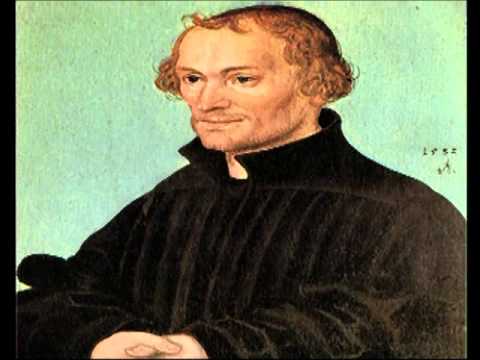
Philip Melanchthon (1497-1560), a leader of the magisterial Reformation in Germany (credit: Wikipedia)

Luther distanced himself from the entire affair, claiming that his conversations with Philip of Hesse were held in the confessional, and that he never counseled his direct approval of Philip’s bigamy. Melanchthon was so scandalized that he physically became ill. The Roman Catholic opponents of the Reformation pounced on Luther, Bucer, and Melanchthon as undermining Christian values.

It would appear that the efforts of the magisterial Reformers, that took the path of political expediency, had backfired. By appearing to endorse Philip of Hesse’s bigamy, the leaders of the Protestant Reformation had lost some of their moral high ground in their efforts to build a “Christian” Europe.

In the end, the results of the whole debacle were mixed. Philip of Hesse got what he wanted, with his bigamous approach to marriage, and kept on supporting the Protestant movement within Germany. But his posture as a Protestant leader was weakened, due to his moral difficulties, and he was forced to try to find a compromise between the Roman Catholic and Protestant Reform movements. A peaceful resolution to the conflict proved to be elusive, and Philip of Hesse suffered defeat, along with other German princes, in the Schmalkaldic War, against the Emperor, Charles V.

For their participation in Philip of Hesse’s marital failure, the Reformers themselves, Luther, Bucer, and Melanchthon, suffered at least some loss of prestige throughout Europe. Surely, it helped to set many traditional Roman Catholics, who were at once on the fence about the Reformation, against the efforts of the magisterial Reformation.

It is difficult to assess how much the bigamy controversy compromised the magisterial Reformation, in the long run, but I can not imagine it helping the situation either. The following centuries, with “Wars of Religion” dividing Protestant and Roman Catholic throughout Europe, showed that the intertwining of theological with political concerns, in late medieval and early modern Europe, would become an extremely bloody affair, leaving a distaste for Christian theological controversy, in Europe, even down to the present day.