Adam Thoroughgood House. An historic colonial home in Virginia Beach, Virginia, but how old is it? (credit: Frances Benjamin Johnston)
I write this post in memory of my dad, who died one year ago today. My dad was a brilliant man, an architectural historian by trade, who inspired in me the desire to pursue the knowledge of the truth, even if that truth might challenge popular convictions. So while there is an application towards Christian apologetics here, I want to frame it within the context of one particular fascinating mystery in the history of colonial Virginia, a mystery that captivated the thought and imagination of my dad….
Let me take you back to Princess Anne County, a few hundred years ago, in the Tidewater of the Virginia Colony…
Adam Thoroughgood was a 17th century English Puritan (roughly equivalent to an evangelical Christian today), who obtained his passage to Virginia as an indentured servant, in the 1620s. After paying off his indentured servitude, Throughgood returned to England, married a wealthy woman, and came back to eastern Virginia, in modern day Virginia Beach, to become one of the most prominent land owners in the colony.
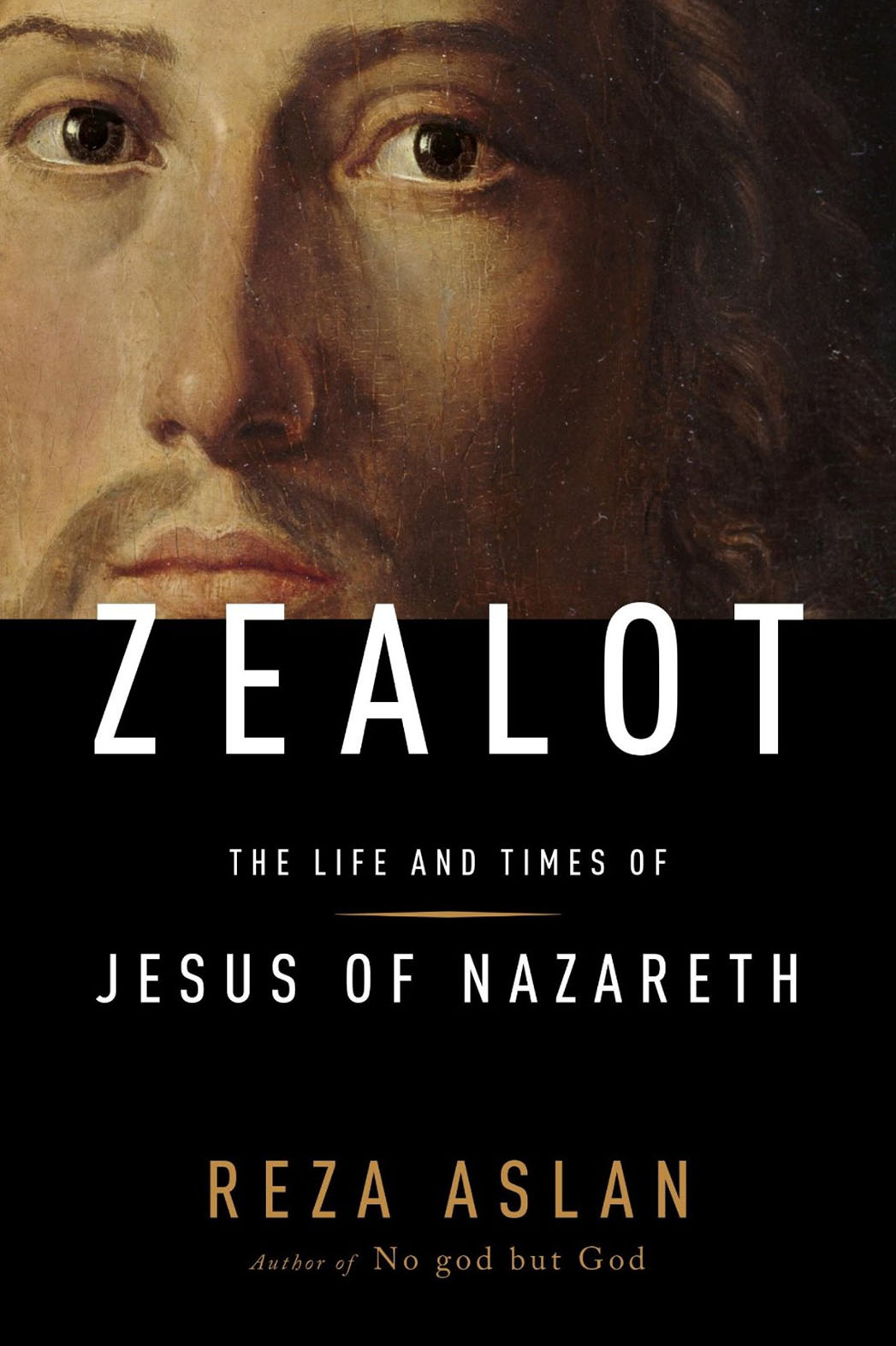
Reza Aslan, film maker and author of Zealot: The Life and Times of Jesus of Nazareth, makes another go at informing(???)/entertaining(???) television audiences about the nature of faith (his last big media splash did not turn out too well).
Reza Aslan came from a somewhat nominally Muslim background before converting to an evangelical Christian faith as a teenager, albeit briefly. Aslan abandoned his newfound faith while attending college in a secularized academic environment, and he now describes himself as a Sufi Muslim. But Aslan’s brand of Sufi Islam is a highly Americanized version of faith that sounds awfully reminiscent of the New Age Movement, and other popular beliefs that contend that all religions are basically the same. In a recent CNN opinion piece, Aslan says:
“My goal — as a scholar, as a person of faith, and now as the host of “Believer” — is to be the linguist, to demonstrate that, while we may speak in different religions, we are, more often than not, often expressing the same faith.”
Aslan’s linguistic demonstration is far from convincing. The problems with Aslan’s statement are multiple, but it is more correct to say that Aslan is a popularizer of scholarship instead, the kind of popularizing where the line between scholarship and entertainment is easily blurred, where ironically much of the scholarship is dated, according to New Testament scholar, Craig Evans. Aslan takes the doctrine of religious pluralistic experimentalism, championed by the late scholar of religions, Huston Smith, quite a bit further. Aslan interviews the kooky and wacky extremes of all various forms of religiosity, in turn subtly opting for some type of vague notion of spirituality, a “roll your own” type of religion, that panders to the individualism of American culture.
That being said, Christians should not be so smug in completely dismissing Reza Aslan outright. According to Becky Castle Miller’s review of Zealot, on the Jesus Creed blog, Aslan ultimately rejected what he thought was historic, orthodox Christianity, when he discovered that his early Bible teachers from his teenage years were wrong. Having observed such irresponsible handling of the Scriptures with young people myself, this type of admission makes me cringe. As with evangelical-turned-agnostic, Bart Ehrman, evangelicals have a lot to learn from Reza Aslan’s story.
Folks, though we as Christians need some admonishment here, we alternatively need not blindly consume what documentary series like these try to dish out for us. Part of me sees that Reza Aslan has a genuine, well-meaning fascination with all things “religious.” But another part of me thinks that Reza Aslan is taking viewers to the zoo, bringing the camera even into the cages to see the “wild animals.” Nevertheless, he eventually goes back to the safety of his sanctuary home in academia, lies down at night, saying to himself, “Man, that was crazy.”
As I have viewed the CNN promo for the series below, billed for the “spiritually curious,” it seems like what Aslan wishes to give us is a rather sensationalist type of theological voyeurism, primed to feed into our culture’s general cynicism towards absolute truth claims.
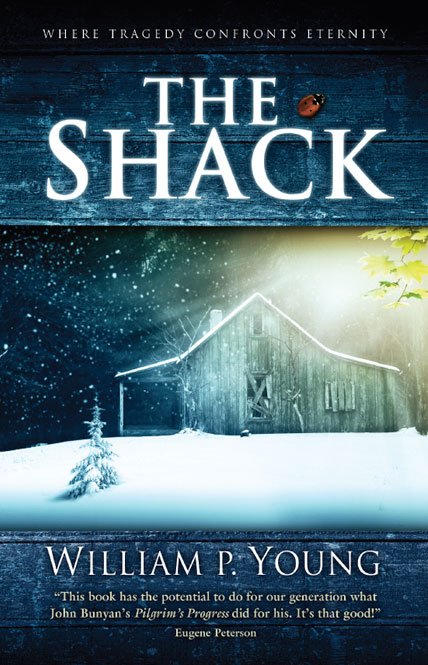
William Paul Young’s New York Times bestselling novel about how a terrible family tragedy led to an encounter with God, is now a movie. But given the controversy over the book, should Christians go see the film?
A few years ago, W. Paul Young’s novel, The Shack, was all the rage among evangelical Christians. “You gotta read this book!”
My concern, about Christian books (and movies) like The Shack, is not their entertainment value. I like a good story. My main problem is about how well the message lines up with Scripture.
I have a confession to make: For years, my understanding of the Trinity was pretty messed up. As a young Christian, I was taught that the relationship between the Father, the Son, and the Holy Spirit was like the different states of water: liquid water, a gas (like water vapor or steam), or a solid (like ice). The problem with this easy-to-understand, yet misleading, analogy is that it follows the treacherous shoreline of modalism, a heresy from the days of the early church. Critics argue that The Shack reinforces this type of erroneous theology. It took me years until I finally engaged in a detailed study of the Scriptures to realize that I was believing a heresy.
I am not alone in my confession, which is partly why the story that Paul Young crafted has resonated so well with people. It fills a void left by our churches that find it difficult to effectively and faithfully communicate certain doctrines of the Bible.
When we read what the Bible has to say about the nature of the Triune God, it is not a topic that you can learn by simply falling off of a log. Sadly, most Christians get their theology from popular books like The Shack, instead of making the investment into an in-depth study of the Scriptures themselves…. and I am just as guilty as the next person.
On the other hand, an engaging story like The Shack can help to stimulate thought that can drive us to investigate what the Bible rightly teaches on the nature of who God is: One God, in Three Persons, as opposed to the modalism view critics contend is portrayed in The Shack; a picture of God as one Person, playing three different Roles in history. To that extent, I would hope that The Shack, the movie, will help motivate folks to really dive into God’s Word, to learn from the Bible, what the truth is, and not settle for anything less. A good book to read after or before viewing movie, like Randal Rauser’s Finding God in the Shack, written by a skilled theologian, can help both the believer and the seeking non-believer process what they see in the movie.
What would be a mistake is to think that spending a night at the movie theater is an adequate substitute for actually reading the Bible, taking a theology class at your Bible-honoring church, and/or having a small group Bible discussion that addresses the topics from the movie. Given the choice between the movie versus reading the Bible, you are much better off cracking open the text of Holy Scripture.
The movie trailer is below, followed by a brief clip from a Ravi Zacharias Q&A session, that summarizes the main positive and negative elements of the book.
For example, yesterday on “Hour 2” of the Eric Metaxas show, Del Tackett was interviewed by Metaxas. Eric Metaxas, a Christian public intellectual, himself is agnostic on the exact meaning of the “days” of Genesis, but he had a very friendly and warm conversation with Del Tackett, who endorses a literal, 24-hour view of the “days” of Genesis 1.
Tackett explains that the film relies on extended interviews with scientific and other experts, to defend the concept of Young Earth Creationism, the belief that the earth is no more than about 6,000 years old, contrary to the mainstream scientific paradigm, that argues that the earth is about 4.5 billion years old. For example, Tackett interviews Hebraist and Semitic language scholar, Steven Boyd, who argues that the plain meaning of a literal, 24-hour day should be taken for each of the six, creational “days” of Genesis. A number of scholars take the view of Dr. Boyd, who is (unsurprisingly) a Young Earth Creationist, but does every scholar agree with this view? Apparently, not.
I decided to ask an Orthodox Jewish friend of mine, to get an answer from a Jewish perspective. After all, Jews and Christians share the Book of Genesis together in their Scriptures. As I expected, Jewish interpretation of the “days” of Genesis mirrors the variety of Christian views on the same topic, and the scholarly disagreements go back hundreds of years, predating the 19th century advent of Darwin’s theory of biological evolution, by a number of centuries.
As it turns out, even though Del Tackett’s list of scholars and scientific experts lean towards the Young Earth side of the debate, at least one of the experts interviewed, philosopher Paul Nelson, associated with the Discovery Institute, now says that Tackett’s Is Genesis History? unfortunately “presents a false dichotomy” and that he “dissents from my role” in the film. The issue for Dr. Nelson is not the age of the earth, but rather, the question of “intelligent design” vs. “no design.”
Mmmmm…..
In the film trailers and in promotional interviews, Del Tackett, has a very homespun, unassuming demeanor, contrary to a lot of rancor this kind of debate often generates within the church, which is quite refreshing. But when I heard Del Tackett talk about soft tissue found in dinosaur fossils, I began to wonder if Del Tackett fully understands views contrary to Young Earth Creationism. So, it remains to be seen whether or not Del Tackett’s Is Genesis History? will serve to provide clarity in this controversial debate, or if it will be an awkward appeal to “alternative facts” that will only confuse believers, who simply want to be able to adequately defend the Bible, in a world that is often hostile to its central, core message.
Biologist Todd Wood: One of the Young Earth Creationist scientists in Is Genesis History? “It is the glory of God to conceal a matter; to search out a matter is the glory of kings. (Prov. 25:2)”, which is Todd’s tagline on his blog.
If you want to find out more about some of the other scientific experts in Is Genesis History?, I would encourage you to first check out the blog for biologist Todd Wood, who this week published a Q&A regarding the film, on his website. Todd Wood understands and appreciates the mainstream scientific consensus, but he consciously adopts a worldview aligned with his Young Earth Creationist interpretation of the first few chapters of Genesis. Todd Wood is crazy smart, and quite likable, in my mind, even if he is more narrow in his beliefs. Whether or not Dr. Wood is able to come up with a viable scientific model, in which his hypotheses can be tested, a difficulty he readily admits, is another matter.
UPDATE: March 1, 2017
Here is another review from BioLogos. It would be great somehow if BioLogos and AnswersInGenesis were able to sit down and have a conversation together:
Gregg Davidson, an evangelical Christian and a geologist, and others, respond to some of Steve Austin’s comments in the most early part of the film (as seen on the film trailer, too), that suggests that geologists are abandoning the prevailing theory of long ages for the formation of the Grand Canyon. Steve Austin is a Young Earth Creationist scientist, and Davidson and his co-authors in this essay dispute Austin’s explanation based on actual evidence, while nevertheless affirming that “Our worldview is based on a belief that the Bible is true – cover to cover, from Gen. 1:1 to Rev. 22:21“
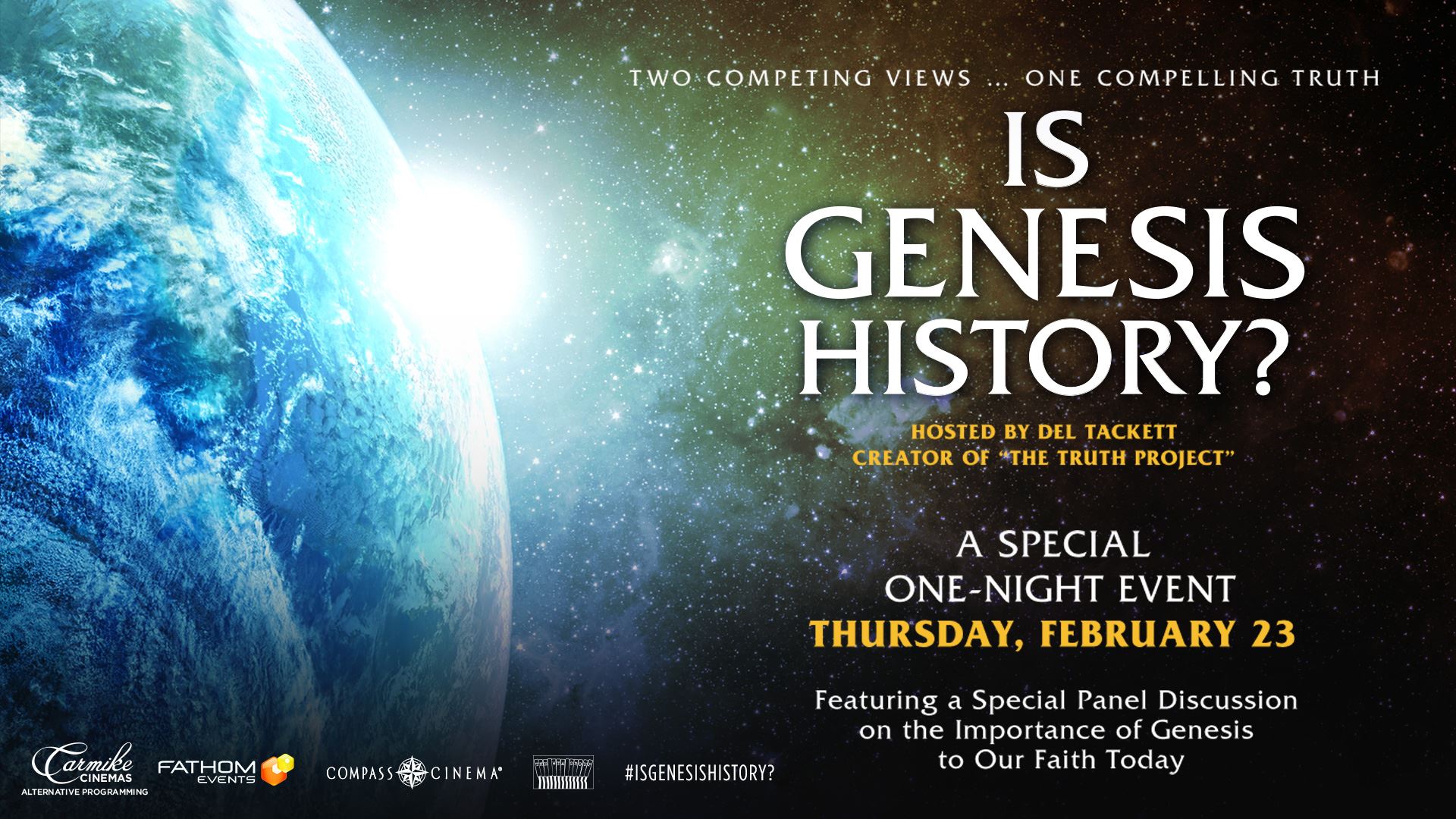
I recently received an email from a local church promoting a new film, in theaters for only one night, February 23, 2017, Is Genesis History?The film is a project of Del Tackett, the creator of “The Truth Project” small-group educational series, distributed by Focus on the Family. Focus on the Family has been a very influential Christian organization, dedicated to helping families struggling against the detrimental influence of the surrounding secular culture. The Adventures in Odyssey radio broadcast, produced by Focus on the Family, is a favorite resource of mine!
When Focus on the Family originally promoted Del Tackett’s, “The Truth Project” in 2004, Christians in many churches, including my own, went through the 12-week, DVD-based curriculum, impacting some 12 million people all over the world. The series was well received by many believers, as a beneficial aid to help Christians develop a more Biblical worldview.
However, I have known a number of other, respected Christian friends who have gone through that curriculum, but who walked away from it with some misgivings. Del Tackett, the instructor on that series, had many good teachings in several areas, but regarding some topics, Tackett’s critics have thought that his approach was myopically opinionated and too narrow. Too get a flavor of this criticism, there is a Christian website, that I have found helpful, “The Truth Problem,” that extensively addresses some of the problems with “The Truth Project.”
So, when I saw the advertisement for Del Tackett’s new film, I thought I should review some of the advance material, and find out what it is all about. I am glad I did, as I have some concerns. Here is the film’s trailer:
What is Del Tackett’s “Is Genesis History?” All About?
An analogy from current events might be of assistance when it comes to evaluating Del Tackett’s Is Genesis History? Cultural commentators have grabbed onto the politically-charged phrase of “alternative facts” to describe the type of world we live in, in 2017. Speaking of “alternative facts,” among those who defend the concept behind the phrase, implies that there are facts out there that are routinely suppressed or ignored by the media, academia, or other sources of supposedly trusted information. To resist against this trend, we are urged to become more exposed to considering “alternative” views.
However, for others, “alternative facts” is just a form of Orwellian double-speak, a fancy way for distorting and obfuscating the true reality of things, exchanging the truth for a lie.
Sorting out exactly what are “alternative facts,” and how they relate to “true facts,” can get rather confusing. Who do you trust? To dispel the anxiety, we can simply turn off our TV, with its 24-hour news cycle, and our social media feeds. But when it comes to how Christians understand the Bible and its theology, the stakes are much higher. What correctly constitutes “true facts” can have eternal consequences, and thus, this discussion can not be taken lightly.
If you carefully observe the Is Genesis History? movie trailer, you will sense that Del Tackett is making an appeal to consider his narrative of “alternative facts.” In a recent interview, Del Tackett states:
“Evangelicals have a tendency to read Genesis in the historical narrative as it was written. And they want to read it that way. But the hierarchy within evangelical Christianity is increasingly persuaded by a deep-time paradigm. And that deep-time paradigm does not lend itself to the historical reading of Genesis. …. It deeply concerns me, because I’m a worldview guy. That’s the call right now on my life – to do everything I can to help the body of Christ get healthy. Well, a biblical worldview is rooted in Genesis.”
Del Tackett has his concerns with negative trends in the church, and some of them are properly justified. Many Christians do lack a healthy, Biblical worldview. But are there any concerns about what Del Tackett himself is proposing? Let us take a look.
What Is Del Tackett Proposing?
According to the promotional material, Is Genesis History? seeks to provide a new look at the evidence supporting Creation and the Flood. But it is important to realize that Del Tackett is putting forward one particular view as to what this means, namely a Young Earth, of no more than about 6,000 years old, and a global Flood in Noah’s day, covering the entire planet.
In the byline for the film, Tackett notes that there are “two competing views… one compelling truth.” The problem here is that Tackett is oversimplifying what is indeed the case among evangelical Christians, just from viewing the film highlight clips on the movie’s YouTube channel. There are actually more than “two” views to consider. For Tackett, the one view he advocates for rejects the concept of “deep time,” the modern scientific consensus of a 4.5 billion year old earth, that helps to explain the origin of our planet and its universe, within the scientific disciplines of geology, astronomy, physics, chemistry, biology, and others, as taught in every American public school and public science museum.
For Tackett, this “deep time” paradigm strikes disaster at the very heart of a Biblical worldview, and specifically the meaning of the cosmic Fall, as taught in the Book of Genesis. There are many skeptical, non-Christian scientists and thinkers who would agree, thereby rejecting the Bible. However, there are also a number of other Christian pastors, Bible teachers, theologians, and believing evangelical scientists who find no difficulty reconciling the concept of “deep time,” with an authoritative, inerrant view of the Bible and its teachings.
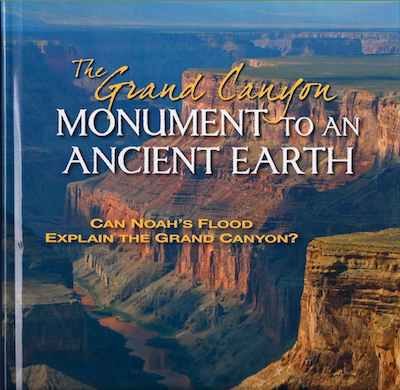
The Grand Canyon: Monument to an Ancient Earth: Can Noah’s Flood Explain the Grand Canyon? is a beautiful new book, with lots of great photography, that makes the point that the fossil record in the canyon shows that the distribution of different animal remains are found in distinct, orderly layers. In the radical turbulence proposed by the alternative, global flood model, we would expect animal remains to be jumbled around in the fossil record. However, unlike what Del Tackett’s experts insist, this expectation is contrary to actual, geological observations.
The film has just enough scientific jargon to convince you that there is real science going on here, but not too much to overwhelm those who are freaked out by science lingo. If you examine the names of the scientific experts Tackett uses in his film, it reads like a virtual “Who’s Who” of the Young Earth Creationist scientific community. These are indeed really smart and brilliant people, with PhDs to back up their work. These experts are no “dummies,” and several of them are known for their irenic disposition towards other Christians who view this issue differently. Based on those film trailers, Del Tackett does not appear to be attacking other Christians who do not share his perspective. However, you will not see a single Old Earth Creationist, nor a single Evolutionary Creationist, interviewed or listed in the credits for Is Genesis History? Not a single one.
Therefore, a lingering question remains: Is the scientific evidence truly there to support Tackett’s claim, overthrowing the reigning paradigm of millions of years of “deep time,” with respect to earth’s origins? Well, if there really is, and folks like Tackett and the scientists he interviews could produce it, then such folks would be considered as heroes and superstars in the scientific community, presumably winning Nobel Prizes right and left. If such evidence can be amassed by Tackett’s scientific collaborators to tell a convincing story to overturn “deep time,” well, then, more power to them! But to date, such a movement to overthrow the current paradigm has yet to emerge in a compelling manner.
But What Difference Does This Really Make?… (and Does It Really Help, or Confuse?)
Del Tackett is quite a gifted and compelling communicator, and he is to be commended for his intended efforts to help Christians develop a more Biblical worldview, to face up to the challenges presented by a contemporary culture, that seeks to undermine the Bible and its authority. However, we can only defend such a Biblical worldview built upon a stable foundation, and not on the shifting sand of speculative Bible interpretations.
For example, the physical evidence for the Big Bang is overwhelming, and this great scientific discovery is consistent with the idea that there indeed was a beginning, just as the Bible teaches. Also, the physical evidence for a large, yet non-global flood in the Ancient Near East, that could have wiped out all of the known, sinful humanity at the time, is perfectly consistent with an extensively catastrophic event, that demonstrates God’s judgment against the humanity of Noah’s day, just as the Bible teaches. Nevertheless, Young Earth Creationism rejects both the ideas of the Big Bang, as well as a large local flood for Noah’s flood, as contrary to their interpretation of Scripture, so it really leaves me scratching my head. Is Del Tackett stirring up controversy where none is needed?
Defending the faith against the onslaught of secularism is difficult enough as it is, without adding the extra burden of trying to dismantle the idea of “deep time” in the sciences. Del Tackett’s efforts to philosophically tackle “deep time” might be theologically correct, but it really is a massively long shot when trying to sync this idea with modern science.
The philosophical presuppositions shared by Del Tackett and his scientific collaborators in the film can be quite heady and elusive to grasp. So, my greatest concern is that uninformed Christians who see the film might be drawn to embrace a form of pseudoscience, one that can not withstand the most rigorous critical scrutiny, when faith is put under pressure. Is Del Tackett really giving his film viewers reliable, intellectual weapons to defend the faith, or will those same weapons fail the Christian, when put to the test?
Should a Christian go see the film? Sure. Go see it in on February 23rd. Del Tackett’s view deserves philosophical and theological consideration, if you have never considered it before. Make up your own mind. Just remember that Del Tackett is only giving you one particular Christian view, his version of “alternative facts,” and he is not giving you different Christian perspectives, that line up better with the modern scientific consensus, to adequately compare and consider.
If you do want to see how Del Tackett presents his views among other Christians, who are not convinced by his arguments, you should consider viewing this dialogue between Del Tackett and others, particularly theologian R. C. Sproul, Intelligent Design science advocate Stephen C. Meyer, and theologian Michael Horton. Otherwise, be careful in how you evaluate Del Tackett’s “alternative facts” in Is Genesis History?
Note: I attempted to contact Del Tackett via email at deltackett.com, asking him to answer some of the concerns I had with Is Genesis History?, and after several weeks, I received no response. As the film is being heavily promoted in our area, I sensed it imperative to get the word out via this blog post, and urge Christians to apply principles of discernment. …… With respect to Del Tackett’s “The Truth Project,” I have not viewed the entire series myself, and perhaps someday, I will have the time to watch all of the sessions, and then develop my own, informed opinion. But based on some of the other informed reviews available, it would appear that for all of the good work Del Tackett has done, there are enough missed opportunities for promoting a wider-range discussion, that such deficiencies take away from “The Truth Project”‘s overall effectiveness. For more analysis of Del Tackett’s work in “The Truth Project”: a review from a progressive evangelical apologist, Randal Rauser, or from a dispensational-Arminian perspective at the Berean Call. Del Tackett definitely has his critics from across the evangelical spectrum.






 Veracity