Tag Archives: Protestant Reformation

Reformation: R. C. Sproul

R.C. Sproul (1939-2017), on camera, recording one his many Ligonier conference sessions, back in 1985 (photo credit: Ligonier Ministries).

Robert Charles Sproul, known to most people as “R. C.,” was one of the most influential theologians in 20th/21st century evangelical Christianity. A primary architect of the 1970’s Chicago Statement on Biblical Inerrancy, and an outspoken critic of the 1990’s dialogue statement between evangelicals and Roman Catholics, Evangelicals and Catholics Together, Sproul was first and foremost a Bible teacher, whose passion was to help Christians integrate their thought life with the teachings of Scripture.

I first heard of R. C. Sproul when a friend handed me a set of cassette tapes, on the relationship between modern philosophy and Christianity. Sproul had given these talks at various retreats held at Ligonier Valley, a study center Sproul had founded, near Pittsburgh, Pennsylvania. As a young believer, I was blown away at how articulate R. C. Sproul was in addressing the type of intellectual challenges I was facing in college.

Not too many Christian Bible teachers were doing this at the time. R. C. Sproul was against efforts within the evangelical church to “dumb-down” the Gospel message. Every Christian, not just professional pastors, needed to know the basics of theology, and he had the gift of taking difficult theological concepts and making them understandable to the average believer.

R. C. Sproul had zero interest in God, and plenty of interest in sports, until he got to college. He became a believer in college, and eventually studied theology under John Gerstner, at Pittsburgh Theological Seminary. At first, Sproul resisted the Reformed theology of Gerstner, making himself into a “pest,” but he gradually came around to Gerstner’s perspective. Later, Sproul pursued doctoral studies under the preeminent Dutch scholar, G. C. Berkouwer, in Amsterdam. The Ligonier ministry was moved to Orlando in the mid-1980s, sponsoring dozens and dozens of weekend and week-long conferences. He was able to pass the leadership of Ligonier Ministries, along with a magazine he had founded, Table Talk, and his Renewing Your Mind radio program and podcast to a new generation of teachers. Over his half century of ministry, R. C. Sproul lived a life of impeccable integrity.

As an ardent Calvinist, R. C. Sproul nevertheless had his critics. He left the mainline Presbyterian church (the PCUSA), over concerns of a drift towards liberal theology. He joined the younger, more conservative, Presbyterian Church of America (PCA) in the 1970s, identifying himself as an heir to the Reformed tradition of the 1648 Westminster Confession of Faith, to the chagrin of other evangelicals who would embrace “believer’s baptism” only, or elements of Arminian theology. Others criticized him for not taking a firm stand regarding the age of the earth, with respect to the doctrine of creation, while others accused him of holding to “replacement theology,” by his not taking a stronger stand to support national Israel’s role in biblical prophecy. He was drawn to taking a more preterist view of the Book of Revelation, that suggests that many events described in that book of the Bible have already taken place, to the consternation of many evangelical futurists, who see most of Revelation being fulfilled in the End Times. Sproul publicly rebuked the late theologian, Clark Pinnock, for the latter’s advocacy of the controversial doctrine of open theism. Some thought Sproul was too heady, in promoting theology, at the expense of practical spirituality. However,  R. C. Sproul resisted pressures by other evangelical leaders, to make political statements, preferring to stick to his core themes of teaching Christian theology and apologetics.

It is fitting that R. C. Sproul would finish his earthly life in the year of the 500th anniversary of the start of the Protestant Reformation. R.C. Sproul loved to tell the story of Martin Luther’s encounter with Rome, generally marked by the year 1517, with Luther’s Ninety-Five Theses. Sproul saw in Luther’s theology the missing ingredient in much of evangelical thought and life today, a consciousness of the holiness and sovereignty of God. If there was one note that R.C. Sproul sang loudly and sang well, it would be to call the church back to God’s sovereignty and The Holiness of God, the title for perhaps his most important book.

R. C. Sproul was truly a man of the Reformation. He is remembered here at Ligonier Ministries, and with this obituary at The Gospel Coalition. Below is a video set of snapshots of Sproul, over the years, teaching on his favorite subject, the imputation of the righteousness of Christ (check out that head of hair!!).

How the Reformation (Almost) Killed Christmas

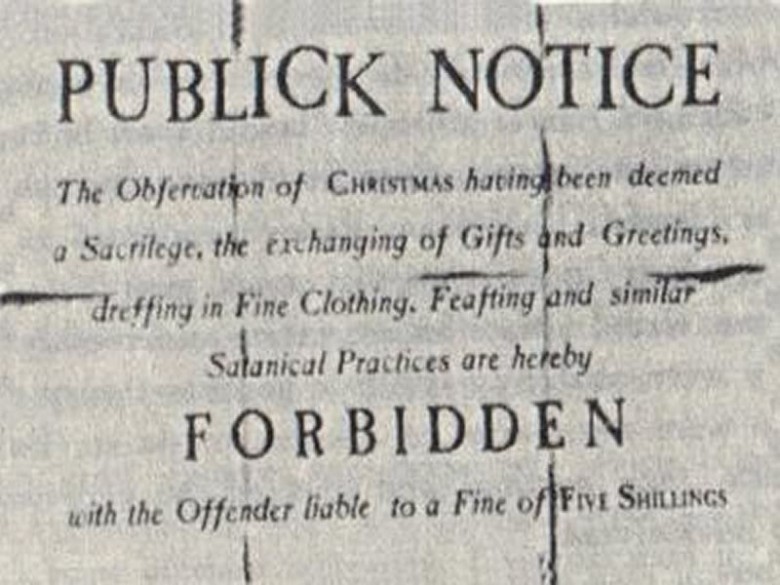
New England Puritans, in 1659, sought to ban Christmas celebrations, as they were thought to be “Satanic practices.” Only the most contrarian Christians are that severe today. How did Christmas win against Puritan opposition?

It was Christmas Day, 1550, in Geneva, Switzerland. A larger than usual crowd gathered at church that day, and the preacher, John Calvin, was rather annoyed.

“Now I see here today more people than I am accustomed to having at the sermon. Why is that? It is Christmas Day. And who told you this? You poor beasts. That is a fitting euphemism for all of you who have come here today to honor Noel.”

Calvin was not exactly trying to be like Charles Dickens’ Scrooge. Instead, he was bothered that so many of his church people were so superstitious, that they thought Christmas to be more important than the weekly Lord’s Day gatherings, held every Sunday. Calvin would be appalled by the contemporary practice of keeping shops open on Sundays, while closing those same shops on Christmas!

Calvin was not alone in his suspicions about Christmas, with some seeking to kill Christmas altogether. From Ulrich Zwingli’s Zurich, Switzerland, to the post-Elizabethan era of English Puritanism, in the early 17th century, many in the Reformation movement sought to abolish all feast and saints holy days… including Christmas.  The Bible gave no command and made no explicit provision for celebrating Christmas, and the Roman Catholic practice of celebrating Christmas was associated with so many superstitious beliefs (kissing under the mistletoe?), that it was better to be rid of all things that even hinted at “ole’ Saint Nick.” Even in colonial America, the Puritan settlers of New England sought to ban Christmas celebrations outright.

On the other hand, the German Reformer, Martin Luther, was one of the holdouts, who liked keeping Christmas traditions. Since the Bible never specifically prohibited Christmas celebrations, he saw no reason to forbid them. Luther gave his children toys and honey cakes on Christmas day. He popularized the Christmas tree. But for the English forebearers of Protestant reform, inspired by those like Geneva’s John Calvin, few Bible preachers and teachers on the British Isles cared that much for Christmas.

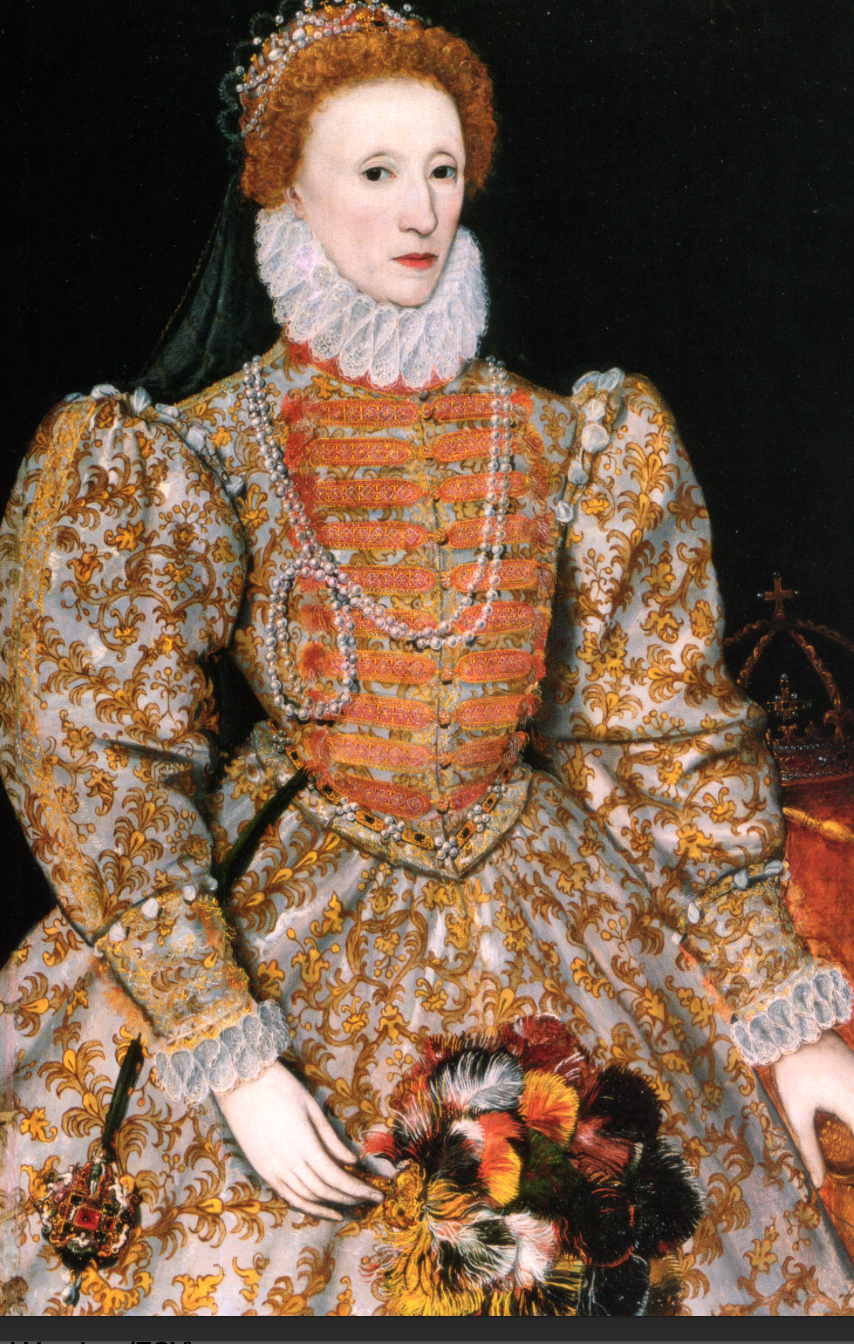
It was mainly during the long reign of Elizabeth I, the 16th century “Virgin Queen,” that Christmas managed to hang on, and even flourish, among the Protestant English. Christmas was a festive time at Elizabeth’s court.

Elizabeth I of England (1533-1603). The queen who saved Christmas for English Christians.

Elizabeth was determined to steer a middle course between the traditionalism of Roman Catholicism, which she abhorred, and the exuberant, reform-minded preaching of the Puritans, who wanted to strip the legacy of choral music, candles, and visual arts from the churches. The 1559 Elizabethan Settlement sought to marry Protestant theology with a collection of traditional, Roman Catholic worship practices. Elizabeth’s Protestant, yet not-so-rigid faith, gave space for the continued celebration of Christmas, during the tumult of the 16th century Reformation. Despite the efforts by Puritan partisans, to stamp out Romish traditions, the English populace loved Christmas.

By the late 18th and early 19th centuries, the red hot conflict between Protestantism and Roman Catholicism had finally begun to cool somewhat, and the Elizabethan embrace of Christmas eventually won over even ardently skeptical Bible-believers. The less confessionally-oriented growth of the evangelical movement, started by popular evangelists, like George Whitfield and John Wesley, made it possible once more for enthusiastic Protestants to consider Christmas as a genuinely Christian celebration, among English-speaking peoples. Towards the end of the 19th century, the popularity of English Christmas carols, ranging from “I Heard the Bells on Christmas Day,” to “O Holy Night,” to “Go Tell It on the Mountain,” helped to cement the reception of Christmas among English-speaking Christians.

Christmas did not merely survive. It thrived.

I am very much a child of the Reformation, sola fide, sola gratia, and all of the rest. Yet even though I do get rather burned out on the barrage of Christmas carols on the radio and in shopping malls, by about mid-December, I am nevertheless thankful that the Protestant Reformation did not ultimately succeed in killing off Christmas. In our increasingly secular American society, Christmas is still a festive time of year, where even the most skeptical non-believers are willing to enjoy a Christian celebration. Sure, many have no real understanding of the meaning of Christmas. Yet some are open to discuss spiritual things. Thanks to folks like Martin Luther (for Germans) and Queen Elizabeth I (for the English), the season of Christmas remains a time of year where we can focus on the mystery of God’s incarnate mission and presence on earth, through Jesus Christ.

Merry Christmas!

For a broader look at the “War on Christmas” in history, read this Veracity posting from a few years ago. The above blog post was inspired by reading David Swartz’s post, on the same topic, at the Anxious Bench blog.

The Williamsburg Inn, at Colonial Williamsburg’s Grand Illumination, 2017, celebrating the coming of the Christ, during the Christmas Advent season.


Lady Jane Grey: A Protestant Martyr

Though the legendary 1833 portrait, by French Romantic artist Paul Delaroche, is somewhat sensationalized, the story of Lady Jane Grey’s execution reveals a young woman with great faith in Christ.

The history of the Reformation was written largely by men, about men. But women often played a crucial role in the spiritual turmoil of 16th century Western Europe. What led to the execution of Lady Jane Grey is one of those stories.

King Henry VIII made it his life goal to obtain a male heir to the English throne. He finally had one son, Edward, who did succeed him. But Edward VI suffered terrible health problems, and he died at age 15, in 1553, after serving as king only since the age of 9.

Anticipating the worst ahead of time, Henry VIII had made provision that his oldest daughter, Mary, would succeed Edward VI, in the event Edward’s illnesses might eventually shorten his life. But young Edward VI had other ideas of his own.

Edward VI had been raised by Protestant tutors, and he firmly held to an evangelical faith. His older half-sister, Mary, was a devoted Catholic. Edward VI did not want England to be ruled by a Catholic queen. He did have a cousin, not too much older than himself, who might be a better fit for Protestant England. Lady Jane Grey had received an education similar to Edward’s, sharing his firm Protestant faith.

Edward’s adult Protestant advisors had steered the Church of England away from Roman Catholicism, in a more Reformed, Protestant direction. Edward feared that Mary would undo these changes, and he had good reason for his fears. He trusted that Lady Jane would keep England on a Protestant course, so he made arrangements for Lady Jane to succeed him, upon his death.

Mary I, Catholic queen of England, who cut short the reign of Lady Jane Grey.

Lady Jane Grey became queen, once Edward die. But the political bickering erupted, and she did not remain queen for long. The young teenage queen had become a pawn in the hands of those who sought great power and influence. Mary, recalling her father’s wishes, asserted her right to become queen. In less than a couple of weeks, Lady Jane Grey had been deposed, and imprisoned in the Tower of London.

However, this is where the story takes on a more spiritual, rather than political, significance. Lady Jane Grey was directly opposed to Mary’s Catholicism. Viewing Lady Jane as a threat, Mary sought to have Lady Jane executed. But in hopes of persuading Lady Jane to disabuse herself of her Protestant ideas, Mary sent her personal chaplain, a man named Fecknam, to go see Lady Jane Grey, to see if she might recant and return to Catholicism. John Foxe, in his Book of Martyrs, recalls the record of the conversation that took place.

            Fecknam.–“What is … required of a Christian man?”

            Jane.–“That he should believe in God the Father, the Son, and the Holy Ghost, three persons and one God.”

            Fecknam.–“What? Is there nothing else to be required or looked for in a Christian, but to believe in him?”

            Jane.–“Yes, we must love him with all our heart, with all our soul, and with all our mind, and our neighbour as ourself.”

            Fecknam.–“Why? then faith justifieth not, nor saveth not.”

            Jane.–“Yes verily, faith, as Paul saith, only justifieth.”

            Fecknam.–“Why? St. Paul saith, If I have all faith without love, it is nothing.”

            Jane.–“True it is; for how can I love him whom I trust not, or how can I trust him whom I love not? Faith and love go both together, and yet love is comprehended in faith.”

When Fecknam quizzed Jane on the subject of the Lord’s Supper, she responded with equal firmness:

            Jane. The sacrament of the Lord’s supper, offered unto me, is a sure seal and testimony that I am, by the blood of Christ, which he shed for me on the cross, made partaker of the everlasting kingdom.”

            Fecknam.” Why? what do you receive in that sacrament? Do you not receive the very body and blood of Christ?”

            Jane.–“No surely, I do not so believe. I think that at the supper I neither receive flesh nor blood, but bread and wine: which bread when it is broken, and the wine when it is drunken, put me in remembrance how that for my sins the body of Christ was broken, and his blood shed on the cross; and with that bread and wine I receive the benefits that come by the breaking of his body, and shedding of his blood, for our sins on the cross.”

            Fecknam.–“Why, doth not Christ speak these words, Take, eat, this is my body? Require you any plainer words? Doth he not say, it is his body?”

            Jane.–“I grant he saith so; and so he saith, I am the vine, I am the door; but he is never the more for that the door or the vine. Doth not St. Paul say, He calleth things that are not, as though they were? God forbid that I should say, that I eat the very natural body and blood of Christ: for then either I should pluck away my redemption, or else there were two bodies, or two Christs. One body was tormented on the cross, and if they did eat another body, then had he two bodies: or if his body were eaten, then was it not broken upon the cross; or if it were broken upon the cross, it was not eaten of his disciples.”

Fecknam was unable to persuade the 16 year old teenager to reconsider, and finally gave up.

After this, Fecknam took his leave, saying, that he was sorry for her: “For I am sure,” quoth he, “that we two shall never meet.”

            Jane.–“True it is,” said she, “that we shall never meet, except God turn your heart; for I am assured, unless you repent and turn to God, you are in an evil case. And I pray God, in the bowels of his mercy, to send you his Holy Spirit; for he hath given you his great gift of utterance, if it pleased him also to open the eyes of your heart.”

Two days later, Lady Jane Grey was led to the scaffold, where she recited Psalm 51. She handed off her prayer book to another person, and then received the blindfold. Unable to see, she was not able to reach out to the executioner’s stone block. Fecknam himself is said to have assisted her, in placing her hands on the block, as she laid her neck upon the stone. The axe ended her life just moments later.


John Calvin and the Servetus Affair

John Calvin (1509-1564)

For some people, when they think of John Calvin, they think of predestination. Specifically, it would be the doctrine of double predestination, popularized by later followers of Calvin, whereby God elects some for salvation, and others for damnation. But in many quarters, Calvin is remembered differently, some negatively and to others, most positively (Listen to John Piper’s poem extolling “The Calvinist”). Continue reading


What is the Apocrypha? (In Six Minutes)

Why are Protestant Bibles shorter than Roman Catholic Bibles? Bible scholar Bill Mounce explains why in less than six minutes. I have to note one small correction to Dr. Mounce in the video, in that while much of the Apocrypha was written in Greek, not all of it was. Some books of the Apocrypha were written in Hebrew, some in Aramaic, and some we do not know for sure. But those Apocryphal works in the Septuagint were all translated into Greek. Either way, after the fall of Jerusalem in 70 A.D., most Jews rejected the Apocryphal books of the Old Testament as being on par with the rest of Scripture.
