Tag Archives: Personal Discipleship

Do We Need Arguments for God’s Existence?

Stargazing

Stargazing in the Tyrolean Alps. Photograph by Torsten Muehlbacher, National Geographic Your Shot

Poll results consistently show that approximately three-quarters of American adults believe in God, with some polls reporting more than 90 percent belief. Given such a strong majority, what is the value of studying arguments for the existence of God? Far fewer people believe that Jesus is the only way, or that the Resurrection was an actual, historical event. Why not concentrate on apologetic arguments targeted at religious pluralism or historical evidence for the Resurrection?

Simply this. There are powerful arguments for the existence of God, and the value of learning these arguments is not limited to being able to defend theism against the minority of adults who believe atheism is true. Studying these arguments can produce strong reinforcement of the Christian faith, and a much deeper appreciation for the nature, power, and character of God.

A more insightful question might be, “Why are there so many Christians who have never heard or considered the classical arguments for the existence of God?” Continue reading


Personal Discipleship: Apologetic Reasoning

Week 4, Apologetic Reasoning

Click on the images inside this file to link to the online resources. (You may need to adjust your browser settings to allow the links to work, or open it in iBooks, or save it to your desktop and open it with Acrobat Reader.)

For those attending or following our personal discipleship class, here are the slides from this week’s session on apologetic reasoning.

The slides contain hyperlinks to videos and related material. In terms of resources, the most useful item might be the link to the 2015 Veracity’s Top 10 Scorers List. If you want a good grounding in apologetics, study these apologists, professors, theologians, philosophers, and authors.


Veracity’s Top 10 Scorers, 2015 Edition

Veracity's Top Scorer Award

It’s time again for that most prized of all personal discipleship honors, Veracity’s Top 10 Scorer Awards. (I know, I know…I can hardly stand the excitement either!)

There are lots of great resources for personal discipleship on the web and in bookstores, but these are the sources Clarke and I cite most frequently, and for good reason. They are the players who consistently “put the puck in the net.” No skating around the issues—just on-target discipleship. We listen to their podcasts, read their books, watch their debates, and benefit greatly from their teaching and personal examples. We don’t agree with everything each of them says or believes, and they wouldn’t want us to. But we are blessed by having studied them. They are, in our opinion, among the most influential proponents of the Christian faith today.

This year’s list includes pastors, philosophers, professors, theologians, apologists, an astrophysicist, several world-class scholars, some exceptionally gifted teachers, and a cop. (As in the past there are more than 10 winners on our Top 10 Scorers list because they all deserve the award.) Continue reading


Stephen Colbert’s Approach to Skepticism

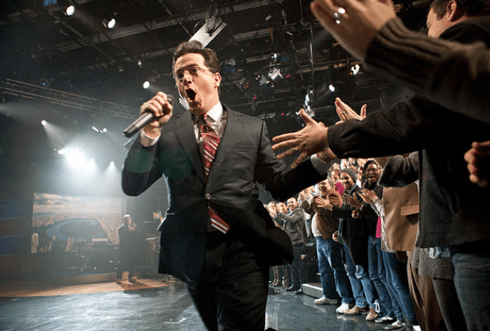
Stephen Colbert

Stephen Colbert (Photo Credit: Todd Heisler/The New York Times)

 In 1974, when Colbert was 10, his father, a doctor, and his brothers Peter and Paul, the two closest to him in age, died in a plane crash while flying to a prep school in New England. “There’s a common explanation that profound sadness leads to someone’s becoming a comedian, but I’m not sure that’s a proven equation in my case,” he told me. “I’m not bitter about what happened to me as a child, and my mother was instrumental in keeping me from being so.” He added, in a tone so humble and sincere that his character would never have used it: “She taught me to be grateful for my life regardless of what that entailed, and that’s directly related to the image of Christ on the cross and the example of sacrifice that he gave us. What she taught me is that the deliverance God offers you from pain is not no pain — it’s that the pain is actually a gift. What’s the option? God doesn’t really give you another choice.”

Charles McGrath, “How Many Stephen Colberts Are There?” (New York Times, January 4, 2012)

In Clarke’s post on today’s most influential skeptics, he listed Richard Dawkins, Bill Nye, Neil deGrasse Tyson, Bart Ehrman and Bill Maher as models of certain types of skepticism. All of them have wide spheres of influence gained through publishing and/or media exposure. Three of them have hosted their own television shows. All of them are intelligent, most are witty, and some have intellectual adversaries. But before we see how Daniel B. Wallace refutes the theories of Bart Ehrman, or how William Lane Craig can give Richard Dawkins a dressing down, let’s see what Stephen Colbert can do with them.

Huh? Stephen Colbert? Really? Okay…cards on the table—I’ve never watched the Colbert Report, probably because sarcasm has never been one of my favorite flavors. But in looking for online material about today’s most influential skeptics, I tripped across several Stephen Colbert video interviews where he took on these very skeptics. Colbert’s comedy can go blue in an instant, and his language at times is inappropriate for genteel company, but his wit is undeniably sharp. And as you may infer from the New York Times excerpt at the beginning of this post, there is a lot more going on with Stephen Colbert than his on-air persona might indicate.

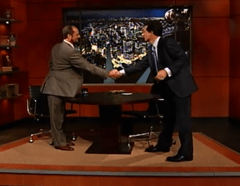
Anyway, here are some cleverly complex interviews where Colbert takes on the skeptics. There is real tradecraft here—he confronts the skeptics boldly without humiliating them. Most of these guests show up for multiple appearances (he interviewed Richard Dawkins and Bart Ehrman twice, and Neil deGrasse Tyson nine times). Some of his quips poke fun at shallow arguments for the very epistemology Colbert seeks to support, while demonstrating an insightful appreciation for apologetic arguments and contemporary skepticism. As W.C. Fields once quipped, “Comedy is serious business.” (Click through to start the video clips, and sensitive ears may want to opt out at this point.)

HT: Stephen Colbert, Clarke Morledge

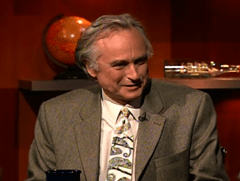
Richard Dawkins, The God Delusion Interview

Richard Dawkins, The God Delusion Interview

Richard Dawkins, The Greatest Show On Earth

Richard Dawkins, The Greatest Show On Earth Interview

Bart Ehrman, Misquoting Jesus Interview

Bart Ehrman, Misquoting Jesus Interview

Bart Ehrman, yyy

Bart Ehrman, Jesus Interrupted Interview


Keeping It Real

Personal Discipleship Week 2

Click on the images inside this file to link to the online resources. (You may need to adjust your browser settings to allow the links to work, or open it in iBooks, or save it to your desktop and open it with Acrobat Reader.)

(Note: For those interested in the calculations for the precise dating of the first Easter, here is the link to the paper Dr. Ken Petzinger shared with our Personal Discipleship class.)

Truth is not relative. Truth is not—as Ogden Nash so eloquently wrote—that “people believe what they believe they believe.” Truth is not dogma. It is not—as Ravi Zacharias argues—logically inconsistent, empirically inadequate, or experientially irrelevant. Truth is incredibly important. Truth is the reason Jesus Christ was born and came into the world.

“In fact, for this reason I was born, and for this I came into the world, to testify to the truth.”
John 18:37c (NIV84)

Okay, okay…Why spend time studying ‘truth’? People who harp on ‘truth’ make me nervous (and sometimes nauseous). Sometimes dangerous ideologies are launched on malformed or manipulative notions of truth. Got it. But objective truth is the proper basis for personal discipleship. Without objective truth, the door is open to wield the Bible as a weapon, perverting the very purpose of Divine revelation. Without objective truth one can hold up the Bible and say with a clear conscience, “The Bible says it, I believe it, that settles it!” (New Testament scholar Daniel Wallace calls this attitude “bumper sticker theology.”) Among many other problems, that approach has a glaring flaw—an inherent internal focus. In other words, “that settles it (for me).”

Those who ascribe to a “that settles it (for me)” approach to the Bible tend to miss the beauty that comes from understanding how well it can withstand objective, historical, logical, philosophical, and (yes) scientific scrutiny. It takes a great deal of effort to “work out your own salvation with fear and trembling” (Philippians 2:12), but the juice is worth the squeeze.

We don’t tell people what to think on Veracity, but we’re not afraid to share opinions. Rather than sticking our heads in the sand and ignoring challenges to the Bible and the Christian faith, why not take a hard look at these challenges and study the appropriate responses? Could it be that the reason some Christians are unwilling to address atheistic or skeptical objections is that, deep down, they fear the answers might be inadequate? Why upset the applecart when it is settled (for me)? Could it be laziness or complacency?

With objective truth as the basis for personal discipleship, our studies can become rich and full of awesome discoveries. Without it we’re apt to flounder, or even end up spiritually bankrupt. Okay, enough of my testimony.

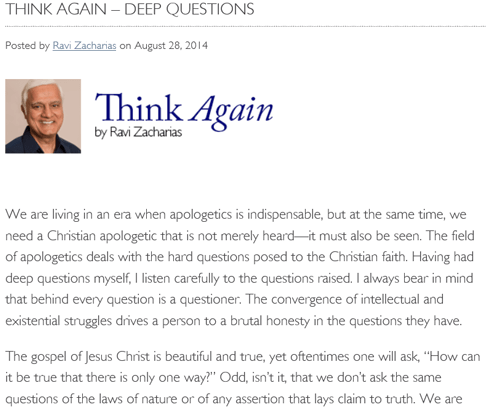
“The gospel of Jesus Christ is beautiful and true, yet oftentimes one will ask, “How can it be true that there is only one way?” Odd, isn’t it, that we don’t ask the same questions of the laws of nature or of any assertion that lays claim to truth. We are discomfited by the fact that truth, by definition, is exclusive. That is what truth claims are at their core. To make an assertion is to deny its opposite. Rather than complain that there is only one way, shouldn’t we be delighted that there is one way?”
Ravi Zacharias, Think Again – Deep Questions, 28 August 2014

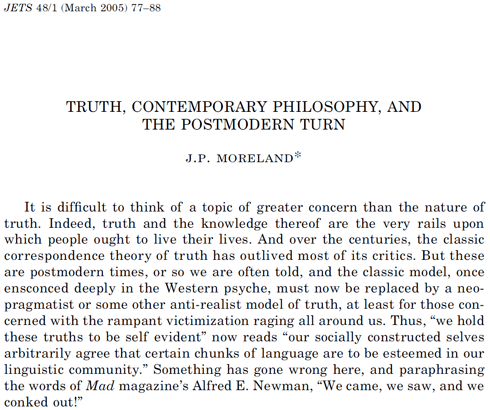
In addition to J. Warner Wallace’s excellent video on The Case For Truth, there are two essays I would recommend for anyone interested in personal discipleship. The first is a brief blog post by Ravi Zacharias entitled “Deep Questions.” The second is a paper delivered by J.P. Moreland at the Evangelical Theological Society, November 18, 2004. Click on the images below to read these essays.
Ravi-Zacharias: Truth

J. P. Moreland: Truth