God, The Bible and The Shack is a short pamphlet, designed to help readers of W. Paul Young’s The Shack navigate through some tough theological issues.
In the study of logic, a false dichotomy is when only two options are presented, either believe this or that, even though there might be yet a third option available. The fallacy of the false dichotomy is that it excludes other reasonable alternatives.
I really hope I am wrong. But sadly, it appears that several recent Christian films (and their associated books) are trying to exploit certain false dichotomies that are increasingly popular in the church today.
On one side, stands something like Del Tackett’s Is Genesis History?, blogged about several times here on Veracity (#1, #2, and #3). According to some reviewers, such as Alan Shlemon at Stand to Reason, though there are some very positive elements in the film, Shlemon thought that Is Genesis History? plays into the notion that the church is divided into two different groups: the sole defenders of the Bible, who unswervingly hold to a view of the earth as being young, around 6,000 years old, versus compromised Christians, who undermine the Bible by accepting anti-Christian, scientific evidence of an earth that is millions of years old. Of course, Del Tackett, in an admittedly kind, warm and unassuming way, urges Christians to pursue the first option, and shun the second.
For Del Tackett, the question of, “Is Genesis History?,” is of great interest, in terms of the age of the earth. But it is often a misleading question. “Is Genesis True?,” is a much more profound and disturbing reality to consider. Alan Shlemon rightly sees the fallacy here, regarding the fundamental argument from the movie as a false dichotomy. Continue reading
Adam Thoroughgood House. An historic colonial home in Virginia Beach, Virginia, but how old is it? (credit: Frances Benjamin Johnston)
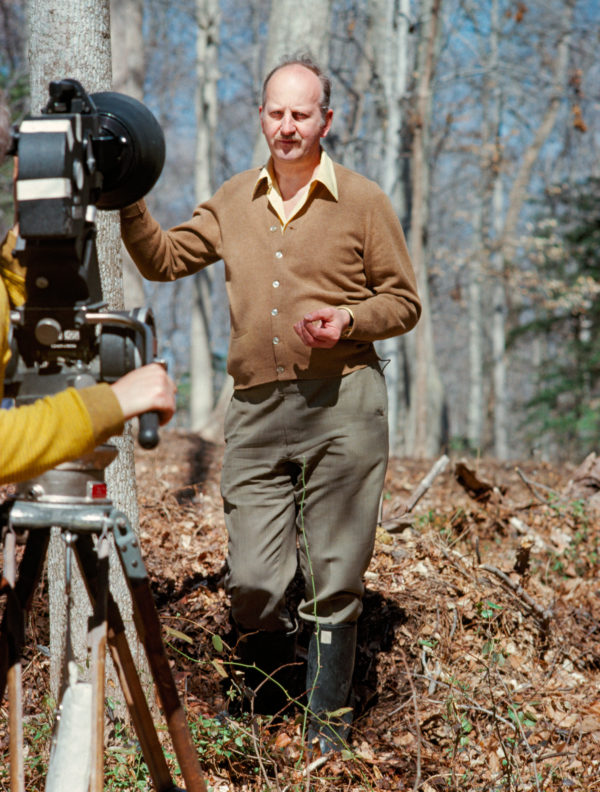
I write this post in memory of my dad, who died one year ago today. My dad was a brilliant man, an architectural historian by trade, who inspired in me the desire to pursue the knowledge of the truth, even if that truth might challenge popular convictions. So while there is an application towards Christian apologetics here, I want to frame it within the context of one particular fascinating mystery in the history of colonial Virginia, a mystery that captivated the thought and imagination of my dad….
Let me take you back to Princess Anne County, a few hundred years ago, in the Tidewater of the Virginia Colony…
Adam Thoroughgood was a 17th century English Puritan (roughly equivalent to an evangelical Christian today), who obtained his passage to Virginia as an indentured servant, in the 1620s. After paying off his indentured servitude, Throughgood returned to England, married a wealthy woman, and came back to eastern Virginia, in modern day Virginia Beach, to become one of the most prominent land owners in the colony.
Reza Aslan, film maker and author of Zealot: The Life and Times of Jesus of Nazareth, makes another go at informing(???)/entertaining(???) television audiences about the nature of faith (his last big media splash did not turn out too well).
Reza Aslan came from a somewhat nominally Muslim background before converting to an evangelical Christian faith as a teenager, albeit briefly. Aslan abandoned his newfound faith while attending college in a secularized academic environment, and he now describes himself as a Sufi Muslim. But Aslan’s brand of Sufi Islam is a highly Americanized version of faith that sounds awfully reminiscent of the New Age Movement, and other popular beliefs that contend that all religions are basically the same. In a recent CNN opinion piece, Aslan says:
“My goal — as a scholar, as a person of faith, and now as the host of “Believer” — is to be the linguist, to demonstrate that, while we may speak in different religions, we are, more often than not, often expressing the same faith.”
Aslan’s linguistic demonstration is far from convincing. The problems with Aslan’s statement are multiple, but it is more correct to say that Aslan is a popularizer of scholarship instead, the kind of popularizing where the line between scholarship and entertainment is easily blurred, where ironically much of the scholarship is dated, according to New Testament scholar, Craig Evans. Aslan takes the doctrine of religious pluralistic experimentalism, championed by the late scholar of religions, Huston Smith, quite a bit further. Aslan interviews the kooky and wacky extremes of all various forms of religiosity, in turn subtly opting for some type of vague notion of spirituality, a “roll your own” type of religion, that panders to the individualism of American culture.
That being said, Christians should not be so smug in completely dismissing Reza Aslan outright. According to Becky Castle Miller’s review of Zealot, on the Jesus Creed blog, Aslan ultimately rejected what he thought was historic, orthodox Christianity, when he discovered that his early Bible teachers from his teenage years were wrong. Having observed such irresponsible handling of the Scriptures with young people myself, this type of admission makes me cringe. As with evangelical-turned-agnostic, Bart Ehrman, evangelicals have a lot to learn from Reza Aslan’s story.
Folks, though we as Christians need some admonishment here, we alternatively need not blindly consume what documentary series like these try to dish out for us. Part of me sees that Reza Aslan has a genuine, well-meaning fascination with all things “religious.” But another part of me thinks that Reza Aslan is taking viewers to the zoo, bringing the camera even into the cages to see the “wild animals.” Nevertheless, he eventually goes back to the safety of his sanctuary home in academia, lies down at night, saying to himself, “Man, that was crazy.”
As I have viewed the CNN promo for the series below, billed for the “spiritually curious,” it seems like what Aslan wishes to give us is a rather sensationalist type of theological voyeurism, primed to feed into our culture’s general cynicism towards absolute truth claims.
William Paul Young’s New York Times bestselling novel about how a terrible family tragedy led to an encounter with God, is now a movie. But given the controversy over the book, should Christians go see the film?
A few years ago, W. Paul Young’s novel, The Shack, was all the rage among evangelical Christians. “You gotta read this book!”
My concern, about Christian books (and movies) like The Shack, is not their entertainment value. I like a good story. My main problem is about how well the message lines up with Scripture.
I have a confession to make: For years, my understanding of the Trinity was pretty messed up. As a young Christian, I was taught that the relationship between the Father, the Son, and the Holy Spirit was like the different states of water: liquid water, a gas (like water vapor or steam), or a solid (like ice). The problem with this easy-to-understand, yet misleading, analogy is that it follows the treacherous shoreline of modalism, a heresy from the days of the early church. Critics argue that The Shack reinforces this type of erroneous theology. It took me years until I finally engaged in a detailed study of the Scriptures to realize that I was believing a heresy.
I am not alone in my confession, which is partly why the story that Paul Young crafted has resonated so well with people. It fills a void left by our churches that find it difficult to effectively and faithfully communicate certain doctrines of the Bible.
When we read what the Bible has to say about the nature of the Triune God, it is not a topic that you can learn by simply falling off of a log. Sadly, most Christians get their theology from popular books like The Shack, instead of making the investment into an in-depth study of the Scriptures themselves…. and I am just as guilty as the next person.
On the other hand, an engaging story like The Shack can help to stimulate thought that can drive us to investigate what the Bible rightly teaches on the nature of who God is: One God, in Three Persons, as opposed to the modalism view critics contend is portrayed in The Shack; a picture of God as one Person, playing three different Roles in history. To that extent, I would hope that The Shack, the movie, will help motivate folks to really dive into God’s Word, to learn from the Bible, what the truth is, and not settle for anything less. A good book to read after or before viewing movie, like Randal Rauser’s Finding God in the Shack, written by a skilled theologian, can help both the believer and the seeking non-believer process what they see in the movie.
What would be a mistake is to think that spending a night at the movie theater is an adequate substitute for actually reading the Bible, taking a theology class at your Bible-honoring church, and/or having a small group Bible discussion that addresses the topics from the movie. Given the choice between the movie versus reading the Bible, you are much better off cracking open the text of Holy Scripture.
The movie trailer is below, followed by a brief clip from a Ravi Zacharias Q&A session, that summarizes the main positive and negative elements of the book.