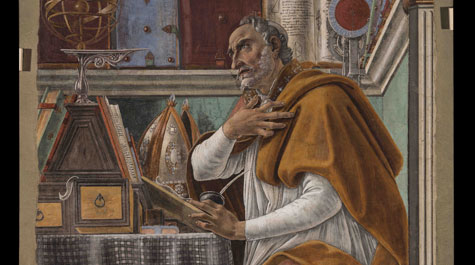
Franco Zefferilli’s 1972 classic film, Brother Sun, Sister Moon, created an exalted portrait of St. Francis of Assisi. Zeffirelli is most known for the TV classic, Jesus of Nazareth.
Did Saint Francis of Assisi really say, “Preach the Gospel at all times. When necessary, use words?”
In a sermon delivered by one of my (very fine) associate pastors this past week, there are good reasons to doubt the quotation’s authenticity. Even though the quote is regularly presented in sermons, etc., there is little evidence that the famous medieval Christian from Assisi, Italy ever said this.
The quote is typically used to suggest that Christians should focus more on their quiet witness, with acts of mercy and compassion. But often, the result is a silencing of the Word of God, an excuse for disobedience, something the Scriptures warn against (Acts 6:1-7 ESV). This is not an either/or issue. Believers are called to love people with good deeds and to verbally proclaim the message of Jesus. We should not neglect the latter for the sake of the former.
As is often done with Jesus of Nazareth, our impression of the historical Francis of Assisi reflects many of the cultural values of the times, and the real story gets lost. In 1972, Italian film producer, Franco Zeffirelli, made a film on the life of Saint Francis, Brother Sun, Sister Moon. Zeffirelli portrayed Francis as an idealized Christ figure. Francis embodied a pure example of non-violence, harmony with creation, and freedom from materialism.
When I first saw the film, I was deeply drawn to the message. But when I watched it again some years later, Francis began to appear like a cartoon figure. Was this guy for real? How did he and his order of brothers support themselves financially? What motivated the people in his day to follow and admire Francis? Was Francis really a pacifist?
I had more questions than answers. As I listened to the Donovan soundtrack, I found myself keeping the tune of Hurdy Gurdy Man in my head, and I began to suspect that Zeffirelli’s Francis looked a whole lot like a Woodstock-era hippie. I mean, I could almost smell the scent of marijuana rising up from the movie screen.
So, I finally sat down to read a scholarly biography, by André Vauchez, Francis of Assisi: The Life and Afterlife of a Medieval Saint. Vauchez proved to be a difficult read for me, but he got his point across. The story of how biographers have memorialized him, over hundreds of years, is just as diverse and complex as the life Francis actually lived in the late 12th to early 13th centuries. Histories of Francis often reflect the values of his historians, just as studies of the historical Jesus, often reflect the values and prejudices of those Jesus historians.
However, one thing stood out from Vauchez’s work. The Franciscan order that Francis founded was foremost a preaching order. Proclaiming the Gospel of Christ came first.
One of the most remarkable episodes of Francis’ life was during the Fifth Crusade, when Christian armies were up against Islamic armies in Egypt. In 1219, Francis did not come as a warrior, but as a peacemaker. Yet contrary to some popular opinions today, as reflected to a certain degree, in the 2016 docu-drama film, The Sultan and The Saint, Francis was not trying to paper over the differences. Rather, he purposed to gain an audience with the Muslim leader, Malik al-Kamil, with the intention of sharing the Gospel with him and winning him to Christ. Francis crossed enemy lines, was captured and threatened with decapitation, but he negotiated his way to see this Sultan, al-Kamil. The Sultan asked Francis if he came to convert to Islam. Francis declined, insisting instead on sharing the Gospel of Jesus with the Sultan.
We have no record of the actual conversation that Francis had with al-Kamil. But we know that the Sultan even allowed Francis to stay in the Islamic camp and preach to the Sultan’s soldiers for several more days. Evidently, the Sultan was so impressed with Francis’ boldness, that he granted him safe passage back across enemy lines.
The Sultan was not persuaded by Francis’ message to embrace Christ, but Francis’ visit nevertheless had a positive effect several years later. In 1229, three years after Francis’ death, al-Kamil did negotiate a peace agreement with the Holy Roman Emperor, Frederick II, a man who grew up in Assisi, knowing Francis as a long time friend.
Needless to say, Saint Francis did “preach the Gospel at all times.” But clearly in this case, he used words.
Following is a 7-minute clip from the 1961 film, “Saint Francis of Assisi.” Though it looks like they used staging scenery from early Star Trek TV episodes, you can get the basic contour of the traditional telling of the story of Francis meeting the Sultan…. Another book I have wanted to read, like Vauchez’s, but more accessible, is Augustine Thompson’s, Francis of Assisi: A New Biography, given a positive review at First Things magazine.