Category Archives: Witnesses

John Glenn: Christian Faith and the God of Creation

Annie and John Glenn, in 1965. They where married for 73 years, until his death in December, 2016.

Annie and John Glenn, in 1965. They were married for 73 years, until his death in December, 2016.

To look out at this kind of creation out here and not believe in God is to me impossible,” so said astronaut John Glenn, during his space flight aboard the Space Shuttle in 1998. “It just strengthens my faith. I wish there were words to describe what it’s like.”

This is a powerful testimony, decades after he became the first American to orbit the Earth in 1962. The American novelist and secular writer, Tom Wolfe, in his essay on “The Faith of John Glenn,” in the Wall Street Journal, observes that Glenn’s Presbyterian confidence in God stood out back in the those early days of the Mercury program, too. In my years working as a contractor at NASA, I never had the opportunity to meet John Glenn, who recently died at age 95, but I always considered him to be a man of integrity and admiration.

By seeing God revealed in creation, above the curvature of the earth, John Glenn followed the lead of where his faith took him, which might seem controversial to some. In a day and an age where many think Christianity is in opposition to science, John Glenn was an advocate for science education in the public schools, even endorsing the teaching of biological evolutionary theory, seeing no contradiction between evolution and his Christian faith.

Christians today do indeed hold to a wide variety of differing viewpoints on the subject of creation and human origins. But I hope believers of all perspectives might be encouraged by the outspoken testimony of this man of faith, who saw God revealed in creation.


Classic-Thinking: Thomas Oden

Thomas C. Oden wrote A Change of Heart, a theological memoir of how as a thinker he made the journey from Protestant Liberal to a truly evangelical and broadly ecumenical man of faith.

Thomas C. Oden wrote A Change of Heart, a theological memoir of how as a thinker he made the journey from a Protestant Liberal to a truly evangelical and broadly ecumenical man of faith.

I loved heresy…But the Holy Spirit found me,” so said Methodist theologian Thomas C. Oden (1931-2016), who died December 8, 2016.

Thomas Oden had grown up in the world of mainline Methodism, in the mid-20th century. He fully imbibed the liberal theology of his day, immersing himself in the writings of Rudolph Bultmann and Paul Tillich. He was a leading thinker and theological spokesperson for a radical redefinition of Christianity that swept through American mainline churches in the 1950s to 1960s. He had admired the Vietnamese Ho Chi Min as an agrarian patriot. But then he realized that he had been wrong.

In an interview a few years ago with Southern Baptist leader, Al Mohler, Oden confessed that his enthusiasm for Marx was misguided. “I loved the fantasies and I loved the revolutionary illusions. I truly loved them… I was one of those who was way out on the far left edge of accommodating to modernity. And I don’t know how but the Holy Spirit found me.

A caring Jewish friend had encouraged Oden to read the patristic writers, those fathers of the early church who wrote extensively within the first few centuries of the Christian movement. Up to that point, Oden “was able to confess the Apostle’s Creed, but only with deep ambiguity. But I stumbled over ‘he arose from the dead.’ I had to demythologize it and could say it only symbolically. I could not inwardly confess the resurrection as a factual historical event.”

When Oden finally realized that the bodily resurrection of Jesus was something that he must believe and eventually did believe, in order to be a true Christian, it reoriented his life. He spent the second half of his life repudiating the hubris behind the very liberalism that nurtured him, and sought to build a case for a consensual model of Christian belief, looking to those early, classic church fathers for guidance. His change of heart was now to serve the church, and not to seek after the latest theological fad of academia.

Oden never broke away from his modest, classically-informed Wesleyan theological leanings. He sought for reconciliation in the predestination and free-will debates that still divides Calvinists and Arminians. He eschewed debates over the age of the earth, charismatic gifts, the “proper” view of the millennium and the “End Times,” and other intramural discussions, in order to focus on the common vision of faith embodied in the early creeds of the church, like the Nicene Creed.

As having read Thomas Oden’s Classic Christianity: A Systematic Theology, as the basic theology textbook in seminary, I can say that Oden was not as strong as an apologist or a textual Bible scholar, but these were not his gifts. His gift was in drawing together the widest range of the greatest teachers in the historical Christian tradition, to give us a “big picture,” consensus view of what it means to believe as a faithful follower of Jesus: Classic Christianity at its finest!!

Michael J. Kruger, at the Canon Fodder blog, offers some lessons learned from Thomas Oden.


Single-Mindedness: Helen Roseveare

Helen Roseveare (1925-2016) was one of the great missionary spokespersons of the 20th century. Roseveare served as a medical missionary in Zaire, surviving a violent civil war there, where she was brutally raped in 1964. In her moment of utter darkness, she prayed to God, and she sensed the Lord telling her, “You asked Me, when you were first converted, for the privilege of being a missionary. This is it. Don’t you want it? . . . These are not your sufferings. They’re Mine. All I ask of you is the loan of your body.”

I had the privilege of hearing Helen Roseveare speak at the Urbana ’87 missionary conference. Her single-minded devotion to the Lord sustained her in extended periods of loneliness, in her near 20-years ministering in Zaire.

She never married.

Justin Taylor, at the Gospel Coalition, posted a remembrance of her life. She died today.


Squanto, Thanksgiving and the Rest of the Story

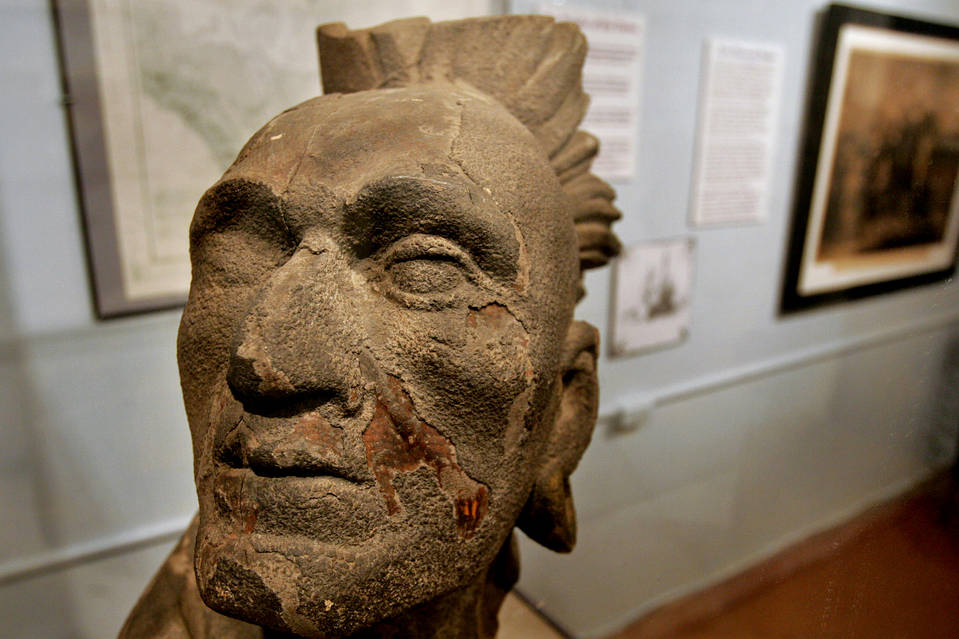
Squanto sculpture at Pilgrim Hall Musuem in Plymouth, Mass. (Credit: Wall Street Journal)

Squanto sculpture at Pilgrim Hall Museum in Plymouth, Mass. (Credit: Wall Street Journal)

If you are a Christian, you have probably heard of the story about Squanto and the Pilgrims, at Plymouth, generally retold around Thanksgiving. If not, I would encourage to read or listen to it. You can find it at the BreakPoint blog online, or through a wonderful children’s book written by Eric Metaxas. I will not retell the whole story here, but I will touch on the highlights.

Before the Pilgrims arrived in Massachusetts in the early 1620s, a young Patuxet Native American had been kidnapped by an English sea captain, and brought back to Europe. Squanto was bought from slavery in Spain by a Catholic monk, and eventually Squanto made his way to work in a horse stable in England, where he learned English and the Christian faith. He longed to go back home to his people in America.  But when he finally returned across the Atlantic, he discovered that his Patuxet tribe had been completely wiped out by disease, most probably small pox.

As providence would have it, Squanto then met the near-starving English Pilgrims. Squanto soon acted as an interpreter between the English and the native Wampanoag tribe, thus establishing peaceful relations between the English and the Wampanoag for at least fifty years. Squanto taught the English how to grow corn and catch fish, enabling the fledgling community to survive. Squanto appeared at just the right time… God’s time… to help establish this small Christian community in a new and hostile world.

It is a great story to tell around Thanksgiving. But often, as in the Breakpoint article/podcast linked above, some important details are left out when Christians typically retell it. Since the Christian aspect of Squanto’s story is hardly ever told in our public schools or secular media, it is understandable that the neglected details of God’s providential care be emphasized to try to balance out the history.

However, this particular Christian retelling of the story gives the false impression that Squanto was some type of angelic character, without sin, spot or blemish. But as Wheaton College historian, Robert Tracy McKenzie, tells us, there is more to the story.

As it turns out, Squanto felt at home neither with the English Pilgrims, nor the Wampanoag tribe, who essentially held Squanto as prisoner. William Bradford and Edward Winslow, the chroniclers at Plymouth who told the story, both described Squanto as someone who would play the Pilgrims and the Wampanoag off of each other. Squanto would use his unique role as language translator to enhance his standing in both communities, spreading false information about the intentions of both parties, setting himself up as the only one who could heal the divisions and prevent war. When the Wampanoag realized that Squanto was double-dealing, they sent a message to the Pilgrims, encouraging them to kill Squanto. But the Pilgrims still needed Squanto’s services, so they offered him protection. This made the Wampanoag mad, but neither did the Pilgrims trust Squanto the way they had before. Just a few years later, Squanto died of disease living among the English, confessing Christ as His Lord, but much remains unknown as to how much of a rift remained between Squanto and the others around him at the time of his death.

This does dampen our image of Squanto, but it still fits within a Biblical view of reality. The patriarchs of the Bible are hardly examples of moral perfection: Abraham offered his wife up as a prostitute, Moses was a murderer, and David was an adulterer and a murderer. Every human under the sun, including folks like Squanto, including you and me, are sinners in need of grace. When we fail to grapple with our insecurities and other sins, just as Squanto did, we break down relationships of trust.

The lesson is appropriate these days: After perhaps the most contested Presidential election in recent memory, the American nation is in many ways very divided today. Trust has broken down between many groups in American culture, and many are fearful. Trust has broken down even within the church, the household of God. The civic bonds that have traditionally held Americans together in the past have become greatly strained. The loosening of those civic bonds have further shown us where Christians, those of us in the church, have sought for unity in the wrong places. However, as followers of Jesus, if we really know and believe the Gospel, we can trust God and model for the non-believers around us what it means to love God and love one another. If we really wish to see healing in our land, such healing must begin within the household of God.

Yes, let us learn from the positive example of Squanto regarding the providence of God. But let us also keep in mind the negative example of Squanto, that we should re-examine ourselves, deal with our own sin before being quick to mistrust others, and model for others what it means to live in a community that loves God and loves one another.


Resounding: Cliff Barrows

Cliff Barrows (1923-2016)  ministered alongside evangelist Billy Graham, starting in 1946. Barrows led the music for the Billy Graham Crusades, believing that worship through music would resound with the glory of Christ, and bring many souls to the feet of the Savior. A website in memory of Cliff Barrows tells his story.