Category Archives: Topics

Life After Death (Part 3)

Lighthouse Stairs

Grays Harbor Lighthouse Stairs, photo by Joe Mabel


Our summary and review of the Life After Death issue of the Areopagus Journal (Fall 2011) concludes with the paranormal.  If this topic makes you uncomfortable, welcome to the club—that’s probably true for the vast majority of rational beings like you and me.  But like it or not, some people do claim to experience things that are beyond the range of our normal experience or scientific explanation.  Should we believe them?  Are there good apologetic arguments to support Life After Death that make sense based upon paranormal claims?
Areopagus Journal

Areopagus Journal, Life After Death, Fall 2011

The Life After Death issue of the Areopagus Journal addressed two paranormal topics: near death experiences (NDEs) and ghosts.  Rather than redact the articles by Dr. Gary Habermas and Dr. Ron Rhodes—as I did in Part 1 and Part 2 of this series—I will link in external material and do more of a paraphrased summary of the points they make (for details get the Areopagus Journal).

Near Death Experiences and Worldview Concerns: Addressing Difficult Questions

Dr. Habermas touched on this topic earlier this month at the 2013 National Conference on Christian Apologetics.  Two things strike me about his approach to apologetics.  First, he makes minimalist arguments—reducing a debate to the minimum number of elements that he needs to make his point, without overreaching.  Secondly, he is very conservative in drawing conclusions—which is a hallmark of credibility.  Here is a quick synopsis of his views on NDEs, from the One Minute Apologist.

After hearing him relate specific cases he has researched, I was enthusiastically thinking those cases would make self-evident apologetic arguments.  After all, a few of them are amazing, and very reliably documented.  But as my co-blogger is quick to point out, we should consider both the affirmative and negative sides of the debate to develop an informed opinion.
Continue reading

John MacArthur’s Strange Fire

I normally do not blog on timely topics, but this one is too important to pass up. Last week, Southern California pastor John MacArthur led the Strange Fire conference. MacArthur’s passion in hosting this conference was to call the evangelical church to publicly refute what he sees is the error of the Charismatic Movement.

There are a few things to say about this. First, John MacArthur is very influential in the church and he is not alone in his views. MacArthur’s radio ministry, Grace to You, is heard by thousands and thousands of Christians across the world on a daily basis. MacArthur, who stands in a rather curious mix of Reformed and Dispensationalist theology, is a master communicator known for his effectiveness in the skill of expository teaching from the Bible. MacArthur is also a cessationist, which means that he believes that the supernatural manifestations of the Holy Spirit, such as speaking in tongues, ceased to be active in the church at the end of the Apostolic age, the first generation of the early church.

Secondly, the Charismatic Movement that MacArthur is protesting against is perhaps one of the fastest, if not THE fastest, growing movements in the church worldwide. While the growth of Pentecostal and Charismatic churches is modest in the United States, it is a completely different story in places like South America and Asia. Literally millions of people are being exposed to different expressions of the Charismatic Movement. I know from personal experience how significant this is as I helped to lead the music ministry at a small Charismatic church for a brief period back in my college years.

Thirdly, positively speaking, many, many Christians have been extremely blessed by what they have experienced in Charismatic churches and grown spiritually by their teachings. On the other side, tragically as with other movements, there has also been a large number of other Christians who have experienced spiritual abuse, theological confusion and tremendous disappointment in Charismatic communities of faith.

Needless to say, not everyone is happy with John MacArthur’s blanket characterization of the movement as a whole (see Adrian Warnock here and here with Loren Sandford for CharismaNews). There is a good chance that people in conservative churches will be having “spirited” conversations about John MacArthur’s conference (and the new book associated with it) for some months to come. Despite the controversy, MacArthur is raising critically important issues for the church. Down the road, Veracity will tackle the phenomena of the charismata in future posts, but hopefully it will be done in a more irenic and less polarizing manner than what MacArthur has done with Strange Fire.

Coming Soon!

Facts & FaithPlease join the Veracity community at the Facts & Faith Symposium, to be held at the Williamsburg Community Chapel, on several Sundays in November, 2013 (the 10th, 17th and 24th) at 6:30pm.


C.S. Lewis, Myth, and the “E” Word

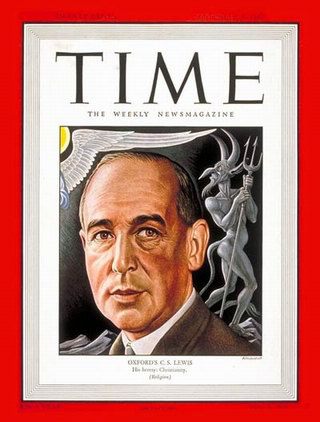
C.S. Lewis on the cover of Time magazine, 1947.  Did he ultimately find "Evolution" to be compatible or in conflict with Biblical faith?

C.S. Lewis on the cover of Time magazine, 1947, perhaps the most popular Christian apologist of the 20th century. Did he ultimately find “Evolution” to be compatible or in conflict with Biblical faith?

A few years ago, a series of letters written by C. S. Lewis back some seventy years ago came to light that has given scholars some questions as to the Narnian’s changing views regarding the “E” word. By the “E” word, I mean … “evolution”.

The “E” word is generally something you do not say in polite company around many evangelical Christians, unless you want to say something negative. Here at Veracity, we have no qualms over discussing topics related to the “E” word. Yet the stakes are high, as many students of Scripture have noted. Some say that evolution is the greatest threat to the truthfulness of the Christian message. Others, to varying degrees, say that evolution is at least partly, if not fully, compatible with Christian belief.

How do  you sort this all out?  It sure would be helpful to know what one of the most popular Christian apologists of the last one hundred years, Oxford’s C. S. Lewis, might have thought about the matter.
Continue reading


Jonathan Edwards on Charity Towards the Poor

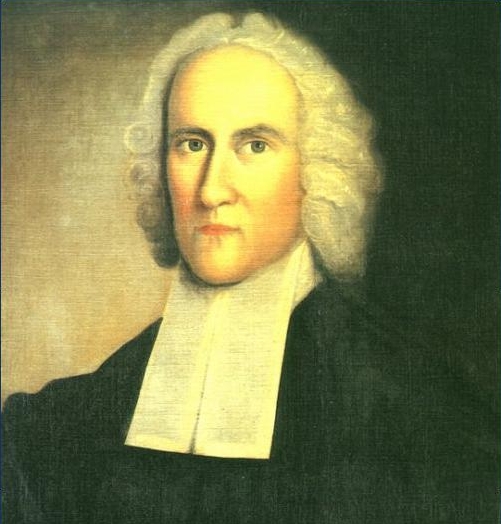
Jonathan Edwards (1703-1758), pastor, theologian, philosopher, and .... advocate for a biblical social justice??

Jonathan Edwards (1703-1758), pastor, theologian, philosopher, and …. advocate for a biblical social justice??

Most people know of Jonathan Edwards as the colonial American preacher of hell-fire and brimstone. I remember reading the mandatory “Sinners in the Hands of an Angry God” in high school and thinking that this guy had an unhealthy, morbid fascination with damnation. This narrow view of Edwards I had for years is a real tragedy, as this unfairly diminishes the extraordinary intellectual and spiritual contribution of perhaps America’s greatest philosopher.

Perry Miller, an influential Harvard historian and prominent atheist of the mid-20th century, practically rescued Jonathan Edwards from the dustbin of American cultural history. In an age when colonial American Puritans like Edwards were treated with “fundamentalist” disdain, Miller saw in Edwards perhaps one of the most perceptive and wide ranging thinkers America has ever produced. What was it about the 18th century Edwards the Christian that fascinated Miller the atheist?
Continue reading


Life After Death (Part 2)

“Just as we are now like the earthly man, we will someday be like the heavenly man.”
1 Corinthians 15:49 (see Dick Woodward’s post)

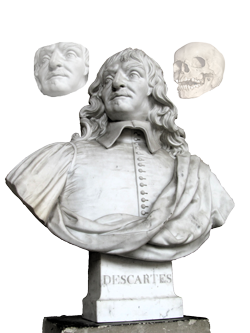
Rene DescartesHave you ever thought about your thoughts? This may seem like a ridiculous question, but it turns out there is a powerful apologetic argument for life after death that derives from simply understanding that humans have a body and a soul, and that the immaterial element (the soul) is spectacularly different from the material element (the body).

Continuing our review of the Areopagus Journal issue dedicated to Life After Death (Fall 2011), in this post we will explore what apologetics can bring to bear on the subject using philosophy, logic, and history.

The blog text below in italics is entirely the writing of Chad V. Meister.  I have edited out quite a bit of material to fit this format, without (I hope) misrepresenting his beliefs and positions.

Mind, Body, and the Possibility of Life After Death

Various conceptions of the human self have been held in the West, the two foremost being dualism and materialism.  Historically, dualism has been the more prominent of the two.  There are different conceptions of dualism as well, but on one main account the human person consists of two substances, one material (the body) and the other immaterial or mental (the soul or mind).  Rene Descartes (1596-1650) is perhaps the most widely recognized defender of substance dualism.  On his account, sometimes called the Cartesian view of the soul, the soul is an unextended, non-spatial substance, and it is contrasted with the body, an extended, spatial substance.  The soul and body are (somehow) connected to one another, but how an immaterial substance can connect to and interact with a physical substance is a bit of a mystery—a mystery which has often been castigated as the problem of the “ghost in the machine.” Continue reading