I was greeted this morning by an ad for tonight’s premiere on HBO and AmazonPrime of Philip Pullman’s His Dark Materials. Adapted to film by the BBC from his series of childrens novels, His Dark Materials presents a fantasy world, just as captivating as J.K. Rowling’s Harry Potter and C.S. Lewis’ Chronicles of Narnia.
The symbolism evoked by Pullman’s “Magisterium,” the evil antagonistic empire, that the 12-year heroine, Lyra, must contend against, is meant to represent the Roman Catholic Church. But evangelical Protestants should not be too smug in Pullman’s denunciation of Rome as tyrannical. Mark my word, His Dark Materials is targeted as an attack on a Christian worldview, as a whole.
Carl Trueman, a professor of history at Grove City College, the alma matter of several of my Christian forefathers, has written a brief essay, explaining “Why I Am a Protestant,” particularly as it relates to our current cultural situation. Trueman sums up pretty much where I stand on the Protestant question. For a deeper look, may I suggest Kevin Vanhoozer’s work towards a “Mere Protestant” statement of faith, for a “A Reforming Catholic Confession.”
OK. Trueman’s essay does have a wee bit of snark to it, but he does appeal to the recently sainted, John Henry Newman for support:
As the years go by, being a Protestant becomes easier and easier for me. Pope Francis is, after all, the gift that keeps on giving. What with his apparent desire to turn the Roman Catholic Church into a standard form of liberal Protestantism (but with a bit more color), his program is less than compelling to anyone who, to borrow a phrase from Newman, is deep in history.
However, Trueman is not soft on the problems of Protestantism:
The myriad magisteria of multitudes of parachurch ministries offer tin-pot spheres of influence for a plethora of popelets. And doctrinal orthodoxy is at a premium: A narrow focus on scriptural authority has led to a neglect of the catholic creedal dimensions of the faith.
Reformation Day … brings the temptation of nostalgia… that it often looks to the wrong eras for guidance in the present. The real analogs to today are not found in the High Middle Ages or the sixteenth and seventeenth centuries. Reformation Protestantism occurred within the cultural context of Christendom. For all of the important differences between Luther and Leo X, Calvin and Trent, Catholics and Protestants shared a common assumption that some form of Christianity would provide the dominant culture…But that is not our world today. In modern society, few have time for Christianity of any flavor. The basic Christian context of our Reformation forefathers is long gone and, if not completely forgotten, utterly despised. We must look to an earlier time for help: Specifically, to the second and third centuries.
Bottom line: There are still some very good reasons to be Protestant. But in many ways, Protestants and Roman Catholics (along with Eastern Orthodox) have a lot more in common with one another, that is often given credit. Healing the gaps that exists between Protestants, Roman Catholics, and Eastern Orthodox will go a long towards enhancing the witness of the church in an increasingly secular world.
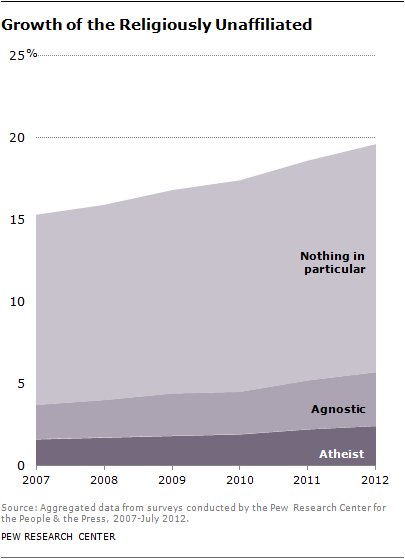
From 2012: The Pew Research Center reported an increase of Americans who have no religious affiliation. Some of these “nones” are atheists, some are agnostics, but many are folks who simply prefer to “roll” their own religion. Is this an alarming trend?
I started blogging seven years ago. The biggest trend I have seen in those seven years is the startling rise of the “nones” in America, those who say they have no particular “religious preference,” whenever polls are conducted. I call it the “Invasion of the Nones.”
In 2012, the Pew Research Center reported that the number of Americans who have no religious affiliation had grown to its highest percentage ever of the American population. One in five Americans marked “None” on questionnaires when asked about religious belief or association with a church. Over the previous five years, prior to 2012, the number of “nones” had increased from 15% to 20%…. and these are not ladies wearing black dresses with white trimming.
Several new highlights standout regarding the latest Pew study:
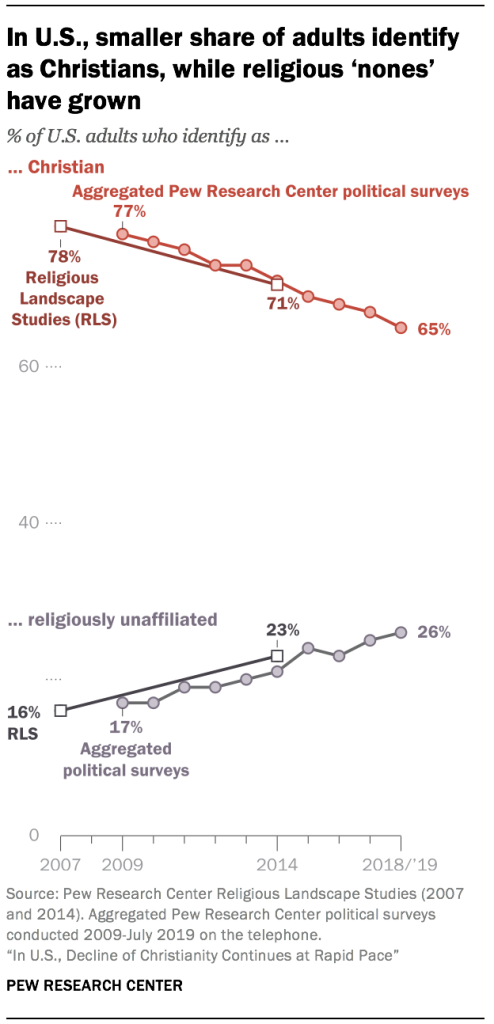
The percentage of the American population, that claims to be either Protestant or Roman Catholic, is shrinking, as well as in terms of absolute numbers.
All categories of those who mark themselves as “None,” with respect to religious preference, including those who adhere to no particular expression of faith, those who are agnostics, and those who are atheists, are continuing to rise.
Church attendance in the United States continues to decline, except for those who identify themselves explicitly as Christians.
Younger generations of people are less inclined to identify as “Christian” as are older generations.
Women are generally more religious than men (Christian are attracting less and less men to church).
While there is some decline among Republicans who profess to be Christian, the greatest decline of professing Christians is among the Democrats.
What is the takeaway from this latest research? While the percentage of Protestant evangelical Christians continues to be pretty much the same, adherents to more nominal forms of Christian faith, among certain Protestants and Roman Catholics is dropping rapidly. Another way of putting it is this: mainline liberal Christianity, in particular, Protestant mainline Christianity, is in steep decline.
No doubt, my answer is the latter, but I will let the discussion below explain why…
I was planning on writing a blog post about “critical race theory,” “intersectionality,” and the “social justice warrior” movement, but I just got bogged down thinking about it. If you do not know what those terms mean, then you are not alone. The vocabulary is complex and elusive. Additional terms like “identity politics” and “wokeness” abound. But allow me a few paragraphs to set up the story, as to why this topic is so important….. A lot of hysteria surrounds this topic. But some of the craziness is surprisingly far too true.
In September, 2018, a group of conservative evangelical pastors drafted and published “The Statement on Social Justice & the Gospel,” discussed here on Veracity. As many as perhaps 9,000 Christian pastors have signed the document, claiming that the modern trend towards “Social Justice” is incompatible with Christianity.
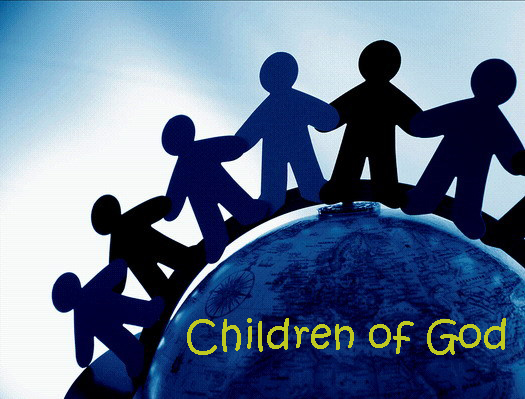
All Christians are children of God, equal in his sight. “So in Christ Jesus you are all children of God through faith (Galatians 3:26 NIV). But in a post-modern, post-Christian society, some people adopt a different narrative, whereby the world is divided between the privileged and the oppressed, whereby the oppressed are called upon to silence the speech of the privileged. Can a postmodern world survive this new narrative, or do we need to resurrect Christianity as a “useful fiction” to counter this new narrative? Or is there a better answer?
The Rise of “Social Justice” in Post-Modernity, and Its Impact on the Church
This can get a bit heavy, so some background might help frame what is going on: Just in case you did not know, we are living in an increasingly post-modern, even post-Christian, society.
To be post-modern is in contrast with the idea of modernity. Modernity is the project of the Enlightenment come to fruition. Philosophers tell us that in pre-modern times, people lived in an age of faith. Whereas in modern times, we live in an age of reason. With modernity, religious faith has been marginalized to the preferences of the individual. What really remains supreme in modernity is reason, guided by the all-knowing hand of scientific progress. The so-called subjective talk of God has been pushed aside in favor the human ability to solve all problems, and come to the knowledge of absolute Truth, through reason alone.
The problem with modernity, however, is that the application of universal human reason has not actually delivered what was promised. Post-modernity, in contrast, has a more pessimistic take on human reason, as the pathway to true enlightenment. Two broad approaches to post-modernity are felt in today’s culture.
One approach is simply to say, “Yes, there is an absolute Truth, but we simply can not know it completely. We can only do the best that we can to approximate what that Truth is, but the limitations of reason prevent us from fully apprehending absolute Truth, in its fullness. So while absolute Truth is hypothetically there, we must simply settle for the notion of relative Truth in practice.” One application of this approach is to say that the various competing claims of absolute truth must be adjudicated through conversation and dialogue, at least in the public sphere. At a pragmatic level, this is an acknowledgement that we live in a pluralistic society. We will not all agree with one another, but we must learn how to live alongside one another.
The second post-modern approach takes a more activist form. “There is no absolute Truth. All claims to absolute Truth are, in reality, merely the exercise of power. The key to living in a post-modern world is then to equalize the power structures that articulate competing narratives of truth.”
It is this second approach to post-modernity that has fueled the contemporary interest in themes such as “Intersectionality,” “Critical Theory,” and being a “Social Justice Warrior.” Perhaps the easiest to explain is “Intersectionality.”
By “intersectionality,” a term coined in 1989 by legal scholar Kimberlé Williams Crenshaw, many scholars in the humanities say that different groups of people, who do not have lives marked by privilege, live their lives from the perspective of being oppressed. For example, many persons of color, such as African Americans, experience oppression. Likewise, many women experience oppression, at the hands of men. But when the experiences of being African American overlap with being female, the intersectionality of those experiences produces yet another complex form of marginalization within society.
Those who have lives marked by privilege, who empathize with the marginalized, are said to “ally” with the marginalized. Those who “ally” are encouraged to stand shoulder to shoulder with those who lack privilege, in order to correct social injustices.
Many social theorists find the category of “intersectionality” a helpful tool for understanding how social structures work. Many evangelical Christian thinkers would agree. After all, the Bible talks a lot about “Blessed are the poor,” and how all of us are created equal, within God’s perspective. So far, so good.
However, we must be exceedingly careful here. What might be seen as a helpful intellectual tool for some, could be carried on by others to mean something radically different.
This may all seem like foreign territory for the average church-going Christian. But in a university setting, the quasi-religious character of being a “social justice warrior,” in the ideological sense, can be quite evident. It can get really bizarre.
This is yet a glimpse into a crisis in academia, as the ideological tendency of this “social justice warrior” movement has threatened to compromise the very integrity of the intellectual viability of certain strands of humanities studies. This is not merely a concern of Christians. It also bothers more secular minded thinkers, those who lean towards the more progressive side of culture. If you want to be entertained and horrified, all at the same time, you can learn about the “Grievance Studies Affair,” exposed by left-wing academics James Lindsay, Peter Boghossian and Helen Pluckrose, in 2018. Following the YouTube playlist for this is mind-blowing.
In a postmodern world, where the premodern categories of religious faith have been deemed obsolete, and the modernistic hope for a view of scientific progress, that can solve all of humanity’s problems, is seen to be elusive, the postmodernist can see the world as merely the realm for power struggles. Orthodox Christian faith is left off to the side, for those who advocate an ideological commitment to “critical theory” and “intersectionality.”
The War Against Biology: The “Social Justice Movement” as Becoming an Ideology for Some
Take for example, the case of evolutionary biologist, Brett Weinstein, when he taught as a professor at Evergreen State College, in 2017. When a group of students, invigorated by ideas taught by certain other professors of the humanities, sought to ask white faculty and students (particularly those who were male) to leave campus for a day, Professor Weinstein objected to the planned event as ill-conceived. In response, a group of student protestors interrupted his class, sparking a national conversation. WARNING: OBJECTIONABLE LANGUAGE IN THE VIDEO BELOW:
Professor Weinsten, and his wife, also an evolutionary biologist, and both who are not professing Christians, resigned from Evergreen State College, as they felt that their lives were being threatened by this student movement, and the school administration did little to intervene. This sets us up to get to the reason as to why this blog post is so important.
Brett Weinstein is now a public intellectual, a member of what some call the “Intellectual Dark Web,” populated by other public intellectual figures, such as Canadian psychologist, Jordan Peterson and orthodox Jewish commentator, Ben Shapiro. Weinstein’s experience at Evergreen State helped him to see that there are intellectuals, within the humanities, who advocate for a more ideological approach to intersectionality, such as in the case of what constitutes “gender” in a post-modern world. Such intellectuals have been convincing a new generation of students to think that the category of “gender” is merely a social construct. Weinstein sees this as an attack on the very foundations of biology, as a scientific discipline, where the distinction between male and female is a fundamentally biological description, not merely a social construct.
Weinstein suggests that the modern approach to evolutionary biology has failed, as evidenced by his own experience at Evergreen State. He is still an evolutionary biologist, but he believes the current secular hostility towards “religion,” including Christianity, has created a cultural crisis. The postmodern rejection of absolute truth, being promoted by certain disciplines in the humanities, has led to the development of distorted forms of traditional religiosity. For Weinstein, this new situation requires that scientists need to rethink how to approach evolutionary biology.
Secular, Atheistic Thinking That Wishes to Revive Christianity/Religion as a “Useful Fiction”
In his mind, Professor Weinstein contends that “religion,” which would include Christianity, still serves as a “useful fiction,” necessary for the survival of the human race. So while Weinstein rejects Christianity as an ultimate truth claim, it is nevertheless an invaluable aid that should be tapped to help secular society transcend the current cultural crisis, marked by the rise of ideologically-driven “critical theory” and “intersectionality.”
At the recent Unbelievable? conference in London, podcaster Justin Brierley sat down with Brett Weinstein and theologian Alister McGrath to discuss Weinstein’s ideas, as part of Brierley’s Big Conversation program. Given the background of Weinstein’s academic experience, the discussion is pretty amazing.
Brett Weinstein rejects the New Atheism of a Richard Dawkins, that negatively views Christianity as a disease or “virus of the mind.” (If you do not understand what Dawkins is talking about, view the following video. Otherwise, skip it, and move on to what I have written below):
Brett Weinstein believes that Dawkin’s approach to religion deserves a much better explanation. Ironically, for Christian listeners, Brett Weinstein thinks that Neo-Darwinian evolution holds the key for understanding and accepting “something” like Christianity, as a positive force for good for humanity. In that sense, something like Christian faith can be a “useful fiction,” to help humanity survive. This is the same type of message being propagated by those like Jordan Peterson. It is just that Peterson and Weinstein seem unable to make that jump of seeing Christianity as actually being true, in and of itself. This is a massive topic, and this blog post merely reveals the tip of a really, really big iceberg.
What interested me the most about the conversation below was the lack of enthusiasm for Alister McGrath’s response to Brett Weinstein, among a number of Christian listeners. But since McGrath does NOT subscribe to the “conflict thesis”; that is, the idea that evolutionary science and biblical faith are in direct opposition with one another, there was not a whole lot to disagree with, aside from Weinstein’s wishful thinking for something like Christian faith, but not exactly Christian faith, to emerge, to address our current problems, as a human race. McGrath’s answer was straight-forward enough, suggesting that historic orthodox Christian faith is sufficient to address the challenges that Weinstein brings up….(plus Christianity is true, and not merely a “useful fiction”).
Two hours, yes, but worth the intellectual workout. Enjoy.
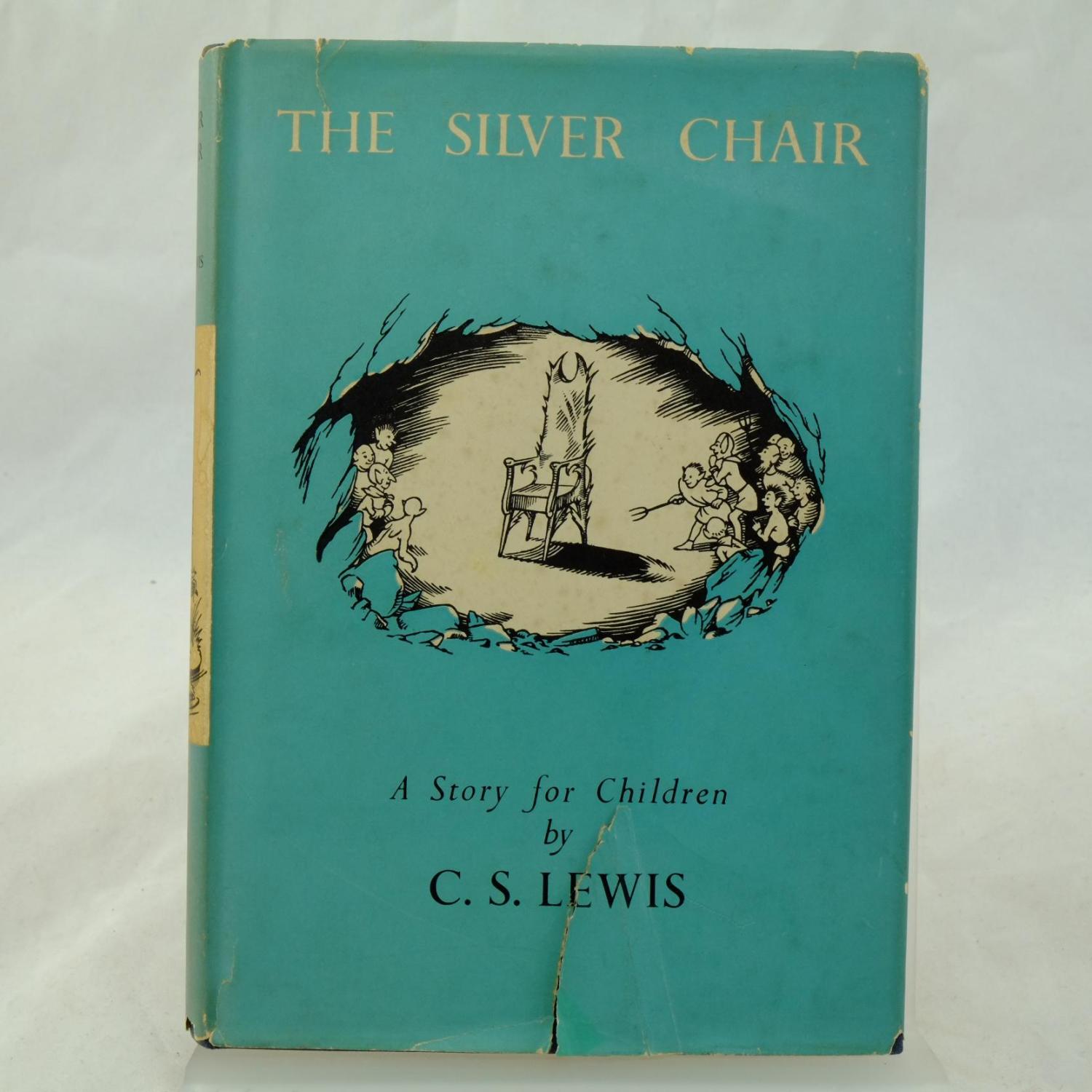
C.S. Lewis’ 1953 fantasy children’s novel has a scene where Jill and Eunace, the human children, along with their faithful, yet gloomy companion and Marsh-Wiggle, Puddlegum, have been living underground, for what seemed like forever. In their search to find Prince Rillian, they were stuck in a maze of dark caverns and sailing the Sunless Sea, in a world governed by a witch, the Lady of the Green Kirtle. The children and Puddlegum have not seen the sun for a long, long period of time. The Green Lady seeks to enchant the others, in hopes of preventing them from returning to Narnia, and meet up with Aslan:
Slowly and gravely the Witch repeated, “There is no sun.” And they all said nothing. She repeated, in a softer and deeper voice. “There is no sun.” After a pause, and after a struggle in their minds, all four of them said together. “You are right. There is no sun.” It was such a relief to give in and say it.
“There never was a sun,” said the Witch.
“No. There never was a sun,” said the Prince, and the Marsh-wiggle, and the children.
For the last few minutes Jill had been feeling that there was something she must remember at all costs. And now she did. But it was dreadfully hard to say it. She felt as if huge weights were laid on her lips. At last, with an effort that seemed to take all the good out of her, she said:
“There’s Aslan.”
C. S. Lewis had grown up as an atheist, eventually becoming a Christian, where the love of Christ showed him the truly reality of things. The Green Lady represents for Lewis the seductive power of secularism, bent on keeping us from seeing reality, as it really is. Prince Rillian had been imprisoned, in a spiritual haze, by the power of the Silver Chair, keeping him in spiritual bondage. The Green Lady was hoping to lure the young humans as well into her control, and away from Aslan.
But the children, Puddlegum, and the Prince were able to break free from the clutches of the Green Lady. The Green Lady was exposed as a deceptive serpent, and killed by Prince Rillian. The group was then able to clearly make their way back to the surface, and see the sun again in Narnia.
While there are many competitors to a Christian worldview, I find that Lewis had it right, that the greatest threat of all is secularism, whereby “religion” is shoved into a little, privatized corner. The “real” world, according to secularism, is a world whereby God is dismissed as a fantasy, an irrational, non-evidenced belief, that has been superseded by the world of reason, science and technology. The belief in “scientism,” that contends that only that which can be demonstrated scientifically is really true, reigns supreme in a secular world. The supernatural world of Narnia is merely an illusion, a “virus of the mind,” to quote Richard Dawkins.
The secular atheist rejects the God of the Bible because of insufficient evidence. There is no “sun” and there is no “Aslan” because we have not seen either, living in this secularized world. Well, at least, we have seen no evidence for either in a really, really long time.
And yet, Jill was compelled to remind the others about Aslan.
Like Jill, the Christian community is that assembly of people who are called to remind others about Aslan, to bear witness to the story of Jesus, the truth of the Gospel.
Sadly, there are times whereby the Christian church has reversed the roles, content to live in the land of the Sunless Sea herself. I have spoken with many an agnostic or atheist, who felt a sense of relief, when they were able to crawl out of their experience, in what they perceived as the dark world of “Christianity,” and discover the world “above” whereby they see the “sunshine” of reason, empiricism, and scientism.
I find that when atheists adopt this narrative, it is generally an indicator that the kind of “Christianity” that they emerged out of is one of a Christian community that has forgotten its true calling. Such a distorted “Christianity” has resorted to a type of navel gazing, that seems so self-absorbed with its own internal affairs, that it has forgotten its primary mission; that is, to be the Jills of planet earth, to remember and speak out words of true hope to a lost world, “There’s Aslan.”
After all, properly understood, the Christian faith is not opposed to rationality or scientific exploration. There is no war between the Bible and science.
Nor does genuine Christian faith seek to impose some archaic standard of morality on others today, merely lifted out of a Bronze age, that is better left forgotten. Rather, Christian morality seeks to illuminate the true of nature of what it means to be human.
Furthermore, a distorted “Christianity” often loses sight of the unity believers are called to have with one another. As author Mac Pier puts it, “Disunity within the church breeds atheism in the world.” Such disunity can often introduce discouragement among the believers, such that we care less about God’s larger mission, to spread the Good News of Jesus. Instead, many Christians will often travel the path of least resistance, going along with the flow, seduced by the voices of the Green Ladies of this life.
As a Christian, are you being lulled into the enchantment of a purely secular world, or are you like Jill, who must remember something at all costs?





 Veracity