Was Jesus, or key leaders of the early Christian community, members of the “Dead Sea Scrolls” community at Qumran?
Cave #4 at Qumran, at the Dead Sea. The vast majority of the Dead Sea Scrolls, discovered in the late 1940s, date back to within a few hundred years BEFORE the time Christ. Many scholars contend that the community at Qumran, who maintained the scrolls, were the Essenes, a Jewish ascetic sect. Was Jesus an Essene? The evidence suggests that the answer is “NO.” But that does not prevent people from promoting a type of conspiracy theory thinking that Jesus WAS an Essene. Did the early Christian movement hide this fact from the rest of us?
When I was in the Holy Land some 25 years ago, I heard a lecture delivered by a small cadre of scholars, who were discussing the possibility that either John the Baptist and/or Jesus was an Essene. Others, like retired Dead Sea Scrolls scholar, RobertEisenmann, have suggested that James, the brother of Jesus, was a member of this group, and wrote a bunch of the Dead Sea Scrolls.
This eclectic group went onto propose a variety of “theories,” suggesting that the original, authentic Christianity of Jesus was essentially hijacked by the Apostle Paul, or some say the “Roman Catholic Church,” to give us today what we think is Christianity. Instead, the real Christianity was hidden away in the Dead Sea Scrolls, and now such fringe scholars have figured out how to bring the “truth” to the light of day.
In some circles, these are very popular views. Nevertheless, such fringe scholarship promotes conspiracy theory thinking that oddly ties the Dead Sea Scrolls to the New Testament. The most popular “theory” advanced by this fringe movement made its way into Dan Brown’s blockbuster novel and movie, The Da Vinci Code, which many bizarrely think is based on “fact.” But other competing, and frankly, contradictory “theories” abound as well.
Nevertheless, the bulk of the Dead Sea Scroll documents do NOT contain the New Testament. What the Dead Sea Scrolls contain, in direct relevance to our Bibles, is a complete record of all of the books of the Hebrew Scriptures, what Christians typically call the “Old Testament,” except the book of Esther. Nearly all of these scrolls can be dated to roughly 300 to 100 years before the birth of Christ. The community at Qumran was abandoned near the time of, or a few decades after, the destruction of Jerusalem, in 70 A.D.
As with any conspiracy theory, there is always some element of truth. Yes, the Essenes were critics of the ruling Jewish establishment, just as was the early Christian movement. But this does not necessarily imply that either Jesus, John the Baptist, or James the Just (brother of Jesus) were members of the Qumran community.
For further information, I would direct the Veracity reader to consider Dr. Michael Heiser’s FringePop321 video on the topic to get the real story behind the Dead Sea Scrolls, and the caves at Qumran. Dr. Heiser is one of the top Old Testament scholars today, but what I appreciate about him the most is that he knows how to take high-quality, scholarly content and make it accessible to normal people. FringePop321 is a great resource, available on YouTube, that addresses many of the wild and wacky claims, coming from the popular fringe:
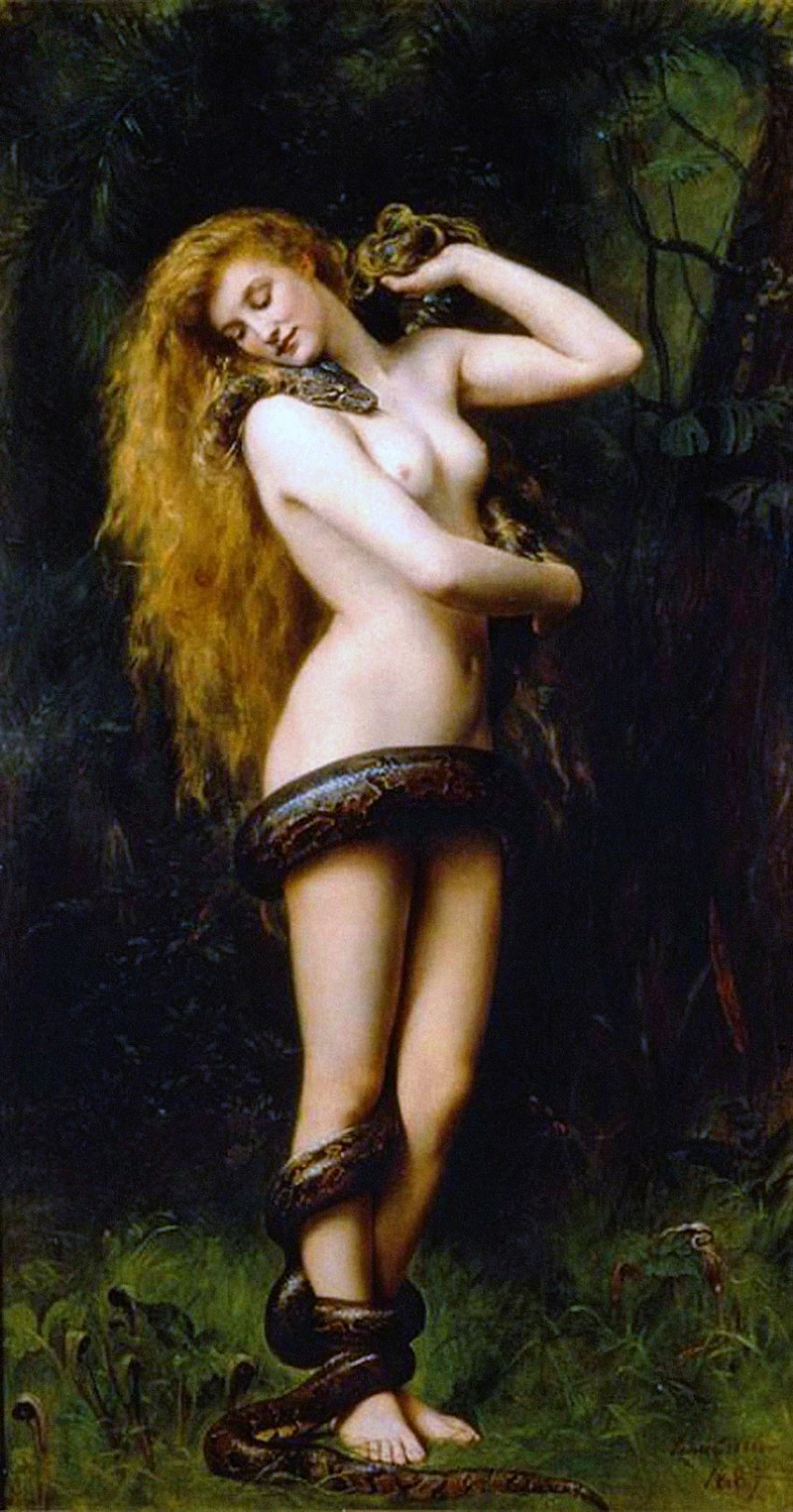
Readers of the Book of Genesis will know that Adam’s first wife was Eve. But some have suggested that the story of Genesis was deliberately changed by the Christian church to hide the fact that Adam had a wife prior to Eve, and her name was Lilith. Is there any truth to this conspiracy claim?
It is true that according to medieval Jewish folklore, that there is a story about a Lilith, who was Adam’s first wife. The most obvious problem with the conspiracy claim is that one of the first Jewish writings to definitively tie Lilith to Adam was a mystical text, the Alphabet of Sirach, composed somewhere between the years 700 C.E. to 1000 C.E. This is several hundred of years after the New Testament was already completed, and well over a thousand years after the story of Adam and Eve made its way into the Bible.
Lilith (1887) by John Collier in Atkinson Art Gallery, Merseyside, England (credit: Wikipedia)
What gives a little bit of life to the conspiracy claim is that a legend about a female demon, Lilith, did originate in Sumerian and Babylonian writings, centuries before Christ. Tales about Lilith crept into later Jewish writings. But the Alphabet of Sirach was one of the first written works to have made any serious connection between Adam and Lilith, and the Christian church had already been in existence for several centuries.
Dr. Michael Heiser has a 13-minute video explaining the full story about Lilith, including why medieval Jewish scribes invested in the Lilith story, and why the conspiracy theory about her existence as Adam’s first wife being suppressed can be easily dismissed.
Critics of the Bible will often point out discrepancies between different Scriptural accounts to be evidence of contradictions in the Bible. A classic case involves differences between Matthew’s account and Luke’s account of the death of Judas Iscariot. In a 2019 debate, critical scholar Bart Ehrman presses the contradiction claim against evangelical Bible scholar, Peter Williams.
Peter Williams’ explanation of what might have happened, in reconciling these accounts, parallels the answer given by Answers in Genesis’ Georgia Purdom. While the standard Williams/Purdom explanation does have a measure of plausibility, I must admit that Bart Ehrman has a point here. Given enough range of possibilities, you can pretty much resolve just about any contradiction.
But some attempts to harmonize the text do not always convince everyone. In Matthew, Judas hangs himself before any mention of the purchase of a field. In Luke-Acts, Judas dies in the field, after he had just bought the field. It is possible that Judas acquired the field, in some manner, before hanging himself, and then afterwards, the chief priests repurchased the field. But the events still seem a bit disconnected. Furthermore, it seems strange that Luke would not have reminded his readers that Judas had hung himself.
I would not want to totally dismiss the Williams/Purdom explanation, but it does border on being ad hoc. Might there be a better resolution to this discrepancy, that has better explanatory power? I think there is, but you have to think a bit “out of the box” to get there.
YouTube apologist Michael Jones, a.k.a. Inspiring Philosophy, brings Licona’s insights to bear on the death of Judas conundrum. In the days of King David, Ahithophel deserted David and plotted against the king, in support of Absalom. But when Ahithophel realized that the plot against David would fail, he hung himself (see 2 Samuel 17, especially verse 23). It is possible that Matthew might have used the hanging of Ahithophel as a metaphorical way of saying that Judas was yet another Ahithophel.
This would have been consistent with the practice of Greco-Roman bios to use figures of speech, that may not be obvious to the modern reader. In other words, perhaps Judas did not actually hang himself, but he could have committed suicide in a manner more like it is described by Luke, early in the Book of Acts. This idea is supported by evidence in the Gospel of John, where John alludes to Judas’ betrayal as being like the betrayal of Ahithophel (Psalm 41:9; John 13:18).
What I would conclude here is that there are a variety of possible resolutions to this classic Bible discrepancy, but that allowing for the use of metaphor and figure of speech, where something has been traditionally interpreted in a non-metaphorical sense, might actually be a better, more plausible and even probable way to resolve such difficulties.
The current scientific consensus, in the exploding discipline of genetics research, indicates that it would have been genetically impossible to account for today’s biological diversity, among humans, based on a solitary human couple, less than six thousand years ago.
A number of Christians see implications from this scientific pronouncement, but they differ on the specifics. For example, Canadian evangelical theologian and scientist, Denis Lamoureux, contends that science rules out the possibility of a single, Adam and Eve couple, since there had to have been an initial human population, of about 10,000 people, to produce the type of genetic diversity we see among humans today. For Lamoureux, without an Adam and Eve, you have no cosmic Fall event. Ironically, Lamoureux still believes that humans all sin; thereby, upholding historic Christian doctrine.
Lamoreux’s conclusion is therefore puzzling. For without a cosmic Fall event, where Adam and Eve were eating the forbidden fruit, it is difficult to determine a historical reason for exactly how sin entered the world, and corrupted the human race.
Rejecting an historical Adam and Eve bothers many Christians, and it is not that difficult to imagine why.
Where does this leave us? Does this impasse signal an irreconcilable conflict? Does the historical reliability of the Scriptures crumble under the weight of not having a “real” Adam and Eve? Is there a way that science and Christian faith can come together, and make peace with one another? Or should we expect the inevitable, with more and more “deconversion” stories coming to light?
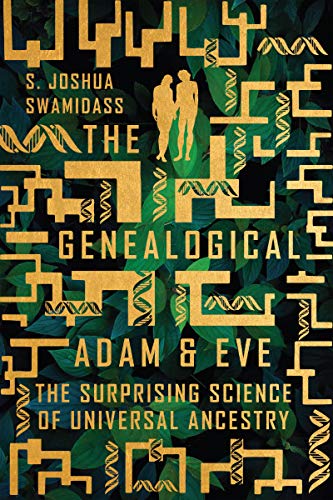
Enter S. Joshua Swamidass, a doctor and scientist teaching at Washington University, who runs a website at PeacefulScience.org. Unlike those who favor the deconversion narrative, Swamidass is optimistic. He has proposed a very interesting answer to these questions, an answer that might resolve the difficulty. In short, to quote from his new book, “Evolution fractured the origin story of Adam and Eve, but we can recover it now” (The Genealogical Adam and Eve, ch. 14).
Swamidass takes this idea of other humans, living alongside of Adam and Eve, outside of the Garden, and explores it, both in terms of its biblical and scientific possibilities. His conclusion? Pay close attention here: Neither the Bible, nor does science, indicate that all people today are genetically related to one another, as coming from a single human couple. Yet both the Bible and science can find room to agree, that all humans today are genealogically related to one another, from a single human couple, namely Adam and Eve, who lived about 6,000 years ago. Science, therefore, does not rule out the possibility of Adam and Eve being created de novo, by God, with no direct biological link to any other creatures.
In other words, Swamidass’ proposal seeks to build bridges across wide divides, but in doing so, he breaks all of the older molds. But perhaps the older molds all need breaking. Perhaps those who are less in entrenched in their particular silos might be open to what Swamidass has in mind.
This is the reason I am really excited by professor Swamidass’ peace proposal. We see all kinds of issues where Christians will divide from one another: separating churches, damaging friendships, and even causing tensions in family relationships. In an age when the church is divided about a number of issues (charismatic gifts, the EndTimes, women in ministry, etc.), it is really encouraging and refreshing to see how someone is creatively willing to try to get a number of Christians, with very different views of human origins, into a room, to try to hammer out a peace proposal, as a sincere attempt to try to build unity among believers, without compromising truth.
That is a pretty tall order.
But it is necessary, if we really believe that Jesus meant business when he prayed for his people to be united as one, in John 17. It is also necessary, if we really want to stem the tide against the increase of deconversions. In an age where it seems like Christians (myself included) can easily get caught up in debates, that can so easily divide us, in a world that is already dividing at an accelerated rate, such peace attempts are worth the effort.
When it comes to Adam and Eve, the dispute is quite simple. The theologian or pastor insists on an historical Adam and Eve. The scientist insists that there is no way that a solitary Adam and Eve can account for the evidence, regarding today’s biogenetic diversity among humans. Swamidass frames the dilemma sharply: “This is the impasse. It has been the impasse for over a century. Pastor explains his honest understanding of Genesis. A scientist objects. The conversation ends. A fracture.” (Kindle location 171). Having been stuck in the middle of these type of conflicts before, I can feel the pain. But Joshua Swamidass’ peace proposal has helped me to re-read the first few chapters of Genesis with new eyes.
Will Swamidass win over the critics? Who knows, but this does stand as a possible way forward. For readers of the book, you should know about the errata page that Dr. Swamidass has, where he is making updates, whenever readers find errors in the book itself. I have read a good chunk of the book, and it is totally refreshing and different, and I would encourage everyone who is interested in this topic to check it out, or at least start with one of the videos below.
For digging deeper……The following YouTube videos explore the questions raised by The Genealogical Adam and Eve. First, there is an episode of the Unbelievable? podcast, where Dr. Swamidass, and an atheist colleague, explains the thesis of The Genealogical Adam and Eve. I would start with that video first. Second, with a greater amount of depth, there is an interview with Dr. Swamidass, by two of my favorite young Christian YouTube apologists, Cameron Bertuzzi, of Capturing Christianity, and Michael Jones, of Inspiring Philosophy. The third video dives into more of the nitty-gritty, as it is an engaging conversation between Dr. Swamidass and Dr. William Lane Craig, hosted by Capturing Christianity. Enjoy!!
Some helpful resources on the current cultural crisis….
Grove City College historian, Carl Trueman, has some great observations about the author of the Harry Potter series, J.K. Rowling, and her recent “fall from grace” from the explosively emerging “critical theory” crowd, sometimes called “cancel culture,” that grew up on her children’s books. Calling out people on social media appears to be the favored method of humiliation by the technological savvy among the “cancel culture.”
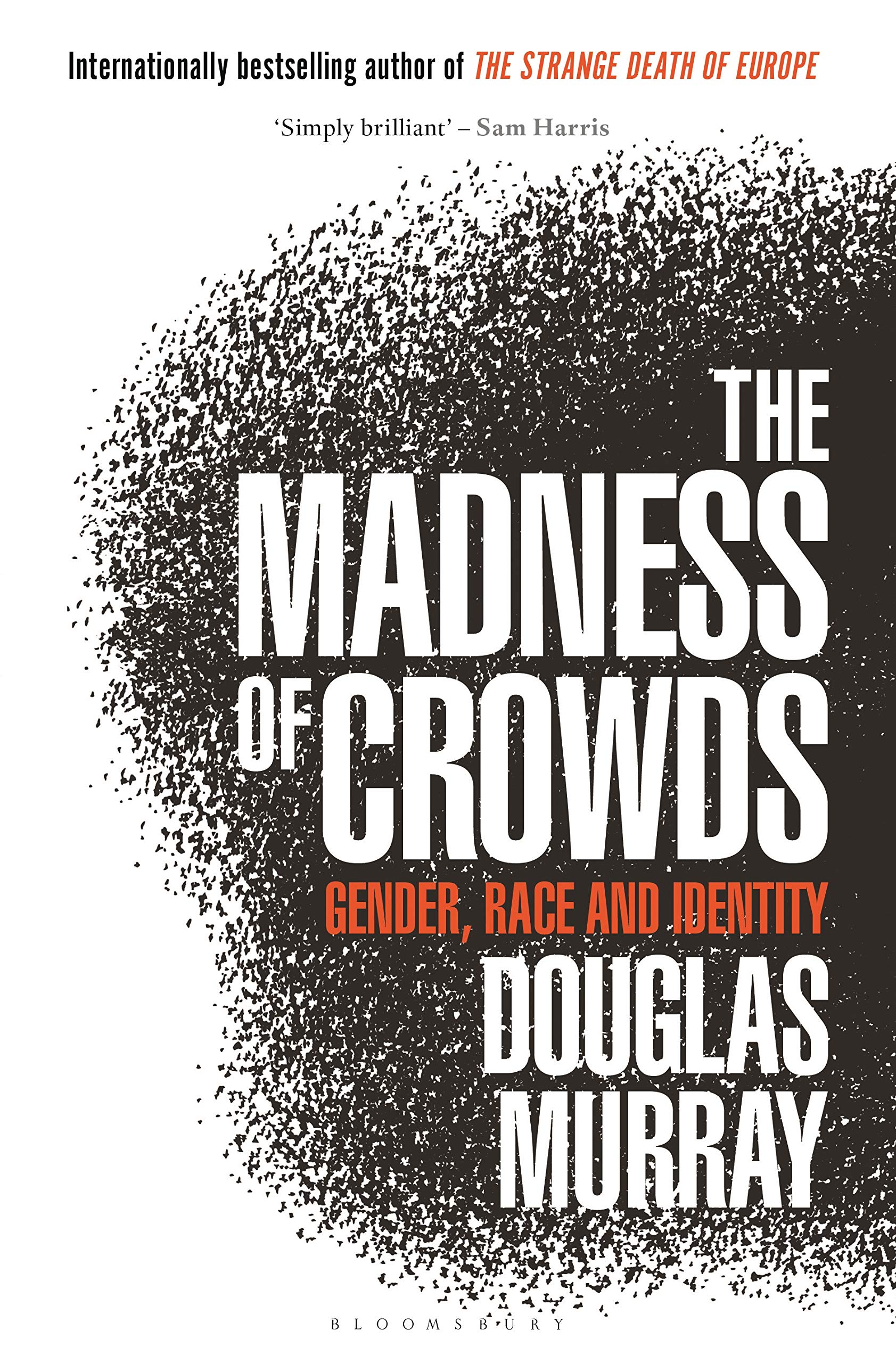
I blogged about the troublesome trend in my review of Douglas Murray’s book, The Madness of Crowds. Murray opened my mind to a lot of the madness going on in our culture today. Murray is not an evangelical Christian, but Carl Trueman is, and Trueman offers invaluable theological insight into the problem that Murray identifies. This quote from Trueman stands out to me: “in a world where critical theory increasingly drives how the world is conceptualized, today’s victim can very easily become tomorrow’s oppressor.” This split within the “LGBTQ” movement is indicative of the trend.
In a nutshell, as a tool, “critical theory” can indeed be useful, for correcting injustice. But as an ideology, “critical theory” is an intolerant religion, completely opposed to the Gospel of Jesus. But Trueman puts it better than I can. I look forward to Trueman’s up and coming book on the topic of the “The Rise and Triumph of the Modern Self.” In our troublesome times, Trueman’s Christian perspective is helpful for all of us.
A couple final thoughts, particularly on the race conversation…: It is becoming harder and harder to distinguish between legitimate cases of injustice and protest motivated by blinded rage. As a result, the temptation on one side is to play down legitimate concerns, and on the other, to wildly overreact. Related to the question of police brutality and racism, this essay by John McWhorter, an African-American intellectual, is highly recommended. McWhorter argues that while race is sometimes a component of police brutality, the issues involved are far more complex. This is the type of conversation needed today…..
Confused by how we all got into this mess, especially with race? Two helpful videos: First, from Jemar Tisby, author of The Color of Compromise, on how racism adapts over time, and then Phil Vischer, of the Veggie Tales fame, giving some of the historical background, which has fueled the contemporary interest in “critical theory.”





 Veracity