Where did “secularism” come from? Are secular values at war with Christianity?
The late venerable statesman for Protestant evangelical Christianity, J. I. Packer, remarked that the greatest threat to evangelical faith today comes not from the so-called “religious” world, such as the revival of a resurgent Roman Catholicism, bent on undercutting the principles of the Reformation. Neither does it come from an amalgamation of Eastern religiosity, as in the New Age Movement, and perhaps not even from Islam, despite its rapid growth. Rather, the “Great Tradition” of Christianity, the triad of evangelical Protestantism, Roman Catholicism, and Eastern Orthodoxy, share a common adversary: a relentless and pervasive secularism. The various strands of Christianity have their profound differences, but they all face together a common challenge: Secularism is the acid that corrodes Christian belief.
Originally, the English word “secularize” came into use during the period of the Protestant Reformation, when lands owned by the church were confiscated and placed in the hands of the state. To make something secular in the 16th century was not an attack on Christianity, but rather, a means of empowering the state to limit the influence and power of the Roman Catholic Church.
But what drives the ethical and worldview imperatives of a secular view of reality in the 21st century? Today, many contend that secularism owes its origins to classical, ancient Greece, only to be pushed aside by the rise of the Christian church, in the Roman empire. Centuries later, by at least the 18th century, secularism was revived through the narrative of Enlightenment, with the triumph of a scientific approach to the world, over and against the superstitious outlook of Christianity, whereby slavery was eventually eradicated, human rights celebrated, and the shackles of repressive sexual restrictions removed…. so the story goes.
Tom Holland, a leading popular historian from the U.K., who has written top-notch histories of the ancient world, once embraced this dominant, contemporary secular perspective (this Tom Holland is not to be confused with the Spiderman actor!). Holland had grown up in the Church of England, but his fascination with dinosaurs as a child triggered his eventual move away from the Christian faith towards atheism. Sunday School depictions of Adam and Eve running around with dinosaurs, merely a few thousand years ago, effectively caused this young boy to doubt his tender faith in the God of the Bible. The glamorous romanticism of the ancient Greeks caught his imagination instead, which has inspired his writing career.
Yet years later, Holland’s latest book, Dominion: How the Christian Revolution Remade the World, dismantled his own earlier thesis, of a secular view of the world superseding Christianity. Now Holland believes, despite the loud appeals otherwise, that it is Christianity that has made the modern world what it is. Christians should take notice of Tom Holland’s revisionist perspective of history, as he has given us a helpful framework for understanding where the Christian church is, in this current cultural moment, resulting from decades of social change.
The Christian roots of our growing secular world has created a crisis, that few secular intellectual elites have been willing to accept, up until recently. A liberal secularism embraces human rights, the equal dignity of all persons (except, apparently, in the case of the unborn), a desire to rid the world of poverty, and the responsibility to care for the weak and the sick. But as Holland makes his case in Dominion, these are all essentially Christian values, an embarrassment for those who wish to see orthodox Christian faith cast upon the dung heap of forgotten human history.
Dominion is equally a fascinating, entertaining read, as well as being a deeply and intellectually stimulating read, that fills the mind with challenges. The thesis being proposed in Dominion, that of a self-confessed secularist critiquing secularism, deserves a careful in-depth review, which I will currently explore. Continue reading
I do not see a need to rehearse the specifics of the accusations. You can follow the links above to learn more.
What I want to do here in this post is to analyze some of the responses on social media, regarding how these accusations about Ravi have been received by Christians, and the general public. Vice President Michael Pence, at Ravi’s memorial service, called Ravi “the greatest Christian Apologist of this [the 21st] century.” There is no doubt that Ravi Zacharias has been one of the most well-known Christian celebrities in the contemporary era.
Many, like me, are grieved about these accusations. As someone who has taught Ravi Zacharias material in adult Bible classes, and who has appreciated a few of his books, I have looked up to Ravi, just as others have done. Ravi’s ministry has benefited my life and the lives of others that I know, and students I have taught. So, I would naturally want to defend Ravi’s reputation here.
At the same time, truth must prevail above all else. Some who have stepped forward with their accusations have been hurt very deeply by all of this, and have seen their reputations tarnished (rightly or wrongly). Others have remained anonymous, due partly to the embarrassing nature of the accusations. Such voices need to be heard, and taken seriously. An independent analysis of the evidence needs to be made, and so it is troubling that a journalist like Julie Roys is skeptical that the investigation sponsored by RZIM will truly be independent. I sincerely hope Julie is wrong about this, and that the truth will come out. Regardless of what happens, we should not be fearful of the truth, recognizing even that if Ravi is shown to have been clearly in the wrong, that this only demonstrates that all of us are sinners, who stand in need of the grace of God to set us free from our sin. YouTube apologist Whaddo You Meme?? has the right perspective here.
But not everyone responds this way. The double-downing effect that some have, in defense of Ravi, is expected to a certain degree. We are called to uphold the reputation of Christian leaders. “A good reputation is more valuable than costly perfume” (Ecclesiastes 7:1 NLT).
Sadly however, some who have rallied to Ravi’s defense have done so in a manner that is greatly troubling, that takes the teaching of Scripture and turns it on its head, completely upside down. Here are some examples that are disturbing:
Some have defended Ravi by questioning why such accusations have only emerged afterRavi died, this past May, thus raising suspicion. But in cases of abuse, particularly sexual abuse, it is very rare for victims to come forward right away, out of fear of repercussion against them. Trauma from abuse can take years and years to overcome.
Some have defended Ravi by assaulting the character of the accusers, claiming that the accusers are “in it for the money,” for example. True, there are cases where false accusations are made, in order to cause great harm on Christian leaders, etc. Nevertheless, everyone needs to be fairly heard. The problem with the Christian celebrity syndrome is that we are typically more inclined to trust the famous and powerful celebrity and dismiss the less well known, and less powerful person.
Some have made some completely outlandish claims, that Christian journalists at Christianity Today have adopted a compromising, liberal attitude towards evangelical faith, and therefore, they have used that liberal distrust to attack a good man. I then wonder what such folks think when other Christian news outlets, like WORLD News Group, ChurchLeaders.com, and the Roys Report, also report the same story, and even bring out new points of data. Is every Christian journalist out there who investigates a Christian celebrity simply a tool for the “far left,” “liberal” biased media?? Really??
While I am surely grieved about the accusations against Ravi, I am probably more grieved by supposed defenders of Ravi who are willing to risk tarnishing other people as merely “pawns of Satan” in an effort to make an idol out of a Christian celebrity. Christians sometimes overuse the language of “tools of Satan” and the “demonic” to attack other people, and avoid the hard work of listening. Yes, Satan is at work to tear down what God is building. But when we attribute “Satan” wrongly to the pursuit of truth, no matter how painful it is, we only do tremendous harm. Any sort of ad hominem attack against a person is no substitute for an honest look at the evidence. Instead, we are called to worship Jesus, and not any fallen man.
Granted, most people have neither the time nor the energy to do full blown investigations themselves. When it comes right down to it, we all have to trust other people to a certain degree. Most of the time, we simply have to defer to trusting in some other authority, believing that such authority is speaking truth and willing to do the hard work of investigation, sorting fact from fiction, on behalf of others occupied with the many other aspects of life.
On the other side, many critics of the Christian faith conclude now that Ravi Zacharias is just another in a long line of hypocrites: Just another reason why the Christian faith should be rejected. For many of such critics, if you dig deeper, it comes down to broken trust. Why trust what a Christian says about the Gospel when they speak lies about other matters?
But the Gospel tells us that we need not be fearful of the truth, as even with hypocrites, Jesus had them among even his “elite” group of followers: Peter promised to defend Jesus to the uttermost, but he denied Christ three times, did he not?
Hopefully, Christians will be known as truth-seekers, even when certitude on certain things remain elusive. My confidence in Christ is strengthened, but not entirely built on, the testimony of others, including Christian leaders like Ravi Zacharias. The argument for the truth of Christianity is based on an aggregation of different evidences, of which the personal life and testimony of others is but one component of a much larger mosaic of realities, that point to Jesus. If one component is shown to be unreliable, or at least somewhat shaky, it need not cause us to reject the whole.
According to this Julie Roys’ podcast, it was Ravi Zacharias’ teachings about prophecy fulfillment in the Book of Daniel that first drew skeptic Steve Baughman to consider Ravi’s arguments in defense of the faith. But Baughman was not entirely impressed with Ravi’s treatment of Daniel, which led him to look more closely at Ravi’s ministry, which eventually led to the disclosure of how RZIM did not properly represent Ravi’s academic credentials, in RZIM’s promotional materials. As it turns out, RZIM’s failure to address the academic credentials issue in a more timely manner was but the first in what has now become a series of far more damaging allegations. Why it took an “outsider,” like Steve Baughman, to force RZIM to begin to address these matters in the first place, instead of some hard looks within RZIM itself, still boggles my mind.
I am not sure if Steve Baughman will ever read this, but if he does, I hope he knows that there are still some Christians who value truth above celebrity-Christianity.
It is quite possible that we may never know the full story here, this side of eternity. Ravi Zacharias is no longer here to defend himself. To repeat, I do hope for the best outcome for Ravi’s reputation from the impending investigations. If such is not the case, for which the mounting evidence points more and more towards, then it would be good for Christian parachurch organizations, like RZIM, and the local churches that care for Christian celebrities, like Ravi Zacharias, to do some serious soul-searching. If all, or even some, of the accusations do turn out to be true, it looks like we are dealing with a man who had immense pressure placed on him to perform in a such a way, that he himself could never achieve. His way of relieving the pressure placed upon him, and his own depression and doubts, sadly impacted the lives of others in a hurtful way (listen to the WORLD News Group broadcast on October 15, 2020, starting about at the 27 minute mark to the 30 minute mark for more). Ravi’s own testimony indicated that he wrestled with suicidal thoughts on at least one occasion, as part of his conversion experience as a young man.
Was Ravi really healed from these suicidal thoughts after his conversion? Was there sufficient accountability at RZIM? What was really going on at the RZIM board? Was there sufficient accountability at Ravi Zacharias’ local church? These are difficult questions that probably deserve concentrated attention.
Neo-orthodox theologian Reinhold Niebuhr once famously said that original sin is “the only empirically verifiable doctrine of the Christian faith.” But what was once “empirically verifiable” is now questioned, and even science is being enlisted as its primary foe.
As the story goes, modern science indicates that it is impossible for the breadth of humanity today to have been derived from a single human pair. If there was no single human pair, there was no Adam and Eve, as the fountainhead of all of humanity. If there was no Adam and Eve, there was no cosmic Fall. Without a cosmic Fall, there was no original sin.1
The conclusion? If the core element of Christian teaching is that Jesus saves us from our sin, then without original sin, the entire Christian story regarding salvation falls flat. Therefore, science has made original sin obsolete. … To continue holding to an obsolete doctrine means that the Bible can not be trusted… The Christian story of sin and salvation implodes…. POOF!!
This is a narrative that has become increasingly popular in the West, as seen from different angles. Many former Christians and other agnostics/atheists point to this as one of the primary reasons why Christian faith must be rejected. Liberal-minded Christians will tend to look the other way and ignore such difficulties. Others from a Christian background will use this objection as a means of rewriting the whole of Christian theology to build a completely different worldview.
Glenn Morton (1950-2020). A maverick creationist(?), who defied labeling, finished his final book, Eden Was Here: New Evidence for the Historicity of Genesis, within days before his death. Morton makes the case for an historical Adam and Eve, thereby linking the Fall of humanity, and its association with original sin, to a specific event in the very ancient past.
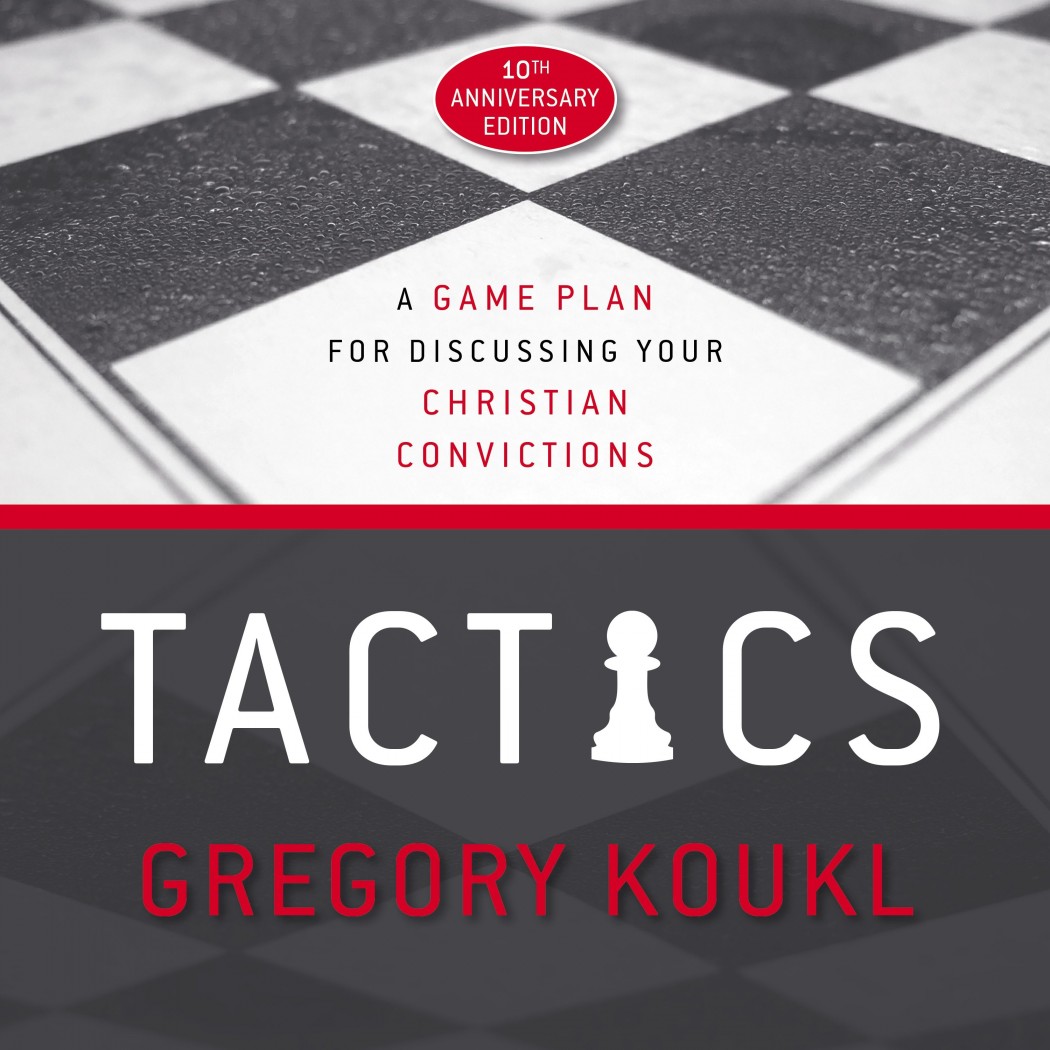
Greg Koukl’s Tactics stands out as the best book that I have read this year, and the year is not even over yet. Koukl, the founder of the apologetics ministry, Stand to Reason, originally wrote this book about ten years ago. A tenth anniversary edition of the book has come out. David Wood, another Christian apologist, say that Tactics is the one apologetics book every Christian needs to read in 2020. So, I decided to take him up on that, and get the audiobook version.
I am so glad that I did. David Wood is right.
Greg Koukl’s book on “tactics” should be required reading for EACH and EVERY CHRISTIAN who struggles with sharing their faith with others.
Greg Koukl’s Tactics is the single most important book in Christian apologetics that you would ever need.
I like to think of myself as an evangelist, but I am not a very good one. I must confess, it just seems like evangelism is getting harder and harder, with every passing year. I find myself continually intimidated, when getting into conversations with others. I never think that I have the most persuasive arguments, when sharing my faith, so I just end up staying quiet most of the time. I even have the same frustration, when trying to discuss a difficult, controversial topic with another fellow Christian, when we have a disagreement. I would rather change the conversation, and avoid the discussion altogether.
“How ’bout them Yankees!! … Nice weather we are having, right?”
Perhaps it goes back to my days as a young believer of doing door-to-door evangelism. I have always envisioned that gospel-oriented conversations need to be about “closing the deal,” and pressing for a decision for Christ.
Not so, according to Greg Koukl. For if we really trust the leading of God, that He might work through the power and presence of the Holy Spirit to change a person’s heart, then it really is not our job to try to “convert” someone. Rather, it is about trying to give someone else something new to think about, and then letting God do the rest of the work.
When you are in a gospel conversation, trying to muster up the best case to win someone over to your point of view, is not the goal, according to Greg Koukl. Rarely is a “debating mode” effective. Rather, one should be about asking good questions, and thus making your interlocutor do the work of having to defend their position, for which they are advancing. If you focus on trying to ask good questions, then you might end up helping the other person to realize that they are believing something, without sufficient justification for that point of view. If the other person begins to suspect that their own position is not as well thought out as they originally thought, it could serve as an opportunity for God to work in the mind and heart of that other person.
Oh…. and just one more thing……
Greg Koukl and the “Columbo Tactic”
Greg Koukl advances basically two questions that can be used to help anyone out, in any conversation, when you feel like you are stuck, and unable to come up with any other reasonable question, that does not make you sound stupid:
(1) What do you mean by that?, and
(2) How did you come to that conclusion?
Koukl calls this the “Columbo Tactic,” named after the 1970s TV detective show, where Peter Falk played the part of a bumbling police detective. But the magic about “Columbo” is that he was always able to sneak in a few strategically placed questions that eventually discloses the killer. Greg Koukl uses this “Columbo Tactic” as a means of “putting a pebble into someone else’s shoe“. It is then up to God to move in that person’s life, to bring about meaningful change. We can then pray that God bring another Christian in the path of the other person, and thereby spark a deeper conversation.
Here are merely a few gems that Koukl lays out for the reader, based on the “Columbo Tactic,” of asking, “What do you mean by that?,” and “How did you come to that conclusion?” Here is what I learned:
If someone gets mad, I lose. In other words, if I get upset, or the other person gets upset and angry, then I lose the opportunity to try to “put a pebble into someone else’s shoe“….. I have made a lot of people mad, or I get really frustrated and upset with myself, so I REALLY need to learn how have better conversations, as Greg Koukl illustrates.
The person making the claim bears the burden of proof. It is always better, when in conversation, to ask questions instead of making claims. You do not need to defend if you are asking questions. But when you make a claim, you bear the burden of proof to defend it. It is always more effective to reverse the burden of proof and place it on the other person, whenever you are being challenged.
Always take the time to ask questions about the other person’s belief, to make sure you properly understand it. If you do not understand the other person’s perspective, then they can easily dismiss you for twisting their words…. and they would be right!!
Ask questions that might help another person see an inconsistency with their belief structure, as a means of giving them something to think about. Many times, people will make assertions that will oddly contradict some other deeply held belief. For example, is the statement, “There is no such thing as absolute truth,” an absolutely true statement? Asking questions is always better than making statements about someone else’s belief. Koukl calls this the “suicide” tactic, as inconsistency in deeply held beliefs leads to a type of intellectual suicide (I just wish Koukl had a better name for this tactic).
Put yourself in the position of taking on someone’s point of view, and examine where such a view might lead. Often the natural conclusion to such viewpoints can be self-undermining. Koukl calls this tactic “taking the roof off” of another person’s argument. This is actually the best use case for what is called “propositional apologetics,” whereby you can follow the train of thought that leads from a person’s presuppositions, to arrive at a conclusion, and then ask whether or not the conclusion is acceptable.
You do not need to allow a steamroller, someone who keeps bombarding you with claims and questions, to get to you. Instead, first stop the person and ask for the time respond. If they keep steamrolling you, point that out, and ask for courtesy. If that does not slow down the conversation, then give the person the last word and walk away.
If you do not know the answer to someone else’s question, simply say “I do not know.”Ask for some time to go research the question, before making a response.
There is a difference between possibility, plausibility, and probability. If someone else makes an assertion, there are basically these three options to explore.
First, is it possible? In some sense, just about anything is possible. However, some assertions are not possible, once that assertion is reasonably and carefully examined. Impossible assertions can be disregarded by the sheer weight of evidence that easily and convincingly works against the assertion.
Secondly, is itplausible? Something might be possible, but not necessarily plausible. In other words, is there actually evidence that might support the assertion? In the absence of other alternatives, is there reliable evidence available that indicates that the assertion is not simply possible, but plausible?
Thirdly, is it probable? Given other plausible alternatives, does the assertion being examined have enough evidence behind it to make it more acceptable than the other available alternatives? One can still acknowledge an assertion as not only possible, but even plausible, as a sign in giving the other person the benefit of the doubt, that they might be correct. But that does not commit you to accept the assertion, if it turns out that there is at least one other, more probable assertion available. We are not obligated to accept assertions that are merely possible, or even if they are merely plausible. Instead, we are to accept assertions that are more probable, as compared to other assertions.
Greg Koukl’s Tactics, and Peter Boghossian’s and James Lindsay’s How to Have Impossible Conversations
Actually, aside from some prodding by others, my interest in reading Tactics was driven by reading/listening to another book, that takes a similar approach, but from a completely different worldview perspective. This book, How To Have Impossible Conversations, was written by a pair of atheists, Peter Boghossian and James Lindsay.
So why would I invest in reading a book written by a pair of atheists, as an aid in helping me as a Christian have better conversations with others, who do not share my Christian convictions? Allow me to explain.
Boghossian and Lindsay are two academics who were behind the embarrassingly silly “Grievance Studies Hoax” (or, for another story about it),that exposed corruption in the academy. Such corruption has led to things like an ideologically-driven mindset regarding Critical Race Theory and the “cancel culture.” Boghossian and Lindsay are on the forefront of trying to educate people about Critical Race Theory, and they oddly make a surprising alliance with evangelical Christians, who are also concerned about free speech on college campuses. Boghossian and Lindsay, though they are not persuaded by the truth claims of evangelical Christianity, have developed a very similar approach to Koukl’s Tactics, that can help people engage in “impossible conversations.” Despite some sharp differences, I thoroughly enjoyed How To Have Impossible Conversations.
Peter Boghossian, in particular, is often credited with founding the idea of “Street Epistemology,” which is essentially an update of the Socratic method, whereby you can enter into casual conversations with people, in order to determine how others have arrived at the beliefs they hold. While Boghossian has in mind steering conversation partners towards atheism, the same type of conversation, handled in a different manner, could also be used to help others to consider Christianity instead.
This is where Greg Koukl’s Tactics comes in. In fact, Koukl addresses some of Peter Boghossian’s “tactics” popularized in Boghossian’s earlier book A Manual for Creating Atheists. As you might guess, as a Christian, I was startled by such an aggressive book title! Since then Boghossian has toned down his atheism rhetoric, resulting in a more fair and nuanced How To Have Impossible Conversations.
For example, Boghossian was heavily criticized in his earlier book, because of his awkward definition of “faith” as “pretending to know things that you don’t know” and “belief without evidence,” a criticism that Greg Koukl highlights in Tactics. Impossible Conversations backs off on that awkward claim and chimes in on more refined themes, just as Koukl refined the arguments in his Tactics book, the 10th anniversary edition that I read.
The main piece of good advice in How To Have Impossible Conversations, that is not clearly presented in Tactics, is regarding the willingness to change one’s view. It really makes no sense to try to ask someone to change their view, if you are not willing to change your own view. Greg Koukl does not really bring this idea out well enough in Tactics, though Koukl does admit that sometimes we can easily misrepresent the views of our interlocutor, which is a good reason why good listening skills are essential for the Christian, that can help us to change our mind, as to where someone else might be coming from.
One practical way to think through having a willingness to change my own beliefs is to consider under what conditions, or what type of evidence would I need to see, in order to change my own beliefs. If we are willing to ask this about ourselves, it would also open up ways to be able to ask this of others. A central point that Peter Boghossian makes in How To Have Impossible Conversations is that just because certain arguments or lines of evidence might convince you, that does not mean that such arguments or lines of evidence will convince someone else. We human beings can be complex creatures (Here is a helpful outline to How To Have Impossible Conversations).
Both How To Have Impossible Conversations and Tactics have proven to be exceptionally helpful to me, as I am pretty terrible when it comes to having such “impossible conversations,” and sharing my faith with others. I am so wanting to “win the argument” intellectually, that I am not-so well-trained in learning how to “win the person.” This point has been driven home to me over the years, since I have been writing for the Veracity blog. It has also come up, when I have had conversations with other Christians, who do not share the same doctrinal convictions that I have.
My concerns have also increased, as a number of my Christian friends seem to be drawn more and more to various conspiracy theories, or other unfalsifiable ways of thinking, both on the right and on the left, that in my view, tend to discredit our Christian witness. My reaction is almost always to lose my cool, and keep insisting on “the facts.” But Greg Koukl in Tactics, and even Peter Boghossian and James Lindsay in How to Have Impossible Conversations, are helping me to better approach these difficult conversations. I am encouraged to focus more on trying to understand how other people come to the conclusions that they arrive at, and less on trying to prove the other person to be wrong. In learning to listen better to what the other person is saying, and figuring out why they are saying it, I actually learn more, even if it means modifying some of my own beliefs.
But it is not easy: I am pretty stubborn at all of this. As Greg Koukl advises, I need to put myself more in “learning mode,” developing a sense of curiosity and wonder, about why other people believe the things they do, instead of becoming a type of “message delivery service” (Peter Boghossian’s term), that mostly puts other people on the defensive. When people become defensive, the likelihood of someone changing their beliefs is drastically reduced. If people feel like they are being attacked, they tend to double-down on their beliefs, instead of being open to change. And nobody wins in that type of environment, neither the other person, and certainly not me.
Added Mini-Tactics in Greg Koukl’s Tactics
The first half of Tactics is really the foundation of the book, a thorough going analysis of the Columbo tactic. Koukl even adds a chapter on how to reframe a conversation, if and when you find yourself having the Columbo tactic applied to you!!
The second half of Tactics is more about analyzing common arguments that you often hear in difficult conversations. While not as strong as the first half of the book, the tactics laid out in the second half of the book serve as a means of putting the Columbo tactic to effective use, in real life situations. For example, Greg Koukl helps the reader to identify intellectually suicidal statements, that do nothing more than to kill a conversation. Some common conversation stoppers include, “All religions are the same” and “There are no absolutes.” But having a way to analyze such arguments, by reading a book like this, while the pressure is off, is very, very helpful for when the pressure is on, and you are engaged in a conversation, where someone might be skeptical to the Christian faith.
I particularly benefitted from a new chapter on “Mini-Tactics,” that was not available in the original edition of Tactics:
“What a Friend We Have in Jesus.” A lot of critics will make an appeal to Jesus in order to try to defeat certain Christian arguments. Instead, we should try to enlist Jesus on “our side,” as a defense. For example, if someone really does not like what the Apostle Paul says, but still likes Jesus, it is good to remind them that the Apostle Paul was personally selected by the Jesus to be his spokesperson to the Gentiles. If Paul was seriously wrong for something he taught, then Jesus was wrong for picking him to be his representative.
“Sticks & Stones.” Others may call you names like “bigot,” “hater,” etc. But a way to turn this around is to argue that even if I were a “bigot” or “hater,” how would that alter the substance of the argument that is found presented in the Bible?
“Moving Toward the Objection.“ Sometimes it is better to embrace the objection, in order to show that it has no force. For example, some argue that Christianity is simply but a crutch for weak people. To respond to that, move toward the objection by saying that people who are in need do need a crutch. What is wrong with that?
“Watch Your Language.” Avoid Christian-ese as much as possible. Find terms and definitions that your interlocutor will accept. For example, instead of always insisting “The Bible says, The Bible says,” it might be better to say “Jesus says,” or “Paul says.” It is still true, but it gets you away from always falling back on overused Christian lingo.
“The Power of SO.” If someone makes a claim that is irrelevant, then a possible response would be to say “so what?” Even if the claim is true, ask why would this have any bearing on the argument at hand?
A Friendly Criticism of Greg Koukl’s Tactics
Alas, despite being my book of the year so far, the book is not perfect. It helps that in Tactics, Koukl provides a number of examples in how he uses Tactics to help better frame a more productive conversation. However, I am not always convinced by every specific example that Koukl uses, and the way he uses them. This is really my primary criticism of the book, but I do feel obligated to point it out, as non-believing critics have noticed this as well. In particular, I am not always persuaded by how well Greg Koukl defines his terms, when engaging in apologetic conversation. In some cases, he even overstates certain “facts.” It is very easy to correctly state certain “facts,” but then make the error of smuggling in other “facts,” that are not so factual.
For example, the term “evolution” means different things to different people. I normally think of “evolution” in purely the sense of a biological scientific theory, whereas I think Greg Koukl generally uses it in a broader sense of a materialistic worldview. The same concern comes from the use of the term “intelligent design,” which means different things to different people as well. For if I were in conversation with Greg Koukl himself, I would be generally inclined, after reading his book, to employ the Columbo tactic with him, and ask Greg, “What do you mean by evolution?,” or “What do you mean by intelligent design?,” and “How did you come to that conclusion regarding evolution?”
Also, as a “pro-life” advocate, Greg Koukl develops very good arguments against abortion. Yet while such arguments are compelling in critiquing the ethics of abortion, applying the same arguments regarding public policy concerning abortion left me still sympathetic, but less convinced. Such arguments regarding the latter may needlessly muddy the waters, making the larger and far more important ethical case less effective. Koukl also tends to overstate his case, with his use of certain “facts” regarding the supposedly orthodox Christian faith of the majority of the individual American “Founding Fathers” (Read this critique of a modified version of Greg Koukl’s view).
The problem here is that once you bring up an argument, with an interlocutor, that really is not very solid, but then you try to make it appear to be really good, you can easily lose your interlocutor. It can have the negative effect of encouraging your interlocutor to ignore the really good arguments that you are trying to make. If they distrust you on a somewhat shaky argument, there is a good chance they will distrust you when you actually make a substantially better argument. Stick with the really good arguments, and avoid the ones that tend towards the shaky side of things.
Nevertheless, there are plenty of ways whereby readers can “agree to disagree” with some of the examples that Greg Koukl uses, and still benefit from the underlying principles. The great exposition of the “Columbo tactic” at work, that Greg Koukl lays out in detail in the book, makes his book worth the effort, despite any other shortcomings, to help any and every Christian become a more effective ambassador for Christ.
Greg Koukl’s Tactics as Your “One Book” on Christian Apologetics
My big takeaway from Tactics is learning how not be silenced when I am in a conversation with someone else, and in learning how to help steer a conversation in a productive direction, whereby both myself and my conversation partner can truly learn something new. The book is perfect for introverts! It can create an opening whereby the Holy Spirit can do his thing, and convict hearts, which is absolutely something that I can NOT do! As Greg Koukl put it, the goal of a Gospel conversation is simply to “put a stone or pebble in someone else’s shoe,” and then let God do the rest.
If you only have money to buy one book on Christian apologetics, buy Tactics!
I rarely go back and re-read parts of a book, even that I enjoy, but in this case, I have found myself going back over several times, and re-listening to how Greg Koukl presents Tactics. I have learned something new every time. If you want to learn how to engage in Gospel conversations, without being intimidated, then please get a copy and read Tactics!
Here is a great interview on Capturing Christianity with Greg Koukl!
As we approach Labor Day weekend, I have a few thoughts about this crazy summer, and absolutely crazy year we have been through so far. We have seen out-of-control fires from Australia to California, an extremely active hurricane season, the leveling of a large swath of Beirut, Lebanon, an earthquake in nearby North Carolina (a few hours from me), and a leading evangelical Christian college president asked to step down from his position, due to scandal. Wow. What more can happen??
The Year 2020: In One Photograph.
Of course, the big news is the coronavirus, and this summer has taught us that we are in this for a long haul. The somewhat good news is that the pandemic, though still deadly and a real threat to the most vulnerable, has not turned out to be as bad as originally feared. Yet at the same time, the pandemic has managed to bring out the worst in people, including sadly a number of Christians.
Concurrently, very real and legitimate concerns and protests over police brutality and racism have tragically triggered a series of riots and violence, many have not seen since the 1960s. Much of this has been invigorated by and has invigorated a cancel-culture, driven by an ideologically-rooted critical theory worldview, surging from the far-left, a movement that has been slowly creeping into even some corners of the evangelical church. Free speech is under attack, along with mainstream science (!), propagated by this new quasi-religion that is infiltrating just about every Western cultural institution, where domestic terrorism against individuals and businesses gets strangely overlooked, rationalized by such mind-boggling calls for “defunding the police,” and now… get this…. “2+2 = 5“.
I feel like I am being sandwiched in by insanity from both sides.
Oh, yeah. We still are not done with 2020 yet. We have a Presidential election to get through.
Despite the insanity, there is some good news to report, along with some other very interesting things I want to link to and post, some sobering, others encouraging….. I am lumping these odds-n-ends all in this single blog post. Some topics deal with current events, but other things are items that have helped me better understand the Bible, and more importantly, the God who authored it:
Jean Vanier. Bill Hybels. Gilbert Bilezikian. Acts 29 leader Steve Timmis. Harvest Bible Chapel’s James MacDonald. John Ortberg…. even 20th c. Roman Catholic author Flannery O’Connor.…. Jerry Falwell, Jr. …. Just a few of the high profile names of Christian leaders/writers who have had their reputations tarnished over the past couple of years. Some offenses have been due to “poor judgment,” which should lead to restoration of such leaders. Others involve egregious behavior, and even flaunting it, in a manner that has seriously damaged their Christian witness. The scandals are irrespective of theology, impacting complementarians and egalitarians, Calvinists and Arminians, charismatics and cessationists, Roman Catholics and Protestants, alike. UK writer Heather Tomlinson writes about the Christian celebrity culture, and how the problem is really with us.
J. I. Packer was one of the most respected Christian leaders, who has had an indelible influence in my life. Like the late John R.W. Stott, Packer is the type of man I aspire to be, even though I know that I fall short a lot! In a day and an age where so many high-profile Christian leaders have been exposed for their hypocrisy and other short-comings, the life and testimony of J.I. Packer is a breath of fresh air. We lost a mighty saint of the church this summer.
British pastor Andrew Wilson invited historian Carl Trueman to deliver this year’s “Think” lectures at the Kings Church London this summer, on the topic “Knowing God: Where Evangelicals Get the Doctrine of God Wrong and What To Do About It.” Trueman is one of the most penetrating Christian intellectuals living today. View the sessions here.
I have been intrigued by the genuine friendship evangelical New Testament scholar Michael Licona has developed with agnostic/atheist scholar Bart Ehrman over the last few years. Ehrman invited Licona a few months ago to post his evangelical view of biblical inerrancy, on Ehrman’s blog, which makes for fascinating reading: Licona’s argument, Licona’s responses to questions and second argument, Licona’s third argument, a flavor of Ehrman’s writings. (some of Ehrman’s content requires you to be a paid member of his blog to read it).
The pandemic has forced a number of apologists and scholars to produce some excellent video content, from their home libraries, which is really a gift to the Christian community. It is like getting a seminary level education for free. Here are a few great examples
Laura Martin analyzes the claim that women are more easily deceived than men, as has often been believed from 1 Timothy 2:14, which is a rather lame interpretation of that text. The main thing lacking in Martin’s case, however, is the only other place where Eve’s deception is mentioned by Paul, in 2 Corinthians 11:3, which is in context of Paul’s warning to the Corinthian church, that includes men as well as women. Complementarians (as I am, as a moderate) as well as egalitarians should be able to get on-board with skepticism about that lame interpretation.
And finally, Veggie-Tales creator Phil Vischer released a follow-up video to his “racism” video that went viral this summer (View the first video here). Some tremendous food for thought, for an informed conversation about racism:






 Veracity