Author Archives: John Paine

About John Paine

Unknown's avatar
This blog is topical and devotional--we post whatever interests us, whenever. If you want to follow in an orderly fashion, please see our Kaqexeß page.

A Layman’s Faith

Religio-Laici

Religio Laici, or A Layman’s Faith. John Dryden’s radical 1682 poem comprises a warrant for personal discipleship.

“For every man is building a several way; impotently conceited of his own model, and his own materials: reason is always striving, and always at a loss; and of necessity it must so come to pass, while it is exercised about that which is not its proper object. Let us be content at last, to know God, by his own methods; at least, so much of him, as he is pleased to reveal to us in the sacred Scriptures; to apprehend them to be the word of God, is all our reason has to do; for all beyond it is the work of faith, which is the seal of heaven impressed upon our human understanding.

“Yet to such as are grounded in the true belief, those explanatory Creeds, the Nicene and this of Athanasius, might perhaps be spared: for what is supernatural will always be a mystery in spite of exposition: and for my own part the plain Apostles Creed, is most suitable to my weak understanding; as the simplest diet is the most easy of digestion.

“But, by asserting the Scripture to be the canon of our faith, I have unavoidably created to myself two sorts of enemies: the papists indeed, more directly, because they have kept the Scripture from us, what they could; and have reserved to themselves a right of interpreting what they have delivered under the pretence of infallibility: and the fanatics more collaterally, because they have assumed what amounts to an infallibility in the private spirit: and have distorted those texts of Scripture, which are not necessary to salvation, to the damnable uses of sedition, disturbance, and destruction of the civil government.

“The florid, elevated, and figurative way is for the passions; for love and hatred, fear and anger, are begotten in the soul by showing their objects out of their true proportion; either greater than the life, or less; but instruction is to be given by showing them what they naturally are. A man is to be cheated into passion, but to be reasoned into Truth.”
John Dryden, Preface to Religio Laici, 1682
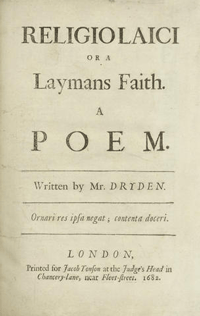
(Ed: One of our regular readers complained recently about the length of a typical Veracity post. His complaint was that they are too short. Well…far be it from us to ignore our readers.)
Continue reading

Announcements

Just a few announcements for our regular readers…

Kaqexeß Page

A couple of years ago our church’s director of Christian education told me about a meeting she had with our associate pastor during which he tossed around the idea of creating online self-directed Bible study courses—a “Chapel U” website as it were. We didn’t have the institutional resources to pull off such an ambitious undertaking, and having just launched Veracity I had plenty to keep me busy. But the idea of self-directed Bible study was intriguing, so I thought it might be helpful to catalog the posts that Clarke and I write on the blog. Maybe someday we might have enough content that people could do a kind of self-directed study.

We pretty much write about whatever our current devotional interests are, with no real agenda or curriculum. Our five most recent posts show up on our home page, then roll off to the automatic archives. But since the very beginning we have also cataloged them in a logical order on our Kaqexeß page, where readers can do topical, self-directed Bible study. We are now closing in on 300 published posts, and if you really worked through them you would have a decent shot at holding your own in discussions about the claims and content of the Bible. (Actually, most of our readers can hold their own regardless, but we have been blessed with feedback from those who learned a great deal from these posts.)

Please check out our Kaqexeß page and see if you have any comments or suggestions as to how we might make this material more accessible and useful. (We also take requests from readers about topics you’d like to see covered on the blog.)

Charlotte Apologetics Conference

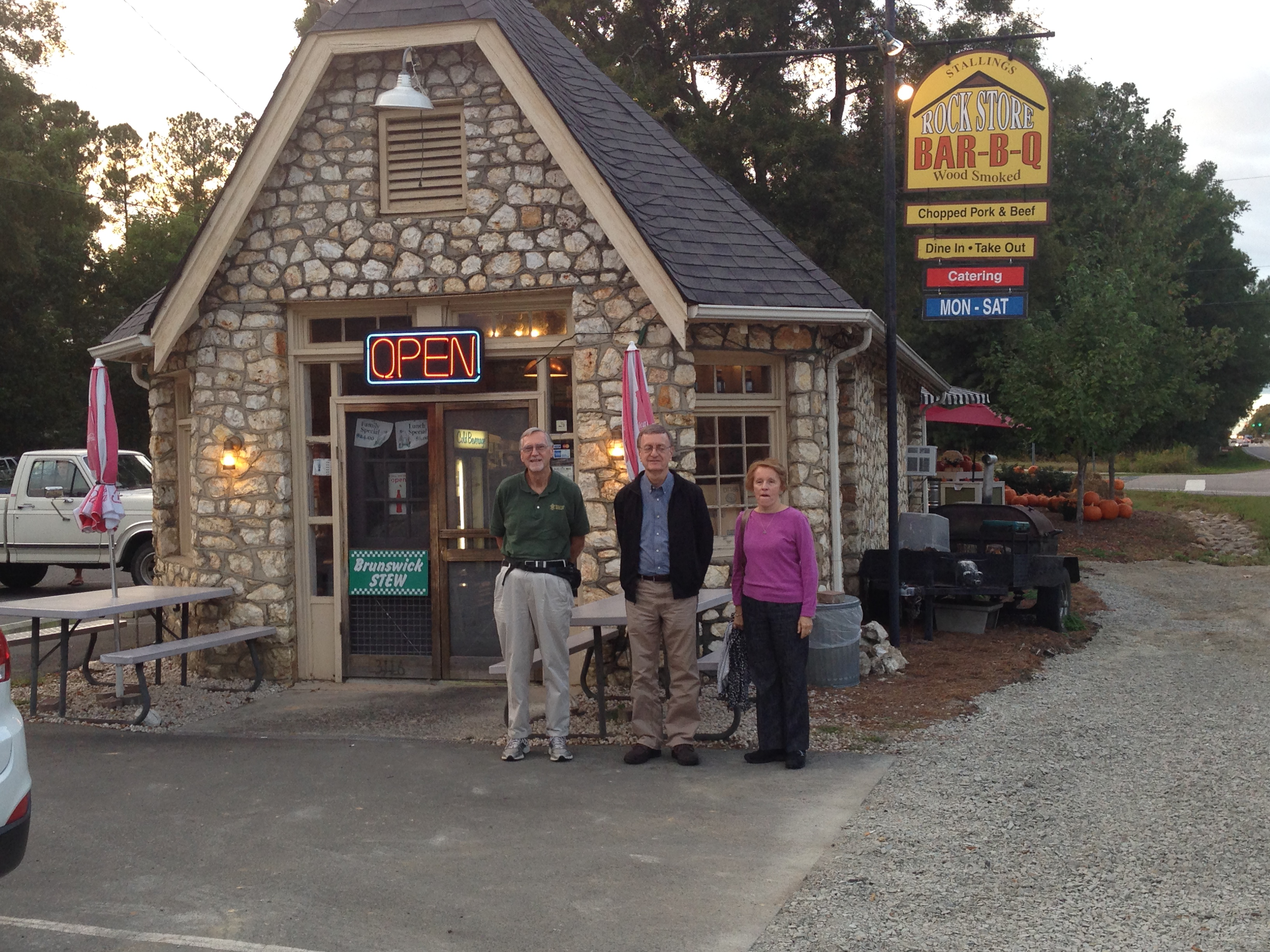
Charlotte BBQ

Where is this place? Sign up for the NCCA conference to find out.

The early bird discount for the 2014 National Conference on Christian Apologetics will not be available after July 31st. The conference doubled its attendance last year to over 2,400 attendees, and registration had to be closed due to space limitations. The 2014 conference is moving to a larger facility, and a strong turnout is expected. If you want to give a boost to your devotional life, attending this conference is the way to go. The speakers are subject matter experts, and are quite engaging and entertaining. The conference is scheduled for October 10 and 11, and only costs $90 for early bird registrants (with two box lunches, which you’ll want). Let us know that you signed up, and I’ll tell you where you can find good local barbecue, apples and cider.

H-E-A-R-T Tournament

H-E-A-R-T

H-E-A-R-T

Our friends Debbie and Rob Smith are holding their 12th Annual H-E-A-R-T golf tournament on October 1st, at the Golden Horseshoe’s Green Course in Williamsburg.  Help out a great ministry with a hole sponsorship, or sign up a team using this registration form.

Debbie Smith is the only person I know who has a federal law named in her honor, with a movie to tell her story. She’s been on 60 Minutes, Oprah, and a large number of programs, testified before Congress, and has received three gubernatorial appointments. From my limited perspective, Debbie and Rob Smith exemplify the power of church community in the aftermath of personal trauma. If you are not familiar with their incredible story, read about it here on their website.

Veracity Readers Out On The Town

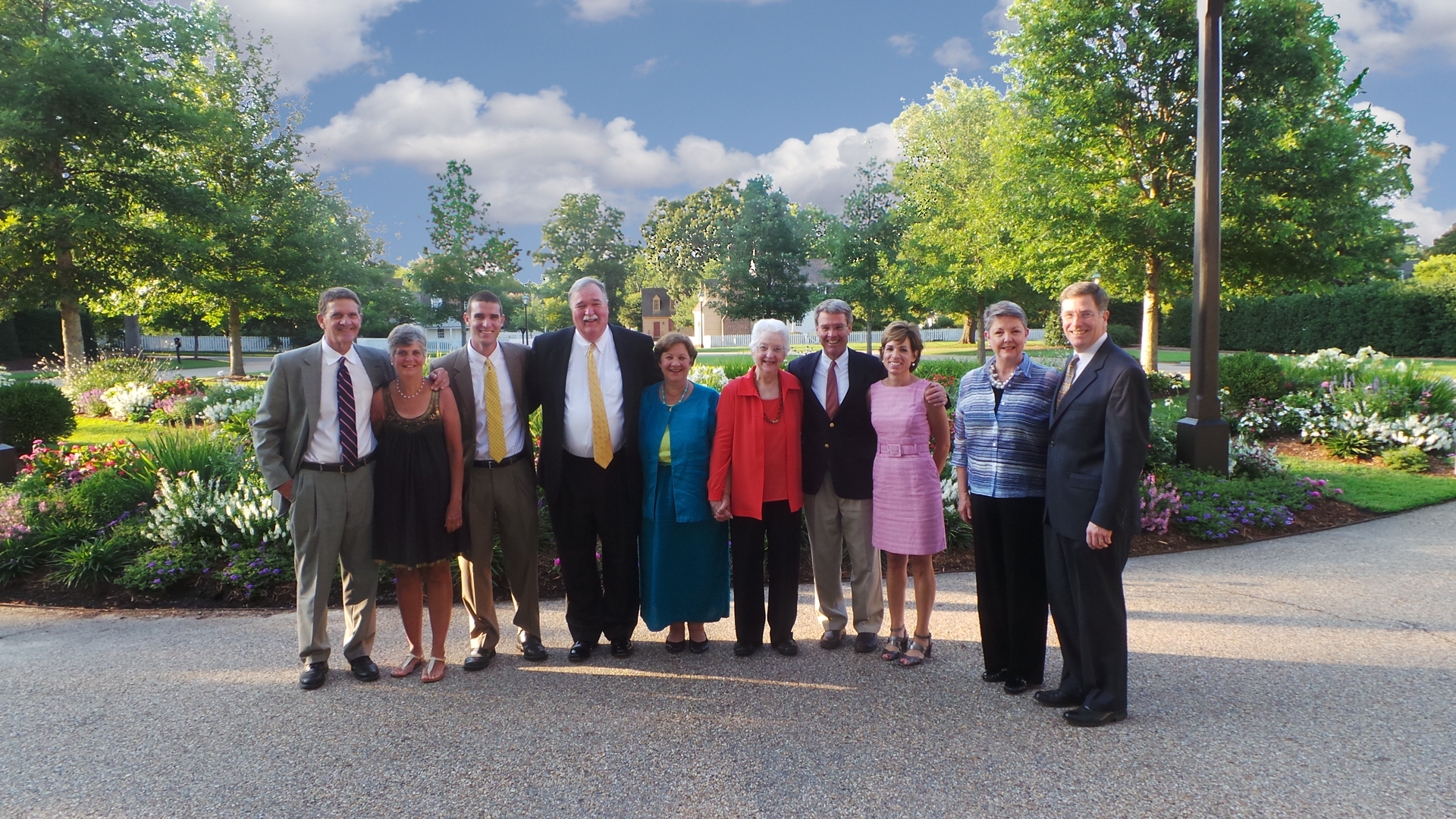
We don’t do it as often as we should, but to mark a milestone birthday several Veracity readers and I took my dear wife Marion to the Williamsburg Inn. We’ve attended so many funerals this year it occurred to us that special celebrations like this one are among the most cherished memories we can have. The evening was fabulous, and I am truly blessed to count these dear people among my family and friends—particularly Marion, whom I count doubly.

Marion's Birthday

Marion’s Birthday


How We Got the Bible (Part 1)

“We should not imagine a committee of church fathers with a large pile of books and these five guiding principles before them when we speak of the process of canonization. No ecumenical committee was commissioned to canonize the Bible.”

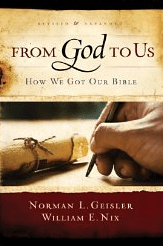
Norman L. Geisler and William E. Nix, From God To Us Revised and Expanded: How We Got Our Bible

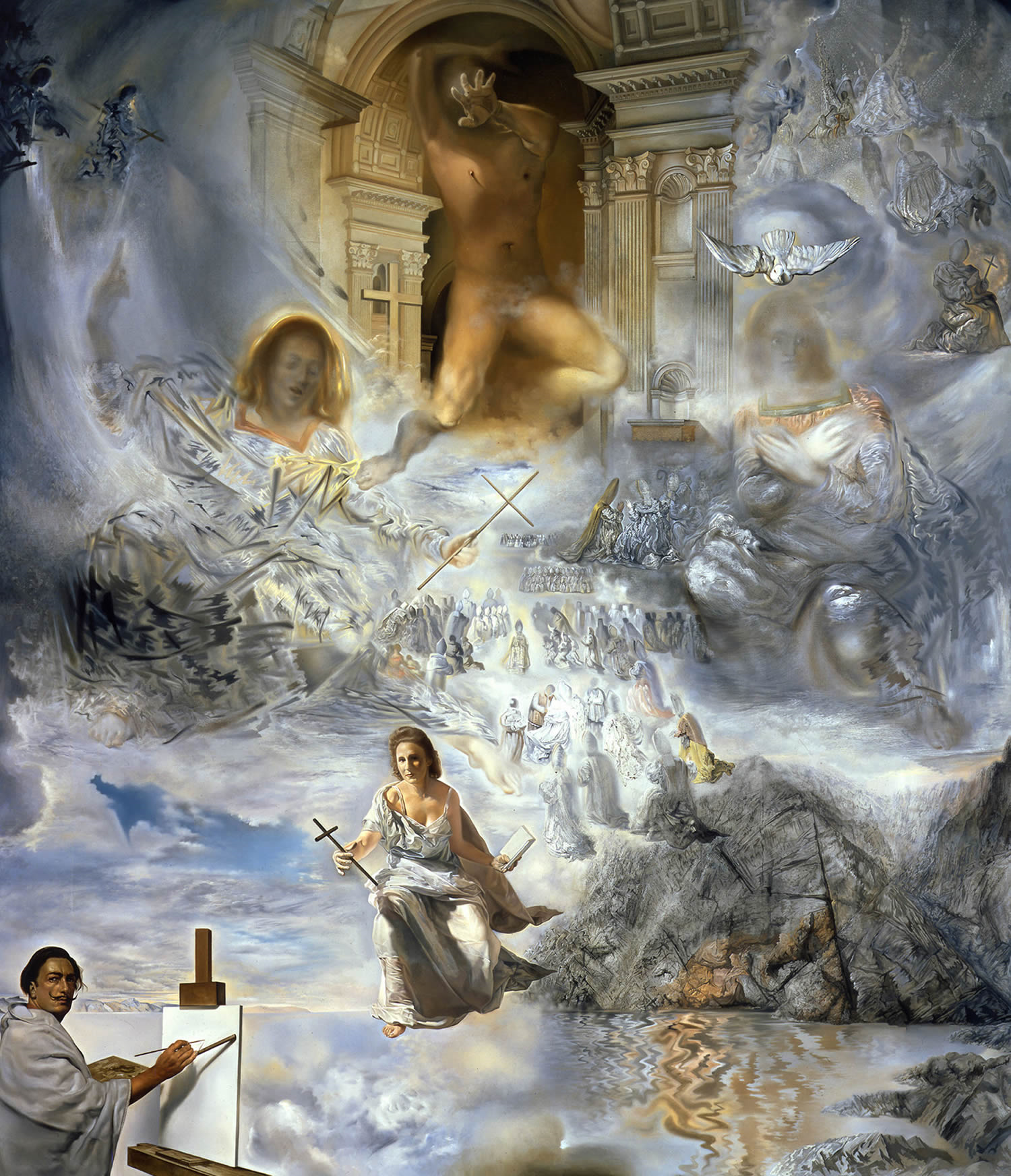
The Ecumenical Council

The Ecumenical Council by Salvador Dali, 1960


Our church’s Statement of Faith is pretty minimal. We only list eight core beliefs, the second of which states that we believe “in the inspiration of all the Scriptures by the Holy Spirit, and that they are the final authority for our faith and practice.”

“…final authority for our faith and practice?” Really?!

Our founders didn’t draft up this idea—it is delineated in the historic confessions of the Christian church. Consider the absolute implications of this statement. It means the Bible contains the foundations for Christian faith and practice, and that we are bound to it in all matters. We don’t get to impart our personal, alternative views. We don’t get to cherry pick which parts we like or which parts we would write differently. We don’t get to interpret what it says in ways that are contradictory to it. When we disagree with someone else’s view or interpretation, we submit to the final authority of the Bible. No appeals. We believe the Bible comprises God’s special revelation to us.

If you’ve been reading Veracity for any length of time, you know that we are big on personal discipleship—which we define as the process in which a believer or seeker takes personal responsibility for investigating the claims and content of the Bible. Personal Discipleship is based on the Bible.

Exactly how did we get the Bible?

Welcome to our latest Veracity series.  If you’re like me or Salvador Dali you may have developed some loose derivative notions such as:

  • God told a select group of human authors what to write,
  • Their writings were evaluated by committees of men in silly hats,
  • These ecumenical councils voted on which writings would be in “the Bible,” and
  • Later ecumenical councils clarified and solidified the final selection (and some modified it).

In fact, if you read what Wikipedia has to say about Ecumenical Councils it sounds like a pretty cut-and-dried historical process. But is that all there is to it? For that matter are these notions even correct? Are we to live our lives under the complete authority of documents that were assembled by ancient and medieval committees? How do we know that the Bible we hold in our hands today is what God intended for us to have? What if it was corrupted in its translations or transmission? How do we know that we have the right books, and why do we disagree along denominational lines about what should be included in the ‘Holy’ Bible?

In preparing for this series I read a lot of texts that come at these questions from a canonical perspective (focusing on how the official list of biblical texts was created and adopted). I must confess, that was originally my interest as well. But Drs. Norman Geisler and William Nix have a more comprehensive, full-orbed understanding, which they explain in From God To Us Revised and Expanded: How We Got Our Bible. So let’s dig in and see what these and other scholars have to bring to our understanding of how we got the Bible.

Introduction

Over the course of this series we will look at the inspiration, canonization, transmission, and translation of the Bible. But before we dive into the topic of inspiration here’s a Mini Bible College audio clip from Dick Woodward to give us the big picture.

Dick did a masterful job summarizing the basics for us, and Geisler and Nix will delve more deeply into the details (particularly when we get to the process of canonization). We’ll go slowly and see what we can learn about the book that comprises the authoritative basis for our Christian faith and practice.

Additional Resources

From God To UsNorman L. Geisler and William E. Nix, From God To Us Revised and Expanded: How We Got Our Bible.

Michael J. Kruger, The Question of Canon: Challenging the Status Quo in the New Testament Debate.

Dick Woodward, Mini Bible College Audio Download.

Robert Laird Harris, Inspiration and Canonicity of the Bible: An Historical and Exegetical Study.

Jack P. Lewis, Jamnia After Forty Years.

Brooke Foss Westcott, A General Survey of the History of the Canon of the New Testament during the First Four Centuries.


Who Wrote the Bible? (Part 4)

Who Wrote The Bible

Who wrote the Bible?

Welcome back to our series on the authorship of the Bible. In this post we will explore evidence that points to Matthew, Mark, Luke, and John as the writers of the four canonical gospels.

Setting aside for now discussions about canonicity, inerrancy, and textual criticism, how much confidence can we have that the four gospels were written by their traditionally-accepted authors?

Because none of the gospel writers identified themselves by name as the author of the text, these foundational books of the Christian faith remain technically anonymous. It is no surprise therefore that skeptics seek to discredit the claims of Christianity by questioning the traditional authorship of the gospels. Likewise it is no surprise that well-meaning proponents of the faith get in over their heads when it comes to defending the traditional authorship. As you can see from spirited discussions like this one (be sure to read the comments), the facts can easily become blurred by the voices entangled in debate. Our position on Veracity is that we’re all about the truth and that readers can decide for themselves without being told what to think. Personally, I think scholars give themselves too much credit for what they ‘know’−on both sides of the debate. Worldviews influence interpretation. Got it. Continue reading


William Lane Craig’s Defenders Series

William Lane Craig's Defenders Series

Dr. Craig teaches his Defenders class at Johnson Ferry Baptist Church in Marietta, Georgia Sundays at 11:15 a.m. (in the Fellowship Hall). If you’re in the Atlanta area treat yourself to some very fine teaching.

Last weekend Marion and I drove to Atlanta to visit our son and daughter-in-law. On the long drive down we listened to William Lane Craig’s podcasts, specifically his Defenders series.

Dr. Craig is one of the premier voices in contemporary Christianity and is quite likely the strongest debater to oppose atheists around the globe. Whether you agree with his views or not, he cannot be dismissed offhand. He has published scores of books, teaches in seminaries, is routinely interviewed in national and international media, and has debated many of the world’s most popular atheists. So it’s somewhat surprising that with all he has got going on he has made a sacrificial time commitment to teach a Sunday school class.

Marion and I popped over to Marietta to sit in on the class and were welcomed by everyone in attendance, particularly by Jan Craig, who is a vital part of her husband’s ministry. We had a warm discussion after the class about how Reasonable Faith functions. It really is remarkable how much they are able to accomplish. The time and financial demands are enormous, so please pray for them and their ministry.

Dr. Craig’s material, including the entire Defenders series, is available at ReasonableFaith.org. The audio files are loaded within a day or so of the class, and the videos are loaded about a month later. There is a large catalog already available online.

If you’ve tried listening to Dr. Craig’s podcasts before, you may have come across some very heady philosophy. After all, he is a professional philosopher. But these Sunday school classes are disentangled—aimed at a target audience of intelligent Bible students, not the academic intelligentsia.

Dr. Craig has been producing his current Defenders series since 2009. This series on Christian doctrine and apologetics has become an epic work. The material is quite refreshing. He presents both sides of opposing doctrinal views fairly and respectfully, without sidestepping his positions. Those of us who have studied under Dick Woodward will find Dr. Craig’s Defenders series to be the perfect complement to Dick’s Mini Bible College series. Dick used to say his goal was to, “Put the cookies on the bottom shelf,” and he was masterful at doing so. If you have studied the Mini Bible College, you might think of the Defenders series as graduate school.

Did I ever imagine I would be interested in Christian doctrine? Nope, never—not many people are, really. But the more I read and study, the more I realize how vitally important sound doctrine and theology are to biblical understanding. Dr. Craig’s Defenders series is not some esoteric exercise for eggheads and theologians, but a profound labor of love that puts the Christian faith within reach of those who are willing to study and think.

If we want to share the Christian faith we must first understand what that faith really is—and we have to be prepared to defend it. The apostle Peter exhorted us to “always be prepared to give an answer to everyone who asks you to give the reason for the hope that you have” (1 Peter 3:15). Doctrine and apologetics…a powerful combination.


HT: Jan and William Lane Craig