Clarke Morledge -- Computer Network Engineer, College of William and Mary...
I hiked the Mount of the Holy Cross, one of the famous Colorado Fourteeners, with some friends in July, 2012. My buddy, Mike Scott, snapped this photo of me on the summit.
Truth-telling is essential to the cause of proclaiming the Gospel of Jesus. For if an unbelieving world can not regard Christians as trustworthy people, why would they even bother to listen to us, when we speak about Jesus?
Events of late in the Christian world have brought me much despair. But some recent news have given me a ray of hope.
Serious accusations against Christian leaders should not be taken lightly. We should uphold the reputations of leaders, as best as we can, and not jump to conclusions. Furthermore, it must be acknowledged that all of us have skeletons-in-the-closet, that we need not always publicize. Everyone falls short of the glory of God, and we should extend grace towards others, as much as possible, so that relationships can be healed and integrity maintained.
But that being said, when a Christian leader or organization presents a story, that does not jive with the available evidence, then that warrants a measure of skepticism. An initial act, that might lead to disgrace is one thing. But when a concerted effort is made to cover-up such an act, the lack of trust associated with the cover-up effort is infinitely more damaging than the original transgression itself. When this type of behavior is exhibited by Christian leaders, and the organizations that support them, then this is a clear case where the celebrity cult of personality has eclipsed whatever good the ministry might be doing.
It took courage for Dr. Baker-Hytch to write such a letter, and that courage gives me some hope that integrity is still something to yearn for. Let us pray that RZIM will make good on their promise to pursue truth, take Dr. Baker-Hytch’s letter to heart, and do the right thing immediately.
Time-honored practice that sparks memories, in celebration of the coming of the Lord, who brings Eternal Life…. or… insidiuous smuggling in of paganism into Christian homes? (credit: US Forest Service)
As someone who has kept ornaments I made back in kindergarten, if I had heard this, back when I was a kid, it might have soured me a bit on Christianity. But in the age of social media, the debate over Christmas’ supposed pagan origins, and that of the Christmas tree in particular, seems never ending. A favorite Bible “prooftext” given for this view is from the King James Version of Jeremiah:
Thus saith the Lord, Learn not the way of the heathen, and be not dismayed at the signs of heaven; for the heathen are dismayed at them. For the customs of the people are vain: for one cutteth a tree out of the forest, the work of the hands of the workman, with the axe. They deck it with silver and with gold; they fasten it with nails and with hammers, that it move not (Jeremiah 10:2-4 KJV).
Well. Well… I guess I should toss that adorable tree into the fire, with that sentimental “Christmas mouse” ornament I once made. Right?
The irony of this mentality is that it is a variation of an argument some atheists use to discredit Christianity, that Christmas was merely an invention of “the church,” political propaganda used to create a new form of paganism, a “copy cat” faith borrowed from the ancient Mithra cult, with a Jewish veneer pasted over it, squashing other forms of paganism, in order to unite the Roman empire.
I always find it bizarre when both certain fundamentalist-type Christians, as well as certain hyper-atheists, manage to gang up together to fight against some Christian practice that was originally designed to point us towards Jesus. But is there a better way to understand this passage of Jeremiah, that more accurately reflects the original context of the Biblical author? Continue reading
Is climate change just a hoax, or is it real? If it is real, what can be really done about it, without killing the world economy?
Hugh Ross, president of Reasons to Believe, and evangelical apologetics ministry focused on the dialogue between science and faith, tackles a topic that often generates more heat than light. However, in Weathering Climate Change: A Fresh Approach, Ross does what the subtitle says, he takes a fresh approach that will both surprise and educate readers.
Will the ostrich be able to delay the impact of global climate change? According to Christian apologist Hugh Ross, in the contentious debate over “global warming,” the ostrich may provide more help to us than draconian and unpopular carbon credit schemes.
Before reading Weathering Climate Change, I made the rather common assumption that today’s relative climate stability has been around for much of earth’s history. It is just something that we take for granted. But Hugh Ross brings up data point after data point to demonstrate that such an assumption is completely false: For most of earth’s history, the world’s climate has ranged wildly in terms of global mean temperature. In other words, climate instability has been the norm in God’s creation.
Hugh Ross takes an Old-Earth Creationist view, that the earth is some 4.34 billion years old, as opposed to the view of a 6,000 to 10,000 year old earth, advocated by Young Earth Creationists. Ross contends that during the vast length of time of earth’s multi-million year history, particularly as we approach the current age, cyclical periods of global warming followed by ice ages of global cooling have always been up and down, up and down.
His point is to show that the development of an advanced technological civilization would have been impossible if all of these factors had not lined up perfectly. Furthering the argument that Ross made in Improbable Planet, we live on a planet that has been fine-tuned for human existence, under the most optimal conditions. Ross attributes this to the providential hand of God, that God would provide just the right complex set of factors to make modern human civilization possible.
Did humans just get lucky with this recent 9,500 year-long anomaly of climate stability? Or was it a product of a Mind? It is difficult to imagine how all of this came together at the right time, without a Creator God superintending the whole process. In comparison, a Young Earth view of creation fails to appreciate as much the marvelous precision it took for God to give us the exact conditions necessary for human civilization to flourish, at exactly the right time in earth’s history…. and that human flourishing is good news!
The bad news is that this current period of climate stability can not last forever, according to the research that Hugh Ross summarizes for the reader. Human efforts can either accelerate the shift towards the climate instability, or slow down the transition, but human engineering alone can not make the climate stable on a permanent basis.In other words, global climate change is real. It is not a hoax. That is just the way the world is. To place our hope in this world alone is futile, as compared to putting our hope assuredly in the God of the Bible.
With that context in mind, Hugh Ross points to evidence showing that humans are primarily responsible for the current acceleration of that shift towards climate instability. Over the past 70 years, the near 1 degree in Centigrade increase in the global mean temperature, has almost wiped out the 1 degree Centigrade drop in temperature, experienced during the prior 9,500 years. Human activity, through pronounced use of carbon-based fuels, are only making a catastrophic, though quite natural situation more likely to arrive sooner, rather than later. But there is some basis for hope, in that Hugh Ross believes that certain steps can be taken to slow down this acceleration, and delay the inevitable.
But what will eventually happen, if nothing is done to slow the acceleration? Misleading information suggests that global climate change will ultimately melt nearly all of the planet’s ice and raise the typical daytime temperature across the globe to intolerable levels. Yet as Hugh Ross describes it, the global temperature will eventually hit a peak, before dropping dramatically, and plunging the earth into another ice age. In other words, in the long run, global cooling poses a greater threat than global warming. So, if you fear rising sea levels alone, you might want to rethink that. That is only part of a more difficult problem.
Nevertheless, there are steps that can be taken that are “win-win” for us all, in contrast to the type of draconian solutions proposed by climate alarmists, that often elevate the young voice of activist Greta Thunberg. While such environmentalist ideas are well-meaning, public resistance to such drastic proposals will greatly impede their adoption, and only increase skepticism about climate change. Ross believes that there are a variety of solutions that humans can adopt that will simultaneously benefit the environment, while still allowing our high technology civilization to flourish. Here are just a few examples:
Replanting the Sahara Desert. Many find it hard to believe, but the Sahara region of North Africa once was the primary agricultural source of food; that is, the “bread basket,” for the ancient Roman empire. But deforestation of the Sahara greatly expanded it into the vast desert region that exists today. By giving North Africans incentives to stop stripping vegetation on the edge of desert and replanting those edges with vegetation, it would go a long way towards increasing the amount of carbon dioxide that could be absorbed from the earth’s atmosphere, back into living plants.
More efficient lumbering. Instead of clear-cutting forests in the Amazon to make for more inefficient pasture land, incentives can be given to have smarter practices of thinning out forests, allowing newer growth to absorb more carbon dioxide and taking down older growth that releases carbon dioxide into the atmosphere, as that older growth decays.
Replace the production of cow beef with ostrich, as a primary source of red meat. Cows inject a lot of methane into the atmosphere, whereas ostriches contribute little methane. Incentives can be given to encourage ostrich farming, which actually consumes far less pasture land than cows do. Ostriches also consume roughly a third less resources, in terms of water, as compared to cows.
These are all innovative ideas that are rarely discussed on public forums for addressing the climate change crisis. Why do we not hear more about such fresh approaches to climate change? Perhaps we need to recalibrate the conversation, and move away from endless, heated debates over carbon credits, that only the super-wealthy in the West would be willing to afford.
Kudos go to Hugh Ross for helping Christians and non-Christians alike think through new ideas that will help us to be better stewards of God’s good creation. Admittedly, ideas such as moving to an ostrich-primary meat system from a cow-primary meat system are difficult to advance when ostrich meat prices are nearly three times as much as cow meat prices. However, with the encouragement of ostrich farming, the price of ostrich meat should come down enough, that it would offset other, more-costly mechanisms designed to reduce humanity’s carbon footprint.
Instead of fixating on repeated debates about wind and solar power versus carbon consumption, what if we were to move beyond those discussions and talk more about solutions that are rarely mentioned in the international media, such as better forest management, and how to expand ostrich farming?
When God created Adam, the Lord placed him in the garden to work it and to keep it (Genesis 2:15). It is very tempting for us to ignore God’s command to care for the earth, when faced with environmentalist extremism in our day that worships the creation as opposed to the Creator. When we give into that temptation, it is like being like an ostrich and putting our head in the sand.
But what if there are better solutions? What if we should be like the ostrich, in a different way? What if we were to start to eat the ostrich instead? After all, as nutritionists like to tell us, “you are what you eat.”
How should we be like the ostrich?
Dr. Hugh Ross was featured as part of a worship service at Grace Church in St. Louis, via Zoom, followed by a period of Q&A:
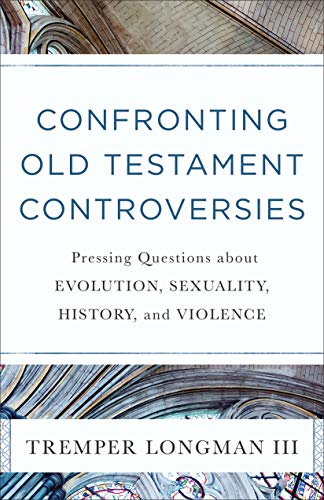
As a Christian, do you tend to ignore the Old Testament? Do the topics of evolution, Israelite history, violence, and sexuality, with respect to the Old Testament tend to freak you out, due to all of the controversies, surrounding these topics?
Dr. Tremper Longman, professor emeritus at Westmont College, who specializes in the Old Testament, tackles these tough topics in a respectful manner in Confronting Old Testament Controversies: Pressing Questions about Evolution, Sexuality, History, and Violence. Most Christians have probably not heard of Dr. Longman, yet he has typically operated in “stealth mode,” for ordinary Christians. They are probably unaware of Longman’s pervasive influence in the world of Bible translation. Nearly every major contemporary English Bible translation in use by evangelicals today bears some influence of his. So, when professor Longman stepped in and wrote a book about the toughest controversies in the Old Testament, I knew I that must read it and offer a review.
Do you desire to know and love God’s Word, as found in the Old Testament, but wrestle with some doubts, as to how to read it? Dr. Tremper Longman offers some vital assistance in Confronting Old Testament Controversies.
Helping Christians to Better Navigate Controversies, to Encourage Christians to Read Their Old Testament
Reading the Old Testament is sadly neglected by many Christians today, but Dr. Longman makes the Old Testament a lot less intimidating. Longman addresses the “hot potato” issues that have surfaced in popular culture, since the arrival of the “New Atheism,” in the wake of 9/11. Voices like that of Richard Dawkins have dismissed the God of the Old Testament as vindictive, capricious, and violent.
The Old Testament has taken quite a beating in public debates, in the wake of 9/11, and a number of evangelical and “progressive Christian” scholars have sought to answer such critiques. However, while Tremper Longman is sympathetic with these recent attempts to somehow “improve” the Old Testament’s reputation, he carefully shows how some of these re-examinations of the Old Testament fall short of accurately reflecting the actual message of the Old Testament, suggesting better ways to move forward.
Confronting Old Testament Controversies is therefore an engagement with contemporary scholars, who have made an impact on popular publishing regarding Old Testament difficulties, over the past ten to fifteen years or so. A number of these books look at the Old Testament with some sense of embarrassment, sort of like portraying the Old Testament as that crazy uncle of yours, who says wild and outlandish things at your Thanksgiving dinner. You sort of tolerate your uncle, but you manage to find a nice way to shift the conversation. However, Tremper Longman’s main audience is evangelical Christians, who hold to a high view of Scriptural authority, and who want to take the whole of the Bible seriously, but who find themselves troubled at times, with what they read in the Old Testament.
Longman is basically a theological conservative-moderate, when it comes to understanding the Old Testament. He does not find compelling highly-conservative views of the Old Testament, such as Young Earth Creationism, that tend to sidestep the Ancient Near East worldview of the Old Testament writers. But on the other hand, Dr. Longman does not buy into the more critical, revisionist views of the Old Testament, ranging from liberal mainline Old Testament scholars, like a Walter Brueggeman, to “post-evangelical” or “progressive Christian” scholars, who claim at least some partial affinity with evangelical thinking, like Peter Enns.
Here is a summary of Tremper Longman’s approach: Dr. Longman suggests that the scientific theory of biological evolution is fully compatible with the Old Testament’s teaching on God’s creation of the world and the fall of humanity into sin. He fully supports the traditional positions Christians have held, regarding human sexuality, for the past 2,000 years. Dr. Longman does not shy away from the charges levied by the “New Atheists,” regarding claims of genocide and child abuse being sanctioned in the Old Testament. But he does encourage the reader to better understand the Ancient Near East context, in which the Old Testament was written, as being the key to better interpreting such tough passages in the Scriptures. God is a God of judgment against evil, and not a perpetrator of genocide or child abuse.
Digging into Old Testament Controversies
Taking a closer look at Dr. Longman’s treatment of the creation vs. evolution controversy, he argues that there is a basic historicity, even of the earliest parts of Genesis, but he contends that the literary genre of texts, like Genesis 1-11, and the extensive use of metaphor in such texts, makes it difficult to nail down specific historical claims. He acknowledges, for example, that the New Testament does assume a degree of historicity, such as with the Flood of Noah, though the particular details of that historicity are difficult to determine. Longman contends that the primary concern of the New Testament writers is to make certain theological points, such as God’s universal judgment against human sin with respect to the flood, and less on the concrete details of the historical event.
He is also prepared to say that an historical Adam and Eve is not necessary in order to retain the fundamental theology, associated with the creation texts. This does NOT mean that Adam and Eve did not exist, as two historical persons. Rather it is to say that the truthfulness of the Bible does not hinge on demonstrating the historicity of Adam and Eve. Contrary to a certain group of scholars, who in recent years have had a pronounced voice at BioLogos, an evangelical think-tank seeking to find harmony between the Bible and science, Longman firmly believes that humans are created in God’s image and that there was an historic, cosmic Fall. It follows from these fundamental biblical teachings that sin, and the effects of sin, have permeated humanity, thus setting up the need for human salvation, that Christ came to accomplish. Attempts to diminish humanity’s fall into sin, by claiming evolutionary science as an ally, are wrong-headed ways of reading the Old Testament, and should be rejected. In this approach, Dr. Longman fits within an interpretive tradition that goes back to earlier generations of thinkers, such as C.S. Lewis.
Though not a scientist, Tremper Longman is willing to accept the current genetic and biological thinking, that would rule out a single human couple as the sole progenitors of the entire human race. He finds no need to look for concordist solutions, like that of a Glenn Morton, that might find concrete agreement between the Bible and modern science, as he contends that the Bible does not purpose to reveal the intricate details of a scientific approach to the world. It is unfortunate that Dr. Longman published his book before Joshua Swamidass published The Genealogical Adam and Eve. It would have been interesting to see how Dr. Longman might have modified his view, upon interacting fully with Swamidass’ thesis (see my earlier review of Swamidass).
Longman’s treatment of the controversies concerning the historicity of the Exodus and Joshua’s conquest of Canaan, are generally aligned with most other evangelical approaches to such controversies, though he does not envision the traditional calculation of 2-4 million Israelites wandering through the Sinai desert. Instead, Dr. Longman is content to say that the biblical record suggests a smaller force of former slaves, making their way from Egypt to the land of Canaan, numbering in the tens of thousands, as opposed to the several million (this view concurs with my reading of the relevant texts). Longman suggests that such a reading of Joshua’s conquest of the Promised Land is fully consistent with Scripture, as well as modern archaeology.
Longman argues against certain “progressive evangelical” attempts to dehistoricize Joshua’s conquest of Canaan, advanced by scholars, such as Kenton Sparks,in his Sacred Word, Broken Word: Biblical Authority and the Dark Side of Scripture (see my review of Sparks from another book he helped to write on the historicity of Genesis). Sparks, along with others, like Eric Seibert, in his The Violence of Scripture: Overcoming the Old Testament’s Troubling Legacy, believe that the claim of the God of the Old Testament, as being a god of violence, is without warrant, because there was no such violent conquest of the land of Canaan to begin with. Essentially such revisionist reviews contend that the narrative of the Book of Judges best describes how the Israelites arose within the land of Canaan. The conquest view, as detailed in the Book of Joshua, was basically made up in the mind of the Scriptural author, a fictionalizing of ancient Israelite history meant to address concerns in the minds of Jews during and after the Babylonian Exile.
Yet Dr. Longman is unconvinced by such reasoning, as he contends that the warrior status of Yahweh, the God of Israel, is fundamental to the Israelite conception of God. However, the warrior nature of Yahweh is not one of genocide, or unwarranted violence, but rather that of a God of judgment, who punishes wickedness and fights against evil. Therefore, Longman sees no compelling need to try to de-historicize the basic contour of the Joshua conquest.
Longman also engages perspectives that align towards more classically-oriented evangelical views of Scripture, such as scholars like Paul Copan, John Walton, Preston Sprinkle, and Gregory Boyd (follow those links to see some relevant book titles), particularly when it comes to the question of divine violence in the Old Testament. Reading the works of these other authors should be balanced alongside Tremper Longman’s nuanced critiques of these works. The differences between Longman and these other authors are relatively minor (as compared to the vast differences between Longman and writers like Seibert and Sparks). But as Copan, Sprinkle, and Boyd are probably more familiar to evangelical readers, Tremper Longman’s engagement with the details are very helpful.
Longman resists the current trend towards rejecting a traditional Christian view of marriage and human sexuality, a trend that is taken up by more progressive thinkers. For example, he believes that while Christians need to do a better job of reaching out to same-sex attracted persons, he nevertheless concludes that same-sex relations are not within the scope of God’s purposes for human sexuality, per the teaching of both Old and New Testaments. Longman makes specific recommendations that Christians should be more intentional in making room for single people, including those who are same-sex attracted, in the the life of the church, while still affirming the biblical teaching of marriage between a man and a woman.
Tremper Longman’s position upholding the concept of marriage, solely between a man and a woman, is surely not popular within the larger cultural conversation during today’s era. But he advises that Scripture urges believers to live at peace among our non-believing neighbors. As one notable expression of this, he recommends that Christians back off from attempts to get the state to pass and enforce anti-homosexuality laws, as he sees that such legislation is counterproductive to maintaining a positive Christian witness in our postmodern, secular society.
Having personally wrestled with such interpretive Old Testament issues over the years, I have appreciated Dr. Longman’s fresh approach to deal honestly with the challenges of the Old Testament, while still encouraging his readers to avoid a kind of “practical Marcionism,” as Longman puts it, that would lower our confidence in the Bible.
Marcion was a 2nd-century Christian who advocated getting rid of the Old Testament. Marcion’s views were soundly rejected as being heretical by the early church. A better way to deal with a “practical Marcion” approach is to appreciate a more robust understanding of progressive revelation. Once we see that the teaching of the New Testament completes the job of what was started in the Old Testament, it puts the Old Testament in a more proper perspective.
One particular benefit in Confronting Old Testament Controversies is how carefully and generously Dr. Longman interacts with the writings of his former student, Pete Enns, another Old Testament scholar, the author of The Bible Tells Me So, who runs the “The Bible for Normal People” podcast, that is very popular among more liberal-leaning, “progressive” Christians. Dr. Longman is strongly opposed to some of the readings that Pete Enns gives to certain parts of the Old Testament, but he does so in such a friendly manner, that it is truly a model for good, irenic conversation, despite having fundamental disagreements. I wish I could be that charitable towards others, when such theological disagreements come up.
One unresolved area for me, when reading Longman, has to deal with God’s commands for Joshua and the Israelites for them to destroy the Canaanites, including young children. In Joshua 6:21, we read, “They devoted the city to the Lord and destroyed with the sword every living thing in it—men and women, young and old, cattle, sheep and donkeys,” and in Deuteronomy 20:16-17a, “But in the cities of these peoples that the Lord your God is giving you for an inheritance, you shall save alive nothing that breathes, but you shall devote them to complete destruction.” Christian apologist and philosopher Paul Copan regards this type of language as hyperbole, thus avoiding the claim that bothers many Christians, that God is somehow endorsing infanticide, or even, indirectly, abortion, by silently including pregnant women and infants in with the command to completely destroy the Canaanites. Yet Longman suggests that this type of reading by Copan is really wishful thinking: “As much as we might want to believe that God did not command the death of women and children, such a view finds no support in the relevant texts” (Longman, p. 169).
Tremper Longman’s view of divine violence was probably the weakest part of the book for me. My concern in Tremper Longman’s critique is that I am not entirely convinced that Copan’s view is completely subject to the criticism of being mere wishful thinking. God’s treatment of such classes of vulnerable human persons, and subjecting them to death, would surely be the case in the story of Noah’s flood, which made no distinction when the flood waters presumably killed small children and pregnant women, as part of God’s judgment against humanity’s sin. We have no Scriptural text that indicates that small children and pregnant women were somehow secretly snuck onboard the ark, to avoid the terrors of the floodwaters. The possibility of a large local flood, as opposed to a global flood, offers some leeway here where some humans might have found sanctuary in some unknown manner. 2 Peter 2:5 does say that the flood came upon the “world of the ungodly,” thus suggesting a possible, more limited scope of the flood, but such a conclusion would still be pure speculation. Nevertheless, with respect to Joshua’s conquest of Canaan, the use of hyperbolic and exaggerated language, a common characteristic of ancient writings of all kinds, lends some credibility to Paul Copan’s viewpoint.
Framing Old Testament Controversies within the Context of the New Testament… and Doing So Responsibly
Thankfully the vast bulk of the Old Testament is not fraught with such theological difficulties. Nevertheless, there are topics like these in Scripture that grate against modern sensibilities, for which wishful thinking does not always successfully erase. To pretend that these difficulties are not there is dishonest. We just simply have to acknowledge the presence of such difficult texts in the Bible, accepting their authority, and try to make sense of how such teaching is to be applied in the post-New Testament era. Vigorous debate still continues concerning what applications of certain Old Testament teachings and principles have been superseded under the New Covenant. Yet ultimately, the Old Testament needs to be read within the light of the New Testament, as the New Testament stands as the definitive commentary on the Old Testament.
That being said, the presence of God-ordained violence in the Old Testament is problematic for many evangelical Christians today, who without hesitation condemn all sorts of abortion and infanticide, as being contrary to the revealed plans and purposes of God. As I have not read Paul Copan extensively on this topic, I will reserve further judgment on Longman’s critique until I have looked more at Copan’s argumentation in greater detail.
Thankfully, the progressive nature of God’s revelation in Scripture need not deter us from saying that the New Testament emphasis on giving everyone the opportunity to have faith in Christ, including the unborn and infants, supersedes any possible ethical difficulties found in the Old Testament. For God “wants all people to be saved and to come to a knowledge of the truth” (1 Timothy 2:4 NIV). Nowhere do we read in the New Testament that infants and the unborn are not to be included by the “all people” mentioned in this text. Christians are called to be “prolife,” for at least that one reason.
It is as though there is a tension in the Old Testament, contrasting God’s judgment against evil and sin, that pertains to all of us, while still yet another theme that emphasizes God’s universal love for all that God created. The story of Jonah preaching to those wicked Ninevites, where Jonah complains about God’s compassion and mercy towards the enemies of Israel, is a good example of this universalistic theme. This does not mean ultimately that all will be saved in the end, nor does it mean that God will wipe out all of humanity, or close to it, as was done with the flood of Noah. It is by looking at the message of the New Testament whereby we begin to see how this tension might be resolved.
There are few cases where I would take issue with Longman on certain interpretations of particular passages. For example, he favors the New Living Translation (NLT) reading of Genesis 3:16, “And you will desire to control your husband, but he will rule over you.” (p.214-215). I am not convinced that the translation of the Hebrew word behind “desire” necessarily implies the concept of “control.” It could simply mean a sense of “longing,” as opposed to a concept that implies some sort of power struggle between man and woman (See my engagement with this text, along with Wendy Alsup’s research and exegesis). However, such criticisms of Confronting Old Testament Controversies need not override the overwhelming positive tenor and aim of Longman’s helpful book.
Not everything in the Bible is neat and tidy. There are clearly moments I wish it was, but to be honest, that probably would not be a good idea. Having a stock of answers that can not be questioned is a recipe for spiritual pride. I would rather have some unsettled questions in my mind than I would having pat and easy answers to difficult questions, that tend to paper over and hide the difficulties. Thankfully, there is more to the story than getting stuck on difficulties in the Old Testament. The good news to be found in the Gospel is that the New Testament completes the story that the Old Testament started.
I would recommend Confronting Old Testament Controversies for anyone who struggles with doubt regarding what they read in the Old Testament, even if one is not convinced by every position that Longman ultimately lands on. Along with Wheaton College’s John Walton and Dr. Michael Heiser, at Celebration Church, Jacksonville, Florida, Dr. Tremper Longman joins my list of perhaps being among the best living Old Testament scholars, who write specifically for a non-academic audience.
For a couple of excellent interviews with Dr. Tremper Longman, about important topics in the book, you should view the following two interviews, on Preston Sprinkle’s video podcast:
Where did “secularism” come from? Are secular values at war with Christianity?
The late venerable statesman for Protestant evangelical Christianity, J. I. Packer, remarked that the greatest threat to evangelical faith today comes not from the so-called “religious” world, such as the revival of a resurgent Roman Catholicism, bent on undercutting the principles of the Reformation. Neither does it come from an amalgamation of Eastern religiosity, as in the New Age Movement, and perhaps not even from Islam, despite its rapid growth. Rather, the “Great Tradition” of Christianity, the triad of evangelical Protestantism, Roman Catholicism, and Eastern Orthodoxy, share a common adversary: a relentless and pervasive secularism. The various strands of Christianity have their profound differences, but they all face together a common challenge: Secularism is the acid that corrodes Christian belief.
Originally, the English word “secularize” came into use during the period of the Protestant Reformation, when lands owned by the church were confiscated and placed in the hands of the state. To make something secular in the 16th century was not an attack on Christianity, but rather, a means of empowering the state to limit the influence and power of the Roman Catholic Church.
But what drives the ethical and worldview imperatives of a secular view of reality in the 21st century? Today, many contend that secularism owes its origins to classical, ancient Greece, only to be pushed aside by the rise of the Christian church, in the Roman empire. Centuries later, by at least the 18th century, secularism was revived through the narrative of Enlightenment, with the triumph of a scientific approach to the world, over and against the superstitious outlook of Christianity, whereby slavery was eventually eradicated, human rights celebrated, and the shackles of repressive sexual restrictions removed…. so the story goes.
Tom Holland, a leading popular historian from the U.K., who has written top-notch histories of the ancient world, once embraced this dominant, contemporary secular perspective (this Tom Holland is not to be confused with the Spiderman actor!). Holland had grown up in the Church of England, but his fascination with dinosaurs as a child triggered his eventual move away from the Christian faith towards atheism. Sunday School depictions of Adam and Eve running around with dinosaurs, merely a few thousand years ago, effectively caused this young boy to doubt his tender faith in the God of the Bible. The glamorous romanticism of the ancient Greeks caught his imagination instead, which has inspired his writing career.
Yet years later, Holland’s latest book, Dominion: How the Christian Revolution Remade the World, dismantled his own earlier thesis, of a secular view of the world superseding Christianity. Now Holland believes, despite the loud appeals otherwise, that it is Christianity that has made the modern world what it is. Christians should take notice of Tom Holland’s revisionist perspective of history, as he has given us a helpful framework for understanding where the Christian church is, in this current cultural moment, resulting from decades of social change.
The Christian roots of our growing secular world has created a crisis, that few secular intellectual elites have been willing to accept, up until recently. A liberal secularism embraces human rights, the equal dignity of all persons (except, apparently, in the case of the unborn), a desire to rid the world of poverty, and the responsibility to care for the weak and the sick. But as Holland makes his case in Dominion, these are all essentially Christian values, an embarrassment for those who wish to see orthodox Christian faith cast upon the dung heap of forgotten human history.
Dominion is equally a fascinating, entertaining read, as well as being a deeply and intellectually stimulating read, that fills the mind with challenges. The thesis being proposed in Dominion, that of a self-confessed secularist critiquing secularism, deserves a careful in-depth review, which I will currently explore. Continue reading