Clarke Morledge -- Computer Network Engineer, College of William and Mary...
I hiked the Mount of the Holy Cross, one of the famous Colorado Fourteeners, with some friends in July, 2012. My buddy, Mike Scott, snapped this photo of me on the summit.
Every year Ligonier Ministries and Lifeway Research partner together to compare the theological beliefs of average Americans with those who claim to be evangelical Christians. This year’s survey report has some encouraging news, but also some red flag warning signs. The most disturbing news is that an alarming 1/3 of evangelical Christians, believe that Jesus was merely a great teacher, and not divine. That is no better than what the average American, including non-church going ones, believe about Jesus. If you think that American evangelicals are being adequately taught the basics in Christian doctrine, you might want to think again (Read my case for why churches need to do a better job at Christian instruction, otherwise known as “catechesis”, at all ages).
As we approach Labor Day weekend, I have a few thoughts about this crazy summer, and absolutely crazy year we have been through so far. We have seen out-of-control fires from Australia to California, an extremely active hurricane season, the leveling of a large swath of Beirut, Lebanon, an earthquake in nearby North Carolina (a few hours from me), and a leading evangelical Christian college president asked to step down from his position, due to scandal. Wow. What more can happen??
The Year 2020: In One Photograph.
Of course, the big news is the coronavirus, and this summer has taught us that we are in this for a long haul. The somewhat good news is that the pandemic, though still deadly and a real threat to the most vulnerable, has not turned out to be as bad as originally feared. Yet at the same time, the pandemic has managed to bring out the worst in people, including sadly a number of Christians.
Concurrently, very real and legitimate concerns and protests over police brutality and racism have tragically triggered a series of riots and violence, many have not seen since the 1960s. Much of this has been invigorated by and has invigorated a cancel-culture, driven by an ideologically-rooted critical theory worldview, surging from the far-left, a movement that has been slowly creeping into even some corners of the evangelical church. Free speech is under attack, along with mainstream science (!), propagated by this new quasi-religion that is infiltrating just about every Western cultural institution, where domestic terrorism against individuals and businesses gets strangely overlooked, rationalized by such mind-boggling calls for “defunding the police,” and now… get this…. “2+2 = 5“.
I feel like I am being sandwiched in by insanity from both sides.
Oh, yeah. We still are not done with 2020 yet. We have a Presidential election to get through.
Despite the insanity, there is some good news to report, along with some other very interesting things I want to link to and post, some sobering, others encouraging….. I am lumping these odds-n-ends all in this single blog post. Some topics deal with current events, but other things are items that have helped me better understand the Bible, and more importantly, the God who authored it:
Jean Vanier. Bill Hybels. Gilbert Bilezikian. Acts 29 leader Steve Timmis. Harvest Bible Chapel’s James MacDonald. John Ortberg…. even 20th c. Roman Catholic author Flannery O’Connor.…. Jerry Falwell, Jr. …. Just a few of the high profile names of Christian leaders/writers who have had their reputations tarnished over the past couple of years. Some offenses have been due to “poor judgment,” which should lead to restoration of such leaders. Others involve egregious behavior, and even flaunting it, in a manner that has seriously damaged their Christian witness. The scandals are irrespective of theology, impacting complementarians and egalitarians, Calvinists and Arminians, charismatics and cessationists, Roman Catholics and Protestants, alike. UK writer Heather Tomlinson writes about the Christian celebrity culture, and how the problem is really with us.
J. I. Packer was one of the most respected Christian leaders, who has had an indelible influence in my life. Like the late John R.W. Stott, Packer is the type of man I aspire to be, even though I know that I fall short a lot! In a day and an age where so many high-profile Christian leaders have been exposed for their hypocrisy and other short-comings, the life and testimony of J.I. Packer is a breath of fresh air. We lost a mighty saint of the church this summer.
British pastor Andrew Wilson invited historian Carl Trueman to deliver this year’s “Think” lectures at the Kings Church London this summer, on the topic “Knowing God: Where Evangelicals Get the Doctrine of God Wrong and What To Do About It.” Trueman is one of the most penetrating Christian intellectuals living today. View the sessions here.
I have been intrigued by the genuine friendship evangelical New Testament scholar Michael Licona has developed with agnostic/atheist scholar Bart Ehrman over the last few years. Ehrman invited Licona a few months ago to post his evangelical view of biblical inerrancy, on Ehrman’s blog, which makes for fascinating reading: Licona’s argument, Licona’s responses to questions and second argument, Licona’s third argument, a flavor of Ehrman’s writings. (some of Ehrman’s content requires you to be a paid member of his blog to read it).
The pandemic has forced a number of apologists and scholars to produce some excellent video content, from their home libraries, which is really a gift to the Christian community. It is like getting a seminary level education for free. Here are a few great examples
Laura Martin analyzes the claim that women are more easily deceived than men, as has often been believed from 1 Timothy 2:14, which is a rather lame interpretation of that text. The main thing lacking in Martin’s case, however, is the only other place where Eve’s deception is mentioned by Paul, in 2 Corinthians 11:3, which is in context of Paul’s warning to the Corinthian church, that includes men as well as women. Complementarians (as I am, as a moderate) as well as egalitarians should be able to get on-board with skepticism about that lame interpretation.
And finally, Veggie-Tales creator Phil Vischer released a follow-up video to his “racism” video that went viral this summer (View the first video here). Some tremendous food for thought, for an informed conversation about racism:
Was Jesus, or key leaders of the early Christian community, members of the “Dead Sea Scrolls” community at Qumran?
Cave #4 at Qumran, at the Dead Sea. The vast majority of the Dead Sea Scrolls, discovered in the late 1940s, date back to within a few hundred years BEFORE the time Christ. Many scholars contend that the community at Qumran, who maintained the scrolls, were the Essenes, a Jewish ascetic sect. Was Jesus an Essene? The evidence suggests that the answer is “NO.” But that does not prevent people from promoting a type of conspiracy theory thinking that Jesus WAS an Essene. Did the early Christian movement hide this fact from the rest of us?
When I was in the Holy Land some 25 years ago, I heard a lecture delivered by a small cadre of scholars, who were discussing the possibility that either John the Baptist and/or Jesus was an Essene. Others, like retired Dead Sea Scrolls scholar, RobertEisenmann, have suggested that James, the brother of Jesus, was a member of this group, and wrote a bunch of the Dead Sea Scrolls.
This eclectic group went onto propose a variety of “theories,” suggesting that the original, authentic Christianity of Jesus was essentially hijacked by the Apostle Paul, or some say the “Roman Catholic Church,” to give us today what we think is Christianity. Instead, the real Christianity was hidden away in the Dead Sea Scrolls, and now such fringe scholars have figured out how to bring the “truth” to the light of day.
In some circles, these are very popular views. Nevertheless, such fringe scholarship promotes conspiracy theory thinking that oddly ties the Dead Sea Scrolls to the New Testament. The most popular “theory” advanced by this fringe movement made its way into Dan Brown’s blockbuster novel and movie, The Da Vinci Code, which many bizarrely think is based on “fact.” But other competing, and frankly, contradictory “theories” abound as well.
Nevertheless, the bulk of the Dead Sea Scroll documents do NOT contain the New Testament. What the Dead Sea Scrolls contain, in direct relevance to our Bibles, is a complete record of all of the books of the Hebrew Scriptures, what Christians typically call the “Old Testament,” except the book of Esther. Nearly all of these scrolls can be dated to roughly 300 to 100 years before the birth of Christ. The community at Qumran was abandoned near the time of, or a few decades after, the destruction of Jerusalem, in 70 A.D.
As with any conspiracy theory, there is always some element of truth. Yes, the Essenes were critics of the ruling Jewish establishment, just as was the early Christian movement. But this does not necessarily imply that either Jesus, John the Baptist, or James the Just (brother of Jesus) were members of the Qumran community.
For further information, I would direct the Veracity reader to consider Dr. Michael Heiser’s FringePop321 video on the topic to get the real story behind the Dead Sea Scrolls, and the caves at Qumran. Dr. Heiser is one of the top Old Testament scholars today, but what I appreciate about him the most is that he knows how to take high-quality, scholarly content and make it accessible to normal people. FringePop321 is a great resource, available on YouTube, that addresses many of the wild and wacky claims, coming from the popular fringe:
Readers of the Book of Genesis will know that Adam’s first wife was Eve. But some have suggested that the story of Genesis was deliberately changed by the Christian church to hide the fact that Adam had a wife prior to Eve, and her name was Lilith. Is there any truth to this conspiracy claim?
It is true that according to medieval Jewish folklore, that there is a story about a Lilith, who was Adam’s first wife. The most obvious problem with the conspiracy claim is that one of the first Jewish writings to definitively tie Lilith to Adam was a mystical text, the Alphabet of Sirach, composed somewhere between the years 700 C.E. to 1000 C.E. This is several hundred of years after the New Testament was already completed, and well over a thousand years after the story of Adam and Eve made its way into the Bible.
Lilith (1887) by John Collier in Atkinson Art Gallery, Merseyside, England (credit: Wikipedia)
What gives a little bit of life to the conspiracy claim is that a legend about a female demon, Lilith, did originate in Sumerian and Babylonian writings, centuries before Christ. Tales about Lilith crept into later Jewish writings. But the Alphabet of Sirach was one of the first written works to have made any serious connection between Adam and Lilith, and the Christian church had already been in existence for several centuries.
Dr. Michael Heiser has a 13-minute video explaining the full story about Lilith, including why medieval Jewish scribes invested in the Lilith story, and why the conspiracy theory about her existence as Adam’s first wife being suppressed can be easily dismissed.
Then there is his FringePop321 YouTube channel, geared towards ministry with people fascinated by all things fringe and bizarre (I will post a few of the better episodes to Veracity in due time).
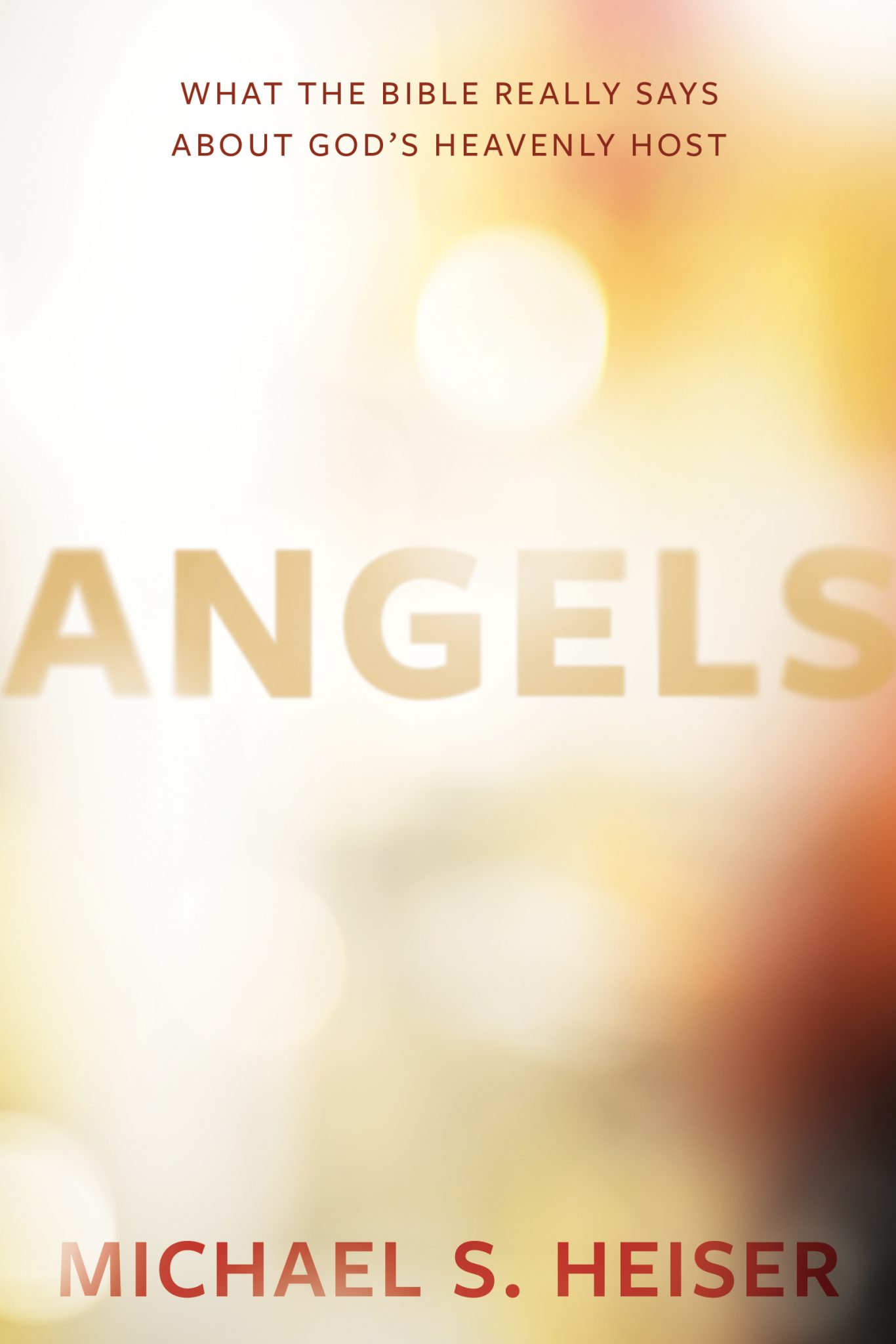
Despite all of this, I never committed the time to read any of his in-depth books. So this summer, I finally made the plunge and started with Angels: What the Bible Really Says About the Heavenly Host (via Audible audiobook). For those who are unfamiliar, Dr. Michael Heiser is an Old Testament scholar, who is gifted in making serious Bible study content accessible to believers who want to dive really deep into Scripture.
My quick take on Angels: Whoa. This changes the way I look at the supernatural. Why do we not hear more about this kind of stuff in church?
My background is such that I never really paid much attention to the topic of angels before. Sure, I read Frank Peretti’s This Present Darkness, when it was all the rage. But there was a certain cheesy-ness factor to Peretti that kept me from taking it too seriously. But with Dr. Michael Heiser, formerly a Bible scholar with Logos Bible Software, and his book of Angels: What the Bible Really Says About the Heavenly Host, I have changed my tune.
Heiser is an Old Testament scholar who makes a bold and provocative claim, but he has some real meat behind it. For Heiser, a lot of traditions that have floated around, about the supernatural realm, are merely that…. they are man-made traditions…. like the idea that angels have wings (they do not).
Different denominational traditions have come up with interesting ideas about angels. But Heiser contends that if we look back at the development of Second Temple Judaism, and the Ancient Near East context that preceded it, they provide the cognitive background for much of our New Testament. As a result, as scholars discover more about how ancient Israelites viewed the world, we gain valuable insight into understanding a lot of the “weird” passages of the Bible.
Looking for the Trinity in Genesis…. But Missing the Bigger Story
Take, for example, Genesis 1:26, where God says, “Let us make man in our image.” Who is the “us” that God is speaking to? About 99% (give or take) of evangelical Christians would say that this is a reference to the doctrine of the Trinity, embedded right there in the Old Testament.
Not so, as Dr. Heiser demonstrates. Heiser makes the case that the “us” is really a reference to a “divine council;” that is, the heavenly host, including angels, that were created by God in the non-material realm. We see other examples of this “divine council” at work, in several other texts of the Old Testament, including Isaiah 6 and 1 Kings 22:19-22, with no reference to the Triune nature of God.
Not only is the “Trinity” explanation rather ad hoc, a way for Christians to make the Old Testament fit into pre-conceived Christian ideas, it does not even make sense. For if all of the persons of the Godhead are already in cognitive union with one another, God does not need to tell himself what he is going to do. It makes better sense if God is addressing his heavenly host, whom he has already created, to speak about the creation of humanity.1
But why might this even be important? For several centuries now, skeptical scholars have taken this reference to “us” in Genesis 1:26 as evidence supporting a polytheistic conception of God, in early Old Testament history. According to this narrative, popularized in university religion classes and the History Channel, ancient Israelite religion evolved from a polytheistic view of “gods” towards a single, monotheistic conception of God. To put it bluntly, this would mean that Judaic religion, with its emphasis on what would become one “god”, is essentially a theological hack, using a manufactured monotheism to replace its original polytheism.
If you believe that, then it really cuts down the idea of the inspiration of Scripture a major notch.
However, if Heiser’s explanation is correct, and he has plenty of evidence to support his overall thesis, the concept of an angelic heavenly host does two things at once: It knocks out a well-intentioned, yet not altogether convincing apologetic for the Trinity. Plus, it silences at least a two-centuries long critique of Biblical faith, as a type of polytheism that clumsily morphs into monotheism.
This polytheism-evolving-into-monotheism story is completely wrong, as Michael Heiser contends. The concept of a monotheistic God, surrounded by his angelic heavenly host, is a theme that runs throughout the whole of Scripture, starting even there in Genesis 1. We do not need to read the Trinity into the Biblical text, when there is a better solution, that has greater explanatory power.
Getting Solid Scholarship into the Hands of the Everyday Christian Believer
What makes Heiser’s work so surprising is that none of his research is original. Angels is well-documented with footnotes that carefully relies on decades of peer-reviewed scholarship. Essentially, Heiser, though skilled in semitic languages and the Old Testament, is a popularizer of prevailing scholarship, that somehow never makes its way out of the academy, and into the hands of your typical church-going Christian.
Some well-intentioned conservative evangelical writers tend to promote a narrative that denigrates the bulk of evangelical scholarship, as somehow a backhanded slap against biblical inerrancy. But Heiser is not buying that story. Rather, the type of research he is making accessible to the average Christian is meant to support and encourage the evangelically minded believer. That scholarship, far from being an enemy of the faith, actually helps to ground our faith in evidenced-based reality.
One need not be convinced of everything Michael Heiser argues in order to benefit from his thesis. I am still mulling a few things over myself. Yet it is the careful attention to the text of Scripture, buttressed by responsible scholarship, that I find to be the most persuasive about Heiser’s work.
The only main drawback about Angels is that it does make for difficult listening as an audiobook. Angels does lean towards being an academic book. But it is primarily targeted towards someone who wants to do serious Bible study. You do not need to know the Biblical languages, or understand heavy theological concepts here. But you do need have an interest in wanting to dig deep and learn. I found myself having to stop what I was doing, when listening to the book, to go look up the Bible passage under discussion. I would strongly suggest getting the Kindle or paper edition of Angels, to supplement the audio version, to be used as future reference.
Dr. Heiser’s primary work is The Unseen Realm, which expounds his underlying thesis about the supernatural world. After reading Angels, I now want to dig into The Unseen Realm, to get the rest of the background material that permeates Angels. I have heard, that like Angels, there is a lot for the average reader to absorb in The Unseen Realm. To accommodate those who do not need lots of footnotes, a less academic version of the book, entitled Supernatural, is aimed to help those readers, in a more popular audience.
If you want to try to understand some of the weirder parts of the Bible, or you want to sift through some of the more erroneous popular understandings of angelic beings in Scripture, then Dr. Heiser’s Angels is the best place to dive into, as a start…. Oh, yeah, Dr. Heiser has a great explanation of that weird-weird passage that talks about head coverings for women in 1 Corinthians 11. Fascinating.
Seriously. Go read Angels and it will all start to make sense.
For an 8-minute explanation about why we do not need to read the Trinity directly back into Genesis 1:
I am not familiar with the “Sharpening Report,” so I am not in the position to make any endorsement, but the following interview with Dr. Heiser summarizes the content of the book.
Notes:
1. That being said, we should be clear in saying that Genesis 1 does not rule out the Trinity. It is sufficient to say that the Trinue nature of God is consistent with what is being taught in Genesis 1, and that God uses the process of progressive revelation to introduce the concept of the Trinity. Nowhere in the New Testament do we find any explicit statement saying “one God, three persons.” Rather, even in the New Testament we see the building blocks for the doctrine of the Trinity, that eventually gets fleshed out, in the early centuries of the Christian movement. Therefore, it is perfectly fine, and even necessary to say, that we as humans, male and female, are created in the image of God, reflecting the Triune nature of God, even if there is no explicit mention of the Trinity in Genesis. As Dr. Heiser teaches in the first video above, God addresses the heavenly host in Genesis 1:26, but when God creates humanity in Genesis 1:27, it is God alone who acts. This is consistent with a theology of the Triune God. We do not need to read something from the New Testament, or Nicene theology, back into Genesis. ↩









 Veracity