Monthly Archives: March 2019

An Easy Question? Should Women Serve as Deacons?

Third in a multipart series.

Should women serve as deacons in a church? I wish this was an easy question to handle, but apparently not.

Let us set aside the question about elders and pastors, in this blog post.

Not all Christians agree about deacons.

The word deacon is a transliteration into English of the Greek word diakonos, which simply means “servant.” In a sense, all Christians are called to be “servants.” But there is also a sense in the New Testament whereby a “servant,” or deacon, constitutes a particular office of the church. And this is where the controversy exists.

Some believe women can be deacons. Many other Christians do not.

I will lay out the case for the former, and try to address the concerns of the latter, as I respectfully disagree with it.

If you look at the ESV translation of 1 Timothy 3:8-12, you get a sense of where the conflicting interpretations are:

(8) Deacons likewise must be dignified, not double-tongued, not addicted to much wine, not greedy for dishonest gain. (9) They must hold the mystery of the faith with a clear conscience. (10) And let them also be tested first; then let them serve as deacons if they prove themselves blameless. (11) Their wives likewise must be dignified, not slanderers, but sober-minded, faithful in all things. (12) Let deacons each be the husband of one wife, managing their children and their own households well.

This is one of the two passages in the Bible that directly address the issue of deacons. In general, the word “deacons,” in our English translations is assumed to be male. But then we get to verse 11, that speaks of “their wives.”

The ESV translators have inserted the word “their,” which is not in the original Greek text, in order to make the sentence flow better. But if you have an ESV translation with footnotes, you will find an alternative translation of “women.” If this latter translation is correct, then this would indicate that Paul has in mind the idea that deacons can be either male or female.

As evidence for the latter view, the word “likewise,” when followed by the alternative “women,” as in “women likewise must be dignified….”  indicates that Paul is continuing to list the types of people who could serve as deacons, before returning back to the qualifications of male deacons in verse 12. But the choice of “their wives,” in the main body of the ESV translation, is actually a particular interpretation of the data, that is not favored by other translations, like the NIV, which by default, indicates women deacons (wives is in the NIV footnote).

In the same way, the women are to be worthy of respect, not malicious talkers but temperate and trustworthy in everything ( 1 Timothy 3:11 NIV).

Elsewhere in 1 Timothy, Paul gives us the qualifications of male elders, but he never addresses the issue of elder’s wives. That being the case, it is unlikely that Paul has deacons’ wives in mind in 1 Timothy 3:11. Rather, this more likely indicates that these were women deacons (some speak of “deaconesses,” but that is just a made-up English word referring to women deacons. “Deacon” in English is actually gender neutral).

Those two pieces of evidence alone are not necessarily sufficient to convince everyone. But there is more.

The other passage that directly addresses the issue is Romans 16:1-2:

I commend to you our sister Phoebe, a servant of the church at Cenchreae, that you may welcome her in the Lord in a way worthy of the saints, and help her in whatever she may need from you, for she has been a patron of many and of myself as well. (ESV).

Here is where we get the English direct translation of the Greek word diakonos, which would be “servant.” Contrast this with the NIV, that has deacon, instead. Both “servant” and “deacon” mean the same thing. The question here is, what kind of deacon or servant are we talking about?

We get our clue with the word “commend” that Paul uses to address Phoebe, who is a woman. For Paul to “commend” is simply more than just, “Hey, Phoebe is a swell gal.”  As the context of the passage indicates, Paul is urging the church in Rome to give Phoebe a place of honor, singling her out for special treatment. This would suggest that Phoebe occupies some official position, with respect to Paul, which is consistent with the office of “deacon.”

Perhaps that still does not persuade the student of Scripture. Some believe that Phoebe still was not a deacon in any “official” sense. In other words, Paul is indeed commending Phoebe to the Romans, but doing so in a non-commendable manner? I suppose?

However, we also have evidence from church history to consider. Near the end of the first century or early second century, we have a letter in Latin addressed to the emperor in Rome, describing Christian women who were “ministers” in Bithynia, which is a good Latin, plural equivalent of the Greek word “diakonos.” This would indicate that the early church, within about 50-70 years after these New Testament letters were written, had women serving as deacons in the churches.

Imagine that.

This would mean that the early church considered having women as deacons, as consistent with the teaching of the New Testament.

Now, critics of this view would suggest that only men can serve as deacons, because they carry the same type of spiritual authority as elders, or overseers, do. While this is hypothetically possible, you have to come up with a lot of explaining to do, in order for this particular interpretation to work.

Consider the heavy lifting involved:

First, it assumes that deacons do carry an elder-like type of spiritual authority. But this would suggest that deacons are kind of like “junior-elders,” or something like that, for which we have no substantial evidence for support. This effectively renders the distinction between elder and deacon as fairly meaningless.

You would also have to explain why Paul mentions the qualifications of deacons’ wives, and then totally neglect the description of elders’ wives (see 1 Timothy 3:1-12). Did Paul just forget? Or run out of papyrus? Probably not, but let us keep going with that.

Then you would have to suppose that Paul was somehow not being clear when he describes Phoebe as being a deacon. On top that, you would have to suggest that 50-70 years after these New Testament documents were written, the early church had by then completely misunderstood what Paul was talking about, when it came to the office of deacon.

If you can make all of these various assumptions hold together, with super-glue, then sure, you can go ahead and have a male-only deaconship in your church. If that sounds convincing to you, then well…. okay.

But it all seems pretty sketchy to me.

Nevertheless, I know of several churches that believe that only men can be deacons. I surely understand why such churches would go this route, as it can be defended from Scripture, in a sense. OK, I might sound a little snarky, so apologies go out to my “male-only deacon” friends, but this is my point: If you are going to resort to these type of arguments to restrict the office of deacon to men, you probably should not be surprised if egalitarians, who argue FOR women as elders, use the same type of complex, multi-assumption arguments, to make their case.

Such male-only diaconate churches are simply using the title of “deacon,” but in reality, the “deacons” are functioning in the role of “elder.” So, churches that have both “elders” and “deacons” exercising spiritual authority essentially have a two-tiered system of “elders,” the primary elders and the junior-elders, the latter whom are called “deacons.”

Calling someone a deacon does not make that person a deacon (read my post linked here, if something I am saying in the current post is confusing).

Likewise, there are often things that elders do that should properly be in the domain of the deacons. This follows the example set in Acts 6, whereby the apostles sought to delegate certain functions to servants; that is, deacons, that would otherwise distract the elders from their primary task, that of spiritually shepherding the community of faith, through the propagation of sound doctrine and the application of church discipline. The elders need not be micro-managing the details of the welcome team ministry, hovering over the operations of the floral guild, or managing the logistics for the short-term mission trips.

The service ministry performed by deacons is just as important as the functions performed by elders. But we should be careful not to saddle the elders with tasks that can easily be handled by the deacons.

Egalitarians will shrug their shoulders, as to much of what I am saying here, but some complementarians need to think long and hard about how they view deacons.

Some might be drawn to conclude that a firm stance against women as deacons must be held in order to dissuade Christians from accepting women as elders. But the difficulties concerning the teaching about deacons are NOT the same as the teaching about elders.

For example, we have no examples of women serving as elders in the New Testament, unlike Phoebe was for deacon. Furthermore, we have no clear, substantial evidence in the early church, just following the New Testament era, that women served as elders there, unlike the positive evidence we have for women deacons in the early church.

Confusing the office of “elder” and “deacon” does not help in this discussion. Granted, those who believe in a male-only diaconate do not necessarily marginalize women. Women can serve in other ways. There is a consistent, biblical interpretation supporting a male-only diaconate, so I do not intend to be disrespectful at all. But it sure makes the situation more confusing than it really needs to be. At the risk of stepping on someone’s toes, I must state that the male-only view of deacons is simply not convincing.

If a church wants to “hold the line” against encroaching feminism in the church, restricting the office of deacon to men only is an unstable line to hold, and unnecessarily restrictive. It is much better to allow the weight of the biblical and historical evidence to stand, and to encourage both men and women to serve as deacons in a local church.

For a scholarly argument for women as deacons, read Tom Schreiner’s essay. For a scholarly argument against women as deacons, read Guy Waters’ essay.


Can Women Serve as Elders, Deacons or Pastors?

Second in a multipart blog series.

In the first post in this multipart blog series, I raise the question: “Should women serve as elders, deacons, or pastors” in a church?

But notice what I did NOT ask. I did NOT ask: “Can women serve as elders, deacons, or pastors?”

Do women have the capabilities, talents, stamina, etc. to exercise leadership? So, can women serve as elders, deacons, or pastors?

Of course they can.

At least, it should be apparent by now that women are just as talented, if not more so, than men, at many, many things. Granted, this must be examined at the individual level. Some are more capable than others, whether they be men or women.

Various Christian groups have been electing women to serve as ordained, or otherwise, as spiritual leaders for a long time. Various Pentecostal and Holiness groups have been ordaining women since the late 19th century, and many of these women have done a spectacular job at what they have done. The Quakers have been encouraging women leadership in the church since the 17th century. Plus, there are different kinds of leadership and ministry skills needed in the church, where the needs far exceed the willingness of Christians to heed the call. It would be fair to say that God has used these women preachers and leaders to build His Kingdom.

An old traditional, patriarchal view suggested that women were somehow inferior, or that they lacked something to be able to perform as well as men. Many Christians over the years have been guilty of perpetuating the idea. Some still do so today. But Galatians 3:28 should be evidence enough that such misogyny has no place in the thought of the believer:

There is neither Jew nor Greek, there is neither slave nor free, there is no male and female, for you are all one in Christ Jesus (ESV).

Old habits die hard. But die they must.

Nevertheless, the question of can women do these things is NOT the same as should they do them. For some who overreact to the old patriarchal ways, the fact that I distinguish between the two questions might come as a shock, and may even sound abrasive. I just encourage both sides in the discussion to keep reading.1

Broadly speaking, at the risk of grievously oversimplifying, there are two camps within evangelicalism that try to address this question of “should.”

Complementarians believe that men and women are to complement one another in ministry. However, women should not exercise positions of spiritual authority or headship, over men, in the church.

Egalitarians believe that men and women are equal with one another in ministry.  As a result, both men AND women should be eligible to serve together in all positions of spiritual authority in the church.

The issues between complementarians and egalitarians are complex. Complementarians are concerned that egalitarians are minimizing the differences between men and women, to the detriment of both women and men, and introducing complex assumptions into our reading of Scripture, that are hard to sustain, in good conscience. Egalitarians are concerned that complementarians are trying to smuggle misogynist, woman-hating thinking back into the church, while they ignore valuable cultural factors present, in how Scripture is read.

A lot of Christians, perhaps the majority, are somewhere in between. In fact, it is probably more realistic to think of the complementarian/egalitarian debate as something that exists on a continuum. A number of Christians, like me, might lean one way, more than the other, but we want to try to figure out how to make peace with one another, so that we can move on towards other, more important things.

The following blog posts are an attempt to address just some of the issues, mostly related to how the Bible is to be interpreted, in a way that the average student of Scripture can comprehend. Hopefully, I have done my homework correctly, and put such weighty matters down on the bottom shelf, as much as possible, so that as many as possible can reach for them, and think them through.

You probably will not be able to tell where I will “land the plane,” based on the majority of these blog posts, near the beginning. Both sides deserve a fair hearing. Just hang in there, as you will eventually discover where this is going. But you will quickly figure out that there are hyper-complementarian and hyper-egalitarian readings of the Bible that ought to be rejected. Some of these hyper-complementarian and hyper-egalitarian views are amazingly popular, in different corners of the evangelical church.

Before continuing on, I would urge the reader to consider looking at some of the other blog posts I have written on this topic before, to fill in some of the gaps. In particular, one of the most troublesome issues is in the very terminology we use, such as terms like “elder,” “deacon,” and “pastor.” You might want to start there before moving on much further. If you get lost, go back to the first blog post, where I am keeping track of the series.

Until next time…..

Notes:

1. Well, surely questions like should women serve as X, Y, or Z, as well as can women serve as X, Y, or Z, are good questions. But perhaps a more profound, and more meaningful question is, who are the elders, deacons, and pastors in a church? This is quite a different question, as it touches upon very deep topics regarding the structure of the church (ecclesiology) and a theology of gender (part of a theological anthropology), which is too much to go into here, at the present time.


Should Women Serve as Elders, Deacons, or Pastors?

An introduction to a multi-part series.

Here I go. Stepping into the quagmire.

Perhaps one of the most difficult “agree to disagree” type of issues facing the evangelical church today is that of whether or not women should serve as elders, deacons, and/or pastors. Passions run high as Christians debate how to interpret certain biblical passages.

Nevertheless, there are Christians for whom the whole discussion seems pointless, and already settled. Why is this even an “agree to disagree” issue? After all, the Bible is clear on the matter. Some can cite their prooftext, and simply move on.

The objective of this series is to show that while the Bible is clear on many things, the varieties of Scriptural interpretation among godly, Bible-loving believers on this issue actually runs the gamut. It is a lot more difficult than you think to gain a clear idea as to whether or not women can serve as elders, deacons, and/or pastors.

At the same time, getting this issue right is of utmost importance. The consequences of getting this wrong are arguably highly significant, and for some, downright scary, if handled incorrectly. The question of “women in ministry” requires concentrated effort to read and study the Bible, and be in conversation with one another. Trusting in the work of Holy Spirit is crucial. Prayer is paramount. Avoiding extremes is difficult, but necessary. In the words of Robertson McQuilkin“It seems easier to go to a consistent extreme than to stay at the center of biblical tension.”

I will keep this blog page updated as the series moves along. First, here are the additional blog posts in this series::

The above linked blog posts make up the original series that I wrote back in 2019. Also, I will note some previous Veracity blog posts that address particular background issues related to the topic:

UPDATE 2023: Below is a list of other blog posts published after that initial series came out in the spring of 2019:


By the end of the original blog series in 2019, you will get an idea of where I am coming from. So, if you are going to read any of these blog posts, please READ ALL OF THEM IN THE INTIAL SERIES BEFORE making a final judgment on what I am saying (I do welcome your comments below). The punch line will come in the last one or two posts, but to get the full sense of it, you should read all of the preceding posts in the series…. and, yes, you might want to keep your Bible handy, as I will be going to God’s Word quite often (or you can just follow the hyperlinks in the blog posts, instead).

The blog posts that came out since 2019 (linked above) have helped me to refine my thinking. I stopped blogging in-depth about this topic in 2023.  I might make a few additional blog posts in the future, as there are newer books to come out that address this topic that does not seem to go away, from both the complementarian and egalitarian sides of the discussion. It just seems like this debate will never end, and life is too short to keep focusing on this.

I will say up front, that in giving my view, I could be wrong. Utterly wrong. Or more likely, perhaps a few points wrong, here and there. My perspective has shifted over the years, and it could shift again. But what I do hope is that folks can take this seriously, and treat it is an important perspective in the ongoing discussion. It is a plea for unity, but it is also a plea to pursue truth, and never abandon the pursuit of truth.


Can “Charismatic” and “Liturgical” Christians Worship Together?

The debate over the “gifts of the Spirit” divides evangelical Christians. The debate over the ancient liturgy of the church divides as well. Is it possible to heal the divides by bringing the charismatic and the liturgical together?

Consider the “gifts of the Spirit.” On one side are those who believe that the supernatural gifts of tongues, prophecy, etc. continue on today in the church (the continuationist, or charismatic position). On the other side are those who believe that those very same gifts ceased to exist at the end of the apostolic age, in the first century of the church (the cessationist, on non-charismatic position).

Walk into just about any “typical” evangelical church today, and the antenna of any first time visitor goes up. How many people during worship are raising their hands during the singing? Is the person sitting next to you uttering some undecipherable words, just above a whisper (or louder), during the corporate prayer time? If things get really scary, you might be asking yourself, “Is that barking I hear, or is that simply the drummer hitting the snare drum, making a really odd sound?”

Depending upon your theological background, the answers to these questions might encourage you to stick around, and inquire positively of the pastor, or they might encourage you to quietly sneak out the door, never to return!

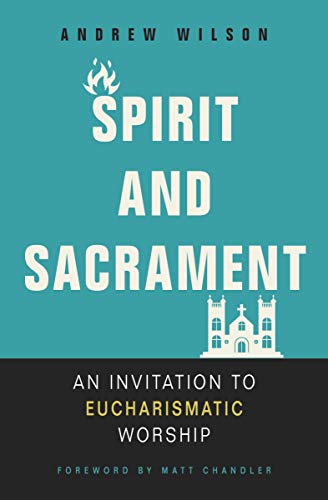
Spirit and Sacrament: An Invitation to Eucharismatic Worship, by Andrew Wilson, is probably the best written case for defending the union and expression of charismatic and liturgical worship in the church. Plus, the book is short and exceptionally well written.

Continue reading


Augustine on Learning How to “Agree to Disagree” Well

Over the coming weeks, I hope to tackle two major issues that threaten the unity of God’s people. I will offer one blog post/ book review on the subject of “Can ‘Charismatic’ and ‘Liturgical’ Christians Worship Together?” The second, and more visceral issue, I will dedicate a multi-part blog series on: “Should Women Serve as Elders, Deacons,or Pastors?”

Is it even possible to “agree to disagree” on issues like these? Some think not. Some say that by giving allowance for such diversity of perspectives in a church is an invitation for false teaching to come in and distort the Scriptures.

Sandro Botticelli, Sant’ Agostino nello studio (Saint Augustine in the studio), Fresco, Chiesa di San Salvatore in Ognissanti, Florence.

The African bishop of centuries ago, Saint Augustine, wrote about this dilemma in his classic, On Christian Doctrine (Chapter 36), arguing that the objective of good Scriptural interpretation is to encourage love of God and love of neighbor:

Whoever, then, thinks that he understands the Holy Scriptures, or any part of them, but puts such an interpretation upon them as does not tend to build up this twofold love of God and our neighbour, does not yet understand them as he ought. If, on the other hand, a man draws a meaning from them that may be used for the building up of love, even though he does not happen upon the precise meaning which the author whom he reads intended to express in that place, his error is not pernicious, and he is wholly clear from the charge of deception. For there is involved in deception the intention to say what is false; and we find plenty of people who intend to deceive, but nobody who wishes to be deceived….

Whoever takes another meaning out of Scripture than the writer intended, goes astray, but not through any falsehood in Scripture. Nevertheless, as I was going to say, if his mistaken interpretation tends to build up love, which is the end of the commandment, he goes astray in much the same way as a man who by mistake quits the high road, but yet reaches through the fields the same place to which the road leads. He is to be corrected, however, and to be shown how much better it is not to quit the straight road, lest, if he get into a habit of going astray, he may sometimes take cross roads, or even go in the wrong direction altogether.

In other words, some people, even teachers in a local church, can make erroneous judgments when reading the Bible, from time to time. But Augustine’s advice is not to immediately throw such people under the bus, treat them as “agents of Satan,” and objectify them as enemies. Instead, Augustine contends that a concerted effort be made to gently, respectfully, patiently, and lovingly seek to correct such error in others, and bring such people along the right path. Sometimes, people do fall off of the high road, but it is possible for them to find their way back, through the fields, to the same place where the road leads. It can be difficult work, but caring brothers and sisters in the Lord will often help those folks along, to find the right road again.

As Proverbs 15:1 puts it, “A gentle answer turns away wrath, but a harsh word stirs up anger.” Christians should be a people ready with a gentle answer, as opposed to a harsh word.

It bears noting that Augustine was no wimpy Christian, when it came to the threat of heresy. Have you ever heard of the Donatists? If not, then there is a good reason for that. It was Augustine’s pen that was largely responsible for wiping out the Donatist heresy that threatened to pull the church completely apart, during the 5th century A.D. But Augustine nevertheless sought to facilitate dialogue in order to seek to persuade  those who had a wrong view of Scripture. His words serve as a useful model for how to work through controversy among Christians today.