Tag Archives: veracity

Keeping It Real

Personal Discipleship Week 2

Click on the images inside this file to link to the online resources. (You may need to adjust your browser settings to allow the links to work, or open it in iBooks, or save it to your desktop and open it with Acrobat Reader.)

(Note: For those interested in the calculations for the precise dating of the first Easter, here is the link to the paper Dr. Ken Petzinger shared with our Personal Discipleship class.)

Truth is not relative. Truth is not—as Ogden Nash so eloquently wrote—that “people believe what they believe they believe.” Truth is not dogma. It is not—as Ravi Zacharias argues—logically inconsistent, empirically inadequate, or experientially irrelevant. Truth is incredibly important. Truth is the reason Jesus Christ was born and came into the world.

“In fact, for this reason I was born, and for this I came into the world, to testify to the truth.”
John 18:37c (NIV84)

Okay, okay…Why spend time studying ‘truth’? People who harp on ‘truth’ make me nervous (and sometimes nauseous). Sometimes dangerous ideologies are launched on malformed or manipulative notions of truth. Got it. But objective truth is the proper basis for personal discipleship. Without objective truth, the door is open to wield the Bible as a weapon, perverting the very purpose of Divine revelation. Without objective truth one can hold up the Bible and say with a clear conscience, “The Bible says it, I believe it, that settles it!” (New Testament scholar Daniel Wallace calls this attitude “bumper sticker theology.”) Among many other problems, that approach has a glaring flaw—an inherent internal focus. In other words, “that settles it (for me).”

Those who ascribe to a “that settles it (for me)” approach to the Bible tend to miss the beauty that comes from understanding how well it can withstand objective, historical, logical, philosophical, and (yes) scientific scrutiny. It takes a great deal of effort to “work out your own salvation with fear and trembling” (Philippians 2:12), but the juice is worth the squeeze.

We don’t tell people what to think on Veracity, but we’re not afraid to share opinions. Rather than sticking our heads in the sand and ignoring challenges to the Bible and the Christian faith, why not take a hard look at these challenges and study the appropriate responses? Could it be that the reason some Christians are unwilling to address atheistic or skeptical objections is that, deep down, they fear the answers might be inadequate? Why upset the applecart when it is settled (for me)? Could it be laziness or complacency?

With objective truth as the basis for personal discipleship, our studies can become rich and full of awesome discoveries. Without it we’re apt to flounder, or even end up spiritually bankrupt. Okay, enough of my testimony.

“The gospel of Jesus Christ is beautiful and true, yet oftentimes one will ask, “How can it be true that there is only one way?” Odd, isn’t it, that we don’t ask the same questions of the laws of nature or of any assertion that lays claim to truth. We are discomfited by the fact that truth, by definition, is exclusive. That is what truth claims are at their core. To make an assertion is to deny its opposite. Rather than complain that there is only one way, shouldn’t we be delighted that there is one way?”
Ravi Zacharias, Think Again – Deep Questions, 28 August 2014

In addition to J. Warner Wallace’s excellent video on The Case For Truth, there are two essays I would recommend for anyone interested in personal discipleship. The first is a brief blog post by Ravi Zacharias entitled “Deep Questions.” The second is a paper delivered by J.P. Moreland at the Evangelical Theological Society, November 18, 2004. Click on the images below to read these essays.
Ravi-Zacharias: Truth

J. P. Moreland: Truth


Personal Discipleship Class

Personal Discipleship Class

Click on the images inside this file to link to the online resources. (You may need to adjust your browser settings to allow the links to work, or open it in iBooks, or save it to your desktop and open it with Acrobat Reader.)

Starting today (February 1st), I will be facilitating a new class on personal discipleship. For the next nine weeks, we will meet promptly at 10:45 a.m. in room 156 at the Williamsburg Community Chapel.

This class will build upon the apostle Paul’s instruction in (Philippians 2:12):

“Therefore, my beloved, as you have always obeyed, not as in my presence only, but now much more in my absence, work out your own salvation with fear and trembling;”

“Personal discipleship” is the process by which a believer or seeker accepts personal responsibility for exploring the claims and content of the Bible. The class will explore resources and topics, going beyond the sacred page to meet some of today’s most interesting and thought-provoking theologians, apologists, and philosophers. We will discuss historical evidence for the Resurrection, the dating of Easter, apologetics, textual criticism, the trustworthiness of Scripture, biblical inerrancy, science and faith, and current topics in theology.

The first session will focus on resources for personal discipleship. Click on the image above to download a PDF file containing hyperlinks to some of my favorite resources, which I will demonstrate in the class. If your personal studies are getting a little rote, try clicking on the images in this file to find some refreshing new tools and resources that you can use to reinvigorate your devotional life. The breadth and depth of high-quality resources available today is absolutely stunning.

Objective Truth As The Basis For Our Study

I posted the following video a couple of weeks ago. It presents an interesting, refreshing basis for studying the Christian faith—specifically that Christianity is founded on objective truth. The ideas in this video will frame our approach to studying during this class.


The Nature of Truth

The Best of Ogden Nash

SEEING EYE TO EYE IS BELIEVING

by Ogden Nash


When speaking of people and their beliefs I wear my belief on my sleeve;

I believe that people believe what they believe they believe.

When people reject a truth or an untruth it is not because it is a truth or an untruth that they reject it,

No, if it isn’t in accord with their beliefs in the first place they simply say, “Nothing doing,” and refuse to inspect it.

Likewise when they embrace a truth or an untruth it is not for either its truth or its mendacity,

But simply because they have believed it all along and therefore regard the embrace as a tribute to their own fair-mindedness and sagacity.

These are enlightened days in which you can get hot water and cold water out of the same spigot,

And everybody has something about which they are proud to be broad-minded but they also have other things about which you would be wasting your breath if you tried to convince them that they were a bigot,

And I have no desire to get ugly,

But I cannot help mentioning that the door of the bigoted mind opens outwards so that the only result of the pressure of facts upon it is to close it more snugly.

Naturally I am not pointing a finger at me,

But I must admit that I find any speaker far more convincing when I agree with him then when I disagree.

_______
HT: Ogden Nash


The Case for Truth

As you might imagine, truth is a very important topic on a blog named Veracity. Veracity is a one-word description of the Bible. The Bible is true. Most people really have no idea how true. Unfortunately, some believe that it is true because they feel it is true. Others hope that it is true without ever really knowing how true it really is. Agnostics doubt that it is true. Skeptics believe it is untrue.

So how important is it that your faith be based on truth? It sounds like a silly question, but it has profound personal implications. When you engage others about your faith, do you say things like, “This happened to me,” or ” I feel that…”? Unfortunately, these type of statements can point to a subjective faith. But Christianity is much truer than that.

Veracity is also a one-word description for Jesus Christ, taken from his own words:

Jesus said to him, “I am the way, the truth, and the life. No one comes to the Father except through Me.”
John 14:6

So, ultimately, truth is a person. Got it. Plain and simple. But is it an objective truth?

I’m currently preparing to teach a class on personal discipleship, which we define here at Veracity as “the process in which a believer or seeker takes personal responsibility for investigating the claims and content of the Bible.” It is personal and inherently objective. And it should be.

The class will be full of mature Christians. Many of these folks have spent a lifetime studying the Bible, and can offer encouragement to anyone who wants to ask questions. They have encouraged me. I’m hoping to give back by delving a little more deeply and father off the sacred page than most are accustomed to exploring. It will require an open mind that thirsts for the truth. No dogma, no “This is the way I’ve always thought it to be,” and no fear of what we might discover. If successful, some may find a more intimate appreciation of the Bible and the veracity of their faith. But it requires an honest assessment of our biases (we all have them), and an open and objective mind.

Anyway, I spend hours and hours looking at videos, trying to find just the right ones that will fit within the class schedule and leave time for discussion. There’s a ton of candidate material to share from brilliant apologists like Ravi Zacharias and John Lennox. There are studied academics like Daniel Wallace, Darrell Bock and Craig Evans. Theologians and philosophers like William Lane Craig and Alvin Plantinga. Seminarians like Michael Kruger, Norman Geisler and Gary Habermas. Pastors and teachers like Dick Woodward, Tim Keller and Andy Stanley. Scientists like Hugh Ross and Francis Collins. And a retired cop.

J. Warner Wallace

J. Warner Wallace

J. Warner Wallace

A retired cop?! Yup. J. Warner Wallace was a keynote speaker at the 2014 National Conference on Christian Apologetics. When my friends and I were looking at the conference syllabus, we had heard of his ministry but it sounded pretty much like a shtick to us—“A cold-case homicide detective looks at the Resurrection.” But we were blown away at his sessions. He is likely one of the most gifted rhetoricians you will ever hear.  There’s nothing wrong with good rhetoric—St. Augustine of Hippo was a professor of rhetoric and one of the most influential thinkers in the early Christian church. Martin Luther King, Jr. successfully persuaded the majority of Americans that racism is wrong and that it was time for the country to move in a more just direction. We need good rhetoric.

By way of background, Jim Wallace had a storied career as a homicide investigator in Torrance, California. Right before he spoke at the Charlotte conference, his last case was chronicled on the TV news program NBC Dateline. (Four of his cases have been featured on Dateline—he never lost a single case in his career as a cold-case homicide detective.) It was the oldest homicide cold case ever brought to trial in the United States, and the defendant’s lawyer was none other than Robert Shapiro, the famous Hollywood attorney from the O.J. Simpson case. It was Shapiro’s last court case. You can watch the NBC Dateline video to see what happened.

I will show some of his remarkably persuasive and compelling videos during the upcoming personal discipleship course but want to put this one out to Veracity readers. The truth matters—if we’re not after the truth, what’s the point in studying the Bible?


How We Got the Bible (Part 3)

The Church no more gave us the New Testament canon than Sir Isaac Newton gave us the force of gravity. God gave us gravity, by His work of creation, and similarly He gave us the New Testament canon, by inspiring the individual books that make it up.”
J. I. Packer, God Has Spoken: Revelation and the Bible, 3rd ed.

“We should not imagine a committee of church fathers with a large pile of books and these five guiding principles before them when we speak of the process of canonization. No ecumenical committee was commissioned to canonize the Bible.”
Norman L. Geisler and William E. Nix, From God To Us Revised and Expanded: How We Got Our Bible

One of the great misconceptions about Christianity involves the canonization of the Bible (that is, deciding which books comprise the whole, inspired, holy Scripture). For whatever reasons, people tend to imagine some sort of ecumenical process—dragging out over several centuries—where well respected officials in the early and medieval church came together and decided which books were in and which books were out. But as we can see from the quotes above from three of the most conservative Bible scholars, church councils did not produce the Bible.

Ecumenical Councils

Conservative Christian scholarship disallows any notion that ecumenical councils somehow selected the Bible from a list of candidate documents. But there were ecumenical councils, lots of them, so what role did the councils play in the canonization of the Bible?

First, recognize that church councils were necessary for the governance and order of the church. The precedent was set at the Council of Jerusalem in Acts 15, attended by the apostles themselves. There were heresies and challenges to Christian doctrine. There were matters of church discipline and orderly worship that had to be addressed. There was confusion about Gnostic teaching and guidelines for living. Later there would be questions about which books and letters belonged in the canon of Scripture—and which did not.

Shortly after the legalization and state patronage of Christianity within the Roman Empire, the church began to hold ecumenical councils. The first was called by Constantine the Great on May 20, 325 at the Royal Palace in Nicaea. The focus of the Nicene Council was the divinity of Jesus and the clarification of the Trinity. It produced the Nicene Creed, which was later amended to be close to the Apostles Creed. (Sidebar—Did Jesus descend into hell? Here’s a brief discussion about this controversy.) Contrary to modern misconceptions—perpetuated by Dan Brown in The Da Vinci Code—Constantine did not determine the New Testament canon and the First Council of Nicaea did not even address the topic of the canon of Scripture.

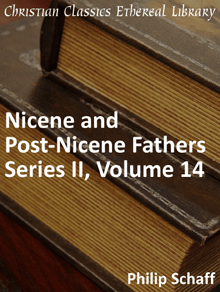
Over the following centuries, there would be many more ecumenical councils and synods, continuing through to the present day. Which meetings are recognized as ‘ecumenical‘ depends largely upon denominational perspective. 19th century church historian and theologian Philip Schaff documented the canons of Seven Ecumenical Councils between 325 and 787 CE (which he defined as “councils which have always, and still do, receive the unqualified acceptance of both East and West”):

  1. The First Council of Nicaea,
  2. The First Council of Constantinople,
  3. The Council of Ephesus,
  4. The Council of Chalcedon,
  5. The Second Council of Constantinople,
  6. The Third Council of Constantinople, and
  7. The Second Council of Nicaea.
Philip Schaff - Ecumenical Councils

Philip Schaff meticulously documented the canons of the historic ecumenical councils of the Christian church.

However, history is replete with other councils that are not accepted as ecumenical by the Eastern and Western churches (‘Eastern’ meaning Eastern Orthodox, and ‘Western’ meaning Roman Catholic and other denominations that developed in Europe). For example, the Synod of Hippo (393 CE) and 3rd Council of Carthage (397 CE) produced authoritative lists of the sacred scriptures. Later, the Council in Trullo (also called the “Quinisext Council,” 692 CE) ratified the canons of these councils—but did not specifically state the list of books considered to be divinely inspired. So why didn’t everyone accept the canons of Hippo and Carthage as ecumenical? As you might imagine, church politics had a lot to do with it—and still does. Hippo and Carthage did not have wide representation from the church as a whole and were heavily influenced by Augustine of Hippo, as later critics would argue.

Page 885 of Schaff’s text contains the list of canonical scriptures from the Council of Carthage. This list includes the Apocrypha in the Old Testament but clearly identifies the 27 books of the New Testament. (We’ll explore the Apocrypha in a future post.)

The canons of the ecumenical councils make for dry reading in parts, not unlike reading the formal minutes from a business meeting where much discussion is reduced to a few statements. Nevertheless, check out the canons of these councils as recorded in Schaff’s monumental work. In addition to the seven ecumenical councils, he also documented the records from other councils, including Hippo, Carthage, and Trullo. Much of what these clergymen dealt with is now irrelevant. Troublesome heretics have long ago died, many of the controversial theological and doctrinal problems have faded in time, and frankly no one cares about how to handle “him who persuades a slave to leave his master under pretence of religion.” When you read the canons, it becomes clear how challenged the Christian church was over matters large and small—and how pious many of these councils must have been.

‘Orthodox’ Christianity

Over the centuries since the Ascension of Jesus Christ, the church found more issues to debate, and more reasons to divide. Rather than serving to unite believers, later ecumenical councils proved to be dividing mechanisms by laying out denominational distinctions.

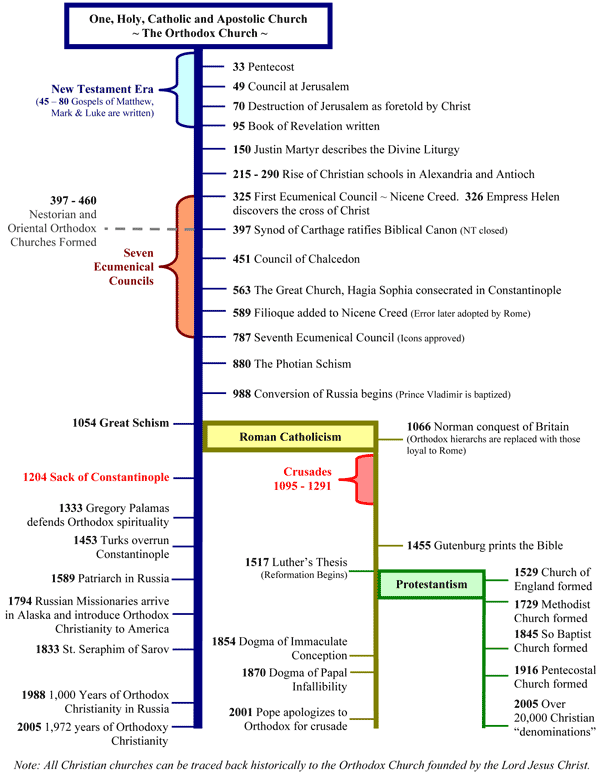
Church History Timeline (credit: http://www.stspyridons.org/timeline/)

Church History Timeline (credit: http://www.stspyridons.org/timeline/)

As shown in the timeline on the right, the Christian church remained essentially united through the early councils. Then, one word (Filioque) caused the Great Schism of 1054 and the ‘orthodox’ church began splitting into more and more denominations.

So…in all the deliberations of the historic synods and councils of the early and medieval Christian church, Christians cannot find agreement on the canon of Scripture. The scholars quoted at the beginning of this post seem to be justified in the strength of their statements. Church councils did not produce or canonize the Bible.

Think about it. Is it reasonable to believe that God would inspire holy Scripture and that it would then need to be ratified by church councils before being recognized as such?

If we rule out the deliberations of church councils as the deciding authority, how then can we know what books comprise the canon of holy Scripture? We’ll take that up in our next post on this topic…

Can We Trust the New Testament Canon?

…but in the meantime, here’s a brief interview with Dr. Michael Kruger that addresses that very important question.

HT: Philip Schaff, Norman Geisler, William Nix, Michael Kruger, Christian Classics Ethereal Library (CCEL)

Additional Resources

From God To Us
The Ecumenical Council