Tag Archives: veracity

A New New Testament: Are You Serious?

Veracity is all about the Bible: what it is and is not, how it came to be, what it reports and claims, who it describes, and the difference it should make in our lives. Here’s another outstanding post by Dr. Daniel Wallace that gets to the heart of these issues, demonstrating solid scholarship and discipleship in response to yet another agenda to remake Christianity.
Daniel Wallace

Daniel B. Wallace's avatarDaniel B. Wallace

Just released from the giant publishing firm, Houghton Miflin Harcourt: A New New Testament: A Bible for the 21st Century Combining Traditional and Newly Discovered Texts, edited by Hal Taussig.

The advertisement from HMH distributed widely via email last week was not shy in its claims for the 600-page volume. The subject line read, “It is time for a new New Testament.” In the email blast are strong endorsements by Marcus Borg, Karen King, and Barbara Brown Taylor. Borg and King, like Taussig, were members of the Jesus Seminar (a group headed up by the late Robert W. Funk, which determined which words and deeds of Jesus recorded in the Gospels were authentic). King and Taylor are on the Council for A New New Testament. All of them share a viewpoint which seems to be decidedly outside that of the historic Christian faith, regardless of whether it is…

View original post 2,205 more words

Like a Son of Man

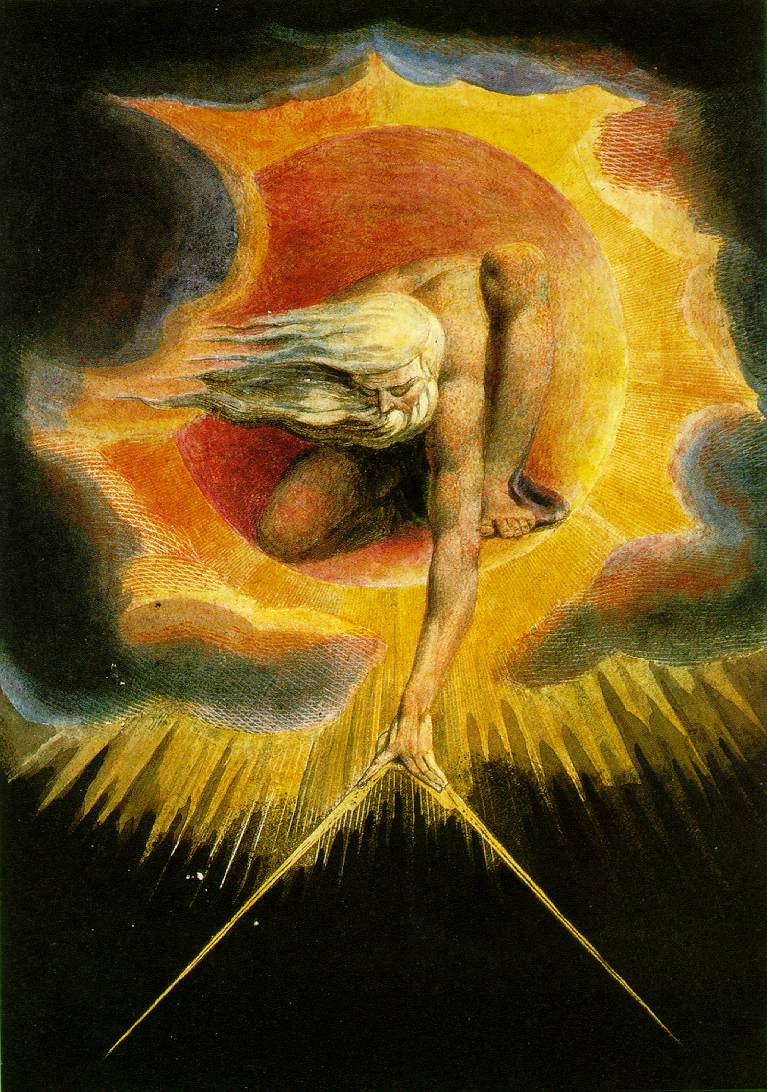
The Ancient of Days. 1794.  Watercolor by William Blake.

The Ancient of Days. 1794. Watercolor by William Blake.    Based on the “like a son of man” passage in Daniel 7.    In the Old Testament, Daniel is the master of apocalyptic imagery, which means using words as pictures to “reveal” or “uncover” that which is hidden.

Jesus talks about being the “Son of Man” eighty-one times in the New Testament. The term is Jesus’ favorite designation for Himself in the Gospels. So, what is the deal with this “Son of Man” stuff anyway?

Son of Man = Messiah = Divinity of Christ“. For years, I merely assumed this to be true, simply out of reflex of being a Christian. But if it is true, why is it true?  I never really thought about it that much. Recently, our  small group Bible study has been looking at the Gospel of Luke, and every now and then there are puzzled looks whenever Jesus speaks of this Son of Man. As I observe everyone scrambling to read their study bible notes, I know that I am not alone in my why question.

A number of critics complain that Christians read way, way too much into this phrase. The Son of Man as the Messiah?  Mmmm. How so?   Furthermore, the Bible never explicitly equates Son of Man with “divinity”. Are followers of Jesus getting ahead of the Bible when asserting the messianic, divine meaning of Son of Man? Can a believer in Christ reasonably defend such a claim?

Continue reading


Keeping the Faith

The Race, 2004

Therefore, since we are surrounded by such a great cloud of witnesses, let us throw off everything that hinders and the sin that so easily entangles, and let us run with perseverance the race marked out for us.
Hebrews 12:1 (NIV)

Hebrews 12:1 reveals so much about the character of God.  This short, pivotal verse tells us about the heavenly realm; the ability of those in that realm to ‘see’ what we are doing; that God has a plan for our lives; that he knows it is not easy; and that he values our striving.  The race we are directed to run gives us a purpose and a mission.  In context it’s about keeping the faithHebrews Chapter 11, often called the Great Faith Chapter, precedes the ‘therefore’.  If you pay attention to the ending of Hebrews Chapter 11, you’ll notice that all the saints mentioned “were commended for their faith, yet none of them received what had been promised. God had planned something better for us so that only together with us would they be made perfect.”

God works by processes.  He wants us to run a race that he knows will be difficult.  Some believe this to be unfair—why doesn’t God just poof everything to be easy for everybody?  But God plays by his own rules.  That’s what the sacrifice of Jesus Christ is all about.  And we have a role in that sacrifice—we’re supposed to keep the faith.

Who wrote the Book of HebrewsOpinions vary considerably, but my personal hunch is Barnabas.  It’s hard to say, but one thing is certain—the apostle Paul knew and appreciated this theology. Continue reading


Apologetics Thomas Aquinas Style

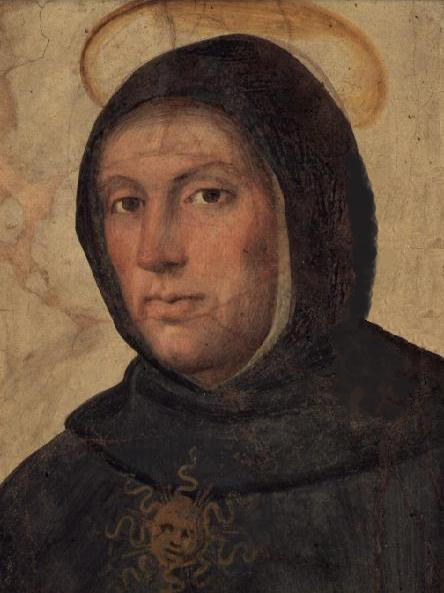
Thomas Aquinas, by Fra Bartolomeo.  During a period  of Islamic ascendancy in medieval  Europe, Aquinas let the way as a follower of Jesus to transform history.

Thomas Aquinas, by Fra Bartolomeo. During a period of Islamic ascendancy in medieval Europe, Aquinas led the way as a follower of Jesus to transform history.

According to the U.S. Census of 2010, Islam is the fastest growing religious movement  in America, increasing 66.7% over the previous ten years, as compared to only a 1.7% increase among evangelical Protestants. How do we best relate the Gospel to Muslims? Here is a nugget from church history on Thomas Aquinas and the influx of Islam into medieval Europe with lessons for today.

So, how did the medieval church respond to the overwhelming cultural influence carried by the Arab Muslims into Christian Europe? Enter in Thomas Aquinas. Aquinas was a young Dominican monk in the 13th century as he thought about the growing influence of Islam throughout the known “Christian” world. But Aquinas knew that the famous ancient Greek philosopher, Aristotle, was perhaps the most important thinker enlisted by the Muslims to support Islamic belief. Aquinas began a nearly lifelong study of Aristotle. His magisterial Summa contra Gentiles was written in about 1264 largely as an apologetic treatise for use by Christian missionaries when explaining the faith to Muslim critics. In Summa contra Gentiles, he comments extensively on Aristotle, the great pagan thinker, in an effort to defend the Gospel.

Continue reading


No Compromise?

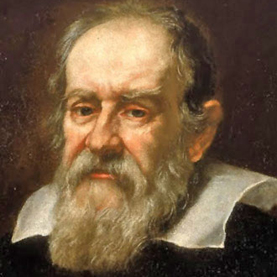
Was Galileo right?  Or did he take the Christian church down the path of compromise, eventually leading to the contemporary secularization of the traditionally Christian societies, weakening the witness of the church?

Was Galileo right? Or did he take the Christian church down the path of compromise, eventually leading to the contemporary secularization of  traditionally Christian societies, and weakening the witness of the church?

Millions of years. The age of the earth. Established scientific fact based on evidence? Or fatal compromise of biblical inerrancy and the integrity of the Gospel?

Answers in Genesis (AiG) is the premier Young Earth Creationist organization in the world. Their basic mission is to try to help Christians have a restored confidence in the full inerrancy of the Bible, starting at the “very first verse” in Genesis. One of their primary claims is that evangelicalism has allowed apostasy to enter the church by accommodating to the modern scientific idea of a “millions of years” Old Earth. Over time, this gradual movement away from a literal 24-hour day interpretation of the Creation account, with a Creation date of less than 10,000 years ago, has led to all sorts of  other confusions of Bible doctrine. Secular critics scoff, church leaders fumble on the questions, and many bewildered young people in our churches go right out the door and leave the faith, according to AiG.
Continue reading