Tag Archives: Tim Keller

Tim Keller on the Book of Romans

We have been studying Paul’s letter to the Romans in the small group my wife and I are in. Romans is loaded with great stuff, arguably the most “theological” of all of the New Testament.

Tim Keller, pastor of Redeemer Presbyterian Church in New York City, is a favorite here on Veracity.  Years ago, Keller pastored a church in nearby Hopewell, Virginia, less than an hour from where we live, long before he wrote his highly acclaimed The Reason for God: Belief in an Age of Skepticism. In my opinion, if you were looking for just one book that you could give to a non-believer today that effectively demonstrates the best apologetic argument for the Christian Gospel, The Reason for God stands at the head of the list.

Keller recently finished contributing to the God’s Word For You series from the Good Book Company on the Book of Romans(Chapters 1-7 and Chapters 8-16). I have not read Keller’s treatment in these books yet (here are some sample reviews, #1 and #2), but I appreciate what he has to say in the following three and a half minute video about why it is important for Christians to read the Book of Romans. Keller is very much “Reformed” in his theology, but not over the top. For example, Keller really likes C.S. Lewis. He is my type of guy…. gotta love the bald thing he has going, too…..

If you like that, you should look into Keller’s God’s Word For You study on the Book of Judges.


Podcasts for the Thinking Christian

Plumb LineJohn’ s recent post on William Lane Craig’s Defender Series of podcasts brought to mind that I should update my list of recommended podcasts for the thinking Christian (here is an earlier list John and I have discussed).  I do not have the time to read books as much as I would like, but the marvel of MP3 players is that I can download audio files and listen to them while I work in the yard or drive to and from work.

John’s suggestion of William Lane Craig as the “graduate school” for the next step following after Dick Woodward’s Mini Bible College is very appropriate. Dick was an amazing teacher who continues to impact the world through his unique ability to “put things on the bottom shelf” for people by exploring the basic contours of the Bible. Dr. Craig then makes it more in-depth in terms of helping you grasp and develop your own understanding of God (theology) founded on Scripture and then applied in terms of being able to offer a rational defense of the Christian faith (apologetics).

But just as there are fine and different academic graduate schools out there, there are different “graduate school” approaches to theology and apologetics. For example, Dr. Craig is probably one of the leading Christian apologists alive today, such that atheist Richard Dawkins awkwardly still refuses to debate him. But Dr. Craig is known for his “Middle Knowledge” approach to the issue of God’s sovereignty vs. free will. He is also known for his classical/evidentialist approach to apologetics.  Without digging too much into those things right now, let me just say that not everybody is totally with Dr. Craig on these issues. But, PLEASE, do not let that dissuade you from digging into William Lane Craig! He is awesome! It is just important to know that there are other approaches that Christians take to these issues. You might want to check out some of the other podcast resources available to get a flavor of what is out there. So here we go!

Continue reading


Jonathan Edwards on Charity Towards the Poor

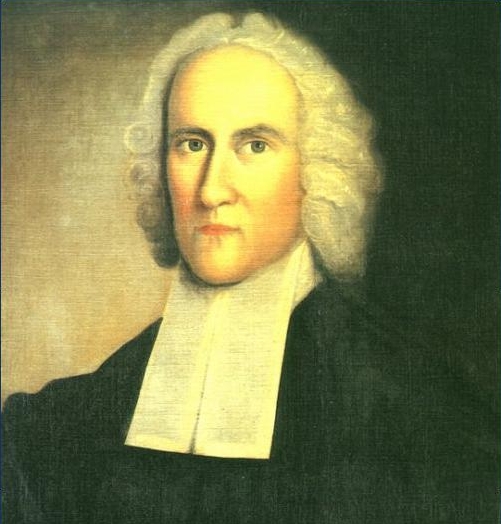
Jonathan Edwards (1703-1758), pastor, theologian, philosopher, and .... advocate for a biblical social justice??

Jonathan Edwards (1703-1758), pastor, theologian, philosopher, and …. advocate for a biblical social justice??

Most people know of Jonathan Edwards as the colonial American preacher of hell-fire and brimstone. I remember reading the mandatory “Sinners in the Hands of an Angry God” in high school and thinking that this guy had an unhealthy, morbid fascination with damnation. This narrow view of Edwards I had for years is a real tragedy, as this unfairly diminishes the extraordinary intellectual and spiritual contribution of perhaps America’s greatest philosopher.

Perry Miller, an influential Harvard historian and prominent atheist of the mid-20th century, practically rescued Jonathan Edwards from the dustbin of American cultural history. In an age when colonial American Puritans like Edwards were treated with “fundamentalist” disdain, Miller saw in Edwards perhaps one of the most perceptive and wide ranging thinkers America has ever produced. What was it about the 18th century Edwards the Christian that fascinated Miller the atheist?
Continue reading


Generous Justice

Is there a connection between the Bible's teaching on justification by faith alone and living a life that promotes justice?  Tim Keller says, "Yes!"

Faith alone saves, but the faith that saves is never alone”.   This quote, often attributed to the Protestant Reformer John Calvin, reveals an important truth that pastor/author Tim Keller wants everyone to know.

A lot of people experience injustice.   A lot of people find themselves on the receiving end of life’s bitter struggles. Then along comes some Bible-toting Christian saying that “all you need is Jesus“.  Well, how does Jesus help you when you can not pay your medical bills, you lost your job, or when your spouse ran off with someone else and left you in thousands of dollars of credit card debt?

Is the Christian faith just some pie-in-the-sky hope for an eternal future or does it mean something for the here and now? Ouch.

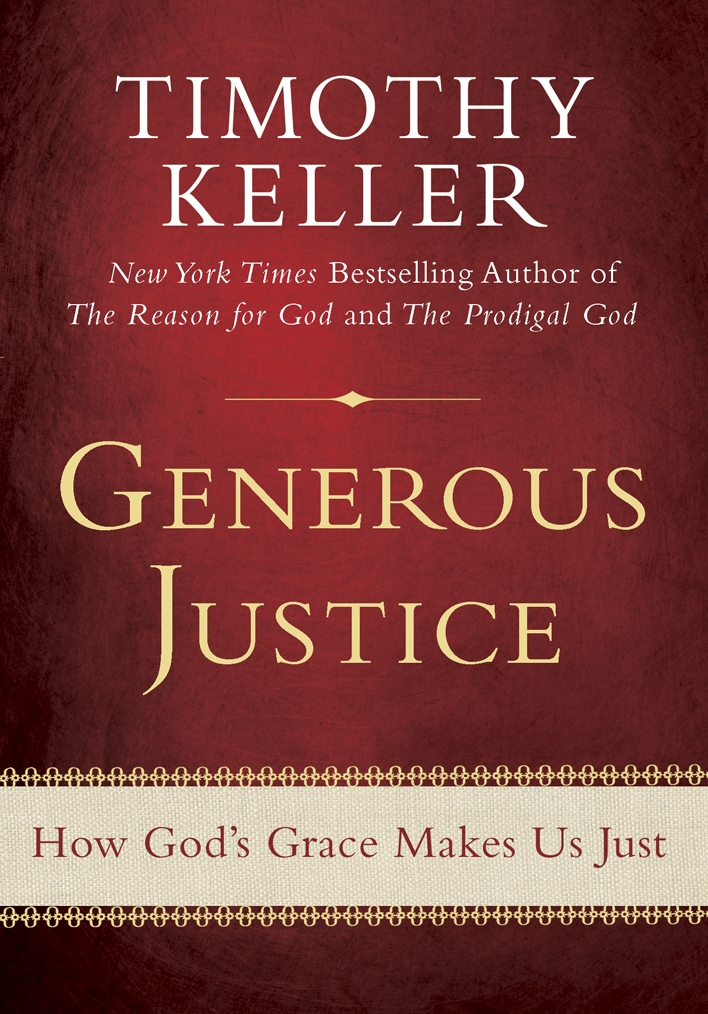
Meet Timothy Keller.  Keller is a pastor of Redeemer Presbyterian Church in New York City.  This fall our church is doing a six-week study on his book Generous Justice: How God’s Grace Makes Us Just.   Many critics of historic, orthodox Christian faith complain that the Bible stands in the way of really making progress towards eliminating injustice in our world today.   Others find that efforts to promote “social justice” in the church are undercutting the message of the Bible.

In his book, Tim Keller is attempting to make a crucial connection between the experience of God’s grace on the one hand with a life empowered to live justly with our neighbor on the other.   The following is a 30-minute talk where Keller summarizes the message of his book based on the teachings he finds in the Bible.  Does he succeed in making that crucial connection?


Is Christianity Reasonable? A Devotional Answer

Is Christianity reasonable? As absurd as this question might seem, there are major religions founded on the premise that faith does not have to be reasonable. Fortunately, Christianity is not one of them.

How would you go about convincing someone that the Christian faith is reasonable? (Okay, this is a trick question—it’s not really our job to convince anyone, but it is our job to think.)

There are massive apologetic resources dedicated to defending the faith and making sound arguments in support of Christianity.  Check out Matt Slick’s CARM site, William Lane Craig’s Reasonable Faith site, Lee Strobel, Ravi Zacharias, Hugh Ross’ Reasons To Believe, the Poached Egg, or the One Minute Apologist.

But it is incumbent upon all Christians—not just big-name apologists, theologians, and pastors—to think.  As Tim Keller says in the following message, “You cannot be a Christian without using your brain to its uttermost.”

Jesus says (in Matthew 6) if you want to have faith, “Think, consider, deduce.” Why does thinking lead to faith? The Bible tells us that if you don’t let your thinking take you all the way to Jesus Christ it will end in despair. Martin Luther’s thinking led him to see there is a God. Then his thinking led him further to see that God must be a personal God. Then he thought, “If there is a personal God, I want to please him.” But Luther couldn’t obey even the Golden Rule, and wondered how he could please God. The Bible tells us there is only one way: Jesus Christ.
Tim Keller, paraphrased from Faith is Reason clip on YouTube

Oftentimes apologetics can be an uppercut.  And it can be an intellectual salve. Great apologists are convincing debaters, loaded with sound arguments to defend their position, and truth be told most of us wish we could dial up their arguments in our normal conversations. But there is an inherent danger in all the eloquence and logic of good apologetics—we can lose sight of the object of apologetics.

Continue reading