Tag Archives: reformation

Indulging With A Treasury of Merit, By Completing the “Afflictions of Christ?”

The Communion of Saints, by Fran Angelico. Retrieved from Call to Communion.

If you want to understand the controversy over indulgences and purgatory, that sparked the Reformation 500 years ago, you need to understand something of the theology of a “treasury of merit,” in Roman Catholic theology.

For Western medieval Christians (and as officially found in the papal teaching of Rome today), those who die and go to purgatory, must go through a type of purification, before they can fully enter God’s presence in heaven. Medieval Europeans knew that they would endure temporal punishments in purgatory. Indulgences are then God’s provision for offsetting, at least partially, those punishments resulting from sins committed in this earthly life. God has granted the Church, through the power given by Christ to bind and loosen, to intervene and come to the aid of soul in purgatory, with indulgences.

But how is that actually accomplished?

First, we must consider that everyone, believer or non-believer, will be judged by their works. “For we must all appear before the judgment seat of Christ, so that each one may receive what is due for what he has done in the body, whether good or evil” (2 Corinthians 5:10 ESV).

Secondly, Jesus Christ saves a person on the basis of Christ’s works, that make a satisfaction for sin. We can not save ourselves by our own works. Only Christ can relieve us from the eternal punishment due to sin (Hebrews 9:11-18). Therefore, all good works performed by anyone in this life essentially derive their source from Christ Himself. What then becomes of those works, unacceptable to God, that come under God’s judgment? Purgatory provides the answer. Purgatory is the means by which those works, that are not good, are “purged,” from the soul of the Christian.

Thirdly, there are some Christians who have performed an abundance of good works in this earthly life. They store up “treasures” for themselves in heaven (Matthew 6:20).  This becomes the basis for the “treasury of merit,” a great supply of good works, resulting from the combined meritorious works Christ and the saints of the church, like the Virgin Mary.

Fourthly, all believers are bound together in this “communion of saints,” those currently alive and those who have already died, where fellow believers can share together and support one another (John 1:12-13). One way of sharing and supporting is through this “treasury of merit,” that can be applied towards lessening the temporal punishments of purgatory. The Catholic Catechism explains the “treasury of merit” this way:

We also call these spiritual goods of the communion of saints the Church’s treasury, which is “not the sum total of the material goods which have accumulated during the course of the centuries. On the contrary the ‘treasury of the Church’ is the infinite value, which can never be exhausted, which Christ’s merits have before God. They were offered so that the whole of mankind could be set free from sin and attain communion with the Father. In Christ, the Redeemer himself, the satisfactions and merits of his Redemption exist and find their efficacy. This treasury includes as well the prayers and good works of the Blessed Virgin Mary. They are truly immense, unfathomable, and even pristine in their value before God. In the treasury, too, are the prayers and good works of all the saints, all those who have followed in the footsteps of Christ the Lord and by his grace have made their lives holy and carried out the mission in the unity of the Mystical Body. (CCC 1476-1477)

Fifthly, the Church has been granted the power to bind and loosen, since the keys of the Kingdom were granted to Peter by Christ (Matthew 16:19). The theology of indulgences allows the Church to be the vehicle, or means, to apply the treasury of merit, through the prayers of fellow believers, to bring relief towards those who are enduring the pains of purgatory.

This theology of indulgences and purgatory took centuries in the Christian West to develop. By the 16th century, theologians of the Reformation, such as Martin Luther, countered that it is the merits of Christ, and Christ alone, who provides satisfaction for sins, and the punishments resulting from those sins. At first, Luther did not object to the doctrinal formulation of purgatory. He only criticized the abuses of the system, such as the sale of indulgences. But it was not too long before Luther identified the theological doctrine itself as being the root of the problem. For if believers are justified by faith, and faith alone, it renders the whole system of indulgences and purgatory, along with the associated “treasury of merit”, rather superfluous and unnecessary (Ephesians 2:8-9).

A Difficult Text… Colossians 1:24

One of the pivotal proof-texts in this discussion between Roman Catholicism and Protestantism, where the Roman doctrine of the “treasure of merit” is said to have some Scriptural traction, is found here:1

Now I rejoice in my sufferings for your sake, and in my flesh I am filling up what is lacking in Christ’s afflictions for the sake of his body, that is, the church” (Colossians 1:24 ESV)

Now all Christians contend that the merits of Christ alone are sufficient for salvation. Nothing else is required. Texts like John 19:30, where Jesus says, “It is finished,” stress this truth.

However, this is not the end of the story, in Roman Catholicism, as Colossians 1:24 is where the abundance of the “treasury of merit” finds an application. Through their sufferings, the sacrificial merits of all followers of Christ, those in this life and the departed, are also somehow2 joined together in building up the Church’s great “treasury of merit,” to provide aid to other believers, thus making up for what is “lacking” in “Christ’s afflictions.” This type of aid becomes the basis for how indulgences are applied to assist souls in purgatory, for the “sake of his body, that is, the church.”

Understood this way, Paul’s text in Colossians may sound like a contradiction to the New Testament teaching about the full sufficiency of Christ’s work on the Cross. Yet Roman Catholic teaching insists that Christ’s work at Calvary is indeed sufficient to save the believer. The “treasury of merit” is therefore different, where Christ continues to work through His church, to complete the work of sanctification (see these earlier Veracity posts, here and here, for more background).

Protestant interpreters balk at this argument. They are quick to point out that the Greek term translated as “afflictions” in Colossians 1:24, is never used elsewhere in the New Testament to describe Christ’s redemptive work at Calvary. Protestants critics also say that it is quite a stretch of Paul’s text to apply this to indulgences and purgatory.

However, the Protestant view leaves us still wondering what to make of Paul’s statement. So then, what is Paul going after in this verse?

Several viable proposals have been made to understand this verse, that pastor and theologian Sam Storms has ably summarized. I will just discuss the most prevailing view here: Many scholars suggest a slightly modified translation of this verse. Instead of “filling up what is lacking in Christ’s afflictions“, it could be better rendered as “filling up what is lacking with regard to the Messiah’s woes.”

An appeal to the larger Scriptural context explains this: In Old Testament thought, there is the theme of the “messianic woes,” of a period of suffering for the Messiah’s people, that precedes the resurrection of the dead and the consummation of God’s Kingdom (see Daniel 12:1-3 and Ezekiel 38). These are not the sufferings that the Messiah himself would experience. But rather, they are the afflictions out of which the messianic age would come. Paul might be thinking of his sufferings to be part of those “messianic woes,” which might also imply that Christians down through ages will also suffer, as a prophetic fulfillment of God’s purposes.

In other words, the sufferings that Paul speaks of here have nothing to do with salvation, and even less with building up a supply in the Church’s “treasury of merit.” Instead, this suggests that Christians, like Paul, will experience suffering, as this is an expected outcome of what happens when the Kingdom of God advances in this world. When people are transformed by the Gospel, the powers of the Devil and world do not like it, and God’s people will suffer accordingly. This fulfillment of biblical prophecy indicates that there is a “filling up,” or completing, of that which is “lacking” in Christ’s “afflictions.”

In this manner, God’s people, through their suffering, participate in the sufferings of Christ. Jesus told his immediate disciples that they will face trials and tribulations. So, when we experience them ourselves, it should not surprise us. Paul’s sufferings therefore benefit other believers, down through the ages, reminding us that we are not alone in our sufferings for the sake of the Gospel, as we await the coming of Christ’s Kingdom.

Admittedly, Colossians 1:24 is a difficult verse. The explanation given above, that ties Christ’s afflictions to the messianic woes, as prophesied in the Old Testament, seems the most plausible.3  Nevertheless, this brief discussion gives us a good idea as to how ideas in Roman Catholic thought, have taken a tricky verse like this, to build into it a theology of indulgences and purgatory, that owes a lot to a long development of church tradition.

Notes:

1. For a good explanation of the treasury of merit, that I used for researching this post, that lays out the doctrine nearly like I have done, but in more detail, see this website, Called to Communion. Called to Communion is put together by Roman Catholics, who are trying to explain the faith of Rome to Protestants. For some helpful discussions about how to understand Colossians 1:24, aside from Sam Storms fine article, include a sermon by John Piper, a brief commentary from Ligonier ministries, and a First Things article by Peter Leithart.

2. This is a very confusing point for me; hence, my italicized somehow. I have heard Roman Catholic explanations that the sacrifice of Christ at Calvary is sufficient to deal with sin. But then I have also heard Roman Catholic explanations that suggest that this finished work of Christ also (somehow??) finds application through the church, specifically through the administration of the sacraments, such as through the treasury of merit, based on the abundance of good works performed by the saints. Protestants fully affirm the first point, but they do not buy into the second point. Perhaps I am not getting it, but the whole Roman Catholic theology of merit seems incoherent, at this juncture, and so remains beyond my mental grasp. That being said, Colossians 1:24 is indeed a difficult verse, so it makes sense how the tradition of the treasury of merit does, in a way, explain Paul here, even if it is not ultimately persuasive. 

3. The case for the “messianic woes” in interpreting Colossians 1:24 is speculative to some degree, but it is perfectly in keeping with Paul’s Jewish context. Southern Baptist theologian Jim Hamilton has a helpful list of biblical passages that describe the “messianic woes,” available in PDF form. A rather technical article by Andrew Perriman, in PDF format, referenced by Peter Leithart, in footnote #1 above, disputes the “messianic woes” interpretation. I must confess that Perriman goes over my head sometimes, so it is difficult for me to evaluate his argument. But the point is this: The verdict on coming to “the” proper interpretation of Colossians 1:24 is still out. In fact, once you start looking at other biblically grounded alternatives to the Roman Catholic view, I get the sense that the doctrine of indulgences and purgatory are looking for a verse, like Colossians 1:24, to fit the theology, instead of looking at the text first, and then deriving the theology from the text and its Scriptural context. Roman Catholic apologist Karl Keating, in a debate with a Protestant apologist Dave Hunt, appeals to Colossians 1:24 to defend the “treasury of merit.” As Keating explains, the “treasury of merit” is not explicitly found in Scripture, but it is found in the tradition of the church, as handed down from the generations, from the original apostles. I am not sure how Keating can substantiate that view. Therefore, at the very least, one need NOT feel obligated to hold to the Roman Catholic magisterium’s view of indulgences and purgatory as the ONLY legitimate and binding approach to this difficult text.  


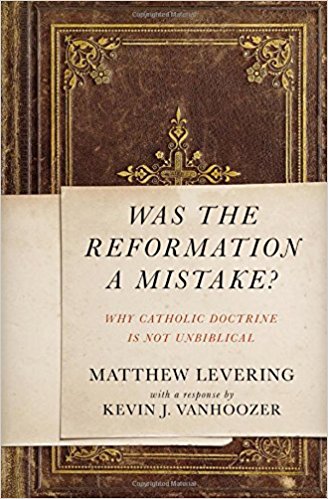
Was the Reformation a Mistake?: A Book Review

Is Roman Catholic doctrine “not unbiblical?” Have you ever thought of that?

The late, beloved Bible teacher, R. C. Sproul was a champion of Martin Luther’s reformation. Sproul died in the year marking the 500th anniversary of Luther’s defiance of the medieval church. But was Luther’s reformation, back in 1517, simply all one huge mistake?

More than anyone else in recent times, R. C. Sproul sounded a call to the church of the late 20th and 21st centuries, to reaffirm the message of Martin Luther. Sola Scriptura, the authority of Scripture, and Scripture alone, must be the watchword of a truly godly church. Many Christians, unfamiliar with the history of the church, have largely forgotten what Luther was all about. Others have heard Sproul’s clarion call, and seek to continue the work of the Reformation, for yet a new generation. At the same time, there are defenders of Rome, who believe that this renewed enthusiasm for Luther, while well intentioned, is unfortunately misplaced.

On a road trip over Christmas, to visit family in the American Midwest, I listened to an audiobook, that inspired me to write the following book review (SPOILER ALERT: this review is in-depth, as the subject matter itself is pretty deep). But first, let me give you some background, and why the idea of the Reformation as a “mistake,” is actually a very good topic to consider.

Continue reading


Was Luther’s Bible the First German Language Bible?

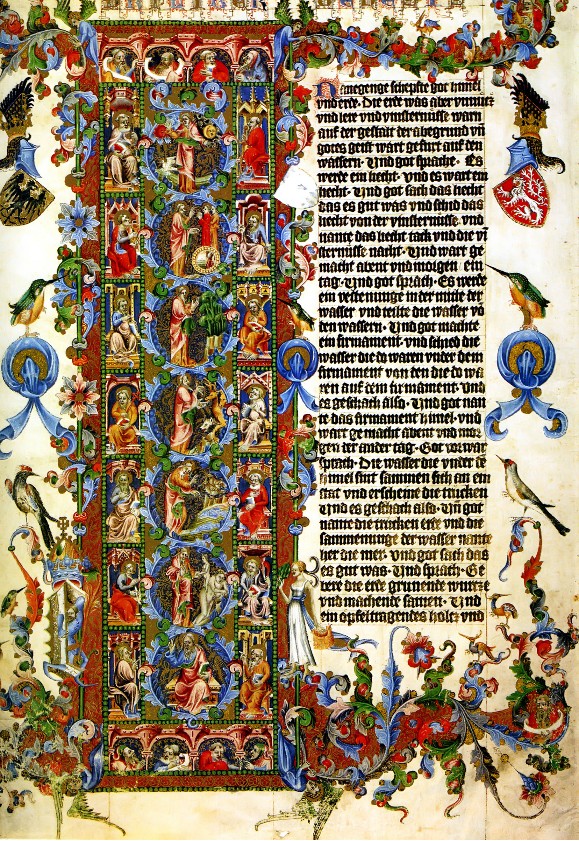
A German language Bible, authorized by “Good King Wenceslas,” predated Luther’s German translation of the Bible by over one hundred years.

The story may sound familiar. Martin Luther had been condemned as a heretic and traitor, after standing before the emperor, with his legendary, “Here I stand, I can do no other” speech, at the Diet of Worms, in 1521. He managed to leave Worms, only to be abducted by friendly supporters, and hidden in the Warburg Castle, for two years. There Luther, who had taken on the name of “George,” was able to complete his translation of the New Testament in German.

Finally, the German people had a Bible, in their own language, in which they could read and study the truths contained in God’s Word…. or so, many people think. This narrative is based on the common, yet mistaken impression, that no vernacular Bibles existed in medieval Europe, prior to the Reformation. But the story is not quite that simple, and Martin Luther himself is partly to blame for this misinformation.

As evangelical apologist and theological Alister McGrath writes, “no universal or absolute prohibition of the translation of scriptures into the vernacular was ever issued by a medieval pope or council, nor was any similar prohibition directed against the use of such translations by the clergy or laity.” (The Intellectual Origins of the European Reformation, p. 124). Rather, the difficulty was that the medieval church frowned upon unsupervised access to the Bible in native languages.

Think of it like the challenge of making a small modification to a home in many localities in America today. Sure, you can add an extra small room to your house, but the process of getting a building permit, in some places, can be a real hassle. You originally thought that adding some lumber and drywall here and there would be no big deal. But after you have spent hours and hours, dealing with the building inspector, your homeowner’s association, etc., you begin to wonder, why bother with it? Just leave the house well enough alone!

Likewise, in the medieval period, getting access to a German language translation of the Bible could be a real pain. Unlike outright bans to vernacular Bibles in England, that even there were not always successfully enforced, you could legally get access to a German Bible, but only if the church hierarchy approved of it. Plus, there was always the de facto Bible translation of medieval Europe, the Latin Vulgate, that you could read…. assuming you had some proficiency at Latin, which was relatively rare.

The printing press revolution of using movable type changed the situation, in the decades prior to Luther’s first German New Testament. Texts like the famous Gutenberg Bible, though still in Latin, were becoming increasingly available. But some early German translations, such as the Wenceslas Bible of the 1390s, and the 1466 Mentelin Bible, were becoming more readily available, too. Some scholars say as many as 18 German translations of the Bible were available to German Christian readers before Luther.

In Luther’s characteristically immoderate, over-stated fashion, you get the idea that German Bibles before his time, as a Bible professor, were hard to come by. This may have been Luther’s personal experience, but it hardly reflected the actual facts of history, broadly across medieval Europe. Looking back on his life as a monk, in a 1538 sample of Luther’s “Table Talk,” the great Reformer claimed this:

“Thirty years ago, no-one read the Bible, and it was unknown to all. The prophets were not spoken of and were considered impossible to understand. And when I was twenty years old, I had never seen a Bible. I thought that the Gospels or Epistles could be found only in the postills [lectionaries] for the Sunday readings. Then I found a Bible in the library, when I first went into the monastery, and I began to read, re-read and read it many times over and reread the Bible many times.”

By the time Luther had finished his complete Bible, including the Old Testament, in 1534, Luther’s celebrity status had totally undercut the efforts of Rome to control “supervised” access to the German Bible. Furthermore, unlike previous German translations, that relied on translating from the Latin Vulgate to the vernacular German, Luther made use of new reference works, such as Erasmus’ Greek New Testament. Luther was able, to at least partly, translate the Bible from the original languages, such as Greek, directly into German.

Luther’s campaign to “get back to the Bible,” in order to correct the contradictions of the papacy and church councils, is what generated a greater interest in reading vernacular Bibles. Luther’s “revolution” broke the default trust the average Christian had with papal and church authority, in medieval Europe. Instead, Luther encouraged Christians to read the Bible, and trust the Bible only as the authoritative source for Truth. As a result, the Reformation encouraged people to read and study the Bible for themselves, and they did so using newer, vernacular Bibles.

It is this effort to appeal to the original languages and earlier texts, driven along by Martin Luther’s popularity as a public figure, that helped Luther’s Bible to essentially become THE Bible for many German-speaking Christians. Western civilization has not been the same since.

For a rather contrarian take on Luther’s influence on the German language, and the priority of his translation, read this essay by the University of Alberta’s Albert C. Gow. A nice, 1-minute summary of Luther’s impact, through his translation of the Bible into German, is given here, in this video by the Museum of the Bible.


The Reformation… For Your Christmas Book List

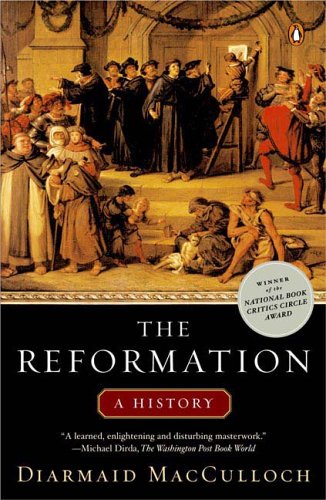
Diarmaid MacCulloch’s The Reformation is my top pick for understanding the Reformation of the 16th and 17th centuries, but requires solid intellectual investment to benefit the most from it.

I am just finishing teaching an Adult Bible Class on the Protestant Reformation, this fall, commemorating the 500th anniversary of Martin Luther’s Ninety-Nine Theses. As a way to round out the class, I thought I would share some books and other resources I have found helpful in learning about the Protestant Reformation…. all for your Christmas reading.

There are a ton of good books out there now on Martin Luther, particularly in view of the 500th anniversary. The classic book I really like is still Roland Bainton’s Here I Stand, though in some respects, it is becoming dated. However, it makes for a perfect audiobook, for a long drive in the car.

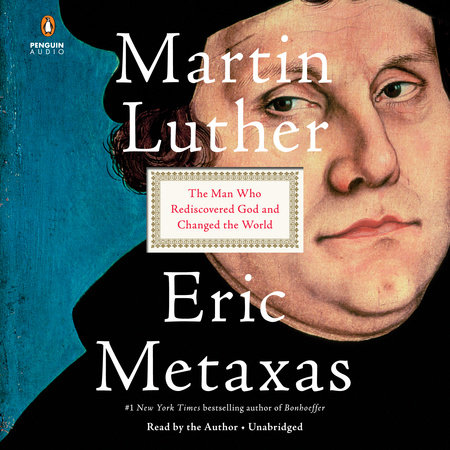
The most accessible book for evangelicals, that I would recommend, is going to be Eric Metaxas’ Martin Luther: The Man Who Rediscovered God and Changed the WorldMetaxas is a very, very entertaining and cheerful writer, and you will learn a lot from him, but there is some caution. Having read his book on Bonhoeffer, and read some parts of If You Can Keep It (that I reviewed last year on Veracity, a review that was oddly controversial to some), it is clear that Eric Metaxas is a popularizer of scholarship, but not really a scholar in these areas himself. To his credit, Metaxas has admitted that much. Metaxas’ occasional mishandling of some facts here and there can be aggravating to those who know a subject fairly well. On the other hand, it is possible that Metaxas has made a better effort here with Luther, than in his previous volumes. The sheer pleasure of reading Metaxas will make up for any nitpicking errors.

I would not want to take away from those who really enjoy Eric Metaxas, but if you are really looking for a serious work of scholarship, that is still very readable, many historians in the field prefer one of Martin Marty’s books, like October 31, 1517: Martin Luther and the Day that Changed the World, or Lyndal Roper’s Martin Luther: Renegade and Prophet. If I was reading about Luther (or the Reformation, in general) for the first time, I would start with Metaxas first, to really get into it, as with an audiobook. Then, go for either Bainton, Marty, or Roper, for the print or Kindle versions, to explore in-depth, and to correct any errors made by Metaxas.

Another old classic I read this year, having extensive excerpts from Luther’s writings, is Preserved Smith’s The Life and Letters of Martin Luther. For recommended newer titles, I have also heard good things about Andrew Pettegree’s Brand Luther,as well as Herman Selderhuis’ Martin Luther: A Spiritual Biography (Christianity Today magazine awarded Selderhuis with a Book of Year Award for 2018, in History/Biography). The next Reformation audiobook I hope to listen to is written from a Roman Catholic point of view, by a scholar at Notre Dame, Brad S. Gregory’s Rebel in the Ranks: Martin Luther, the Reformation, and the Conflicts That Continue to Shape Our World.

For the “number two man” of the Reformation, John Calvin, I have enjoyed reading the French historian, Bernard Cottret’s Calvin: A Biography. Cottret gives you a genuine flavor of Calvin, the man, warts and all. My only regret with Cottret is that he did not get into the theological and exegetical issues that Calvin faced, in doing his work, as much as I would have liked.

To get a comprehensive overview of the theology of the Reformation, in general, there is no better resource than Alister McGrath’s Reformation Thought: An Introduction.  McGrath knows his stuff, and communicates ideas really well. Just be sure to get the Fourth Edition. I read McGrath’s book for the second time this year (but as an audiobook), and everything just seemed to make sense. McGrath covers everything from Luther, to Zwingli, to Calvin, to the English Reformation, to the Catholic Reformation. Superb.

However, the cream of the crop when it comes to grappling with the Reformation, as a whole, is Diarmaid MacCulloch’s The Reformation. The man is a rock star. Comprehensive. Thorough. Authoritative. Provocative. Entertaining. Engaging. It is all there. From the 16th to 17th centuries, he really packs it in at 884 pages. It took me almost a year to listen to it as an audiobook, to take it all in. My only caveat with MacCulloch is that he leans sorely to the left theologically, having publicly professed being a gay man, and has sadly felt like he has been treated badly at times by the church. There are little sarcastic jabs here and there where you can feel the sting. But I would not let that deter those who persevere with MacCulloch, as he dearly loves his subject, so a critical reader will be abundantly well-rewarded for making an investment in MacCulloch.

As a type of addendum, Diarmaid MacCulloch compiled a series of book reviews and essays, All Things Made New: The Reformation and Its Legacy. You will learn bits and pieces of things normally skipped over by other treatments of the Reformation. It all creates a fascinating narrative, except that a couple of the essays tend to be rather tedious. MacCulloch is particularly strong on the English Reformation, being a Brit himself.

Well, that should keep you busy this Christmas!


Reformation: R. C. Sproul

R.C. Sproul (1939-2017), on camera, recording one his many Ligonier conference sessions, back in 1985 (photo credit: Ligonier Ministries).

Robert Charles Sproul, known to most people as “R. C.,” was one of the most influential theologians in 20th/21st century evangelical Christianity. A primary architect of the 1970’s Chicago Statement on Biblical Inerrancy, and an outspoken critic of the 1990’s dialogue statement between evangelicals and Roman Catholics, Evangelicals and Catholics Together, Sproul was first and foremost a Bible teacher, whose passion was to help Christians integrate their thought life with the teachings of Scripture.

I first heard of R. C. Sproul when a friend handed me a set of cassette tapes, on the relationship between modern philosophy and Christianity. Sproul had given these talks at various retreats held at Ligonier Valley, a study center Sproul had founded, near Pittsburgh, Pennsylvania. As a young believer, I was blown away at how articulate R. C. Sproul was in addressing the type of intellectual challenges I was facing in college.

Not too many Christian Bible teachers were doing this at the time. R. C. Sproul was against efforts within the evangelical church to “dumb-down” the Gospel message. Every Christian, not just professional pastors, needed to know the basics of theology, and he had the gift of taking difficult theological concepts and making them understandable to the average believer.

R. C. Sproul had zero interest in God, and plenty of interest in sports, until he got to college. He became a believer in college, and eventually studied theology under John Gerstner, at Pittsburgh Theological Seminary. At first, Sproul resisted the Reformed theology of Gerstner, making himself into a “pest,” but he gradually came around to Gerstner’s perspective. Later, Sproul pursued doctoral studies under the preeminent Dutch scholar, G. C. Berkouwer, in Amsterdam. The Ligonier ministry was moved to Orlando in the mid-1980s, sponsoring dozens and dozens of weekend and week-long conferences. He was able to pass the leadership of Ligonier Ministries, along with a magazine he had founded, Table Talk, and his Renewing Your Mind radio program and podcast to a new generation of teachers. Over his half century of ministry, R. C. Sproul lived a life of impeccable integrity.

As an ardent Calvinist, R. C. Sproul nevertheless had his critics. He left the mainline Presbyterian church (the PCUSA), over concerns of a drift towards liberal theology. He joined the younger, more conservative, Presbyterian Church of America (PCA) in the 1970s, identifying himself as an heir to the Reformed tradition of the 1648 Westminster Confession of Faith, to the chagrin of other evangelicals who would embrace “believer’s baptism” only, or elements of Arminian theology. Others criticized him for not taking a firm stand regarding the age of the earth, with respect to the doctrine of creation, while others accused him of holding to “replacement theology,” by his not taking a stronger stand to support national Israel’s role in biblical prophecy. He was drawn to taking a more preterist view of the Book of Revelation, that suggests that many events described in that book of the Bible have already taken place, to the consternation of many evangelical futurists, who see most of Revelation being fulfilled in the End Times. Sproul publicly rebuked the late theologian, Clark Pinnock, for the latter’s advocacy of the controversial doctrine of open theism. Some thought Sproul was too heady, in promoting theology, at the expense of practical spirituality. However,  R. C. Sproul resisted pressures by other evangelical leaders, to make political statements, preferring to stick to his core themes of teaching Christian theology and apologetics.

It is fitting that R. C. Sproul would finish his earthly life in the year of the 500th anniversary of the start of the Protestant Reformation. R.C. Sproul loved to tell the story of Martin Luther’s encounter with Rome, generally marked by the year 1517, with Luther’s Ninety-Five Theses. Sproul saw in Luther’s theology the missing ingredient in much of evangelical thought and life today, a consciousness of the holiness and sovereignty of God. If there was one note that R.C. Sproul sang loudly and sang well, it would be to call the church back to God’s sovereignty and The Holiness of God, the title for perhaps his most important book.

R. C. Sproul was truly a man of the Reformation. He is remembered here at Ligonier Ministries, and with this obituary at The Gospel Coalition. Below is a video set of snapshots of Sproul, over the years, teaching on his favorite subject, the imputation of the righteousness of Christ (check out that head of hair!!).