Tag Archives: Dead Sea Scrolls

Notes on Leviticus: By Michael Heiser. Part Three

Which parts of the Law of Moses found in the Book of Leviticus are still binding on the Christian today? Christians from diverse traditions debate this most controversial topic. Jonathan Edwards, perhaps America’s greatest theological mind, had this to say:

“There is perhaps no part of divinity attended with so much intricacy, and wherein orthodox divines do so much differ, as stating of the precise agreement and differences between the two dispensations of Moses and Christ.”1

Leviticus is essentially a law book, detailing the specifics of the Old Covenant, which defined the standards for the ancient Israelite community. But what exactly are the elements from that Old Covenant that have been brought forward into New Covenant? And even if particulars of certain Old Covenant regulations from Leviticus are not binding on New Covenant believers, might there still be lessons in Christian obedience to be learned from them today?

Protestant evangelicals are divided on such issues: Is tithing carried forward under the New Covenant?  Does the Bible allow Christians to get tattoos? What about Saturday Sabbath observance? Hebrew Roots Movement enthusiasts bring forward as much from the Old Covenant as they can, even without a standing temple in Jerusalem. Progressive Christians do just the opposite, and jettison as much of the Old Covenant as they can, when certain moral prescriptions are deemed out-of-date. The diversity of such practical applications in interpreting Leviticus can be bewildering.

I came across the teaching of the late Dr. Michael Heiser several years ago, through his Naked Bible Podcast. An expert in Semitic languages and the Old Testament, he did an audio series on the Book of Leviticus, which were transcribed to form the book Notes on Leviticus: From the Naked Bible Podcast. As the author of The Unseen Realm, one of the most groundbreaking books I have read in recent memory, having influence across multiple denominations and Christian traditions, Heiser walks the student of Leviticus through the text in ways that opened up the book for me, with a lens that helps to better understand so many other parts of the Bible. As I have noted at several points, I am not always convinced by Dr. Heiser’s thinking, but he is way far more right than wrong in what he says, and he challenges me to think more deeply on crucial issues concerning the Bible. The tens of thousands of thoughtful Christians who follow Heiser’s YouTube channel surely agree with me.

Heiser’s premise is that Christian readers have often read Leviticus through presuppositions they bring in from their understanding of the New Testament, often confusing things in the process. Alternatively, Heiser proposes that we should learn to read Leviticus from the perspective of an ancient Israelite. What did Leviticus mean to a follower of Yahweh centuries before Jesus came on the scene?

One of the major themes in Leviticus is the concept of atonement. I am publishing this post on Good Friday, which in the Christian calendar commemorates what Jesus accomplished on the cross for us. Many theologians link Good Friday to the concept of atonement, the focus of this final post in this series. But the exact meaning of atonement has stimulated a significant debate among scholars: What does it mean to say that Jesus died for our sins?
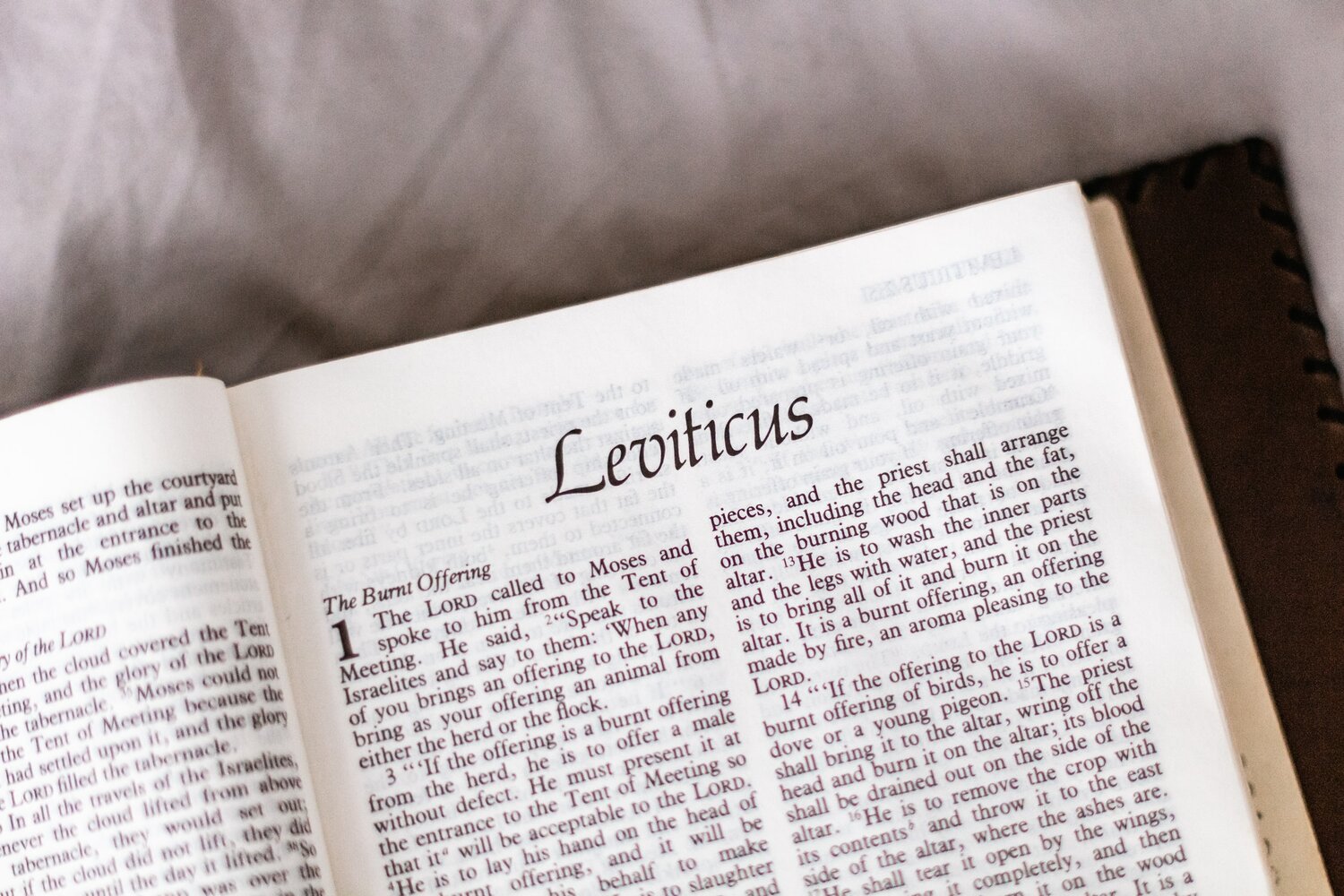
On the late Michael Heiser’s Naked Bible Podcast, this Old Testament scholar brings out important highlights, accessible to everyday Christians, who want to have a better grasp on Leviticus, one of the least studied, least understood, and least read books in the Old Testament.

Continue reading


Responding to Criticisms of Wes Huff on the Joe Rogan Podcast

Wow. Social media is a crazy place. A few days ago, Joe Rogan, who hosts what is today known as the world’s most popular podcast, dropped an interview with Canadian Christian apologist Wes Huff. Nearly five days later, the current count is nearly up to 4 million views, listening to a 3-hour interview with an evangelical Christian, working towards his PhD studying New Testament manuscripts. Nevertheless, the social media feedback from friend and foe alike have been pouring out.

Some of the oddest responses have been from fellow Christians, some of whom say that Wes Huff never shared the Gospel with Joe Rogan during the 3-hour interview. Some wonder why it is such a big deal that Wes Huff has some scholarly credentials and academic training: Just share the “Roman Road” with Joe Rogan and leave it at that.

Let me respond to this. We live in a day, particularly in the West, when people have a lot of questions about Christianity, when biblical illiteracy has sky-rocketed, despite us living in an information age. If you listen to the podcast, Joe Rogan asks Wes Huff plenty of questions about the Christian faith. But Wes Huff was prepared enough to give credible answers to Joe’s questions. There is even a compilation of the moments during the interview when Joe Rogan said “Wow” in response to Wes’ informed responses to such questions.

Here is the point: When you have millions of people tuning in to listen to a Christian apologist explain where our oldest New Testament manuscripts come from, the majority of whom are young men between the ages of 18-35, you have to wonder why is it that so many of our churches are not doing more to step up and provide more educational resources for people to become better informed about their faith. Sadly, the exact opposite has happened, whereby many churches try to “dumb down” the message, for fear that people might become overwhelmed with too much Bible, too much Christian history, too much Christian apologetics, etc.

In my view, the lesson learned from Wes Huff’s appearance on Joe Rogan’s podcast is that many churches tend to “dumb down” the message way too much. Folks like Joe Rogan are hungry for answers. You do not have to be working towards a PhD like Wes Huff is doing. Having academic training does not make you a better Christian. But every Christian can learn better ways to answer curious questions from their non-believing family members, friends, and co-workers. The Christian faith is based on particular truth claims, which can be examined and studied. If we believe in the concept of truth, we should be doing what we can to defend that truth, and not skirt around difficult questions.

As far as the skeptical response goes, it is true that Wes Huff did slip up a few times during the podcast. But my goodness, it was a 3-hour interview!! No one not working off of notes in front of them would nail down everything with perfection in such a conversation.

Perhaps the most noticeable gaffe was when Wes Huff claimed that the Great Isaiah Scroll from the Dead Sea Scrolls, dated a thousand years before our other earliest copy of the Book of Isaiah, copied during the Middle Ages, matches “word for word.” (Look through the transcription of the podcast to find this). Alex O’Conner, formerly known as the Cosmic Skeptic, has one of the most popular YouTube channels challenging the truthfulness of the Christian message, and Alex pounced on that fumble in a video response.

Actually, there are a number of variants between the Dead Sea Scrolls and what we have in the 10th century Aleppo Codex, with the Book of Isaiah. But the vast majority of those variants are very, very minor, as in spelling differences. For example, consider the differences between how Americans and the Brits spell different words. Both groups speak English, but they vary on how to spell words like “color” (“colour“) or “honor” (“honour“).  So who is correct here? Are the Americans spelling such words correctly and the Brits are in error, or is it the other way around?

Frankly, I do not care…. and frankly, neither should you.

Such supposed “errors” do not rise to the level of compromising what might best described as a flexible, nuanced view of biblical inerrancy. Wes’ point during the Joe Rogan podcast was to testify to the remarkable agreement between the Great Isaiah Scroll found at Qumran and our other later manuscripts, despite the existence of minor errors. Gavin Ortlund came out with a helpful response video that addresses these and other concerns made by Alex O’Conner.


Was Jesus an Essene?

Was Jesus, or key leaders of the early Christian community, members of the “Dead Sea Scrolls” community at Qumran?

Cave #4 at Qumran, at the Dead Sea. The vast majority of the Dead Sea Scrolls, discovered in the late 1940s, date back to within a few hundred years BEFORE the time Christ. Many scholars contend that the community at Qumran, who maintained the scrolls, were the Essenes, a Jewish ascetic sect. Was Jesus an Essene? The evidence suggests that the answer is “NO.” But that does not prevent people from promoting a type of conspiracy theory thinking that Jesus WAS an Essene. Did the early Christian movement hide this fact from the rest of us?

When I was in the Holy Land some 25 years ago, I heard a lecture delivered by a small cadre of scholars, who were discussing the possibility that either John the Baptist and/or Jesus was an Essene. Others, like retired Dead Sea Scrolls scholar, Robert Eisenmann, have suggested that James, the brother of Jesus, was a member of this group, and wrote a bunch of the Dead Sea Scrolls.

This eclectic group went onto propose a variety of “theories,” suggesting that the original, authentic Christianity of Jesus was essentially hijacked by the Apostle Paul, or some say the “Roman Catholic Church,” to give us today what we think is Christianity. Instead, the real Christianity was hidden away in the Dead Sea Scrolls, and now such fringe scholars have figured out how to bring the “truth” to the light of day.

In some circles, these are very popular views. Nevertheless, such fringe scholarship promotes conspiracy theory thinking that oddly ties the Dead Sea Scrolls to the New Testament. The most popular “theory” advanced by this fringe movement made its way into Dan Brown’s blockbuster novel and movie, The Da Vinci Code, which many bizarrely think is based on “fact.” But other competing, and frankly, contradictory “theories” abound as well.

Nevertheless, the bulk of the Dead Sea Scroll documents do NOT contain the New Testament. What the Dead Sea Scrolls contain, in direct relevance to our Bibles, is a complete record of all of the books of the Hebrew Scriptures, what Christians typically call the “Old Testament,” except the book of Esther. Nearly all of these scrolls can be dated to roughly 300 to 100 years before the birth of Christ. The community at Qumran was abandoned near the time of, or a few decades after, the destruction of Jerusalem, in 70 A.D.

As with any conspiracy theory, there is always some element of truth. Yes, the Essenes were critics of the ruling Jewish establishment, just as was the early Christian movement. But this does not necessarily imply that either Jesus, John the Baptist, or James the Just (brother of Jesus) were members of the Qumran community.

Furthermore, it is true that a relatively small number of Dead Sea Scroll documents, that can possibly be dated to the 1st century C.E., may possibly contain small fragments of the New Testament. However, there is no evidence to indicate that any New Testament documents originated at Qumran. Nor were there any members of the 1st century C.E. Jesus movement writing Dead Sea Scrolls documents clearly dated prior to the birth of Christ (unless the Essenes figured out a way travel back through time!!). Unless you can demonstrate that the twin lines of evidence to support the dating of the Dead Sea Scrolls, namely paleography and radiocarbon dating, can not be trusted, then you are pretty much wasting your time.

As an aside: When it comes to political matters, we all have various convictions. But when it comes to matters of church history and the Dead Sea Scrolls, Christians should avoid whacky ideas being promoted by media personalities, like Glenn Beck. Stick to the evidence instead. Truth is based on evidence, not on wild concoctions.

For further information, I would direct the Veracity reader to consider Dr. Michael Heiser’s FringePop321 video on the topic to get the real story behind the Dead Sea Scrolls, and the caves at Qumran. Dr. Heiser is one of the top Old Testament scholars today, but what I appreciate about him the most is that he knows how to take high-quality, scholarly content and make it accessible to normal people. FringePop321 is a great resource, available on YouTube, that addresses many of the wild and wacky claims, coming from the popular fringe:


Is the Virgin Birth Prophecy a Mistranslation?

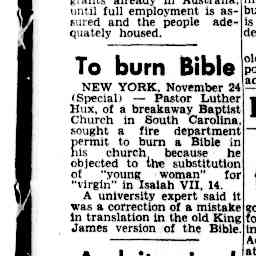
The media coverage of the burning of the RSV, the “Revised Satanic Version” of the Bible. From the November 25, 1952 edition of the Courier Mail, Brisbane, Australia. Luther Hux made quite a news splash all over the world.

“Behold, a virgin shall conceive and bear a son, and his name shall be called Emman′u-el” (Matthew 1:23 RSV)

Therefore the Lord himself will give you a sign. Behold, a young woman shall conceive and bear a son, and shall call his name Imman′u-el. (Isaiah 7:14 RSV)

Bible Burning

Luther Hux knew full well that the RSV was unholy, and accordingly he announced his intention to burn a copy of the new Bible,” so reports historian Peter Johannes Thuessen, from his In Discordance with the Scriptures: American Protestant Battles over Translating the Bible (p.96). Hux, a North Carolina Baptist pastor, had recently received a copy of the new “Revised Standard Version” of the Bible, published that year in 1952. In his fury over what he saw as a “mistranslation” of Isaiah 7:14, Luther Hux was determined to make a show over this “Bible burning” in front of as many press reporters as possible. Isaiah 7:14 is the famous prophecy of the virgin birth, as referenced by the Gospel writer Matthew. All previous English translations of this verse referred to a “virgin,” not a more generic “young woman,” as the new Revised Standard Version had done. Thuessen continues:

On the night of 30 November Hux delivered a two-hour oration and then led his congregation from the white-frame Temple Baptist Church into the cold autumn air, where every member received a small American flag. Climbing onto the bed of a waiting truck, Hux held aloft a copy of the RSV on which he had written the word “fraud.” Instead of burning the whole book, however he ripped out and ignited the page bearing Isaiah 7:14. “This has been the dream of modernists for centuries,” he shouted, ” to make Jesus Christ the son of a bad woman.” (p. 97)

Burning part of a Bible? It would hardly register a blip on the 24-hour news cycle at CNN today. But back in 1950s North Carolina, the “Buckle of the Bible Belt,” you just did not do things like that.

Well, at least he was being patriotic about it.

But what if Luther Hux was right? Was the Revised Standard Version (RSV) a fraud? Was the RSV, from Hux’s own word’s, “the Master Stroke of Satan?

I am not approving of “Bible burning,” but actually Luther Hux was onto something. What Hux did not know at the time is that he had stumbled upon an issue that has puzzled Bible scholars now for decades,… if not centuries.
Continue reading


Dead Sea Scrollback

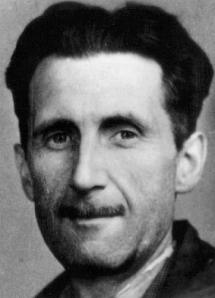
George Orwell wrote about the tendency to revise history into a muddle of misinformation in order to pacify people. Though Orwell had political totalitarianism in mind, is there perhaps a similar application with respect to popular distortions of church history?

George Orwell wrote about the tendency to revise history into a muddle of misinformation in order to pacify people. Although Orwell had political totalitarianism in mind, is there perhaps a similar application with respect to popular distortions of church history?

The most effective way to destroy people is to deny and obliterate their own understanding of their history.” George Orwell penned this in his classic novel, 1984. Can the same be said of God’s people regarding their knowledge of church history?

Perhaps the greatest battleground in apologetics today revolves around the early history of the church.   Many students of the Bible are content to honor the authority of Scripture as God’s Word straight from Jesus Christ.  Some say that if all you need is the Bible, why trouble yourself with church history?

However, the Bible as we have it today did not drop down out of the sky.   During the early centuries of the church, Christians passed down the teachings of those earliest apostles to make up the New Testament.   The Old Testament was borrowed from the Jewish community.     Put together, the Scriptures as we have them arose out of the spiritual life of the early church.   If we fail to grasp a hold on this earliest Christian history, we risk falling into a type of Orwellian trap that would make discussions about the Bible… sadly…. useless.
Continue reading