
Tag Archives: Darrell Bock

Podcasts for the Thinking Christian

Plumb LineJohn’ s recent post on William Lane Craig’s Defender Series of podcasts brought to mind that I should update my list of recommended podcasts for the thinking Christian (here is an earlier list John and I have discussed).  I do not have the time to read books as much as I would like, but the marvel of MP3 players is that I can download audio files and listen to them while I work in the yard or drive to and from work.

John’s suggestion of William Lane Craig as the “graduate school” for the next step following after Dick Woodward’s Mini Bible College is very appropriate. Dick was an amazing teacher who continues to impact the world through his unique ability to “put things on the bottom shelf” for people by exploring the basic contours of the Bible. Dr. Craig then makes it more in-depth in terms of helping you grasp and develop your own understanding of God (theology) founded on Scripture and then applied in terms of being able to offer a rational defense of the Christian faith (apologetics).

But just as there are fine and different academic graduate schools out there, there are different “graduate school” approaches to theology and apologetics. For example, Dr. Craig is probably one of the leading Christian apologists alive today, such that atheist Richard Dawkins awkwardly still refuses to debate him. But Dr. Craig is known for his “Middle Knowledge” approach to the issue of God’s sovereignty vs. free will. He is also known for his classical/evidentialist approach to apologetics.  Without digging too much into those things right now, let me just say that not everybody is totally with Dr. Craig on these issues. But, PLEASE, do not let that dissuade you from digging into William Lane Craig! He is awesome! It is just important to know that there are other approaches that Christians take to these issues. You might want to check out some of the other podcast resources available to get a flavor of what is out there. So here we go!

Continue reading


Darrell Bock: Truth Matters

A recent survey indicates that about 70% of young people stop going to church between the ages of 18 and 22. Many eventually  do come back. However, 4 out of every 10 kids who grow up in evangelical churches will leave the church when they get out of high school… and NEVER return. NEVER.

Think about that for a moment.

I was very young in my Christian faith when I took one of my first religion classes at a secular college. It was entitled “Jesus of Nazareth”. I thought it would be nothing more than a Bible study and an easy grade.

Boy was I wrong.

After several hours in class, I was scratching my head, wondering whether or not Christianity was really true …or not! It was a mind blowing experience that rattled my faith. Thankfully, I had some good Christian friends and a few good resources from InterVarsity Press to tackle my intellectual doubts.

Today, if a young person goes off to college and takes a religion class, chances are very, very high that they will read a textbook written by Bart Ehrman, professor of religion at the University of North Carolina at Chapel Hill. Ehrman grew up in the heartland of evangelical academia, Moody Bible Institute and Wheaton College. Ehrman eventually abandoned his Christian faith and is now perhaps the leading, agnostic New Testament textual scholar in the country. Given all of the TV documentaries and New York Times bestsellers, Ehrman is practically an icon of American popular culture, too. Ehrman’s latest book, How Jesus Became God: Exaltation of a Jewish Preacher from Galilee, promises to challenge deeply held beliefs by Christians (note the up-and-coming book-length response by Australian scholar Michael Bird and others, with the provocative title, How God Became Jesus: The Real Origins of Belief in Jesus’ Divine Nature—A Response to Bart Ehrman). If you think young people in our evangelical churches will not be impacted by prominent skeptics like Bart Ehrman, then I am sorry, you are terribly deluded. I will pray for you.

New Testament scholar Darrell Bock, along with fellow scholar Andreas Köstenberger and pastor Josh Chatraw have written a very accessible book that helps to orient young people, parents, and youth ministers to address the type of issues that Ehrman and others are raising that are typically never discussed in most evangelical churches today. Here is the promo video for the book written by Bock and his team, Truth Matters: Confident Faith in a Confusing World:

From what I have read so far, this book does not go for the combative, culture war mentality so predominant in many apologetic books of the past. Instead, Bock and his colleagues are trying to foster a type of engaging dialogue that encourages conversation.

I think this is the way to go forward in apologetics and the way to approach the type of questions that Bart Ehrman raises. I know of at least one high school student graduating and heading off to college this year. I plan on getting them a copy of this book.

How are you going to address the issues that Bart Ehrman raises?

Additional Resources:

When I was taking that “Jesus of Nazareth” class in college, I had to work through in my mind what it meant to read scripture in a devotional way, like how a follower of Jesus typically does, and what is often called the historical critical method, which is basically a way of looking at the biblical text from the viewpoint of an historian, whether that person be a Christian or a critic of Christianity. Bart Ehrman in Jesus Interrupted argues that reading the Bible devotionally and reading it as an historian does are completely irreconcilable approaches. Here, Darrell Bock corrects such a misguided distinction:


The Quirinius Question

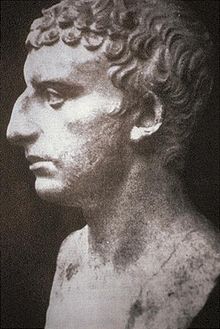
Titus Flavius Josephus, 37 – c. 100 A.D. (Wikipedia)

Titus Flavius Josephus, 37 – c. 100 A.D. (Wikipedia). Primary historical source for establishing Quirinius as Governor of Syria in the time of the census according to the Gospel of Luke at 6 A.D. But was Josephus confused on his dates?

One of the more problematic issues with the Christmas story is the question of the Census of Quirinius in Luke 2:2. According to the Jewish historian, Josephus, there was indeed a Quirinius who served as governor in Syria starting in 6 A.D., and in that year there was a Roman census during the time of Jesus’ birth by Luke’s testimony. However, then compare this to the infancy narrative in Matthew and try to line it up with the record of Josephus concerning Herod’s death around 4 B.C., which Matthew says is after Jesus’ birth. This gives you about a ten year discrepancy regarding the actual date of the birth of Jesus.  Was Jesus born around 6 A.D. according to Luke or before 4 B.C. according to Matthew? What are we to make of this?

We already know that the Christian calendar, which has no year “0” in it, was orginally meant to be started in agreement with Jesus’ birth prior to the death of Herod, but that appears to be off by a few years. We can thank “Dennis the Dwarf”, a 6th century monk, for getting us sidetracked with that one (look here for more nerdy details about the story of the Anno Domini system). But most Bible scholars agree that Luke’s apparent birthdate for Jesus in 6 A.D. is far too late to be correct. What then do you do with the census of Quirinius?

The consensus in critical scholarship has concluded simply that Luke somehow got this wrong. Skeptics run with this and conclude that the Gospels are unreliable as historical documents. UNC Chapel Hill scholar and former evangelical Bart Ehrman, for example, argues that Luke is using the whole census idea as a theological device of fiction to get Mary and Joseph to Bethlehem for the birth of the heir to the Davidic throne, namely Jesus. The virgin birth then is starting to sound, well,…. uh… rather contrived. Mmmm… Does this mean that I got all of those ding-dang Christmas decorations down out of the attic for nuthin’? Bummer.

But what if a closer look at all of the evidence suggests an alternative way of looking at the Quirinius Question?
Continue reading