Tag Archives: Christianity

Basic Islam – Part 5

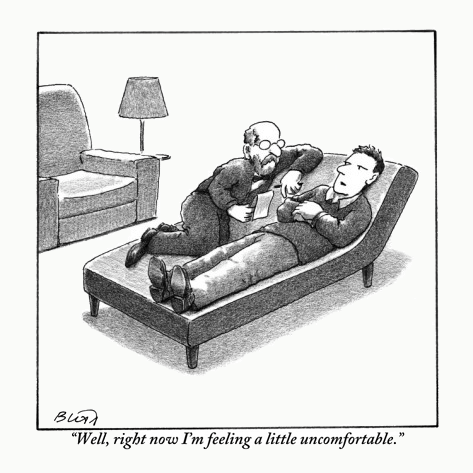
Uncomfortable

Harry Bliss, The New Yorker, September 6, 2010

Suppose that you’re a Christian who wants to share your faith with a Muslim. How would you go about doing that? Further, suppose that you appreciate how difficult it is for anyone to overcome what they have been taught adamantly since birth. Muslims who convert to Christianity are considered apostate and subject oftentimes to ostracism and harsh treatment. They break their family’s hearts. The penalty for apostasy in many Islamic countries is death. Conversion is serious business. Sharing could get very uncomfortable.

There are many, many testimonies online about Muslims who have converted to Christianity. Their stories are fascinating, heartbreaking, shocking, tragic, joyful, unlikely, and often involve dreams. Many relate miraculous healing or delivery from dire circumstances. Some, like the five Christians noted below who were raised by Muslim parents, answer a calling to witness to the global Muslim and Christian communities after they become Christians.

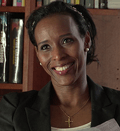
So what causes a Muslim to become a Christian? If you listen to Nabeel Qureshi or Abdu Murray, or even Mona Walter, you might get the impression that the common catalyst is steadfast friends who genuinely love them and reflect the love of Christ. While that appears to be true in many cases, after reviewing scores and scores of testimonies, there seems to be an even more common basis for Muslim conversions, namely critical thinking.

Critical thinking is not easy. It requires us to put away our feelings, our dogma, our subjective instincts, and to apply disciplined thinking that is “clear, rational, open-minded, and informed by evidence.” Sometimes the important questions are self-induced, and sometimes they are offered by friends who risk feeling a little uncomfortable. Either way they can move mountains.

What about our critical thinking? When we think about Muslims, do we envision terrorists? Are we that prejudiced? Or do we think about millions upon millions of people who need to hear the truth of the Christian Gospel? Are we ready to give a “reason for the hope” that is within us, with gentleness and respect? Do we have compassion for our brothers and sisters in Islamic countries who are persecuted for their beliefs? It’s very easy to feel anger and to hate when we are attacked. Terrorists are the enemies of free people everywhere. But what did Jesus say about our enemies? His words make us unique among the world’s religions, as does His sacrificial atonement. That should mean something.

We try not to give advice on Veracity, but we’re not at all above taking advice. Take it from Abdu Murray; if you want to reach out to a Muslim, don’t begin by attacking Islam—begin with the positive case for Christianity. If you want to engage in critical thinking, study Nabeel Qureshi’s Seeking Allah, Finding Jesus. Nabeel and his friend David Wood engaged in that process for five years. (If you watched David’s sociopath-turns-Christian testimony, don’t stop there.) Both of these guys were brilliant and committed to opposite truth claims. It got very uncomfortable at times between them, but their friendship only grew stronger as they subjected their beliefs to critical thinking. It cost Nabeel greatly. But he was willing to pay the price because ultimately he accepted the truth. I really cannot recommend his book highly enough. It is an incredible account of the power of friendship and apologetics in transforming even an ardent Muslim.

Take a little time to explore the links and testimonies of the incredible people below. If they are willing to risk their lives to share the Christian Gospel, as many of them do, maybe we shouldn’t worry so much about being uncomfortable.

Walter Mona Walter

Videos


Murray Abdu Murray

Videos

Gabriel Mark Gabriel

Videos

Qureshi Nabeel Qureshi

Videos

Rana Fazale Rana

Videos


Basic Islam – Part 4

Pure and undefiled religion before God the Father is this: to care for orphans and widows in their misfortune and to keep oneself unstained by the world.
James 1:27, NET

Islam and Violence

In our previous post on Basic Islam, we introduced the question, “Has true Islam been hijacked by radical elements, as many claim, or do the acts of terror that are so prevalent in the world today have epistemological roots in Islamic doctrine and theology?”

It’s been an interesting week. I met Nabeel Qureshi and asked him how he would answer that question. (I also attended several conference presentations on Islam, and heard some diverse opinions on how to respond to Islam and how to deal with Muslim refugees.)

It’s an extremely loaded question. On one hand, those of us who have been blessed with close friends who are Muslim have a hard time accepting that Islam equates necessarily to violence. On the other hand, we cannot ignore the proliferation of terror that is perpetrated in the name of Islam.

So which is it? What did Nabeel say?

He said, “My answer is summarized, violence is built into the DNA of Islam.”

But he also referred me to several of his online videos and his book, Seeking Allah, Finding Jesus (which I bought from Audible and listened to in its entirety on the way home from the conference. If you want to read an incredible story about the power of friendship and the value of apologetics in winning people to Christ, read this book.) The next day, Nabeel posted the following three-minute video on his Facebook page.

Quereshi Response to Paris Attacks

Is the God of Islam the God of Christianity?

It would seem that because Christianity and Islam have their roots firmly in Genesis and Old Testament history that they worship the same god. But the biggest chasm between Muslims and Christians is the Trinity. While both faiths are monotheistic, Muslims abhor the idea that God exists in three distinct persons. In fact, the greatest sin in Islam (shirk) is to associate anyone—such as the Son or Holy Spirit—or anything with Allah.

But there is more to it than that. Theologians debate the moral sufficiency of the God of Islam, making strong arguments that Allah and the God of Christianity cannot be one and the same. While it may not be the first thing you would bring up with a Muslim friend, it’s important to understand. “The violence [that] is built into the DNA of Islam” is part of the moral sufficiency argument.

William Lane Craig’s recent presentation, entitled “The Concept of God in Islam and Christianity,” makes comparisons based on moral sufficiency. Dr. Craig takes on the unpleasant reality of the differences between Christianity and Islam. If we are going to reach Muslims for Christ, we better get used to the idea that we cannot ignore the differences. If this makes us uncomfortable, we are going to have to learn to deal with it.

No Shortage of Shortsighted Self-absorption

At both of the conferences I attended this week, there were sessions on Islam, including one entitled Responding to Islam. At that session, four presenters discussed ideas on how to handle the refugee crisis in the Middle East. One presenter, who has impressive credentials as a theologian, professor, and lawyer, gave a presentation on specific concessions he would require from Middle Eastern refugees wanting to enter the United States.

His presentation was full of the angry sentiment we hear on the news these days in the wake of the Paris attacks. It was also pompous, self-aggrandizing, and downright mean. He said several times that if his proposal kept good Muslims from entering the United States, “Worse things could happen.” Not exactly what one might expect from a follower of Jesus Christ.

One woman in the audience gave him favorable comments, and a man in the back asked for a copy of his paper. It may just be my impression, but there seemed to be more than a little appreciation for what he said.

Then a young man stood up and politely asked, “What is the New Testament basis for your proposal—in light of what the Bible has to say about orphans and widows?”

Wait a minute. We’re supposed to think and act according to the New Testament?! Orphans and widows…like in James 1:27? Are you kidding me? (I could get quite smarmy, so I’ll just stop there.)

Taking the High Ground

Nabeel was the first to speak at the panel discussion after that presentation. He was gracious and did not take on the mean presenter. He noted that his father was persecuted in Pakistan for his Islamic beliefs and that he came to the United States as a refugee. If we talk about responses to ISIS without realizing the unprecedented opportunity we have to share the Gospel with the Muslim world, we miss the point. We should consider what is happening to innocent Muslims. We are here [on this earth] to reach out to others. We must share the Gospel. For 1,400 years we have done virtually nothing to reach these people.

I really don’t have anything to add to that. “Pure and undefiled religion before God the Father is this: to care for orphans and widows in their misfortune and to keep oneself unstained by the world.”


Politics and the Christian Faith

Political Family

“My opponent is a #^&@)*g.  You know he’s a #^&@)*g because here’s a picture of him frowning with his finger near his nose.  (Cue the pleasant music)  Here’s a picture of me smiling with my family and our dogs.  I will be good for you, and I will be good for your wallet.  You can tell I am a true patriot.  I am your non-#^&@)*g candidate, and I approved this message. (Smile)”

Welcome to the predominant success formula on the American political landscape. To get elected candidates discredit their opponent—by striking fear in voters that there is something really wrong with the other guy. Political handlers believe that American voters have short attention spans. There isn’t enough time in a 30-second spot to address substantive issues or ideas—but we can absorb short, memorable sound bites that leave horribly unfavorable impressions of the opponent.

After being bombarded with political rhetoric and campaign commercials in the month leading up to the midterm elections, I was hoping the election results would bring an end, at least for now, to this ugly parade of mudslinging.

But I received a troubling email this week. Not from a political candidate who caved in to his handlers, but from a seminary that, at the very least, has an increasing appetite to engage in political issues and debates.

So?! What’s wrong with that? Shouldn’t seminaries be engaged in the democratic process? After all, the right to free speech is protected in our constitution. The church is under increasing attacks from political figures and the culture in general. Shouldn’t seminaries prepare their graduates to engage and challenge the culture? Shouldn’t Christians be thermostats instead of thermometers? Why would anyone object to Christians being actively engaged in political processes? Some of these candidates are sincere Christians who truly want to serve their Lord and their country.

At the risk of disappointing family, friends and Veracity readers, there is something wrong with mixing politics and political agendas with the Christian faith.

Please hear me out. There are times when it is right—even necessary—to mix Christian values with politics. Consider the political activities of William Wilberforce (fighting slavery), Dietrich Bonhoeffer (fighting Nazism), or Martin Luther King, Jr. (fighting racism). These are three strong examples of when Christian activism was necessary and made an impact on our world.

But let’s be honest—it’s a long way from Wilberforce, Bonhoeffer and King, Jr. to the political candidates of the 21st century. So, how willing should we be to lock arms as Christians with political candidates or political agendas? Is that necessarily a problem?

The problem is that one institution (politics) is fueled by popular opinion, and the other (Christianity) is beyond popular opinion. Democratic politics is practiced successfully by appealing to the widest swath of voters, while negotiating compromises to build plurality positions. The objective in politics is to make a better world for ‘us’. The means are often ugly and combative. Christianity, on the other hand, is successfully practiced by appealing to God, who isn’t favorably impressed or swayed by popular opinion. The objective in Christianity is to develop a right relationship with God, by representing Him well and serving others.

An Argument from Silence

When we bring Jesus to the political arena, we risk equating our faith with our politics. The Christian faith compels us to maintain a certain integrity—by sharing God where it matters most, not necessarily in politics for political gain.

Jesus never attacked a government (although He certainly did attack religious leadership), and nowhere did He model that His followers should engage in any political debate, issue or cause. Jesus launched the ultimate revolution. He did call upon His followers to fight—not against individuals or governments—but against separation from God, darkness, evil and man’s own inhumanity to man. And what weapons did He prefer? Kindness, compassion, self-sacrifice, empathy and love. In fact, when confronted by Pontius Pilate at His trial, Jesus said, “My kingdom is not of this world. If my kingdom were of this world, my servants would have been fighting, that I might not be delivered over to the Jews. But my kingdom is not from the world” (John 18:36, ESV). When the apostle Peter drew his sword to defend Jesus in Gethsemane, Jesus said, “Do you think that I cannot appeal to my Father, and he will at once send me more than twelve legions of angels?” (Matthew 26:53, ESV). Jesus was fighting a different kind of war, for something far more important than political gain. And He never promised that anything would be better in this world—”In this world you will have trouble, but take heart! I have overcome the world.” (John 16:33, NIV84).

In the 1st century somewhere between 10 and 15 percent of the entire population of the Roman empire was enslaved. The Romans occupied Palestine and Jerusalem. Talk about political causes you could sink your teeth into! In fact, Jews expected their Messiah to be a king who would overthrow the Roman occupiers. So if Jesus wanted to gain the respect of the chosen people, all He would have had to do was take on the Roman government. But when Jesus said, “Give to Caesar what is Caesar’s, and to God what is God’s” (Matthew 22:21, Mark 12:7, Luke 20:25, NIV84), we see the ultimate example of a big thinker. If they were looking for a leader to free the slaves, Jesus was way ahead of them—You know that the rulers of the Gentiles lord it over them, and their great ones exercise authority over them. It shall not be so among you. But whoever would be great among you must be your servant, and whoever would be first among you must be your slave, even as the Son of Man came not to be served but to serve, and to give his life as a ransom for many” (Mathew 20:25b-28, NIV84). In John 8:34-36 Jesus answered them, Truly, truly, I say to you, everyone who commits sin is a slave to sin. The slave does not remain in the house forever; the son remains forever.  So if the Son sets you free, you will be free indeed.

The apostle Paul got it. Paul had a lot to say about slavery, particularly as he addressed the idea that we are all one in Christ. His letter asking a slave owner to restore a runaway slave as a brother in Christ is as poignant as his instructions to slaves and masters in Ephesians 6:9. Paul ends these instructions by noting that God is everyone’s master in Heaven. There’s that big-picture idea again.

In logic, this type of argument is termed an “argument from silence.” Can we infer from Jesus’ own words and deeds, and apostolic writings, that the Christian faith is dealing with more important matters than politics and political ideas? Is there a principle to be applied in our own lives about our approach to politics?

Ravi Zacharias on Christianity and Politics

Ravi Zacharias recently wrote an eloquent post about Christianity and politics.

“Only Christianity is strong enough to preserve our freedom and our dignity. Only the gospel of Jesus Christ gives us the enormous privilege of sacred freedom without imposing faith on anyone. Those who mock this faith will find themselves before long under the oppression of an ideological domination that uses religion to gain political and cultural dominance and will not tolerate the mocking of their beliefs without cruel responses.

“History is replete with examples that politics never has had and never will have the answers to ensuring the perpetuity of a nation and the freedom and dignity of our souls. From the feudal warlords of ancient Mesopotamia to the divine status of kings in Babylon and Persia, from the democratic and republican ideas of Greece to the empire building of Rome, from the theocracies of Islam and the state church of Europe to flirtation with the idea of freedom without responsibility in postmodern America and the materialism of Communism—what has remained? A world in turmoil.

“Political theories come and go. Nations and empires rise and fall. Civilizations wax and wane. For this very reason, Jesus resisted any efforts to make himself an earthly king. The allegiance he wants is that of the heart, for the ultimate universal battle is that of the will against God. In Him alone are we truly made free.”
Ravi Zacharias, Think Again–Freedom and Dignity

 So What?

Back to Lon Solomon‘s litmus test. Back to Jesus and the apostle Paul, and bring it through Ravi Zacharias. What would I say to the seminary president who introduces a politician at a national Christian apologetics conference, and who has specific ideas about which political parties have made certain mistakes, and which legislative bills should be passed and which should be defeated?

Simply this. Your faith is of far more consequence than your political views, and (with all due respect) your Savior deserves better treatment than your Congressman.

You have a right to your political opinions, and you have a right to speak out. In matters of highest import I sincerely hope you will. But when you take up one politician or political cause and promote them with your faith, you put Jesus in a position of lower integrity than He deserves, and you invite questions about your judgment and priorities. Be as shrewd as snakes and as innocent as doves.

So, promote the Gospel and promote Jesus Christ with all your heart, mind, soul and strength. Let your efforts affect the political system most importantly through the votes of the citizens that you counsel and teach. Prepare them to engage this world and our culture, but more importantly prepare them for the next. Prepare them to recognize the shortcomings in a political system that succeeds by following formulas built on disdain for people who think differently than we do.

As Ravi Zacharias wrote, “History is replete with examples that politics never has had and never will have the answers to ensuring the perpetuity of a nation and the freedom and dignity of our souls.” Christianity should remain above politics.

 Additional Resources

Relevant Magazine (yes, Relevant Magazine has fresh, insightful material) published a piece by contributing author Brian Roberts entitled 7 Things Christians Need to Remember About Politics that we would all do well to heed.


A Mistaken View of Love

Do you like God? Do you think God likes you?

Have you ever heard anyone say something like, “Love is a commitment of the will?” Here’s an 11-minute Reasonable Faith audio from William Lane Craig and Kevin Harris that demonstrates the value of checking our theology.

Love is a commitment of the will. But if that’s all love is we had better work on our understanding of the character and nature of God. It’s really, really important to get this straight.

And for the record, not that I would want to argue with William Lane Craig, but I don’t think Calvinists have the corner on this issue by any means.


Who Wrote the Bible? (Part 3)

Imprimatur: official approval; approval of a publication under circumstances of official censorship.
Merriam-Webster
Who Wrote The Bible

Who wrote the Bible?

For those who’ve been following our current series, it’s time to get into the battle for the Bible. (You might need a cup of coffee to get through this one.)

We’re about to give you some information that will help you stand tall at any water cooler, but with two caveats before we check into the debate. First, we’re about discovering the truth—not defending dogma or tradition for tradition’s sake. Second, we fight with gentleness and respect—the objective of apologetics done right is to remove obstacles, not to win an argument. And for those who are new to Veracity, as a matter of ethics, on this blog we don’t tell you what to think.

In our previous posts on the subject, we laid out the traditionally accepted authors of the Bible. As you might imagine, there are those who seek to discredit the Bible as the basis for Christian faith and practice by challenging the authorship of its books. (A forthcoming series will explore how we got our Bible, but for now we’re focusing on authorship—yes, God wrote the Bible, but it came through the inspiration of human authors.)

Let’s start at the beginning. The first five books of the Bible are referred to as the Pentateuch (which ironically is Greek for Five Scrolls), and are taken straight from the Hebrew Bible (or ‘Tanakh’).  Often these five books—Genesis, Exodus, Leviticus, Numbers, and Deuteronomy—are referred to as the ‘Torah’, but that word has multiple meanings. Traditionally, both Jewish and Christian scholars credit Moses with writing the Pentateuch. But there have been challenges to the claim of Mosaic authorship going back many centuries, and these challenges have gained traction with modern scholars. This debate is not going away any time soon, so let’s see what the fuss is all about.

First and foremost, why should we care? What difference does it make who wrote the Pentateuch? In short, so much of the Bible—including major parts of the New Testament with direct references from Jesus Christ and the apostles—cite and depend upon the Mosaic provenance of the Pentateuch that if Moses’ imprimatur is not on these books then the entire Bible is a hoax. If Moses did not accurately record what God revealed to him then Christians (and Jews) are living a lie. Do we have your attention now?

The Documentary Hypothesis

The preeminent challenge to the claim of Mosaic authorship of the Pentateuch is “The Documentary Hypothesis” (also called the Graf-Wellhausen Hypothesis or JEDP Theory). Make Documentary Hypothesis your first water cooler term.

Unlike many other challenges to biblical Christianity, the Documentary Hypothesis is based upon reason and logic—or so it might seem. A clear summary may be found in Richard Elliot Friedman’s text Who Wrote the Bible? Dr. Friedman introduces the hypothesis by describing its historical development, and here we’ll do the same.

Challenges to the traditional Mosaic authorship of the Pentateuch go back at least as far as the third century A.D. when people began questioning apparent inconsistencies in the text. Events were related in one order, then in a different part of the Pentateuch the same events appeared to be recounted in a different order. Numbers and people groups didn’t always line up precisely in different historical accounts within the text. Moses apparently went to a tabernacle before the Israelites built the Tabernacle. These apparent inconsistencies were explained by medieval commentators (such as Rashi in France and Nachmanides in Spain), and their explanations were generally accepted into the middle ages.

Then scholars turned their attention to lines of text that were added after Moses was dead. For example, the list of Edomite kings in Genesis 36 includes kings who lived long after Moses. Likewise, they noted that Deuteronomy contains the account of Moses’ death and burial, and post-mortem reflections on his life. At the very least, someone else put a bookend on the biography of Moses in Deuteronomy. A theory began to emerge that Moses wrote the Pentateuch, but that later editors added occasional words and phrases of their own. Contemporary scholarship produced additional arguments, such as noting the occasional use of the phrase “To this day”—typically the phrase of a later writer contextualizing the history recorded in the text.

Dutch philosopher Baruch Spinoza published Tractatus Theologico-Politicus in 1670, a critical analysis in which he rejected in its entirety the view that Moses authored the Pentateuch. Here’s your second water cooler term: Spinoza is the father of “Higher Criticism” of the Bible. When you come across that term in this debate it refers to a very specific branch of literary criticism (it doesn’t mean a ‘true’ or ‘enlightened’ view). Spinoza cited the third-person accounts of Moses in the text, such as Numbers 12:3 which states (parenthetically in several modern translations of the Bible) that Moses was very humble and indeed was the most humble man on the face of the earth.  Not a statement likely to have been written by a humble man like Moses. Got it.

Shortly thereafter, French priest Richard Simon put forth the idea that the core of the Pentateuch was Mosaic, but that there were later additions. He proposed that one or more writers had assembled the text from older source documents. Simon’s idea was based on the analysis of doublets in the text—that is places where the same account is told twice. For example, the following accounts appear to be repeated in the Pentateuch: the account of creation; the covenant between God and Abraham; Abraham’s deception about Sarah in Egypt; the naming of Isaac; Jacob’s journey to Mesopotamia; and Moses getting water from a rock at Meribah. Defenders of traditional Mosaic authorship argued that these doublets are complimentary, not contradictory. (Incidentally, the same issues occur in the Gospels where four authors record the same events, but each from their own perspective.)

Then scholars looked at the doublets and began to analyze specific words and linguistic nuances. One observation was that one set of doublets seemed to consistently use the name ‘Yahweh’ and the other set used the name ‘Elohim’. (One might ask who determines which texts are included with which set of doublets—it could be arbitrarily grouped by name, but let’s move on.) French physician Jean Astruc then published a book in 1753 laying out the theory that Moses compiled Genesis from two sources. Minister H.B. Witter and theologian Johann Gottfried Eichhorn also arrived somewhat independently at similar conclusions in Germany.

The Documentary Hypothesis then multiplied. Scholars expanded the theory to three separate source documents, and felt that the book of Deuteronomy was completely different from the other three sources. The source documents were labelled as:

  • J – the document associated with the name ‘Yahweh’ (or ‘Jehovah’);
  • E – the document associated with the name ‘Elohim’;
  • P – (by far the largest of the four) including sections dealing with priestly matters; and
  • D – material only found in the book of Deuteronomy.
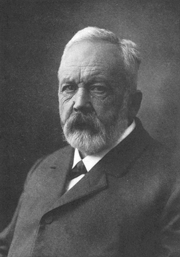
Julius Wellhausen

Julius Wellhausen, the father of the modern Documentary Hypothesis

(Ironically there is an analogous theory called Q Source in the New Testament, for which no manuscript evidence has ever been found, but again let’s move on.) Karl Heinrich Graf then put J, E, P and D in chronological order and concluded that the J and E documents preceded D and P. His ordering built upon the work of others, but centered on the idea that there were three distinct periods in the development of Hebrew history, a position that was furthered by the writing of nineteenth century biblical scholar Julius Wellhausen, who is regarded as a pioneer in the development of the Documentary Hypothesis.

The gravitas of Wellhausen’s work lay in his ability to link Hebrew history with J, E, P and D.  Specifically he noted that J and E reflected early religious life and practices, that D reflected a spiritual and ethical stage, and that P described a priestly and legal stage. His historical work is well respected, even though it does reflect the anti-Semitism of nineteenth and early twentieth century Germany.

So what we have is a theory that the Pentateuch was not written by Moses, but that it was assembled by a redactor or redactors around 400 B.C. (approximately 1,000 years after Moses) from four or more source documents that were spliced together to obtain the text that has been transmitted to us. Several contemporary scholars, including Friedman, believe that the primary redactor was Ezra the priest.

The Case for Mosaic Authorship of the Pentateuch

Personal discipleship can be complicated. The Documentary Hypothesis sounds pretty convincing, right?

Not so fast.

There is considerable hubris among proponents of the Documentary Hypothesis. It’s a bit like the members of the Jesus Seminar sitting around and dropping marbles into a ballot box to vote on how much they accepted each of the quotations of Jesus. Okay, it’s an exercise, but is it valid? Is there an agenda or bias behind this scholarship? Are they telling themselves what they want to hear? The questions get tougher. Is there any proof? Does the hypothesis fit the facts or are the facts being arranged to fit the hypothesis? Hmmm….

Markup of the Pentateuch according to the Documentary Hypothesis

Markup of the Pentateuch according to the Documentary Hypothesis

One of the first criticisms of the Documentary Hypothesis is its fragmentation. As indicated in the color-coded figure on the right, there are many places where it appears the text has been run through a shredder and glued back together. Over time, additional scholarship proposes new, finer fragmentation, devolving to absurd levels of edits (down to single words in some cases). The E source is extremely fragmentary, as are the redactor’s comments.

A second criticism is that, as with Q Source Theory, no manuscript evidence has ever been found. Nothing in the Dead Sea Scrolls, nothing in extra-biblical sources, …nothing.

One defense that proponents of Wellhausen’s hypothesis like to throw up is that consistent patterns appear in the text. But one pattern they overlook is the pattern throughout the Pentateuch (and the Old Testament and the New Testament) where the text acknowledges Moses as the source of the Pentateuch. In other words, the text itself testifies to its authorship. Examples include:

You get the point. While nowhere in the Pentateuch does an author directly identify himself—as was the style of most ancient Semitic writers—there can be no doubt within the biblical text that Moses was accepted as the preeminent source of these books.

In the Gospels alone there are 37 references to Moses and his authority over the Hebrew people, and 79 such references in the New Testament. In the Old Testament, Moses’ name appears 500 times. Moses is big stuff.

How convincing does the Documentary Hypothesis appear now?

So we arrive at the tipping point of the debate. The acceptance of Mosaic authorship of the Pentateuch is inextricably tied to our presuppositions, and particularly our view of the Bible. In the list of additional resources at the end of this post you’ll find some heady, academic reference materials mixed in with some simpler and more straightforward documents that delve further and wider into this debate. The authors range from noted apologist and Old Testament scholar Professor Daniel I. Block to Yale University religious studies Professor Christine Hayes.

Dr. Block is regarded as an expert in this field, and his paper published in the September 2001 Journal of the Evangelical Theological Society is well worth the read, as is his contribution to the Spring 2012 issue of the Areopagus Journal.

Dr. Hayes’ lecture video presents an academic view of Wellhausen’s hypothesis, but comes at the debate from the viewpoint of someone who believes that mythology comprises significant portions of the Pentateuch.

Takeaways

The Documentary Hypothesis is not the hammer blow to Christianity many would make it out to be. Granted, only a very naïve person would argue that Moses wrote the entire Pentateuch as we normally consider ‘writing’, but we can’t have either the Old or New Testament without the imprimatur of Moses on the Pentateuch.  Were there later additions and edits? Yes, clearly. Does that mean that the Pentateuch is misrepresented in the Old and New Testaments? Certainly not.

Reading the Bible as less than the inspired Word of God misses the point. It’s like reading or studying music without ever hearing the sounds. Whether you come at it with a skeptical agenda or not, you cannot fully appreciate it until it moves you to the truth—not a derived truth, but the Divine Truth.

If you need to develop an appreciation for the reliability of the Bible, we offer the following Veracity posts:

The last link above deals with the Chicago Statement, which has considerable bearing on this discussion. Put the Chicago Statement in your water cooler lexicon.

For a takeaway to the question of Mosaic authorship, let’s end with the words of Dr. Daniel I. Block, the Gunther H. Knoedler Professor of Old Testament at Wheaton College:

“So who wrote the Pentateuch? In answering this question we need to follow the lead of the Apostles, who were so certain of its Mosaic nature that they can substitute the man’s name for the document itself. In Acts 15:21, James declares, ‘From ancient generations Moses has had in every city those who proclaim him, for he is read every Sabbath in the synagogues’ (ESV). Similarly Paul writes of his fellow Jews, ‘To this day, when they read the old covenant, that same veil remains unlifted, because only through Christ is it taken away. Yes, to this day whenever Moses is read a veil lies over their hearts’ (2 Corinthians 3:14-15, ESV [italics mine]). Here Moses is identified with the ‘old covenant,’ by which he presumably means the Pentateuch. Whether or not they believed Moses put his own signature to the forms of the text they used in worship, they certainly accepted it as coming with Moses’ full authority. In that sense the first five books of the Bible are rightly called The Five Books of Moses.”

Daniel I. Block, “Moses and the Pentateuch: An Investigation Into the Biblical Evidence,” Areopagus Journal, Spring 2012

Additional Resources
Who Wrote the Bible? The Areopagus Journal of the Apologetics Resource Center (Volume 12 No. 2)Who Wrote the Bible? The Areopagus Journal of the Apologetics Resource Center (Volume 12 No. 2)

Recovering the Voice of Moses: The Genesis of Deuteronomy (Daniel I. Block)

Who Wrote the Bible? (Richard Elliot Freidman)

Wellhausen’s Documentary Hypothesis (Yale University lecture by Professor Christine Hayes)

Does It Really Matter Who Wrote the Pentateuch? (Eric Lyons)

Defending Biblical Inerrancy… (Harold C. Felder)

A History and Critique of The Documentary Hypothesis and a Defense of Mosaic Authorship of the Pentateuch (Nicholas J. Lutzo)

Debunking the Documentary Hypothesis (Bible Translation Magazine)

HT: Yvonne Brendley, Faith Smagalski