Tag Archives: al mohler

Did Kirk Cameron Just Deny the Doctrine of Hell?

Kirk Cameron, the Christian actor, who first made his name in Hollywood as a teen actor in the Growing Pains television series, has recently gotten into some hot water, so to speak, with some of his fans. Cameron revealed on his podcast that he no longer accepts the traditional doctrine of hell as eternal conscious torment. Instead, he now holds to the doctrine of conditional immortality instead, at least tentatively.

A number of commentators have responded, such as Southern Baptist Seminary President Al Mohler, in an essay for the WORLD News Group. Dr. Mohler believes that Kirk Cameron’s move towards the doctrine of conditional immortality is a slippery slope towards other areas of compromise in Christian doctrine, whereby Cameron has allowed emotional concerns to overwhelm a commitment to historic Christian orthodoxy.

Cameron is in many ways a popular evangelical Christian influencer, an evangelist and a spokesperson on conservative political issues as well. He admittedly acknowledges that he is not a scholar, and some of his amateur misunderstandings of things have come out in at least one filmed “prayer meeting” a few years ago, and on an historical documentary he produced on American history, which I have critiqued.
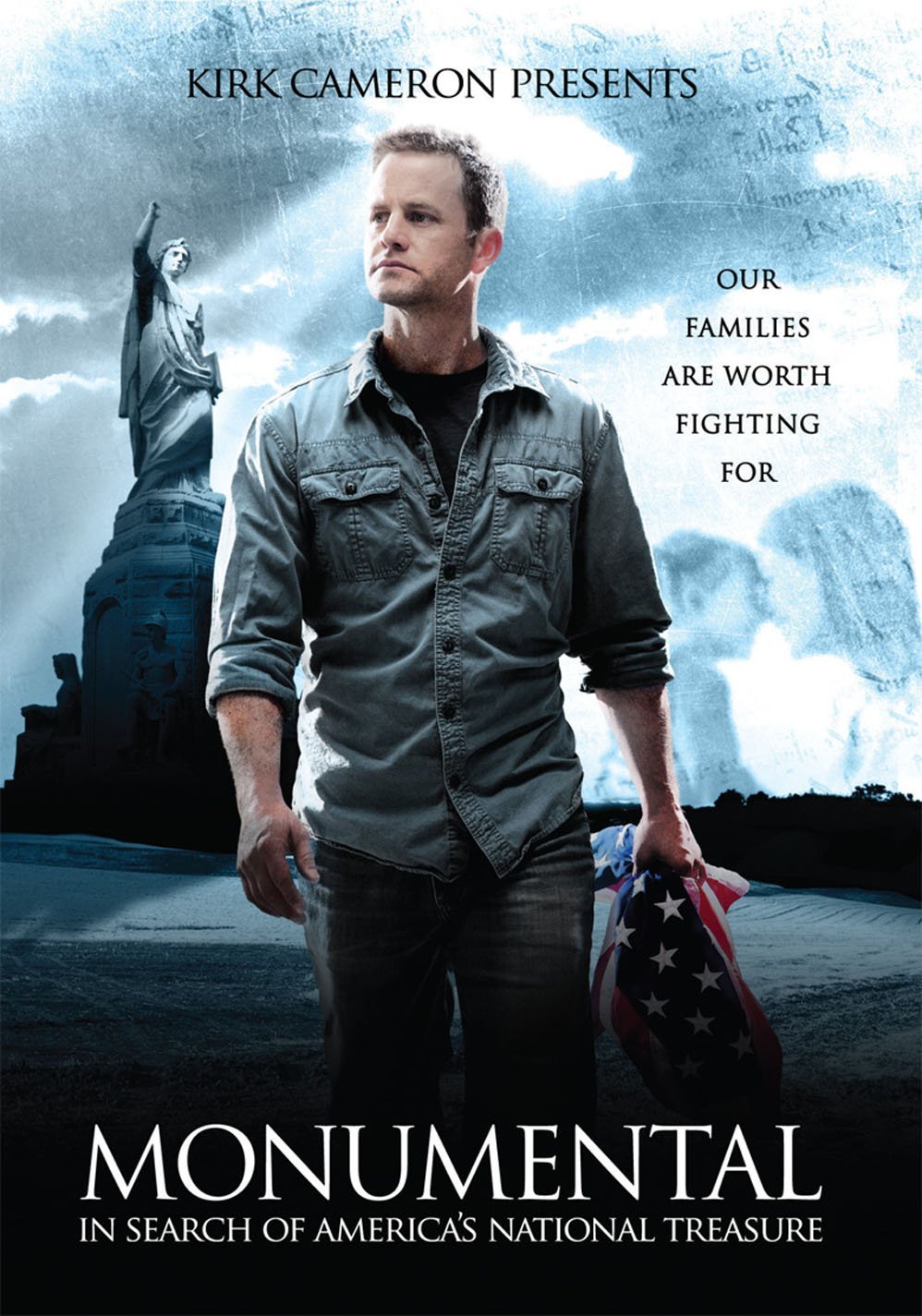
Kirk Cameron made a historical documentary film Monumental back in 2012, among his many other projects. Cameron has become a trustworthy and influential popular spokesperson among many evangelical Christians.  But some now are concerned that Kirk has gone off the deep end…. or has he?


Is Kirk Cameron Now a “Heretic,” or Is He Simply Thinking Through Some Really Important Questions, and Wants to Talk About It?

Alas, Kirk Cameron means well, and to many in his audience, he seems trustworthy. So it really shocked some people, myself included, when he announced that he has shifted towards upholding a doctrine of conditional immortality.

The doctrine of conditional immortality differs from the traditional doctrine of eternal conscious torment. In the latter view, those who are eternally separated from God will undergo a never-ending experience of divine punishment resulting from their sin. However, the doctrine of conditional immortality, otherwise known as annihilationism, argues that those eternally separated from God will be punished, but that the punishment will have a terminus. To use a common expression, the punishment (of God) will fit the crime (of the sinner). Once the punishment, as rightly determined by God’s judgment, is rightly finished, the person will be annihilated. That person, separated from God, will no longer exist, eternally.

So, to answer the question posed by the title of this post: No, Kirk Cameron is not denying the doctrine of hell. But he is framing the way to think about hell in a category that might be unfamiliar and unsettling to others.

The debate of the exact nature of hell has been going on since the days of the early church. There are three main views on the topic: (1) the doctrine of eternal conscious torment, (2) the doctrine of conditional immortality, and (3) the doctrine of universalism. Universalism, which in its most popular form in Christians circles, as suggested by those like theologian David Bentley Hart, or William Paul Young, the author of The Shack, teaches that hell is really a kind of purgatory, whereby God will purge sin from the non-believer and eventually win that person to salvation, eventually, in the next life. In other words, hell is primarily restorative and redemptive, as opposed to being punitive.

While Christian universalism has had its proponents, even in the early church era, the doctrine was rejected as veering away from historic Christian orthodoxy. Names like Origen, and possibly Gregory of Nyssa, on up to more recent times, as with C.S. Lewis’ intellectual hero, the 19th century author George MacDonald, have espoused some form of universalism. But the orthodoxy of universalism has been rightly questioned.

However, the story is different from the doctrine of conditional immortality. There are no ancient, historic creeds or confessions which have rejected conditional immortality, unlike universalism. Prominent church fathers, and champions of orthodoxy, such as Ignatius of Antioch and Irenaeus of Lyons, were aligned with the advocates of conditional immortality.

It was really Saint Augustine of Hippo, an avid proponent of the doctrine of conscious eternal torment in the 5th century, who effectively put the nail in the coffin on general acceptance of conditional immortality…. at least for many Christians. Augustine’s massive influence pretty much made conscious eternal torment the traditional view of hell for centuries. But every now and then, conditional immortality makes a comeback, at least among a few Christians, in nearly every age of the church. So, Kirk Cameron’s musings on the doctrine of hell are far from new.

I take an agnostic view on the debate between these two perspectives at the present time. Dr. Mohler cites Matthew 25:46 as the main “go-to” verse to favor the doctrine of eternal conscious torment:  “And these will go away into eternal punishment, but the righteous into eternal life.”  But then there is Paul’s statement in 1 Thessalonians 2:9: “They will suffer the punishment of eternal destruction, away from the presence of the Lord and from the glory of his might.”

Eternal destruction sounds a lot like annihilation, at least to me. But I get Dr. Mohler’s point about Matthew 25:46. I am concerned about slippery slope tendencies on controversial topics, like Mohler, but these can be complex issues where different people will come to varying conclusions based on different ways of thinking. What matters more to me is how people arrive at their conclusion, as opposed to not just the exact conclusion they land on.

Interestingly, the world’s most famous New Testament scholar/skeptic, Bart Ehrman, believes that Jesus actually held to a kind of belief in conditional immortality, as opposed to eternal conscious torment. But Ehrman recognizes the difficulty put forward by Matthew 25:46. Ehrman’s solution, as a skeptic, is to say that Mathew 25:46 was a later invention by the early church, to make Jesus into being a teacher of eternal conscious torment (when he really was not).

This is one of those doctrinal disputes which I have wanted to study, but I have not done a thorough enough job to make any firm, informed conclusion. About thirteen years ago, I read Robert A. Peterson’s Hell on Trial: The Case For Eternal Punishment, a 272 page articulate text which I highly recommend. Peterson makes a strong argument for eternal conscious torment, while acknowledging that some verses in the New Testament do lean towards conditional immortality. I have not yet read thoroughly any counter-perspective from the conditional immortality side of the discussion. I simply have not yet had the mental bandwidth to take on such a project, and I doubt I will get to it anytime soon (though I have wanted to).


An Appeal to Have More Charitable Dialogue on Controversial Topics Among Christians

But what concerns me the most about the controversy concerning Kirk Cameron are some of the outlandish comments, which have called into question Cameron’s spiritual integrity. Some have claimed that Kirk Cameron is embracing “heresy” now with his views on hell. That simply is not true. Kirk Cameron might indeed be wrong about conditional immortality, but that does not make him a “heretic.”

Apologist Wesley Huff, who defends the traditional doctrine of eternal conscious torment, calls for more charitable conversation on this topic, from a post he made on X:

“With @KirkCameron announcing his position on conditionalism I’m seeing a lot of people attempting to critique it. I hold to ECT, but I do understand the topic of conditional immortality and I have yet to see anyone actually give a rebuttal that shows me they’ve interacted with the arguments and biblical reasoning from the other side. To condemn conditionalism/annihilationism as heresy is to say that John Stott, Edward Fudge, F. F. Bruce, potentially even Athanasius of Alexandria, are all heretics. This is, with all due respect, ridiculous. While the position might be unorthodox it is not heresy. If you actually want to interact with someone who knows the topic reach out to my friends @datechris and/or @DanPaterson7. Both are solid, fair minded, well educated and articulate holders of conditionalism.”

Gavin Ortlund, another theologian who holds to the traditional doctrine of conscious eternal torment, has a video which echoes Wesley Huff’s call for more charitable discussion. In Gavin’s four-layered model for how to go about “theological triage,” when Christians disagree with one another, from his book Finding the Right Hills To Die On, Gavin does not place this debate about the nature of hell as a “Tier 1,” top-level issue. It is an important issue to consider, a “Tier 3” issue, but Christians of good faith may come to different conclusions regarding the nature of hell. This is a good reminder that we should all strive for more charity in having discussions with one another on controversial topics.

I mean, if Kirk Cameron is no longer “safe,” then is anybody really “safe” anymore?

I have a couple more blogposts to put out before the end of the year, but this topic was too important not to pass up!



What Andy Stanley Gets Right…. and Wrong… About The LGBTQ+ Conversation

The Internet is all abuzz about a recent conference at Andy Stanley’s North Point Community Church in Atlanta geared to help parents of LGBTQ+ children navigate through their struggles. Certain conservative Christian leaders, like Southern Baptist Seminary President, Al Mohler, have decried the conference, suggesting that Andy Stanley has parted ways from historic orthodox Christianity. Alternatively, certain progressive Christians have spoken out somewhat in favor of Andy Stanley here, while also indicating that not enough was shown regarding what they see as the moral bankruptcy of continuing to restrict the definition of marriage as being only between one man and one woman for one life.

How does an evangelical Christian respond to all of this?  In defending the Unconditional Conference sponsored by Embracing the Journey, Andy Stanley has got some things right, while also getting some other things wrong.

Megachurch pastor Andy Stanley. Promoter of Biblical truth… or compromiser?


What Andy Stanley Gets Right

First, let us consider what Andy Stanley got right. Aside from the confusion experienced by many young people themselves today questioning their sexual and gender identity, the trauma that many Christian parents of such children face, trying to figure out how best to respond and love their children, can be extremely difficult and bewildering. Aside from a few pockets here and there, a long history of full-blown hatred against LGBTQ+ persons is finally starting to disappear, but there are still problems with the emerging, hopefully more-compassionate, less-combative approaches.

Unfortunately, there seems to be two paths currently taken in certain evangelical circles these days. One path might best be called the “stick your head in the sand” approach. Many such Christians simply want the LGBTQ+ discussion to go away. But that simply will not do. The data is not fully in yet, but some suggest that as many as one out of four young people today, growing up in the age of social media, wrestle with either a sense of sexual attraction to the same sex, or experience a sense of discomfort or anxiety about their own gender identity. Do the math. At least one out of five, but perhaps even one out of four. The sheer numbers are staggering. The LGBTQ+ discussion is not going away anytime soon.

The other path is to at first write into a church’s statement of faith or covenant a commitment for membership to only support traditional marriage, between one man and one woman. While this honorable stand for 2000 years of church teaching is taken, the church then sadly provides very little in terms of helping young people work through these questions of sexual and gender identity, as well as not providing sufficient resources for parents and other family members of such young people to work through their questions and struggles.

In this sense, Andy Stanley was right to break out of both the “stick your head in the sand” approach as well as the purely moral posturing approach, which offers little to no practical help. Andy Stanley was right to sponsor a conference intended to offer pastoral help and assistance for parents who want to know what to do when their son or daughter does not know if they are a “son” or a “daughter,” or if their son or daughter finds themselves attracted to members of the same sex. Parents need a safe space where they can share their stories, and listen and learn from one another, so that they can better know how to support their children.

According to a Sean McDowell video posted below, Alan Shlemon of Stand to Reason attended the conference and reported that some of the sessions were very helpful in creating that kind of safe space, which is so desperately needed today. Thankfully, there are more and more resources available today that can help parents be equipped to better deal with these issues in their parenting. One that I can recommend is the Center for Faith, Sexuality and Gender. I was able to convince just a few of the staff at my church to attend such a training event a few years ago. I wish I could have gotten a few more to attend, but a few is much better than nothing!

Andy Stanley’s most knee-jerk critics should keep these positive points in mind before piling on against Andy.

What Andy Stanley Gets Wrong

On the other hand, there are some other things that Andy Stanley got wrong. I will note one thing in particular. Some of the speakers at the Embrace the Journey conference affirm a traditional, historically orthodox view of marriage and gender identity. That is great. However, not all of the speakers do so.

According to Shlemon, two of the speakers were gay men already participating in what is commonly known today as same-sex marriages. While there was no overt attempt to try to argue against a traditional view of marriage by the speakers, promotional material written by such speakers at the conference was made available to participants, seeking to challenge the traditional view of marriage.

For example, one of the other speakers was David Gushee, a scholar in Christian ethics. I never knew or met Dr. Gushee, but I know of friends who knew him. While I was off-to-college out of town in the 1980’s, David Gushee attended the College of William and Mary in my home town, where he participated in the evangelical Christian community. David Gushee even served as the youth director at a conservative evangelical Baptist church in Williamsburg, where my Boy Scout troop met when I was a kid. After college, David Gushee pursued Christian ministry and scholarship, but he eventually completely changed his mind regarding the biblical definition of marriage, publishing a book chronicling his change of thinking in 2014, which received a lot of media attention.  It boggles my mind how a young college student in my hometown went onto become a nationally-known, influential figure. But there you go.

I actually agree with Dr. Gushee when he supports those same-sex attracted believers who have been mistreated by Christian institutions, when someone holds to a traditional sexual ethic, while still acknowledging their same-sex attraction. Such idiotic treatment of fellow Christians completely baffles me. But Dr. Gushee goes much further than that with his perspective contrary to historic Christian teachings.

Again, according to Shlemon, Dr. Gushee did not openly try to persuade the conference participants to adopt his point of view. But apparently his books were there…. and it only takes a few clicks on the Internet to find out what Dr. Gushee really thinks.

In a Sunday sermon, Andy Stanley offered a response to critics, noting that North Point Community Church still teaches an historic view of marriage as being between one man and one woman, while still defending hosting the Embracing the Journey conference. As he put it, the Embracing the Journey conference was not a theology conference. Rather, it was a pastoral conference.

Here is the problem which Andy Stanley faces. On the one hand, theologically, Andy Stanley appears to be saying that his church still affirms an historic orthodox view of Christian marriage in its teaching. So far, so good. At the same time, the church is hosting a conference where several of the speakers hold a position on marriage which is out of step with the official position of the church. This is confusing.

Was North Point Community Church offering a conference where the speakers were being “platformed” by the church? Or was the conference simply an invitation to “have a conversation?”

I am all for the idea of dialogue. I am all in support of having conversations with people with whom I disagree. Churches should not be afraid to sponsor such conversations. But there is a huge difference between “having a conversation” and actually giving a platform for a speaker, who holds views which are contrary to the teaching of the church. Even if the speaker is not expressing their contrary views at such a speaking event, it really lacks a sense of clarity and transparency as to what the purpose of the event actually is. The outrage over the Embracing the Journey conference, given such lack of clarity and transparency, is not surprising. It might prove to be very difficult for Andy Stanley to recover from this situation.

Where were the elders of North Point Community Church when the decision was made to host the Embracing the Journey conference? Did they know if they were simply sponsoring an event, “having the conversation?” Or did they know that they might be platforming controversial speakers, who have publicly let the world know that they hold theological positions which go against the teaching of the church?

Chances are, even if Andy Stanley and the elders of North Point had effectively communicated beforehand that the conference was a only a conversation with contrary voices, and not a platforming event, Andy Stanley would probably still have his critics. There is not much you can do about that.  However, when churches like North Point fail to follow sound-principles of discernment they only generate a sense of mistrust of their leaders.

The irony of all of this is that Andy Stanley is known for hosting a Leadership podcast. Well, with all due respect, the way the Embracing the Journey conference was handled was not good leadership.

Andy Stanley means well, but this is one specific area where Andy Stanley got things wrong.

Grace and Truth in the LGBTQ+ Conversation

Not all Christian leaders who hold to an historic, orthodox Christian sexual ethic offer the same type of assistance to Christian parents. Voices ranging from Rosaria Butterfield and Christopher Yuan to Gregory Coles and Wesley Hill handle the pastoral issues quite differently, but they all recognize the consistent witness of Scripture regarding the definition of marriage held throughout the centuries. I lean towards approaches advocated by authors like the latter Gregory Coles and Wesley Hill, as the former voices tend to view “same-sex orientation” as some type of modern myth, which is hard to comprehend why they see the issue that way. Nevertheless, regardless of the approach, it is important that churches handle LGBTQ+ concerns with both grace and truth. The controversy at Andy Stanley’s church is not the first time confusion like this has shaken Christians. Nor will it probably be the last. Nevertheless, we can do better.

Andy Stanley is a high-profile Christian leader in evangelicalism, pastoring one of the largest churches in the United States.  He is basically a household name in evangelial Christianity. If local churches can follow the positive trend set by Andy Stanley, to offer better resources to parents wrestling with LGBTQ+ concerns in their family, then this would be a very good demonstration of grace. However, there is a negative side. For if local churches do not sufficiently uphold truth with clarity, then more confusion will inevitably result, with the unintended consequence of making grace less accessible, to where it is needed most.

Discerning the nature of the conference is crucial; that is, was this an invitation to “have a conversation,” or was it a platforming event offering an implicit endorsement of views contrary to North Point’s stated position? Many have already concluded that this was a platforming event, and I can understand why. Many have already written off Andy Stanley as a false teacher.

I do wish more churches would provide conferences and support for parents of LGBTQ+ as North Point has tried to do. But sadly the confusion over the nature of the conference, and even some points raised by Andy towards the end of his sermon, will potentially discourage families who need help the most to avoid churches that are trying ways to stay true to Scripture while simultaneously creating those safe places for sharing deep personal struggles. Church leaders need to communicate clearly when they are platforming a speaker, and by association, the message they stand for, versus hosting a conversational dialogue with those who do not subscribe to the teachings aligned with that church. I have seen this scenario of confusion played out in other contexts that need not be discussed here.

Have a listen to the Sean McDowell and Alan Shlemon discussion, as well as Andy Stanley’s sermon, and decide for yourself what Andy Stanley got right, and got wrong.


For other Veracity blog posts on this topic see: 


Finding the Right Hills to Die On: Gavin Ortlund’s Case for Theological Triage

Do you know how to diagnose theological controversy, and treat it well? Author Gavin Ortlund helps us to figure this out.

Wearing masks in church? Vaccinations? What about critical race theory? Racism? QAnon? The Election!! I try to be optimistic, but it seems like Christians have had a lot of opportunities to divide over many different issues in 2021, many of them with theological underpinnings (The challenges of trying to do “online church” for over a year has not helped matters). Finding the right hill(s) to die on is not easy. I have my own story to tell about theological controversy, but it goes back a few years.

However, before I jump into that, I need to issue a disclaimer: It is very tempting, in the face of intractable theological disputes (or political disputes among Christians) to either run off into a corner, and cut yourself off from other people, and double-down on your viewpoint. It is also tempting to try to “church hop,” in order to find another expression of Christian faith that suits you better…. only to find that your new church has a lot of the same problems as your old church did, just framed in a different way.

Yet perhaps the most difficult temptation is to become cynical, and simply get disgusted when theological controversy arises, over a matter that you find to be somewhat trivial, over-hyped, or perhaps destructive, or even downright stupid, but that someone else considers to be super-important. Of course, there is the other side to this: someone ELSE might strongly disagree with YOU, because they think the issue is really super-important, and they find it frustrating that you do not seem to understand the gravity of the issue! After all, the same Jesus who loves the whole world is also the same Jesus who threw the money-changers out of the Temple, challenging the complacent! So, maybe you SHOULD be more concerned about the issue being discussed!!

An extreme example of the temptation to become cynical can be found in Abraham Piper’s recent TikTok videos. Abraham Piper is a son of John Piper, one of evangelicalism’s most well-known pastors. At age 19, Abraham was excommunicated from his church, then tried to return later, only eventually to walk away from the faith. In the meantime, Abraham Piper has since become a multi-millionaire making jigsaw puzzles. He also has a TikTok page, with over 900 thousand followers, (compare that to his famous pastor/father, who has a 1 million Twitter followers) where a number of Abraham’s videos flesh out how he has deconstructed his faith on subjects ranging from “Almost nobody believes in a literal hell,” “If you’ve ever quit a religion, did you become something else?”, “If you still live with evangelical parents,” and “Three times Jesus stole stuff from people.”

Provocative stuff, for sure. But pretty sad in the end.

By the grace of God, I have not gone to such major extremes, with any of these temptations, and I certainly would not encourage them in others. When Christians double-down on their beliefs, or church-hop to get away from other Christians who do not see things exactly the same way, or who walk away completely and give into cynicism, the result is usually bitterness and resentment towards others, and that is never healthy. However, I can see how a lack of honest conversation, preventing people from expressing their questions and doubts in a non-confrontational way, can drive people to go to certain extremes. Finding the right hills to die on is not a very easy thing to figure out. Raising questions and doubts can sound scary when theological controversy surfaces, but they need not prompt conversation partners to automatically go into “freak out” mode when controversy arises. I would like to share my own brief story, and offer a positive resource I have found for working through such difficulties.

Why Splits in Churches and/or Other Christian Fellowships Can Be Nerve-Racking

Perhaps this will sound like a rant, but it is a pet peeve of mine: There are certainly times where Christians do need to separate from church bodies and/or other Christian fellowships, when they have lost their way spiritually or morally, drifting into theological error. However, there are other times when Christians can divide over matters that during the time of crisis seemed all-important and ultra-critical. However, looking back on the controversies months or years later, we realize that such controversies were far too overblown, doing more harm than good.

Here is my story: It was the 1980s and I was a campus leader in my small college Christian fellowship group. The charismatic movement swept through my group and I was caught right in the middle. Two of my dearest friends, who both helped to disciple me, took opposing perspectives in the controversy.

One of them, who later married a wonderful gal I had dated in college, had taken me to a charismatic prayer meeting. For a guy like me, growing up in a liberal mainstream Protestant background, I was dumbfounded when people started to speak in tongues all around me. My friend helped to establish me in having a regular “quiet time” with the Lord, using the Dake Annotated Bible, a popular Pentecostal study Bible in those days (Though I must confess I found myself buried more often in reading Finis Jennings Dake’s notes, as opposed to just focusing on the text of Scripture itself… but that is another topic for another time).

My other friend, who helped to answer a lot of my spiritual questions while I did my laundry, was one of the most passionate defenders of biblical inerrancy… a real stickler for clinging to the text of the Bible. He had been kicked out of a charismatic Bible study, for asking too many questions, and was told never to come back. To say that he “disliked” the “charismatic movement” would be an understatement. He firmly believed that the miraculous gifts of the Holy Spirit ceased to operate after the last of the first century apostles had died. Once the New Testament was completed, the church had no more need for such miraculous gifts. In his mind, speaking in tongues in our modern era has continued to be all about promoting deception in the church.

Both of my friends truly sought to love Jesus, but they had a difficult time getting along with one another. Trying to find common ground between my two friends was like trying to get my dog to get along with another neighbor’s dog. It was exceedingly difficult. And the rancor disturbed our whole fellowship group. Most people simply tried to stay on the sidelines, adopting more of a “stick-your-head-in-the-sand” approach, but that did not go over very well either.

After my friends both graduated from my school, the controversy erupted among the followers my two friends left behind. As a campus Christian leader, I was simultaneously accused of “quenching the Spirit” by one party and of “smuggling charismatic deception” into the group, by another party. Weeks of meeting with people who had gotten their perspectives out of joint eventually produced some good fruit, and many relationships were eventually restored. We got through the crisis, but this was not terribly unlike the “pro-mask” versus “anti-mask” parties that have divided churches in the era of the coronavirus pandemic.

I really hated being in the middle of this theological controversy, which was also a controversy of different personalities. Nevertheless, theological controversy is just something that Christians, particularly Protestant evangelicals, simply do and have from time to time. The question is how do we navigate such treacherous waters. Trying to figure out which battles to fight and which battles to lay aside requires gaining a lot of wisdom, a process that I must honestly (and personally) admit can be pretty hard to discern.

Gavin Ortlund’s Helpful Resource for Doing Theological Triage

That is why I took a great interest in Gavin Ortlund’s Finding the Right Hills to Die On: The Case for Theological Triage, put out by the Gospel Coalition and Crossway books. It is a pretty short yet powerfully succinct book, that elaborates on Al Mohler’s theological triage model, discussed in a previous Veracity blog post. Another helpful resource in this category is Andy Naselli’s and J.D. Crowley’s book on the Conscience: What It Is, How To Train It, and Loving Those Who Differ, also reviewed here on Veracity.

Gavin Ortlund outlines, as I would frame it, basically four orders of theological issues, faced by Christians:

  • First rank issues:  These would be theological issues that are “essential to the gospel.” For example, if someone denies the authority of Scripture, the divinity of Jesus, or the necessity of believing that Jesus died for our sins, then these would be issues serious enough for a Christian to leave a church and seek a new fellowship.
  • Second rank issues: These would be doctrines that are “urgent for the church (but not essential to the gospel).
  • Third rank issues: These would be doctrines that are “important for Christian doctrine (but not essential to the gospel or necessarily urgent for the church.”
  • Fourth rank issues: These would be teachings that are “indifferent (they are theologically unimportant).

The ranking system that Ortlund uses is reasonable enough. The problem comes in trying to figure out what doctrines fit in which ranking. This is where the “triage” part comes in, where being able to diagnose which issues belong in which category requires some wisdom and forethought.

Starting from the bottom up is easiest for me to process. A good example of a fourth rank issue is about where the Apostle Paul wrote his letters to the Ephesians and the Colossians from. My lead pastor holds the view that Paul wrote these letters while in a prison in Rome. This is the predominant view among many scholars as well. But I disagree with my pastor on this one, as I find the case for Paul having been in an Ephesian jail, when writing these letters, as more convincing. But is this dispute weighty enough for me to leave the church? No, of course not. The average Christian probably might yawn, and say, “Who cares?“, and for the most part, they would be right. The theological ramifications involved are in the category of indifferent.

However, there are other issues that are important, but neither essential to the gospel, nor urgent for the church. Like Gavin Ortlund believes, issues such as the age of the earth, and the timing sequence of events surrounding the Second Coming of Jesus, including the nature of millennium, are surely important, but they are neither essential to the gospel, nor urgent for the church.

It is the second rank category that most troubles me. Yes, there are issues that are “urgent for the church (but not essential to the gospel).” But I find that the category of urgent is far more elusive and slippery than what counts as essential and non-essential. For example, Gavin Ortlund is a credo-baptist, believing that believer’s baptism for adults should be a doctrinal standard for the church, while generally accepting previous receivers of infant baptism as members in his church; that is, infant baptism is “improper, yet valid.”

Ortlund therefore places the nature of baptism in the category of a second rank issue. It is urgent for the church, and it has an impact on how a local church governs itself.

But as someone in an interdenominational church, who values the diversity of different church backgrounds, I am not convinced that baptism necessarily belongs in that second rank category. As I experienced in my college years, I found it valuable to look for common ground, and cling to that, for the sake of the unity of the fellowship, while honoring that a subset of the group, or particular individuals, might hold to one particular perspective rather strongly. To that end, I find it worth it to try to keep the category of second rank issues as small as possible, and move as many issues as possible down into the third rank category. Ideally, I would hope that the second rank category can be squeezed down to basically nothing….However, that is not always practical.

The issue of baptism, to me, can fit within a third rank category, as long as there is a genuine commitment to find common ground. For example, both proponents of credo-baptism (adult believers baptism) and paedo-baptism (infant baptism) can agree that adults can be baptized. So, it surely makes sense that you can have adult, believer’s baptisms in a Sunday morning worship service.

But it is also reasonable NOT to have infant baptism performed during a Sunday morning worship service, lest you disturb the consciences of those credo-baptists, who do not find paedo-baptism to be legitimate. Instead, if someone wants to have their infant child baptized, then why not have a private, at-home service, or part of a small group experience, as long as a pastor is willing to perform such a baptism?

Such a solution sounds acceptable to me, but this may not satisfy the need for clarity that a pastor like Gavin Ortlund would have for a local congregation. Being content with having a “common-ground” solution, with allowances for practices that fit an individual’s or a small group’s consciences, may not satisfy a local church’s desire for consistent doctrine and practice across the entire church fellowship.  There are those for whom a “common-ground” solution would not be good enough, coming across to some as being too restrictive and over-emphasizing conformity, while others would protest that not enough uniformity in church doctrine and practice can lead to other problems in the life of the local church.

The two areas that stick out for me, where this would be most problematic, is in the charismatic movement controversy, as exemplified by the introductory anecdote from my years in college; and in the complementarian/egalitarian controversy, particularly regarding whether or not women should serve as elders in a local church, in terms of governance of the church.

Some local churches do have a commitment to look for “common-ground,” while honoring issues of conscience, whereas other churches will find certain conflicting applications of conscience to be unworkable, in a local church. For example, speaking in tongues in a corporate worship service, in an interdenominational church, is not a workable solution, as that would not be pursuing a “common-ground” approach, though it might be very permissible to allow speaking in tongues in a small group Bible study, in the same church.

The various complexities surrounding the “pro-mask” versus “anti-mask” debates have taught me over the last year that the quest for unity can often be elusive when dealing with “urgent” matters, where the coronavirus controversies do fit within that second-rank category. Compound all of this with seemingly endless controversies regarding critical race theory and racism on the left, and nutty QAnon conspiracy theorizing on the right, have left many churches struggling for maintaining bonds of fellowship and unity. The craziness of 2020 led apologist Natasha Crain to call this “disagreement fatigue,” and I think that is a good way to put it. Finding “common-ground” is not always easily found.

For example, I know of Christians who refuse to wear masks and/or refuse to get vaccinated, based on some moral principle. They will cite their “freedom in Christ” as a reason why they should follow their conscience on this matter. But if someone is in church leadership, and they hold to this position, they also need to realize that their exercise of freedom is not beneficial to those other believers, whom for whatever reason, are unable to take the vaccine. Such vulnerable persons will likely not feel safe to stay in such a church. If the exercise of someone’s “freedom in Christ,” particularly in leadership, causes another fellow believer in Jesus to feel like the only path they can reasonably take is out the exit of the church door, then that tells me that such a church needs to rethink what it means to truly follow one’s conscience. If there is one thing that the coronavirus pandemic has taught me, is that I have a greater appreciation now for why some churches implement theological triage that includes the value of second-rank categories of controversy.

I just wish we did not have to be so distracted by such second-rank category issues, as I believe they keep us from focusing on fulfilling Christ’s Great Commission, to make disciples of all of the nations. But alas, that is just the nature of things, in our social media driven world today.

Gavin Ortlund has a helpful YouTube channel, where he tries put of lot his theological triage philosophy into practice, by in particular inviting Roman Catholics and Eastern Orthodox persons into conversations, in an attempt to find common ground with his own Protestant evangelical tradition, and the other major historic Christian faith movements. It is worth taking a look at the Truth Unites channel to see how he does it.

In the following video, Gavin Ortlund applies some of the insights from Finding the Right Hills to Die On to the discussion of the millennium, making the case that the millennium is a third-rank doctrine, and not a first or second-rank doctrine. So, I appreciate Gavin’s graciousness towards others, even in areas of disagreement, which is a big reason I consider Finding the Right Hills to Die On to be an excellent resource for working through issues of Christian conscience, within the context of a local church.

Here is an introduction to the themes found in Gavin Ortlund’s book:


Is the Temptation to Sin, Itself, Sin?

Most Christians know that temptation is what can lead us into sin. However, when we experience temptation, is that experience, in and of itself, sin?

There has been a very lively debate in evangelical theological circles in recent months, on this very question. The occasion for the debate has been the Revoice Conference controversy, the question of same-sex attraction, and how it relates to sexual orientation, lust, and behavior. But the implications are far reaching, as the debate gets to the very heart of how all believers progress in our sanctification.

Sanctification 101: Temptation vs. Sin

As a new believer, back in my teenage years, I struggled intensely, just as almost every high school boy does, with sexual lust. I really needed help in this area, and I got some great advice once at a Christian youth music festival.

The main speaker put it this way: If you see a girl, and you find yourself attracted to her, that is not sin, in and of itself. Instead, that is an opportunity for you to thank God that you can appreciate the beauty of another human being. So, praise God for beauty, but then take your eyes off of that girl, lest you fall into sin! You have been presented with an opportunity to sin, but it is a temptation, for which you can resist, and say no to. In our obedience, God can give us those little victories, as we progress forward in following Jesus, by trusting in the work of the Holy Spirit to transform us.

But if you find yourself drawn to take a second look at that girl, and allow your imagination to run away, then you are in real trouble. That would be lust, and lust would be sin (Matthew 5:27-28 ESV). Resisting temptation at that point is not enough. You must repent of your sin, and seek the Lord’s forgiveness. In other words, there is a clear distinction between temptation and sin, and the two are not necessarily the same. We resist the one, and repent of the other.

That nugget of wisdom has served me well over the years, convicting me at times where I have needed to be convicted of my sin, which is sadly, yet honestly, a continuing difficulty for all Christians, and giving victory at other times, when God gave the strength to say, “No,” and I followed in that obedience.

Sanctification 101 Twisted Around

Strangely though, there are some Christians who seek to turn that simple advice, that I got as a teenager, and flip it on its head. In classic Christianity, marriage between a man and a woman is the sole arena for sexual relations. Any sexual expression, in thought or deed, outside of that, is sin. But a well-intentioned, theological movement, among some Christians, regarding same-sex attraction, in response to challenges from the culture, adds a peculiar, mind-blowing twist.

Apparently, it is not enough for some Christians to reject same-sex relations, either in thought (fantasizing about it) or deed (physically engaging in such behavior). Pay attention to that, as it is important. The teaching goes beyond that.

Consider the words of prominent Baptist theologian, Albert Mohler, (from The Briefing), who gives an otherwise thoughtful, trenchant critique of the tendency to confuse one’s sexual identity with one’s spiritual identity in Christ. He raises some important questions, observations, and cautions, with which I support. Yet despite having a prophetic outlook, and crucial voice in the conversation, in this essay, Dr. Mohler makes this shockingly broad statement: “The Bible identifies internal temptation as sin….We are called to repent both of sin and of any inner temptation to sin.

What are we to make of this?

Repenting of sin, I get. But repentance of temptation?? How does one go about doing that? Was the advice I received as a teenage boy, as applied to thinking about girls, in error?

For such Christians, in a nutshell, the mere presence of same-sex attraction in a person’s life is inherently lust, and therefore, it is inherently sin. Same-sex attraction, awakened by temptation, is surely a disordered desire, a fallen part of human nature, and it can lead to sin, but is it actually sin itself?

If you extrapolate that way of thinking out to include all sexual attraction, consistently, outside of marriage, heterosexual as well as homosexual, you reach a very, very strange conclusion. Let me explain, in a few steps, why I believe that this view is misguided at best, a theological error that has far reaching negative consequences, if left unchecked.

These are weighty issues where sound bite answers will not suffice. Here is a meager attempt to hit the highlights. So here we go… Continue reading


What Al Mohler Gets Right … and Wrong … about the Revoice Conference


Al Mohler, the president of Southern Baptist seminary, and host of The Briefing, a podcast I recommend, is an important voice in evangelical Christianity, offering moral clarity and biblical perspective on critical, cultural issues challenging the church today. So, it is with some thoughtful hesitation that I must offer a rejoinder to a recent commentary he gave on WORLD magazine’s, The World and Everything in It, radio and podcast program.

In Dr. Mohler’s three and half minute commentary, he expressed grave concerns about the Revoice Conference, a new church conference, being held this week in St. Louis. A look at their website summarizes its purpose, that of “supporting, encouraging, and empowering gay, lesbian, same-sex-attracted, and other LGBT Christians so they can flourish while observing the historic, Christian doctrine of marriage and sexuality.

What bothers Dr. Mohler the most is the rather broad use of LGBT-type terminology and identity language when it comes to sexuality. In particular, Dr. Mohler is alarmed by one workshop session entitled, “Redeeming Queer Culture and Adventure.” He concludes that the organizers of Revoice are trying to embrace something that is, in reality, contradictory. In other words, you can not affirm any redemptive aspect of “queer” culture and at the same time hold to a Scriptural model of sexual morality.

Dr. Mohler has a point here. If I was leading the workshop, I would steer away from the “queer” terminology, as it has such negative connotations in the church today. Furthermore, many Christians are becoming confused as to what to think about gender identity issues. In this respect, Dr. Mohler is totally right. If someone identifies themselves as a “gay Christian,” without clarification, it could be very, very troubling, as our identity should be founded on Christ, and not upon our sin.

Sadly, however, Dr. Mohler’s critique completely misses the reason why the conference is being held in the first place. It is time to set the record straight.

When Exodus International, the largest “ex-gay” ministry in the world, ceased to function back in 2013, it left a huge void as to how Christians can faithfully minister the Gospel with those who wrestle with same-sex attractions, all while western societies appear to be racing towards the legal acceptance of same-sex marriage. Christians can be thankful for testimonies from authors like Rosaria Butterfield and Christopher Yuan, and those in the Restored Hope Network, who despite great difficulties, have found deliverance from their struggle with same-sex desire.

However, not every Christian shares that same set of positive experiences.

A small, yet still significant, group of believers in our churches have been doing everything they can to try to change their sexual orientation, and yet the hoped for deliverance has never come. They have tried counseling, psychotherapy, prayer, parental reconciliation, even shock treatment, and still, they wake up in the morning, still finding themselves attracted to members of the same sex. And yet they honor the Bible’s teaching on sex and marriage.

They feel sidelined by the church. They remain silent in our congregations, fearful of being exposed. How can the church effectively offer the love of Christ, and the support of welcoming community, to these people?

The Revoice Conference exists to try to answer that very question.

Contrary to Dr. Mohler’s puzzling view that the Revoice leaders “want evangelicals to accept LGBTQ identity as permanent,” like trying to pull the wool over our eyes, there are believers in our churches who are trying to figure out how to live the Christian life, when their sexual attractions do not appear to be changing, as Dr. Mohler would expect them to be. Author Gregory Coles is one of them. I have several such Christian friends.

I am not able to attend the conference this year, but I am very glad that this conference exists, as it is an attempt to fill that void with praying people who care about this “sexual minority” group. The thought of hundreds of otherwise silent believers standing together, singing their praise to Jesus, is really exciting!

I probably will not agree with everything being “revoiced” at this conference. Nevertheless, we need to have conversations about this in the church, including between the likes of Dr. Mohler and the Revoice Conference leaders.

But can I make a plea for one thing? When having these conversations, let us please not throw people, who are finding it difficult to flourish in evangelical churches, under the bus in the process. Let us embrace them with joy instead!

SaveSave

SaveSave

SaveSave

SaveSave