Life After Death (Part 1)

Serenity

Serenity by Henri Martin, 1899

Have you ever tried to share the concept of Heaven with someone who doesn’t understand much about the Christian faith?  The theology of Heaven can be a stumbling block to those who have haven’t thought much beyond caricatures of floating angels and harps in an afterlife.  How can something that every reasoning adult must process be so subject to myth and misconception? Can an apologetic approach help?

Yvonne Brendley recently gave me back issues of Bill Brendley‘s Areopagus Journal, published by the Apologetics Resource Center. The Fall 2011 edition addresses the topic of life after death.

So is there evidence for life after death?  This journal will address biblical, historical, philosophical, and scientific evidences that support the reality of life after death as well as refute false ideas about it.
Craig Branch, Senior Editor, Areopagus Journal, Fall 2011

Continue reading


Navigating the Young vs. Old Earth Debate

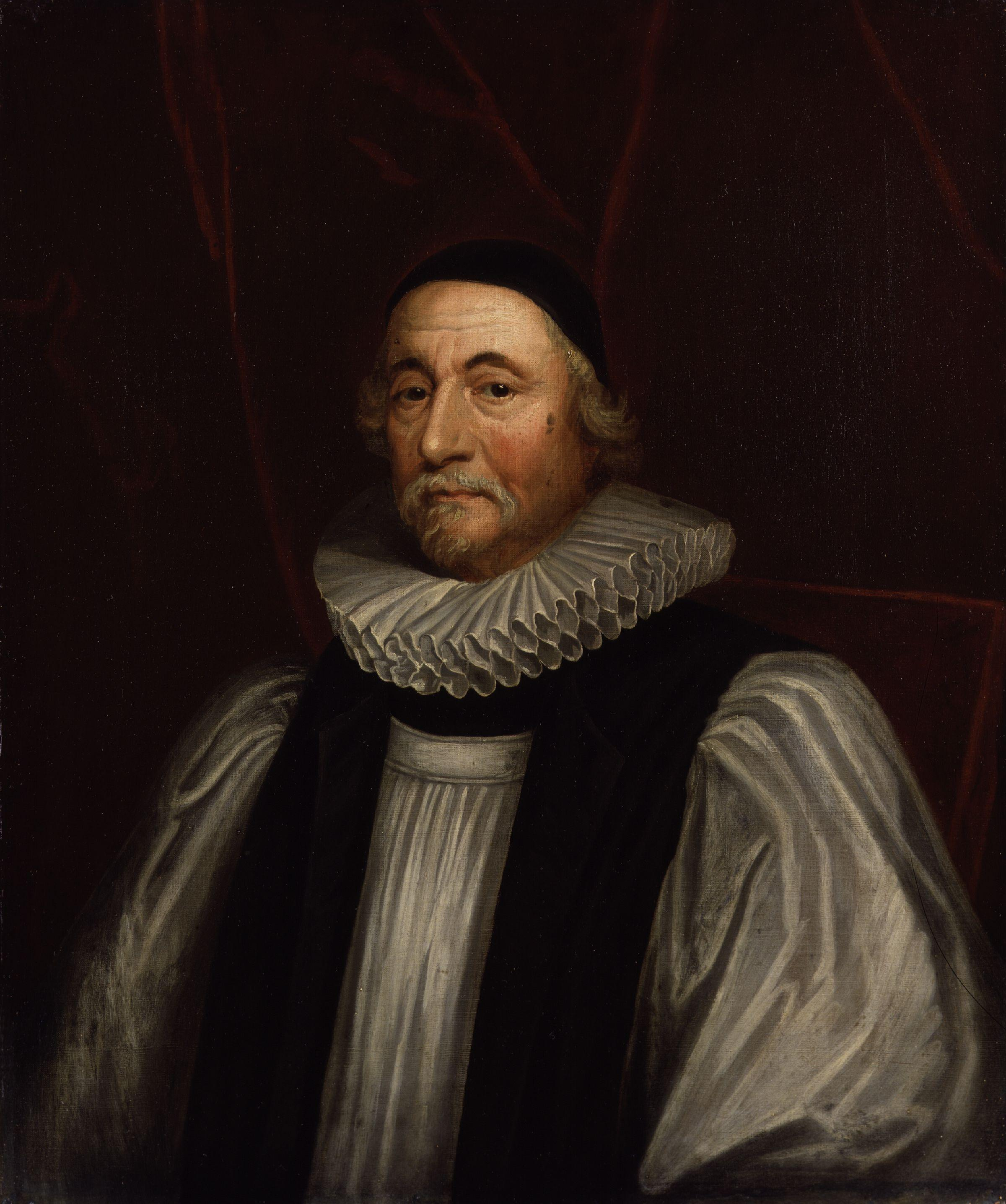
James Ussher (1581-1656), Ireland Archbishop who calculated from the Bible that the earth was created on Sunday, October 23, 4004 B.C.    Throughout   church history, most (but not all) Christians have embraced  such a   view of a "Young Earth" as taught within the pages of Holy Scripture (Wikipedia, painting by Sir Peter Lely (1618-1680).

James Ussher (1581-1656), Ireland Archbishop who calculated from the Bible that the earth was created on Sunday, October 23, 4004 B.C. In the 21st century, very few young people in the developing world still accept the concept of a “Young Earth”.  But is there a way to reconcile the teachings of the Bible today with the findings of modern science? (Wikipedia, painting by Sir Peter Lely (1618-1680)).

A recent informal survey at the social networking website, Reddit.com, was conducted that asked atheistic young people who left the Christian faith, what were their reasons for leaving the faith. By far, the most common response from over 50% of the respondents was concerning “Christian teachings that conflict with [the] findings of modern science.”    Though not a definitive be-all, end-all conclusion by any means, I find this to be an incredibly disturbing trend explaining what is draining people out of evangelical churches.  In my view, the heart of the controversy centers on the debate over the age of the earth.

So, how old is the earth? Is it relatively young, say between 10,000 to 6,000 years old as many Young Earth Creationists would argue? Or is it really old, some 4.54 billions of years according to many Old Earth Creationists?

Evangelical Christians are deeply (and rightly) concerned about the erosion of biblical authority undercutting the proclamation of the Gospel. Yet for many, any departure away from a specifically Young Earth perspective is a compromise of biblical authority. This is a serious claim. For if adopting the modern scientific consensus of an Old Earth is against the clear teaching of the Bible, then surely every Bible-believing Christian should reject that scientific consensus and embrace creation science, based on a literal six 24-hour day understanding of God’s creative act in the first few chapters of Genesis.

But is this the only way to understand the timing of creation as taught in the Bible?  The Old Earth Creationist, on the contrary, makes the claim that the teaching of modern science is instead compatible with a high view of the Bible’s divine inspiration. The Old Earth advocate argues that the Young Earth community is driving an unnecessary wedge between faith and science, thus harming the integrity of the evangelical witness of the church. Mmmm… Which perspective is the right one?  How does a Christian navigate through these competing ideas regarding the age of the earth?
Continue reading


Dover Design Debate Debacle

Dover, Pennsylvania.  Symbol of the defeat of Intelligence Design as scientific theory..... or a tragic setback for the advancement of scientific discourse?

Dover, Pennsylvania. Symbol of the defeat of Intelligent Design as scientific theory….. or a tragic setback for the advancement of scientific discourse? (photo credit: msnbc)

Should Intelligent Design be taught as science in the classroom?

It has been almost ten years since the Kitzmiller v. Dover Area School District case in Dover, Pennsylvania. There a group of elected school board officials, spearheaded by some Christians favoring Young Earth Creationism, sought to have a particular biology textbook removed from the classroom. The biology textbook was co-authored by Kenneth Miller, a biologist at Brown University, a practicing Catholic, and an outspoken advocate of what some call “theistic evolution.” Instead, a different textbook developed by the Discovery Institute, Of Pandas and People, would be used. The Discovery Institute is a think-tank that advocates Intelligent Design as opposed to Darwinian Evolution, among other important cultural and intellectual interests. A lawsuit ensued, and while it was not as big and spectacular as the famous 20th century Scopes Monkey Trial, the Dover case still became a media sensation. In the end, the court ruled that teaching Intelligent Design in a public school science class is a violation of the Establishment Clause of the First Amendment of the U.S. Constitution. The court reasoned that Intelligent Design (ID) is not science and therefore cannot be uncoupled from its Creationist, and therefore religious, antecedents.

It was a devastating blow to the movers and shakers behind Intelligent Design. I pretty much thought that the ID movement was dead in the water after that. However, the issues behind the controversy are still with us.
Continue reading


Christians in Assad’s Syria

Maaloula, St. Takla Convent, Syria.   Refugees from the Syrian civil war are hiding here as of early, September, 2013.  Residents of this village still speak a dialect derived from the ancient Aramaic, the language that Jesus spoke.

Maaloula, St. Takla Convent, Syria. Refugees from the Syrian civil war are hiding here as of early, September, 2013. Residents of this village still speak a dialect derived from the ancient Aramaic, the language that Jesus spoke.

As of early September, 2013, the world has been shocked by reports of chemical weapons being used in the civil war in Syria.   Numerous reports in the media argue that President Bashar al-Assad was behind these attacks. This horrible tragedy surely deserves at least some response.   But what kind of response?

Philip Jenkins is a renowned evangelical historian at Baylor University.   He has studied extensively the history of Christianity in the Middle East and the rest of the Mediterranean region.    Jenkins recently wrote an editorial piece giving his view that the lessons of church history should give American leaders caution in their response to the situation in Syria.  In particular, will a military intervention in Syria help or hurt the existing Christian community in Syria?

Jenkins’ position is that military intervention in Syria will not only hurt the Christians, it could ultimately lead to the annihilation of the Christian community in that country.  Pretty strong words.

Sadly, many American Christians are largely ignorant about the history of Christianity in this part of the world.  As I have tried to show with the recent situation in Egypt, the issues are exceedingly complex.   Frankly, I am not sure what the clear answer is on what to do.   But what I do know is that most Christians in the Middle East and particularly in Syria itself oppose outside intervention into Syria’s internal problems.   Assad is not the nicest guy in the world.  That much is over-abundantly clear.  But Christians in the region have looked to Assad and his family for many years for at least some protection from Islamic extremists.   What will happen to an already persecuted church if the country is further destabilized?

Perhaps you might have a completely different view.   Perhaps Jenkins is mistaken. There is much that I do not know.  Nevertheless, as a Christian in America what I do know that it is my duty and responsibility to listen to my brothers and sisters in Christ in Syria and make a better effort to fully understand their history and appreciate their situation today in view of the present crisis.


Unwinding with Alvin Plantinga

“Be merciful to those who doubt;”
Jude 22 (NIV84)

Alvin Plantinga

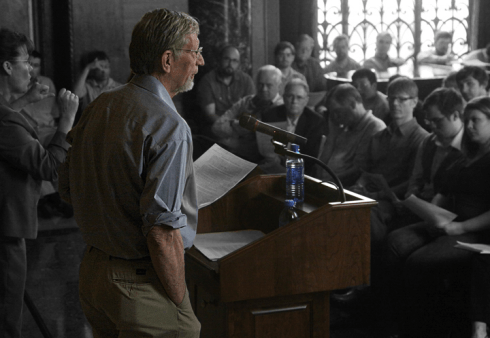
Alvin Plantinga speaking to students and faculty at Baylor University on April 26th, 2012 (photo credit: Chris Derrett).

Have you ever heard a presentation of the Gospel that goes something like this: “Hell is hot, death is certain, Jesus saves, turn or burn”? This is the Ripley’s (Believe It or Not) version of the Gospel. While this presentation may work—if only pragmatically—on a theological level, it’s a complete mess on a personal, relational level. It falls so short of the mark. Unfortunately, there are a lot of people who hear the message of Jesus Christ just this way.

I came across a common theme in atheists’ objections to Christianity three times last week—specifically that Christians are misguided. You know: the Bible is a bunch of fairy tales and legends, a loving god wouldn’t allow evil and suffering, there is no god, hell is an invention, science disproves Christianity, and so forth. (If you’re not running into these objections might you be playing it a little too safe in sharing your faith?) One atheist posted a rant in which the sophomoric level of his uninformed statements exposed his unwillingness to think rationally about theism and Christianity. They also pointed to a long line of Believe-It-or-Not presentations that left negative impressions. (His argument denying the plausibility of God was solely based upon his personal conviction that there can be no such thing as hell.) Who ‘shared’ their faith with him, and how? Too much truth and not enough grace? Continue reading