The Quirinius Question

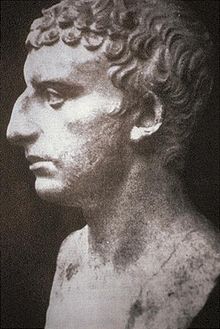
Titus Flavius Josephus, 37 – c. 100 A.D. (Wikipedia)

Titus Flavius Josephus, 37 – c. 100 A.D. (Wikipedia). Primary historical source for establishing Quirinius as Governor of Syria in the time of the census according to the Gospel of Luke at 6 A.D. But was Josephus confused on his dates?

One of the more problematic issues with the Christmas story is the question of the Census of Quirinius in Luke 2:2. According to the Jewish historian, Josephus, there was indeed a Quirinius who served as governor in Syria starting in 6 A.D., and in that year there was a Roman census during the time of Jesus’ birth by Luke’s testimony. However, then compare this to the infancy narrative in Matthew and try to line it up with the record of Josephus concerning Herod’s death around 4 B.C., which Matthew says is after Jesus’ birth. This gives you about a ten year discrepancy regarding the actual date of the birth of Jesus.  Was Jesus born around 6 A.D. according to Luke or before 4 B.C. according to Matthew? What are we to make of this?

We already know that the Christian calendar, which has no year “0” in it, was orginally meant to be started in agreement with Jesus’ birth prior to the death of Herod, but that appears to be off by a few years. We can thank “Dennis the Dwarf”, a 6th century monk, for getting us sidetracked with that one (look here for more nerdy details about the story of the Anno Domini system). But most Bible scholars agree that Luke’s apparent birthdate for Jesus in 6 A.D. is far too late to be correct. What then do you do with the census of Quirinius?

The consensus in critical scholarship has concluded simply that Luke somehow got this wrong. Skeptics run with this and conclude that the Gospels are unreliable as historical documents. UNC Chapel Hill scholar and former evangelical Bart Ehrman, for example, argues that Luke is using the whole census idea as a theological device of fiction to get Mary and Joseph to Bethlehem for the birth of the heir to the Davidic throne, namely Jesus. The virgin birth then is starting to sound, well,…. uh… rather contrived. Mmmm… Does this mean that I got all of those ding-dang Christmas decorations down out of the attic for nuthin’? Bummer.

But what if a closer look at all of the evidence suggests an alternative way of looking at the Quirinius Question?
Continue reading
Lo! How A Rose E’er Blooming

This Advent season, we sang the English version of the great German carol, Es ist ein Ros entsprungen, more commonly known to English speakers as Lo! How A Rose E’er Blooming.

No one knows who originally wrote it, though it appeared in a German hymnal in Cologne in 1599. The familiar tune was written by Michael Praetorius in 1609. Many hands have been involved in the development of this carol over the years. Having up to 23 stanzas at one point, an American, Theodore Baker, originally translated the first two stanzas into English in 1894. Several other verses in English were added by others later to give us this:

Lo, how a Rose e’er blooming from tender stem hath sprung!
Of Jesse’s lineage coming, as men of old have sung.
It came, a floweret bright, amid the cold of winter,
When half spent was the night.

Isaiah ’twas foretold it, the Rose I have in mind;
With Mary we behold it, the virgin mother kind.
To show God’s love aright, she bore to men a Savior,
When half spent was the night.

The shepherds heard the story proclaimed by angels bright,
How Christ, the Lord of glory was born on earth this night.
To Bethlehem they sped and in the manger found Him,
As angel heralds said.

This Flower, whose fragrance tender with sweetness fills the air,
Dispels with glorious splendor the darkness everywhere;
True Man, yet very God, from sin and death He saves us,
And lightens every load.

O Savior, Child of Mary, who felt our human woe,
O Savior, King of glory, who dost our weakness know;
Bring us at length we pray, to the bright courts of Heaven,
And to the endless day!

And who is this “Rose”, you might ask? You could rightly say “Jesus”, but in the original German version, the “Rose” was understood to be “Mary”. Some medieval interpreters of the Bible understood the “Rose of Sharon” in Song of Solomon 2:1 to be an allegorical representation of Mary. But presumably through the influence of Michael Praetorius, a moderate Lutheran who had an interest in improving relations between Protestants and Catholics, and others like him, the carol gradually shifted its focus to center on Christ. As is made explicit in verse 2 above, the prophet Isaiah in chapter 11 speaks to Jesus as being the fruit derived from the stump of Jesse. Mary’s role is clear as the Christ-Bearer.

As with many carols, they often take on different expressions. I have included three below: The first version is our church band’s  rather avante-garde bluegrass interpretation, loosely based on the second brilliant version by Sufjan Stevens. Our band here includes my friends: Doug Deberry on acoustic guitar, Peter Budnikas on banjo and singing, and our fearless leader, Glenn Lavender, on portable upright bass and singing. Glenn is the worship leader for our church, formerly the bass player with the internationally popular band, Downhere. The mandolin player is some guy they found in between writing blog posts on something called “Veracity” 😉 . If you are looking for a more traditional rendering, have a listen at the majestic, classical version at the bottom by opera legend Ren´ee Fleming singing with the Mormon Tabernacle Choir.

[vimeo 81331569 w=500&h=281]

HT: Steven Wedgeworth’s blog on the carol. Steven has some great reflections on some other carols, too.


Lawrence of Archaeology

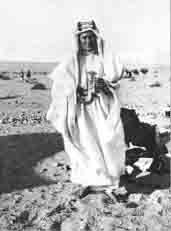
T. E. Lawrence, a British intelligence officer in World War I who became an Arabian legend. But how many folks know about his work in Biblical archaeology?

T. E. Lawrence, a British intelligence officer in World War I who became an Arabian legend. But how many folks know about his work in Biblical archaeology? (Imperial War Museum, London)

Back when I was in college, I worked as an usher at a drama theatre. One night, I caught this guy trying to sneak in after the show started. “Sir, may I see your ticket please?” My demeanor startled the guy, but then he flashed me his official guest badge. On the badge read “PETER O’TOOLE”.

I took the famous actor to his seat for the performance. But then I thought to myself, “I just met Lawrence of Arabia!

The 1962 film, Lawrence of Arabia, is one of my all-time favorite movies. But I have always wanted to know who the real T. E. Lawrence was. In the following article, I discovered that Lawrence was an illegitimate child. His father ran off with the governess. His father and his mother (the governess) were never able to legally marry as his father never secured a divorce from his legal wife. Lawrence’s mother eventually, torn by her guilt, found relief when she came to know Jesus Christ as her Lord and Savior. She was determined that her children would have a Christian education. Lawrence’s mother and a brother later went to China as missionaries.

T.E. Lawrence never really embraced his mother’s faith, but he did gain a love for the Holy Land from what he was taught from the Bible. It was this fascination with the ancient Middle East that led him to pursue archaeological work across the Palestinian landscape and beyond, eventually giving him the opportunity to serve in British intelligence to aid the Arabs to rise up against the Ottoman Turks nearly a hundred years ago. Read Stephen E. Tabachnick’s full article on BiblicalArchaeology.org to learn more.

Here is one of my favorite scenes with Peter O’Toole from the movie, where he first meets the character played by Omar Sharif:


Movement: Chuck Smith

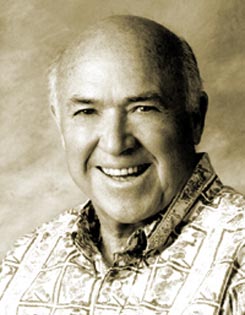
Chuck Smith (1927-2013). A pastor on the move.  A passion for the lost, but not without conflict.

Chuck Smith (1927-2013). A pastor on the move. A passion for the marginalized, but not without some conflict along the way.

In the 1960s, most American Christian churches wanted to have nothing to do with hippies. A young Southern California pastor, Chuck Smith, was determined to change all of that.

When an older member of the church posted a sign in the sanctuary with “no bare feet allowed”, Smith ripped it down. Smith believed that the church was called to reach out to the counter-culture community, even if it meant exchanging the standard suit and tie of the evangelical preacher for a more casual dress.

Chuck Smith’s critical moment came unexpectedly when he befriended a long-haired, bearded hippie teenager, Lonnie Frisbee. Frisbee became a pastor himself in Chuck Smith’s Calvary Chapel in Costa Mesa. From there, by the sheer providence of God, the Jesus Movement was born.
Continue reading


Christmas Calculus

Christmas Calculus


I am thankful for the mechanism
that lifts anger off the rails of contention
and offers instead a calculus of peace.

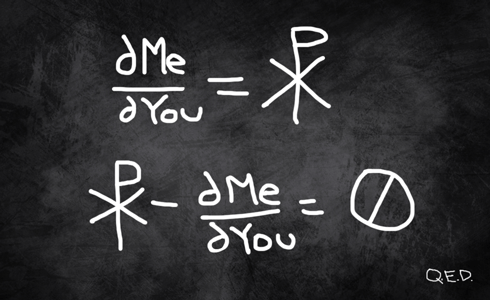
Because it occurs to me
that the change in me
with respect to you
was modeled by Jesus Christ.

His equation for anger can be found
in the handbook for our self-obsessing culture—
a testable model for peace.

Because if we genuinely put our anger
next to Jesus Christ
it leads to forgiveness,
and no anger remains.

Absent anger, love can change the intractable,
and save the cost of cleaning up emotional fallout—
leaving energy for peace.

Because there is no peace in anger,
you and I desperately need
a Chi Rho to make it work—
and that’s why Christmas is so necessarily beautiful.