
We cannot explain or resolve all parts of Scripture. However, to surmise that apparent conflicts in the Bible must be ‘errors’ is an arrogant and dangerous supposition. Too many people give up too easily—if it doesn’t make sense they aren’t willing to dig deeper. Or to trust. 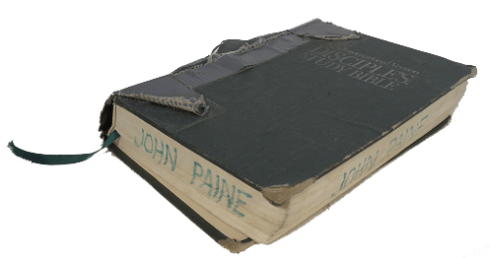
A few years ago I listened as wise, godly friends discussed the inerrancy and infallibility of the Bible. All of them are mature Christians. The issue was not the authority of Scripture for faith and practice. The issue was whether it is necessary and/or appropriate to include in our statement of faith that the Bible contains the ‘inerrant’ and ‘infallible’ word of God.
While I try not to get too personal with this blog, the most that I can contribute on this topic is personal. Specifically, the more I study, the more it all makes sense. Not just in a little way, but in one “Oh wow!” realization after another. Many (not all) passages that at one time confused me or caused me to wonder if the text was correct came into sharper focus with deeper study. This detailed-study-leads-to-edification process has happened so many times that my views on the inerrancy and infallibility of the Bible have strengthened considerably.
Just one example—I audited an apologetics course entitled Creation and the Bible by Reasons To Believe. Dr. Hugh Ross, an astrophysicist and the founder of Reasons To Believe states in his testimony that he became a Christian by reading the foundational books of the world’s religions and discarding them one by one based upon scientific errors apparent in their text. When he got to the Bible, however, he found 13 scientifically accurate statements about the creation of the universe in the first chapter of Genesis. If you take the time to dig, the details are amazing and dramatically support the case for ascribing inerrancy and infallibility to the Bible.
There’s no shortage of opinions on the accuracy of the Bible. Our post-modern culture promotes individual opinions and disharmony over conformity and agreement. Fine. Got it. No one wants to give a straightforward yes or no to the question of Biblical inerrancy, and actually that should be the case. What do you do with translation differences, poetry, allegorical statements, the use of Koine (slang) Greek, textual criticism, differing accounts of the same events by different authors, a lack of modern technical precision, observational descriptions of nature, the use of hyperbole and round numbers, variant selections of material in parallel accounts, and so on? It takes a fair amount of clarification before we can get to a yes or no response.
But the concepts behind these adjectives are extremely important, and there are those who have done a very good job building a case for unity on this topic. The Chicago Statement on Biblical Inerrancy is a document worthy of very careful reading. Before I read it, I had my own unfocused views on the subject. After reading it and thinking it through, I’m in. I support the Chicago Statement.
So back to the question of whether it is necessary or appropriate to include that the Bible is inerrant and infallible in our statement of faith. In its constitutional context, the Williamsburg Community Chapel’s statement of faith is reduced to eight points about which we believe so strongly that we would break fellowship with those who would disagree. In this context, personally I believe it is appropriate—but not necessary—to include these terms (see Article XIX of the Chicago Statement). In other words, would I break fellowship with someone who was struggling with the genealogies of Christ in Matthew versus Luke? No. Would I break fellowship with someone who insisted that the differences in these genealogies prove the errancy of the Bible? Absolutely. More importantly, do I believe that the Bible is the inerrant and infallible, inspired word of God? Yes.
______
- Click on the images inside this file to link to the online resources. (You may need to adjust your browser settings to allow the links to work, or open it in iBooks, or save it to your desktop and open it with Acrobat Reader.)
HT: Dave Rudy
 When someone confronts us in a particularly offensive manner or strikes at a deeply held conviction or belief, most of us have a natural inclination to fight back. Unfortunately, we have a tendency to let anger and emotions get the better of us.






 Veracity