John Hus: A Journey of No Return

A hundred years prior to Martin Luther, John Hus was a late 14th century Czech priest championing the principles of the Reformation.  However, unlike Luther, John Hus, in 1415, was burned at the stake for his beliefs. What motivated John Hus to put his life on the line?  A fairly recent film, John Hus: A Journey of No Return, produced in the Czech Republic, and dubbed into English, tells the story. In 1999, Pope John Paul II formally apologized to the Czech people for the “cruel death” inflicted upon Hus at the Council of Constance

Here is the teaser trailer for the film.


Imputation: The Chocolate Chips in Luther’s Theological Cookie

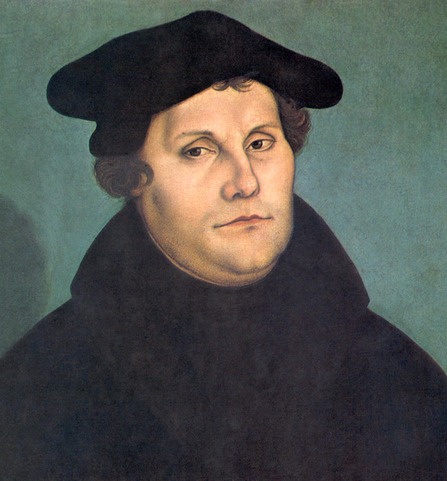
Martin Luther (1483-1546), by Cranach (credit: Wikipedia). “Imputation” was the core theological concept behind Luther’s thinking. So then, what is “imputation?”

Imputation. Have you ever heard of that word? We do not use it in normal conversation. But in the 16th century, imputation became a battleground idea for the Reformation. This crucial theological concept helps us think through a true understanding of the Gospel, even today.

Theologian Michael Horton, one of the scholars interviewed in the film documentary This Changed Everything, about the Reformation, likens imputation to a cooking analogy. If you try to make chocolate chip cookies, but leave out the chocolate chips, then you have pretty much left out the main ingredient. Likewise, many Protestants would argue that if you talk about the Gospel, but leave out imputation, then you end up with a chocolate-less cookie. Before we get at the definition of imputation, let us see why this might be so important. Continue reading


Mortal Sin, Venial Sin, and the Sin That Leads to Death?

Not having grown up in the Roman Catholic tradition, I was always puzzled by the whole idea of mortal versus venial sins. What is all of that about, and where is it in the Bible, (or is it)?

Well, it all stems back to one of the more difficult passages in the Bible to interpret:

If anyone sees his brother committing a sin not leading to death, he shall ask, and God will give him life—to those who commit sins that do not lead to death. There is sin that leads to death; I do not say that one should pray for that. All wrongdoing is sin, but there is sin that does not lead to death. (I John 5:16-17 ESV)

Bible scholars have been scratching their heads for hundreds of years on this one. Who is his “brother?” What are some examples of the different types of “sin“? What is meant by “death?” In other words, what in the world is John talking about here?

Spiritual Anxiety: Mortal vs. Venial Sins

Continue reading


Does the Roman Catholic Church Still “Sell Indulgences?”

Johann Tetzel, 16th century indulgences promoter, and “used car salesman.” Tetzel never visited Wittenberg, Germany, seeking to avoid the direct barbs of Martin Luther’s scathing critique (credit: Wikipedia)

When the German Dominican friar, Johann Tetzel (1465-1519), began to travel across Europe, urging people to contribute to the church fund for building St. Peter’s basilica, it fired up the indignation of one monk, Martin Luther. Many have quoted Tetzel’s couplet, that appeared to endorse the idea that the medieval Church was “selling indulgences.”

“As soon as a coin in the coffer rings, the soul from purgatory springs.”

The idea here is that Tetzel was encouraging almsgiving to the Church in exchange for offering more “time off” for loved ones in purgatory. Luther’s protest soon brought the Christian world into turmoil. But were Tetzel’s actions merely an abuse of the teachings of the medieval Church, or did they signal a deeper, more fundamental problem with the Church’s theology?

When Martin Luther first nailed up his Ninety-Five Thesis to the Castle Church door in Wittenberg, it may not have been clear to him as to how to answer that question. But as Luther began to receive more and more pushback from Church authorities, he began to think that Tetzel’s “used car salesman” tactics were more that just an abuse of an otherwise, acceptable doctrine. Rather, the whole theology of indulgences was based on a dangerously false interpretation of the Bible.
Continue reading


September 23 End Times Nonsense

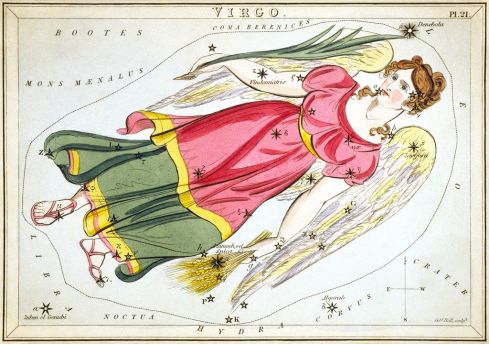
The constellation Virgo. Foreboding a fulfillment of the Book of Revelation? I think not.

The nonsense about the supposed “End Times” event happening September 23, 2017, just keeps getting worse.

Some “bible prophecy expert” had predicted the end of the world tomorrow (Sept 23), but now is backing off (sort of) from his claim, according to the Washington Post. If you have missed the whole media splash about this, read this previous Veracity post, published last month, the day of the solar eclipse, for details. 

Basically, a somewhat uncommon astronomical event, tied to a rather creative interpretation of Revelation 12, is “supposed” to be prophetically fulfilled in the skies tomorrow. The first couple of verses describe what star gazers “might” see tomorrow night, in the constellation Virgo:

A great sign appeared in heaven: a woman clothed with the sun, with the moon under her feet and a crown of twelve stars on her head. She was pregnant and cried out in pain as she was about to give birth….

Frankly, this type of “bible prophecy” handling is an embarrassment. As Logos Software Bible scholar, Michael S. Heiser, whom I greatly respect, says in his very helpful, bible study blog, this is “living testimony to biblical illiteracy” in the church today.

We could chock this up as being meaningless media hype. But sadly, many Christians fall for this type of stuff, and the reputation of the Gospel suffers.

Admittedly, the Book of Revelation is difficult to interpret. But the main reason why it is so difficult to understand is because most Christians are not aware of the original literary context, of which it was written in, during the 1st century of the Christian era. Ian Paul is a British evangelical bible scholar, with another helpful bible study blog, that explains why Revelation gets so mangled up by 21st century readers. You may never think about “little red riding hood” the same way again:

“Revelation is absolutely saturated with allusions to the OT, and our lack of knowledge often means we miss these. The woman in labour is an image of the people of God awaiting deliverance from exile in Is 66 and Micah 4 and 6. The dragon (Revelation 12:3-4) is a composite of the four beasts that emerge from the sea in the visions of Daniel 7, where they signify four human empires, and it is overlaid with a range of imagery denoting the primeval opponent of God and his people (the serpent in Gen 3, the Satan from Job) as well as intertestamental ideas. The male child ‘who is to rule the nations with a rod of iron’ (Revelation 12:5) is indeed Jesus as the fulfilment of the messianic Ps(alm) 2. If we struggle a little with these allusions to the characters, we will struggle even more with the strange plot into which they have been inserted. But John and his readers will have struggled no more than we would if we heard someone describing a girl wearing a red hooded cloak taking apples to her granny in the woods, or a girl coming across three bowls of porridge in a cottage. (If you don’t know what these are, then again it makes the point: we easily spot allusions to story we know in our own culture, but the moment we look at another, unfamiliar culture we can become very disoriented.).”

The rest of Ian Paul’s blog entry can be found at his Psephizo website. It just goes to show you that context matters when you study the Bible.