Category Archives: Topics

Why Ravi Zacharias International Ministries (RZIM) Should Change Their Name

UPDATE:  February 15, 2021

With the report from RZIM’s law firm released last week, the situation is worse…. far worse than I could have imagined. It makes me sick to my stomach. I agree now, with Glen Scrivener below.  What we need is “root and branch” reform, not *simply* a name change.  I stand admonished.  Thank you, Glen.

ORIGINAL POST:

The recent allegations of inappropriate sexual activity, dating back several years ago, by the late apologist Ravi Zacharias, are heartbreaking. I discovered this latest news several weeks ago about the spa workers on Julie Roys’ blog, which now is news at Christianity Today magazine. I corresponded with the “whistle blower,” Steve Baugham, several years ago, and you can read some of my interactions with him on the Veracity blog.

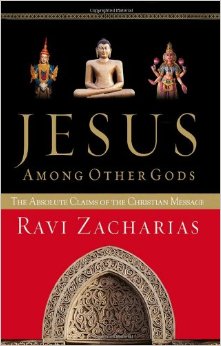
Jesus Among Other Gods, by Ravi Zacharias, 2000. Perhaps my favorite Ravi Zacharias book.

My main interest with Ravi Zacharias from several years ago was over the inaccurate promotion of Ravi’s academic credentials by Ravi Zacharias International Ministries (RZIM). I was aware of a sexting controversy involving Ravi as well, but felt like I had nothing to say about it, as the exact details were unknown, due to a non-disclosure agreement that Ravi had with another party.

I personally reached out to a member of RZIM’s team that year, and received a personal phone call, for which I was grateful. My concern back then was that RZIM had delayed in resolving the academic credentials, a matter which should have been resolved within a matter of weeks, but that actually took about 2 years to get rectified. I received assurance that RZIM was doing their due diligence and doing the right thing. I have a tremendous amount of confidence in many of the persons who do great apologetic ministry work with RZIM, so I was grateful that RZIM was taking the steps to put these matters behind them.  May their efforts in building the Kingdom increase.

However, in view of the recent allegations, I believe that now would be a good time to take an additional step, and rename Ravi Zacharias International Ministries, to honor and respect the new generation of Christian apologists, many of whom were personally discipled by the late Ravi Zacharias (Frankly, I think that a name change would be a move that even Ravi would applaud!).

According to the CT article, RZIM has engaged a law firm to investigate these new allegations. I would sincerely hope that these allegations could be proven false, and Ravi’s full legacy could be restored. As a long time enthusiast of Ravi Zacharias, having taught several adult Bible classes using his teaching material, I would greatly welcome that outcome.

Nevertheless, it has bothered me for several years now that Ravi Zacharias had been wrongly put on a pedestal, by many of his supporters. Sadly, I have known of several admirers of Ravi who have doubled-down in defending certain aspects of Ravi, when they really have not done the hard work of actually listening to different points of view, and investigating different perspectives, that conflict with the narrative that Ravi portrayed in his public ministry…. and I am not just talking about the scandals, I am also talking about sincere criticisms of certain apologetic methods and arguments used by Ravi.

On the one hand, Christians should do their very best to defend the honor and reputation of their leaders. The Gospel does cause an offense, and so, we should not be surprised when the Enemy sows seeds of distrust by making false accusations against Christian leaders.

At the same time, Christians should be seekers of the truth. We should be willing to admit when we are wrong, when presented with convincing evidence. We should embrace the truth, even when it might be painful to do so.

The line between defending the reputation of Christian leaders and the pursuit of truth can be sometimes difficult to find. I wrestle with this a lot. Yet President Ronald Reagan’s adage offers some sound wisdom here, “Trust, but verify.”

Some of us can become overly skeptical and fail to trust anyone, other than themselves, which is not the best path to take, considering that we as humans have the unavoidable tendency to deceive ourselves immensely. Christian doctrine has another name for this: it is called “original sin.” Nevertheless, others of us can be so trusting that we fail to take the necessary steps to verify that what our leaders are telling us is indeed truthful and reliable. We need discernment. We need more concentrated study into God’s Word to gain wisdom.

So, what if the latest accusations against Ravi hold true? It would not mean that everything about Ravi’s ministry should be invalidated. If we were to judge everyone on this type of standard, then our Bibles would become very small indeed. Abraham pimped his wife. Moses killed a man in cold blood. David committed adultery and had the woman’s husband killed. These are patriarchs of our faith. The Bible is quite clear that all of us have skeletons in our closet, that we would prefer would just remain there.

Ravi’s career as a Christian apologist offered a display of a number of good arguments for the Christian faith, that personal failings themselves can not undo. The many gifted students of Ravi’s, who are now leading RZIM, need not be lumped together and taken down by any of Ravi’s supposed failings.

Would I continue to recommend Ravi’s books to others?… Mmmm… I am not sure about that….. No matter what, the failures of Ravi’s life should serve as illustrations for up and coming apologists to take heed, and learn some tough lessons, and engender a better sense of accountability.

Let us pray for Ravi’s family and RZIM that things will turn out for the best. Until the investigation makes a conclusion, hard though it will be, I want to do my best to prefer to honor the tradition commonly upheld in American jurisprudence, “Innocent, until proven guilty.”

However, even if Ravi is exonerated from these latest accusations, I am afraid that his legacy has been sufficiently tarnished, that it would not be good for RZIM to continue their work, with the name of Ravi Zacharias so boldly displayed on the masthead. Ministries like RZIM should be focused around a common vision statement, statement of faith, and a shared covenant held by staff/supporters, and not around a particular personality. When a ministry becomes solely attached to the name of a famous, yet ultimately flawed person (which we all are!!), it can easily sink the reputations of others who are not associated with lingering scandal.

Sadly, Protestant evangelicalism has developed a reputation of promoting a type of “celebrity pastor” culture that does more harm than good.  It harms those who follow after such “celebrity pastors.” It reinforces the skepticism and distrust of those who stand outside of the church. Furthermore, the pressures of trying to fit into the role of the “celebrity pastor” is an impossible task for that “celebrity pastor” to fill, which if the CT story is correct, goes a long way in explaining the current controversy involving Ravi Zacharias.

Therefore, changing the name of RZIM to something that more reflects the common vision of purpose of the band of apologists that Ravi once mentored, and who now lead the ministry, would be the prudent thing to do.  Let us not attach ourselves to the legacy of sin-prone human, failing persons. Instead, let us refocus on lifting up the unfailing name of Jesus. To God be the glory.


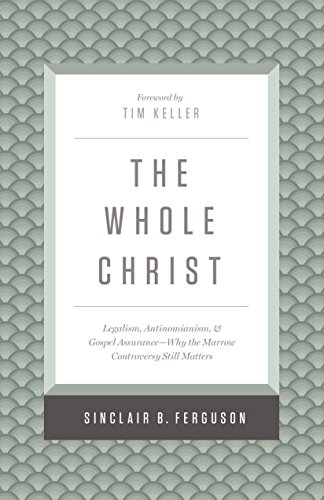
The Whole Christ, by Sinclair Ferguson, A Review

How do you know if you are truly a Christian? Can you be sure about that?

In our 21st century age, we tend to look down upon Christians of earlier eras, particularly the Puritans. Their world seems so far removed from ours. But such an opinion only reveals our chronological snobbery. A wealth of wisdom lays hidden with the Puritans, that we need to need to hear from today. The assurance of one’s salvation is one area of wisdom we need to recover from those Puritans,

If you ever read the writings of the English Puritans, they often speak of the tension between “legalism” and “antinomianism,” in the Christian life. On one side, is the tendency to reduce Christianity to a set of rules and regulations to follow, a bunch of “do’s and don’ts” (legalism). On the other, is the tendency towards lawlessness, a faith that has no real regard for the commands of God (antinomianism). What Christian does not wrestle with that tension today?

Between these two extremes, it can sometimes be like walking a tightrope, maintaining a sense of balance to keep from falling down one way or the other. We have plenty of controversies in church history that testify as to how difficult it is to maintain that sense of balance.

Martin Luther was accused of being a libertine by his Roman Catholic opponents, while his Papal accusers were accused of their own “works-righteousness.” Anne Hutchinson was exiled from the Massachusetts Bay Colony, for her claim that the Puritan fathers were teaching a “covenant of works” as opposed to a “covenant of grace.” Late 20th century evangelicals argued over the “Lordship Salvation” versus “Free Grace” controversy. In recent years, megachurch pastor Andy Stanley told his congregation that they must “unhitch” themselves from the Old Testament, largely because of the Old Testament emphasis on law, causing quite an uproar.

In all of these controversies, the assurance of one’s salvation has hung in the balance. At the core of this, the relationship between Law and Gospel is something with which every new generation must wrestle.

Sinclair Ferguson, in his The Whole Christ: Legalism, Antinomianism, and Gospel Assurance—Why the Marrow Controversy Still Matters, looks at one of these controversies in church history, as a lens on which to try to tease out how this balance might be properly maintained. The “Marrow Controversy” was an otherwise forgotten controversy over an otherwise forgotten book, by Edward Fisher, a Puritan author from the 1640s, entitled The Marrow of Modern Divinity.

The Whole Christ centers around the story of an early 18th century Scottish preacher, Thomas Boston. Early in his preaching career, Boston was frustrated by the lack of positive response to his preaching message, among the callous in his Scottish congregation. Yet Boston took great comfort in reading Edward Fisher’s book, when he stumbled across it one day, while visiting someone else’s home. Fisher’s book sought to find a way between legalism and antinomianism (a term which means, “against the law”). The abbreviated title, “The Marrow,” meant that Fisher was trying to get at the innermost substance of the Gospel. Boston credited The Marrow for correcting his own posture towards the Gospel, and it revolutionized his ministry.

So, when the General Assembly of the Church of Scotland banned the book in 1720, as promoting antinomianism, some 80 years after it was first published, a theological fire erupted. Thomas Boston and his like-minded preacher friends protested the ban. These pastors, known as the “Marrow Men,” did not view the book as dangerous at all, but rather saw its message as liberating with the truth of the Gospel. The censure of the church, which subsequently was never revoked (even to this day!), would not stop the “Marrow Men,” for they sought to republish The Marrow of Modern Divinity, with some notes added by Thomas Boston, in 1726.

Sinclair Ferguson’s The Whole Christ endeavors to explain the “Marrow” debate that engulfed the early 18th century Church of Scotland, as a means to help us today to properly understand the relationship between the Law and the Gospel. There are a couple of added, standout benefits gained from Sinclair Ferguson, from this book:

The last issue, regarding the assurance of salvation, is something that still needs sharpening in our day. For on one side, it is very easy to have a false assurance of one’s salvation, by presuming upon the grace of God, and thereby leading a life of recklessness, marked by a distinct lack of holy living. If you dwell among Christians who act one way on Sunday, but who act completely different on the other days of the week, you will know exactly what this means.

We may think we have a right standing before God, when in fact, we have merely fooled ourselves, placing our own demands and wishful thinking upon God. On the other side, we can become so restless concerning our final state before God, that we lack confidence in the power of God to save sinners. In our insecurity about “going to hell” we forget about the love of God, which brings us into the joy of God’s presence. People who fret and fret over whether their faith is fully acceptable, in the sight of God, reveals this sense of spiritual insecurity.

Sinclair Ferguson takes us on a trip through church history, that might not be familiar to readers. Ferguson draws connections between the teachings of the medieval church, similar teachings found in contemporary Roman Catholicism, and other crucial theological figures, such as the 16th century French/Swiss Reformer, John Calvin, and the 19th century Scottish “heretic” John McLeod Campbell. But this is not theological history to satisfy certain intellectual curiosities. Instead, Ferguson weaves a theological tale that will assist the reader in avoiding common pitfalls, that can easily derail the life of any Christian.

The forward of The Whole Christ, written by Tim Keller, helps to orient the reader to understand the book’s purpose, regarding how the Law and the Gospel relate to one another. Keller writes that Ferguson “wants to help us understand the character of this perpetual problem—one that bedevils the church today. He does so in the most illuminating and compelling way I’ve seen in recent evangelical literature.” But the book’s audience should not be restricted to pastors, for The Whole Christ seeks to set out a reasoned, biblical approach to how a balance between legalism and license can be lived out.

How can this be done?  By preaching the whole Christ. A proper understanding of the Gospel, in its fullness, is the antidote that helps believers to avoid a sense of making the Christian faith into following a list of do’s and don’ts. It also helps us to avoid a faith, where we can fool ourselves to think that we can do whatever we want, with no restraints upon our conscience. The subtle danger, as Ferguson tells us, is that often we can have a very “orthodox” sounding theology, but that on the inside, our hearts’ disposition is completely out of whack. The way the message is presented is just as important as the message itself.

By emphasizing the whole Christ, Ferguson insists that it is all too easy to separate Christ Himself from the benefits He gives to the believer. A proper grounding for the assurance of our salvation is found in loving God for who He is, and not simply for what He gives us.

The last few chapters of The Whole Christ explore the details of what it means to have the assurance of one’s salvation. These chapters make for the densest reading in the book, but it forced me to read slowly and think more carefully. Does one have an unhealthy preoccupation with anxiety about their eternal state? Or does one settle for a kind of presumptive expectation of salvation, when actually, their hearts are far, far from God? Sinclair Ferguson endeavors to find the right balance and nuance, to get at the truth.

Again I ask: What genuine Christian does not struggle with these matters? But notice how easy it is to trick ourselves. If I find myself easily condemning other Christians for their “loose-living,” that might be an indication of legalism in my own heart. On the other hand, if I am quick to dismiss the rigidity of how another Christian seeks to be obedient to God, it might be a good sign of a latent antinomian spirit residing in me.

What is the solution to avoiding these spiritual traps? Knowing the whole Gospel: The Whole Christ. How do we equip ourselves to fully understand and implement this truth?

One way would be reading The Whole Christ, by Sinclair Ferguson. I listened to the audiobook format, but if you like a video teaching format, you should consider the video teaching series, available at Ligonier Ministries. The clarity of doctrinal teaching that Ferguson offers is exceptional. I have read through the entire book once, and several other parts multiple times, and I continue to learn vital Scriptural truths to be applied to my walk with Christ, in every chapter. This is a book to savor, and re-read, so that the Scriptural truths it conveys might become imprinted upon our hearts.

  • ….

UPDATE: September 26, 2019, 10am

This just came in…. a debate between William Lane Craig and Gregory Boyd on penal substitutionary atonement (PSA). Haven’t viewed it yet, but it looks to be very good, and quite relevant to the topics covered in The Whole Christ.  I side with William Lane Craig here, but Gregory Boyd is probably one of the most able critics, whose perspective should be taken seriously by other Christians. I see the PSA view as complementing the Christus Victor view of the atonement, and not a contradiction.


Former Evangelical Christianity Today Editor Becomes Roman Catholic

Mark Galli receives Communion during Mass at St. Michael Catholic Church early Sept. 8, 2020, in Wheaton, Illinois. RNS photo by Tom Killoran

Mark Galli, formerly editor for the evangelical magazine Christianity Today, has decided to become Roman Catholic. Normally, conversions between Roman Catholicism and Protestant evangelicalism go the other way around: typically, I see a lot of “cradle” Roman Catholics grow up to become Protestant evangelicals. So, why would a Protestant evangelical “cross the Tiber” and make the journey towards Rome?

What makes the Mark Galli story so significant is because Galli was for several years the editor of what many still consider to be the flagship periodical of Protestant evangelicalism, Christianity Today. He also raised a lot of eyebrows in late 2019, when Galli, a moderate conservative who is firmly “pro-life,” with respect to abortion, wrote an editorial calling for the impeachment of President Donald Trump.

It is a good question to consider: Why would someone who once publicly championed the principles of the Protestant Reformation take the Eucharist, with Rome’s understanding of transubstantiation, along with other doctrines of Rome that repel the typical Protestant?

Was part of it the continual drift we see in the Protestant evangelical movement away from centuries-long, established church tradition? In Galli’s case, according to an article in the Roys Report, he was a “cradle” Catholic, who became heavily involved in Presbyterianism as a teenager. He eventually moved towards Anglicanism, and even looked into Eastern Orthodoxy for awhile.

Was it the never-ending fracturing in Protestant evangelicalism, that zapped him of his spiritual energy? Was it the tendency of evangelicals to unite more around politics than solid, Scriptural doctrine? An interview with Galli tells the story.


The Amplified Bible: How to Use and How Not to Use It

I am posting this for my wife’s benefit, and others who really like the Amplified Bible. Logos Bible Scholar Mark Ward does a great job in this 13-minute video explaining the pros and cons of using the Amplified Bible. It is sort of like having a Bible with brief commentary embedded right in the text, which can be both a good thing … and a bad thing.

The following might come across as disparaging, but it is often quoted because there is some truth to it: “[The] Amplified [Bible is] for folks who have no idea what translation is but know that if you try enough words one of them will hit pay dirt.” I personally prefer to have a good study Bible instead, so that I do not get confused as to what is the text and what is the commentary.

The video is based on a blog article Mark wrote a few years ago. His book on the King James Version is incredibly insightful. You can check him out at his web site, ByFaithWeUnderstand.com.


A Bible Q&A Panel

My local church just finished a one-year survey of the Bible, and the year was ended with a Q&A session, that I am linking to, for your video viewing (follow this link: sorry, I was not able to embed the video itself!), with Pastors Travis Simone, Hunter Ruch, Rich Sylvester, Dale South and Claude Marshall. This was a fantastic example of how pastors with different views can come together in an attitude of humility, and model good conversation with one another.

When pastors preach, typically no one dares to ask a question. So, if you ever get stuck on something, you may or may not be able to get back to your pastor to discuss what concerns you. You may feel intimidated. You might never ask, as you might think you have a stupid question, when it really is not. That is why it is a good idea for pastors to have Q&A sessions like these to tackle sincere questions from the flock.

The times are approximate, but I have tried to mark the time when a question comes up in the discussion, so that you can track this easier. The questions were all really good:

  • 0:00 Music filler intro that you can skip.
  • 11:46 Introduction
  • 17:39 Why did Jesus of Nazareth never clarify to his listeners that he was born in Bethlehem as a fulfillment of prophecy?
  • 26:29 How do we handle the multiple interpretations of the Book of Revelation?
  • 49:06 How important is numerology in the Bible?
  • 1:00:00 How do we interpret the Rapture? How many times does the Bible say that Jesus is coming back?
  • 1:18:40 What is the Apocrypha? Is it important for us to know the Apocrypha?
  • 1:27:00 How are we to understand the Palestinian/Israeli conflict?
  • 1:38:00 What is our responsibility in submitting to civil authority from Romans 13?

A few comments on the questions:

  • The Nazareth/Bethlehem question is important as skeptic Bart Ehrman says that Jesus was really born in Nazareth, and that the Gospel writers invented the Bethlehem birth story as a way to have a cover for saying that Jesus was the  Messiah of Old Testament prophecy. It is helpful for Christians to think about this and have an answer for this claim.
  • Yes, there are multiple interpretations of the Book of Revelation, as well as different views of the Rapture, and the panel reflects this plurality of views: (1) a progressive dispensationalist, who holds to a pre-tribulational rapture, followed by a premillennial return of Christ; (2) a partial preterist, who believes that much of Revelation was fulfilled in the 1st century A.D. (except for the last few chapters of the book); (3) a post-tribulational rapture proponent, who holds to a non-dispensational, historic premillennialism view; and (4) an amillennialist, who is very wary of speculations regarding futurist views of Revelation. See if you can pick out which is which. Learn more about these different viewpoints here.
  • Regarding the Apocrypha, Protestants do not consider it as Scripture, but yes, it is important for us to know the basics of the Apocrypha, as it helps us to better understand the New Testament.
  • For more information about the Palestinian/Israeli conflict, from a Biblical perspective, the video mentions a two-part Romans 9-11 Q&A session that dives into this in great detail (Night #1 & Night #2).
  • Romans 13. Yes, this is important in the age of COVID-19, where the importance of religious freedom needs to be balanced with public health concerns, and loving your neighbor well.

Enjoy the discussion.