Category Archives: Topics

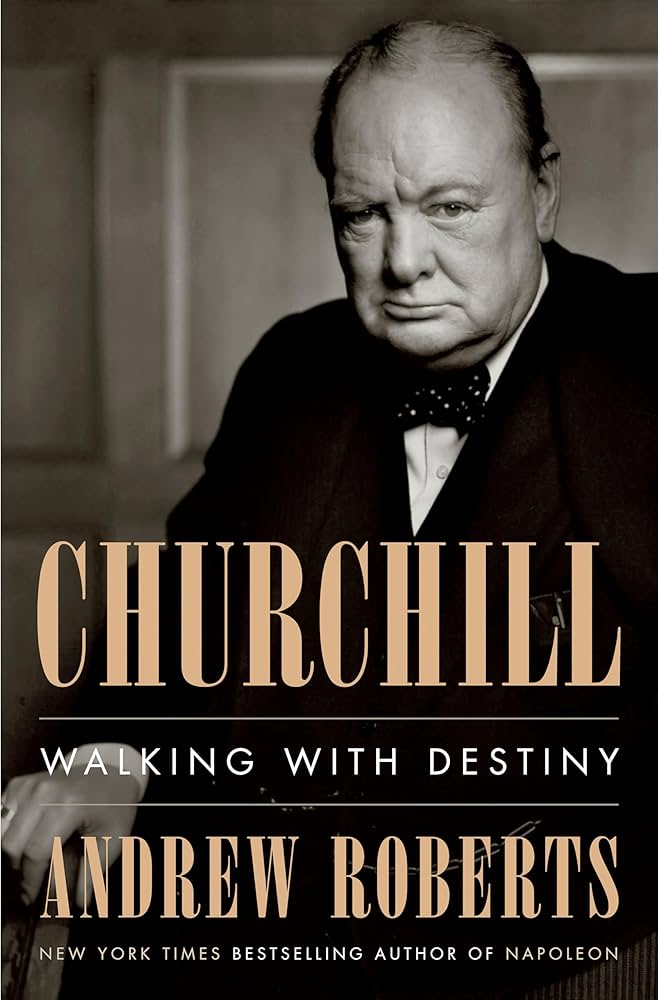
The 1700th Anniversary! … The Nicene Creed, by Jared Ortiz and Daniel A. Keating. A Review.

In 2025, Christians can celebrate 1700 years of the most influential and famous summary of Christian belief, the Nicene Creed. I grew up in a church where we recited the Nicene Creed once a month during worship services. Sadly, a lot of evangelical churches today rarely, if ever, recite the Nicene Creed in public worship, despite the fact that for hundreds of years Christians have historically recited the Nicene Creed (or a shortened version of it, the Apostles Creed) on a regular basis, to remind them of basic Christian truths.

The Nicene Creed has served as a summary of what Christians connected to historically orthodox Christianity have believed and confessed through much of the long history of the Christian movement. It really strikes me as odd that so many conservative evangelical churches, who claim to be concerned with upholding centuries-long-held truths, tend to downplay the creed. Thankfully, with the 1700th anniversary of the first version of the creed, there are a bunch of good books available now that go into detail about the history behind the creed, and what it means for us today.1

I decided to pick up a copy of a book written by a pair of Roman Catholic scholars, who write for an ecumenical audience, from a C.S. Lewis-type “Mere Christianity” perspective. Jared Ortiz and Daniel A. Keating, the authors of The Nicene Creed: A Scriptural, Historical & Theological Commentary, have written a relatively accessible introduction to the creed, making an argument for its importance. Ortiz even teaches at a Protestant evangelical Christian college, Hope College, in Michigan. As Ortiz and Keating put it:

Because we live in an age that doubts the very reality of truth, and because we are trained to go our own way and encouraged to craft our “own truth,” we need more than ever an anchor of Truth—given, tested, and secure—not just as individuals but together as the Church. To our culture, the creeds implicitly say, “These things are true and real. Here is the genuine narrative of our world. And this is true for everyone.” (Ortiz & Keating, The Nicene Creed, Introduction)


The Nicene Creed: A Scriptural, Historical, and Theological Commentary, by Jared Ortiz and Daniel Keating, a great introduction into the most influential Christian creed, celebrating the 1700th anniversary of its first draft.


Urban Legends of Nicaea

There is a lot of misinformation out there regarding the history and purpose of the Nicene Creed. One of the most popular misinformed stories is that the Emperor Constantine essentially bullied a group of Christian bishops, to get together and declare Jesus to be God, as part of a political tactic to exert his control as emperor over the Christian church.

That makes for a tantalizing conspiratorial tale of intrigue, but it is not good history. If anything, Constantine himself was eventually became more partial to the ideas of Arius, the arch-heretic associated with the Council of Nicaea. In reality, the story is more complex: Constantine at first accepted the decision of the bishops at Nicaea, opposing Arius.  Nevertheless, within ten years after the council met, Constantine’s posture towards Arius changed.  In becoming more sympathetic towards Arius, Constantine even ordered that one of Arius’ chief antagonists, bishop Athanasius of Alexandria, be exiled because of his enthusiastic support for the Nicene resolution against Arius.

A second popular misinformed story also makes Constantine into being the “bad guy,” by suggesting that he helped to pressure these bishops to come up with a list of books which would make up the New Testament, accepting books that he and certain bishops liked, and throwing out the rest. In other words, Constantine is “blamed” for trying to put all of the bishops together in a headlock, and forcing them to “fix” the New Testament. This second story is wildly wrong, in that the topic of the canon of the New Testament never once made it into any discussion at Nicaea. It would be several decades before a final list of books of the New Testament would be recognized, and the process was more organic and less autocratic, as purveyors of this story want to believe.

The rumor linking the formation of the New Testament canon with Council of Nicaea probably originated based on a comment made by Jerome, the late 4th and early 5th century translator of the Bible into Latin, the Vulgate, who stated that it was at Nicaea when someone acknowledged that the Book of Judith was an accepted part of Scripture. Jerome had his own doubts about the inclusion of the Book of Judith within the record of Scripture. There is not much more detail about Jerome’s comment, and furthermore, the Book of Judith belonged to the Old Testament Apocrypha, and was never a candidate to be accepted into the New Testament anyway.

Then there is the medieval legend that Saint Nicholas, whose cultural memory over the centuries gave us Santa Claus, stood up and punched Arius in the face for all of his heresies. That probably did not happen, but it is still a fun story to think about, old St. Nick throwing a right hook against a reviled heretic across the cheek. Ha! Ha!

Nevertheless, all of this misinformation about Nicaea does leave the question: What was the Nicene Creed really all about, anyway?


An Overview of The Council of Nicaea

The Nicene Creed in 325 initially addressed the controversy over the deity of Christ, describing the precise relationship between the Father and the Son. But the Creed was expanded at the 381 Council of Constantinople in order to flesh out the doctrine of the Trinity, to include more detail about the role of the Holy Spirit, within the divine Godhead. In other words, most Christians, who even know about the Nicene Creed, do not realize that what was agreed upon in 325 is not the exact creed many Christians recite today. It really took about 55 years for the exact formulation of the Nicene Creed to reach its fullest form, common to both the Western and Eastern churches.

However, the acceptance of the Nicene Creed in the church was not immediate. It took some time before the recitation of the Nicene Creed became a normalized part of Christian worship. Scholars say Paul’s letters in the New Testament included a variety of ancient creeds which preceded the Nicene Creed.

Contrary to what I had always thought, the Apostles Creed did not date back to the earliest apostles. Instead, it was derived from the Old Roman Creed, which Augustine used as late as the early 5th century to prepare catechumens for baptism. It was not until the seventh century (the 600s) when the Nicene Creed became a standard part of a Christian worship service.

Ortiz and Keating say with Saint Augustine that there are three basic concepts which undergird the Trinitarian theology of the Nicene Creed: (Ortiz & Keating, Introduction)

  1. There is only one God.
  2. The Father is God, the Son is God, and the Holy Spirit is God.
  3. The Father is not the Son, the Son is not the Father, and the Holy Spirit is neither the Father nor the Son

Ortiz and Keating go through the major parts of the Nicene Creed, namely about the Father, the Son, and the Holy Spirit, giving a Scriptural exposition regarding where each of these components of the Nicene Creed come from the Bible. Along the way, the authors have helpful sidebars with digressions that fill out the bigger story behind the Nicene Creed, such as various witnesses to the tradition, like Irenaeus and Augustine, and contemporary issues touching on the Nicene Creed, such as “Why is God called ‘Father’ and Not ‘Mother’.” An appendix displays a comparison between the original 325 creed at Nicaea, the finalized Nicene Creed ratified at the Council of Constantinople in 381, and the 7th century Apostles Creed, an abbreviated version of the longer Nicene Creed. A glossary helps the reader to navigate terms essential to the Nicaea debate, such as homoousios (“one in being”) and homoiousios (“like in being”).


Addressing The Arian Heresy

The primary issue at stake with the Nicene Creed was the controversy over the teachings of Arius, a presbyter from Alexandria in Egypt, probably the second largest city in the Roman Empire with one of the most vibrant Christian communities in the ancient world. While Christians worshiped Jesus as the Son of God, by the early 4th century, they had not clearly worked out how the Son of God related to the Father. Arius was not the first one with a commitment to monotheism, who suggested that while Jesus was divine in some sense, the Father was uniquely divine in a different way than the Son.

What stirred up controversy that precipitated the Council of Nicaea was Arius’ particular teaching that Jesus as the Son of God was a creature, whereas the Father was not. Or to put it succinctly, there was a time when the Son was not, according to Arius.

Arius appealed to bible passages like Proverbs 8:25, where divine Wisdom, by which God created the world, speaks and says, “Before the mountains were established, and before all the hills, he begot me.” Because Paul describes Jesus Christ as “the power of God and the wisdom of God” (1 Cor.1:24), Arius like many others saw Jesus as the Son of God described as the Wisdom of God in Proverbs 8, in that Christ was “begotten” by God. However, in that same passage, Wisdom is described in the Greek Septuagint translation as being “created” by God (Proverbs 8:22). As Ortiz and Keating put it, a great “exegetical contest” took place in the 4th century church to resolve the question: Is the divine Wisdom created by God or begotten from God? (Ortiz and Keating, p. 98).

There were some who were at least initially sympathetic towards Arius in saying that while the Father is “truly God,” the Son is also divine, but in a derived and subordinate way. The Fathers who championed Nicaea pushed back on this idea by insisting that the Son is “begotten, not made,” appealing to verses like Jude 25, that the Son existed before every and any age. They also crafted the language that the Son is indeed “God from God, Light from Light, true God from true God,” to emphasize the full divinity of the Son. An appeal was made from texts like “the Word was with God, and the Word was God” (John 1:1), Thomas’ confession of Jesus as “My Lord and My God” (John 20:28), Hebrews 1:3, Hebrews 1:8, Revelation 5:12–14, along with others.2


Using a Non-Biblical Word to Express a Biblical Concept

If Arius was indeed wrong, as the Council of Nicaea concluded, how then should Christians think of the relationship between the Father and the Son? The debate preoccupied the church for about 55 years, until the Council of Constantinople, where the Nicene Creed was reaffirmed and expanded to resolve ongoing disputes. For example, the 325 version of the creed said that the Son is “consubstantial with the Father.” But what does “consubstantial” actually mean here, which the Book of Common Prayer traditionally renders this as “being of one substance with the Father?”

It all came down to a single Greek word: homoousios.

The 325 version used the Greek word homoousios to mean “same substance” or “same essence,” though the word homoousios itself was not found in the Bible. Two Greek words make up the compound word: “homo” for “same,” and “ousia” for “substance” or “essence.” However, some critics argued that the concept of “same substance” did not adequately recognize a real distinction between the Father and the Son, a feature of modalism, the heretical notion the Son’s identity is not permanent, that at some point in the future the Son will “merge back into the Father.” (Ortiz & Keating, p. 107).

These critics, commonly called the “Homoeans,” proposed another word, homoiousios, meaning “like substance,” to reinforce the distinction between the Father and the Son. Nevertheless, those like Athanasius, the most vocal bishop and advocate for the original Nicene formulation, insisted on keeping the language of homoousios. Athanasius was concerned that homoiousios would pave the way back towards the heresy of Arius. The 380 version of the creed kept the word homoousios, as a result. The one letter, a little “i”, made all the difference.

How then should the distinction between the Father and the Son be made (along with the Holy Spirit)? The Greek word hypostasis was selected by some to designate the different persons of the Godhead: Father, Son, and Holy Spirit. Along with the Greek word ousia, meaning “essence” or “being,” the church at the time of the Council of Constantinople in 380/381 adopted the language of “one ousia and three hypostases” to describe the Triune Godhead (Ortiz & Keating, pp.110-111).

However, this brought some confusion as some considered the word hypostasis to be synonymous with the concept of “substance,” which emphasized the oneness of God. The concern was that it made the Christian Godhead into a union of three separate Gods, which was entirely misleading. Another word, prosōpon, was introduced instead, which is best rendered in English as “person.” However, the Greek prosōpon actually meant “face,” which to others seemed not to adequately signal the distinction between the Father, Son, and Holy Spirit. It was not until the Council of Chalcedon in 451 that the common language to describe the Trinity as “one God in three persons” was finally settled as the most suitable way to speak of the Godhead, the language most Christians use today (Ortiz & Keating, pp.110-111).

Despite the efforts at Nicaea to deal with the heresy of Arius, subsequent controversies led to more material being inserted into the creed at the second ecumenical council at Constantinople in 380/381. Marcellus of Ancyra, one of the bishops who attended the Nicene council and opposed Arius, was ultimately condemned at Constantinople for his own teachings. While Marcellus agreed that Son was divine and yet not created, as Arius claimed, Marcellus also championed an idiosyncratic interpretation of Paul’s writings in 1 Corinthians 15:24–28.

When Paul writes that at “the end , when he [the Son] delivers the kingdom to God the Father after destroying every rule and every authority and power,” Marcellus believed that this indicated that the distinction between the Son and the Father should only be understood as a temporary condition. For Marcellus, Paul was teaching that at the end of the age, after the return of Christ, the Son will merge back into the Father. In other words, the Triune nature of God ceases to exist once Christ’s work is complete. At least this is how Marcellus interpreted Paul: “When all things are subjected to him, then the Son himself will also be subjected to him who put all things in subjection under him, that God may be all in all.”

At Constantinople, a phrase at the end of the second stanza regarding the doctrine of the Son was added: “and his kingdom will have no end.” I had always thought this was a throwaway line added into the creed without much of a reason. Now I know that was because the fathers at Constantinople were condemning the heresy of Marcellus by including this insertion, thus affirming the eternal distinct identity of the Son from the Father (Ortiz and Keating, p. 140).


The Holy Spirit at the Second Ecumenical Council in Constantinople

At the 325 council meeting at Nicaea, only one line in the creed mentioned anything about the Holy Spirit: “We believe in the Holy Spirit.” However, in the years immediately prior to the council meeting at Constantinople, some of those who affirmed the full divinity of the Son, standing against Arius, were saying that the Holy Spirit was but a creature, and not fully divine in the same sense as the Son and the Father.

This group, known as the “Macedonians,”named after a former bishop of Constantinople, Macedonius, brought thirty bishops to the 380 council. They believed that the Holy Spirit was a kind of created “super-angel,” serving the purposes of the Father and the Son. But when Gregory of Nazianzus, a well-known orthodox bishop, preached in favor of the full divinity of the Holy Spirit, the Macedonian group left the council meeting. In their absence, the council of Constantinople drafted what would become the stanza that Christians recite today, including such statements affirming that the Holy Spirit is “the Lord, the giver of life” (Ortiz and Keating, p. 165-167).

No exposition of the Nicene Creed would be complete without commenting on the controversy that arose long after the final draft of the creed in 380/381, the so-called filioque controversy, whereby “filioque” is Latin for the phrase “and the Son.” Around the 6th century, various Latin churches altered the Nicene Creed, which describes the Holy Spirit as one “who proceeds from the Father [and the Son],” where the final phrase was added. Notably, it is commonly accepted that the 589 Third Council of Toledo codified the insertion of “and the Son” into the Nicene Creed, in an effort to try to stamp out another variation of the Arian heresy, which had persisted in some areas of the Christian West.

The practice in the Latin churches soon became uniform, but the alteration was made without any consultation with the Eastern church. The addition of the filioque eventually was cited as one of the major reasons for the split between the Eastern and Western churches during the Great Schism in 1054, when Greek-speaking and Latin-speaking Christians officially began anathematizing one another. The original phrasing found in the Nicene-Constantinople version of the creed was drawn from one of the few texts which discuss the origin of the Holy Spirit, John 15:26.

Ortiz and Keating explain the controversy this way: While the final draft of the creed was written at Constantinople in 380/381, it was not broadly known in the West until the Council of Chalcedon in 451, some 70 years later. By that time, the West was developing an understanding of the Holy Spirit’s procession being from both the Father and the Son (or through the Son). It was only a matter of time before the Latin Christians of the West would formally incorporate that theology into the Nicene Creed.

In addition, Ortiz and Keating contend that certain well-respected Eastern church leaders, namely Cyril of Alexandria, Maximus the Confessor, and John of Damascus, had written in favor of the Holy Spirit’s procession from both the Father and the Son (Ortiz and Keating, pp. 174ff). I am not aware of how Eastern Orthodox theologians would respond to these historical claims.3


Other Takeaways From The Nicene Creed

There are a number of other nugget-sized takeaways from The Nicene Creed that are worth noting:

– Saint Augustine is sometimes thought of in negative terms as emphasizing the wrath of God. Those who reject the doctrine of penal substitutionary atonement point to this as a flaw in Augustine’s thought, depicting God as an uncontrollable, angry deity, bent on punishing his human creatures. But Augustine has a rationale for why we see anthropomorphic language about God in the Bible:

“so those men through whom the Holy Spirit has spoken have not hesitated to employ in those books, as the occasion best demands, names of even those passions which our soul experiences and which the man who knows better already understands to be completely foreign to God. For example, because it is very difficult for a man to avenge something without experiencing anger, the authors of Scripture have decided to use the name wrath for God’s vengeance, although God’s vengeance is exercised with absolutely no such emotion.”4

– While the main controversy at Nicaea was over Arius’ failure to affirm the full divinity of the uncreated Son, there were those who failed to affirm the full humanity of the Son Incarnate as Jesus, such as Apollinaris of Laodicea, an eager opponent of Arius, but who unfortunately upheld the divinity of Jesus at the expense of the full humanity of Jesus, a doctrine which Gregory of Nazianzus strenuously opposed:

For Apollinaris, the Christ we meet in the pages of the Gospels is a kind of ‘product’ of two parts: he is part Word (who runs things from the center) and part human (with the intellectual soul removed). As Gregory of Nazianzus famously stated in rejecting this model, ‘The unassumed is the unhealed.’If Christ did not assume a full human nature, including a human soul, then we have not been saved” (Ortiz and Keating, p. 131).5


Offering Some Pushback

Granted, both Ortiz and Keating are Roman Catholic scholars, a feature that will probably bother some readers. Various Roman Catholic distinctive doctrines are mentioned, including purgatory. At the very least, this might cause some confusion.

For example, take the word “catholic” from the creed. In the final version approved at the Council of Constantinople (380 CE), the Nicene Creed says that Christians believe “In one holy catholic and apostolic Church.” That word “catholic” has often been taken out of its historical context.

In the early church era there was only one church, the “catholic” church, as “catholic” simply meant the universal, one and only Christian church. The authors generally use the term “catholic” as an alternative to the Gnostics and other groups deemed heretical and out of step with the main body of historically orthodox Christians. Only occasionally do the authors conflate the term “Catholic” with the Roman Catholic tradition specifically (with an uppercase “C”). But since Roman Catholics, Eastern Orthodox, and evangelical Protestants all accept the Nicene Creed as biblically grounded and theologically true, the focus on the Nicene Creed itself will prove beneficial to anyone who wants to learn more about it.

There is at least one spot where Ortiz and Keating make a controversial claim that should be challenged, regarding how the doctrine of creation out of nothing developed in run-up to Nicaea. On page 79, the authors write:

“By the time of the Nicene Creed, “maker of heaven and earth” was firmly understood to mean that God created all things, without exception, from nothing. But, surprising to many of us, creatio ex nihilo was not a doctrine held by the earliest Christians nor by the Jews who preceded them. Indeed, along with many of their pagan neighbors, they held that God created all things from preexistent matter. The question of the origin of matter—and its implications for God’s being and power—did not arise in a clear way until the second century.”

This startling claim, while having some substance, is ultimately misleading. Admittedly, the authors go on and affirm the Nicene Creed’s teaching concerning God’s creation out of nothing; i.e. creation ex nihilo. However, to say that creation ex nihilo was not held by the earliest Christians and the Jews before them is not wholly accurate.

It is better to say that there was a diversity of views concerning creation ex nihilo in the first century among Christians and Jews. Some Scriptural passages suggested a creation ex nihilo interpretation, whereas others were more ambiguous, lending themselves towards other interpretations. Like concerns about the deity of Christ, and what that actually meant, the early church had to wrestle with what creation actually meant regarding the eternal existence of matter. By the time of the Nicaea era, the issue was resolved in that historical orthodox Christians accepted the idea that the material world had a specific beginning, where the existence of God came prior to that of the material world.6

Even the controversy regarding creation ex nihilo recognizes the need for accurate bible interpretation, in that simply having possession of the Scriptures does not necessarily guarantee that the Scriptures will be interpreted properly. Any controversial ambiguity within the biblical text concerning important doctrines needs to have creeds, such as the Nicene Creed, to act as guardrails, to prevent readers from taking certain passages of Scripture and going in the wrong direction with them.

Thankfully, even with some of the pushback offered, Jared Ortiz and Daniel Keating’s The Nicene Creed gives a high quality introduction to the creed, emphasizing its importance, and presenting the concepts articulated in the creed which remains accessible to the novice reader. Christians should take the opportunity of the 1700th anniversary of the Nicene Creed to study this formative summary of Christian belief.

So, why is it that so many Bible-believing, evangelical Christians tend to either ignore or downplay the Nicene Creed? Now, that is an intriguing question. Perhaps it is due to the uniquely American tradition of “No Creed But the Bible,” a slogan popularized during the Second Great Awakening of the 19th century. Frankly, the tragic lack of emphasis on the great creeds of the Christian church, as with the Nicene Creed, within many evangelical circles is something that those Protestants, who know little about the creeds, could learn a thing or two from our friends in the Roman Catholic and Eastern Orthodox traditions. At least, I hope so. The 1700th anniversary of the Nicene Creed may spark some interest!

For more on the Nicene Creed, honoring the 1700th anniversary of the Council of Nicaea, see this earlier blog post reviewing theologian’s Matthew Barrett’s book on the topic, offering an overview of the classic doctrine of the Trinity. For a helpful walk-thru of each word in the Nicene Creed, set aside an hour-and-a-half to watch this video by apologist Gavin Ortlund:


Notes:

1. Dr. Philip Cary wrote The Nicene Creed: An Introduction, in 2023, which offers a fairly easy read, explaining the creed line by line. Cary, a teacher in philosophy at Eastern University in Philadelphia, is an excellent teacher, someone I actually met and had dinner with at a wedding reception a few years ago, and that I have read and followed for years, so I would highly recommend him. From a Reformed Protestant perspective, Kevin DeYoung, a pastor and popular contributor at The Gospel Coalition, recently wrote The Nicene Creed: What You Need to Know about the Most Important Creed Ever Written. I heard an interview with DeYoung giving an overview of the book, and that sounds very promising. Those are just a couple of recommendations, from a list of several available. Later in the year, I will offer a review of a great academic book, The Cambridge Companion to the Council of Nicea, edited by Young Richard Kim, which takes a deep dive into the story of Nicea, with essays by several historians, covering a wide variety of topics, focused more on the history behind the council. The Ortiz and Keating book, being reviewed in this blog post, is more of a general introduction to the theology of the Nicene Creed, looking at each phrase of the creed to see how the church worked through the controversies to arrive at the most important theological statement and summary of Christian belief. In summary, if you are Protestant and would prefer not to wade through some of the finer points of Roman Catholic theology, stick with either the Philip Cary or Kevin DeYoung book on the Nicene Creed. Linked below are some lectures/interviews with Cary and DeYoung that might spur your interest in their books. But if you want a quick introduction, watch the first video below produced by Gospel Simplicity.

2. The concept of the eternal subordination of the Son, which stirred up tremendous online controversy in the middle of the second decade of the 21st century (about 10 years ago), harkens back to certain elements of the 4th century debate surrounding the Council of Nicaea. See earlier Veracity blog post regarding the doctrine of the Trinity from an author who vigorously opposes the idea of the eternal subordination of the Son. Defenders of the eternal subordination of the Son say that the Son is functionally subordinate to the Father, in eternity, while still being ontologically equal to the Father. I find the doctrine of the eternal subordination of the Son to be wholly unconvincing, though one critic who commented claims that I misrepresents his view. For another conservative critique of the “eternal subordination of the Son” doctrine, see this First Things article by Craig Carter. Readers should do their own research and draw their own conclusions. A helpful overview of the “eternal subordination of the the Son” controversy, and its relationship to the Nicene Creed, is covered by the following discussion on the White Horse Inn “Sola Media” podcast below. This is my biggest beef with Wayne Grudem’s theology affirming the “eternal subordination of the Son” .

3. While these are helpful counterarguments which explain why the filioque was inserted into the creed by the West, this does not excuse the West for making a unilateral change to the creed without first consulting the Eastern church through an ecumenical council. But to the credit of the authors, perhaps there is a middle way forward that might lead to reconciliation. It might be possible for both the Western and Eastern churches to agree that the Holy Spirit proceeds from the Father through the Son.  Interestingly, the Evangelical Lutheran Church of America recently decided to remove the offending filioque phrase from their liturgy. One wonders if the ELCA will backtrack on their revisionist statements regarding human sexuality, and return to a more historic orthodox view on that subject .

4. Augustine, Eighty-Three Different Questions, no. 52, trans. David L. Mosher, FOTC 70 (Washington, DC: Catholic University of America Press, 1982), 88–89., found in Ortiz and Keating, chapter. 2. See Veracity blog posts on the atonement for more (Michael Heiser on Leviticus, Stephen De Young on the atonement.

5. For a technical history but excellent theological reflection on the doctrine of the Trinity, see the work of the late Scottish theologian, Thomas Torrance. I read Torrance when I was in seminary in the 1990s. He goes pretty deep, but the reading investment is very rewarding. You can start with The Trinitarian Faith, but then go for his masterpiece, Christian Doctrine of God, One Being Three Persons.

6. Ortiz and Keating cite Gerhard May’s Creatio Ex Nihilo: The Doctrine of “Creation out of Nothing” in Early Christian Thought, trans.A.S. Worrall (London: T&T Clark, 2004) as evidence for their claim. Even some progressive Christian scholars, like Nazarene scholar Thomas Jay Oord, argue that the Bible does not teach creation ex nihilo. However, William Lane Craig and Paul Copan’s Creation out of nothing : a biblical, philosophical, and scientific exploration (Michigan: Baker Academic, 2004) refutes May’s argument that no one accepted the doctrine of creation ex nihilo until the second century. Copan has an online essay which summarizes the themes of his book.


“No Creed But the Bible” ….. A Visit to Cane Ridge, Kentucky

As the summer of 2025 has been drawing to a close, I ran across some old photos of a summer trip to the Midwest, about twelve years ago, that I would like to share. My wife’s family is from Evansville, Indiana, which is not far from Interstate 64, taking one highway west from where we live in Williamsburg, Virginia to get there. Just a little over halfway to Indiana, about an hour northeast of Lexington, Kentucky, is a little spot off the road called “Cane Ridge,” not too far from the small town of Paris, Kentucky, in horse country.

Most people have never heard of Cane Ridge, Kentucky. The ridge was named by the explorer Daniel Boone, during the early decades of the American republic. But if you are a student of American church history, you should probably know about it, because Cane Ridge, Kentucky was the site of one of the most remarkable events of Christian history.

Sinners gathering on the “anxious bench,” during the American Second Great Awakening, in the early 19th century. The “anxious bench” was the forerunner to the modern “altar call.”  This portrait envisions what the camp meeting at the Cane Ridge Revival might have looked like.


The Woodstock of the 19th Century

In 1801, a group of ministers were hoping to host a camp revival meeting in what was then the frontier of the young nation of the United States. The two most prominent figures in the movement were originally a Presbyterian minister, Barton Stone, and later on, a Scottish minister, Alexander Campbell. During the heat of the summer, there was not that much to do while your crops were growing on the frontier before the fall harvest, so the idea of traveling to a camp meeting was a great way to accomplish spiritual and social goals for folks spread out in sparsely populated areas of the Midwest.

What was unique about the Cane Ridge Revival was the sheer size of the event, for that moment in history, out on the American frontier. Stone and his fellow ministers behind the revival had advertisements for the camp meeting posted in numerous newspapers across the country. Historians estimate that in August, 1801, somewhere between 10,000 to 20,000 people descended upon Cane Ridge. It was the 19th century cultural equivalent of the 1969 music festival, Woodstock, held in New York state, a defining moment for the counterculture movement of the 1960s.

So many people came to the camp meeting that the house used by the little Presbyterian church, which hosted the event, could not be used. Makeshift platforms were made across the various fields surrounding the church building, where singers sang, and most importantly, preachers preached. In front of some of these platforms there was an “anxious bench,” where various sinners could sit when the message being preached pricked their hearts, urging them on to repentance. The “anxious bench” was the forerunner to the “altar calls” held by 20th century preachers, like Billy Graham.

When I met up with the local historian who was on-site, he told me that there were reported manifestations of healings, speaking in tongues, and being “slain in the spirit.” He even told me that some additional, really bizarre stuff was reported, too, like people barking like dogs.

Barton Stone, who led the little Presbyterian church at Cane Ridge, reported on the meeting like this: “Many, very many fell down, as men slain in battle, and continued for hours together in an apparently breathless and motionless state — sometimes for a few moments reviving, and exhibiting symptoms of life by a deep groan, or piercing shriek, or by a prayer for mercy most fervently uttered.” Eventually, their condition would change, giving way first to smiles of hope and then of joy, they would finally rise “shouting deliverance” and would address the surrounding crowd “in language truly eloquent and impressive.” “With astonishment,” Stone exclaimed, “did I hear men, women and children declaring the wonderful works of God, and the glorious mysteries of the gospel.”


The original Cane Ridge meeting house, the Presbyterian church which hosted the 1801 revival. This photo was taken sometime in the early 20th century.  I saw it as part of the Cane Ridge museum exhibit.


Not Presbyterian, Not Baptist, Not Methodist….. Just “Christian”

Cane Ridge was a remarkably interdenominational event, where Presbyterians, Baptists, and Methodists all joined together, for the cause of calling people to give their lives to Jesus. At the end of the week-long or so meeting, those remaining at the camp all shared in the Lord’s Supper together. It was a potent experience of Christian unity and spiritual energy. In many ways, the Cane Ridge Revival ended up spinning off numerous other camp meetings across the Eastern United States for decades, prior to the advent of the American Civil War.

Barton Stone and subsequently Alexander Campbell became the leaders synonymous with the movement, which often is called by historians as the “Restoration” movement. The idea was that Stone and Campbell believed that these various camp meetings, starting with Cane Ridge, were about restoring the Christian church to its original New Testament foundations.

During the early 19th century, groups like the Presbyterians, Baptists and Methodists were all defined by their various creeds and confessions. Visionaries like Stone and Campbell believed that these creeds and confessions just got in the way of sticking with what “the Bible says,” and calling people to faith and repentance, and following Jesus.

This Restoration movement was often associated with the popular slogan: “No Creed But the Bible.”

However, despite its “non-denominational,” or perhaps “inter-denominational” focus, the Stone-Campbell Restoration movement ended up spawning several prominent American denominations:

  • Churches of Christ
  • Disciples of Christ
  • The Christian Church
  • … and several others

As the original Cane Ridge church building was starting to fall in disrepair, an effort was made to preserve the wooden structure, by building another stone structure around it, in 1930. If you can imagine that inside the stone building behind me, stands the preserved wooden church building (see prior photo) safe from the elements, then that is what you would see if you visit Cane Ridge, Kentucky. The wooden building inside is one of the oldest structures standing in Kentucky.


After Cane Ridge

Barton Stone himself left the Presbyterian church, there at Cane Ridge, just a few years after the Cane Ridge Revival meeting. Stone was not content to sign off on the Westminster Confession of Faith championed by the Presbyterians any more. Instead, Stone merely called his group “Christians.” Alexander Campbell’s father, Thomas, was originally a minister enthusiastic about the Restoration movement, during that period of the Cane Ridge Revival. But it was the son, Alexander Campbell, who became a prominent minister himself among the “Disciples of Christ,” in the decades following the Cane Ridge Revival.

Several features were common to all of these groups. They all acknowledged the importance of water baptism for believing adults and celebrating the Lord’s Supper on a weekly basis.

However, there were notable differences, too, among these various groups, fault lines spreading out in various directions. For example, some groups emphasized that baptism was not simply a sign of one’s profession of faith, but it was also essential to one’s salvation. Some in the Churches of Christ refused to have musical instruments in their worship services.

I asked the on-site historian about what was behind the dispute about musical instruments. At first he told me that different Stone-Campbell groups would cite their own Scripture passages, for and against musical instruments in church. But he then conceded that the primary issue was economical. Most of these small churches, mostly scattered across the Midwest, were poor. By the time a church grew large enough to afford something like a piano or an organ, the community was often faced with a crisis: Do you spend your limited church funds on something like an expensive piano or organ, or do you increase the pay of your minister, or even better yet, fund some missionaries to go out and start some new churches?

While idealistic in many ways, the Restoration movement pioneered by ministers like Barton W. Stone and Alexander Campbell got involved in various controversies.  Stone, for one, became outspoken in his opposition to slavery. Stone sought publicly to free several slaves that his wife had inherited from her parents. Kentucky law prohibited Stone from doing that in that state, as the slaves were legally connected to an estate. So, Stone moved his family to Illinois, where it was legal to free slaves connected to an estate.

However, at the same time, Stone became convinced that the classic doctrine of the Trinity was not biblical. Interestingly, he did not claim to be a unitarian, though he accepted a kind of subordinationism with respect to Jesus as the Son being subject to the Father.

Alexander Campbell was perhaps the more intellectually inclined of the two, emphasizing that Christian ministers should be college educated. Campbell founded the first institution of higher learning, Bethany College, in what is now West Virginia. In his earlier years, Campbell would engage in various debates, particularly in opposition to infant baptism. Yet he also engaged in a debate once where he defended the institution of slavery as being biblical (contra Stone).

Campbell’s relationship with the Mormons was complicated, as a number of Stone-Campbell movement adherents left the movement to become Mormons. Campbell wrote a critical review of the Book of Mormon, saying that the Mormons had added extra supposed Scripture to the Bible without warrant.

Today, the descendants of the Stone-Campbell are a very diverse lot. There are still conservative elements of those groups that still uphold many of the ideals that came out of the Cane Ridge Revival. However, the largest denomination, the United Churches of Christ (UCC), grew out of several Restorationist and other churches to form what has become one of the most prominent liberal mainline Protestant church bodies. The UCC at the denominational leadership level has been known for its support for abortion rights as well as support for same-sex marriage.


A Reflection on the Stone-Campbell Movement

Today’s adherents to the original principles of the Stone-Campbell Restoration movement often have a mixed view of creeds and confessions. On the one hand, the revivalist heritage of the Cane Ridge Revival put a rightful focus on the importance of conversion and having a personal encounter with Jesus Christ.

Nevertheless, while the famous adage No Creed But the Bible may sound great at first, it belies a problem that has surfaced throughout the history of the Restoration movement, and other similar attempts to transcend denominational differences. In an effort to get rid of the objectionable creeds, many Restoration groups ended up re-engaging the same debates that led to the historical creeds in the first place.

The fact that an effort to promote a “non-denominational” form of Christianity ended up spawning a whole host of denominations, anyway, should tell you something. Particularly in areas of the American Midwest, just about in any town, you are within a stone’s throw of hitting a “Christian Church, “Disciples of Christ Church,” or a “Church of Christ.” Furthermore, in a number of cases, particularly in the post World War 2 era, the “No Creed But the Bible” mantra has become a cloak for hiding a tendency towards embracing “progressive Christianity.”

While there are many the positive elements that sprang from the Cane Ridge Revival, and the subsequent Stone-Campbell Restoration movement, having an aversion to creeds does not bode well for the future of the church. True, some creeds and confessions can get really deep into the weeds, making too many demands on the conscience of the believer. But in the world of Protestant evangelicalism which I have immersed myself now for decades, the lack of any creed, or downplaying such a creed, can be a recipe for theological crisis, ironically leading to more church splits, and not less.

The base level creed for classic Protestant, Roman Catholic, and Eastern Orthodox churches is the Nicene Creed. In 2025, we celebrate 1700 years since the Council of Nicaea met to hammer out the first draft of this creed that unites all of Christendom.  If anything, the Nicene Creed should be something that all of us as Christians can start with.

The fact is “No Creed But the Bible” is a creed, in and of itself. Unfortunately, it is not a very good one.


Barton Stone Memorial obelisk, marking Stone’s grave at Cane Ridge, Kentucky. Though Stone died in 1844, his remains were interred at Cane Ridge in 1847.  My wife and I stopped by and visited Cane Ridge, Kentucky, in August, 2013, the same time of year the Cane Ridge Revival was held in the summer of 1801.


Did God Kill Jesus? The Cross of Christ, by John R. W. Stott, A Review

All Christians believe that Jesus died for our sins. But what exactly does that mean? Christians disagree as to how Jesus died for our sin. Getting our theology right about the meaning of the cross tells us a lot about how we view the Gospel.

I first read John R. W. Stott’s The Cross of Christ some thirty years ago. Stott, one of the most respected evangelical leaders of the late 20th century, died fifteen years ago in 2010, having been one of the U.K.’s finest and most influential preachers. Stott teamed up to support evangelist Billy Graham for crusades across the United Kingdom in the 1950s, to pioneer the Lausanne movement which championed world missions. But Stott was also a prolific author, and in my view, The Cross of Christ stands as his finest book, giving us a mature, robust understanding of what it means to say that “Jesus died for our sins,” defending in irenic fashion the doctrine of penal substitutionary atonement against various critics.

The Cross of Christ has a message that is needed today. There are very good reasons why The Cross of Christ is a classic, and why Christians should continue to read it.


John R. W. Stott’s The Cross of Christ remains a classic defense of an evangelical view of the atoning work of Christ on the cross, offering a nuanced perspective on penal substitutionary atonement theory.


The Controversy Over Penal Substitutionary Atonement

The idea of “penal substitutionary atonement” is controversial today, even in evangelical circles. Google’s AI engine tells us that penal substitutionary atonement, abbreviated here as “PSA,”  is a “theological concept explaining Jesus Christ’s death on the cross as a substitutionary punishment for humanity’s sins. It posits that Christ bore the penalty (punishment) that humanity deserved for sin, satisfying God’s justice and allowing for forgiveness and reconciliation.” To talk about “penal substitutionary atonement” (PSA) is a mouthful, and as result, can be a bit confusing to figure out.

For example, Missouri pastor Brian Zahnd acknowledges the atonement work of Christ on the cross, but he rejects the concept of “penal substitution.”  Jesus died for our sins, but not in a PSA way. Zahnd believes that the concept of “penal substitution” makes God into a monster, a monster who would kill even his own Son:

Elsewhere, Zahnd has written:

“Some theories [of atonement] are merely inadequate, while others are repellent. Especially odious are those theories that ultimately portray God as sharing the petty attributes of the primitive and pagan deities who can only be placated by the barbarism of child sacrifice….. The cross is many things, but it is not a quid pro quo to mollify an angry God….

…. The cross is not a picture of payment — the cross is a picture of forgiveness. Good Friday is not about divine wrath — Good Friday is about divine love. Calvary is not where we see how violent God is — Calvary is where we see how violent our civilization is. The cross is not where God finds a whipping boy to vent his rage upon — the cross is where God saves the world through self-sacrificing love…

…. When the cross is viewed through the theological lens of punishment, God is seen as an inherently violent being who can only be appeased by a violent ritual sacrifice.”

Is PSA about finding a “whipping boy” to vent God’s rage upon? Zahnd rejects the penal language about atonement, such as  “the theological lens of punishment,” and the language of substitution does not fare much better. If all you heard or read about PSA was from Brian Zahnd, you might think that he is right, and that PSA is not a good way to think about the cross of Christ.


Christians Singing About Penal Substitutionary Atonement

And yet, Christians sing about it all the time. All of the buzzwords which Zahnd finds as “odious” are embedded in dozens of worship songs sung nearly every week in evangelical churches.

Consider the “wrath” of God in Stuart Townend’s and Keith Getty’s widely sung “In Christ Alone”:

“On that cross, as Jesus died, the wrath of God was satisfied.”

Or consider the language of “payment,” as in various contemporary versions of the 19th century hymn “Jesus Paid It All,” originally written by Elvina Marble Hall, in 1865:

“Jesus paid it all, all to Him I owe, sin had left a crimson stain, He washed it white as snow”

And this other line:

Oh, praise the One who paid my debt,  And raised this life up from the dead.

Or even a fairly recent song by Shane and Shane, “All Sufficient Merit”:

“It is done, it is finished, no more dеbt I owe
Paid in full, all-sufficient merit now my own”

Reach back into 18th century for this classic from Charles Wesley, “And Can It Be?

And can it be that I should gain
An int’rest in the Savior’s blood?
Died He for me, who caused His pain?
For me, who Him to death pursued?
Amazing love! how can it be
That Thou, my God, should die for me?

Lots of substitution language in Wesley’s famous hymn. Too much for Brian Zahnd?

You would have to purge hymnals and Powerpoint slides of projected screen lyrics of a lot of standard worship song phrases to remove the references which Zahnd finds objectionable.


Will The Real “Penal Substitutionary Atonement” Please Stand Up?

But is Zahnd somehow onto something? Much of the controversy comes down to how key terms like “penal” and “substitutionary” are defined which makes the difference.

Frankly, you can find evidence to support Zahnd’s critique by listening to various sermons given by some vigorous defenders of PSA. Minneapolis preacher John Piper has given the following explanation as to when Caiaphas, the high priest of the time of Jesus’ crucifixion, in John 11:50, said that was better to have Jesus killed than it was that the whole nation should perish:

“In the mind of Caiaphas, the substitution was this: We kill Jesus so the Romans won’t kill us. We substitute Jesus for ourselves. In the mind of God, the substitution was this: I will kill my Son so I don’t have to kill you. God substitutes Jesus for his enemies.”

Did God really kill Jesus? Did the Father really kill his Son? Zahnd would probably interpret Piper as saying yes, that God, the Father, killed the Son,  in order to satisfy the wrath of the Father against sinful humanity. For Zahnd, Piper’s explanation makes Jesus, as the Son, into “a whipping boy to vent [God’s, the Father’s]  rage upon,” the very idea which Zahnd rejects as being the core of PSA.

This is where Stott’s chapter on “The Self-Substitution of God” is alone worth the price of the book.  Take note of what John Stott says about certain well-intended defenders of PSA, who end up delivering a caricature of what the work of Christ is really about on the cross:

“In the one [caricatured] case Christ is pictured as intervening in order to pacify an angry God and wrest from him a grudging salvation. In the other [caricature], the intervention is ascribed to God, who proceeds to punish the innocent Jesus in place of us the guilty sinners who had deserved the punishment. In both cases God and Christ are sundered from one another: either Christ persuades God or God punishes Christ. What is characteristic of both presentations is they denigrate the Father. Reluctant to suffer himself, he victimizes Christ instead. Reluctant to forgive, he is prevailed on by Christ to do so. He is seen as a pitiless ogre whose wrath has to be assuaged, whose disinclination to act has to be overcome, by the loving self-sacrifice of Jesus.

Such crude interpretations of the cross still emerge in some of our evangelical illustrations, as when we describe Christ as coming to rescue us from the judgment of God, or when we portray him as a whipping-boy who is punished instead of the real culprit, or as the lightning conductor to which the lethal electrical charge is deflected.”  (Stott, The Cross of Christ, p. 149-50)

Ah, here we see Zahnd’s despised “whipping-boy” complaint against PSA. However, in contrast, Stott sees certain “whipping-boy” illustrations as indicative of caricatures which distorts a genuine understanding of PSA. It makes the casual observer wonder what PSA really is all about.


It Is Possible to Misread the Bible in Support of PSA

Furthermore, Stott is careful not to overstate his case. For example, it is quite common in evangelical circles to say that Jesus paid the debt for our sin in full on the cross, as many worship songs declare. In support of this view, Jesus’ last words on the cross as recorded in John 19:30, as “it is finished,” is translated from the single Greek word tetelestai.

Many bible teachers have been taught, and pass onto their congregations, particularly over the past hundred years, that this word tetelestai  in an economic context means “paid in full,” which fits in nicely with the motif of penal substitutionary atonement. In the early 20th century, it was commonly thought that tetelestai was found on ancient papyri receipts in Egypt denoting a paid off debt or taxes.

Unfortunately, newer research has shown that this identification for the word “tetelestai” is actually erroneous. Such papyri receipts have a word close to tetelestai  on them, but it is indeed different from what is cited as Jesus’ last word(s) in John 19:30. In other words, neither Jesus’ hearers nor John’s readers would have readily picked up on the idea that Jesus acknowledged paying off a sin debt by uttering these word(s).

Thankfully, John Stott does not lead the reader down that rabbit hole, which is actually a dead end. Stott goes along with the majority of English translations today of John 19:30 to argue that tetelestai  simply means “it has been and will for ever remain finished” (Stott, p. 82). Like previous interpreters such as Leo the Great in the 5th century and Martin Luther in the 16th has suggested, for Jesus to have said “it is finished” would sufficiently mean that the work of Christ, however it would be understood, was finished, and that Scripture was indeed fulfilled.

We may still conclude that Jesus paid off our sin debt in full, after deeper reflection. But it would be overstating the case to argue that Jesus’ last statement on the cross specifically says this.


Self-Substitution On God’s Part Regarding the Cross

The key to grasping how John Stott can defend penal substitutionary atonement, while rejecting well-intended yet misguided caricatures, is in Stott’s concept of self-substitution, whereby God the Father through his Son offers himself as the very substitute to satisfy his own wrath against human sin.  In Stott’s framework, there is no need to pit the wrath of the Father against the love and mercy of the Son. The Son and the Father are not working at cross purposes against one another. The Son shares in the wrath of the Father against sin. Likewise, the Father shares in the love and mercy of the Son on behalf of sinful humanity.

As Stott would go onto say:

“We must not, then, speak of God punishing Jesus or of Jesus persuading God, for to do so is to set them over against each other as if they acted independently of each other or were even in conflict with each other. We must never make Christ the object of God’s punishment or God the object of Christ’s persuasion, for both God and Christ were subjects not objects, taking the initiative together to save sinners. Whatever happened on the cross in terms of “God-forsakenness” was voluntarily accepted by both in the same holy love that made atonement necessary…There was no unwillingness in either. On the contrary, their wills coincided in the perfect self-sacrifice of love.”  (Stott, p. 151)

In a certain broad sense, John Piper might be correct to say that out of respect to God’s sovereignty and his providential activity in the world that “God killed Jesus.” But the saying is misleading. Saying that “God killed Jesus” is not that much different from saying that when your dear grandmother dies of cancer that “God killed your grandmother.” Really? With all due respect to John Piper, Piper’s comments are highly problematic.

The danger in making such an assessment is that it invites the kind of caricatures which critics of PSA, such as Brian Zahnd , will make against the PSA position as a whole.  Honoring the sovereignty of God as part of a theodicy, which says that even in the face of evil, God’s will remains supreme, arguably means well. But if it leaves the impression that God is somehow a capricious monster, whose anger must be placated in a manner no different than the pagan gods, then the assessment is counterproductive at best, a horrific scandal at worst.

Rumors of that scandal only encourages preachers like Brian Zahnd to double-down on their critique of PSA, as a corruption of pure Christian doctrine.

Thankfully, John Stott’s position avoids the pitfalls exposed by both misguided attempts to rescue the pure atoning work of Christ away from the supposedly painful grip of “penal substitution,” on the one hand, and overzealous apologetics which say that “God killed Jesus,” on the other.  I have had to re-read these sentences from John Stott several times to let it all sink in, as Stott sprinkles in quotes from P. T. Forsyth, the late 19th and 20th century Scottish theologian:

“[God] was unwilling to act in love at the expense of his holiness or in holiness at the expense of his love. So we may say that he satisfied his holy love by himself dying the death and so bearing the judgment which sinners deserved. He both exacted and accepted the penalty of human sin. And he did it ‘so as to be just and the one who justifies the man who has faith in Jesus’ (Rom. 3:26). There is no question now either of the Father inflicting punishment on the Son or of the Son intervening on our behalf with the Father, for it is the Father himself who takes the initiative in his love, bears the penalty of sin himself, and so dies. Thus the priority is neither ‘man’s demand on God’ nor ‘God’s demand on men’, but supremely ‘God’s demand on God, God’s meeting his own demand’ “(Stott, p. 152).

Does Stott’s characterization of God’s “self-substitution” regarding the cross of Christ go against any traditional sense of penal substitutionary theory? Is Stott redefining terms like “penal,”  “substitution,” or even “atonement” to make PSA as traditionally understood unrecognizable? To my knowledge, Stott stands firmly within the traditional camp while rightfully rejecting extreme, excessive expressions of the traditional PSA view. I find it curious that contemporary critics of PSA, including those acting in good faith who are not merely throwing stones at PSA with overworn tropes (like saying that Jesus’ death on the cross was an act of “cosmic child abuse”), rarely interact with Stott’s classic work on the topic.  If I am wrong about this, I would like to be corrected.


Applying the Doctrine of the Cross of Christ

While Stott’s careful discussion about God’s self-substitutionary act of atonement through the work of Christ on the cross is the most valuable contribution of Stott’s book, The Cross of Christ has many other benefits. Stott finds that the language of penal and substitutionary atonement is complemented by other biblical ideas that flesh out the doctrine in full.

Stott reminds Christians of the oft forgotten aspect of Christ’s defeat over the powers of sin, death, and evil, which was recovered for Western Christians by the early-to-mid 20th century Swedish theologian, Gustav Aulen, through his influential 1930 work Christus Victor. The Christus Victor motif puts emphasis on Christ’s victory over the powers of darkness, a feature long held prominent in Eastern Orthodoxy (Stott, p. 228ff).

Stott also finds value in certain aspects of Peter Abelard’s “moral influence” theory of the atonement. In the “moral influence” view, Christ’s death on the cross is an expression of the love of God, in which Christians are called to emulate that same kind of love, in our relationships with God and others. Jesus laid down his life for us out of love, therefore we are to lay down our lives for others. Abelard was reacting against his contemporary fellow 12th century theologian colleague Anselm, who pioneered the language of “satisfaction,” for describing the work of Christ, with respect to uphold God’s honor (Stott, p. 217ff). Stott finds some fault with Anselm, who “should have laid more emphasis on God’s love” (Stott, p. 221).

However, Stott finds some fault with those critics like Abelard and Aulen, for their focus on their respective efforts to emphasize the subjective aspect of atonement at the expense of the objective aspect of atonement, championed by Anselm. It is the objective character of the atonement that enables the subjective aspect. In other words, penal substitution is not at odds with either Christus Victor or moral influence motifs, but complement each other. Yet Stott suggests that penal substitution makes Christus Victor and moral influence possible. As Stott says, “the cross can be seen as a proof of God’s love [the subjective element] only when it is at the same time seen as a proof of his justice [the objective element]” (Stott, p. 220).

The last portion of The Cross of Christ focuses on the application of the doctrine of the cross for Christian practice. Because of the cross of Christ, Christians are called to sacrificially love others just as Christ has shown his love towards us. It is through meditation on the cross of Christ where we are enabled to love even our enemies. When we partake of the Lord’s Supper, we are reminded of the suffering of Christ which helps the believer to find support when we experience times of suffering for Christ’s sake.

Some have criticized that the doctrine of penal substitutionary atonement has led Christians to not “take up our cross and follow him.” A careful read of Stott’s pastorally rewarding last portion of the book should alleviate such concerns. A full appreciation of Christ’s work on the cross will lead the believer to follow in Christ’s footsteps, as opposed to walking the other way. A whole host of other practical nuggets show that the doctrine of atonement is not merely an abstract set of concepts.


Some Critique of Stott’s Exposition of the Cross of the Christ

Despite its strengths, The Cross of Christ has missteps in a few places. In analyzing the 1856 century Scottish work The Nature of the Atonement, by John McLeod Campbell, Stott acknowledges that Campbell upholds the substitutionary aspect of the cross while saying that Campbell dismisses the penal aspect of the cross. Stott claims that for Campbell, substitution dissolves “into vicarious penitence, instead of vicarious punishment.”  As a result, Stott dismisses Campbell’s effort to “retain the language of substitution and sin-bearing, while changing its meaning.” Such effort “must be pronounced a failure. It creates more confusion than clarity.” (Stott, pp. 141-143).

Stott’s critique is not entirely fair. While the substitutionary aspect of Campbell’s approach remains sound, the penal aspect of atonement we should admit is harder to defend, primarily because it is so easily misunderstood. Is God’s wrath concerning sinful humanity directed towards sinful humans or sin itself? While it might seem more pious to say that God’s wrath is directed towards sinful humans, this is only because sin has become so regretfully intertwined in humanity that it becomes exceedingly difficult to separate our sin from our core human identity.  Yet a more proper way is to say that God mainly focuses his wrath against sin itself, and not the people for whom Christ has died.

Stott also has very little discussion, if any, analyzing the difference between ritual purity and moral impurity, two fundamental concepts standing behind the sacrificial system described in the Book of Leviticus. Any genuine New Testament theology of cross is indebted to the Book of Leviticus. But the concept of atonement as described in Leviticus is quite complex and nuanced, and Stott only makes scattered references to it. More recent research shows that Christian interpreters have tended to overlook or minimize Jewish views regarding atonement and the Levitical ritual impurity system when articulating the doctrine of the cross. For example, numerous scholars today hail the work of the Jewish scholar Jacob Milgrom on Leviticus as transformative, most of Milgrom’s work on Leviticus having been published after Stott published The Cross of Christ in 1986. In other words, while Stott’s description of the atoning work of Christ is robust, it is still not as robust as it could have been.

Despite these few shortcomings, John R. W. Stott’s The Cross of Christ remains a trustworthy and helpful guide for understanding and applying the truths behind the death of Christ for our sins. The various motifs surrounding the work of Christ, including penal substitution, Christus Victor, and the moral influence of Christ, all contribute to a rich theology that can nourish the church down through the ages. If I could name one contemporary book, even though it was first written back in 1986, which adequately defends PSA thoroughly against a wide variety of critics, Stott’s The Cross of Christ would be my go-to recommended resource.


One Final Thought:

Christian opponents of penal substitutionary atonement (PSA) undoubtedly mean well. They are not all “woke,” progressive Christians, as some strict defenders of PSA over-enthusiastically claim, though undoubtedly  some very much are.

As evidenced by John Stott’s The Cross of Christ, much of the critique of PSA depends on all-too-common caricatures which Stott effectively dismantles. Just because someone props up a caricature of PSA as a defense of PSA does not mean that they understand what PSA really is.

Here is something to keep in mind: Some have suggested that the Eastern church never accepted any kind of doctrine of penal substitutionary atonement, and continues to reject penal substitution as a theological innovation of the Western church. But one should not be too hasty in drawing such a conclusion.

Saint Athanasius, surely a hero in Eastern Orthodoxy, wrote this in a letter to Marcellinus:

“He suffered for us, and bore in himself the wrath that was the penalty of our transgression, even as Isaiah says, Himself bore our weaknesses.”

Saint Cyril of Alexandria in his commentary on John’s Gospel wrote this:

“We were, then, accursed and condemned, by the sense of God, through Adam’s transgression, and through breach of the Law laid down after him; but the Savior wiped out the hand-writing against us, by nailing the title to his cross…For our sake he paid the penalty for our sins.”

More recently, Saint Philaret of Moscow, wrote in a catechism for Eastern Orthodoxy:

“Jesus Christ, the Son of God … endured all the penalties due to all the sins of men, and death itself, in order to deliver us from sin and death….. His voluntary suffering and death on the cross for us, being of infinite value and merit, as the death of one sinless, God and man in one Person, is…a perfect satisfaction to the justice of God, which had condemned us for sin to death…to give us sinners pardon of our sins…”

All of the typical theological trigger words which opponents of penal substitution find to be so odious find their affirmation in the writings of these Eastern Orthodox leaders: Athanasius wrote of “wrath” and “penalty.” Cyril wrote of Christ as the one who “paid” the “penalty” for our sins. Philaret approved of the language of “satisfaction” to describe the work of Christ on the cross. So, before someone wants to rewrite many of our worship songs, we should reckon with the words of these highly respected church fathers of the East.

We can preserve the best of the tradition that gave us a theology of penal substitutionary atonement, while also embracing other themes and motifs that fill in the colors of the portrait of Christ on the cross, such as Christus Victor and moral influence. John R. W. Stott’s The Cross of Christ helps us to do just that.


An Addendum:  A Timely Debate When I Post This Book Review!…..

Just a few weeks after I finished re-reading Stott’s The Cross of Christ, Christian evangelical Twitter (or X) blew up when popular bible teacher John Mark Comer came out to say that he recently read a book which delivers a “knock out blow to PSA.”  Into the flurry of comments, some more responsibly nuanced than others, with a lot of back and forth, Protestant apologist Gavin Ortlund gives a summary of classic understandings of penal substitutionary atonement in the following video, offering a modest Stott-like defense, while rejecting caricatures of PSA. John Mark Comer has since walked back some on his earlier statement, stating that he still believes in some form of substitutionary atonement, but the debate continues. Some even wonder if an evangelical can truly be an academic, or do doctrinal commitments prevent someone from rethinking a long cherished belief. Andrew Rillera’s Lamb of the Free is at the heart of the controversy. Even John Mark Comer, in a recent follow-up statement acknowledges that Rillera “completely denies all substitution, which seems untenable biblically to me.” Derek Rishmawy, a blogger whom I follow occasionally, has written a response to John Mark Comer’s concerns about PSA. Rillera’s book is on my “to-be-read” list. I am open to being challenged, but you have to make a pretty compelling case to dismiss a Christian doctrine that goes back hundreds of years to the early church:


Augustine on Infant Baptism

I have been in the middle of reading Jared Ortiz and Daniel Keating’s book, The Nicene Creed : A Scriptural, Historical, and Theological Commentary, in honor of the 1700th anniversary of the Nicene Creed, and I ran across the following insight from Saint Augustine about his rationale for infant baptism. A lot of Christians have thought that Augustine encouraged infant baptism merely as a means of trying to save a baby from original sin. But his actual comments on baptism are more thoughtful than that, and are worth quoting in full:

To believe, however, is nothing else than to have faith. And for this reason when the answer is given that the little one believes, though he does not yet have the disposition of faith, the answer is given that he has faith on account of the sacrament of the faith and that he is converted to the Lord on account of the sacramentof conversion, because the response itself also pertains to the celebration of the sacrament. In the same way the apostle says of baptism, We were buried together with Christ through baptism into death (Rom. 6:4). He did not say, “We signified burial,” but, “We were buried.” He, therefore, called the sacrament of so great a reality by the word for the same reality.

And so, even if that faith that is found in the will of believers does not make a little one a believer, the sacrament of the faith itself, nonetheless, now does so. For, just as the response is given that the little one believes, he is also in that sense called a believer, not because he assents to the reality with his mind, but because he receives the sacrament of that reality. But when a human being begins to think, he will not repeat the sacrament, but will understand it and will also conform himself to its truth by the agreement of his will. As long as he cannot do this, the sacrament will serve for his protection against the enemy powers, and it will be so effective that, if he leaves this life before attaining the use of reason, he will by this help for Christians be set free from that condemnation which entered the world through one man, since the love of the Church commends him through the sacrament itself (Augustine, Letter 98.9–10, in Letters 1–99, ed. Roland Teske, WSA II/1 (Hyde Park, NY: New City, 2001), 431–32).

I have had to meditate on it, but I think this best explains what this great African bishop of the late 4th / early 5th century was trying to communicate: There is no such things as “self-baptism” in the Bible. No one baptizes themselves. You must be baptized by someone else.

The same can be said about salvation. We can not save ourselves. Only God can save. God saves by the gift of his grace, and we can not save ourselves by our religious works.

Sandro Botticelli, Sant’ Agostino nello studio (Saint Augustine in the studio), Fresco, Chiesa di San Salvatore in Ognissanti, Florence.


The Sacrament of Baptism: What Baptism Does Is a Mystery

Augustine sees in this the mystery of what makes the notion of sacrament so powerful in Christian theology. As Augustine reads Paul in Romans 6:4, baptism actually does something, despite the fact that Paul does not go into extensive detail about it. Baptism is not merely a symbol. It pertains to a reality that goes beyond what our feeble minds can grasp.

There is no prooftext that says “baptism is a sacrament,” but historically this is how those like Augustine understood baptism. The English word “sacrament” is derived from the Latin sacramentum, which is a translation of the Greek word mysterion, from which we get the English word mystery. There are several concepts, like baptism, which Christian theologians have described as a mystery, explaining why those like Augustine thought of baptism as a sacrament.

Like many other advocates of infant baptism, Augustine considered baptism to be the New Testament counterpart to the Old Testament’s insistence on circumcision as the primary identity marker for being an Israelite.  As male infants were circumcised in ancient Israel, so are male and now female infants baptized as Christians. See Galatians 3:27-28:

For as many of you as were baptized into Christ have put on Christ.There is neither Jew nor Greek, there is neither slave nor free, there is no male and female, for you are all one in Christ Jesus.

A sacrament like baptism enacts reality for us. I got this idea of enactment from a book by Thomas Howard, the brother of the famous missionary Elisabeth Elliot, On Being Catholic. But the point is that the sacrament of baptism enacts the reality that only God can save the human being, and it is Augustine’s contention that baptism can in this sense “save” the infant, when they are not yet at the stage whereby they can exercise reason, and rationally comprehend ideas like “salvation by grace,” etc. Instead the infant can experience it through the act of baptism.

It is hard for us modern people living in the West to appreciate the impact Augustine’s theology has had over the long history of the Christian movement. Throughout most of human history, the infant mortality rate has been extremely high as compared to what the typical American family experiences in the 21st century. Even if you lived in the early 19th century in the United States, and in many parts of the world developing world today, there was/is a high probability that your child would not survive infancy.  Yet today in much of the West, due to the benefits of modern medicine, the opposite is the case. Now, it is relatively rare for a child to die in infancy (though, obviously, it still happens tragically).

The Augustinian idea that baptism is connected to the salvation of the infant can bring great comfort to a mother and father grieved to the loss of a child, knowing that their deceased child is with the Lord.  The same can be said for a family with a child (or even a young adult) that is mentally and/or emotionally challenged in some way, where the young person lacks the cognitive abilities to adequately grasp even basic concepts of Christian theology.

Augustine has not been without his critics. Many proponents of credobaptism; that is, the teaching that only a believer’s baptism is a valid form of baptism, and that infant baptism (otherwise known as paedobaptism) is not to be practiced, typically reject Augustine on this point. In other words, someone needs to demonstrate that they have genuinely come to know and believe in Jesus before they would be eligible for baptism, not after. They would generally argue that Augustine’s belief that infant baptism can wash away the taint of original sin makes baptism into a kind of work which actually undermines the theology of grace.

Instead, many credobaptists adopt the practice of “baby dedication” (some call it “family dedication,” “parent dedication,” “baby thanksgiving,” or something along those lines), whereby a pastor of the local church will publicly pray with a family that comes forward with their newborn, dedicating themselves to raise the child in a Christian home, and asking the congregation to join the parents in helping to raise the child in a discipling, Christian community, in the hope that when that child is old enough to exercise human reason the child might come to confess faith in Jesus, and then at some point become baptized (believer’s baptism) as an act of Christian obedience.

This has become standard practice in much of the world of American megachurch evangelical Christianity. It has become like a half-way mediating solution between credobaptism and paedobaptism, with respect to infant children. It has only become a common feature in American evangelical Christianity for about a hundred years or so (though how far back the practice actually goes is highly debated).

The problem is that such “baby dedication” is not the same as infant baptism.  For if a child who has been a part of a “baby dedication” and not infant baptism then dies still in infancy, this could create (and indeed has created) a theological crisis for the parents in their grief. For what comfort would such parents have about the eternal destiny of their child?

Perhaps such parents could reimagine “baby dedication” to be somehow efficacious in the same way as infant baptism, but that would probably take a lot of theological creativity on the part of the parents, and probably more that one session of grief meeting with a church pastor to work things out.

Some hold to a doctrine of baptismal regeneration, which suggests that infant baptism actually saves the infant, and that this act of baptism somehow suggests an irrevocable salvation status regarding baptism. There are bunch of good debates on YouTube about baptismal regeneration, though I would recommend this conversation between Baptist apologist Gavin Ortlund and Roman Catholic apologist to be among one of the more helpful discussions.


Confusion About Infant Baptism

Most evangelical Christians reject such a theology of baptismal regeneration, as it can confuse a person, leading someone who has been baptized as an infant to wrongly believe that since they were baptized as an infant, this somehow gives them an irrevocable ticket to heaven. Some then rationalize that they can live a life completely contrary to any Christian commitment, and still be somehow “OK” with God.  Again, this makes the sacrament of baptism into a kind of work, an example of “works-righteousness” which is completely contrary to a right-minded understanding of the Gospel.

However, it would be good to note that not every tradition commonly associated with “baptismal regeneration” accepts this irrevocable understanding of infant baptism.  Eastern Orthodox priest Stephen De Young, in his incredibly helpful book The Religion of the Apostles: Orthodox Christianity in the First Century, (read my four-part review of De Young’s theologically and yet remarkably accessible book), might surprise Protestant evangelicals regarding what is entailed in an Eastern Orthodox understanding of baptism, including infant baptism.

Saint Paul goes to great pains in 1 Corinthians 10 to argue that baptism does not necessarily entail salvation (1 Cor. 10:1–6)” (De Young, p. 163).

This passage talks about Old Testament Israelites being “baptized into Moses,” through the passing through the Red Sea, and the experience under the cloud in the Wilderness, but that most of them did not survive to make it into the Promised Land, due to disobedience.

In other words, infant baptism is not an irrevocable indication of someone’s status regarding salvation. For a person baptized as an infant, that person must still reason through and reflect on the meaning of their baptism, in order to make good on it, which appears to be consistent with what Augustine says as quoted above.

Augustine would reject the idea of getting re-baptized, something that a lot of evangelical Christians tend to do; that is, despite having been baptized as an infant (if they were), they go on and go through a “believer’s baptism” now that they finally understand what it means to be a real Christian. For Augustine, such re-baptism would be a needless attempt to “repeat the sacrament,” and completely miss the reality of what the sacrament is in the first place.

Needless to say, sacramental theology is still very much highly controversial in our churches today, whether it be about baptism, or the Lord’s Supper, or other matters related to the concept of sacrament. Some churches reject the language of “sacrament” altogether, preferring to categorize baptism as an “ordinance,” as opposed to being a “sacrament.” Some local churches try to take an “agree-to-disagree” posture regarding the credobaptism versus paedobaptism controversy, but they do so with mixed success.

Navigating Baptism as a Second-Rank Doctrine

However, most Protestant evangelical churches either go one way or the other, either they baptize infants or they do not. There is no middle ground, but rarely do churches split over the baptism issue nowadays. Many just try to muddle through the controversy somehow. But at least someone visiting the church will eventually figure out where that church lands on the issue. In his wonderful book, Finding the Right Hills to Die On, theologian Gavin Ortlund, reviewed here on Veracity a few years ago, argues that when navigating theological issues which divide churches, one must do what he calls “theological triage,” ranking different issues into four distinct categories:

  1. first-rank issues: some doctrines are essential to properly defend and proclaim the Gospel. Ortlund puts something like the doctrine of the Virgin Birth in this category. For without a belief in the Virgin Birth of Jesus, our understanding of the Gospel is at stake.
  2. second-rank issues: some doctrines are not essential to the Gospel, but they are urgent issues, in that they can and often do have an impact in how a church practices its mission. For these doctrines can lead to “divisiveness, confusion, and violations of conscience” (Ortlund, p. 95). Two common examples include (1) whether to allow certain charismatic gifts, like speaking in tongues and prophecy, to be publicly displayed during a worship service, and (2) whether to have women serve as elders in a local church (the so-called “complementarian” verse “egalitarian” issue).
  3. third-rank issues: some doctrines are not essential to the Gospel, but are nevertheless still important issues to resolve. Nevertheless, Christians with different convictions in good faith can still participate in such a local church, while taking an “agree to disagree” posture. Two common examples include (1) different understandings of the age of the earth, and (2) different understandings of the “End Times” regarding the millennium and the rapture of the church.
  4. fourth-rank issues: some doctrines are not essential to the Gospel, and they not important in terms of how Christians in a local church can work together to accomplish Gospel mission.

My classic example of a fourth-rank issue comes from a conversation I have had with a pastor friend of mine. He is convinced that the Apostle Paul wrote the so-called “prison letters”, like Ephesians, Colossians, and Philemon from a jail in Rome. I believe Paul wrote these letters from a prison cell in Ephesus.

How many people really care about where Paul wrote these letters from? Aside from a few Bible nerds like me, basically no one!!

Interestingly, Gavin Ortlund adds the doctrine of baptism as a common third example of a second-rank issue. Ortlund himself grew up in a church that practiced infant baptism, but when he took to studying the issue in-depth, he came to the conclusion that infant baptism was an improper form of baptism, and thus became a credo-baptist. Nevertheless, Ortlund looks to Saint Augustine, perhaps the most influential proponent of infant baptism in the history of Christianity, as one of his greatest theological heroes!!

Augustine has surely been the most influential Christian theologian in the Christian West, outside of the Bible itself, but Christians will still chafe against some of the theological positions he took hundreds of years ago. One may still reject the validity of infant baptism, as many evangelical Christians emphatically still do, but the purpose of this blog post has been to aid in having a more informed understanding of what infant baptism, as classically understood by Saint Augustine, actually is, and what it is not.


Does the Bible Forbid Christians From Getting Tattoos?

Does the Bible forbid a Christian from getting a tattoo? The answer is a qualified “No,” but it does require some unpacking to explain the qualification.

Tattoos have become increasingly popular, among non-Christians and Christians alike today. But they are controversial. Some say that the Bible is OKAY with tattoos, while others disagree with that. Let us take a look at this controversial topic….

The closest Hebrew word to our English “tattoo” is found only one place in the Bible:

“You shall not make any cuts on your body for the dead or tattoo yourselves: I am the Lord” (Leviticus 19:28 ESV).

The Hebrew word transliterated into English as “qa-aqa,” is translated here in the ESV translation as “tattoo,” or in other translations as “tattoo mark” (CSB, NASB, NIV, NRSVue). The NET translation reads this as “incise a tattoo.”1

The Book of Leviticus is often ignored by many Christians, as it has a lot of information about purity rituals and regulations, which tend to bog readers down. But there are insights that we can gain from this book that we can apply to our lives today as Christians.


A Fairly Short Look at a Controversial Topic:  Do Tattoos and Christians Mix Well Together?

As with any verse in Scripture, it is crucial to understand the context. Leviticus 19:28 is first and foremost found within the Law of Moses, in a set of prescriptions given to the Israelites as to what they should not do as followers of Yahweh. In the two prior verses, the Israelites are told not to interpret omens or tell fortunes (v. 26) and not to round off the hair on the temples or mar the edges of one’s beard (v.27). Before the mention of “tattoo” in verse 28, the Israelites are told not to make any cuts on the body for the dead.

In view of these various restrictions, some sensible (and some frankly a bit weird … according to modern standards), the context would indicate that these forbidden practices were associated with idolatry. The Israelite people were to worship Yahweh and stay completely away from practices associated with worshipping other gods. Tattoos, apparently, in the world of the ancient Israelite, were somehow linked with idol worship.

The idea of “cutting” the body was associated with the worship of foreign gods in 1 Kings 18:28. It was also forbidden in Deuteronomy 14:1-2, urging faithfulness to the God of Israel instead of worship other gods:

You are the sons of the Lord your God. You shall not cut yourselves or make any baldness on your foreheads for the dead. For you are a people holy to the Lord your God, and the Lord has chosen you to be a people for his treasured possession, out of all the peoples who are on the face of the earth.

The context for the prescription against tattoos is with respect to avoiding idolatry. Some scholars even suggest that since marking one as a slave is associated with piercing the ear, then this verse also anticipates a movement away from the practice of slavery (Exodus 21:6; Deut. 15:17).2

Since this is the only reference to tattoos in the Bible, there is then no obvious reference to it in the New Testament. One could appeal to Genesis 1:26-28, that humans have been made in God’s image, and therefore tattoos, or any other disfiguration of the body is an insult to the creator. However, this type of appeal has a lot of guesswork to it and few scholars would defend it.

Some might even also cite 1 Corinthians 6:19 to say that our bodies as New Testament believers are a temple of the Holy Spirit. Therefore, as this line of reasoning goes, Christians should not get tattoos. However, the Old Testament temple, which corresponds to this referent in the New Testament, had plenty of images and markings on it, such as cherubim, palm trees, and open flowers (1 Kings 6:29). Therefore, it is difficult to forbid a New Testament “temple” for having a marking on it (the human body), if the Old Testament temple had plenty of markings. Again, this kind of argument against tattoos is difficult to sustain.

Given that Christians today are under the New Covenant, and not the Old Covenant, which is often associated with certain cultic practices and prohibitions associated with ancient Israel, as found in this passage of Leviticus 19, then Christians today are not forbidden to get tattoos.3

Someone put an “agape” tattoo on their arm… Tattoos have been becoming increasingly popular to get, even among Christians. But is it really “OKAY” for a Christian to get a tattoo?


Tattoos Today Are Not Prohibited in Principle, But There Are Still Things to Consider Before You Agree to Get One

Some Christians will get “Christian” symbols tattooed on themselves, as a kind of witness for the Christian faith and/or a conversation starter. But physical symbols can easily get misinterpreted.  How does someone know that such symbols really are “Christian” and not something else?

In early 2025, then Secretary of Defense nominee Pete Hegseth learned the hard way that tattoos can be interpreted in variety of ways, after being relentlessly grilled during his Senate confirmation hearing. Hegesth has a “Jerusalem Cross” tattooed on his chest, which some critics say is associated with certain white supermacist or otherwise violent extremist groups.  Is it really worth having to go through all of the trouble as to why you wear a controversial tattoo permanently on your body?

The possible association with idolatry is something which every believer should keep in mind. Even though most modern people do not get tattoos in order to declare their allegiance to other gods, some people still associate getting at least certain kinds of tattoos with idolatry.

An extreme example of when getting tattoos crosses the line into idolatry is with gangs. In El Salvador, gangs like MS13 use tattoos (lots of them) as a means of identifying someone as a gang member, where strict allegiance to the game is expected, and gang members often engage in outright Satanic activities. If such is the case, then out of allegiance to Jesus, Christians should not get those types of tattoos. Is it really worth the risk to get a tattoo, if it might lead to some serious confusion which can severely impact your life?

While Christians do have the freedom in Christ to get a tattoo or not get a tattoo, it is important to consider that wearing a tattoo might cause another believer in Jesus to struggle, particularly depending on what kind of tattoo it is. Consider the example of gangs and tattoos again. If a Christian has given up their identity with a gang, in pursuit of following Jesus, then other Christians might want to reconsider getting a tattoo, or if they already have one, they might reconsider public display of their tattoo(s), out of a sense of encouraging a former gang member to wholeheartedly pursue their walk with Jesus. If a Christian does get a tattoo, one might consider placing the tattoo on a part of the body that can be covered with clothing easily, out of respect for others.

Getting a tattoo is not simply about doing something you like. It is also about having wisdom and showing love in your relationships with other people.

Now, time for some full disclosure: Personally, I am no fan of tattoos. I do not find them attractive on a person. I know that getting a tattoo of some sort has become very popular, particularly among younger people. Nevertheless, I really do not understand the appeal for why someone would want to get a tattoo in the first place. But it would be wrong for me to insist that another Christian should not get a tattoo, when the Scriptural support for such a prohibition is rather weak. Simply wanting the Bible to say something does not make it true!

There are probably a lot of other reasons for not getting tattoos that are more practical in nature, that have little to do with Scripture. For example, one should think twice about getting a tattoo, if there is a possibility that several years down the road you might eventually regret having obtained that tattoo. I had a friend once who tattooed the name of his girlfriend on his leg…. then they broke up….. Not a smooth move!!

That is reason enough for me to stay away from tattoos altogether!  Also, there is always some risk with getting a tattoo, from a health perspective, even under the safest conditions.

The bottom line is that getting a tattoo is a matter of the conscience. So, while ultimately, there is no clear moral prohibition against a Christian getting a tattoo, it might not always be the wisest thing to do. Think about what you are getting yourself into before you rush off to get some mark imprinted on yourself.

Notes:

1. This Hebrew word transliterated into English as qa-aqa is notoriously difficult to translate, as it only appears this one time in the Hebrew Bible, and scholars are unsure about its meaning. It is however closely associated with another Hebrew word, transliterated to English as “ke-to-vet,” which means to “imprint” or to “mark.” Bible scholar Chad Bird at 1517.org explains in the following video.

2. Richard Hess, Leviticus (The Expositor’s Bible Commentary), p. 754; The Jewish Study Bible: Second Edition, notes for Lev. 19:28). John Walton argues that tattoo marks were used to mark someone’s loyalty to a particular god, as we see in various Egyptian mummies. In Mesopotamia, most known tattoos were either slave markings or marks made by priests designating which god they serve. See Walton and Keener, NIV Cultural Backgrounds Study Bible, footnote 28 on Leviticus 19. The question about tattoos highlights a lot of issues that can be traced back to how Christians interpret the Book of Leviticus, a topic discussed in the Veracity blog series on Leviticus.  

3.  For a more thorough look at the question of tattoos within the context of the Old Covenant, and how this, and other controversial Levitical regulations relate to Christians today, the following teaching video by Christian apologist Mike Winger from a few years ago might provide some help. Mike Winger is more of a pastor/apologist than an academic Bible scholar, but in this video I think he does a pretty good job laying out the issues, more broadly. As he states in the first few minutes of the video, the division among Christians over tattoos is very concerning, and we should work hard to try to find peace between different Christians who disagree over the topic of tattoos.