Iconic view of Prague Castle, in the Czech Republic, on a beautiful October day. The highlight for me in 2022!!
Towards the end of the year, I try to post a blog entry looking back over the past year in blogging, mainly to comment on some of the favorite books that I have read, looking back over some important issues in our world with respect to the Christian faith, and perhaps taking a glance into the future for the blog.
2022 turned out to be a special year because of a trip that my wife and I took to Europe, celebrating our 20th wedding anniversary. It was the absolute highlight of the year for me. Three weeks. Six countries: Germany, Austria, Slovakia, Czech Republic, and Italy. The trip really tapped into my love of church history, and I particularly enjoying meeting up with some good friends who live in Sicily. I will have a few extra posts to come out in 2023 that will chronicle a bit more of our trip.
Some Favorite Podcasts… (To Catch Up On)
OKay, this might all sound a bit rambling, as it is a hodge-podge of things I have been thinking through towards the end of 2022, but I will go with it anyway…. (otherwise, please feel free to skip this post and go about the rest of your day: Happy New Year!)….
First, let us talk about a podcast update: In 2022 I decided to take on some European history audiobooks to get me primed for our trip this past fall, on my work commute. I am still listening through some of them to finish them up! But it meant that I had to postpone listening to some of my favorite podcasts, to be picked up (hopefully) in 2023. I will just list five here:
- The Rest is History: Tom Holland and Dominic Sandbrook are fascinating British historians to listen to, as they are wonderful story tellers of world history. They did a whole set of episodes covering the histories of various nations that competed in the 2022 World Cup. These historians are not professing Christians (Evangelical scholar Peter Williams offers a critique of Tom Holland’s view of the Christmas story, from a podcast episode posted near the end of the year…. plus here is another resource at Triablogue that might offer some additional help.), but they do try to treat Christians fairly, with respect, and even with admiration. Quite refreshing and enjoyable.
- Theology in the Raw. Evangelical theologian Preston Sprinkle has done some great interviews with people who are having an impact on what thoughtful Christians wrestle with in the 2020’s.
- Sean McDowell YouTube. The son of pioneer evangelical apologist, Josh McDowell, has great interviews with scholars concerning issues of Christian apologetics. Excellent stuff on YouTube.
- Naked Bible Podcast. Dr. Michael Heiser is top notch at doing in-depth Scripture study. Not exactly verse-by-verse exposition, but pretty close to it. Heiser is struggling with cancer right now, but he still manages to pump out great content every week. He is currently in 1 Samuel.
- Bad Books of the Bible. Eastern Orthodox scholars Joel Miller and Jamie Bennett took a hiatus for much of 2022 in this podcast on the Old Testament Apocrypha, after looking at 1 Maccabees. But towards the end of 2022, they jumped into the “Wisdom of Solomon.” My fellow Protestants miss this, because we do not have these books in our Protestant Bibles, but even the leaders of the magisterial Reformation, like John Calvin and Martin Luther, suggested that Christians read these books, not so much for establishing Christian doctrine, but rather to be edified by Jewish writings written between the Old Testament and New Testament periods. Offbeat for Protestants, yes, but very helpful for understanding the background of the New Testament.
There are a couple of new podcasts out, that do verse-by-verse exposition, that have been recommended to me, but I honestly have not had time to check out myself…. but hopefully in 2023…. if someone knows about these, I would love to hear a review!:
- The Listener’s Commentary: Idaho pastor John Whittaker is going through the whole New Testament verse by verse.
- 40 Minutes in the Old Testament: The 1517 Project’s Chad Bird takes listeners through the Old Testament.
A Little Dialogue with ChatGPT: Will Artificial Intelligence “Replace” the Bible?
Second, let us have a little fun with ChatGPT, the AI application that is all the rage right now at the end of 2022. I wonder what ChatGPT thinks about some of the topics we discuss here on Veracity:
“Is the Bible the Word of God?”
Here is ChatGPT’s answer:
“The Bible is a religious text that is revered by many people, particularly Christians, as a sacred and divinely inspired work. Some people believe that the Bible is the word of God and that it contains teachings and wisdom that can guide and inform their daily lives. Others may view the Bible as an important historical and cultural document, but do not necessarily believe that it is divinely inspired. Ultimately, whether or not one believes that the Bible is the word of God is a matter of personal belief and interpretation. It is important to approach the Bible, or any other religious text, with an open mind and to consider it thoughtfully and critically, rather than simply accepting it as true without questioning or examining it.”
There is a lot insight to ChatGPT’s answer, that anticipates some of the concerns for the church I will address later in this blog post….. How about another question:
“Is Christianity true?”
Here is the first part of ChatGPT’s response:
“It is not possible for me to determine the truth or falsehood of any particular religious belief, as truth is a subjective concept that can vary from person to person……”
Mmmm. Is that really the best answer? “Truth is a subjective concept that can vary from person to person?” Sure, there is a subjective element, but does ChatGPT not believe in objective truth at all? What do you think, dear Veracity reader?
OK. Here is another question, but let us try something else that is not theologically-oriented:
“Who is the best soccer/football player in the world? Is it Lionel Messi?”
ChatGPT’s answer:
“It is difficult to definitively say who the best soccer player in the world is, as this is a subjective question and opinions on the matter can vary widely. Many people consider various players to be the best at different times and for different reasons. Lionel Messi is certainly one of the most highly regarded and successful soccer players of all time, and he has consistently been mentioned as one of the best players in the world. He has won numerous awards and accolades, including six Ballon d’Or awards, which are given to the best player in the world as voted on by international journalists. However, other players, such as Cristiano Ronaldo and Pelé, have also been widely regarded as some of the best soccer players of all time, and it is ultimately up to each individual to decide who they believe is the best based on their own criteria and perspectives.”
Ah. This answer goes a long way to explain why ChatGPT’s partial answer to the previous question was so non-committal.
Let us go for one more question. A simply “yes” or “no” might do for some, but my guess is that ChatGPT’s answer will be nuanced….. perhaps a bit too-nuanced. What do you think about this? Here we go:
“Did Jesus of Nazareth physically rise from the dead?”
ChatGPT’s answer:
“The belief in the resurrection of Jesus, or the belief that Jesus physically rose from the dead after his death, is a central tenet of the Christian faith. According to the biblical accounts, Jesus was crucified by the Romans and died on the cross, but he rose from the dead on the third day after his death and appeared to his followers. The belief in Jesus’ resurrection is thought to be a key aspect of the Christian faith, as it is seen as a sign of Jesus’ divinity and a fulfillment of biblical prophecies.
However, the truth of Jesus’ resurrection is a matter of faith and belief, and it is not something that can be proven or disproven through empirical evidence. Different people may hold different beliefs about the resurrection, and it is up to each individual to decide what they believe to be true based on their own experiences, knowledge, and perspective.”
ChatGPT is respectful of Christian belief, but I can still tell that the minds that created ChatGPT hold Christian truth claims at arm’s length. The moral to this lesson is this: If the only source for getting answers to the big questions of life is from the Internet, then the answers you might be looking for from ChatGPT might come up rather short.
Well, I hope that was fun!! ….. Now onto more serious matters….

Me with my longtime friend, Thomas Coyner: 1963-2022
A Brief Remembrance…
Though I experienced a lot of joy in 2022, I also had times of sadness. Just now on the last week of the year, my last remaining uncle died, which I am still reeling from right now, so I will not write about it more… therefore, I will move onto the next difficult moment…..
The toughest part of 2022 was perhaps losing a dear teenage friend of mine, Thomas Coyner. We met in high school, and we really bonded together as friends on a two-week wilderness Christian camping trip. Though I had grown up in a pretty liberal mainline Protestant church, I knew very little about the Bible, and less about having a personal relationship with Jesus. Thomas really helped me out, coming from a family background where so many of his family members were strong, well-grounded followers of Jesus.
Thomas drifted away from me after I went off to college, getting mixed up with the wrong friends, where drugs wrecked havoc in his life. It took a drug-related arrest and felony prison sentence to final bring him back around, and restore our friendship. Sadly, a genetic muscular disease started to degrade his life over several decades, even while he took upon himself the task of caring for his aging parents, who had their own serious health difficulties. Eventually, Thomas was unable to effectively care for himself beyond rudimentary tasks. The disease impacted his ability to speak, but it did not diminish his cheerful attitude. He never complained about his ailing condition.
I was able to spend an afternoon with him, and his immediate family, a few days before his death, where we got the photograph above together. I will miss my high school friend, Thomas Coyner.
Some End of Year Reflections…
Earlier this year, Queen Elizabeth II died, one of the world’s most devout Christian leaders, with a very evangelical faith clearly evident in all of her Christmas messages.. Interestingly, her son, Charles III gave his first Christmas message towards the end of 2022.
If you listen carefully, Charles gives a message similar to his mother’s, but with a slight twist. As noted by The Washington Post, Charles thinks of himself more as a “defender of faith” versus “defender of the faith.” Can you tell the difference?
“The Chosen” Mormon Controversy
I need to add some balance to what I am going to say next….I am not a big television watcher at all, but I know that many of my Christian friends have enjoyed the hit multi-season series, “The Chosen.” an in-depth dramatic presentation of the life of Christ, that has been viewed by millions.
The series is the brain child of Dallas Jenkins, son of the popular novelist Jerry Jenkins, who co-authored with the late Tim Lahaye the previously popular film series, Left Behind. Dallas Jenkins is a film-maker himself, and The Chosen has become the most successful crowd-funded film project of all time.
I have to admit that I have only seen one or two episodes myself. Not knowing much more than that, I have to say that I am glad that something like The Chosen is available, as an alternative to much of what is being pumped out rather frequently by traditional television media, the revamped Disney corporation, and Netflix. If The Chosen does nothing more than to encourage people to dig into the study of the Bible, then I think that it is worth it, despite any criticisms.
Nevertheless, Dallas Jenkins has been in trouble with a lot of Christians because of concerns about Mormon influence in “The Chosen” project. In fact, a number of Christians are now urging their Christian friends to boycott watching “The Chosen,” because of concerns that Mormonism is having a deceptive influence in the making of the film series.
I head went “tilt” when I first heard this….
Frankly, a lot of the criticisms and calls for a boycott seem way over the top for me. Yes, VidAngel, the distributor for the show, and who helped to build Android and iPhone apps for watching The Chosen, was started by some Mormons. And yes, various scenes in the films, depicting the city of Jerusalem, were filmed on property owned by the LDS (Latter Day Saints). And furthermore, yes, Dallas Jenkins has become friends with a number of Mormons who have expressed great interest in making The Chosen a success.
I have written extensively about various problems with Mormonism, such as when Liberty University platformed conservative political commentator and Mormon supporter Glenn Beck, on their campus a few years ago, where Beck was claiming that Mormonism was just another Christian denomination (!!!!), and a broader look at how Mormonism in the 21st century is trying to reinvent itself, in an attempt to try to fit within the Christian mainstream, while trying to reckon with the movement’s history, (plus John Paine’s post on Mormonism from several years ago), so there is no need to rehearse this again here.
But just because Mormons have been involved in the distribution and set creation for the project does not necessarily mean that “The Chosen” is actively promoting Mormon doctrine about God. You have to actually look at the script for the film series and examine what is being said to figure that out.
For that matter, my car was probably built in Japan, with at least some part of that car having been installed by someone who was an active adherent to the Shinto religion, which is completely different from the Christian faith. Should I stop driving my car now??
Guilt by association is never a sufficient reason alone to condemn something.
If you think I am just being rather unconcerned about the importance of true doctrine, just take a few minutes to listen to this following interview that Christian apologist Melissa Dougherty had with Dallas Jenkins. Melissa is a former New Ager, who became a Christian a few years ago, and she has a very helpful YouTube channel, that would be of benefit for someone wrestling with beliefs associated with the New Age Movement. Melissa asks Dallas some tough questions, which is good! This all being said, The Chosen is clearly introducing material into the screenplay, as the Gospels themselves are highly selective, and do not neatly translate well to film without some adaptation. In other words, viewing the The Chosen is no substitute for actually reading and studying the Bible for yourself. If you think my fairly positive and tentative support for “The Chosen,” given what knowledge I do have, is not adequately based, then I would like to know.

Retired pastor and author Brian McLaren identifies with being a “progressive Christian,” but just barely. McLaren was once one of the most influential leaders in American Evangelicalism nearly 20 years ago. Times have changed.
Brian McLaren: The Theological Driftings of a Former “Emergent” Evangelical Leader Turned “Progressive Christian” Turned ????
With that out of the way, and yet before I launch into my primary focus of my “year in review,” I would like to share a sobering story to frame what I will say next….. For a number of years, I have had a book on my shelf by Brian D. McLaren, a now-retired “non-denominational” pastor, entitled A Generous Orthodoxy. This is a book I had been meaning to read, for two main reasons: (1) the book came highly recommended to me, and (2) I loved the title. The title conjures up the idea that Christians need to get past all of the denominational bickering of the past and move on towards a “generous orthodoxy” that simply focuses on the ethics of Jesus.
Who could argue with that? Well, … read on…. I really resonated with that type of message (or a least I thought I did), but I just never got around to reading the book, despite the urging of other friends who suggested that I read it. As I write this, the book still sits in my bookshelf, occasionally drawing me in to dip in and read it…. but I am not sure if I really want to anymore.
Back in 2004, when McLaren wrote A Generous Orthodoxy, he was considered a leader of the so-called emergent church movement…. something that you rarely ever hear about these days. Other prominent emergent church leaders have included Rob Bell (author of Velvet Elvis and the very controversial Love Wins), Donald Miller (author of Blue Like Jazz), William Paul Young (author of The Shack and Lies We Believe About God), and the late Rachel Held Evans.
One evening about ten years ago, some eight years after A Generous Orthodoxy was initially released, I was sitting in a church meeting, to receive some training to become a better small group leader in my church. I was given some paper handouts, including an article written by Brian McLaren. The article itself was actually pretty good. But that was not what bothered me. What bothered me was that within a few months prior to that evening meeting, the word on the street was that Brian McLaren had shifted on his view of marriage between one man and one woman, to say that it was perfectly fine for evangelical church pastors like him to bless same-sex marriages. In fact, McLaren had actually officiated at the same-sex wedding for his own son.
That made me go “tilt,” but I need to carefully explain this, as a lot of these kinds of conversations generate more heat than light…..
Should A Christian Attend a “Gay Wedding”? Did Brian McLaren Cross a Line Here?
To this day, I can appreciate the difficult situation McLaren had in trying to know how to best love and support his own son. Even among historically orthodox Christians, like myself, who do not believe that the Bible affirms same-sex marriage, there is no uniform consensus on how to respond to such a situation. After all, if someone receives an invitation to attend a same-sex wedding, whether it be a family member or not, there is no explicit text in Scripture that addresses this.
The Gospel Coalition posts an article saying that attendance at a same-sex wedding inherently communicates that the attendee is endorsing the union, and thus advises the Christian to respectfully decline such invitations, even for a family member. Instead, a Christian should suggest an alternative, such as inviting the friend (or family member) and the significant other over for dinner, as a meaningful gesture of friendship, or something along those lines. But attending a same-sex wedding should be off-limits for the committed believer in Jesus.
LivingOut.org, a ministry in the U.K. that seeks to encourage LGBTQ persons in adhering to the historic sexual ethic of marriage, between one man and one woman, does not agree that attendance at a same-sex wedding inherently implies an endorsement, though it could be understood and interpreted that way. For example, attendance at a same-sex wedding for those who are not professing Christians might be a profound witness, encouraging the bonds of friendship, that might lead to Gospel fruit down the road. But if a professing Christian is having a same-sex wedding, one should probably decline the invitation, unless perhaps there is a family member involved, for the sake of preserving a positive family relationship.
These are tough decisions and questions to deal with, issues of conscience, where believers in good faith will indeed disagree, and arrive and different conclusions.
Sometimes Christians in our churches, and those who are investigating Christianity, have questions, looking for a place where such questions can be discussed, but they do not always sense the freedom for having such an open dialogue. Quite often, conversations are shut down before they even get a chance to start, such that those who are looking to have those conversations begin to look elsewhere.
Then there is the recent controversy regarding Amy Grant……I have not kept up with the whole story, but the recent news that Christian contemporary music mega-star Amy Grant will be hosting her niece’s lesbian wedding on Grant’s farm tells us that even the most applauded Christian celebrities are not far from being faced with such a difficult dilemma.
Here is my approach, and I would think that Brian McLaren would support this: When those deeply close to you make decisions you do not agree with, I would want to carefully navigate how to keep a friendship or family relationship growing, and maintain a listening posture, without feeling like I was betraying my own deeply held convictions or dishonoring the Lord, trusting that God would impart wisdom to me and allow the Holy Spirit to do the work to reach someone’s heart, for the sake of the Gospel.
I have never been to a same-sex wedding, nor have I been invited, but I have been to other kinds of weddings for non-believing friends of mine, who do not view marriage the same way as I see it taught in the Bible. I went to those weddings not as an endorsement of the couple’s view of marriage, but because I wanted to maintain the friendship. In some cases, my going to the wedding served as an entry-point for a deeper, spiritual conversation after the wedding, for which I was grateful, that I probably might not have had otherwise. On the other hand, I can think of other kinds of supposedly “traditional” weddings where I simply could not attend, as I knew that my presence there would have been an implied endorsement.
Yet while I want to be as “generous” as I can be with Brian McLaren, nevertheless I find some serious, serious problems here. I agree with McLaren that Christians need to more proactively, intentionally walk with LGBTQ folks through their journeys. However, actually performing a same-sex wedding, and trying to do so within a Christian context, goes far, far beyond the category of Scriptural faithfulness.
In other words, to answer the question posed in the subheading above, yes, I do believe that Brian McLaren crossed a line here…. and it is rather blatant.
Like others like him, Brian McLaren sought to justify his position by finding all sorts of examples where Christian leaders, or even ordinary Christians, have fostered some type of abuse, inflicting harm on those should have instead received support from God’s people. Sadly, this is not that hard to do. But just because some Christians have used the Bible as a weapon does not give us permission to undermine or redefine 2,000 years of consistent, received church teaching, thus stretching the boundaries of a “generous orthodoxy” to its uttermost limit, and even beyond.
I am pretty sure that our church leaders who prepared the teaching handouts for that training class did not know that much about Brian McLaren’s backstory. They just liked the article that McLaren wrote as offering excellent wisdom for a church small group leader. But it did make me wonder, “What was the process for vetting material to be used for training small group leaders in our church? Who is really responsible for that?”
McLaren’s new position on same-sex marriage was not consistent with the traditional perspective on marriage described in the membership covenant of our church. My question was simply this: Even though McLaren’s views on marriage were not part of the training materials that I received that evening in our church, I wondered if it really was the wisest thing to be distributing such written material authored by McLaren in our church meeting. Were we inadvertently platforming McLaren’s teachings, even though his stated position on marriage went contrary to the views of marriage held by our church’s members? Could we not have used similar teaching material written by a different author, who was more orthodox in their thinking?
Since then, Brian McLaren dropped off of my radar. No more Brian McLaren article handouts were being handed out at small group leader training sessions. Perhaps leaders in my church picked up on the story about Brian McLaren and wisely chose not to distribute his teaching materials any more, in an effort to avoid some type of endorsement conflicting with our church covenant. That was years ago, so I can only guess.
Brian McLaren Now in 2022….
Flash forward to the night that I am writing this blog post, in December 2022. I was curious to learn about where Brian McLaren, listed back in 2005 as one of America’s 25 most influential evangelical leaders, by Time magazine, was at in 2022, some 18 years after he first wrote A Generous Orthodoxy. As it turns out, McLaren had written a new book in early 2022, entitled Do I Stay Christian?: A Guide for the Doubters, the Disappointed, and the Disillusioned. An evangelical apologist, Randal Rauser, leaning on the more progressive side of the evangelical spectrum, though way more traditional and orthodox than McLaren, wrote a review for the book, that I found both enlightening and disturbing. In his review, Rauser concludes:
To sum up, it seems to me that McLaren has journeyed far from the comparatively modest explorations of his works of twenty plus years ago. At this point, he seems to have adopted a process metaphysic coupled with a metaphorical view of theology that ranks the value of doctrines as forms of life that spur pro-individual, social, and environmental behaviors….. in keeping with [McLaren’s] pragmatic orientation, he is not particularly troubled if others achieve those same ends wholly outside a Christian form of life. Indeed, one might say that on McLaren’s view Christianity is an incidental husk, one that is useful insofar and only as it aids us in loving one another…..
…. So is McLaren a Christian? No doubt, his many fans will give a hearty yes while his many conservative evangelical critics will respond with an equally hearty no! …. I submit that McLaren … [has adopted] a sweeping skepticism about the truth status of Christian doctrine but who nonetheless advocates remaining in the Christian form of life so as to increase love of neighbor and the mystery that stands behind it all.
Frankly, I do not see a whole lot of difference between McLaren’s attempt to redefine Christianity and outright disbelief in the Christian faith. For if McLaren had simply stated that he was no longer a Christian, then it would sadden me, but it would have come across to me as being way more honest.
There are a number of secular intellectuals, styling themselves as “Christian atheists,” like the British historian and atheist, Tom Holland, who reject the ultimate truth claims of Christianity, but who nevertheless acknowledge a kind of indebtedness to how Christianity has shaped their world and moral values. Though I disagree with him, I respect Tom Holland in that he comes across as being very honest about his hesitations about Christianity.
Instead, Brian McLaren’s thinking these days comes across as though he has embraced the “Gospel of Wishful Thinking” more than the historical Gospel of Jesus. If Rauser’s assessment of McLaren’s latest book is correct, then I must confess that I am both grieved and bothered by where McLaren is at now. Does it grieve and bother you?
Is there such a thing as an inevitable “slippery slope?” I would argue that going down a “slippery slope” is indeed a logical fallacy, as not everyone who embraces one particular “progressive” expression of Christianity necessarily is on their way down to apostasy. It would be going too far to say that Dallas Jenkins is sliding down a slope towards Mormonism and away from orthodox Christianity. However, in the case of a Brian McLaren, the slope away from historic, orthodox Christianity appears to be well-lubricated for him.
Some people are drawn to folks like Brian McLaren, because they resonate with McLaren’s on-going concerns about doubt and disillusionment, as they wrestle with their own doubts. However, I would pushback on this to say that there are also those who are drawn to progressive Christians like McLaren, only to be driven deeper into their doubts, and abandon their faith.
Did Jesus “Change His Mind” Because of “Mistakes” That He Made?…. Brian McLaren’s New Reading of a Somewhat Difficult Text
If you think I am misrepresenting Brian McLaren, or being too hard on him, let me share with you something that McLaren said in a recent interview, promoting Do I Stay Christian? In that interview, McLaren commented on Jesus’ first miracle, as recorded in the Gospel of John, at the wedding of Cana (John 2:1-12 ESV). When Mary, Jesus’ mother, comes to Jesus saying that the wedding party had run out of wine, Jesus gives what appears to be a rather stiff rebuke (v.4):
“Woman, what does this have to do with me? My hour has not yet come.”
Interestingly, Mary then speaks to the servants, “Do whatever he tells you.” Oddly, at first glance, Jesus then proceeds to turn the water into wine. Admittedly, it is a rather strange passage. I mean, would you ever talk to your mother like that?
Sadly, a lot of church sermons will simply brush that issue aside and move on to talk about Jesus’ power that turns water into wine. So, kudos to Brian McLaren for not side-stepping the obvious. But a careful exploration of a good study Bible, like the ESV Study Bible, the NIV Zondervan Study Bible, or the Christian Standard Bible Apologetics Study Bible, three sources that I consulted and highly recommend, might help illuminate what is going on.
Evangelical scholarship on John 2:4 broadly indicates that Jesus is warning his mother not to try to press in too hard and insist that Jesus inaugurate the full coming of the Kingdom of God, right there and then. Instead, Jesus performs the miracle as a sign that points towards the future coming of the Kingdom, a good example of typological interpretation of biblical prophecy at work within the Gospels themselves, whereby the miracle at the wedding at Cana is a “type” that looks forward to the full revelation of the heavenly wedding banquet, where Christ the bridegroom is united with his bride, the Church. The messianic times were breaking through into human history at the wedding of Cana, but it would not be until Jesus’ sacrificial death on the cross that the full impact of the Messiah’s coming would be felt.
The NET (New English Translation) notes that the verse here is actually using an idiomatic expression common in first century Greek, “Woman, what to me and to you.” This idiom suggests that the speaker is saying that the matter at hand is simply none of his or her business. In other words, Jesus is saying to Mary, “That is your business, how am I involved? My hour has not yet come.”
McLaren begs to differ with all of this, suggesting that in verse 4 Jesus is being “a little bit cheeky” saying to his mother that he will not perform the miracle. However, later, upon seeing his mother’s insistence for Jesus to do something, Jesus gives into his mother’s wishes and performs the miracle anyway. In a sense, McLaren is saying that Jesus has made a mistake, then realizes his error, and then “changes his mind” and acts differently. For McLaren, this incident shows him just how human Jesus really was; that is, Jesus made “mistakes” and learns from them.
What exactly does McLaren mean by “mistakes” here? It is one thing to say that Jesus did not know everything. Mark 13:12 tells us explicitly that Jesus did not know exactly when the Kingdom would arrive in its fullness. In his humanity, Jesus set aside the divine attribute of omniscience, which explains how Jesus was able to learn, and increase “in wisdom and in stature and in favor with God and man” (Luke 2:52 ESV).
However, the problem here is the kind of “mistake” McLaren believes Jesus is making at the wedding of Cana. It implies, at least in my mind, that Jesus is at first a bit abrupt with his mother, then he realizes how he was in the wrong in doing so, and therefore he then rectifies the situation by performing the miracle anyway, as though Jesus was acting out some form of repentance.
Dear reader: Do you think Jesus, as the Son of God, who is without sin, would really behave this way?
Ponder that a bit before you read on about my year in review……
Clarke’s Blogging Year in Review…. a Series on “Historical Criticism” of the Bible
My primary focus in early 2022 was writing a multipart blog series on the “historical criticism” of the Bible. Simply put, “historical criticism” is about getting at the story “behind the text” of Scripture. Two current cultural trends prompted me to address this topic. First, the stunning decline of the mainline liberal Protestant church has created a new crisis in evangelical Christianity. Many mainline liberal Protestant churches, that stood on the corners of 20th century Main Street, are simply dying today, with rapidly aging congregations. Unless something disrupts the current trend, a number of the formerly largest Protestant denominations will cease to exist within the next few decades, or they will become minor cultural oddities.
As a result, more and more people who once populated the Protestant mainline are making their way into evangelical non-denominational and interdenominational churches. While this may appear to be a boon for evangelicalism, in many ways the same problems that have taken down the Protestant mainline (and put them on the “sideline”) are now entering the evangelical megachurch world. Sociologists often associate this as a consequence of the rise of the “nones” and the “dones.”
This ties into the second cultural trend, associated with the rise of social media. The current fascination with stories of “deconstruction” within evangelical Christianity showing up on Facebook, Instagram, etc., reveals the shallowness of much of American megachurch Christianity, and the failure to address the challenge posed by the “historical criticism” of the Bible, that is shaking many folks’ confidence in Scripture as God’s Word. Briefly stated, “deconstruction” refers to the experience of those raised in our churches, some of whom are simply asking good yet tough questions about Christianity. Admittedly, there are those who have been “deconstructing” , who yet remain in the faith. They find their Gospel footing again, and have a renewed confidence in the God of the Bible. We should be grateful for that.
However, there are others who are either walking away from the faith altogether, or redefining faith with meanings that differ significantly from any form of historic orthodox faith. Some call the latter challenge, of redefining faith, as part of the progressive Christianity movement. The first post in the series begins here.
If the label “progressive Christianity” sounds unfamiliar or confusing to you, then I would recommend the following YouTube video dialogue between evangelical apologist Sean McDowell and self-described progressive Christian Brandan Robertson. McDowell is well-known in that he is a professor at Biola University and son of Josh McDowell. Brandan Robertson is less well-known, but he is a longtime progressive Christian blogger, who now looks up to a scholar like John Dominic Crossan as his mentor. Crossan was one of the popular scholars who participated in the Jesus Seminar of the 1990s (If you are not familiar with Crossan and his brand of “progressive Christianity,” I would recommend a YouTube video, on an atheist channel, MythVision, where Dr. Crossan is interviewed).
What is most interesting about this interview with Brandan Robertson is in how he redefines faith with meanings far afield from historic orthodox Christianity. He redefines terminology, such as “the Bible is inspired,” to mean something completely different from how evangelical and other historically orthodox Christians think about the inspiration of the Bible. While not all “progressive Christians” can be easily lumped into the same category, such as what Brandan Robertson describes about himself, a common feature in progressive Christianity is the redefining of classic Christian terminology, also including “resurrection,” “atonement,” “sin,” “hell,” “Jesus’ divine nature,” “second coming of Jesus,” “marriage,” “male,” “female,” etc., this list goes on, to mean things radically different from how historically orthodox Christians have viewed these things for 2000 years. For example, Brandan Robertson believes that when Luke 2:52 says that Jesus as a young boy “increased in wisdom and in stature and in favor with God and man,” that this means that Jesus “made mistakes.” As in the story above about Brian McLaren, does this suggest that Brandan Robertson believes that Jesus sinned? Watch the video and decide for yourself:
While some efforts towards “progressive Christianity” can be positive, healthy reactions against a wooden, fear-based fundamentalism, other expressions of “progressive Christianity” are not.
What is new about this “progressive Christianity” movement is that it is not simply taking place in the dying liberal Protestant mainline. Rather, it is taking place right in the heart of evangelical megachurch Christianity. Brandan Robertson did not grow up in a mainline Protestant church, but rather, he is a graduate of Moody Bible College, a leading evangelical institution of higher education, and he has served as a pastor at a “nondenominational” or “interdenominational” church that markets itself as being “evangelical in style but radically progressive in the message.” This is not your grandmother’s fundamentalist church!!
I read several books in 2022 that dived into the story of “historical criticism” of the Bible, and various aspects of the “deconstruction” phenomena, and the progressive Christianity movement, which I blogged about in the “historical criticism” series:
- A Book Forged in Hell: Spinoza’s Scandalous Treatise and the Birth of the Secular Age, by Steven Nadler. A look at the impact of a book written by Baruch Spinoza, which launched the modern study of “historical criticism.”
- Three Skeptics and the Bible: La Peyrère, Hobbes, Spinoza, and the Reception of Modern Biblical Criticism, by Jeffrey Murrow. Offers an excellent intellectual history of how “historical criticism” arose since the Protestant Reformation.
- A History of the Bible: The Book and Its Faiths, by John Barton. Barton is a liberal Anglican scholar at Oxford who wrote a very readable summary of how mainline liberal Protestants look at the Bible. Barton’s views are now becoming a common feature of progressive Christianity, that is seeping into evangelical megachurch Christianity today.
- Heaven and Hell: A History of the Afterlife, by Bart Ehrman. Ehrman is probably the most well-known critic of evangelical Christian faith writing today. My review of his book about the afterlife was by the far the longest and most detailed book review I wrote this past year…. and probably the most important.
- Tradition and Apocalypse: An Essay on the Future of Christian Belief, by David Bentley Hart. D.B. Hart is perhaps one of most influential theologians living today (and one of the most entertaining writers I have ever read!). Some fifteen years ago, Hart was a champion of a Christian critique of the New Atheist movement in his Atheist Delusions, a book that was recommended to me by many evangelical friends of mine. Now Hart is an emboldened, and down-right dogmatic proponent of a Christian universalism. Despite his Eastern Orthodox background, the story of David Bentley Hart is the story of someone who started off on the right foot but who now has gone into a fully progressive Christianity direction.
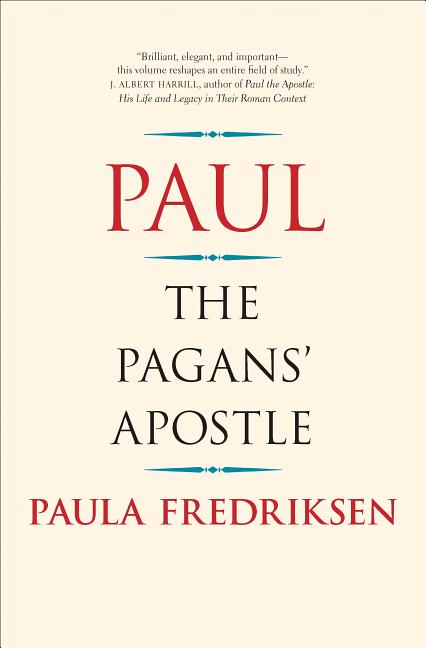
- Paul: The Pagan’s Apostle, by Paula Fredriksen. Paula Fredriksen, a world-class New Testament scholar, argues that Paul did not convert to Christianity such that he left his Judaism behind. Instead, Paul saw Christianity as the fulfillment of Old Testament Jewish promises. Even though Dr. Fredriksen does not share my evangelical Christian theological convictions, I contend that historically orthodox Christians can still learn something from her insights into Paul.
In 2023, I plan on digging into some more pressing issues related to “historical criticism” of the Bible. I wish more evangelically-minded churches would take this challenge more seriously. The future of the church, and the faith of our children depends on it.
More on the Debate about How Men and Women Can Flourish Together in Both the Church and in the Family
In 2022, I also did a two part series on the ever-present complementarian-egalitarian issue; i.e. about the role of women in the church and family, focusing on two different books:
- Men and Women in the Church: A Short, Biblical, Practical Introduction, by Kevin DeYoung, which represents a complementarian view of men and women. There are different forms of complementarianism, and DeYoung’s view tends to be more traditionalist and less moderate than my own.
- Rediscovering Scripture’s Vision for Women: Fresh Perspectives on Disputed Texts., by Lucy Peppiatt, which represents an egalitarian perspective on men and women.
In 2023, I plan on reading one more book on this topic and blog about it, as well as writing a blog series on the related topic of head coverings, as discussed in 1 Corinthians 11, which is a challenge for any Christian, complementarian or egalitarian. Then I want to move on to something else.
I would recommend Mike Winger’s YouTube series that covers the complementarian/egalitarian debate in-depth. Mike is a Christian apologist and a pastor, so he is not an academic by profession, which some critics fault him for. But he does a decent job covering the different views. He lands on the “moderate complementarian” side of the debate, not taking an extreme complementarian approach (like DeYoung), but he does not embrace egalitarianism (Peppiatt). Just a warning: many of Mike’s videos are long, but he is a good presenter, even if you do not agree with his conclusions, and I have listened to him for hours at a stretch.
Some egalitarian scholars have written some responses to his videos. I have not seen that many rebuttals from the more extreme complementarian direction yet, but I am sure that they will come, too. The debate just seems to go on… and on…. and on….and on…….. Some complementarian arguments I find are not very convincing, but on the other side, a number of egalitarian arguments are just as unconvincing, if not worse. I tend to land near Mike Winger, but I am more moderate than he is. A lot of extreme complementarians seem like they just want to double-down against any reasonably egalitarian argument that is actually pretty good. Like Mike, I really wanted to be convinced of egalitarianism, but I simply could not get there without thinking that the data was being distorted to an unfair degree by some egalitarian authors. I want to try to find some middle ground in this debate, but it just seems to be getting harder and harder as time goes on….. *SIGH*.
On the other hand, the controversy over gender in the church today has helped me to dig deeper into the Scriptures, in order to explore the answers found in God’s Word.
Back in the early 1990s, I heard an Eastern Orthodox bishop predict that the debate about gender within the church would be the defining theological debate for the next fifty years, paralleling the debate over the deity of Christ that eventually gave us the Nicene Creed in the 4th century. That was twenty years before public opinion in the West shifted dramatically on the question of same-sex marriage and before most people began to think seriously about transgender issues. Almost thirty years after hearing that prediction I have come to believe that this Eastern Orthodox bishop was 100% correct!!
Final Wrap-Up for 2022
In addition to what I described in my “end of the summer review“, I have a few more random book reviews:
- Better Days Will Come Again: The Life of Arthur Briggs, Jazz Genius of Harlem, Paris, and a Nazi Prison Camp, by Travis Atria. A short book about the relative of a friend of mine. Arthur Briggs was a black jazz trumpeter who was imprisoned by the Nazis in France in World War II.
- R. E. Lee: A Life., by Allen Guelzo. A Christian historian offers a superb analysis of the life of Robert E. Lee.
- Rock and Sand: An Orthodox Appraisal of the Protestant Reformers and Their Teachings, by Father Josiah Trenham. An Eastern Orthodox critique of evangelical Protestantism.
- Powers and Thrones, by Dan Jones. A historical survey of medieval Europe.
- Divine Violence and the Character of God , by Claude Mariottini. Dr. Mariottini invited me to review his book and I was glad to do so. It is an extremely difficult and delicate topic, but something made ever more pressing due to the war in the Ukraine.
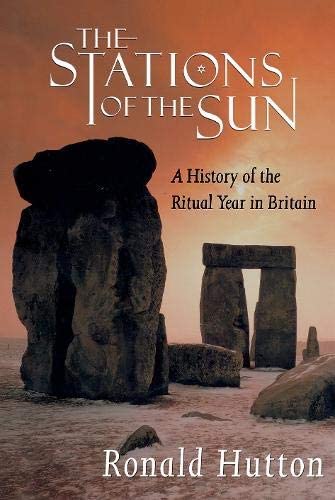
- The Stations of the Sun: A History of the Ritual Year in Britain, by Ronald Hutton. This is perhaps the best go-to reference source for explaining how we got many of the holidays in the United States. It is pretty dense and academic, but packed with evidence to dispel many of the popular misconceptions about where Christmas, Easter, and Halloween came from.
- I finally got around to reading C.S. Lewis’ classic, Mere Christianity. Simply excellent. A must read. Why did I wait so many years before I read this??
Aside from listening to Audible and ChristianAudio.com books on my work commute, I have to say that YouTube is still where it is at to get excellent content regarding Christians apologetics.
Interestingly, one of the most well-known Christian apologists out there on YouTube, Cameron Bertuzzi, of Capturing Christianity, recently announced his conversion to Roman Catholicism, after having grown up in a Protestant charismatic church. It will be interesting to see where his spiritual journey takes him.
Now, the drumroll….. please…….
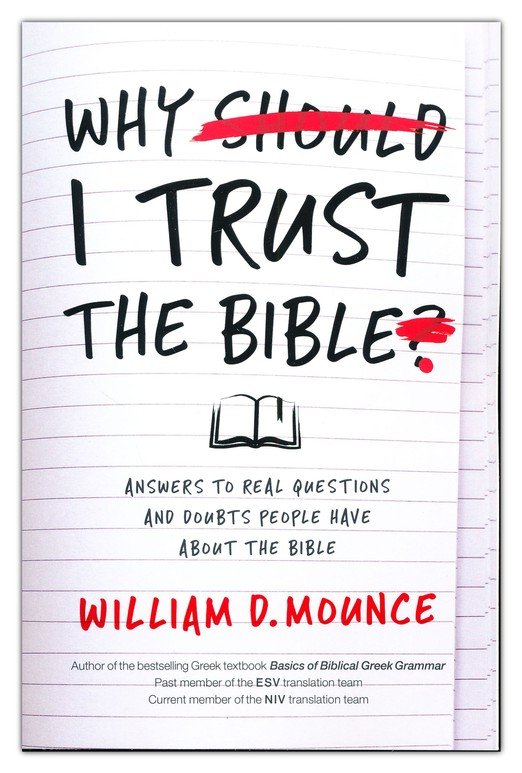
FINALLY, here is my book of the year, that I can recommend to every Christian who reads Veracity:
- Why I Trust the Bible: Answers to Real Questions and Doubts People Have about the Bible, by Bill Mounce. Readable and practical. Dr. Mounce is a senior Bible translator, who has had an enormous impact on both the NIV and ESV bible translations, which are two of the most popular Bible translations available today. This is perhaps the best single volume you can get that addresses common issues faced by Christians today when sharing their faith and their confidence in the Bible.
Odds-and-Ends
Now a few more little “odds-and-ends”…. I have been enjoying the PourOver, a Christian summary of the news, without all of the vitriol of the 24-hour news cycle and social media madness. Recently, they recommended a new Bible app, Dwell, that I might try out for 2023.
Speaking of news, for years I was one of those loyal NPR (National Public Radio) listeners, who faithfully listened to NPR’s All Things Considered radio program almost every evening on my commute home from work. More than a few times I would have one of those “driveway moments,” as I continued to listen spellbound to one of NPR’s stories. I always knew that there was a bit of liberal bias in their reporting, but I thought they did at least a decent job interviewing someone on the “other side” of the issue.
That was quite a few years ago. My wife gave up on NPR before me and she still enjoys listening to World News Group’s The World and Everything In it. (I have had my concerns with World News Group, and still have some of them, but I must confess that their journalistic quality has managed to improve).
I gave up on NPR for two reasons, the main one because I started to shift to podcasts and audiobooks for my commute. The other reason was that I kept getting the sense that NPR stopped trying as much to enter into dialogue with diverse points of view. But this year, I learned that a whole cross-section of former NPR supporters, not just evangelical Christians like me, have given up on NPR, particularly over the past 5-7 years.
What amazes me is that the vast majority of this “I stopped listening to NPR when….” group are actually secular-minded or others with a liberal political bent. Apparently, NPR has gone so far to the cultural left that not even someone like my mother, who was a life-long political liberal, would be able to stand what has happened to NPR. Author and public-intellectual, Peter Boghossian, who would describe himself as a classic liberal and an atheist, put out a multi-episode podcast, All Things Re-Considered, featuring interviews with such former NPR listeners, and even former NPR employees, who have become disillusioned with NPR. The days of a widely trusted news journalist, like a Walter Cronkite, are sadly far behind us.
My book reading (or should I say, “listening”) list keeps growing, as we head into the New Year. But there are some really important issues found in these books that I believe will be of help to fellow Christians, that I hope to blog about further.
Well, that is my rambling update for 2022. Onwards to 2023!! Happy New Year!!
Oh, if you are still in the Christmas mood (or you are Eastern Orthodox, and just getting into it!), you might enjoy this bluegrass version of “O Come, O Come, Emmanuel” & “Come Thou Long Expected Jesus” by the Petersons…… or if you are tired of winter, the Peterson’s have a new version of “Wayfaring Stranger”: