Category Archives: Apologetics

Like a Son of Man

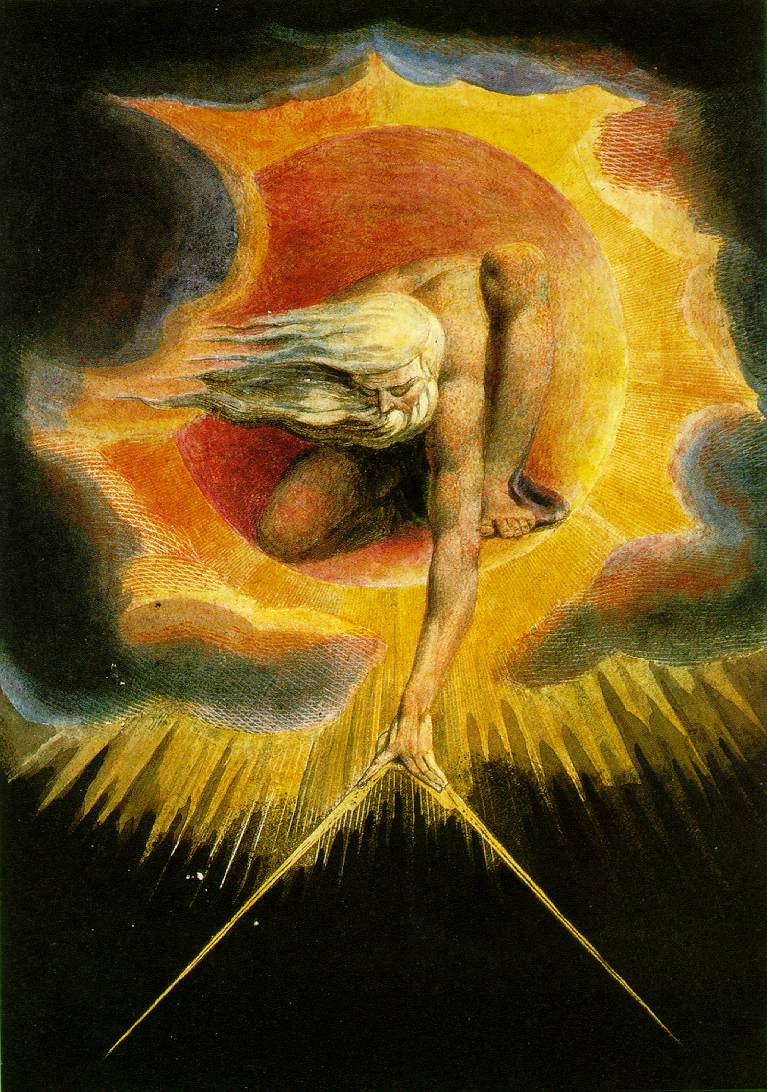
The Ancient of Days. 1794.  Watercolor by William Blake.

The Ancient of Days. 1794. Watercolor by William Blake.    Based on the “like a son of man” passage in Daniel 7.    In the Old Testament, Daniel is the master of apocalyptic imagery, which means using words as pictures to “reveal” or “uncover” that which is hidden.

Jesus talks about being the “Son of Man” eighty-one times in the New Testament. The term is Jesus’ favorite designation for Himself in the Gospels. So, what is the deal with this “Son of Man” stuff anyway?

Son of Man = Messiah = Divinity of Christ“. For years, I merely assumed this to be true, simply out of reflex of being a Christian. But if it is true, why is it true?  I never really thought about it that much. Recently, our  small group Bible study has been looking at the Gospel of Luke, and every now and then there are puzzled looks whenever Jesus speaks of this Son of Man. As I observe everyone scrambling to read their study bible notes, I know that I am not alone in my why question.

A number of critics complain that Christians read way, way too much into this phrase. The Son of Man as the Messiah?  Mmmm. How so?   Furthermore, the Bible never explicitly equates Son of Man with “divinity”. Are followers of Jesus getting ahead of the Bible when asserting the messianic, divine meaning of Son of Man? Can a believer in Christ reasonably defend such a claim?

Continue reading


Apologetics Thomas Aquinas Style

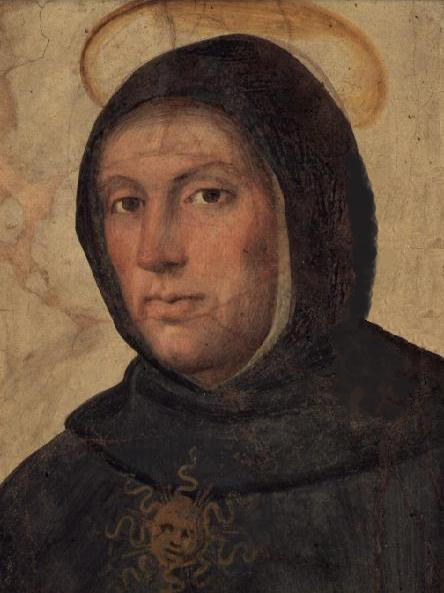
Thomas Aquinas, by Fra Bartolomeo.  During a period  of Islamic ascendancy in medieval  Europe, Aquinas let the way as a follower of Jesus to transform history.

Thomas Aquinas, by Fra Bartolomeo. During a period of Islamic ascendancy in medieval Europe, Aquinas led the way as a follower of Jesus to transform history.

According to the U.S. Census of 2010, Islam is the fastest growing religious movement  in America, increasing 66.7% over the previous ten years, as compared to only a 1.7% increase among evangelical Protestants. How do we best relate the Gospel to Muslims? Here is a nugget from church history on Thomas Aquinas and the influx of Islam into medieval Europe with lessons for today.

So, how did the medieval church respond to the overwhelming cultural influence carried by the Arab Muslims into Christian Europe? Enter in Thomas Aquinas. Aquinas was a young Dominican monk in the 13th century as he thought about the growing influence of Islam throughout the known “Christian” world. But Aquinas knew that the famous ancient Greek philosopher, Aristotle, was perhaps the most important thinker enlisted by the Muslims to support Islamic belief. Aquinas began a nearly lifelong study of Aristotle. His magisterial Summa contra Gentiles was written in about 1264 largely as an apologetic treatise for use by Christian missionaries when explaining the faith to Muslim critics. In Summa contra Gentiles, he comments extensively on Aristotle, the great pagan thinker, in an effort to defend the Gospel.

Continue reading


Contradiction or Difference?

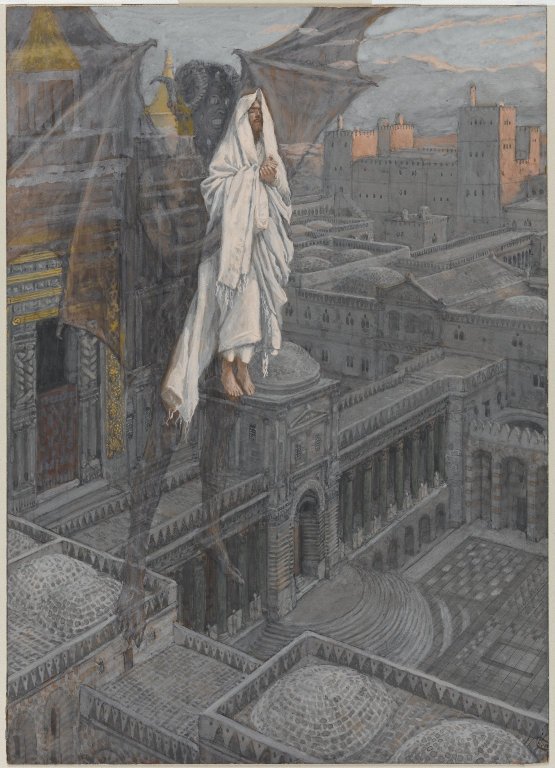
Jesus carried up to a pinnacle of the Temple, by James Tissot , a watercolor between 1886 and 1894. Was Jesus taken up to a pinnacle on the Temple prior to being taken up to a high mountain and shown the kingdoms of the world, or is the order reversed? Does the chronology really matter?

Jesus carried up to a pinnacle of the Temple, by James Tissot, a watercolor between 1886 and 1894. Was Jesus taken up to a pinnacle on the Temple prior to being taken up to a high mountain and shown the kingdoms of the world, or is the order reversed? Does the chronology really matter?

The sermon this past week was on the Temptations of Jesus. I noticed that in comparing Matthew’s version with Luke’s version that there is an apparent discrepancy in the chronology. I asked my small group what they thought of the discrepancy:  “Does this impact how you view the Bible?”

You probably know the story: Early in Jesus’ public ministry, He spends forty days in the wilderness and after being exceedingly hungry, He was tempted by the devil. Mark simply records the basics (Mark 1:12-13). But Matthew and Luke spell out the order of events of the three temptations. Both Matthew (Matthew 4:1-11) and Luke (Luke 4:1-13) start with the first temptation suggesting that Jesus turn the stones to bread. However, the order of the next two temptations between Matthew and Luke are reversed. Matthew’s second temptation is where the devil takes Jesus up to the pinnacle of the temple, urging Him to throw Himself down and trust the angels to catch Him, and the third temptation is where Jesus is taken to a very high place, challenging him to worship the devil in exchange for sharing power. Luke, on the other hand, switches the chronology, putting the “pinnacle of the temple” last, prior to being taken up to a high mountain and shown the kingdoms of the world.
Continue reading


Accordion Word at the Aquarium

Whale Shark at Georgia Aquarium

Whale Shark at the Georgia Aquarium (photo credit: Zac Wolf)

During a family visit to the Georgia Aquarium last weekend, for no particular reason I started wondering if they might have a clown triggerfish on the premises.  Clown triggerfish are part jaguar, part piranha, and part Peter Max—among the most colorful and striking of all animals.

Eventually I asked a docent in the Tropical Diver exhibit if there were any triggerfish around (leaving off the word ‘clown’ so as not to appear star-crossed with only the most beautiful fish).  He was very knowledgeable—probably a professor or teacher of marine biology just gazing at beautiful fish and waiting for someone to ask a question.  He led me around the exhibit, describing the three triggerfish they had (no clowns), where they normally hang out, their swimming patterns, and a whole host of interesting fish facts.  He said there was a triggerfish in the surf above our heads (go figure), and if we were patient the fish would eventually come into full view.  It did, he spotted it, and let me know right away so I could get a couple of pictures.  Then he said, “The evolution of their tails is really quite interesting.” Continue reading


Gnosis: The Inside Scoop

The Nag Hammadi Library is the largest and earliest discovery of Gnostic Christian texts, discovered in Egypt  in 1945 by two peasant brothers digging for fertilizer.

The Nag Hammadi Library is the largest and earliest discovery of Gnostic Christian texts, discovered in Egypt in 1945 by two peasant brothers digging for fertilizer.

What is that new stock tip? Where is that sale that no one else knows about? What secret knowledge can I get to win in Fantasy Football? The human quest to get the “inside scoop” is no surprise. But when it comes to Christian spirituality, an obsession to get insider knowledge can lead to folly.

Whether it is a get-rich-quick scheme, the latest diet fad, or even many forms of alternative medicine, the characteristics of an obsession with getting the “inside scoop” are basically the same. Someone gives you some special tip that is trivial at first yet seems helpful.   You have gained some valuable insight that others might not have.   But then this self-proclaimed “guru” encourages you to place your confidence in that person to gain more and more knowledge that will lead to success, wealth, health, or peace in a way inaccessible previously. You find yourself engrossed in what the guru says and you become skeptical of ordinary ways of knowing things. In many cases, you end up shelling out lots of money and/or time or other valuables to obtain what is promised to you, and any other discipline on your part is typically a short-cut to the ultimate goal. You may eventually learn the hard way that you have been duped, or you continue on in the ruse, ever more hopeful for that which was originally promised to you will finally come your way.
Continue reading