Category Archives: Apologetics

Simply Trinity, by Matthew Barrett. A Review.

Looking for a not-so-technical book which explains the doctrine of the Trinity? Matthew Barrett’s Simply Trinity: The Unmanipulated Father, Son, and Spirit would be a good place to start.

Exactly 1700 years ago this year, back in 325, a gathering of Christian leaders at the modern lake-side city of Iznik, Turkey began a process which took almost a century for the brightest minds in Christendom to hammer out the basic idea of the Triune nature of God. Even still, what the Nicene Creed summarizes regarding the doctrine of God has generated volumes of theological works down through the ages. Millions of Christians (though not all!) recite the core features of the Trinity expressed in the Nicene Creed every week during worship services. But once you go beyond the idea of “One God in Three Persons”, it can be intimidating to try to think through what it all means.

The doctrine of the Trinity is one of the most central doctrines of the Christian faith, but it is also one of the hardest theological concepts to grasp without falling off the edge into heresy. As a young Christian myself, I early on adopted the analogy of water to explain the Trinity: one substance with three distinct states: a gas like steam, a liquid like water, and a solid like ice. It sure made sense to me back then. Little did I know that such an easy formulation is regarded as a heresy by some of the most brilliant theologians in the church.

Ouch.

While some authors, like the 5th century African Saint Augustine of Hippo, have written classic works on the Trinity, others have distorted the doctrine or rejected it as unimportant. The father of 19th century Protestant liberalism, Frederick Schleiermacher, pretty much dismissed the doctrine of the Trinity as a metaphysical waste to be easily disposed of.  In response, more than any other theologian of the 20th century, the Swiss thinker Karl Barth recovered the doctrine of the Trinity as part of the core teaching of Christianity, rescuing it from Schleiermacher’s attempts to discard it. Conservative evangelical theologians since then have taken a renewed interest in articulating this doctrine of God for the postmodern era. Some get it right, but according to Matthew Barrett, a professor at Midwestern Baptist Theological Seminary, some have gotten it terribly wrong.
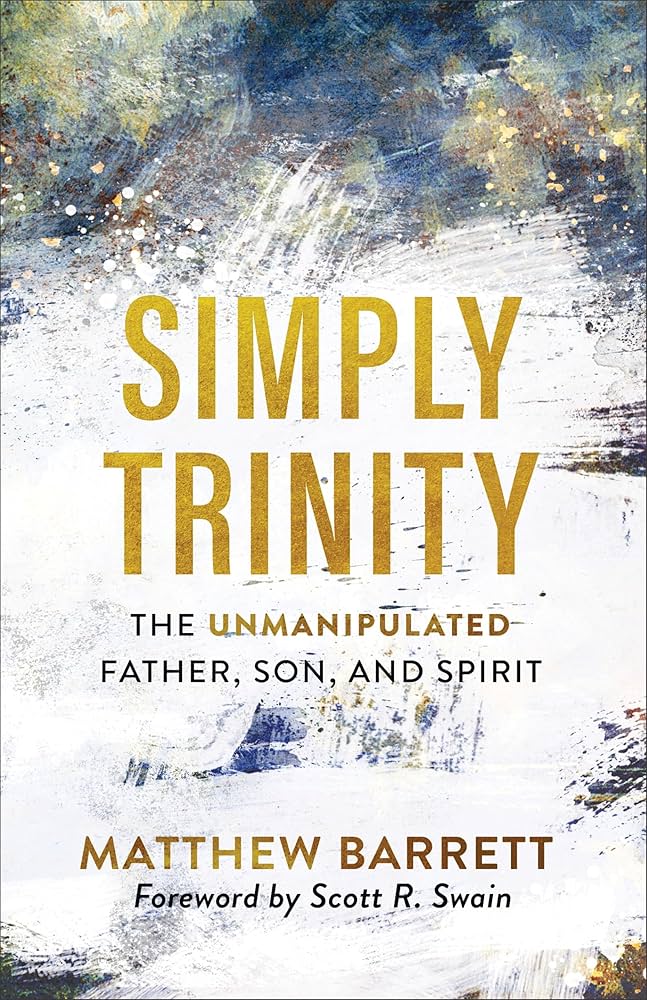
Simply Trinity: The Unmanipulated Father, Son, and Spirit. Baptist scholar Matthew Barrett wants to revive the classic doctrine of the Trinity, keeping the doctrine of God unmanipulated by contemporary social concerns.


Recovering the Classic Doctrine of the Trinity

In Simply Trinity: The Unmanipulated Father, Son, and Spirit, Matthew Barrett is concerned that even in some of our best evangelical seminaries that many have fallen into a kind of “trinity drift,” whereby Christian thinkers have ever so increasingly veered away from the classic formulation of the Triune doctrine of God, as articulated in the famous Nicene Creed. While some of the terminology and names associated with the great 4th century debate over the Father, the Son, and the Holy Spirit will be unfamiliar to some, Matthew Barrett wants to make the doctrine of the Trinity accessible to interested lay persons who do not know who either Arius or Athanasius was.

Oddly enough for a serious book on theology, Simply Trinity is actually a fun read. Barrett tosses out enough pop culture references to engage his audience, mainly ordinary Christians who want some type of fairly easy read to try to make sense of a complex doctrinal topic. Simply Trinity is not only educational, it is entertaining, listening to it in Audible audiobook form.

Harkening back to the movie classic, Back to the Future, Barrett invites the reader regularly to go “back to the DeLorean,” to meet some of the figures in church history who wrestled with terms like “essence” and “person,” when we think about the Father, the Son, and the Holy Spirit. Barrett apparently loves basketball, so he envisions a kind of “Dream Team” to champion the cause of Nicene Orthodoxy. The NBA has had its Magic Johnson and Larry Bird, but the church has had its Athanasius and Thomas Aquinas.  Did you know that the Puritan theologian John Gill was the “Patrick Ewing” of trinitarian authors, or that Augustine of Hippo was the “Michael Jordan” of the early church? It is a clever way for Barrett to introduce some deep ideas. I think it works.

In Simply Trinity, Barrett, the host of the Credo Magazine podcast, wants to argue that what makes the doctrine of the Trinity so beautiful and essential to faith is its simplicity. In summary, the Father is unbegotten, the Son is begotten, or generated from the Father, and the Spirit is spirated, or breathed out, from the Father. These qualities have to deal with the internal character of the persons in terms of their origins, often called the “immanent” Trinity.  God also acts in history, which displays his external relations to the creation, what is often called the “economic” Trinity.  The “immanent” Trinity is about who God is, whereas the “economic” Trinity is about what God does.

Yet as Barrett sees it, the problem with a lot of modern understandings of the Trinity is that ideas have been invented by theologians regarding the “economic” Trinity, and that these ideas have been imported back into the “immanent” Trinity, thereby causing distortions as to who God really is.

“To be blunt, they have not revived the Trinity, but they have killed it, only to replace it with a different Trinity altogether – a social Trinity – one that can be molded, even manipulated, to fit society’s soapbox” (Barrett, 92).

Barrett is bothered by what he understands to be conceptions of a “social doctrine of Trinity,” emphasizing what God does, as a model for human interpersonal relationships, whether these be principles for governance and politics, economic structures, the organization of the church, and how Christians should think of marriage and family.

Jürgen Moltmann, the great German Reformed theologian of the late 20th century, though not fully a conservative evangelical, pioneered the concept of a “social trinity.” Moltmann developed this theology in an effort to provide a Christian basis for relations within society, and other causes, ranging from care for the environment to a critique of economic systems, like capitalism. Theologians, both liberal and conservative, have followed Moltmann in his wake to apply the model of “social trinity” to other areas of human communal life.

To make his case against a “social trinity,” Barrett sufficiently rehearses the history of the Nicene controversy of the 4th century, and how some of the best theologians since then have reaffirmed the truth of the classic Nicene doctrine of the Trinity. Names like Arius and Athanasius emerge, helping to form the narrative for this ancient theological battle of ideas. Along the way, Barrett illustrates his points through a fictive admirer of Jesus, a Jewish woman named Zipporah, who narrates her own encounter with Jesus and the religious leaders who opposed him. It is a pretty creative way to educate people about the classic doctrine of the Trinity, without diving too much into sophisticated theological jargon.

However, the zinger comes when Barrett attacks the efforts of “social trinitarian” scholars who inadvertently distort the classic doctrine of the Trinity. He chides evangelical egalitarian scholars who base the relations within marriage, between husband and wife, on the supposedly social arrangement within the Triune persons in the Godhead. A husband and wife are essentially equal in their relations to one another because the social trinitarian theologian says that this mirrors the essential equality between the persons of the Godhead. But this is all wrong, says Barrett, because this way of talking about God is really a manipulation of the doctrine of God to serve a kind of social arrangement within human communities. Keep it simple, says Barrett, in response. Do not distort our understanding of God by introducing elements within trinitarian thought that no one before the modern era ever considered.

The Eternal Functional Subordination of the Son (EFS) as an Unhelpful Modern Theological Innovation

But Matthew Barrett saves his most stinging critique to take down the modern concept of the Eternal Functional Subordination (EFS) of the Son, advanced by scholars like Bruce Ware and Wayne Grudem (chapter 8).  In the EFS view, God is ultimately defined in terms of a pattern of authority and submission within the Godhead. For example, the Father is in authority and the Son is in submission to the Father.  Why is this important? Because it explains the earthly human pattern as to how a wife is to submit to the authority of her husband.

Classically understood, when the Son became incarnate as Jesus the Messiah, the Son was indeed submissive to the authority of his Father.  This activity of God through the incarnation is about what God has done, but the EFS theologians have projected this functional arrangement of the Father in authority and the Son in submission back into the very immanent, ontological aspect of God in all eternity.  The EFS theologians maintain that such an arrangement is gladly accepted by both the Father and the Son, therefore there is a kind of equality within God, so it has the appearance of orthodoxy. But Barrett makes the case that the EFS view ultimately veers away from the classic doctrine of God by projecting something from the economic activity of God towards humanity back into God’s very internal relations, a violation of Christian truth which has been received down through the ages.

What really shocked me was to learn about the EFS tendency to suggest that each person of the Trinity has a will of their own (chapter 10).  For when one speaks of an eternal function of subordination of the Son to the Father, it implies that the Son has a will distinct from the Father’s will, with the same idea applying to the Spirit. This does border on tritheism, as the early church fathers aligned with Nicaea argued for the singularity of the divine will, and not three distinct wills.

What makes Matthew Barrett’s critique so striking is that Barrett acknowledges that he is fully committed to a complementarian view of marriage and church office, namely that the husband is the head of the wife, and that only qualified men are to serve as elders of a local church. But Barrett is fully convinced that what EFS theologians have done is to try to bolster their particular brand of complementarian theology by wrongly drawing on a false view of the Trinity, in order to support their views.

Regarding his criticism of the Eternal Functional Subordination of the Son (EFS), Matthew Barrett makes a most compelling case that EFS is off-the-mark.  Back in 2016, evangelical Twitter exploded in controversy when another complementarian Bible scholar raised the spectre of EFS as being “heresy,” which generated hundreds and hundreds of comments online back and forth. Now that the air has cooled down several years later, in 2021 Matthew Barrett has written a very careful, sober case for why EFS, despite whatever good intentions it may have had initially, is simply barking up the wrong tree. Is EFS heresy? Well, if it is not, it sure leans in a direction away from the received tradition of the church, and we need a course correction, if we are going to have a fully robust, and simpler view of the Trinity as Matthew Barrett proposes.

Other reviews of the book are mostly very positive. However, defenders of EFS will probably say that Matthew Barrett has straw-manned their position, and misrepresented what they are trying to say. Perhaps this is the case, but I am not so sure. It is quite telling that such a committed complementarian thinker regarding marriage and local church elders would argue so strongly against the EFS view. One reviewer even acknowledges that Matthew Barrett once held to an EFS-like view, though Simply Trinity makes the case that he has now repented of that wrong viewpoint. So, I find it hard to believe that Barrett would so badly mischaracterize the weakness of the EFS position, if he indeed once held it himself.

On the other side of the gender debate, egalitarian critics of Matthew Barrett’s position argue that a complementarian view of male/female relations collapses without the EFS doctrine of the Trinity. But this alternative view does not hold up very well. An egalitarian must still find an explanation for passages like 1 Corinthians 11:2-16 and 1 Timothy 2:8-3:15, which are difficult passages that simply can not be easily waved away. Long before EFS became fashionable in evangelical circles, Christians have historically held to some kind of complementarian view of gender relations, between male and female. The fact that many complementarian scholars agree with Matthew Barrett testifies to the fact that complementarian theology is not tied to the hip of an EFS doctrine of the Trinity.

The strongest takeaway for me is in Barrett’s critique as to how advocates of EFS misuse 1 Corinthians 11:3, their primary New Testament prooftext,  to defend the Son’s eternal functional subordination to the Father:

…when Paul says the “head of a wife is her husband, and the head of Christ is God” (11:3), he has in view the incarnate, suffering servant, who fulfilled his mission by means of his obedient life, death, and resurrection as the Messiah (Christ). There is absolutely nothing in the immediate or wider context that says anything at all about the Son apart from creation and salvation within the immanent Trinity. To infuse and impose discussions of immanent Trinity on this text is a failure to treat the context with integrity. Paul has in view the salvific lordship of the anointed One, the Messiah (Barrett, chapter 8).

For if the EFS advocates were correct, Paul would have said that the head of the Son is the Father, and not what he did say, “the head of Christ is God.” Paul intentionally speaks of the Son’s incarnate ministry as the Messiah, and not the internal relations between the Son and the Father. Without 1 Corinthians 11:3, the support for the EFS view basically falls apart.

Critical Engagement with Matthew Barrett’s Book on the Trinity

The book is not perfect, as there are a few places in Simply Trinity that left me twitching a bit.  In chapter 10, Barrett flies his Reformed tradition colors rather proudly with his reference to the “doctrines of grace” embodied in the “five points of Calvinism.” That right there is enough to send non-Calvinist Christians into fits. But what was so odd is that I really did not get how Barrett’s appeal to the “doctrines of grace” really tied into the substance of his argument regarding the inseparability of the persons of the Trinity. Barrett could have just as easily made his point without annoying his non-Calvinist readers.

In his chapter 9 on the “spiration” of the Spirit (which in most versions of the Nicene Creed is called the “procession” of the Spirit), Barrett has a sidebar discussing the vexing issue of the filioque. In 589 C.E., about two hundred years after the Nicene Creed was finally formalized, the Council of Toledo in the West modified the Nicene Creed to say that the Spirit “proceeds from the Father and the Son.” That last phrase, “and the Son” is filioque in Latin. Originally, the Creed as agreed upon by both East and West simply read that the Spirit “proceeds from the Father.”

The insertion of the filioque has been regarded as heresy by the Eastern church ever since the Great Schism of 1054 C.E., as it unilaterally changed the Creed without the full participation of the East. Most Christians in the West are completely oblivious to this controversy. But if you ask an Eastern Orthodox Christian, who converses with Western Christians, the filioque controversy stands out as a real sore point. I think our Eastern Christian friends are right to register their protest.

Oddly, Barrett justifies the action of the Council of Toledo, appealing to Anselm’s reasoning that the addition of the filioque protects against any slippage of the church back into the heresy of Arianism, which compromises the fully divine nature of all three persons in the Godhead. But this justification seems like a contradiction of the main thesis Barrett is advancing in the Simply Trinity, that we should not be monkeying with the doctrine of the Trinity that was originally formulated in the 4th century by the early church fathers.  For if you are going to be consistent and poke holes at modern innovations like EFS, you should also poke holes at earlier post-Nicene innovations from the 6th century, like the filioque.

Barrett criticizes modern translations, which the older KJV translated as “only begotten,” now as simply “only,” as John 3:16′s “For God so loved the world he gave is only Son.” But one need not drop the concept of God the Father “begetting” the Son because the Greek word monogenes is translated in a less interpretive manner in today’s translations. Later in chapter 7, Matthew Barrett does come back to acknowledge this: The idea that Jesus is God’s “only begotten Son” can be inferred from this and other passages. It is sufficient to ground the language of the Son’s “only begotten-ness” in other concepts aside from the contested analysis of the Greek word monogenes.

These criticisms aside, my takeaway is that Simply Trinity has changed my mind in a more general way. Back in the 1990s, I held to an egalitarian view of marriage and church structure with respect to elders, and I largely based it on the kind of “Social Trinitarian” theology being advanced back then in evangelical egalitarian circles. But Matthew Barrett has convinced me that whether promoted by egalitarian scholars or by complementarian scholars, trying to use the Trinity as a model for how to conceptualize male-female relations in either marriage or the local church is a wrong-headed way of thinking, in that it invariably leads to a distorted way of thinking about God.

More generally, Matthew Barrett as an evangelical Protestant makes a strong appeal to the “Great Tradition,” the confluence of thought found in Protestant, Roman Catholic, and Eastern Orthodox traditions, which can be traced back to the Council of Nicaea. He laments that a number of evangelical scholars in the name of what Barrett calls a ‘narrow, crude biblicism” have jettisoned the Great Tradition’s formulation of the Trinity in favor of something novel. This is refreshing, as in my mind, too many evangelical Protestants have confused their understanding of sola scriptura; that is, scripture and scripture alone as the final authority for matters of Christian faith and practice, with a kind of “nuda scriptura“; that is, scripture naked, whereby the Bible is stripped of certain understandings of tradition which have served the church well going back to the era of the early church fathers.

This is not to say that the patristic tradition, associated with early Christian luminaries like Saint Augustine and Ireneaus are infallible.  Historically orthodox Christian faith was formed within the crucible of the early church. However, it is to say that if you feel compelled to ditch a traditionally received interpretation of the Scripture going back to the era of the early church, the evidence in favor of a revised view should be able to pass a high bar for acceptance. In the case of social Trinitarian models of theology, whether that be EFS or even egalitarian interpretations which Barrett critiques, those revisionist solutions have not met that high bar standard. Matthew Barrett has convincingly shown that novel concepts, such as the Eternal Functional Subordination of the Son, have set the bar far too low, thereby compromising the integrity of the Great Tradition. In effect, theological positions like EFS have managed to tweak the doctrine of the Trinity to serve purposes that were never envisioned by the 4th century architects of Nicaea who hammered out the classic doctrine of the Trinity.

Even if you lay the controversial chapter 8 aside, there is much in the other chapters of Simply Trinity that can help any Christian have a more confident view about the doctrine of the Trinity. A Christianity Today magazine review hails Simply Trinity with this:  “For anyone who has read confusing blog posts about the Trinity in recent years, the book will help you regain your theological bearings.” Each chapter has helpful key point summaries, to keep the reader from getting lost, and interesting sidebars contain juicy nuggets, which helps to retain the reader’s focus. From even a purely devotional perspective, Simply Trinity is just a joy to read. The book captured my attention from beginning to end. I wish all theology books read like this one!!

As 2025 is the 1700th anniversary of the Council of Nicaea (or “Nicea,” as some spell it), look for a few more blog posts commemorating this all important date in Christian history.

The folks at Remnant Radio have a good interview with Matthew Bates about Simply Trinity. Enjoy!


Responding to Criticisms of Wes Huff on the Joe Rogan Podcast

Wow. Social media is a crazy place. A few days ago, Joe Rogan, who hosts what is today known as the world’s most popular podcast, dropped an interview with Canadian Christian apologist Wes Huff. Nearly five days later, the current count is nearly up to 4 million views, listening to a 3-hour interview with an evangelical Christian, working towards his PhD studying New Testament manuscripts. Nevertheless, the social media feedback from friend and foe alike have been pouring out.

Some of the oddest responses have been from fellow Christians, some of whom say that Wes Huff never shared the Gospel with Joe Rogan during the 3-hour interview. Some wonder why it is such a big deal that Wes Huff has some scholarly credentials and academic training: Just share the “Roman Road” with Joe Rogan and leave it at that.

Let me respond to this. We live in a day, particularly in the West, when people have a lot of questions about Christianity, when biblical illiteracy has sky-rocketed, despite us living in an information age. If you listen to the podcast, Joe Rogan asks Wes Huff plenty of questions about the Christian faith. But Wes Huff was prepared enough to give credible answers to Joe’s questions. There is even a compilation of the moments during the interview when Joe Rogan said “Wow” in response to Wes’ informed responses to such questions.

Here is the point: When you have millions of people tuning in to listen to a Christian apologist explain where our oldest New Testament manuscripts come from, the majority of whom are young men between the ages of 18-35, you have to wonder why is it that so many of our churches are not doing more to step up and provide more educational resources for people to become better informed about their faith. Sadly, the exact opposite has happened, whereby many churches try to “dumb down” the message, for fear that people might become overwhelmed with too much Bible, too much Christian history, too much Christian apologetics, etc.

In my view, the lesson learned from Wes Huff’s appearance on Joe Rogan’s podcast is that many churches tend to “dumb down” the message way too much. Folks like Joe Rogan are hungry for answers. You do not have to be working towards a PhD like Wes Huff is doing. Having academic training does not make you a better Christian. But every Christian can learn better ways to answer curious questions from their non-believing family members, friends, and co-workers. The Christian faith is based on particular truth claims, which can be examined and studied. If we believe in the concept of truth, we should be doing what we can to defend that truth, and not skirt around difficult questions.

As far as the skeptical response goes, it is true that Wes Huff did slip up a few times during the podcast. But my goodness, it was a 3-hour interview!! No one not working off of notes in front of them would nail down everything with perfection in such a conversation.

Perhaps the most noticeable gaffe was when Wes Huff claimed that the Great Isaiah Scroll from the Dead Sea Scrolls, dated a thousand years before our other earliest copy of the Book of Isaiah, copied during the Middle Ages, matches “word for word.” (Look through the transcription of the podcast to find this). Alex O’Conner, formerly known as the Cosmic Skeptic, has one of the most popular YouTube channels challenging the truthfulness of the Christian message, and Alex pounced on that fumble in a video response.

Actually, there are a number of variants between the Dead Sea Scrolls and what we have in the 10th century Aleppo Codex, with the Book of Isaiah. But the vast majority of those variants are very, very minor, as in spelling differences. For example, consider the differences between how Americans and the Brits spell different words. Both groups speak English, but they vary on how to spell words like “color” (“colour“) or “honor” (“honour“).  So who is correct here? Are the Americans spelling such words correctly and the Brits are in error, or is it the other way around?

Frankly, I do not care…. and frankly, neither should you.

Such supposed “errors” do not rise to the level of compromising what might best described as a flexible, nuanced view of biblical inerrancy. Wes’ point during the Joe Rogan podcast was to testify to the remarkable agreement between the Great Isaiah Scroll found at Qumran and our other later manuscripts, despite the existence of minor errors. Gavin Ortlund came out with a helpful response video that addresses these and other concerns made by Alex O’Conner.


Joe Rogan Podcast with Christian Apologist Wesley Huff Just Dropped

I normally do not comment much on current events anymore, but this one was just too provocative to ignore. If you do not know who Joe Rogan is, then you probably do not spend much time on YouTube, and you probably have never heard of Wesley Huff either.

Joe Rogan has been a comedian and a commentator for the UFC (Ultimate Fighting Championship), but he is probably most known now for being a YouTube podcaster. On the Joe Rogan Experience, Joe Rogan, who with his tattoos, cigars, and large biceps, hosts long-form interviews with his guests, often lasting two to three hours each. Some of his recent guests have included Elon Musk and President-elect Donald Trump. The Joe Rogan Experience, appeals mainly to young men, and is perhaps the world’s most listened to podcast, with close to 19 million subscribers worldwide.

Earlier today, Rogan released an interview with Canadian Christian apologist Wesley Huff. The backstory on Huff is that he recently debated a previous guest on Rogan’s podcast, Billy Carson, who has had some rather strange views on Christian and Jewish history. Carson’s performance in the debate did not go well. So, Rogan decided to invite Huff on the Joe Rogan Experience to have a wide ranging discussion, focusing on Huff’s PhD-candidate academic work in ancient Jewish and Christian texts, in an effort to correct the misinformation spread by Billy Carson, a researcher involved in extraterrestrial studies.

I have not listened to the full interview myself, but to me, it is quite refreshing to have someone like a Joe Rogan, a person riding near the top of the wave of popular culture, having an extended interview with a well-informed Christian, exploring questions about the Christian faith.  It helps that Wesley Huff has big biceps, too.  The podcast episode dropped earlier today, and it already has had 3/4 million views.

Just a warning: I know enough about Joe Rogan to say that the conversation will be raw and unfiltered at certain points, and certainly not suitable to listen to with young children around. I pray that Wesley Huff will come off well in the interview, but at the very least, this podcast will give the YouTube world an opportunity to listen to a thoughtful Christian voice answering some of the toughest and skeptical questions asked by young people in today’s secular world.  Maybe something like this will encourage someone to actually pick up a Bible and dig into it, allowing God to speak to both their heart and their mind. From what I have listened to, Wesley Huff offers a good model for having conversations with curious people about Christian apologetics.

Linked here is a clip to where Wesley Huff talks with Joe Rogan about the death and resurrection of Jesus…. or just listen to the whole thing:


2024 Year in Review

Here are some highlights from the Veracity blog for 2024, as the year winds down to a close…..

But before I jump into that, here is a quick meditation on why Veracity exists. Veracity is all about learning, knowing, and defending what the truth is. Sadly, we live in a world where truth gets set off to the side. Sometimes, even those of us with the best of intentions get sidetracked and mislead by those who live by lies.

Here is a recent example. One of biggest news stories of 2024 has been the fall of the Bashar al-Assad regime in Syria. Veteran news reporter, Clarissa Ward, was in Syria investigating some of the prisons ran by the former Syrian president Bashar al-Assad. In one of the cells Ms. Ward went into with her guide, they found a man saying that he had been in the prison several months. It was a griping scene. Ward offered the man some water, and some food, before he eventually boarded an ambulance. It was horrifying to witness the state of this man who had been imprisoned by al-Assad…… or so it seemed.

A few days after this stunning report, it became known that the story about this man was a hoax. Apparently, Clarissa Ward and her camera team had been duped. This man whom they “rescued” from this prison cell was none other than Salama Mohammad Salama, a first lieutenant in the Syrian Air Force Intelligence, one of al-Assad’s cronies who himself had a record of torturing opponents of al-Assad.

I have to admit, when I first heard and saw the story, I bought into it hook, line, and sinker. On the surface, the story sounded convincing. My heartstrings were pulled, as I sympathized with the man’s plight, narrated by a stunned veteran journalist. But it did seem odd that the man went off with the ambulance without giving Clarissa Ward a phone number to call someone in his family, to tell them he was free from the prison. Clarissa Ward had been duped. CNN had been duped. I had been duped.

It is a terrible feeling to know that you have been lied to. Unfortunately, too often well-meaning Christians will get duped by misinformation about their faith. There are plenty of critics of Christianity who see right through the misinformation that gets propagated in certain Christian circles. Some of this misinformation comes in the form of rather benign Christian urban legends, or genuine conversations of disagreement regarding topics where we have incomplete data to work with. However, other pieces of misinformation can be highly damaging, triggering sentiments of mistrust towards Christian spokespersons or other Christians more generally. If those lies do not get exposed by Christians willing to think deeper about their faith, then it only increases the cynicism of the skeptic and prompts unprepared Christians to go through a process of faith deconstruction, which in some cases can lead to outright deconversion.

Veracity exists to expose those lies and get at the truth of what makes Christianity true. Hopefully, if you have been reading the Veracity blog for awhile, you have been helped at least somewhat to ask curious questions which might lead to a deeper and more genuine commitment to know and love Jesus Christ. Thanks for sticking around and reading.

Reflections on the Year 2024

I lost some good friends this year, as friends get older. These were men who walked humbly with God, and it showed in their lives.

More in the public eye, there are those who are still with us, but who are living in times of twilight. D. A. Carson, one of founders of the Gospel Coalition and one of the finest exegetical theologians living today has withdrawn from speaking due to his Parkinson’s disease. Richard B. Hays, a veteran New Testament American theologian, who recently co-wrote a very controversial book with his son, a controversy covered here on Veracityer, has gone into hospice care.

Yet there are others in the greater public eye who have died, and a few of their stories are worth noting, but for different reasons.

Before there was Nicholas Cage in the Left Behind movie, there was Hal Lindsey, the great popularizer of EndTimes scenarious based on a dispensationlist interpretation of the Book of Revelation.


The Late Great Hal Lindsey

In late November, I learned of the death of Hal Lindsey, the author of the 1970’s blockbuster book, The Late Great Planet Earth. That book was the best selling book in America in that whole decade, behind the Bible. Lindsey was a popular Christian speaker among college student audiences, particularly through Campus Crusade for Christ (now known as CRU). An extended family member of mine was convinced in reading that book that Jesus would return sometime in the 1980’s, probably by 1988, some 40 years after the founding of the modern national state of Israel 1948. Some famous Christians still think that Jesus will return before everyone living in 1948 dies, based on their interpretation of the Bible, and tweaking Hal Lindsey’s timeline.

Jesus could still return at any time, but I am not waiting to hold my breath that the year 1948 holds the definitive key to unlocking this biblical prophecy.

Lindsey was a bit fuzzy about the exact date of Christ’s return, but the conflict between the U.S. and the Soviet Union had many concerned. Back then, the threat of the Cold War and the USSR had me thinking that Lindsey might be right. Maybe??? I was not a geeky student of the Bible then, yet I had Christian friends whom I respected who were enamored with Lindsey’s book. But the fall of the Soviet Union by 1989 pretty much dissolved Lindsey’s reputation.

Not only did Lindsey miss the target on the date of Christ’s return, he also had questionable personal integrity with respect to marriage, being married four times going through several divorces.

Even within the last decade or so, back in the days before the iPhone and when watching television was still a thing, Lindsey was prominent on late-night cable TV, offering his analysis of world events that might impact the future. The Left Behind series of novels and movies owe a tremendous debt to Hal Lindsey. Mmmph.

Perhaps the larger scope of Lindsey’s Bible interpretive method, what theologians call “dispensationalism,” might prove to be correct in the long run, but the date-setting proclivities embedded in The Late Great Planet Earth have proven to fall woefully short in retrospect. With all due respect, I would argue that there is a better way to read the Bible concerning the “End Times.” For a similar approach, British theologian Ian Paul offers his perspective.

Frankly, I am glad I have never bothered with late-night cable TV. I was not missing much!

“Red Letter” Christianity??

Then there was the death of evangelist Tony Campolo. Years ago I read his Partly Right: Learning from the Critics of Christianity. Campolo helped many to listen to non-believers with a sympathetic ear, a virtue which I hopefully have tried to learn from, and emulate in Veracity blog posts.

About 35 years ago, I attended a Christian youth conference in Pittsburgh where Campolo was headlined as the primary speaker. Afterwards a couple of friends and I were tasked to take Campolo back to the airport to catch a flight back to his home in Philadelphia, where he was a professor at Eastern University. He was a great conversationalist, with an amazing knack for helping others to think outside of the box. Campolo impressed me as a radical Christian, which was cool. Below is one of my favorite Tony Campolo sermons:

Over the decades, this quality also made him controversial. He kept pushing boundaries. He was the spiritual advisor to President Bill Clinton during the 1990s, through the period of Clinton’s sexuality scandal. Though pro-life with respect to abortion, he was otherwise very involved in progressive politics. At one point, he refused to identify himself as an “evangelical,” as in his view, the term had become hopelessly hijacked with its connection to right-wing politics.

But he kept pushing boundaries further than necessary. He became edgy in ways I ultimately could not endorse, popularizing the concept of a “Red-Letter Christian,” elevating the words of Jesus above other teachings in Scripture. As I have shown before (see the following hyperlinks), this hermeneutic is really an example of wishful thinking that fashions the ministry of the earthly Jesus into something that reflects the embedded cultural values of the Bible reader and not what is actually in the text of Scripture.  In this way of thinking, the words/teachings of Jesus are prioritized over other teachings in the Bible, particularly the letters of Paul.

Contrary to the claim made by certain skeptical scholars that the New Testament is an inherently contradictory mish-mash of attitudes towards the Law of Moses, and ethics in general, the way the New Testament actually works is a really good example of progressive revelation in action. Progressive revelation demonstrates that God reveals truth in the Bible over time, later revelatory teachings built on top of and refining earlier teachings. For example, the New Testament itself completes the message that unfolds over centuries of Old Testament texts and teachings.

Jesus is not the only one speaking in the New Testament, for he also uses the words of Paul, but that only comes out over time. For example, Jesus’ earthly ministry was focused primarily on the Jews living in and around Jerusalem and Galilee, despite a few forays into Samaritan territory and contact with “God-fearing” Romans. In the “red letters,” Jesus tells us that he only came for the lost sheep of Israel (Matthew 15:24). It is not until AFTER the ascension of Jesus that the Gospel’s progress extends in full force to go outside of Israel and impact the whole world. Paul, who knew nothing of the earthly Jesus, received his commission on the road to Damascus by the Risen Jesus to be the Apostle to the Gentiles.

In other words, the full inclusive message of the Gospel is articulated by Jesus through the words of the Apostle Paul, not through the actual “red letters” of Jesus alone. If you are looking for an antidote to xenophobia, you need to look more to the words of Paul and not the words of the earthly Jesus in comparison. This is NOT to say that Jesus was xenophobic. Of course not. But it is to say that the Gospel’s message of welcoming and embracing those who are different from ourselves comes out more clearly through Paul, as the message of progressive revelation expands out through the pages of the entire New Testament.

The Christian faith today would look a whole lot different if Jesus had not tapped Paul to be his prime emissary to the Gentile world. Otherwise, Christianity would probably only remain a smaller sect within Judaism, and not the worldwide, universal faith of billions today.

The New Testament does not offer a full throated attack against slavery, but you do get at least a modest, indirect attack against the institution of slavery in the teachings of Paul. In comparison, the “red letters” of Jesus in the Gospels never challenge the institution of slavery, even in any indirect way. If all we had were the “red letters”of Jesus to go on, we would have never had a Christian abolitionist movement to end slavery in the United State. Think about that.

If you looking for a message of non-violence in the New Testament, and you are willing to lay aside the whole concept of judgment coming at the end of time momentarily, the words of Paul help you out better than the “red letters” of Jesus. For while the “red letters” of Jesus in the Gospels do promote non-violence, the “red letters” of Jesus in the Book of Revelation tell a very different story. In Revelation, we have Jesus going around wielding a sword and not afraid to use it. Even if you take Jesus’ words in Revelation more non-metaphorically (a wise thing to do), Jesus’ words are still more harsh than anything we find in Paul. In comparison, Paul never says an explicit word about endorsing the use of violence. Think about that one, too, for a moment.

Then finally, when it comes to the doctrine of hell, even if you leave the Book of Revelation out of the picture, Jesus talks about hell, or images related to hell, more in his “red letters” than what we find in the words of Paul. Paul never even mentions any word corresponding to “hell” once in his letters, and he only talks about “eternal destruction” in one verse, 2 Thessalonians 1:9. The differences are real, if we only take the time to actually read the New Testament.

The theological trajectory that Tony Campolo took has grieved me.

“Red Letter” Christianity sounds great on the surface, until you actually start to read the “red letters” of Jesus in comparison to other texts in the Bible. At the risk of some overstatement, in Campolo’s way of wishful thinking he wanted to equate the words of Jesus, written in red in some Bibles, with social justice efforts. Much of this was all  well-intended, as I have seen it. But it seemed to also follow in a murky way and track along with what Elon Musk has called a secular “woke mind virus,” whereby everything in reality is measured through the lens of an oppressor/oppressed matrix, viewing Dr. Martin Luther King, Jr.’s vision of a “color-blind” society as a deficiency and not a goal for real social change. Campolo even flipped his position on homosexuality, eventually embracing same-sex marriage as a viable Christian option.

His son, Bart Campolo, went even further, going through a period of deconstruction of his own faith, ultimately deconverting and renouncing Christian faith altogether, becoming a “humanist” chaplain. In my view, Bart took his father’s theological trajectory to its logical conclusion. I commend Bart’s honesty, though I can not follow that path either.

A contrarian in many ways, Tony Campolo nevertheless set a very good example in encouraging conservative Christians to fight against racism and ending poverty, and not getting caught up in fantasies about “Christian Nationalism.” Despite many of the positive contributions like this he made, Tony Campolo regretfully drifted away from historic orthodoxy, in a way that is not theologically sustainable over the long run across the generations (as evident with his son, Bart), but he did not drift far enough to ultimately escape God’s grace, at least in my estimation.


Another Dietrich Bonhoeffer Movie

On a somewhat related note, my wife and I and some friends did get a chance to see the new Bonhoeffer movie, over the Thanksgiving weekend.  Dietrich Bonhoeffer grew up in the world of German theological liberalism in the early 20th century, but then embraced a vision of neo-orthodoxy, a broad counter-movement to liberalism, a kind of theological half-brother to evangelicalism, that sought to restore the faith, particularly as a response to the widespread embrace of Hitler’s Nazism, which entered the void left by German theological liberalism.

Having read a few biographies about Dietrich Bonhoeffer, it was slightly painful to see how the film mangled some of the chronology of Bonhoeffer’s life. For example, Bonhoeffer confusingly placed Dietrich’s last trip to New York sometime presumably after Hitler’s invasion to Poland, after Dietrich had joined the Abwehr , the German military intelligence unit. The more historically accurate chronology has Dietrich going to New York for the last time in the early summer of 1939, realizing that he had made a mistake in going to America, and then returning to Germany to face his fate. Within a few months of his return to Germany, he then joins the Abwehr, in a subversive effort to bring down Hitler from the inside.  Hitler invades Poland that September.

But the film did highlight the key moments of the German theologian’s overall career, who died at the hand of the Nazis, after being implicated in a conspiracy that failed to assassinate Hitler. What more can you try to squeeze into a 2-hour movie? Bonhoeffer’s Christian courage is both inspiring and controversial, and the legacy of this pacifist-turned-political-traitor will continue to be examined and re-examined for some time to come.

What I found fascinating are the reviews that go all over the map regarding the kind of impression the Bonhoeffer movie was trying to make. For example, on one side, Slate magazine saysIn an age of rampant access to information but elusive truth, we are all searching for quick ways to categorize one another, and to claim the best heroes for our own personal camps. Such is also the case with Bonhoeffer, whose most popular biography was written not by a German theologian, but by American conservative radio host and prominent Trump supporter Eric Metaxas….. The movie is, then, yet another claim conservatives are making to Bonhoeffer’s legacy.”

On the other side, America: The Jesuit Review, took a completely different slant, suggesting that the film is actually a prophetic warning issued against Christian conservatives: “What separates “Bonhoeffer” from the myriad instructive Holocaust biographies and melodramas is its timing: American audiences have never before watched a movie about World War II-era Germany with the knowledge that a majority of their own electorate has voted in favor of fascism….Will Evangelical America be apologizing in five years?

I guess that is partly why I liked the film, and would recommend others see it, even with the strained and confusing chronology. When viewers on opposite sides of their ideological biases have quite contradictory takes on the same film, it generally indicates that the film at least got something right. The truth is probably somewhere in the balance between two extremes.

On my “to-be-read” list is Charles Marsh’s biography of Bonhoeffer, Strange Glory: A Life of Dietrich Bonhoeffer. Most people that I know who have read the Marsh book tell me that it is better than Eric Metaxas’ biography of Bonhoeffer.


The Book of the Year… Books and More Books

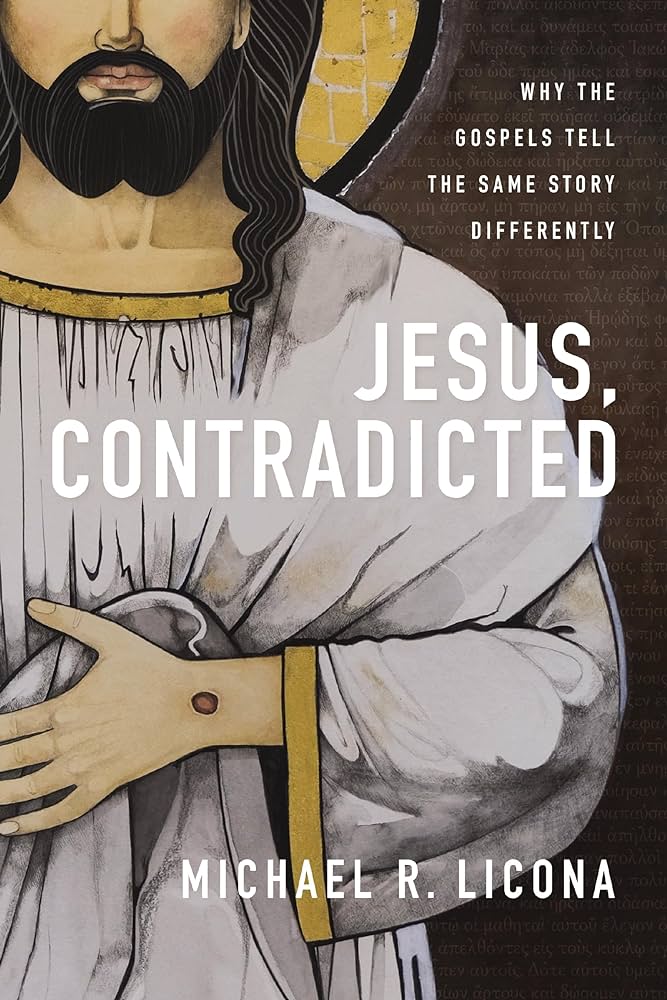
My book of year, hands down, is Michael Licona’s Jesus Contradicted.  More than any other book I have read in a long time, Licona’s work to reframe how we think about the inspiration of the Scripture, in view of the evidence, and see how the impact of Greco-Roman genres of literature helps us to make better sense of the differences/discrepancies we read in the Gospels. While I do not think Licona’s call for an updated revision of the Chicago Statement on Biblical Inerrancy will gain much traction, I do think Licona’s flexible view of biblical inerrancy is the most defensible way to think about the reliability of the Bible.

We do not need to try to torture the Bible to make it say what we want it to say. God gave us the Bible the way we have it, so we simply need to trust that God knows exactly what he has done and what he continues to do (BONUS: here is a link to a video interview by a Roman Catholic scholar about the late Pope Benedict that says pretty much the same thing).

Jesus, Contradicted: Why The Gospels Tell The Same Story Differently, by Michael Licona, offers a more evidenced-based approach to handling differences in the Gospels, without resorting to tortured harmonization efforts.


My number two book of the year is the timely The Anxious Generation, by Jonathan Haidt, showing how social media has hijacked the mental health of a generation of children and other young people. The book is making an impact, and I encourage everyone to go read it…. like right now!!

In many ways, our culture has gone crazy with an “anything goes” attitude towards social media while punishing parents who allow their kids physical freedom to go out and explore the world on their own. This is insane.

The good news is that the message of this book is not only making in-roads into the church (though perhaps not enough), it is starting to have in impact in the wider culture. In late November, 2024, Australia took the bold and audacious move of banning social media for people under the age of 16. I am not sure how enforceable such a law could be, but it is a step in the right direction as it will hopefully stir up families to take a closer look at how children digest and consume social media.

So while Haidt’s book is not the number one book I read in 2024, it certainly is the most timely and important!

The Anxious Generation: How the Great Rewiring of Childhood is Causing an Epidemic of Mental Illness, by Jonathan Haidt

——————–

Odds-n-Ends

The other most profound theological book I read in 2024 was Matthew Thiessen’s A Jewish Paul.  I am not clear on what Thiessen’s exact theological commitments are, but in this book he explains Paul’s teaching about the “spirit,” in terms of “Pneumatic Gene Therapy,”  as an explanation which makes sense of what Paul had in mind regarding the dynamics of living the Christian life, as well as thinking about the future bodily resurrection of believers.

Following up on A Jewish Paul, I read and reviewed Kent Yinger’s The New Perspective on Paul, a very, very helpful and accessible introduction a topic that at least in some circles is very controversial. Read the review, or better yet, get a copy of the book to make sense of what the fuss is all about.

……………..

A couple of years ago, I decided to try to read at least one Bart Ehrman book a year, and offer a review. Ehrman is probably the world’s leading academic critic of evangelical Christianity, having a very loyal following of formerly evangelical Christians who have deconverted from Christianity, or otherwise deconstructed their faith in a more progressive direction. Ehrman’s podcast on YouTube has 180 thousand subscribers, so he is hard to miss.

Most Christians I know either do not know who Bart Ehrman is, which is odd, as he is probably the 21st century equivalent to Bertrand Russell, or the biblical scholar equivalent to the scientist Richard Dawkins. Or they just ignore Ehrman. I think that is a mistake. Faith deconstruction is fueled by social media these days, and Bart Ehrman stands at the head end driving a lot of it.

A lot of Christians think of Ehrman as “demon spawn,” or something like that. The problem is that Ehrman is actually an impressive, and in many ways, a winsome communicator and teacher, as evidenced by his podcasts. He considers the evidence carefully. He is a very engaging writer, too.

The problem with Ehrman ultimately, however, is one of method. The most formidable skeptics, like Ehrman, tend to think of themselves as “scholars” as opposed to being “apologists.” In this sense, “scholars” are those who do not descend to the level of apologetics. However, this is just a bunch of hogwash. Everyone is an apologist for whatever beliefs they have. Everyone has their biases, including Bart Ehrman, as well as Christians. Scholars like Ehrman bracket off the divine inspiration of the Bible to the side, which effectively undercuts the big-picture univocality of the Bible, thus reducing the Bible to a jumble of contradictory texts.

The key to appreciating Ehrman in the most irenic and charitable way is to acknowledge that he has many helpful insights, while being able to detect how the method he uses to do research is formed by the skeptical worldview he embraces, thus informing the kind of conclusions he arrives at, which are at odds with historic orthodox Christianity. There is no such thing as a completely unbiased scholar, despite what Bart Ehrman repeatedly suggests.

In 2022, I reviewed Ehrman’s Heaven and Hell: A History of the Afterlife. In 2023, I reviewed Ehrman’s Forgery and Counterforgery: The Use of Literary Deceit in Early Christian Polemics. In 2024, I wrote a two part review of his Armageddon: What the Bible Really Says about the End.

……….

Stephen De Young, in his The Religion of the Apostles, stands out as one of the most thought-provoking Eastern Orthodox writers, showing how an appreciation for the faith and practices of the early church dovetails with Christian apologetics, in a way that even non-Eastern Orthodox Christians should be able to appreciate. I liken Stephen De Young to be the Eastern Orthodox version of the late Old Testament scholar, Michael Heiser, who has influenced me greatly.

……………………………

To wrap up the year, I read three biographies about a single person, Elisabeth Elliot, perhaps the most prominent female evangelical intellectual and Bible teacher of the latter half of the 20th century. Lucy Austen and Ellen Vaughn wrote some great books, examining one of the most fascinating, complex, and controversial Christians of the past hundred years. The stories about her life were equally riveting, maddening, and entertaining. But my ultimate conclusion is that reading about Elisabeth Elliot’s life challenged me to think more about what it means to act in obedience to Christ, no matter what the cost.

I started a bunch of other fun books, but finished very few of them! Look for some Veracity book reviews in early 2025. On some roadtrips my wife and I took this year, I caught up with a bunch of The Rest is History podcast episodes (my favorite podcast), particular the series about the life and assassination of John F. Kennedy (what a womanizer!),  and the first half of the French Revolution history series. British historians Tom Holland and Dominic Sandbrook play off one another to do some great storytelling that I can listen to all day, if I could. Superb stuff!

If you like listening to British accents in podcasts and enjoy history like I do, another great podcast is Melvyn Bragg’s In Our Time, put out by the BBC.  Unlike The Rest is History, Melvyn Bragg brings in several experts (mainly from the UK), and he asks very attentive questions to his guests about the topic at hand. I am bit behind in listening to the episodes I want take in, but Baylor University historian Philip Jenkins has a blog post outlining kind of a “best of” selection of the best In Our Time episodes.

Right now, I am most excited about the year 2025 being the 1700th anniversary of the writing of the Nicene Creed. That’s right. 1700 years ago, the first and perhaps most important church council (after the Jerusalem council described in Acts 15) met to hammer out the first universal creed of the Christian faith.

If you like podcasts, you might want to look into the Passages podcast which covers the history and theology of the Nicene Creed, put out by the good folks at MereOrthodoxy.com, to get you primed for learning about this most important creed which unites billions of Christians together today.

Have a Happy New Year, and welcome in 2025!!


How A New Testament Apocryphal Gospel Influences What Many Know About Christmas

Have you heard about the Netflix movie about Mary, the mother of Jesus? A lot of folks are talking about it, as the film raises some questions.

Did a pregnant Mary ride a donkey all of the way from Nazareth down to Bethlehem to give birth to Jesus? Well, it certainly is plausible that a donkey was involved, as they were known as common utility animals in the ancient Middle East. Unfortunately, the New Testament never mentions anything about a donkey regarding the circumstances surrounding Jesus’ birth. Both Luke and Matthew, our primary sources for the Virgin Birth, are silent about the mode of Mary’s transportation. So, how did the donkey find its way into the story?

Where did Joseph and Mary get that donkey from? …. Spoiler alert: Not from the New Testament.


It turns out that a popular work called the Gospel of James, otherwise known as the Protoevangelium of James, mentions Mary riding a donkey as Joseph and Mary set out for Bethlehem from Nazareth. But there are other details in the Protoevangelium that you will not find in Luke or Matthew either. Joseph had been married before, and his “son” (probably James, the step-brother of Jesus, the supposed author of this Gospel) led the donkey on the trip down to Bethlehem. Apparently, Joseph was a much older man when he married Mary, according to the story.

New Testament scholar and early Christian historian Simon Gathercole notes that this Gospel of James was very popular in early and medieval Christianity. However, Gathercole tells us that the Gospel of James could not have been written by James, the “step-brother” of Jesus (or simply “brother,” according to most Protestants), as the book probably dates back to the latter part of the second century, long after James had died, at least a century earlier. The early church never accepted the Gospel of James as part of the New Testament canon, as it was clearly a forgery. But it did serve as a kind of Christian “fan fiction” that tried to fill in the missing gaps in the official narratives provided by Matthew and Luke.

For example, the Protoevangelium also gives us the traditional names of Mary’s parents, Joachim and Anna (or Anne).  In many ways, the focus of the Protoevangelium of James is not as much about Jesus as it is about Mary. Among Roman Catholics, the Eastern Orthodox, and even the earliest Reformers, like both John Calvin and Martin Luther, have accepted the perpetual virginity of Mary, the doctrine which states that Joseph and Mary technically never had sexual relations during their marriage, even after the birth of Jesus.  The brothers of Jesus, like James, were actually step-brothers resulting from a prior marriage by Joseph, or that these brothers were cousins of Jesus. The Protoevangelium was one of the main sources for this early Christian belief.

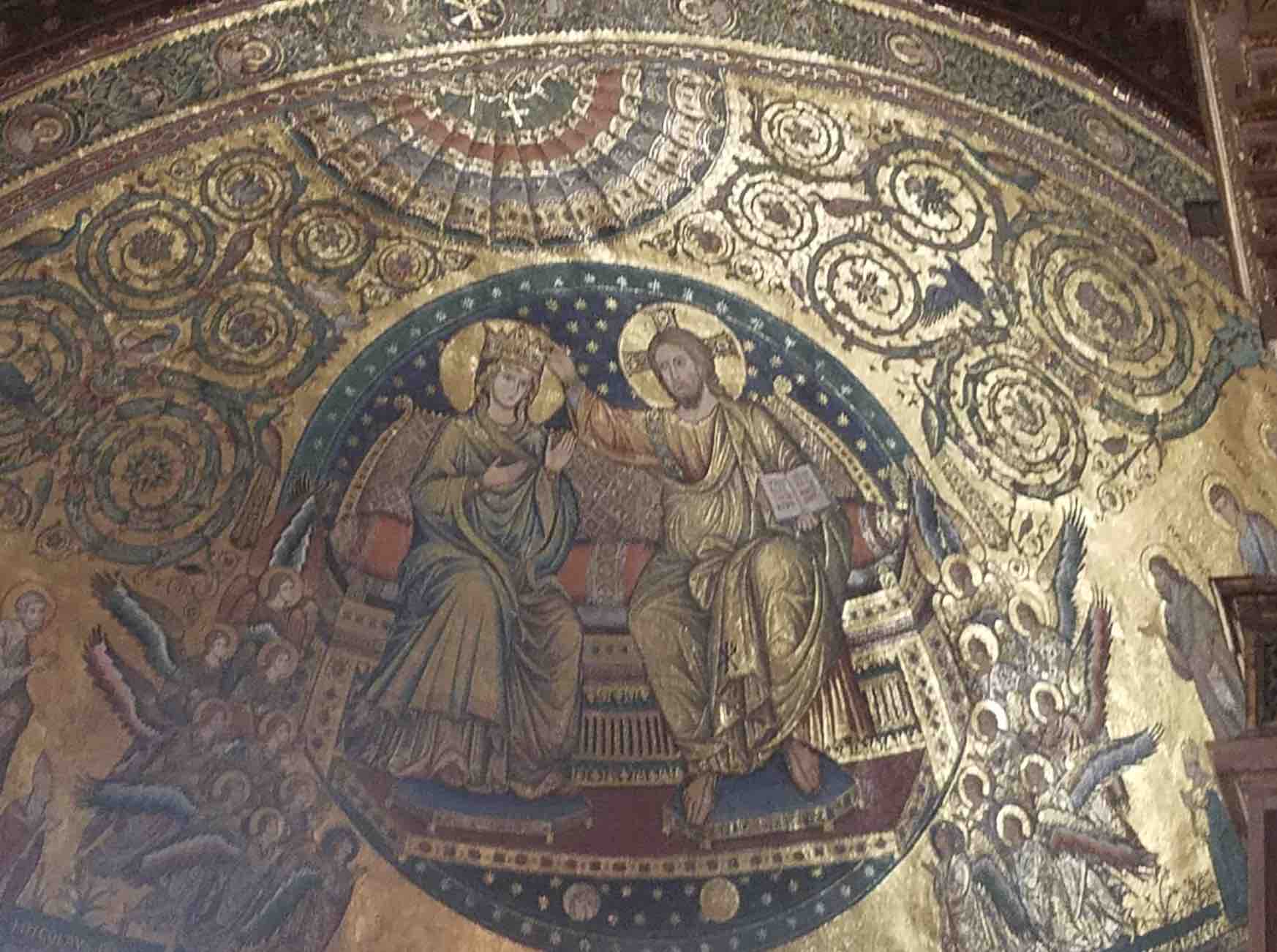
One of many side chapels in Santa Maria Maggiore, a beautiful church in Rome, Italy, dedicated to the Virgin Mary, from our trip to Rome in 2018. Though a little difficult to see, another photo linked here of the Triumphal Arch at the church shows Mary, as told by the Protoevangelium of James, with a scarlet thread she used to spin to help make the curtain of the Jerusalem Temple, in the top left mosaic. A dove representing the Holy Spirit is above her head, showing the Annunciation as described in Luke 1:26-38.


More Than You Ever Knew About Mary

In 2018, my wife and I visited Santa Maria Maggiore, a breathtakingly ornate church in the heart of Rome. The tour guide made it a point to tell us about a mosaic portraying Mary weaving some type of garment with scarlet thread. I should have taken a photo of the mosaic, but I missed that opportunity. I had no clue what the guide was talking about until I read Gathercole’s translation of the Protoevangelium of James in his The Apocryphal Gospels, part of the Penguin Classics series, not too long ago. In the Protoevangelium, Mary is tasked to spin scarlet thread for use in making the great robe of the Jerusalem Temple, which tore on the day when Jesus was crucified.

After reading that, it finally clicked with me regarding the significance of the scarlet thread.

It is a pretty cool idea that Mary might have had such a connection with the Temple robe. But unfortunately, this is all highly speculative. No historian today accepts this part of the Protoevangelium as being grounded in actual historical data.

What is bizarre in the Protoevangelium about Mary’s relationship with the Temple is that Mary ends up spending a lot of time at the Temple. I mean, A LOT OF TIME. According to the Protevangelium, she actually lives at the Temple as a young girl, from about age 3 to age 12. She even “received her food from an angel” (Protoevangelium, chapter. 8).

I am sorry, but I can not get the image out of my head of someone from Dominos or Grubhub dropping off delivery meals to Mary while she is spinning thread in her Temple dorm room. You get the impression that the Protoevangelium uses this Temple-connection to somehow reinforce the idea of Mary’s purity.

Wherever this story about Mary and the Temple came from, it probably was not the Jewish Temple in Jerusalem. Instead, it is more reminiscent about the Vestal Virgins in the city of Rome.

Frankly, this is really over the top. Mary must have had a pretty boring childhood, if there was any historical substance to this story…. which there really is not. Nevertheless, the incredulity of the story never stopped it from being believed, at least in parts, by many Christians for hundreds of years. The Protestant Reformation 500 years ago, with its emphasis on the Bible as we have it today, essentially wiped out interest in the Protoevangelium of James. But my visit to Rome, filled with artistic references to the Protoevangelium in the Santa Mary Maggiore church, convinced me that many Christians took great interest in this Gospel forgery for centuries.

I took this photo in 2018 of the “Coronation of Mary” at Santa Maria Maggiore, showing Jesus crowning Mary. The veneration of Mary has a long, long history.


The “Cave” of Jesus’ Birth in Bethlehem

Exactly thirty years ago this year, back in 1994, I made a trip with some friends to the Holy Land, and had the opportunity to visit the Church of the Nativity in Bethlehem, that traditional site where Jesus was born. It is difficult to tell how accurate the location really is, as the story goes that the emperor Hadrian in the second century erected a pagan temple over the site, in order to try to obscure the Christian claims that Jesus was born there.

When we followed our guide down a passageway in the church, we came to the location of a “cave” where Jesus was born. The New Testament mentions that Jesus was born in something like a stable and then laid in a “manger,” but interestingly, the Protoevangelium tells us that Jesus was born in a “cave” instead. When our guide was talking about this “cave,” I kept wondering how Joseph and Mary would have fit the “manger” within that “cave,” which kind of looks like a fireplace, with a hearth in front of it. But no, the Protoevangelium does not mention a “manger” at this point. The “manger” only comes into play later in the story. Those who built the Church of the Nativity obviously were familiar with the tradition popularized by the Protoevangelium of James. (For those wondering about there being “no room at the inn,” check out this blog post from the Veracity archives).

Bethlehem, West Bank, Palestine – July 23, 2013: People gather to pray and reflect at the Grotto of the Nativity, the birthplace of Jesus inside the Church of the Nativity in Bethlehem, Palestine.


Netflix Revives the Protoevangelium of James

There has been a lot of renewed interest in the Protevangelium of James this year (2024), in light of the release of a Netflix film about Mary, featuring Anthony Hopkins playing the part of Herod. The writers of Mary apparently used the Protoevangelium as one of the sources to create the storyline of the movie.

Speaking of Herod, here is one other area where the Protoevangelium conflicts with what we read about in the New Testament. In Matthew’s version, the Holy Family make their way down to Egypt, probably along the way or near Alexandria where there was a large population of Jews living, in order to evade Herod’s attempts to kill Jesus by having all of the male babies in Bethlehem murdered. Yet in the Protoevangelium, Joseph and Mary never left Bethlehem, and instead Mary hid the baby Jesus in some swaddling clothes in a cow’s manger, while Herod’s “secret police” were rounding up baby boys to be slaughtered.

Ah, so this is where the “manger” pops into the Protoevangelium’s narrative. Presumably, the author of the Protoevangelium realized that a really old Joseph would not fair so well in making the journey all of the way to Egypt, which would have easily taken several weeks to make on foot. Therefore, Mary has to stash the baby Jesus somewhere near Bethlehem so that Herod’s death squad does not find the Messiah.

This is all very interesting. However, this Christmas, I will take Matthew’s version of the story over what the Protoevangelium tells us.

The Problem With Christian Forgeries

Sadly, the practice of writing forgeries by some Christians has proven difficult to stamp out, causing some scholars and skeptics to wonder how far the Christian practice of forgery making has distorted our view of Christian history… and even the New Testament itself. Despite efforts to discourage Christian forgeries by church leaders over the centuries, books like the Protoevangelium of James have maintained their influence: some good and some bad. Some of the bad stuff is unbelievably bad. There are a few lessons to be learned here:

  • It is quite possible that the Protoevangelium of James relies on some actual historical sources, concerning some of the details the story relates to the reader. As Simon Gathercole quotes from a statement made by Jerome, the late 4th century translator of the Latin Vulgate, it is possible to find some “gold in amongst the muck” (Gathercole, The Apocryphal Gospels, p. xvii). Importantly, the Protoevangelium affirms the Virgin Birth of Jesus, just as Matthew and Luke tell us. Perhaps Joachim and Anna are indeed the names of Mary’s parents. We simply can not confirm one way or another as to the truthfulness of the Protoevangelium’s assertion regarding these names. Personally, I am okay with accepting Joachim and Anna (or Anne) as their names, as most Roman Catholic and Eastern Orthodox Christians do.
  • It is better to stick with the New Testament instead of relying on sources that only go back to the late second century, well after the supposed author had died. But the temptation to “fill in the gaps” missing from the Bible can lead to accretions over time which can distort the original picture.
  • Long received Christian traditions are generally fine and good, but we should be careful about accepting certain beliefs as dogmas that are not clearly rooted in the New Testament.  Many Christians throughout the world wholeheartedly believe in the perpetual virginity of Mary, and other highly elevated views of Mary.  Mary indeed is to be greatly honored for her act of obedience and her piety, but whatever we do, we should not elevate Mary at the expense of elevating Jesus himself.
  • Given the fact that there were forgeries circulating in the early church, whether they were written with supposedly good or nefarious intentions, it is to be expected that some are skeptical about certain historical claims about the Christian faith. (The standard historical critical scholarship of our day suggests that the Virgin Birth stories in both Matthew and Luke are fictional, largely due to historical problems related to the census of Quirinius, but I am convinced of a better approach). Nevertheless, the New Testament itself has provided the historically orthodox standard for faith and practice, so it is vital that historically orthodox followers of Jesus uphold the authority of Scripture, as we find in our Bibles.
  • The early church made the right call in rejecting the Protoevangelium of James as part of canonical Scripture, even if some …. and I mean only some ….of the historical data in this forged document actually has some truth to it.

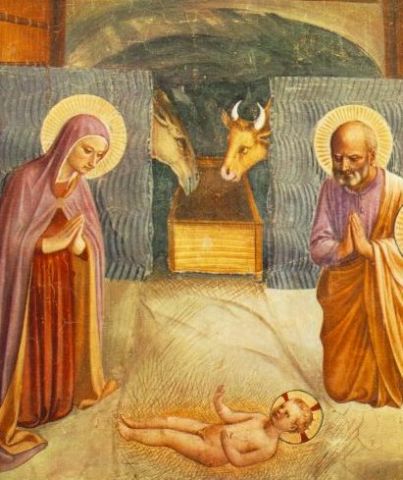
A close-up of part of Fra Angelico’s fresco, in Florence, showing the ox and ass peering in from behind their stalls, to catch a glimpse of the baby Jesus.


The Protoevangelium of James is not the only apocryphal gospel source for details influencing how Christians have thought about the birth of Jesus over the centuries. Texts like the Gospel of Pseudo-Matthew, which includes a forged letter reportedly written by St. Jerome, follows much of the same storyline we find in the Protoevangelium of James, but it also includes the first known reference to the “ox and ass,” which shows up in a number of Christmas carols and nativity displays. Neither Luke nor Matthew includes anything about an “ox and ass” present at Jesus’ birth.

Most scholars say that the “ox and ass” got incorporated into the story as a veiled reference to messianic prophecy found in Isaiah 1:3 (ESV):

The ox knows its owner,
    and the donkey its master’s crib,
but Israel does not know,
    my people do not understand.”

Christian apologist Mike Winger offers a YouTube video reading Protoevangelium of James, if you would rather listen to it than read it yourself (see below).  Winger is a Protestant, and is not terribly thrilled with the new Netflix Mary movie (I do not have Netflix, so I can not offer a film review).

There are plenty of ways of reading the Protoevangelium of James, but I would recommend Simon Gathercole’s The Apocryphal Gospels as Gathercole has a nice introduction to each apocryphal work.  I met Dr. Gathercole earlier this year in Cambridge, England, and he is certainly one of the finest New Testament scholars and early Christian historians we have living today, and a wonderfully evangelical and historically orthodox Christian, too!!

And with that, I wish readers of the Veracity blog a very Merry Christmas!!

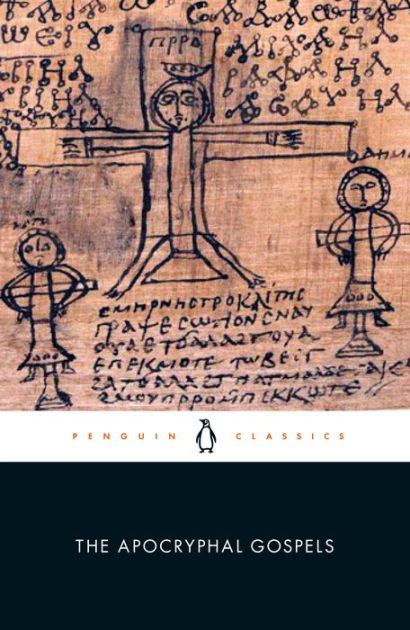
The Apocryphal Gospels, a translation of about 40 Gospels or Gospel fragments by New Testament scholar Simon Gathercole, including the Protoevangelium of James, gathers together texts that have enjoyed various degrees of attention over the centuries, but that were never accepted into the New Testament canon, due to concerns about their authenticity. Part of the Penguin Classics series. Some of these texts have only been rediscovered within the past two hundred years. You can find other collections like this, but Gathercole offers an irenic approach sympathetic more towards historic orthodox Christianity.


Simon J. Gathercole. United Kingdom New Testament scholar, Professor of New Testament and Early Christianity, and Director of Studies at Fitzwilliam College, Cambridge. I met Dr. Gathercole in Cambridge in January, 2024.