Author Archives: John Paine

About John Paine

Unknown's avatar
This blog is topical and devotional--we post whatever interests us, whenever. If you want to follow in an orderly fashion, please see our Kaqexeß page.

Grandson

Whitner David Paine, b. October 8, 2015

Whitner “Whit” David Paine, b. October 8, 2015

I pray that you will:

  • recognize that God loves you
  • be a good friend
  • be dependable
  • be able to let things go
  • be humble and gracious
  • be a compelling witness
  • be slow to anger and quick to forgive
  • be a good steward
  • be willing to make difficult decisions
  • be loved unconditionally
  • love unconditionally
  • try hard
  • laugh easily
  • smile when people need you to smile
  • enjoy the small things in life
  • listen to and respect those who disagree with you
  • know that God has a plan for your life
  • know the joy of personal discipleship
  • discover and appreciate that Christianity is objectively true
  • have courage
  • have compassion
  • have an uplifting sense of humor
  • have friends like your parents

I pray that you will never:

  • hate people
  • burn with anger
  • chase things that don’t matter
  • worry about things that you cannot control
  • waste your time
  • embrace cultural values that contradict your faith
  • forget who died for you

Blue Letter Bible

When it comes to researching the Bible, people often call me a geek. And they’re right. I have little patience for flipping through tomes and trying to remember where I read something. Give me a multi-tabbed Internet browser and an electronically searchable document every time. For casual research (on the couch or Barcalounger) an iPad does the trick nicely, thank you. The guys at Google should be knighted or something for their contributions to society. Put the inventors of the Kindle Reader app right behind. Gotta love Amazon theology for instantly accessible books. Have trouble remembering things? Try Evernote. Bible study has never been so accessible, easy and convenient.

But things evolve rapidly in cyberspace.You can get used to a favorite tool, and miss out on something even better. Likewise, you can try one that is in an early stage of gestation, be unimpressed, and fail to see improvements that are rolled out later on. So it is with Bible reference sites.

For years, I enjoyed using a popular Bible search tool that eventually became thick with advertisements. It failed to keep up with modern resources, instead offering 19th-century commentaries that rarely satisfied. Friends recommended the Blue Letter Bible site and app to me a couple of years ago, but I just didn’t like the interface.

Things change.

My go-to searching tool for Bible study has become the Blue Letter Bible. It has a very convenient and well-thought-out interface that connects resources in a powerful way. Aesthetically it’s a bit like looking at the guts of an engine, but once you get used to it, you’ll have tremendous power at your fingertips. For those who copy and paste Scripture into documents and would like to avoid having to manually remove each verse number and then type the citation after you paste, Blue Letter Bible’s copy and paste options are amazingly flexible and powerful. Seems like a simple thing, but that’s what brought me back to retry the Blue Letter Bible.

Wow, have they delivered a lot of smart features! But don’t take my word for it. Watch this five-minute video tour then try it out for yourself. Enjoy!


Rearranging Prejudices

Rearranging Predjudices in Quebec City

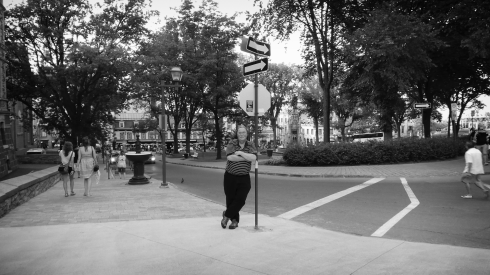
Blending in in Quebec City, August, 2015


“A great many people think they are thinking when they are merely rearranging their prejudices.”
William James

“Offer hospitality to one another without grumbling. Each of you should use whatever gift you have received to serve others, as faithful stewards of God’s grace in its various forms.”
1 Peter 4:9-10 NIV

I have always had an empathetic connection to the civil rights movement. In the early 60’s my family encountered ethnic pressures in a “Quiet Revolution” that caused us to pack up and move from Quebec to Virginia. We switched racial status—from being among the minority of native English Quebecers to being among the majority of southern whites. How times change. Virginia has lost a lot of its ‘southern’ culture, but in 1963 it was strong. I remember being in the back seat of our family’s car while we drove past a cross burning beside a highway interchange. I was too young at the time to know what was going on but knew it was about hatred and fear. We didn’t have any dogs in that fight. We were in Virginia because my father wanted to work and raise a family on a level playing field. That’s all.

My brother and I became completely assimilated into the mid-Atlantic way of life. Dad would express frustration from time to time with Quebec separatists, and we (more or less) passively inherited some of his prejudices. They didn’t seem like ‘prejudices’ at the time, but looking back that’s probably a fair assessment. Ethnic, nationalist and political strife have torn at Canada for decades over the issue of sovereignty for Quebec. In 1995, the year my father died, a national referendum that would have turned Quebec into an independent country was defeated by an extremely narrow margin.

I haven’t really kept up with Canadian politics, much less the temperature of the separatist movement. So when my wife announced this summer that she wanted to visit Quebec City, I really didn’t know what to expect. I had heard that French Canadians were unfriendly to Americans, particularly if the Americans could not converse in French. I struggled through college French 35 years ago, so I was less than optimistic about how we would be treated.

Quebec City StairsQuebec City is one of the most charming, clean and beautiful places in North America. It is a city planner’s dream—beautiful public squares, monuments and statues, lavish stonework, French provincial architecture, lofty vertical buildings that tower over cobblestone streets, flowers and gardens everywhere, sidewalk cafes, talented street performers, horse-drawn carriages, avant-garde restaurants, and people sitting on benches enjoying all the beauty that surrounds them. We didn’t see trash anywhere, not even gum on the sidewalks. The City has a profound Catholic foundation—the major streets and city gates (it’s the only walled city north of Mexico) are named after apostles and saints. There are churches and cathedrals everywhere.

How were we treated? For a couple of language-challenged foreigners, everyone we encountered was extremely friendly and helpful. As soon as they discovered we couldn’t speak the language, they immediately switched to English. Everyone we met was cheerful and hospitable, even complete strangers standing in line to order poutine at Fromagerie Lemaire. Their warmth was striking. Not at all what I had expected.

19th-century pragmatic American philosopher William James wrote, “A great many people think they are thinking when they are merely rearranging their prejudices.” (Dick Woodward used that quote frequently.) The apostle Peter wrote, “Offer hospitality to one another without grumbling. Each of you should use whatever gift you have received to serve others, as faithful stewards of God’s grace in its various forms.” After being in Quebec this week, I can’t help but wonder if Peter’s instruction might have had some pragmatic value in motivating others to change their opinions. The New Testament is full of instructions to be cheerful and to respond to prejudicial behavior with kindness and charity—to treat adversaries with respect and gentleness.

“But I tell you, love your enemies and pray for those who persecute you,” (Matthew 5:44 NIV)

“You must put away every kind of bitterness, anger, wrath, quarreling, and evil, slanderous talk. Instead, be kind to one another, compassionate, forgiving one another, just as God in Christ also forgave you.” (Ephesians 4:31-32 NET)

“Let everyone see your gentleness. The Lord is near!” (Philippians 4:5 NET)

“Who is wise and understanding among you? By his good conduct he should show his works done in the gentleness that wisdom brings.” (James 3:13 NET)

“But reject foolish and ignorant controversies, because you know they breed infighting. And the Lord’s slave must not engage in heated disputes but be kind toward all, an apt teacher, patient, correcting opponents with gentleness” (2 Timothy 2:23-25a NET)

“But set Christ apart as Lord in your hearts and always be ready to give an answer to anyone who asks about the hope you possess. Yet do it with courtesy and respect, keeping a good conscience, so that those who slander your good conduct in Christ may be put to shame when they accuse you.” (1 Peter 3:15-16 NET)

“Do everything without grumbling or arguing,” (Philippians 2:14 NET)

Sometimes being a Christian is like fighting with your hands tied behind your back. We get kicked and slapped and even worse, then we have to fight back with kindness, compassion, empathy, and respect. It can take incredible patience. What we experienced in Quebec was a powerful reminder of the best way to deal with people who don’t like us. Has Quebec turned the corner on ethnic strife? Who am I to say? But their kindness and hospitality makes me want to rearrange my prejudices.

Le Château Frontenac

Le Château Frontenac, Quebec City

HT: Marion Paine


C.S. Lewis and the Butterfly Effect

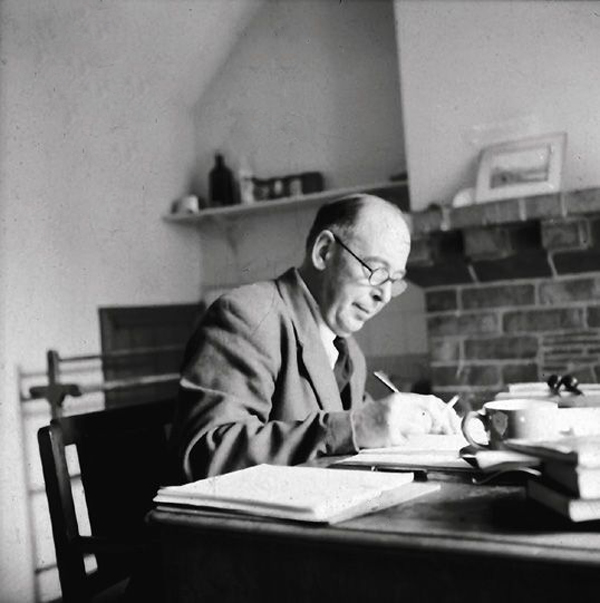
C.S. Lewis

Why would C.S. Lewis take the time to correspond with a young American girl he did not know? Would his four letters, including the one he wrote to her just 11 days before his death, have any consequence?

In our culture we are taught to swing for the fences. Blast the game-winning home run high over the center field wall. Instant gratification and recognition. Great work if you can get it.

But a life lived in obedience to God is seldom like that. It’s much more like the butterfly effect—where one small change can make a big difference in the way things turn out. Consider the chain of events in the following story.

  1. In the 1960s, a somewhat under-appreciated (at the time) Cambridge don, deep thinker, and writer of children’s literature gets a fan letter from a 12-year-old American girl. Despite all he has going on, he takes the time to write back to her.
  2. The young girl begins to read some of his other work, including his Christian writings. She writes more letters, he writes back.
  3. When he dies, only a small number of friends attend his funeral.
  4. Through subsequent publishing he becomes one of the most influential Christian thinkers of the 20th century.
  5. Because he took the time to write to the little girl, his corpus has a profound effect on her faith and her ability and desire to defend her Christian worldview.
  6. The little girl grows up, marries a small town preacher, and has a profound effect on him.
  7. The small town preacher becomes one of the most influential Christian writers and thinkers of the 21st century.

For the whole story, read this article.

We really don’t take enough time to correspond with people. Taking the time to write someone can have significant and lasting consequences—much more so than hitting a dramatic home run.

HT: Marion Paine, David the Older


Dr. Jim Shaw and the Butterfly Effect

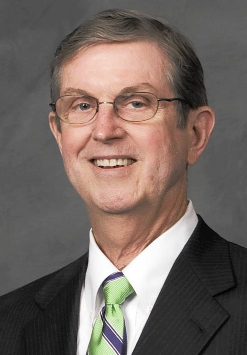
Dr. Jim O. ShawThe essence of the butterfly effect is that one small change can make a big difference in the way things turn out.

Dr. Jim Shaw died last Wednesday, and while reading the online media tributes, I can’t stop thinking about the butterfly effect.

For those unfamiliar with Jim’s story, he is best known as the founder of Lackey Free Clinic, which provides “skilled, compassionate health care and counseling to the medically disadvantaged in a manner that honors the name of Jesus Christ.” He was also a husband, father, grandfather and respected pulmonary specialist. For their compassion and humanitarian efforts, Jim and his wife, Cooka, received the Daily Press Citizen of the Year award in 2007. Lackey Free Clinic just celebrated its 20th anniversary, racking up quite an impressive list of awards and accolades along the way.

I served with Jim as an elder in our church. He commanded respect. He was smart, humble, and determined to make a difference in this world. He was steadfast in his faith—not just in the hearing of the Word, but in the doing. Jim modeled what he read in the Bible.

If a brother or sister is poorly clothed and lacks daily food, and one of you says to them, “Go in peace, keep warm and eat well,” but you do not give them what the body needs, what good is it? So also faith, if it does not have works, is dead being by itself. But someone will say, “You have faith and I have works.” Show me your faith without works and I will show you faith by my works.
(James 2:15-18 NET)

Jim had a very long battle with cancer, chronicled in the links above. He fought the disease bravely, intelligently, and with conviction. He found a way to take all the pain and suffering and turn it into good in the name of Christ. Not unlike Dick Woodward.

The butterfly effect? My most profound memory of Jim is one in which, truthfully, I was a little peeved at him. It was a couple of decades ago when a group of volunteers would meet every Saturday morning to cut the grass at the Church. We saw all the comings and goings of people from the business end of our lawnmowers. Jim was one of those who kept coming. He had a lot of questions about Christianity, and he would show up Saturday mornings, Bible in hand, to meet with our senior pastor. I remember thinking, “Bill doesn’t have time to meet with this guy every Saturday. He’s got sermons to prepare and a church to pastor.”

Shows how much I know.

Chi Rho, Jim. Our community is far better off on your account, and you completely succeeded in honoring the name of Jesus Christ. We will miss you.

HT: Bill Warrick, Tuck Knupp, Lackey Clinic, Daily Press (Photo)