Author Archives: John Paine

About John Paine

Unknown's avatar
This blog is topical and devotional--we post whatever interests us, whenever. If you want to follow in an orderly fashion, please see our Kaqexeß page.

Matthew’s Gospel Truth

I’ve had multiple conversations over the past two weeks on witnessing and evangelism, all centering on how we present Jesus and the Gospel. One thing that strikes me is how many Christian brothers and sisters seem to be without a plumb line when it comes to presenting the Gospel. Some sound doctrine would greatly help. Here is a post I contributed to our church’s Lenten blog series that speaks to the issue.

John Paine's avatarLessons in Lent

“One of the great lies of our time is to suppose that because Jesus brings forgiveness, and urges us to be forgiving people, meek, and gentle, there is no sharp edge to his message. To hear some people, you’d think the whole of the Christian message was simply a call to accept one another, never to judge another person.”
N.T. Wright, Lent for Everyone, Matthew, Year A

Personally, if I had to pick one word to sum up Jesus Christ (and the Bible, and the Christian faith for that matter), it would be ‘veracity’—partly because Jesus called Himself “the truth” in John 14:6. We’re dealing with the truth when we’re dealing with Jesus. Really.

Certainly as much as any other Gospel writer, Matthew gives us a fully-developed, true picture of Jesus Christ and His message—and it’s not the saccharine depiction many people make it out to be (just wait until…

View original post 392 more words


The Wisest, Most Encouraging, Toughest Man I Ever Met

Remember those earlier days after you had received the light, when you stood your ground in a great contest in the face of suffering.

So do not throw away your confidence; it will be richly rewarded. You need to persevere so that when you have done the will of God, you will receive what he has promised.
Hebrews 10:32, 35-36 (NIV84)

Dick Woodward

Dick Woodward

The wisest man I ever met went home yesterday.

Our regular readers know how much Clarke and I have been shaped by Dick Woodward’s ministry. It would have been impossible for us to have any kind of teaching ministry—blog or otherwise— without sharing what we learned from him. His occupational title was ‘pastor’, but he saw himself, perhaps first and foremost, as a teacher.

There will be many fine tributes in the days ahead, and I am not a good enough writer to do him justice. But I will share some personal remembrances as a small way of saying ‘thanks’.

Biography

Dick Woodward helped found and pastor both the Virginia Beach Community Chapel, where he served 23 years, and the Williamsburg  Community Chapel, where he remained as pastor emeritus until his passing. His relationship with (don’t skip this hyperlink) Dois Rosser, the founder of International Cooperating Ministries (ICM), made it possible for Dick to realize his dream of  “The Whole Word for the Whole World.” His Mini Bible College program has been translated into 31 strategic languages and is used around the world to nurture believers and assist in church growth. MBC is a survey, book, and topical study of the Bible that teaches practical and devotional applications of every book of the Bible to our lives.

In 1980 Dick was diagnosed with a degenerative disease of the spinal cord that eventually left him a bedfast quadriplegic. In spite of this disease he remained active in small groups, mentoring, and writing Bible study materials. He was an avid blogger and a meticulous and prolific writer, and produced his ambitious Marketplace Disciples in December, 2013. He often said, “The less I can do, the more the Lord does.”

ICM publishes his books, study guides, and pamphlets on multiple websites, including Amazon, and the ICM Shop, and serves his extensive audio catalog on One Place, iTunes, The Mini Bible College, and To Learn To Live. ICM used Dick’s Mini Bible college to construct and support over 4,500 churches in 66 countries.  They held a 25th Anniversary celebration in 2011 to celebrate God’s blessing of this remarkable ministry.

Personal Remembrances

Being around him was like taking a spiritual shower. He was always upbeat and encouraging—unquestionably the most steadfast, most faithful, and toughest man I ever met. I never saw him down, and never heard him say an unkind word about anyone. Never.

In no particular order, here are a few remembrances and impressions for which I am grateful.

  • If Dick had not been a pastor, I am certain he would have been a comedian. He started every sermon with a joke, and most of them were very funny. There was a method to his joke telling—people didn’t want to miss the beginning of his sermons for fear they would miss the joke.
  • He was completely self-deprecating. When I started attending his church I was taken by his descriptions of shooting rats in a landfill, stray bullets, and snatching a parishioner by the collar. This guy was for real. He described himself as a ‘barbarian’ in his teenage years. He wasn’t what I thought preachers were like. Again, I am extremely grateful.
  • Dick had a very sharp mind. He had memorized over 100 hymns and countless lines of Scripture. I always hesitated to cite a chapter and verse with him, because if I missed, he could call me out. He never did.
  • He loved Scripture songs. I can vividly recall his a cappella voice leading the congregation in “Jesus is Lord of Heaven and Earth,” from his wheelchair, with Jane Hanson and Gayla Johnson making my neck tingle with their soprano runs from the seats behind me. Wow, what I wouldn’t give to hear that again!
  • He loved the Pittsburg Steelers, sports, and generally anything to do with Pittsburg (where he grew up).
  • In recent years Dick and I would meet under the guise of helping him with his computer. His doctors and caregivers said he had to limit his time with visitors to save energy, and I was always looking at my watch, but he loved to talk. Even when he had to struggle to do so. He was diagnosed with sleep apnea a year or two ago, and his BiPAP therapy gave him a second wind (literally). There were times when he just wouldn’t stop talking.
  • Dick would not miss any opportunity to teach people about the Bible and about Jesus Christ. One of the things I set up for him was the automatic signature for his outgoing emails. Tonight, it seems like a fitting epitaph. It read:

Dick Woodward
Founder & Teacher
Mini Bible College
4 Spiritual Secrets
learntolive

“And I am sure that God, who began the good work within you, will continue his work…
For God is working in you, giving you the desire to obey him and the power to do what pleases him.”
(Philippians 1:6; 2:13, NLT)

  • He was encouraging; some would say to a fault. If anyone went to him and said they wanted to become a brain surgeon, Dick would encourage them, regardless. There were no limits, just positive support. Dick truly believed that God could do anything with anyone—as expressed in his email signature.
  • I have listened to thousands of hours of his preaching and teaching, and his lessons are quite ingrained. When I began teaching adults, Dick’s material was my plumb line. It always will be. When I am blogging and find myself getting on a high horse, I ask myself “what would Dick say or think about that?” The result is typically a deletion of smarmy words and comments, and a softening of my attitude.
  • Dick was so humble. I remember reading one of Clarke’s statements that, “C.S. Lewis never systematized his theology,” and began wondering why Dick never systematized his theology. When I came to my senses I realized Dick had completely systematized his theology—it’s called “The Four Spiritual Secrets.”
  • Dick said he really didn’t get C.S. Lewis. He once told me he thought Lewis made things too complicated. “I’ve spent my ministry trying to make things simple so people can understand.” Every time I catch myself wanting to toss in an extra big word in my writing, I hear Dick’s echo.
  • He was a fierce writer. He had editors for his published books, and he would send them drafts, and when the editor’s comments came back Dick was persistent and insistent. Man, he worked over sentences! It was an amazing thing to watch because he had to draw in a breath and push hard to make the voice-activation work. It took a lot of voice commands to revise his text, particularly when, as he would say, his “computer was having a bad day.” It was exhausting, but he did it because the words really mattered to him.
  • He knew all the big names in Christianity. I would tell him about a video I saw on Robertson McQuilkin, and Dick would start talking about what kind of cook Muriel McQuilkin was, and how they used to come visit Dick in Williamsburg. Dick studied under Robertson McQuilkin—and Howard Hendricks (Dick affectionately remembered him as ‘Howie’). Bill Bright and Ravi Zacharias came to see him. He arranged to have John Stott come speak. He worked under J. Vernon McGee. He studied at Biola and Columbia University.
  • For all his publishing and ministerial work, Dick never tried to cash in. He once told me that he and Ginny hated “that sort of thing” (meaning where people made God’s Word less accessible by charging for it, and even worse, trying to profit from its distribution). He said everything he did was intentionally in the public domain. His publishers still need payment for their efforts, but that’s the way he truly felt about what he was doing.
  • Dick’s dad worked multiple jobs to support his family through the Great Depression, including driving a cab at night. Dick got his work ethic from his dad, as well as his love of the Scriptures (which you can read about here). His family is tight. It always has been—never under the circumstances.

There’s much more to be grateful for, but most of that will be documented by others and is available in his published materials and audio resources. Dick persevered, with grace, with humility, and with great joy, through all things. He trusted his favorite verse, Romans 8:28, and he clearly demonstrated that he knew whom he believed:

“That is why I am suffering as I am. Yet I am not ashamed, because I know whom I have believed, and am convinced that he is able to guard what I have entrusted to him for that day.”
2 Timothy 1:12 (NIV84)

Thanks to Dick’s hard work and dedication, we can all share that trust with confidence and greater understanding.

Video Remembrances

ICM produced the following “Meet the Man” video on Dick and his ministry.

Here is Ravi Zacharias describing how Dick inspired him. (Ravi’s  meeting with Dick starts at 2:09 in the video.)


Dick’s Family

This is where I really start to get choked up. This is where the love of God and personal sacrifice were most demonstrated for all of us. Dick’s family took care of Dick when his body failed. Without asking for help. For decades they steadfastly sacrificed to do everything, EVERYTHING, for Dick. Their love for each other and their devotion to Dick, Ginny, and each other was completely unflappable. To say it was “truly inspiring to witness that kind of love” is completely inadequate. I really have no words—and tears are streaming down my face as I type.

HT: All I can think to offer is, “Thank you God.”


Personal Discipleship

Clarke and I have been invited, along with four other bloggers, to share devotional posts with our Church (Williamsburg Community Chapel) during Lent. Here’s the first post we’d like to also share with our Veracity readers as we start this ” Lessons In Lent” series on Ash Wednesday.

John Paine's avatarLessons in Lent

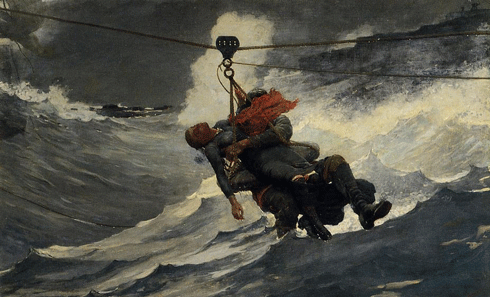
The Life Line The Life Line by Winslow Homer, 1884

Personal discipleship has been a lifeline for me between what had become a comfortable and complacent Christian experience, and one that became vibrant, exciting, and very real. As we embark on this new Lenten series, I invite you to take a fresh approach to your devotional life.

Personal discipleship is the process in which a believer or seeker takes personal responsibility for investigating the claims and content of the Bible. While we all appreciate hearing a well-turned sermon in a moving worship service, sitting in a pew is a passive experience. None of us would get very far academically if all we ever did was attend lectures. We have to read, study, work some problems through, write, engage others in discussion, apply ourselves, and prepare to be tested. And so it is with our faith.

Matthew’s Gospel invites that kind of approach. His…

View original post 357 more words


Who Wrote the Bible? (Part 3)

Imprimatur: official approval; approval of a publication under circumstances of official censorship.
Merriam-Webster
Who Wrote The Bible

Who wrote the Bible?

For those who’ve been following our current series, it’s time to get into the battle for the Bible. (You might need a cup of coffee to get through this one.)

We’re about to give you some information that will help you stand tall at any water cooler, but with two caveats before we check into the debate. First, we’re about discovering the truth—not defending dogma or tradition for tradition’s sake. Second, we fight with gentleness and respect—the objective of apologetics done right is to remove obstacles, not to win an argument. And for those who are new to Veracity, as a matter of ethics, on this blog we don’t tell you what to think.

In our previous posts on the subject, we laid out the traditionally accepted authors of the Bible. As you might imagine, there are those who seek to discredit the Bible as the basis for Christian faith and practice by challenging the authorship of its books. (A forthcoming series will explore how we got our Bible, but for now we’re focusing on authorship—yes, God wrote the Bible, but it came through the inspiration of human authors.)

Let’s start at the beginning. The first five books of the Bible are referred to as the Pentateuch (which ironically is Greek for Five Scrolls), and are taken straight from the Hebrew Bible (or ‘Tanakh’).  Often these five books—Genesis, Exodus, Leviticus, Numbers, and Deuteronomy—are referred to as the ‘Torah’, but that word has multiple meanings. Traditionally, both Jewish and Christian scholars credit Moses with writing the Pentateuch. But there have been challenges to the claim of Mosaic authorship going back many centuries, and these challenges have gained traction with modern scholars. This debate is not going away any time soon, so let’s see what the fuss is all about.

First and foremost, why should we care? What difference does it make who wrote the Pentateuch? In short, so much of the Bible—including major parts of the New Testament with direct references from Jesus Christ and the apostles—cite and depend upon the Mosaic provenance of the Pentateuch that if Moses’ imprimatur is not on these books then the entire Bible is a hoax. If Moses did not accurately record what God revealed to him then Christians (and Jews) are living a lie. Do we have your attention now?

The Documentary Hypothesis

The preeminent challenge to the claim of Mosaic authorship of the Pentateuch is “The Documentary Hypothesis” (also called the Graf-Wellhausen Hypothesis or JEDP Theory). Make Documentary Hypothesis your first water cooler term.

Unlike many other challenges to biblical Christianity, the Documentary Hypothesis is based upon reason and logic—or so it might seem. A clear summary may be found in Richard Elliot Friedman’s text Who Wrote the Bible? Dr. Friedman introduces the hypothesis by describing its historical development, and here we’ll do the same.

Challenges to the traditional Mosaic authorship of the Pentateuch go back at least as far as the third century A.D. when people began questioning apparent inconsistencies in the text. Events were related in one order, then in a different part of the Pentateuch the same events appeared to be recounted in a different order. Numbers and people groups didn’t always line up precisely in different historical accounts within the text. Moses apparently went to a tabernacle before the Israelites built the Tabernacle. These apparent inconsistencies were explained by medieval commentators (such as Rashi in France and Nachmanides in Spain), and their explanations were generally accepted into the middle ages.

Then scholars turned their attention to lines of text that were added after Moses was dead. For example, the list of Edomite kings in Genesis 36 includes kings who lived long after Moses. Likewise, they noted that Deuteronomy contains the account of Moses’ death and burial, and post-mortem reflections on his life. At the very least, someone else put a bookend on the biography of Moses in Deuteronomy. A theory began to emerge that Moses wrote the Pentateuch, but that later editors added occasional words and phrases of their own. Contemporary scholarship produced additional arguments, such as noting the occasional use of the phrase “To this day”—typically the phrase of a later writer contextualizing the history recorded in the text.

Dutch philosopher Baruch Spinoza published Tractatus Theologico-Politicus in 1670, a critical analysis in which he rejected in its entirety the view that Moses authored the Pentateuch. Here’s your second water cooler term: Spinoza is the father of “Higher Criticism” of the Bible. When you come across that term in this debate it refers to a very specific branch of literary criticism (it doesn’t mean a ‘true’ or ‘enlightened’ view). Spinoza cited the third-person accounts of Moses in the text, such as Numbers 12:3 which states (parenthetically in several modern translations of the Bible) that Moses was very humble and indeed was the most humble man on the face of the earth.  Not a statement likely to have been written by a humble man like Moses. Got it.

Shortly thereafter, French priest Richard Simon put forth the idea that the core of the Pentateuch was Mosaic, but that there were later additions. He proposed that one or more writers had assembled the text from older source documents. Simon’s idea was based on the analysis of doublets in the text—that is places where the same account is told twice. For example, the following accounts appear to be repeated in the Pentateuch: the account of creation; the covenant between God and Abraham; Abraham’s deception about Sarah in Egypt; the naming of Isaac; Jacob’s journey to Mesopotamia; and Moses getting water from a rock at Meribah. Defenders of traditional Mosaic authorship argued that these doublets are complimentary, not contradictory. (Incidentally, the same issues occur in the Gospels where four authors record the same events, but each from their own perspective.)

Then scholars looked at the doublets and began to analyze specific words and linguistic nuances. One observation was that one set of doublets seemed to consistently use the name ‘Yahweh’ and the other set used the name ‘Elohim’. (One might ask who determines which texts are included with which set of doublets—it could be arbitrarily grouped by name, but let’s move on.) French physician Jean Astruc then published a book in 1753 laying out the theory that Moses compiled Genesis from two sources. Minister H.B. Witter and theologian Johann Gottfried Eichhorn also arrived somewhat independently at similar conclusions in Germany.

The Documentary Hypothesis then multiplied. Scholars expanded the theory to three separate source documents, and felt that the book of Deuteronomy was completely different from the other three sources. The source documents were labelled as:

  • J – the document associated with the name ‘Yahweh’ (or ‘Jehovah’);
  • E – the document associated with the name ‘Elohim’;
  • P – (by far the largest of the four) including sections dealing with priestly matters; and
  • D – material only found in the book of Deuteronomy.
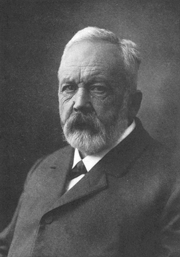
Julius Wellhausen

Julius Wellhausen, the father of the modern Documentary Hypothesis

(Ironically there is an analogous theory called Q Source in the New Testament, for which no manuscript evidence has ever been found, but again let’s move on.) Karl Heinrich Graf then put J, E, P and D in chronological order and concluded that the J and E documents preceded D and P. His ordering built upon the work of others, but centered on the idea that there were three distinct periods in the development of Hebrew history, a position that was furthered by the writing of nineteenth century biblical scholar Julius Wellhausen, who is regarded as a pioneer in the development of the Documentary Hypothesis.

The gravitas of Wellhausen’s work lay in his ability to link Hebrew history with J, E, P and D.  Specifically he noted that J and E reflected early religious life and practices, that D reflected a spiritual and ethical stage, and that P described a priestly and legal stage. His historical work is well respected, even though it does reflect the anti-Semitism of nineteenth and early twentieth century Germany.

So what we have is a theory that the Pentateuch was not written by Moses, but that it was assembled by a redactor or redactors around 400 B.C. (approximately 1,000 years after Moses) from four or more source documents that were spliced together to obtain the text that has been transmitted to us. Several contemporary scholars, including Friedman, believe that the primary redactor was Ezra the priest.

The Case for Mosaic Authorship of the Pentateuch

Personal discipleship can be complicated. The Documentary Hypothesis sounds pretty convincing, right?

Not so fast.

There is considerable hubris among proponents of the Documentary Hypothesis. It’s a bit like the members of the Jesus Seminar sitting around and dropping marbles into a ballot box to vote on how much they accepted each of the quotations of Jesus. Okay, it’s an exercise, but is it valid? Is there an agenda or bias behind this scholarship? Are they telling themselves what they want to hear? The questions get tougher. Is there any proof? Does the hypothesis fit the facts or are the facts being arranged to fit the hypothesis? Hmmm….

Markup of the Pentateuch according to the Documentary Hypothesis

Markup of the Pentateuch according to the Documentary Hypothesis

One of the first criticisms of the Documentary Hypothesis is its fragmentation. As indicated in the color-coded figure on the right, there are many places where it appears the text has been run through a shredder and glued back together. Over time, additional scholarship proposes new, finer fragmentation, devolving to absurd levels of edits (down to single words in some cases). The E source is extremely fragmentary, as are the redactor’s comments.

A second criticism is that, as with Q Source Theory, no manuscript evidence has ever been found. Nothing in the Dead Sea Scrolls, nothing in extra-biblical sources, …nothing.

One defense that proponents of Wellhausen’s hypothesis like to throw up is that consistent patterns appear in the text. But one pattern they overlook is the pattern throughout the Pentateuch (and the Old Testament and the New Testament) where the text acknowledges Moses as the source of the Pentateuch. In other words, the text itself testifies to its authorship. Examples include:

You get the point. While nowhere in the Pentateuch does an author directly identify himself—as was the style of most ancient Semitic writers—there can be no doubt within the biblical text that Moses was accepted as the preeminent source of these books.

In the Gospels alone there are 37 references to Moses and his authority over the Hebrew people, and 79 such references in the New Testament. In the Old Testament, Moses’ name appears 500 times. Moses is big stuff.

How convincing does the Documentary Hypothesis appear now?

So we arrive at the tipping point of the debate. The acceptance of Mosaic authorship of the Pentateuch is inextricably tied to our presuppositions, and particularly our view of the Bible. In the list of additional resources at the end of this post you’ll find some heady, academic reference materials mixed in with some simpler and more straightforward documents that delve further and wider into this debate. The authors range from noted apologist and Old Testament scholar Professor Daniel I. Block to Yale University religious studies Professor Christine Hayes.

Dr. Block is regarded as an expert in this field, and his paper published in the September 2001 Journal of the Evangelical Theological Society is well worth the read, as is his contribution to the Spring 2012 issue of the Areopagus Journal.

Dr. Hayes’ lecture video presents an academic view of Wellhausen’s hypothesis, but comes at the debate from the viewpoint of someone who believes that mythology comprises significant portions of the Pentateuch.

Takeaways

The Documentary Hypothesis is not the hammer blow to Christianity many would make it out to be. Granted, only a very naïve person would argue that Moses wrote the entire Pentateuch as we normally consider ‘writing’, but we can’t have either the Old or New Testament without the imprimatur of Moses on the Pentateuch.  Were there later additions and edits? Yes, clearly. Does that mean that the Pentateuch is misrepresented in the Old and New Testaments? Certainly not.

Reading the Bible as less than the inspired Word of God misses the point. It’s like reading or studying music without ever hearing the sounds. Whether you come at it with a skeptical agenda or not, you cannot fully appreciate it until it moves you to the truth—not a derived truth, but the Divine Truth.

If you need to develop an appreciation for the reliability of the Bible, we offer the following Veracity posts:

The last link above deals with the Chicago Statement, which has considerable bearing on this discussion. Put the Chicago Statement in your water cooler lexicon.

For a takeaway to the question of Mosaic authorship, let’s end with the words of Dr. Daniel I. Block, the Gunther H. Knoedler Professor of Old Testament at Wheaton College:

“So who wrote the Pentateuch? In answering this question we need to follow the lead of the Apostles, who were so certain of its Mosaic nature that they can substitute the man’s name for the document itself. In Acts 15:21, James declares, ‘From ancient generations Moses has had in every city those who proclaim him, for he is read every Sabbath in the synagogues’ (ESV). Similarly Paul writes of his fellow Jews, ‘To this day, when they read the old covenant, that same veil remains unlifted, because only through Christ is it taken away. Yes, to this day whenever Moses is read a veil lies over their hearts’ (2 Corinthians 3:14-15, ESV [italics mine]). Here Moses is identified with the ‘old covenant,’ by which he presumably means the Pentateuch. Whether or not they believed Moses put his own signature to the forms of the text they used in worship, they certainly accepted it as coming with Moses’ full authority. In that sense the first five books of the Bible are rightly called The Five Books of Moses.”

Daniel I. Block, “Moses and the Pentateuch: An Investigation Into the Biblical Evidence,” Areopagus Journal, Spring 2012

Additional Resources
Who Wrote the Bible? The Areopagus Journal of the Apologetics Resource Center (Volume 12 No. 2)Who Wrote the Bible? The Areopagus Journal of the Apologetics Resource Center (Volume 12 No. 2)

Recovering the Voice of Moses: The Genesis of Deuteronomy (Daniel I. Block)

Who Wrote the Bible? (Richard Elliot Freidman)

Wellhausen’s Documentary Hypothesis (Yale University lecture by Professor Christine Hayes)

Does It Really Matter Who Wrote the Pentateuch? (Eric Lyons)

Defending Biblical Inerrancy… (Harold C. Felder)

A History and Critique of The Documentary Hypothesis and a Defense of Mosaic Authorship of the Pentateuch (Nicholas J. Lutzo)

Debunking the Documentary Hypothesis (Bible Translation Magazine)

HT: Yvonne Brendley, Faith Smagalski


Who Wrote the Bible? (Part 2)

Who Wrote The Bible

Who wrote the Bible?

In the first part of our new series entitled “Who wrote the Bible?” we explored the human authors of the Old Testament. With this post let’s turn our attention to the writers of the New Testament.

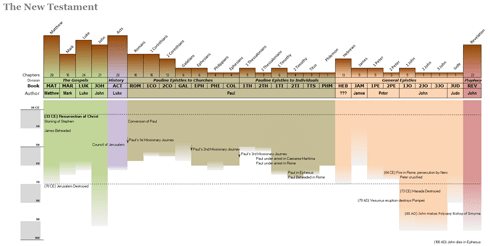
In order to keep everything balanced, we developed an infographic on the composition of the New Testament (similar to the one we developed for the Old Testament), linked to first century history.

New Testament Infographic

So what do you see in the infographic? There are five divisions in the New Testament: the Gospels, a history book (Acts), Paul’s letters, general letters, and a prophetic book (Revelation). In no particular order, here are some fun facts you can use in water cooler conversations:

  •  Two of the four Gospels were written by authors who were not firsthand witnesses to the events they recorded (Mark was Peter’s associate, and Luke was an associate of Paul).
  • While it may appear as if Paul wrote most of the New Testament, in fact Luke wrote more words than anyone else.  (Luke was very thorough in his research and writing, and was always meticulous with the details.)
  • As far as historical research can determine, there was a writing gap between the Resurrection and the writing of the New Testament books. Don’t be disarmed by this apparent gap—it’s considerably smaller than the gaps for other ancient manuscripts, and well within the lifetimes of firsthand witnesses. (Don’t believe it? Study this infographic.) The gap is also understandable in terms of the history of the early Christian Church—which was so inept (by its own reporting) that it barely held together in its first years.
  • James is arguably the earliest of the New Testament manuscripts (competing with Paul’s earliest epistles). Who was James and why was he important?  Keep reading.
  • That James would be the first to write is consistent with his leadership of the early Church in Jerusalem.
  • There are only eight known authors of the Old Testament (the authorship of Hebrews remains uncertain). In terms of occupations, one was a tax collector, one was a physician, one was a tent maker, two were fishermen, and two were half-brothers of Jesus Christ.
  • Only three of the new Testament writers were among Jesus’ 12 Apostles (although Paul clearly had apostolic authority).
  • Although precise dating of some of the New Testament Scriptures is not possible (by the way some can be dated very precisely), it took approximately 14 years from Paul’s conversion for him to begin writing his contributions to the Bible. Why so long? Well according to his own writing, he spent years with Jesus Christ learning all that God had to show him.
  • John was the youngest of the apostles, some think as young as 13 years old when Jesus was crucified, and he lived much longer than the other Apostles. John’s writing comes later, and with the possible exception of Jude (who only wrote one chapter of the Bible), is the only New Testament author writing after the conquest of Jerusalem in 70 AD.

The precise dating of the New Testament books in the context of first century history is a fascinating subject, well beyond the scope of this post. Two excellent sources are From Abraham to Paul: a Biblical Chronology by Andrew E. Steinmann, and anything by Norman Geisler (here’s a small sample of his work—if you only click one hyperlink in this post, let it be this one so you’ll see how forensic this topic becomes when it is approached with academic integrity).

How important is understanding how these texts fit in history? Hmmm…maybe we could light a fire under Clarke Morledge to start with John in Ephesus in 70 AD and take it forward from there (Clarke has a passion for Christian history). Let me just state for now that it’s important to appreciate how tightly the dots are connected.

So…back to the New Testament authors.  Click on the names of the authors in the right-hand column to read their biographies (yes we’re using Wikipedia, which doesn’t have all the facts straight, but does provide mostly useful information with lots of links to rich content).

The New Testament

The Gospels

Matthew

Matthew

Mark

Mark

Luke

Luke

John

John

History

Acts

Luke

Pauline Epistles to Churches

Romans

Paul

1 Corinthians

2 Corinthians

Galatians

Ephesians

Philippians

Colossians

Pauline Epistles to Individuals

1 Thessalonians

2 Thessalonians

1 Timothy

2 Timothy

Titus

Philemon

General Epistles

Hebrews

???

James

James

1 Peter

Peter

2 Peter

1 John

John

2 John

3 John

Jude

Jude

Prophecy

Revelation

John

Matthew was a tax collector, clearly among the most despised people in Judea. He would have been a meticulous record keeper, and was probably very good at getting away from mobs—both useful skills for an apostle and Gospel writer.

James and Jude were half-brothers of Jesus Christ. James was the leader of the Jerusalem Church, and was the glue that held it together at the Council of Jerusalem. (The discovery of the James Ossuary has recently touched off a firestorm of controversy in the field of biblical archaeology.)

Peter was an illiterate fisherman (which may explain why Mark is thought to have written Peter’s accounts in his Gospel), with a Galilean accent. Peter’s tomb is arguably the finest grave site in the world.

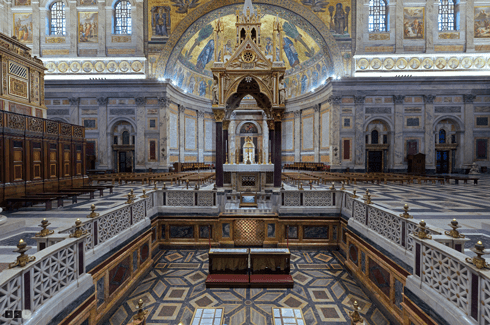
Paul was a tent maker, and a gifted student of the Hebrew Tanakh. He was a small man with a fiery temper, humble and remarkably fearless. He also had a marvelous sense of humor (he wrote that greeting while chained to two Roman guards.) By the way, speaking of tombs and chains, Paul was honored with a very fine basilica of his own. Click the graphic below to take a 3-D virtual tour. The chains at the center are thought to be the chains that bound him to his Roman captors, with provenance back to the fifth century. In 2009 the Vatican announced that bone fragments collected inside his sarcophagus were indeed from a first century man.

Paul's Tomb

Take a 3-D tour of Paul’s Tomb at the Basilica of St. Paul Outside the Walls (in Rome).

Click away, dig deep, and share the joy of personal discipleship! After you’ve gotten acquainted with the authors, in our next post in this series we will explore the apologetics of defending the claims for traditional authorship of the Bible. Enjoy!