
Here are some highlights from the Veracity blog for 2024, as the year winds down to a close…..
But before I jump into that, here is a quick meditation on why Veracity exists. Veracity is all about learning, knowing, and defending what the truth is. Sadly, we live in a world where truth gets set off to the side. Sometimes, even those of us with the best of intentions get sidetracked and mislead by those who live by lies.
Here is a recent example. One of biggest news stories of 2024 has been the fall of the Bashar al-Assad regime in Syria. Veteran news reporter, Clarissa Ward, was in Syria investigating some of the prisons ran by the former Syrian president Bashar al-Assad. In one of the cells Ms. Ward went into with her guide, they found a man saying that he had been in the prison several months. It was a griping scene. Ward offered the man some water, and some food, before he eventually boarded an ambulance. It was horrifying to witness the state of this man who had been imprisoned by al-Assad…… or so it seemed.
A few days after this stunning report, it became known that the story about this man was a hoax. Apparently, Clarissa Ward and her camera team had been duped. This man whom they “rescued” from this prison cell was none other than Salama Mohammad Salama, a first lieutenant in the Syrian Air Force Intelligence, one of al-Assad’s cronies who himself had a record of torturing opponents of al-Assad.
I have to admit, when I first heard and saw the story, I bought into it hook, line, and sinker. On the surface, the story sounded convincing. My heartstrings were pulled, as I sympathized with the man’s plight, narrated by a stunned veteran journalist. But it did seem odd that the man went off with the ambulance without giving Clarissa Ward a phone number to call someone in his family, to tell them he was free from the prison. Clarissa Ward had been duped. CNN had been duped. I had been duped.
It is a terrible feeling to know that you have been lied to. Unfortunately, too often well-meaning Christians will get duped by misinformation about their faith. There are plenty of critics of Christianity who see right through the misinformation that gets propagated in certain Christian circles. Some of this misinformation comes in the form of rather benign Christian urban legends, or genuine conversations of disagreement regarding topics where we have incomplete data to work with. However, other pieces of misinformation can be highly damaging, triggering sentiments of mistrust towards Christian spokespersons or other Christians more generally. If those lies do not get exposed by Christians willing to think deeper about their faith, then it only increases the cynicism of the skeptic and prompts unprepared Christians to go through a process of faith deconstruction, which in some cases can lead to outright deconversion.
Veracity exists to expose those lies and get at the truth of what makes Christianity true. Hopefully, if you have been reading the Veracity blog for awhile, you have been helped at least somewhat to ask curious questions which might lead to a deeper and more genuine commitment to know and love Jesus Christ. Thanks for sticking around and reading.
Reflections on the Year 2024
I lost some good friends this year, as friends get older. These were men who walked humbly with God, and it showed in their lives.
More in the public eye, there are those who are still with us, but who are living in times of twilight. D. A. Carson, one of founders of the Gospel Coalition and one of the finest exegetical theologians living today has withdrawn from speaking due to his Parkinson’s disease. Richard B. Hays, a veteran New Testament American theologian, who recently co-wrote a very controversial book with his son, a controversy covered here on Veracityer, has gone into hospice care.
Yet there are others in the greater public eye who have died, and a few of their stories are worth noting, but for different reasons.
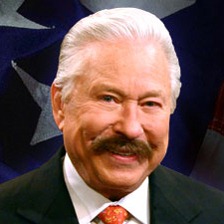
Before there was Nicholas Cage in the Left Behind movie, there was Hal Lindsey, the great popularizer of EndTimes scenarious based on a dispensationlist interpretation of the Book of Revelation.
The Late Great Hal Lindsey
In late November, I learned of the death of Hal Lindsey, the author of the 1970’s blockbuster book, The Late Great Planet Earth. That book was the best selling book in America in that whole decade, behind the Bible. Lindsey was a popular Christian speaker among college student audiences, particularly through Campus Crusade for Christ (now known as CRU). An extended family member of mine was convinced in reading that book that Jesus would return sometime in the 1980’s, probably by 1988, some 40 years after the founding of the modern national state of Israel 1948. Some famous Christians still think that Jesus will return before everyone living in 1948 dies, based on their interpretation of the Bible, and tweaking Hal Lindsey’s timeline.
Jesus could still return at any time, but I am not waiting to hold my breath that the year 1948 holds the definitive key to unlocking this biblical prophecy.
Lindsey was a bit fuzzy about the exact date of Christ’s return, but the conflict between the U.S. and the Soviet Union had many concerned. Back then, the threat of the Cold War and the USSR had me thinking that Lindsey might be right. Maybe??? I was not a geeky student of the Bible then, yet I had Christian friends whom I respected who were enamored with Lindsey’s book. But the fall of the Soviet Union by 1989 pretty much dissolved Lindsey’s reputation.
Not only did Lindsey miss the target on the date of Christ’s return, he also had questionable personal integrity with respect to marriage, being married four times going through several divorces.
Even within the last decade or so, back in the days before the iPhone and when watching television was still a thing, Lindsey was prominent on late-night cable TV, offering his analysis of world events that might impact the future. The Left Behind series of novels and movies owe a tremendous debt to Hal Lindsey. Mmmph.
Perhaps the larger scope of Lindsey’s Bible interpretive method, what theologians call “dispensationalism,” might prove to be correct in the long run, but the date-setting proclivities embedded in The Late Great Planet Earth have proven to fall woefully short in retrospect. With all due respect, I would argue that there is a better way to read the Bible concerning the “End Times.” For a similar approach, British theologian Ian Paul offers his perspective.
Frankly, I am glad I have never bothered with late-night cable TV. I was not missing much!
“Red Letter” Christianity??
Then there was the death of evangelist Tony Campolo. Years ago I read his Partly Right: Learning from the Critics of Christianity. Campolo helped many to listen to non-believers with a sympathetic ear, a virtue which I hopefully have tried to learn from, and emulate in Veracity blog posts.
About 35 years ago, I attended a Christian youth conference in Pittsburgh where Campolo was headlined as the primary speaker. Afterwards a couple of friends and I were tasked to take Campolo back to the airport to catch a flight back to his home in Philadelphia, where he was a professor at Eastern University. He was a great conversationalist, with an amazing knack for helping others to think outside of the box. Campolo impressed me as a radical Christian, which was cool. Below is one of my favorite Tony Campolo sermons:
Over the decades, this quality also made him controversial. He kept pushing boundaries. He was the spiritual advisor to President Bill Clinton during the 1990s, through the period of Clinton’s sexuality scandal. Though pro-life with respect to abortion, he was otherwise very involved in progressive politics. At one point, he refused to identify himself as an “evangelical,” as in his view, the term had become hopelessly hijacked with its connection to right-wing politics.
But he kept pushing boundaries further than necessary. He became edgy in ways I ultimately could not endorse, popularizing the concept of a “Red-Letter Christian,” elevating the words of Jesus above other teachings in Scripture. As I have shown before (see the following hyperlinks), this hermeneutic is really an example of wishful thinking that fashions the ministry of the earthly Jesus into something that reflects the embedded cultural values of the Bible reader and not what is actually in the text of Scripture. In this way of thinking, the words/teachings of Jesus are prioritized over other teachings in the Bible, particularly the letters of Paul.
Contrary to the claim made by certain skeptical scholars that the New Testament is an inherently contradictory mish-mash of attitudes towards the Law of Moses, and ethics in general, the way the New Testament actually works is a really good example of progressive revelation in action. Progressive revelation demonstrates that God reveals truth in the Bible over time, later revelatory teachings built on top of and refining earlier teachings. For example, the New Testament itself completes the message that unfolds over centuries of Old Testament texts and teachings.
Jesus is not the only one speaking in the New Testament, for he also uses the words of Paul, but that only comes out over time. For example, Jesus’ earthly ministry was focused primarily on the Jews living in and around Jerusalem and Galilee, despite a few forays into Samaritan territory and contact with “God-fearing” Romans. In the “red letters,” Jesus tells us that he only came for the lost sheep of Israel (Matthew 15:24). It is not until AFTER the ascension of Jesus that the Gospel’s progress extends in full force to go outside of Israel and impact the whole world. Paul, who knew nothing of the earthly Jesus, received his commission on the road to Damascus by the Risen Jesus to be the Apostle to the Gentiles.
In other words, the full inclusive message of the Gospel is articulated by Jesus through the words of the Apostle Paul, not through the actual “red letters” of Jesus alone. If you are looking for an antidote to xenophobia, you need to look more to the words of Paul and not the words of the earthly Jesus in comparison. This is NOT to say that Jesus was xenophobic. Of course not. But it is to say that the Gospel’s message of welcoming and embracing those who are different from ourselves comes out more clearly through Paul, as the message of progressive revelation expands out through the pages of the entire New Testament.
The Christian faith today would look a whole lot different if Jesus had not tapped Paul to be his prime emissary to the Gentile world. Otherwise, Christianity would probably only remain a smaller sect within Judaism, and not the worldwide, universal faith of billions today.
The New Testament does not offer a full throated attack against slavery, but you do get at least a modest, indirect attack against the institution of slavery in the teachings of Paul. In comparison, the “red letters” of Jesus in the Gospels never challenge the institution of slavery, even in any indirect way. If all we had were the “red letters”of Jesus to go on, we would have never had a Christian abolitionist movement to end slavery in the United State. Think about that.
If you looking for a message of non-violence in the New Testament, and you are willing to lay aside the whole concept of judgment coming at the end of time momentarily, the words of Paul help you out better than the “red letters” of Jesus. For while the “red letters” of Jesus in the Gospels do promote non-violence, the “red letters” of Jesus in the Book of Revelation tell a very different story. In Revelation, we have Jesus going around wielding a sword and not afraid to use it. Even if you take Jesus’ words in Revelation more non-metaphorically (a wise thing to do), Jesus’ words are still more harsh than anything we find in Paul. In comparison, Paul never says an explicit word about endorsing the use of violence. Think about that one, too, for a moment.
Then finally, when it comes to the doctrine of hell, even if you leave the Book of Revelation out of the picture, Jesus talks about hell, or images related to hell, more in his “red letters” than what we find in the words of Paul. Paul never even mentions any word corresponding to “hell” once in his letters, and he only talks about “eternal destruction” in one verse, 2 Thessalonians 1:9. The differences are real, if we only take the time to actually read the New Testament.
The theological trajectory that Tony Campolo took has grieved me.
“Red Letter” Christianity sounds great on the surface, until you actually start to read the “red letters” of Jesus in comparison to other texts in the Bible. At the risk of some overstatement, in Campolo’s way of wishful thinking he wanted to equate the words of Jesus, written in red in some Bibles, with social justice efforts. Much of this was all well-intended, as I have seen it. But it seemed to also follow in a murky way and track along with what Elon Musk has called a secular “woke mind virus,” whereby everything in reality is measured through the lens of an oppressor/oppressed matrix, viewing Dr. Martin Luther King, Jr.’s vision of a “color-blind” society as a deficiency and not a goal for real social change. Campolo even flipped his position on homosexuality, eventually embracing same-sex marriage as a viable Christian option.
His son, Bart Campolo, went even further, going through a period of deconstruction of his own faith, ultimately deconverting and renouncing Christian faith altogether, becoming a “humanist” chaplain. In my view, Bart took his father’s theological trajectory to its logical conclusion. I commend Bart’s honesty, though I can not follow that path either.
A contrarian in many ways, Tony Campolo nevertheless set a very good example in encouraging conservative Christians to fight against racism and ending poverty, and not getting caught up in fantasies about “Christian Nationalism.” Despite many of the positive contributions like this he made, Tony Campolo regretfully drifted away from historic orthodoxy, in a way that is not theologically sustainable over the long run across the generations (as evident with his son, Bart), but he did not drift far enough to ultimately escape God’s grace, at least in my estimation.
Another Dietrich Bonhoeffer Movie
On a somewhat related note, my wife and I and some friends did get a chance to see the new Bonhoeffer movie, over the Thanksgiving weekend. Dietrich Bonhoeffer grew up in the world of German theological liberalism in the early 20th century, but then embraced a vision of neo-orthodoxy, a broad counter-movement to liberalism, a kind of theological half-brother to evangelicalism, that sought to restore the faith, particularly as a response to the widespread embrace of Hitler’s Nazism, which entered the void left by German theological liberalism.
Having read a few biographies about Dietrich Bonhoeffer, it was slightly painful to see how the film mangled some of the chronology of Bonhoeffer’s life. For example, Bonhoeffer confusingly placed Dietrich’s last trip to New York sometime presumably after Hitler’s invasion to Poland, after Dietrich had joined the Abwehr , the German military intelligence unit. The more historically accurate chronology has Dietrich going to New York for the last time in the early summer of 1939, realizing that he had made a mistake in going to America, and then returning to Germany to face his fate. Within a few months of his return to Germany, he then joins the Abwehr, in a subversive effort to bring down Hitler from the inside. Hitler invades Poland that September.
But the film did highlight the key moments of the German theologian’s overall career, who died at the hand of the Nazis, after being implicated in a conspiracy that failed to assassinate Hitler. What more can you try to squeeze into a 2-hour movie? Bonhoeffer’s Christian courage is both inspiring and controversial, and the legacy of this pacifist-turned-political-traitor will continue to be examined and re-examined for some time to come.
What I found fascinating are the reviews that go all over the map regarding the kind of impression the Bonhoeffer movie was trying to make. For example, on one side, Slate magazine says “In an age of rampant access to information but elusive truth, we are all searching for quick ways to categorize one another, and to claim the best heroes for our own personal camps. Such is also the case with Bonhoeffer, whose most popular biography was written not by a German theologian, but by American conservative radio host and prominent Trump supporter Eric Metaxas….. The movie is, then, yet another claim conservatives are making to Bonhoeffer’s legacy.”
On the other side, America: The Jesuit Review, took a completely different slant, suggesting that the film is actually a prophetic warning issued against Christian conservatives: “What separates “Bonhoeffer” from the myriad instructive Holocaust biographies and melodramas is its timing: American audiences have never before watched a movie about World War II-era Germany with the knowledge that a majority of their own electorate has voted in favor of fascism….Will Evangelical America be apologizing in five years?”
I guess that is partly why I liked the film, and would recommend others see it, even with the strained and confusing chronology. When viewers on opposite sides of their ideological biases have quite contradictory takes on the same film, it generally indicates that the film at least got something right. The truth is probably somewhere in the balance between two extremes.
On my “to-be-read” list is Charles Marsh’s biography of Bonhoeffer, Strange Glory: A Life of Dietrich Bonhoeffer. Most people that I know who have read the Marsh book tell me that it is better than Eric Metaxas’ biography of Bonhoeffer.

The Book of the Year… Books and More Books
My book of year, hands down, is Michael Licona’s Jesus Contradicted. More than any other book I have read in a long time, Licona’s work to reframe how we think about the inspiration of the Scripture, in view of the evidence, and see how the impact of Greco-Roman genres of literature helps us to make better sense of the differences/discrepancies we read in the Gospels. While I do not think Licona’s call for an updated revision of the Chicago Statement on Biblical Inerrancy will gain much traction, I do think Licona’s flexible view of biblical inerrancy is the most defensible way to think about the reliability of the Bible.
We do not need to try to torture the Bible to make it say what we want it to say. God gave us the Bible the way we have it, so we simply need to trust that God knows exactly what he has done and what he continues to do (BONUS: here is a link to a video interview by a Roman Catholic scholar about the late Pope Benedict that says pretty much the same thing).
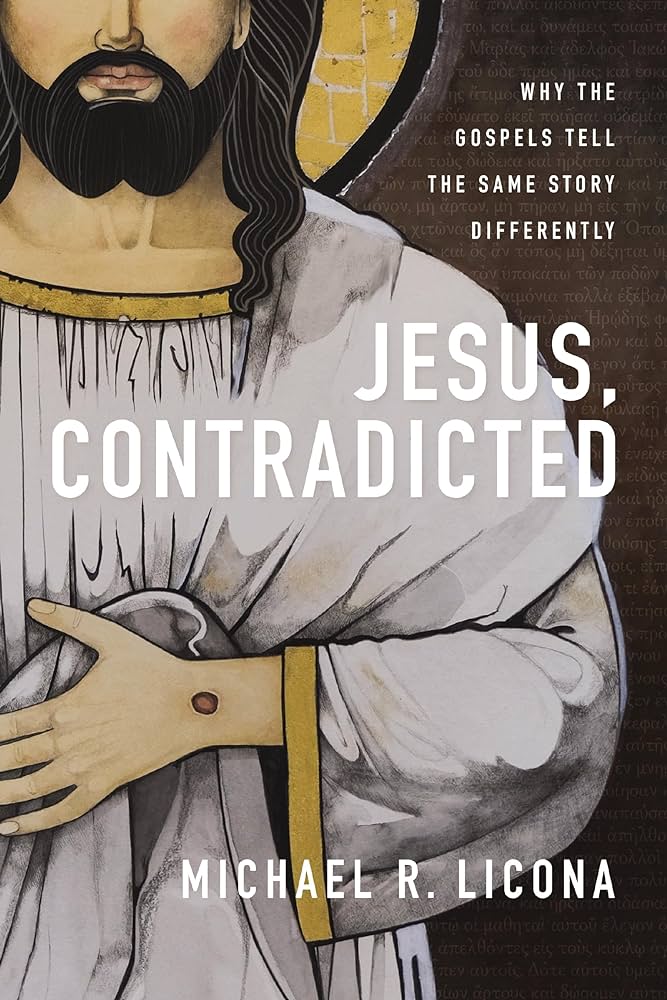
Jesus, Contradicted: Why The Gospels Tell The Same Story Differently, by Michael Licona, offers a more evidenced-based approach to handling differences in the Gospels, without resorting to tortured harmonization efforts.
My number two book of the year is the timely The Anxious Generation, by Jonathan Haidt, showing how social media has hijacked the mental health of a generation of children and other young people. The book is making an impact, and I encourage everyone to go read it…. like right now!!
In many ways, our culture has gone crazy with an “anything goes” attitude towards social media while punishing parents who allow their kids physical freedom to go out and explore the world on their own. This is insane.
The good news is that the message of this book is not only making in-roads into the church (though perhaps not enough), it is starting to have in impact in the wider culture. In late November, 2024, Australia took the bold and audacious move of banning social media for people under the age of 16. I am not sure how enforceable such a law could be, but it is a step in the right direction as it will hopefully stir up families to take a closer look at how children digest and consume social media.
So while Haidt’s book is not the number one book I read in 2024, it certainly is the most timely and important!

The Anxious Generation: How the Great Rewiring of Childhood is Causing an Epidemic of Mental Illness, by Jonathan Haidt
——————–
Odds-n-Ends
The other most profound theological book I read in 2024 was Matthew Thiessen’s A Jewish Paul. I am not clear on what Thiessen’s exact theological commitments are, but in this book he explains Paul’s teaching about the “spirit,” in terms of “Pneumatic Gene Therapy,” as an explanation which makes sense of what Paul had in mind regarding the dynamics of living the Christian life, as well as thinking about the future bodily resurrection of believers.
Following up on A Jewish Paul, I read and reviewed Kent Yinger’s The New Perspective on Paul, a very, very helpful and accessible introduction a topic that at least in some circles is very controversial. Read the review, or better yet, get a copy of the book to make sense of what the fuss is all about.
……………..
A couple of years ago, I decided to try to read at least one Bart Ehrman book a year, and offer a review. Ehrman is probably the world’s leading academic critic of evangelical Christianity, having a very loyal following of formerly evangelical Christians who have deconverted from Christianity, or otherwise deconstructed their faith in a more progressive direction. Ehrman’s podcast on YouTube has 180 thousand subscribers, so he is hard to miss.
Most Christians I know either do not know who Bart Ehrman is, which is odd, as he is probably the 21st century equivalent to Bertrand Russell, or the biblical scholar equivalent to the scientist Richard Dawkins. Or they just ignore Ehrman. I think that is a mistake. Faith deconstruction is fueled by social media these days, and Bart Ehrman stands at the head end driving a lot of it.
A lot of Christians think of Ehrman as “demon spawn,” or something like that. The problem is that Ehrman is actually an impressive, and in many ways, a winsome communicator and teacher, as evidenced by his podcasts. He considers the evidence carefully. He is a very engaging writer, too.
The problem with Ehrman ultimately, however, is one of method. The most formidable skeptics, like Ehrman, tend to think of themselves as “scholars” as opposed to being “apologists.” In this sense, “scholars” are those who do not descend to the level of apologetics. However, this is just a bunch of hogwash. Everyone is an apologist for whatever beliefs they have. Everyone has their biases, including Bart Ehrman, as well as Christians. Scholars like Ehrman bracket off the divine inspiration of the Bible to the side, which effectively undercuts the big-picture univocality of the Bible, thus reducing the Bible to a jumble of contradictory texts.
The key to appreciating Ehrman in the most irenic and charitable way is to acknowledge that he has many helpful insights, while being able to detect how the method he uses to do research is formed by the skeptical worldview he embraces, thus informing the kind of conclusions he arrives at, which are at odds with historic orthodox Christianity. There is no such thing as a completely unbiased scholar, despite what Bart Ehrman repeatedly suggests.
In 2022, I reviewed Ehrman’s Heaven and Hell: A History of the Afterlife. In 2023, I reviewed Ehrman’s Forgery and Counterforgery: The Use of Literary Deceit in Early Christian Polemics. In 2024, I wrote a two part review of his Armageddon: What the Bible Really Says about the End.
……….
Stephen De Young, in his The Religion of the Apostles, stands out as one of the most thought-provoking Eastern Orthodox writers, showing how an appreciation for the faith and practices of the early church dovetails with Christian apologetics, in a way that even non-Eastern Orthodox Christians should be able to appreciate. I liken Stephen De Young to be the Eastern Orthodox version of the late Old Testament scholar, Michael Heiser, who has influenced me greatly.
……………………………
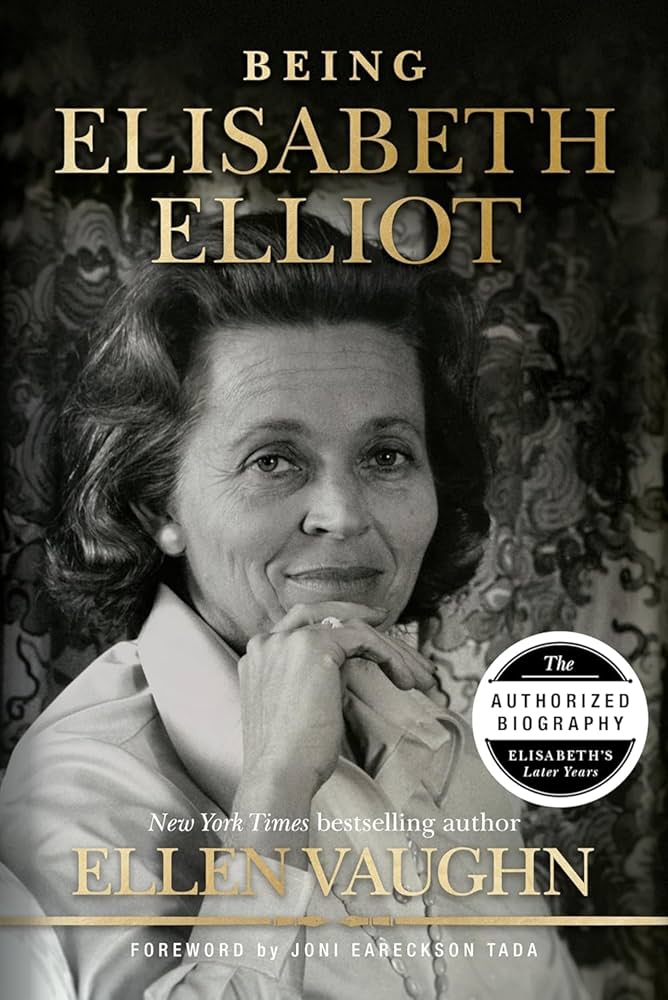
To wrap up the year, I read three biographies about a single person, Elisabeth Elliot, perhaps the most prominent female evangelical intellectual and Bible teacher of the latter half of the 20th century. Lucy Austen and Ellen Vaughn wrote some great books, examining one of the most fascinating, complex, and controversial Christians of the past hundred years. The stories about her life were equally riveting, maddening, and entertaining. But my ultimate conclusion is that reading about Elisabeth Elliot’s life challenged me to think more about what it means to act in obedience to Christ, no matter what the cost.
I started a bunch of other fun books, but finished very few of them! Look for some Veracity book reviews in early 2025. On some roadtrips my wife and I took this year, I caught up with a bunch of The Rest is History podcast episodes (my favorite podcast), particular the series about the life and assassination of John F. Kennedy (what a womanizer!), and the first half of the French Revolution history series. British historians Tom Holland and Dominic Sandbrook play off one another to do some great storytelling that I can listen to all day, if I could. Superb stuff!
If you like listening to British accents in podcasts and enjoy history like I do, another great podcast is Melvyn Bragg’s In Our Time, put out by the BBC. Unlike The Rest is History, Melvyn Bragg brings in several experts (mainly from the UK), and he asks very attentive questions to his guests about the topic at hand. I am bit behind in listening to the episodes I want take in, but Baylor University historian Philip Jenkins has a blog post outlining kind of a “best of” selection of the best In Our Time episodes.
Right now, I am most excited about the year 2025 being the 1700th anniversary of the writing of the Nicene Creed. That’s right. 1700 years ago, the first and perhaps most important church council (after the Jerusalem council described in Acts 15) met to hammer out the first universal creed of the Christian faith.
If you like podcasts, you might want to look into the Passages podcast which covers the history and theology of the Nicene Creed, put out by the good folks at MereOrthodoxy.com, to get you primed for learning about this most important creed which unites billions of Christians together today.
Have a Happy New Year, and welcome in 2025!!










 Veracity