Tag Archives: second coming

Will the Rapture Happen on September 23-24, 2025?

Will the “rapture” happen on September 23-24, 2025? I have a quick answer for this one: “NO.”

Over the past thirteen years when I have been writing on the Veracity blog, there have been several attempts at “date setting” event predictions connected to the Second Coming of Jesus. Speculation about “blood moons,” eclipses, etc. surface from time to time, and go viral on various news feeds, and this year is no exception. Videos of people having personal dreams about the “rapture” show up on YouTube and TikTok.

I would normally ignore stuff like this, as it keeps happening over and over again. All of the hundreds of attempts over the centuries to try to calculate the exact timing of the Second Coming of Jesus, or related events, have a 100% failure record…. which is pretty terrible. But what struck me this time is how “date setters” have managed to find a way around the New Testament warning AGAINST date setting.
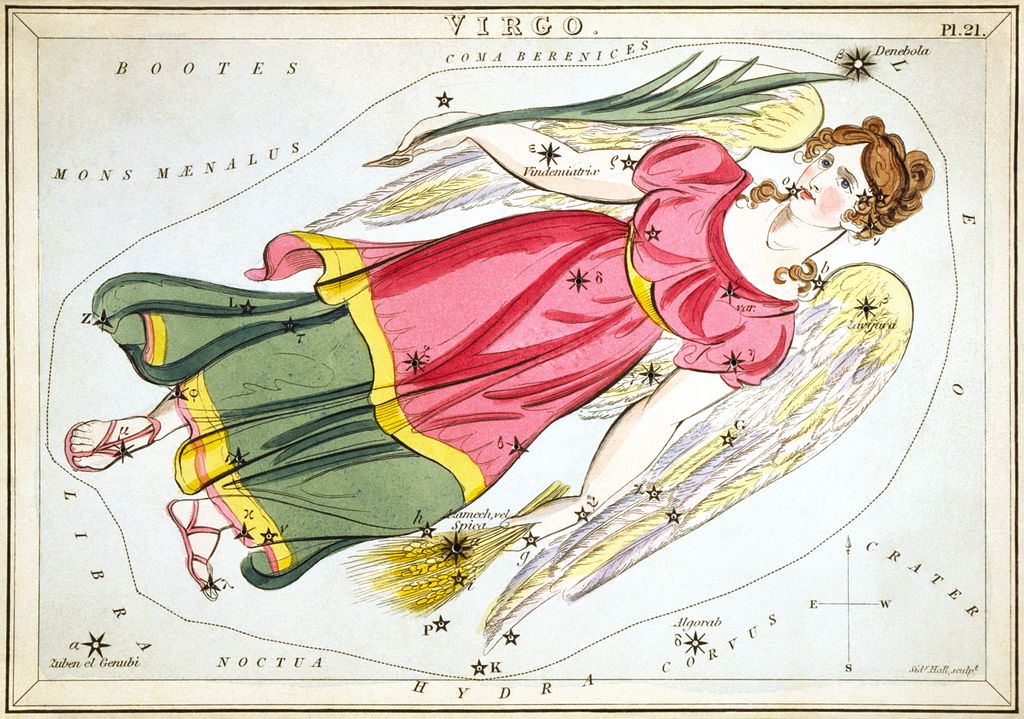
Back in 2017, a prediction associated with the Second Coming of Jesus was made by date setters connected to the constellation Virgo. Foreboding a fulfillment of the Book of Revelation? Nope.  Nothing happened like that in 2017….. The same will prove true for the September 23-24 prediction in 2025.


The standard response any informed Christian should give to “date setting” speculations can be found in texts like Matthew 24:36, where Jesus himself says:

“But concerning that day and hour no one knows, not even the angels of heaven, nor the Son, but the Father only.

In other words, Jesus as the Son does not even know the time of the Second Coming. For if Jesus does not even know, why would we think that anyone else living on planet earth would be able know any better?

You would think that should settle the matter. But apparently, some have come up with a very clever response to get around these words of Jesus.

The September 23-24, 2025 current speculation for the “rapture” has a certain twist to it. Rosh Hashanah is the time of the Jewish New Year, which will occur sometime during this period, for 2025, over these couple of days. Rosh Hashanah is also known as the Feast of Trumpets, the timing of which is determined by the sighting of the first sliver of the New Moon.

But what if certain atmospheric or other conditions interfere with an accurate sighting of the New Moon? For example, what if the evening is cloudy? Here is where the latest escape hatch for justifying “date setting” comes into play.

The claim is made that when Jesus says that the “day and hour no one knows,” this is a reference to the fact that it is not always clear as to when the New Moon could be actually sighted.  Could it be September 23rd?  September 24rd? At what hour? We are not sure, but it should be somewhere within this time frame.

If you scour Internet websites where this claim is made, the suggestion is made that Jesus is simply using a Hebrew idiom associated with the Feast of Trumpets to describe the timing of an event like the “rapture.”

The problem here is that there is no evidence which indicates that the “day and hour no one knows” is indeed such a common Hebrew idiom. You would think that if there was indeed such a Hebrew idiom, that a source can be cited to demonstrate this.

Hebrew idioms like this do exist. For example, when Jesus in the Gospels cites the sign of Jonah regarding “the three days and three nights” associated with his coming death, there is indeed an existing Hebrew idiom found among rabbinic Jewish writings, which serves as evidence to support the claim.

Unfortunately, for purveyors of the “day and hour no one knows” Hebrew idiom claim, there is no such evidence. But since the idea appears to fit, advocates for this hypothesis are not bothered by the lack of evidence.

In other words, for the date-setters, it is apparently okay for someone to claim something is true without evidence to support it, simply because you want it to be true: It is okay to simply make things up in order to justify your interpretation of the Bible.

This is really a bad way to try to interpret the Bible.1

I am no prophet, but I am willing the make a firm prediction here: While it is true that Jesus could indeed return at any time, September 23-24, 2025 will come and go and nothing will happen. As this has happened time and time again, purveyors of this type of thinking will go back and rethink their date setting, and some may suggest a new date, based on more supposedly accurate data to work with. Or they will find some other sophisticated way to wiggle out of their original predictions. If someone is foolish enough to buy into the prediction and sell their house and all of their belongings before September 23-24, they will probably be severely disappointed.

But worst of all, such another repeated failed prophecy prediction will invite more skepticism against the integrity of the Christian faith.

Folks, we can do better than this.

Notes:

1. As apologist Mike Winger shows from his videos regarding the September 2025 rapture speculations, there are other ways of mistreating the Bible which are also bad. For example, 1 Thessalonians 5 is the famous passage on the “rapture,” as verse 2 lays out what Paul is writing to his readers: “For you yourselves are fully aware that the day of the Lord will come like a thief in the night.” Paul is indeed warning the Thessalonians of the first century that the return of Jesus will come at any time. That Jesus is returning is sure, but the timing is unexpected. But at least one popular purveyor of the September 2025 rapture hype claims that in 1 Thess 5:4 , Paul shifts his audience to address people living much, much later (like September 2025???): “But you are not in darkness, brothers, for that day to surprise you like a thief“.  In other words, Christians today will not be surprised as to when Jesus comes back, as they will no longer be in darkness about the timing of the “rapture.” Not surprisingly (pun intended), this popular purveyor of the September 2025 prediction gives no supporting evidence for the claim that the “you” of verse 2 shifts to a different “you” in verse 4, the later “you” being Christians living 2,000 years later. This is just making stuff up to make the Bible say what you want it to say. What is missing is the intervening verse 3: “While people are saying, ‘There is peace and security,’ then sudden destruction will come upon them as labor pains come upon a pregnant woman, and they will not escape.”  Verse 3 here explains the meaning of verse 4, in that there will be some in Thessalonika who will be completely surprised at the coming of the Lord, when/if it comes in that day.  But the coming of the Lord will not be a surprise for the Christian believers who understand the truth that the Lord will indeed return. In other words, while the coming of the Lord Jesus will not be a “surprise” for those who expect it, we still will not know when it will come; that is, the exact timing of his coming, NOT the fact that Jesus is coming.  Since what Paul wrote to the Thessalonians, regarding the Second Coming, did not happen in his lifetime, there is nevertheless still a message for us living today. If only such prophecy “teachers” could read the Bible in context, and stop reading things into the text which simply are not there!!


A Chapel Institute Conversation on Progressive Christianity (Veracity Video Special !!)

My friend and one of my pastors, Hunter Ruch, sat me down after lunch not too long ago to record two sessions for the Williamsburg Community Chapel Institute. The Chapel Institute is a ministry of the Williamsburg Community Chapel, in my hometown, Williamsburg, Virginia.

During this interview, Hunter and I talk about some very important topics. First, we briefly share about another ministry that he and I are very much excited about, the Cambridge House, at the College of William and Mary. The Cambridge House is a Christian Study Center located within walking distance of the College, where I work. Just a week or so before my interview, another friend and new director of the Cambridge House, Jon Thompson, was interviewed by Hunter about what it means to be human. Read more about the Cambridge House here!

After that, in the first session, we launch into a conversation about what is “progressive Christianity“, how it differs from “historic orthodox Christianity,” and some of the history behind the movement, offering a few examples of what “progressive Christianity” might look like in certain expressions of the church. We talk about how the “progressive Christianity” of the 20th century has morphed into the “progressive Christianity” of the 21st century.

In the second session, we drill down on one particular example of “progressive Christianity,” the idea of “Christian universalism,” which contends everyone will ultimately be saved and reconciled to God in the end, through Jesus. At first, ideas like this look attractive, but it can lead to warped understandings of what the Bible actually teaches. It is very sad and disconcerting when certain evangelical influencers drift off in this direction. We wrap up our conversation talking about ways that we can help others who are wrestling with “progressive Christianity,” and trends like “deconstruction,” and how we can avoid drifting into “progressive Christianity” ourselves.

Just a few comments about what you will see and hear. First, Hunter introduced me as the senior networking “director” of IT at the College, which is not accurate. I am more properly a “senior network engineer,” part of a team of IT staff, though my main responsibility is in the area of architecture and design. Secondly, I got a little lost halfway through the second segment, explaining some of the problems associated with “Christian universalism,” but hopefully I got back on track!! Please let me know what you think in the comment section below.


The Beautiful Gate: Holy Week, Ezekiel, Mary, and the Return of Christ

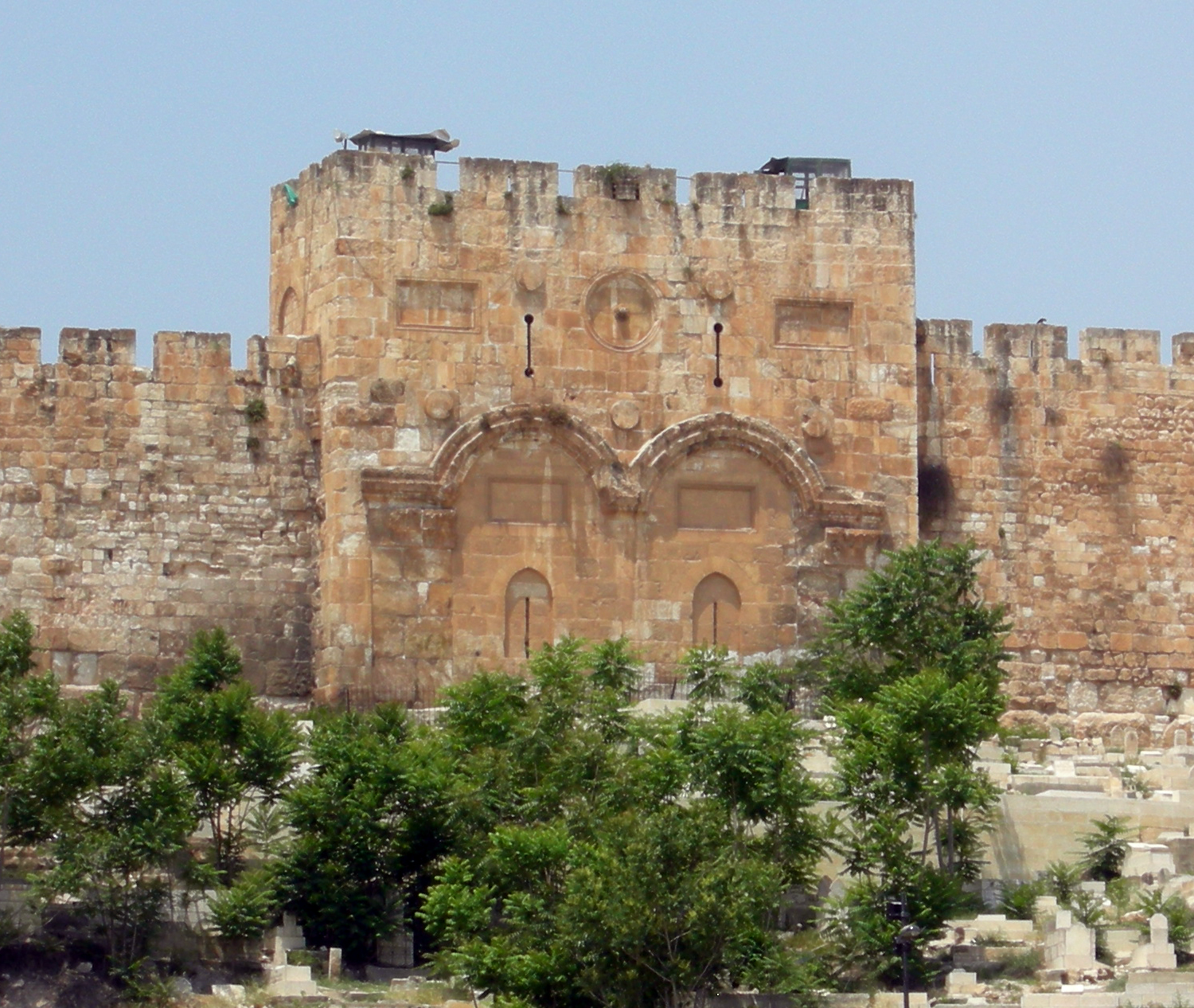
The Golden Gate of Jerusalem, that some identify as being the Beautiful Gate of Acts 3, where Jesus will return at the end of the age (credit: Wikipedia)

In Acts 3, some followers of Jesus met a lame beggar, at the Beautiful Gate, as the man was asking for alms of those entering the temple. Peter stunned the beggar by saying, “I have no silver and gold, but what I do have I give to you. In the name of Jesus Christ of Nazareth, rise up and walk!” (verse 6). The man was healed, and Peter boldly proclaimed the news that Jesus was and is indeed the Risen Messiah, to those who saw this miracle.

The man was “leaping up” (Acts 3:8), anticipating that this is one of the signs indicating the beginning of the messianic age, as foretold in the Old Testament, as in Isaiah 35:6 (ESV):

..Then the eyes of the blind shall be opened,
    and the ears of the deaf unstopped;
then shall the lame man leap like a deer,
    and the tongue of the mute sing for joy.
For waters break forth in the wilderness,
    and streams in the desert;..

The Beautiful Gate is not directly mentioned elsewhere in the Bible, and unfortunately, scholars are divided as to the exact location of the Beautiful Gate. As the Temple Mount area was largely destroyed in 70 A.D., it is difficult to establish the location with much certainty. However, there are at least one (or two) theories, though I am hardly qualified enough to be sure of them, that tell very interesting stories.

Some say that the Beautiful Gate is the same as the Golden Gate, located on the eastern side of the Temple Mount, sitting above the Kidron Valley, across from the Mount of Olives. Though not clearly specified in Scripture, tradition suggests that when Jesus made His triumphal entry into Jerusalem, starting from the Mount of Olives, that He entered the city through this gate, on Palm Sunday (Luke 19:28-44), the beginning of what many Christians call “Holy Week.” Within that following week, subsequent events would lead to the Crucifixion and, finally, the Resurrection of Jesus.

Proponents of this theory also suggest that when Jesus returns at His Second Coming, that he will appear on the Mount of Olives again (Zechariah 14:4), and travel the same route he took on Palm Sunday, entering the city again through this same gate, into the temple area.

What caught my attention with this theory was something that you will notice about this gate. As you see in the photograph, the gate has been walled off, and sealed shut.

This Golden Gate was sealed shut in 1540-41 AD, by Suleiman the Magnificient, an Ottoman Empire sultan. The story goes that Suleiman sealed the gate, and even placed a Muslim graveyard into front of the entrance, in order to prevent the Jewish Messiah from entering the city.

If you are familiar with the Book of Ezekiel, you will know that Ezekiel mentions a gate or entrance to the city, on the east side, facing presumably the Mount of Olives (Ezekiel 10:18-19, 11:23, 43:1-5). But then in Ezekiel 44:1-2, we read a fascinating passage:

Then he brought me back to the outer gate of the sanctuary, which faces east. And it was shut. And the Lord said to me, “This gate shall remain shut; it shall not be opened, and no one shall enter by it, for the Lord, the God of Israel, has entered by it. Therefore it shall remain shut.

Many Christians have read this to believe that Suleiman’s actions were actually a fulfillment of prophecy, though he did not realize it. Then when Jesus returns again, the gate will be opened for the returning Messiah (Ezekiel 46:12).

Such interpretations are not without their problems. A long standing, older interpretation, going back to the early church, understands that the shutting of the gate in Ezekiel 44:1-2, is about something completely different.

A number of early church fathers saw this as Ezekiel’s prophecy regarding the perpetual virginity of Mary, a belief shared today by Catholics and Eastern Orthodox alike, that Mary was not only a virgin before the birth of Jesus, but that she remained a virgin her whole life, as taught here by Saint Augustine of Hippo, in the 5th century AD.

“It is written (Ezekiel 44, 2): ‘This gate shall be shut, it shall not be opened, and no man shall pass through it. Because the Lord the God of Israel hath entered in by it…’ What means this closed gate in the house of the Lord, except that Mary is to be ever inviolate? What does it mean that ‘no man shall pass through it,’ save that Joseph shall not know her? And what is this – ‘The Lord alone enters in and goeth out by it,’ except that the Holy Ghost shall impregnate her, and that the Lord of Angels shall be born of her? And what means this – ‘It shall be shut for evermore,’ but that Mary is a Virgin before His birth, a Virgin in His birth, and a Virgin after His birth.” 

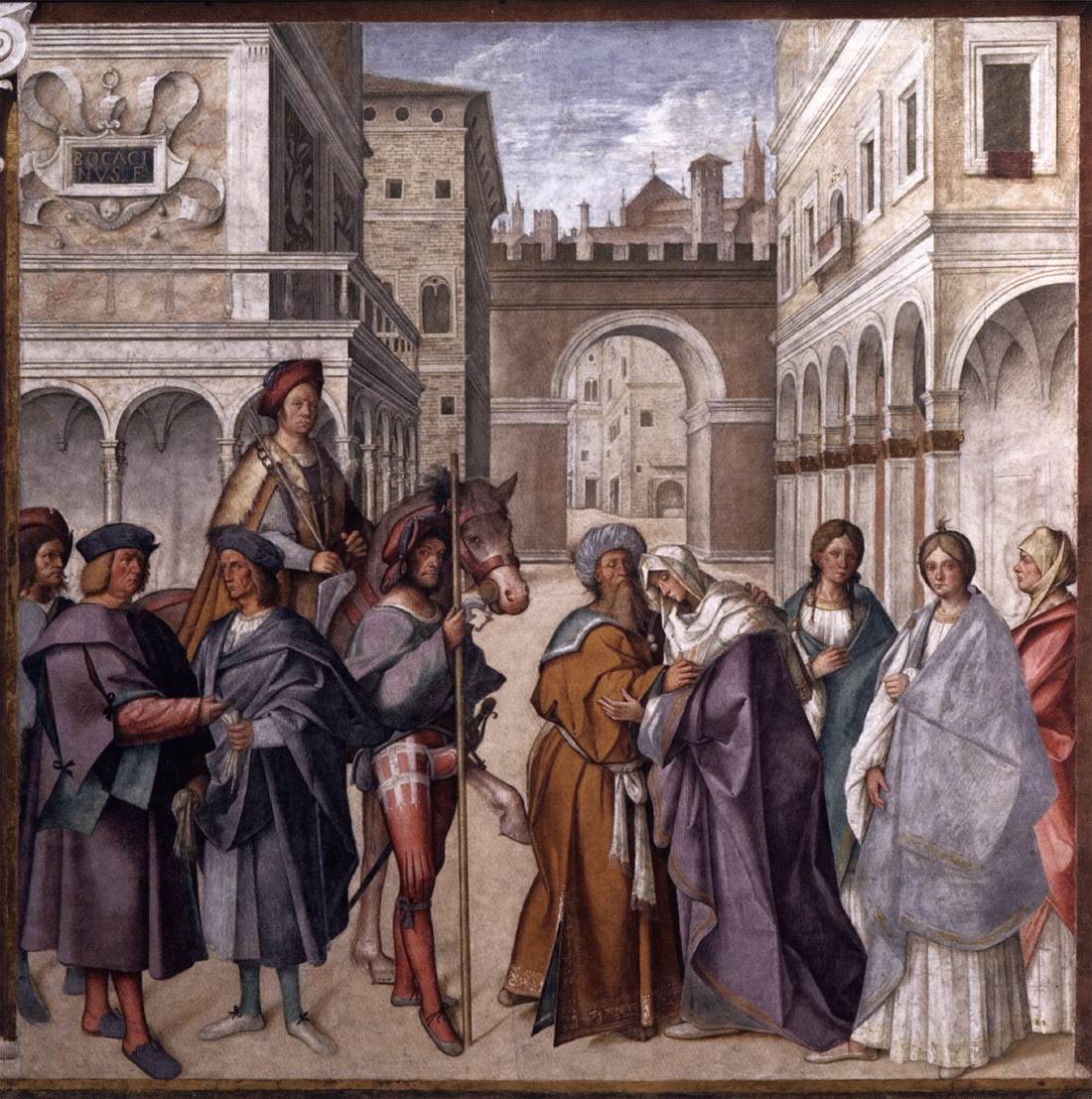
But I recently learned that the Beautiful (or Golden?) Gate figures prominently in the apocryphal story of the Annunciation of Mary, to her parents (see below). Not too many evangelical Protestants would accept this particular interpretation today.

Well, there is a lot of speculation here, I must freely admit. Various Christians have long debated and will continue to debate the details on these matters.

Nevertheless, the momentous events during Holy Week, from Palm Sunday to the Resurrection, give us a lot to think about. The entire message of the Bible, from the Old Testament, to the very end of this current age, puts a laser focus on this very special week in world history. No matter where you land on the true meaning, location and history of the Beautiful Gate, where Peter healed the lame beggar, this gate points to the central themes of the Bible that are worth the efforts of our meditation.

Meeting at the Golden Gate, by Boccaccio, 1514-1515, at Cremona Cathedral. In the New Testament apocryphal literature, the Protoevangelion of James, the parents of the EverVirgin Mary, Joachim and Anna, met at the Golden or Beautiful Gate, after both received a visit independently from the Archangel Gabriel, promising them the birth of their child. Though not a part of the Bible, the Protoevangelion of James was a popular text in the medieval church, for thinking about the life of Mary, the mother of Jesus. (credit: Web Gallery of Art).


Revelation … (and the Rapture Reboot)

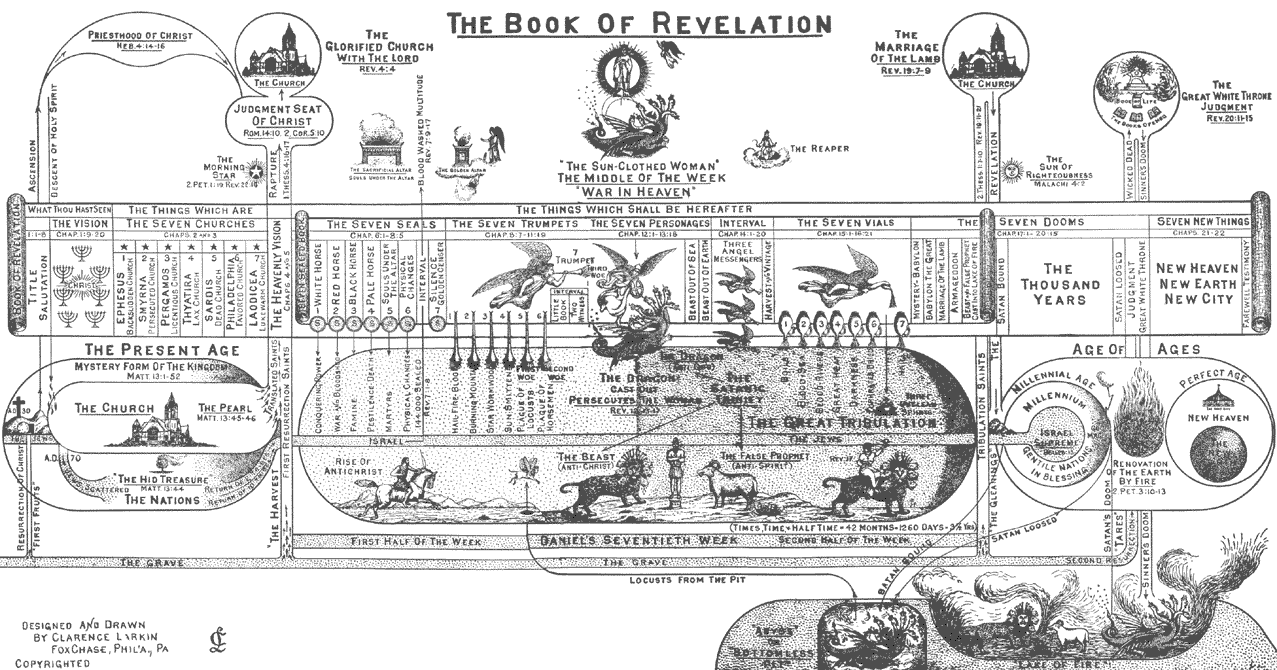
Clarence Larkin (1850–1924), a Baptist pastor, produced this intricately detailed chart showing the structure of the events described in the Book of Revelation according to a dispensationalist system of Bible interpretation. Note how Larkin splits the event of the Second Coming, into two parts: the first where Christ "raptures" the church and the second where the Christ comes in glory with his Church to begin the millennial reign. In between the two parts of the Second Coming is the "seventieth week of Daniel," which forms the basic narrative of the last book of the Bible.

Clarence Larkin (1850–1924), a Baptist pastor, produced this marvelously intricate and detailed chart showing the structure of events described in the Book of Revelation according to a dispensationalist system of Bible interpretation (Click to enlarge). Note how Larkin splits the event of the Second Coming, into two parts: the first where Christ “raptures” the church out of the world and the second where Christ comes in glory with his Church to begin the millennial reign. In between the two parts of the Second Coming is the “seventieth week of Daniel,” which forms the basic, if not sometimes terrifying, narrative of the last book of the Bible… You really need a chart to keep track of everything! (Source: clarencelarkincharts.com)

The subject of the End Times can be very daunting. Various places in the New Testament address the topic, but by far the most fascinating discussion in the Holy Scriptures that digs into End Times issues can be found in the very last book of the Bible: The Revelation.

As I was nearly completing this blog post on the Book of Revelation, I read about a new Christian movie coming out this year, Left Behind. What? Nicholas Cage in a Christian movie?

Yep. That’s right. What a great lead in on a blog post about the Book of Revelation! How did this all come about?

Well, the story is that some years ago, best selling Christian authors Tim LaHaye and Jerry B. Jenkins wrote a series of popular books of the same name. The only book series that has topped Left Behind in sales in recent years is Harry Potter.

In 2000, Cloud Ten Pictures released a theatrical version of the book, starring Christian actor Kirk Cameron. Left Behind: The Movie was a total bust at the box office. Unlike the Harry Potter films, Left Behind: The Movie never went very far.

In response to the poor sales and lackluster quality, author Tim LaHaye sued the film company claiming a breach of contract. LaHaye was expecting a much better movie and wanted Cloud Ten to make amends. Cloud Ten eventually settled with the author and agreed to remake the movie. As the subject of the film is “the Rapture,” you can call it a “Rapture Reboot.”

Well, here is the trailer. Does this look like your idea of a Christian film?

I am still working on the concept of Nicholas Cage being in this film…. Anyway… Undoubtedly, the film will be controversial, particularly among Christians. Fans of the book series might flock to the theatre, just to see if the “Rapture Reboot” with Nicholas Cage was really that much of an improvement over Kirk Cameron. Nevertheless, the film does raise a lot of questions about the Bible, the type of issues you simply will not be able to resolve just by going to a movie theater, or viewing later on Netflix.
Continue reading