Tag Archives: same-sex attraction

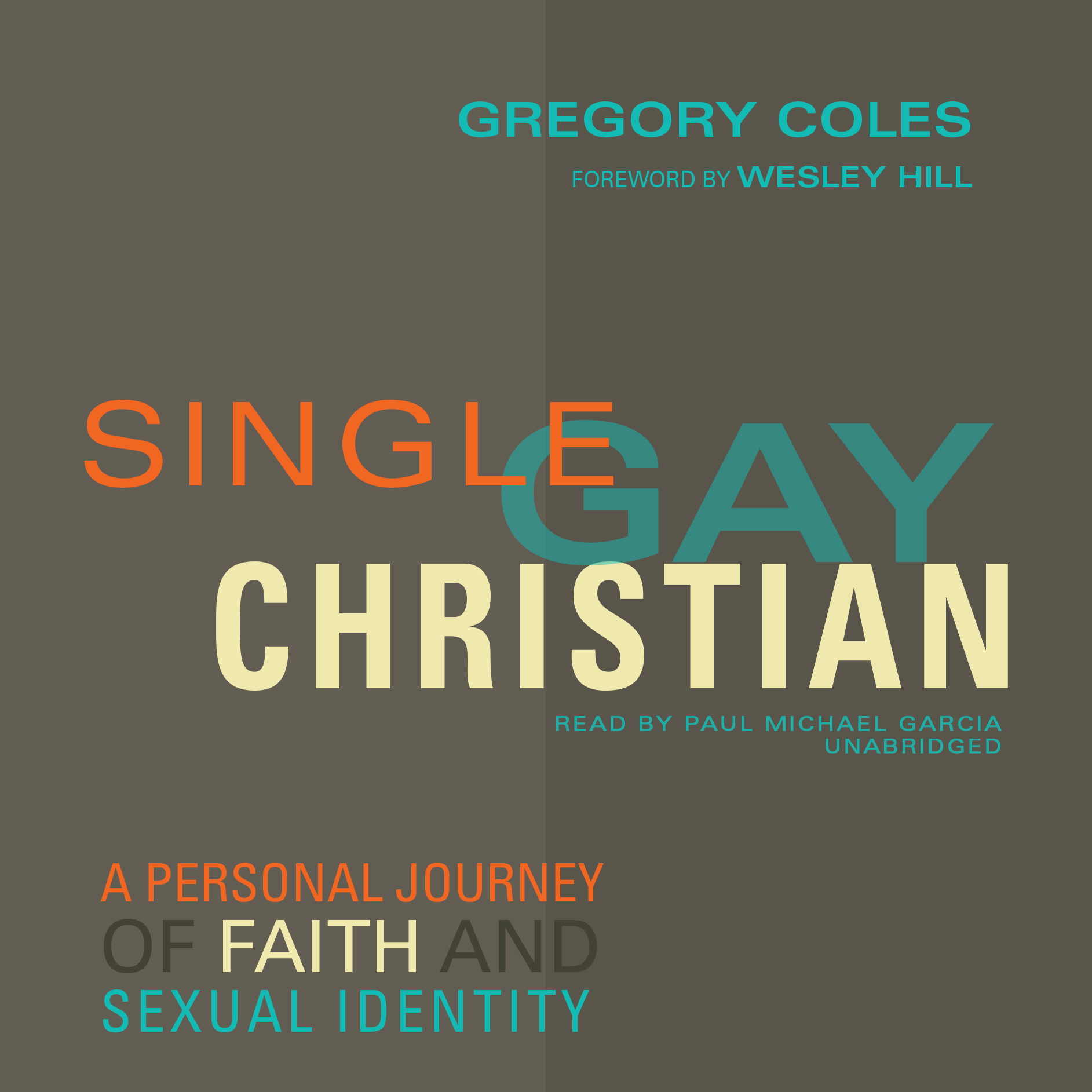
Single, Gay, and Christian: A Review of the Book and Its Criticism

Let me tell you why this is such a great book. Author Gregory Coles has a lot of guts.

In his memoir, Single, Gay, Christian, Coles tells his story, growing up in the evangelical church, loving Jesus, who nevertheless made the slow and disturbing discovery that he was attracted to other men, and not to women. But unlike many of those who “come out” with this self-realization, Coles understands that his sexual orientation does not biblically give him permission to enter into a practicing, same-sex relationship. Yet it does give him a unique perspective to live out a life of committed celibacy, and live that life out to the fullest. This is a story that needs to be heard.

Coles grew up, in what appears to have been a missionary(?) family, serving in Indonesia. Aside from living in a different country, Coles spent his growing up years in an evangelical church sub-culture. But he knew something was different about himself, when compared to other boys in his church youth group. His discovery about his sexual attraction to males was not something that hit him overnight, and he tried his best to change his orientation, to conform to social expectations. He did not fit the stereotype of someone who was “gay.” He did not have a distant, emotionally detached father. Rather, he enjoyed life, loved God, and had a great relationship with loving parents.

Even through college, and into his early years as a church worship leader, back in the United States, Coles’ efforts to become “ex-gay” simply did not work. The hoped for change in his sexual attractions never materialized. Coles had hit a roadblock: Prayer and therapy did not produce the expected results, that many of his Christian friends had promised, and that he himself desired. He spent hours…. repeated hours…. over and over again…. where he sought to “pray the gay away”….. and the promised change, that many of his sincere Christians friends told him would happen, did not materialize. This is where Coles’ story today gets controversial, at least to a certain segment of the church.

He makes a concerted effort to study the Scriptures, to best understand God’s perspective and purpose for human sexuality. Contrary to revisionist views of homosexuality, that are gaining popularity within liberal-minded congregations, Coles concludes that sexual relations, as through “gay marriage,” is not an option, for someone like himself, who seeks to be a faithful follower of Jesus.

But neither does Coles embrace the “ex-gay” narrative championed by many evangelical Christians, that suggests that “gayness” necessarily implies a certain “lifestyle.” The typical “ex-gay” narrative believes sexual attraction to be merely a choice: a choice that can be reversed through the appropriate therapy, or intense prayer. Rather, Coles seeks to embrace his “identity” as a celibate gay Christian man, which explains the title for his book. As a single, gay Christian, Coles seeks to explore how his sexual orientation might inform his understanding of who God created him to be.

Coles self-identification as a single, gay Christian will strike many other Christians as being repugnant, or at the very least, confusing.1 That controversial phrase, “identity,” needs a bit of unpacking. After all, our “identity” as believers should be, first and foremost, grounded in Christ, and not somehow paired with our sin, right? We should never celebrate temptation. Rather we are to flee from temptation. You can be a single Christian, sure. But it would be best to leave the “gay” out of it, or perhaps, embrace something like “ex-gay.” To be “gay” and “Christian,” are mutually exclusive categories. Another book reviewer, “Pastor Gabe,” a Baptist pastor in Kansas, drills down on this as the fatal flaw in Gregory Coles’ book.2

The criticism is fairly common among more than a few Christians. But it is too fixated on specific semantics and labels, and it makes some questionable assumptions, that need to be challenged. What Greg Coles is talking about is completely different. It is vitally important that readers closely examine the meaning of terms found in this book. Less anyone thing that Greg Coles book is sloppily written, the Christian reader should know that the esteemed, conservative evangelical New Testament Bible scholar, and co-founder of The Gospel Coalition, D.A. Carson, one of the global church’s leading and committed defenders of biblical inerrancy, wrote an endorsement for Single, Gay, and Christian. At the same time, Single, Gay, Christian has been reviewed by more thoughtful critics, such as Rachel Gilson, as falling short, who ironically appeals to D. A. Carson in making her rebuttal.

In my reading of Gregory Coles’ book, I found his message to be truly liberating, and quite a change from what you often here in some conservative Christian circles. Here is a sample of his approach (p.16):

Instead of praying to like women and to stop liking men, I prayed for joy. I prayed for contentment. I plunged myself so deeply into ministry opportunities, into biblical study, into the lives of others, that I almost managed to forget myself entirely. I became one of the happiest people I knew — happy not just on the surface but all the way through, in love with he world because I was desperately in love with the God who had created it.

How often do you hear that?

In this book review, I will try to interact with some of Coles’ critics. Listening to Coles’ story, the “ex-gay” thinking comes across as sincere, well-intentioned, but ultimately wrong-headed. We can address some of those questionable assumptions below, but let us first examine the central idea behind its wrong-headed-ness.3 Continue reading


What Was the Sin of Sodom?… (Taking A Closer Look)

Colorado cake artist, Jack Phillips, who recently won a Supreme Court case, in a United States freedom of religion case, that opponents say legitimizes discrimination against gay persons. (credit: Sam Brasch, Colorado Public Radio)

To bake the cake, or not bake the wedding cake?

Nothing gets a group of Christians animated like the topic of same-sex marriage. Go ahead. Try it. The next time you are in a Bible study, or share a meal with believers, just mention “same-sex marriage.” I guarantee you that for the next twenty minutes, the conversation will be anything but boring.

Ever since the landmark 2015 Supreme Court decision, Obergefell v. Hodges, that legalized same-sex marriage, many Christians have besieged themselves with questions as to how to reach gay and lesbian people, while still affirming the Bible’s teaching that God created marriage between only a man and a woman.

Some say that Christians have focused too much on the issue of same-sex marriage. Others are concerned that the church is gradually capitulating to the culture, in accommodating “the sin of Sodom.”  A recent Pew survey even suggests that among younger evangelicals, there is an increased acceptance of gay marriage, at least in terms of its legality, in the wider culture, if not also, in the church.

Many say that the church needs to “preach the Word.” Specifically, we should preach against “the sin of Sodom.” Every Christian should surely agree with that.

However, the problem is that we often fail to understand what “the sin of Sodom” really is. Is “the sin of Sodom” gay marriage? Would this include a society’s increased acceptance of gay marriage as normal? What really is “the sin of Sodom?”

Let us take a closer look at the biblical text, and see if the common, traditional understanding of “the sin of Sodom” actually matches what the Bible teaches. Continue reading


Statements: What Does Nashville Have to Do With Chicago?

On August 29, 2017, a group of evangelical leaders announced the signing of the Nashville Statement. If you have not heard of it, you should go and read it for yourself.

The Nashville Statement was crafted by the leadership of the Council for Biblical Manhood and Womanhood (CBMW), in response to recent cultural changes regarding the public acceptance of gay marriage and transgender identification. For those Christians who have felt that the evangelical church has not taken a firm enough stand against these cultural trends, this is a boldly direct statement that such Christians should spend some time carefully studying.

CBMW originally had its beginnings, in the 1980s, opposing the acceptance of women as elders and/or pastors, in churches, as well as affirming male-headship in the home. But now, with the Nashville Statementunder the leadership of Bible professor Denny Burk, CBMW has broadened its scope to “equip the church on the meaning of biblical sexuality.”

Why is it called the Nashville Statement? Well, because, like other Christian confessional documents, ranging from the Nicene Creed, to the Augsburg Confession, to the Westminster Confession, it was written in Nashville, Tennessee. It contains a listing of articles, made of various affirmations (“WE AFFIRM”) and denials (“WE DENY”), that seek to address a biblical approach to gender dysphoria and same-sex desire and behavior.

The written style of the Nashville Statement is therefore much like the Chicago Statement on Biblical Inerrancy, drafted in Chicago, in the 1970s. Like the Chicago Statement, the Nashville Statement enjoys some of the same positive characteristics as well as suffering some of the same problems that these type of documents have.

As I have written about before, the Chicago Statement succeeded in defining a view of biblical authority, that many evangelical Christians could rally around and support, rightly affirming the Bible’s truthfulness. On the other hand, the Chicago Statement was unsuccessful in resolving a number of issues surrounding how the Bible is to be interpreted. Much of the challenge that has arisen, since the Chicago Statement’s signing, involves how terms, like inerrancy, that are not explicitly mentioned in the Bible, are to be defined and applied in Christian hermeneutics.

The Nashville Statement carries much of the same properties, but within a different scope. The Nashville Statement is already gathering an impressive number of Christian leaders, across a wide set of backgrounds, who have publicly signed onto the document. It affirms the beliefs that Christians have held for 2000 years. In our sexually confused world, this is a big deal. I would not be surprised if the Nashville Statement becomes a unifying banner for many, if not most, conservative evangelicals.

Alas, the Nashville Statement has its difficulties. It uses terminology and language that some might find antiquated, offensive, or otherwise, difficult to define, such as “homosexual,” “divinely ordained differences between male and female” (Article 3 & 4), “homosexual or transgender self-conception” (Article 7), and “transgenderism” (Article 10). What does all of this mean?

For example, does the Nashville Statement mean that those who identify as gay and celibate persons can consider themselves as being fully Christian, or does it preclude such self-identification? I honestly do not know. As far as I can tell, many of the signers (and non-signers) of Nashville themselves are deeply divided on this.

There has been a firestorm of criticism from the progressive wing of Christianity, such as this counter-statement, Christians United: In Support of LGBT+ Inclusion in the Church.  However, there have also been a different set of criticisms from other conservative evangelicals.

From my perspective, I would not have written such a document in the same manner. While the Nashville Statement affirms central ideas that I would strongly endorse, like in defending a biblical concept of marriage, I doubt that it successfully casts a vision of how to reach out to an LGBT+ population, that remains either hidden in silence in, or already alienated from, evangelical churches.

This is a pastoral crisis in our churches, and it has been that way for years. A 2009 study shows that teenagers who struggle with same-sex desires, many of whom come from Christian families, who experience rejection from their families, are 8.4 times more likely to attempt suicide, than other teenagers. I personally know a number of folks who have left evangelical church communities, feeling that evangelical churches are not safe and supportive environments for addressing LGBT+ questions.

I pay close attention to the writings of Mark Yarhouse, professor of clinical psychology at Regent University, in Virginia Beach, who believes that the Nashville Statement lacks the type of nuanced, mature reflection necessary to address extremely difficult and complex questions surrounding gender dysphoria, that many Christians, and often even scientists and psychologists today, do not know that much about. I also agree strongly with the critique offered by theologian Preston Sprinkle, author of People To Be Loved. The Nashville Statement will be a rallying point for many Christians, in that it affirms an approach to biblical sexuality. But it offers very little in terms of how Christians can faithfully love and care for friends, neighbors, co-workers, and family members who struggle with sexual and gender identity issues. As Preston Sprinkle puts it, the evangelical conversation in this area typically “has been profoundly impersonal and one-sided (lots of truth and very little grace).”

Will the Nashville Statement have the staying power of a Chicago Statement on Biblical Inerrancy, or even a Nicene Creed? I do not know. Either way, I do hope for something better in evangelical churches, a Christian vision that fosters a spiritual posture that enables Christians to be agents of healing, as opposed to having the reputation as being agents of condemnation.


Thinking About Ditching Your Copy of The Message? … Consider This

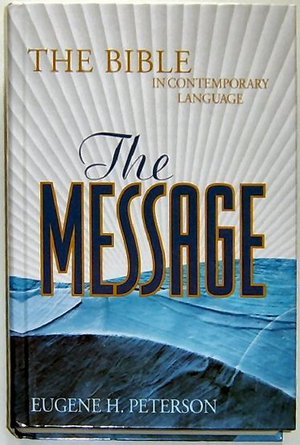
(UPDATE 4:30PM:  PLEASE READ TO VERY END OF THE POST). As some of you probably already know, the veteran Christian author, Eugene Peterson, has apparently changed his views regarding same-sex marriage. Twitter lit up like crazy yesterday, after an interview with Peterson suggested that the author, of great books like, A Long Obedience in the Same Direction, and the popular paraphrase of the Bible, The Message, would perform a same-sex wedding, if he was asked.

Peterson is getting up there in years, and he says he is withdrawing from public life. But with the news yesterday, he joins a growing chorus of evangelical leaders, who have changed their views on same-sex marriage in the church, such as Tony Campolo and HGTV’s Jen Hatmaker. This is disconcerting to those who believe the church is capitulating to pressure from the culture, while others believe that this is a long-due, over-corrective to the church’s mistreatment of gay and lesbian people.

Lifeway Christian Stores is talking about refusing to sell Peterson’s books, while others are suggesting that Christians stop using Peterson’s The Message, in their Bible reading. There are few things to consider here:

  • Peterson’s books have proven to be very helpful over the years, before anyone knew about yesterday’s news. Furthermore, while The Message is still a helpful paraphrase of Scripture, for getting a long overview of different books of the Bible, by reading long passages of Scripture in one sitting, it is no replacement for a good study Bible. I frequently run into people who try to put verse numbers into The Message, to help in their study, but I am afraid they are sorely missing the point. My New Testament professor in seminary, Donald Hagner, was asked years ago to be a consultant for The Message. But when the book came out in print,  “The Hag,” as his students affectionately called him, felt embarrassed by some of the things that Peterson did with the text, to make it more readable. I have teased my old professor for years about this, and after every time I mention it to him, I still get a rise from him. I am sure Professor Hagner feels even more embarrassed today! But still, the point is, The Message is a good tool for what it was designed for, and not for what it was not meant for.


  • Regarding the gay and lesbian topic, Christians need to own up to the fact that the church has had a lousy track record in caring for and ministering to gay and lesbian people over the years. When Newsweek journalist, Kurt Eichenwald, went on his infamous, multi-dozen page tirade against the Bible, in the Newsweek Christmas issue of 2014, he did so when he learned that a neighboring family, who were evangelical Christians, kicked their son out of the house, and put him on the street, when that teenage son finally had the gutsy courage to come forward to his parents, to tell them that he was wrestling with sexual feelings for other boys, that he did not seem able to control. Folks, stuff life this happens all of the time in evangelical churches, and we simply have to do a better job in reaching out to people who struggle with same-sex desires. It is possible that doing something positive is the thrust behind Peterson’s motivation. Prudence demands that we give Eugene Petersen some latitude.


  • Nevertheless, Eugene Peterson’s change of views, assuming he genuinely holds them, is not warranted by what the Bible teaches. The Bible does teach that marriage is between a man and a woman, and we do people no favor by side-stepping parts of the Bible that are unpopular.

A brief look at Peter’s example in Scripture might help. The Apostle Peter was like a lightning rod for the early church, as documented all throughout the Book of Acts. But even though Peter was perhaps the most significant leader in the church, he was not perfect. When Peter started to shun table fellowship with Gentile Christians, the Apostle Paul totally got in his face for his error (Read Galatians 2:11-14). Paul knew that the Gospel was meant for all people, not just the Jews, and persistently challenged Peter upfront. But Paul never discredited the good things Peter had done to promote the Gospel. In the end, Peter eventually changed his mind, and supported Paul’s ministry.

To this day, we are still reading Peter’s two letters (1 and 2 Peter) and the Gospel of Mark, that he collaborated with Mark. If we were to have prematurely written off Peter as being without hope, we would have lost a large chunk of our New Testament! So, there is something to hope for, too, that Eugene Petersen might rethink his position.

For that reason, I plan on keeping my copy of The Message…. but I am still not going to put verse numbers in it!!

UPDATE: July 13, 2017, in the PM.

Okay, folks. Back away from the bonfire! …. You can put away that gasoline that you were going to pour on your stack of The Message Bibles. ChristianityToday reports this afternoon that Eugene Petersen has retracted his earlier statement regarding same-sex marriage. That was pretty quick, and the whole debacle has some telling lessons on how public statements, issued and heard in sound bites, taken out of context, can cause harm for Christian witness. To the extent, that I said something that misrepresented Eugene Peterson, a man I respect and admire, I sincerely apologize   …… Still, I AM NOT GOING TO PUT VERSE NUMBERS IN MY COPY OF THE MESSAGE, AND YOU SHOULD NOT EITHER!!

UPDATE: July 16, 2017

As the initial controversy has died down, I will link some helpful posts here, from a variety of perspectives, regarding the Eugene Peterson affair this week, or The Message as a translation/paraphrase. Your feedback is welcome:


Jen Hatmaker and the Frustrated Evangelical Response to LGBTQ

The Babylon Bee, a Christian satire website, unloaded a clever piece on Jen Hatmaker today, expressing the type of dismay that many evangelical Christians are thinking. But are we really hearing the message underneath Jen Hatmaker's public pronouncement?

The Babylon Bee, a Christian satire website, unveiled a clever piece on Jen Hatmaker recently, expressing the type of dismay that many evangelical Christians are thinking. But are we really hearing the message underneath Jen Hatmaker’s public pronouncement?

Over the past week or so, Jen Hatmaker, the funny and vivacious reality TV star of the HGTV show, “My Big Family Renovation,” rocked the social-media world of evangelicalism asunder. Jen Hatmaker, a favorite in MOPS circles (that is, Mothers Of PreSchoolers, a very active group in our church), and popular speaker at various Christian women’s conferences, in an interview, publicly stated her affirmation of gay and lesbian marriages as potentially holy.

Well, this probably had the same effect as setting a stack of Bibles on fire.

Jen Hatmaker is but one in a steady stream of high-profile, evangelical celebrities and leaders to jump ship from supporting a traditional, evangelical view of human sexuality, to supporting gay and lesbian marriage in the church, over the past few years. Just off the top of my head, I can think of Rob Bell, Tony Campolo, and singer songwriter Jennifer Knapp, too. What was unthinkable ten or twenty years ago, is now becoming more common, as otherwise traditional “Bible-believers” are willing to discard 2,000 years of Christian teaching, particularly in the wake of the June, 2015 Supreme Court decision in Obergefell v. Hodges.

What makes Jen Hatmaker a bit different is because she is not a pastor, or a theologian, or a super-talented singer. She comes across as a very down-to-earth, spunky, disarmingly honest and homespun happy mother, who has the same type of problems all of us have… and she has 109 thousand Twitter followers. That means that there are probably at least a handful of busy MOPS women in your conservative, evangelical church, who are probably a bit bewildered as to why Jen Hatmaker is making such a public stand on this topic.

These are not folks out there in liberal, mainline churches, who long ago dropped their commitment to biblical authority. Rather, they could be sitting next to you at your Bible-believing fellowship.

There is confusion in our churches.

What are we to make of this trend? How does someone with a high view of Scripture respond?  Continue reading