Tag Archives: John Piper

Lectio Divina: Spiritual Formation #3

Imagination. Is there such a thing as a godly imagination in the life of a believer in Christ?

Lectio divina: An ancient spiritual discipline of “divine reading” of Holy Scripture that is being revived among evangelicals today. Yet some Christians fear that such practices could be dangerous.

Over the course of my spiritual journey, I have often had trouble reading the Bible. Not only do I find some things difficult to understand from what the text is saying, I also have struggled with something closer to home. Does God still speak through the Bible to people today? Am I trying to read the Bible merely to gain information, or am I reading it to try to meet with God in a personal relationship?

It has been said that the ultimate objective of reading Scripture is not simply to know the Word of God. Instead, it is to get to know the God of the Word, to move beyond the Sacred Page to have an encounter with the supreme Author of the text.

Yet for some Christians, there is a danger associated with moving beyond the Sacred Page. There is a temptation, critics argue, even for Christians to view the reading of Scripture as some sort of talisman, a type of magic book where merely reading the words of the text will somehow subconsciously restore our soul. The imagination of the reader can easily get caught up in inventing one’s own private, personal interpretation, thereby introducing confusion between understanding our own thoughts and wishes and desires with God’s supreme and objective revelation that calls us to face reality.

The critics are right to have their concerns. I have sat through innumerable Bible studies where people have brought forward a cacophony of opinions of “what the Bible says and means to me.” I even have known people who simply opened up to some random page of the Bible, put their finger somewhere into the page, and then read that verse believing that God might speak to them through that verse. I remember opening up my Bible once to Genesis 41:46. There I read that “Joseph served in Pharoah’s court.” As I was struggling with my tennis game at the time, I could have easily mistaken the words of Scripture as God’s way of coaching me on my backhand, but I sincerely doubt that this would have been the proper use of Scripture!

These are some of the issues that we can encounter when we think about spiritual formation, particularly in terms of developing spiritual disciplines focusing around Scripture. One of the classic spiritual disciplines in this area is something called lectio divina. Some might even call lectio divina … dangerous…
Continue reading

Podcasts for the Thinking Christian

Plumb LineJohn’ s recent post on William Lane Craig’s Defender Series of podcasts brought to mind that I should update my list of recommended podcasts for the thinking Christian (here is an earlier list John and I have discussed).  I do not have the time to read books as much as I would like, but the marvel of MP3 players is that I can download audio files and listen to them while I work in the yard or drive to and from work.

John’s suggestion of William Lane Craig as the “graduate school” for the next step following after Dick Woodward’s Mini Bible College is very appropriate. Dick was an amazing teacher who continues to impact the world through his unique ability to “put things on the bottom shelf” for people by exploring the basic contours of the Bible. Dr. Craig then makes it more in-depth in terms of helping you grasp and develop your own understanding of God (theology) founded on Scripture and then applied in terms of being able to offer a rational defense of the Christian faith (apologetics).

But just as there are fine and different academic graduate schools out there, there are different “graduate school” approaches to theology and apologetics. For example, Dr. Craig is probably one of the leading Christian apologists alive today, such that atheist Richard Dawkins awkwardly still refuses to debate him. But Dr. Craig is known for his “Middle Knowledge” approach to the issue of God’s sovereignty vs. free will. He is also known for his classical/evidentialist approach to apologetics.  Without digging too much into those things right now, let me just say that not everybody is totally with Dr. Craig on these issues. But, PLEASE, do not let that dissuade you from digging into William Lane Craig! He is awesome! It is just important to know that there are other approaches that Christians take to these issues. You might want to check out some of the other podcast resources available to get a flavor of what is out there. So here we go!

Continue reading


The Calvinist: A Poem by John Piper

In the popular mind, the thought of a “Calvinist” conjures up thoughts of “predestination”, “horrible decree”, “hellfire and brimstone”, “condemnation”, and “rigid”. Basically, what you get is a sourpuss. Not a lot of fun and happy thoughts here, as “Calvinism” for a number of folks today gives Christianity a bad name.

I never thought that the power of a poem on video could viably challenge such as assessment. But I think I have found something that might do just that.

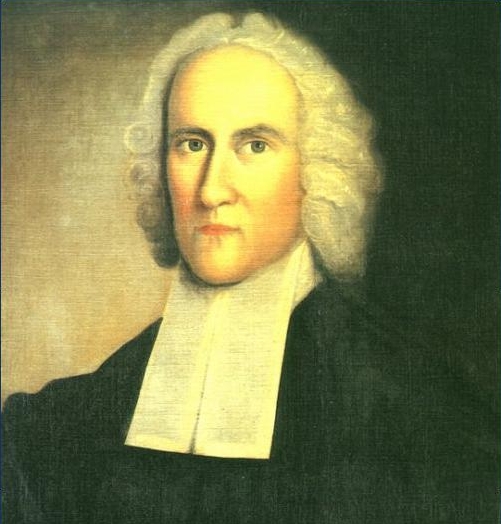
John Piper served as pastor of Bethlehem Baptist Church in Minneapolis, Minnesota for 33 years, and he is currently the chancellor for Bethlehem College and Seminary, and founder of DesiringGod.org. John’s theological hero is the 18th century colonial preacher, Jonathan Edwards, probably the greatest American philosopher ever…. and a Calvinist.

What gets me about Jonathan Edwards is that he was able to have this awesome, even terrifying, view of God’s majestic sovereignty on the one hand, as well as a tender, joyous fondness for the “sweetness” of God on the other. How was he able to put these two things together?

John Piper’s most popular book is Desiring God, Meditations of a Christian Hedonist, which is nothing more than a contemporary exploration of Jonathan Edward’s faith and thought. John wrote a poem recently, and he invited a few friends to add their voices to help him read the poem: D.A. Carson, R.C. Sproul, Alistair Begg, Thabiti Anyabwile, Matt Chandler, and Sinclair Ferguson.

This really surprised me. It may not change your view of a “Calvinist”, but it might give you some pause to ponder. I would like to know what you think.

Additional Resources:

Just in case you thought that Calvinism was on the periphery of the evangelical church these days, you might want to rethink that and look into the recent CrossCon student missions conference, held in Louisville, Kentucky, the last week of 2013. The Gospel Coalition posted a number of videos from this new missions conference, an event designed to mobilize a new generation of young college students. I recently talked to one of the 4,000 students who attended. It was quite an experience from the report I received.


Jonathan Edwards on Charity Towards the Poor

Jonathan Edwards (1703-1758), pastor, theologian, philosopher, and .... advocate for a biblical social justice??

Jonathan Edwards (1703-1758), pastor, theologian, philosopher, and …. advocate for a biblical social justice??

Most people know of Jonathan Edwards as the colonial American preacher of hell-fire and brimstone. I remember reading the mandatory “Sinners in the Hands of an Angry God” in high school and thinking that this guy had an unhealthy, morbid fascination with damnation. This narrow view of Edwards I had for years is a real tragedy, as this unfairly diminishes the extraordinary intellectual and spiritual contribution of perhaps America’s greatest philosopher.

Perry Miller, an influential Harvard historian and prominent atheist of the mid-20th century, practically rescued Jonathan Edwards from the dustbin of American cultural history. In an age when colonial American Puritans like Edwards were treated with “fundamentalist” disdain, Miller saw in Edwards perhaps one of the most perceptive and wide ranging thinkers America has ever produced. What was it about the 18th century Edwards the Christian that fascinated Miller the atheist?
Continue reading


Son of Man as Israel?

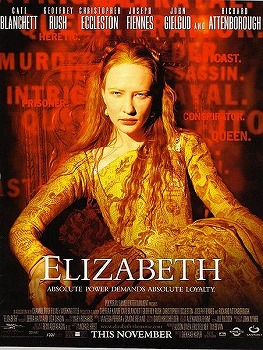
Elizabeth, Queen of England.   She represented the aspirations, hopes and dreams of her nation.

Elizabeth, Queen of England. She represented the aspirations, hopes and dreams of her nation.  What insight does this give us in knowing  how the Son of Man represents Israel?

Jesus’ self-designated title of Son of Man is a mystery to many. What does Son of Man “represent”?

One of my favorite movies is Elizabeth, starring Cate Blanchett. What strikes me about the Virgin Queen was that she truly personified England as the up and coming European empire in the 16th century. As she matured over her long forty-four year reign, England grew along with her to become a decisive world power. Elizabeth never simply spoke nor acted on her own. She represented England as a nation.  She was not just a queen.  She was England.

To “represent” some entity has an interesting etymology. It is derived from a Latin phrase meaning “to present”, or “to symbolize, to be the embodiment of”.

Earlier on Veracity, we explored how Jesus as God’s “Son” lives out the same type of life that the nation of Israel was originally supposed to do as God’s “son” in the Old Testament. Israel was disobedient, but Jesus obediently fulfills what God intended Israel to do. Jesus somehow embodies all of what the nation of Israel is meant to be.  How do we clarify what it means to say that Jesus represented Israel?
Continue reading
