Tag Archives: Islam

Is Islam a Religion of Peace?

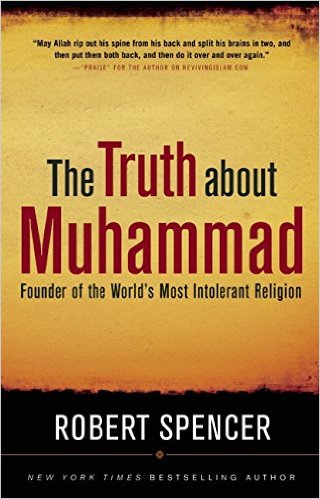
Robert Spencer's The Truth about Muhammad paints a very different portrait of the founder of Islam, as compared to the work of popular author Karen Armstrong, who describes Islam as a religion of peace. How do you figure out who is telling the right story?

Robert Spencer’s The Truth about Muhammad paints a very different portrait of the founder of Islam, as compared to the work of popular author Karen Armstrong, who describes Islam as a religion of peace. How do you figure out who is telling the right story?

Within a few weeks of the 911 attack on the World Trade Center, Karen Armstrong, a former Catholic nun, who now specializes as a scholar of comparative religion, and very popular author, wrote an essay for TIME magazine. In the essay, Armstrong makes the case that the terrorists who destroyed the twin towers did not represent the true face of Islam. The prophet Muhammad, she argues, sought to heal the rifts between different, warring tribal factions in 7th century (A.D.) Arabia.  In portraying true Islam as a religion of peace, she concludes:

The vast majority of Muslims, who are horrified by the atrocity of Sept. 11, must reclaim their faith from those who have so violently hijacked it.

I have been listening to an audiobook by a Catholic popularizer of contemporary scholarship, who specializes in Islamic history, Robert Spencer. Listening to The Truth About Muhammad: Founder of the World’s Most Intolerant Religion has been a challenging experience. Spencer notes that while some Koranic texts do suggest that in Muhammad’s early career, the prophet did seek to promote peace, the story of his later life suggests a more complicated, and much darker story. According to Spencer, the theology of jihad, or “struggle,” was used to justify violence against Jews, Christians, and others who resisted Muhammad’s message towards the end of his prophetic career. This tradition is still appealed to today by the followers of extreme Islamic groups, such as ISIS, who are demonstrating their commitment to erase Christian believers from much of Syria and Iraq.

Karen Armstrong, who champions efforts to bring peace between different religious traditions, and who wrote her own book about the life of Muhammad, begins her review of Spencer’s book this way, “Like any book written in hatred, his new work is a depressing read. Spencer makes no attempt to explain the historical, political, economic and spiritual circumstances of 7th-century Arabia, without which it is impossible to understand the complexities of Muhammad’s life.”  Spencer, the intellectual force behind JihadWatch.org, and no stranger to visceral public debate, responds with:

“Reading this, I doubt Armstrong actually read the book. Or maybe she just wants to make sure no one else reads it.” (retrieved from jihadwatch.org).

So, which narrative is correct? Is Islam a religion of peace, or a religion of violence?

Strangely, I know many Christians who never give much thought to the study of religious history, considering the matter to be of little consequence to their daily lives. Yet I would contend that such ignorance provides little consolation to the families of those who lost loved ones during the 911 attacks, or to the millions of Syrian refugees fleeing ISIS, looking for sanctuary in Western countries in our current time.

Lurking behind this debate over Islam is the debate among Christians as to the history of violence even in the Bible. I have been studying the Book of Joshua for the past few weeks, and I am struck by the message that God gave to Joshua to drive the Canaanites out of the land, and to claim the ancient land promise given to Abraham and his descendants (see these Veracity posts on Christian Zionism). Here are some vital questions for believers today:

  • Is the Book of Joshua a justification of ethnic genocide, or was it a directive by God to execute judgment against the wickedness of the Canaanites? Would God ever command Christians to do the same today?
  • What does it mean to “trust God” in the face of evil and wickedness, and to what extent are believers to engage in combating such evil and wickedness?
  • What should be our priority, sharing our faith with non-believers, or doing what we can to prevent or restrain acts of violence?

Such questions require thoughtful consideration by Christians. The questions are complicated because people are complicated. For example, while it is surely true that Islamic extremists threaten with acts of violence, the vast majority of Muslims regard their faith as essentially peaceful. Islam is not a monolithic movement. But should our view of Islamic extremism cause us to love our Muslim friends and neighbors any less? I hope not. I hope that we as believers would make the sharing of our faith, the Good News of the Gospel, our highest priority.

Where do we go to sort out these things? For me, I have been strongly encouraged by the testimony of Nabeel Qureshi. Qureshi grew up in high school in Virginia Beach, Virginia, in a family of Muslims who belong to an Islamic sect that strongly believe Islam to be a religion of peace. Yet when Qureshi attended Old Dominion University, he met a Christian friend who challenged his understanding of Islam. After several years of friendly, yet intense, back and forth dialogue, Nabeel Qureshi became a follower of Jesus. Over the years, Qureshi has had a powerful ministry with Ravi Zacharias, encouraging other Muslims to reconsider their understanding of Islam and consider afresh the claims of Christianity. Below is a five minute clip where Qureshi addresses the tough questions (PLEASE NOTE: Nabeel Qureshi recently announced that he has been diagnosed with stomach cancer and his survival chances over the next few years is quite low. Please pray for him and his family).


A Lesson from Orlando: Responding to Fear

FearWhen I heard the news the other day about an Islamic man, claiming to be associated with ISIS, gunning down 49 people in a gay nightclub in Orlando, Florida, I was grieved and saddened. That evening, at a meeting in our church, we prayed for the families impacted by this terrible event.

However, in the midst of processing all that has happened in Orlando, I would contend that a lot of my Christian brothers and sisters feel a bit bewildered by the whole thing. How do you respond to something like this? How do you love people gunned down in a gay nightclub? How do you love someone claiming to be an Islamic terrorist, slaughtering people around him? What would Jesus do?

If I had to name one word that covers a lot of what Christians are feeling, it would be this:

FEAR

A lot of Christians are afraid.

Hey, I struggle with it. Don’t you??

On one side, many Christians are afraid of Islam. Some are afraid of Sharia law taking over America. Some are afraid of Christianity being diluted by an unfamiliar faith that claims Abraham as their father. Some are afraid of violence.

On the other side, many Christians are afraid of the LGBTQ community. Some are afraid of family values going downhill. Some are afraid of the “ick” factor associated with homosexuality. Some are afraid of the pressure to change the theology of the church in order for LGBTQ folks to feel like being accepted.

But does fear tell the whole story?

No.

There is no fear in love, but perfect love casts out fear. For fear has to do with punishment, and whoever fears has not been perfected in love (1 John 4:18).

Allow me to tackle a couple of these fears. For example, as has been discussed before here on Veracity,1 literally millions of Muslim-background people are fleeing countries that have been closed to or otherwise restricted from Christian missionaries. Furthermore, some reports show2 that Muslim-background people have shown a greater interest and openness to the Christian faith within the past 14 or so years, than in the preceding 14 centuries. The harvest is plentiful. And the fields are coming right to your doorstep in your community.

Should we respond in fear, or should we respond with obedience to the Great Commission?

Here is another fear to address. Many Christians are afraid that the LGBTQ community is trying to force Christians to give up on the theology of the Bible in order to feel accepted by the church.

A new book from NavPress by Andrew Marin makes the case that this typical evangelical concern is misplaced. In Us versus Us: The Untold Story of Religion and the LGBTQ Community, Marin reveals the results of a long-term scientific study regarding the LGBTQ community and the Christian church. Here are some startling observations from the study:

  • 83% of the LGBTQ community has some type of Christian faith background.
  • 76% of the LGBTQ community would be open to coming back to church.
  • 80% of the LGBTQ community pray.

According to a recent review of Marin’s book by theologian Preston Sprinkle,3 only 15% of LGBTQ leave the church because of “theological interpretations of sin.” In other words, most LGBTQ people have left the church not because the church teaches that same-sex marriage is not supported by the Bible. Instead, they leave the church for the following reasons (I list the most common):

  • The person did not feel safe in the church (18%)
  • The person experienced a relational disconnect with church leadership (14%)
  • Christians were unwilling to dialogue (12%)
  • The person was kicked out of the church for being gay (9%)

Of the 76% of those who would be open to coming back to a church, only 8% would insist that the church change its theology of sin and/or marriage. Think about that. That means 92% of LGBTQ people who are interested in coming back to a church are more interested in how they are treated than they are with the doctrinal stance of that church, regarding sexual ethics.

With the added emphasis of what has happened recently in Orlando, it is imperative that Christians demonstrate compassion towards those in the LGBTQ community, when their sense of fear of being relationally isolated from the church has only been compounded all the more.

Here are some practical suggestions: Get to know someone who is a Muslim or someone who identifies with the LGBTQ community. Listen to their story. Ask them questions. Show them hospitality. Then, ask the Lord where to lead you next in your relationship with that person.

Sure, there is always an aspect of fear. Radical terrorists still threaten with violence: convert to Islam or die. There are still some LGBTQ people who will not budge an inch in their efforts to change your Christian theology on marriage. But I am reminded by a quote from a sermon this past week. In C.S. Lewis’ The Lion, the Witch, and the Wardrobe, a question was asked about Aslan, the Christ-figure in the story. Is the Lion safe?

“Safe?” said Mr. Beaver; “don’t you hear what Mrs. Beaver tells you? Who said anything about safe? ‘Course he isn’t safe. But he’s good. He’s the King, I tell you.”

If Christ is the King, and he is good, then we have nothing to fear.

Notes:

1. See John Paine’s post on Syrian refugees and his series on Basic Islam. Here is my report on viewing world history through Islamic eyes

2. Open Doors, a ministry to the persecuted church, observes that God is using visions of Jesus Christ to bring many Muslims to having faith in Christ.

3. Preston Sprinkle has written what I believe is the best book on how Christians should view same-sex attraction, People to Be Loved. You should read it. I gave a brief review here.


Destiny Disrupted: A History of the World Through Islamic Eyes

Islamic Center in Williamsburg, Virginia

Islamic Center in Williamsburg, Virginia

Everyday on my drive home from work, I pass by a house that always catches my curiosity: There is an Islamic mosque off to the side. I have often wondered, who really goes to that mosque? Why do they go? What goes on inside?

Over the past few years, I have had the privilege to make friends with some young men who attend that mosque. They are a nice bunch of guys. How much do they really know about Jesus? I am not sure yet.

Before I met these guys, I never knew that much about the history of Islam. So I thought it might be best to take some time to learn. What is the bigger story behind how a group of young men from the Islamic world ended up in my town? That is how I stumbled upon an Audible.com audiobook by Tamim Ansary, Destiny Disrupted: A History of the World Through Islamic Eyes.
Continue reading


Basic Islam – Part 6


Sharing Christianity with Muslims

For those of us who may be in a position to dialog with Muslim friends about our faith, here’s a series of thought-provoking videos that may be helpful.

Reasons To Believe scholar Fuz Rana, who had a Muslim father, interviews Abdu Murray, who converted from Islam to Christianity and now shares his faith with Muslims through several high-profile ministries.

Abdu has hard-won, firsthand insights about how to share the Christian faith with Muslims. Among his most powerful points are the value of respect for the individual and how bridges can be built in a positive way, without attacking the person or his worldview.

HT: Reasons To Believe, Fuz Rana, Abdu Murray, Embrace the Truth International

Additional Resources


Do Jews and Samaritans Worship the Same God?

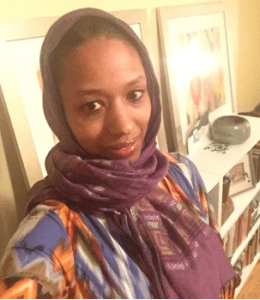
Wheaton College professor, Larycia Hawkins, in "hijab." (Facebook)

Wheaton College professor, Larycia Hawkins, in “hijab.” (Facebook)

The suspension of Wheaton College professor, Larycia Hawkins, in response to her “same God” comments about whom Muslims and Christians worship, has reignited a long-standing controversy within the church. Yes, on the one hand, theological clarity is at stake, but at the same time, having a measure of wisdom, that emphasizes shared values as a starting point in developing relationships of trust in the midst of cultural tensions, is just as important. Jesus never compromised on the truth, but He never compromised on His love for those who need salvation either.

Here is a great example: When Jesus met the woman at the well in Samaria in John 4, He was quite clear in saying that Samaritan theology did not line up exactly with traditional Jewish belief. The Samaritans (still) worship God, believing that Mount Gerizm is the proper place for such worship. Traditional Jewry has always focused on the Temple in Jerusalem instead. Jews would purposely avoid Samaritan lands because of the latter’s heterodoxy. But notice how Jesus, who purposely passes through Samaria, approaches the woman:

“Woman, believe me, the hour is coming when neither on this mountain nor in Jerusalem will you worship the Father. You worship what you do not know; we worship what we know, for salvation is from the Jews. But the hour is coming, and is now here, when the true worshipers will worship the Father in spirit and truth, for the Father is seeking such people to worship him. God is spirit, and those who worship him must worship in spirit and truth.”(John 4:21-24 ESV).

I just do not see Jesus falling for the modern, popular tendency for the “sound-bite” theologies of the politically-correct: “Samaritans and Jews worship the same God,” nor the opposite, bigotry-sounding to some, in this day and age: “Samaritans and Jews do not worship the same God.” Instead, Jesus proclaimed the truth, but he did it in a way of great wisdom that built a relationship of trust with this woman, and she recognized Jesus at the Messiah.

If only some of our Christian leaders and theologians on both sides of  issues like this were to show such restraint and wisdom. You can be theologically correct and still miss an opportunity to demonstrate love and solidarity with those, like the Syrian refugees, who are marginalized, for the sake of the Gospel. Likewise, on the other side, one need not resort to confusing or misleading theological statements for the sake of avoiding the appearance of bigotry. For the most part, I will leave it to the reader to make such judgments as appropriate (for the content linked below).

So, do Jews and Samaritans worship the same God?  How about Christians and Jews? Do they both worship the same God? What does one mean by the “same” God? These questions are not so easy to answer. No matter what your “take” on all of this is, we should probably take our cue from Jesus as to how we approach the current debate over whether or not Christians and Muslims worship the “same” God.

Additional Resources:
