Tag Archives: inerrancy

Inerrancy Summits and the Valleys of Interpretation

The saddle between Grays and Torreys Peaks in Colorado.

The saddle between Grays and Torreys Peaks in Colorado. I am the guy in the red jacket.

I love hiking in the Colorado Rockies. In 2006, a buddy of mine and I hiked two of Colorado’s famous “fourteeners,” mountains that rise above 14,000 feet, in one day. In the photo, I am walking up from the saddle connecting these two huge peaks, with Grays Peak to my back and the photo being taken from a few hundred feet below the summit of Torreys Peak. I love this picture because it eerily captures the pure desolation at such heights, with the clouds just crossing this “valley” between the two mountain summits. If you click on the photo for more detail, you can barely make out the dozens of other climbers that day as they made their way between these beautiful peaks.

This camera shot fits well with the topic at hand, the relationship between inerrancy “summits” and the “valleys” of biblical interpretation.
Continue reading


Mustard and Chocolate

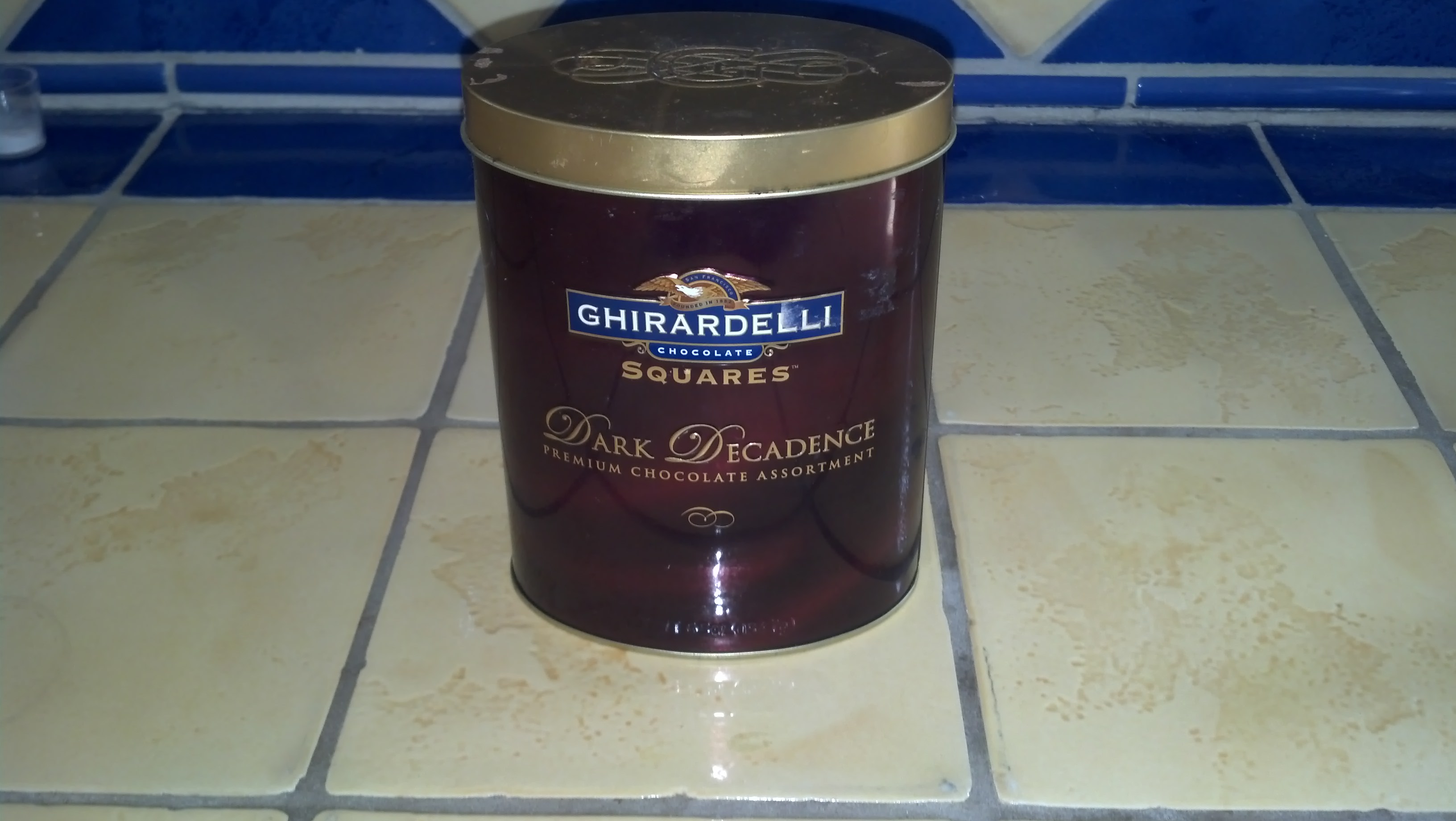
Can you find the mustard?

Can you find the mustard?

Communication problems in marriage can give us remarkable theological insight. Here is a great example.

I married a gourmet cook. My wife is the type of person who would rather cook something rather than go out to a restaurant where the chef’s skills are inferior to hers. As for me? I am good with a can of Chef Boyardee.

So imagine what it was like when my wife was out of town unexpectedly for a family crisis and she had promised to fix a dish for a previously scheduled dinner party. Guess who had to step in and cook?

Now that, my friends, is a recipe for disaster.

My wife left me instructions. The recipe called for dry mustard. Unfortunately, I could not find it in the pantry. Where could the mustard be?

Would a culinary defeat be averted?

Was all hope lost?

Read on and find out what happened… and what it might tell us about the challenge of doing biblical interpretation when Christians do not always agree with one another.
Continue reading


Domino Theology

Is your theology built on a difficult to maintain stack of dominos?

Is your theology built on a difficult to maintain stack of dominos?

As a kid, I liked to play with dominos. I would try to arrange them in neat patterns, and even try to stack them in certain ways to build a toy house or a bridge. But the problem with building any structure with dominos is that if you make one slight mess up with any one domino, the whole project would come crashing down.

Some years ago, I put an addition with an extra bedroom on the small house I was living in. But I learned that the most important part was the foundation. Footers supporting the new structure had to be strengthened prior to any further work being done, and I was glad for it! For within a few months after completing the project, a terrible storm came and ripped part of the siding off of the brand new addition. That was a bummer! But the siding was not fundamental to the foundation, so I was able to live in the addition while it was getting repaired. But if something had gone wrong with the foundation, I would have had to abandon the entire structure.

You would never build a real house with dominos.

Dallas Seminary New Testament scholar Daniel B. Wallace recently was reviewing a book and mentioned the problem of domino theology in evangelical Christianity. I think Wallace is sadly correct. It is a real problem in the church.

I have had numerous disturbing conversations with well meaning Christians as to how they view the Bible. Some subscribe to the notion that they believe Christianity is an all-or-nothing proposition regarding the Scriptural text. If they were to find but one error in the Bible, even if it is a small, minor or obscure one, then it threatens the whole substance of their faith. They could never trust any of the Bible or anything in Christianity at all if there was yet but just one small minor problem or discrepancy that they could not solve.

This is domino theology in action. All it takes is one slight move of doubt and the whole thing comes crashing down. Watching all of the dominos fall is great fun for a kid playing a game, but it is a disaster when it comes to trying to build your faith.
Continue reading


A Year of Biblical Doubting #1

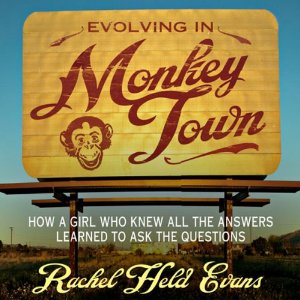
Rachel Held Evans first book.  She's young, church-going.... and not very sure about her faith.   Does she represent the future of "evangelical Christianity"?

Rachel Held Evans first book. She’s young, church-going…. and not very sure about her faith. Does she represent the future of “evangelical Christianity”?

How do you handle doubt? Some want to shove it under the rug. Some, frankly, never really go through serious periods of doubt. Others wallow in their confusion. Some simply rebel as an escape mechanism. Others are driven to God’s Word, study, prayer, and fellowship to find answers. Where do you go when you begin to second guess everything, if you ever do?

Part of what we are trying to do with Veracity is to provide tools to help folks to get into God’s Word so that God’s Word can get into us. What resources are available that can equip us to better understand our faith so that we can better serve the Lord in our worship and witness? However, there are times where doubt can plague us in our spiritual journey and threaten to derail us spiritually. Perhaps an explanation about the Bible we once heard no longer makes sense anymore. Or is there some assumption that we have made about the Christian life that no longer appears to be working? Perhaps we expected God to do something and things did not turn out the way we think it should.

Doubt is an enormous topic to tackle in a single blog posting. So I will be content for now to give you a partial case study.
Continue reading


Bart Ehrman’s Challenge to the Divinity of Jesus

How God Became Jesus, by multiple authors, is a rebuttal to Bart Ehrman's book, How Jesus Became God.

How God Became Jesus, by multiple evangelical scholars, is a popular-style, accessible rebuttal to Bart Ehrman’s book, How Jesus Became God.

From the preface of How God Became Jesus, by editor and Australian scholar Michael Bird:

[Bart] Ehrman is something of a celebrity skeptic. The media attraction is easy to understand. Ehrman has a famous deconversion story from being a fundamentalist Christian to becoming a “happy agnostic.” He’s a New York Times bestselling author, having written several books about the Bible, Jesus, and God with a view to debunking widely held religious beliefs based on a mixture of bad history, deception, and myth. He’s a publicist dream since in talk shows and in live debates he knows how to stir a crowd through hefty criticism, dry wit, on the spot recall of historical facts, and rhetorical hyberbole. He also has a global audience…

For conservative Christians, Ehrman is a bit of a bogeyman… Conservatives buy his books if only for the purpose of keeping their disgust with him fresh and find out what America’s favorite skeptic is up to now… For secularists,… Erhman is a godsend. He provides succor and solace that one need not take Jesus too seriously, confirming that religion is the opiate of the masses and that the whole God thing might be just a big mistake.

Why is Bart Ehrman, a professor of religion teaching at the University of North Carolina at Chapel Hill, on a lot of people’s radar?

Continue reading