Tag Archives: eschatology

The Christmas Truce of 1914

They said that the war would be over by Christmas…

This Christmas marks the 100th anniversary of the so-called “Christmas Truce” between the German and British armies along the Western Front during the “Great War.” When the fighting began in August, 1914, both sides were expecting a fairly quick outcome. But by the time the bitter cold of December set in amid the muddy trenches near the Marne River, devastated by terrible casualties resulting from the horrors of modern warfare, it became clear that the bloody end was still some years away.

But why the war in the first place? As Baylor University historian Philip Jenkins argues in the The Great and Holy War: How World War I Became a Religious Crusade, the typical narrative offered by secular historians, that the war was basically a great imperial contest among European colonizing empires, fails to adequately and fully explain what happened. Jenkins maintains that “the First World War was a thoroughly religious event, in the sense that overwhelmingly Christian nations fought each other in what many viewed as a holy war, a spiritual conflict” (Wall Street Journal book review, by D. G. Hart, June 6, 2014, but also consider this review from Reformation21).

Prior to the war, the majority of Christians were optimistic about the future spread of the Gospel changing societies for the better, an essentially postmillenial view of the “End Times.” But after these supposedly “Christian nations” of the world had managed to annihilate millions of people, at least indirectly all in the “name of God,” the mood and perspective of many Christians began to change. A type of pessimism took over, so it should come as no surprise that the great “Christian nations” of Europe would eventually enter a steady decline towards apostasy. It was as though the “War to End All Wars” had compromised the witness of the church. But what was not so evident at the time was that in the aftermath of the war, the spread of the Gospel would increase rapidly across the “Global South”, where the Christian faith continues to expand even today all across Africa, Asia, and Latin America.

Is there anything we can learn from all of this?

For me, the event during that war that most captures the contradictions and the absurdity of “Christian nations” fighting one another, while still offering a glimmer of hope, is in that unusual truce between the German and British armies that lasted for several days beginning Christmas Eve, 1914. What started off as German soldiers singing Christmas carols to one another became a type of peaceful interchange between the warring parties.

The truce would turn out to be brief, as the fighting renewed just a few days later… Charlottesville, Virginia folk singer, John McCutcheon, tells the tale of the Christmas Truce:


The Shemitah: Mystery or Mischief?

Does an ancient Jewish practice point us today towards a “3,000-Year-Old Mystery That Holds the Secret of America’s Future, the World’s Future, and Your Future?” So reads the subtitle to a book written by messianic Jewish pastor, Jonathan Cahn, The Mystery of the Shemitah.

Here is a one minute, partial interview with the author:

My first encounter with Jonathan Cahn’s first book, The Harbinger, was when I was on my way out of a restaurant, where a very nice yet persistent couple proceeded to talk my ear off about the supposed “revelations” discussed in that book. That one-time New York Times bestseller has made its way onto coffee tables across America over the past few years. As American culture continues to become more biblically illiterate, books like The Harbinger demonstrate a growing interest to better understand the Jewish roots of the Christian faith. What better way to learn about some of the teachings in ancient Judaism and its relevance for today than from a man who grew up ethnically Jewish, embracing atheism as a child, only to finally encounter Jesus (Yeshua) of Nazareth as the true Messiah? Admittedly, it peaked my curiosity.

In this follow-up to The Harbinger, Jonathan Cahn suggests that he is revealing to the reader The Mystery of the Shemitah and its contemporary implications. The shemitah, transliterated from the Hebrew, refers to the early Jewish practice taught within the first five books of the Bible regarding a command about observing the “sabbath.” Just as the Jews were commanded to work six days and then take a day of rest on the seventh to focus on worshipping God, the same logic was extended towards a sabbath of years. The shemitah principle, particularly in an agricultural context, teaches that the people in covenant with God are commanded to work the land for six years and then give the farm land a rest on the seventh.

For six years you shall sow your land and gather in its yield, but the seventh year you shall let it rest and lie fallow, that the poor of your people may eat; and what they leave the beasts of the field may eat. You shall do likewise with your vineyard, and with your olive orchard (Exodus 23:10-11 ESV).

Furthermore, the shemitah, literally meaning “release,” also calls for the cancellation of debts in that seventh year:

At the end of every seven years you shall grant a release.And this is the manner of the release: every creditor shall release what he has lent to his neighbor. He shall not exact it of his neighbor, his brother, because the Lord’s release has been proclaimed (Deuteronomy 15:1-2 ESV).

The Mystery of the Shemitah, a concept first mentioned in a chapter in Cahn’s fictional work, The Harbinger, now takes on a “non-fictional” literary approach, exploring how this ancient observance of the Sabbath every seven years has direct implications for today’s world. But is what Cahn laying out for the reader a “revelation” of mysteries… or is he playing mischief with his handling of the God’s Word?
Continue reading


Left Behind: A Good Thing or A Bad Thing?

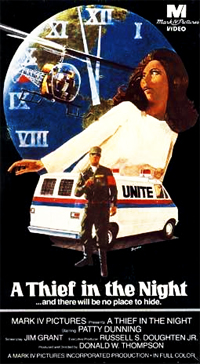
Long before the popular Left Behind books and films by Tim LaHaye and Jerry Jenkins, a Christian filmaker, Russell S. Doughten, in 1972 produced the classic (though some say a bit cheesy) A Thief in the Night, a visual experience that haunted a great many youth groups in dispensationalist churches throughout the 1970s.

Long before the popular Left Behind books and films by Tim LaHaye and Jerry Jenkins, a Christian filmaker, Russell S. Doughten, in 1972 produced the classic (though some say a bit cheesy) A Thief in the Night, a visual experience that haunted a great many youth groups in dispensationalist churches throughout the 1970s.

Growing up in the late 1970’s and early 1980’s, things were not looking very good. The Cold War with the U.S.S.R., the Islamic Revolution in Iran with American embassy staff held as hostages, and runaway inflation were on everyone’s mind. So when I first heard Larry Norman’s song “I Wish We’d All Been Ready,” I really resonated with the message:

life was filled with guns and war
and everyone got trampled on the floor
i wish we’d all been ready

children died the days grew cold
a piece of bread could buy a bag of gold
i wish we’d all been ready

there’s no time to change your mind
the son has come and you’ve been left behind
a man and wife asleep in bed
she hears a noise and turns her head
he’s gone
i wish we’d all been ready

two men walking up a hill
one disappears and one’s left standing still
i wish we’d all been ready

Based on Matthew 24:36-44, Larry Norman was singing about the coming Rapture, where all living Christians would be taken up into the air to escape the approaching seven years of the Great Tribulation, prior to the Second Coming where Jesus Christ sits in judgment as the righteous King and to rule the earth for a one thousand year millennium (previous Veracity post). While most of my Christian friends were hesitant to guess any particular dates, the general sense was that Jesus would definitely come within my lifetime. I was so taken in by this message that for the first few working years out of college, I never bothered to participate in my company’s 401K plan to save for the future. Why should I plan for the future when Jesus is definitely coming back so soon?

Years later, I now wish I had given greater thought to how my view of the EndTimes had impacted my life as a young person. Even more so, I wish I had learned that the Rapture theology narrative I had so readily embraced as being identical with the very Word of God is actually a bit more complicated. Let us dig a little deeper into what the Bible teaches on the subject. Continue reading


Ben Witherington and Darrell Bock on the Rapture

If you were a bit intimidated by my last (lengthy) post regarding the Book of Revelation, including its connection to the Rapture, you might be more interested in the following less-than-seven minute video by Ben Witherington, New Testament scholar at Asbury Seminary. Witherington, who was highlighted before here on Veracity, gets to the rub of the history behind the Rapture.

Witherington, as you will see, concludes with a negative assessment of “Rapture Theology.” Contrast this with Dallas Theological Seminary’s Darrell Bock who accepts the “Rapture Theology.” For those of you not accustomed to big words like eschatology, you can think of it in this context as someone’s understanding or theology of the “End Times.” Bock, also a New Testament scholar and a favorite here on Veracity, follows his brief assessment with a very helpful, three-minute way of evaluating how Christians should handle important issues in the church where Christians nevertheless disagree.

I hope you might benefit from both videos.


Revelation … (and the Rapture Reboot)

Clarence Larkin (1850–1924), a Baptist pastor, produced this intricately detailed chart showing the structure of the events described in the Book of Revelation according to a dispensationalist system of Bible interpretation. Note how Larkin splits the event of the Second Coming, into two parts: the first where Christ "raptures" the church and the second where the Christ comes in glory with his Church to begin the millennial reign. In between the two parts of the Second Coming is the "seventieth week of Daniel," which forms the basic narrative of the last book of the Bible.

Clarence Larkin (1850–1924), a Baptist pastor, produced this marvelously intricate and detailed chart showing the structure of events described in the Book of Revelation according to a dispensationalist system of Bible interpretation (Click to enlarge). Note how Larkin splits the event of the Second Coming, into two parts: the first where Christ “raptures” the church out of the world and the second where Christ comes in glory with his Church to begin the millennial reign. In between the two parts of the Second Coming is the “seventieth week of Daniel,” which forms the basic, if not sometimes terrifying, narrative of the last book of the Bible… You really need a chart to keep track of everything! (Source: clarencelarkincharts.com)

The subject of the End Times can be very daunting. Various places in the New Testament address the topic, but by far the most fascinating discussion in the Holy Scriptures that digs into End Times issues can be found in the very last book of the Bible: The Revelation.

As I was nearly completing this blog post on the Book of Revelation, I read about a new Christian movie coming out this year, Left Behind. What? Nicholas Cage in a Christian movie?

Yep. That’s right. What a great lead in on a blog post about the Book of Revelation! How did this all come about?

Well, the story is that some years ago, best selling Christian authors Tim LaHaye and Jerry B. Jenkins wrote a series of popular books of the same name. The only book series that has topped Left Behind in sales in recent years is Harry Potter.

In 2000, Cloud Ten Pictures released a theatrical version of the book, starring Christian actor Kirk Cameron. Left Behind: The Movie was a total bust at the box office. Unlike the Harry Potter films, Left Behind: The Movie never went very far.

In response to the poor sales and lackluster quality, author Tim LaHaye sued the film company claiming a breach of contract. LaHaye was expecting a much better movie and wanted Cloud Ten to make amends. Cloud Ten eventually settled with the author and agreed to remake the movie. As the subject of the film is “the Rapture,” you can call it a “Rapture Reboot.”

Well, here is the trailer. Does this look like your idea of a Christian film?

I am still working on the concept of Nicholas Cage being in this film…. Anyway… Undoubtedly, the film will be controversial, particularly among Christians. Fans of the book series might flock to the theatre, just to see if the “Rapture Reboot” with Nicholas Cage was really that much of an improvement over Kirk Cameron. Nevertheless, the film does raise a lot of questions about the Bible, the type of issues you simply will not be able to resolve just by going to a movie theater, or viewing later on Netflix.
Continue reading