Tag Archives: eschatology

Daniel’s Seventy Weeks #2

One of Clarence Larkin's (1850-1924) memorable charts illustrating how to interpret the Seventy Weeks of Daniel 9 from a dispensationalist perspective.

One of Clarence Larkin’s (1850-1924) memorable charts illustrating how to interpret the Seventy Weeks of Daniel 9 from a dispensationalist perspective. Clarence Larkin’s charts were some of the most influential teaching tools in evangelical churches throughout the bulk of the 20th century (click on it for more detail — source clarencelarkincharts.com)

Here we take a closer look at Daniel 9:24-27, in this season of Advent, as we dig a little deeper into this famous prophecy of “Seventy Weeks.” I am surely no “Yoda” (read the first post in this series to get what I am saying), but let me guide you with some things to think about, and then point you towards other resources on the Internet that I think you will find helpful. First, let us read our text again, as it has a lot packed in here:

“Seventy ‘sevens’ are decreed for your people and your holy city to finish transgression, to put an end to sin, to atone for wickedness, to bring in everlasting righteousness, to seal up vision and prophecy and to anoint the Most Holy Place. Know and understand this: From the time the word goes out to restore and rebuildJerusalem until the Anointed One, the ruler, comes, there will be seven ‘sevens,’ and sixty-two ‘sevens.’ It will be rebuilt with streets and a trench, but in times of trouble. After the sixty-two ‘sevens,’ the Anointed One will be put to death and will have nothing. The people of the ruler who will come will destroy the city and the sanctuary. The end will come like a flood: War will continue until the end, and desolations have been decreed. He will confirm a covenant with many for one ‘seven.’ In the middle of the ‘seven’ he will put an end to sacrifice and offering. And at the temple he will set up an abomination that causes desolation, until the end that is decreed is poured out on him” (Daniel 9:24-27, NIV 2011).


Scratching your head a bit? Well, let’s start digging!

Continue reading


Daniel’s Seventy Weeks #1

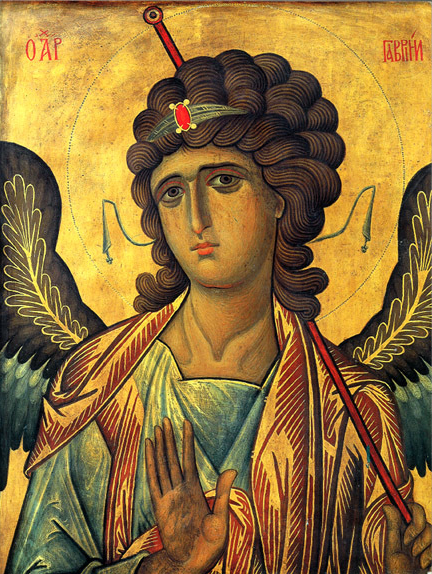
The angel Gabriel, from a 10 century icon, spoke to Daniel, with a mysterious vision of "Seventy Weeks." (credit: Uncut Mountain Supply)

The angel Gabriel, from a 10 century icon, spoke to Daniel, with a mysterious vision of “Seventy Weeks,” in Daniel 9:24-27 , that many say speaks of the coming time of the Christ (credit: Uncut Mountain Supply).

The season of Advent is a time when Christians look forward to the coming of the Messiah, Jesus of Nazareth, in the period we celebrate at Christmas. Part of that time of preparation is spent considering Old Testament prophecy that looks forward to the coming of this Messiah. This Advent season, I want to tackle one of the more controversial passages of the Bible, that many say points hundreds of years in advance, with incredible accuracy, to the time of Jesus, the so-called “Seventy Weeks” prophecy of Daniel 9. Though not directly a “Christmas prophecy,” per se, nevertheless, some Christians believe that the “Seventy Weeks” of Daniel 9 is the most important prophecy about Jesus in the Bible. Have you ever heard of that before?

In churches that emphasize teaching on the “End Times,” the topic of Daniel’s “Seventy Weeks” gets talked about a lot. On the other hand, there are other churches that tend to steer clear away from the “Seventy Weeks.” There is a good reason for all of this: Daniel 9 is loaded with mystery.

The “Seventy Weeks” prophecy in Daniel 9 is a significant, yet difficult, part of the Bible to  grasp. Throughout my life as a Christian, I have heard plenty about the “Seventy Weeks,” but to be honest, my eyes have tended to glaze over whenever someone starts to explain it. But over the past couple of years, or so, I finally decided that I needed to make a concerted effort to grasp what the fuss was all about.

I must warn you: This gets complicated. Like with any investment in something worthwhile, there is great reward, though it does require a good degree of concentration. Nevertheless, despite the challenges, it really is an amazing passage of the Bible.

I will try not to get too technical, but I would suggest that you grab a chair, pour yourself a beverage, and keep your thinking cap handy, as we embark on this series….
Continue reading


Who is the AntiChrist?

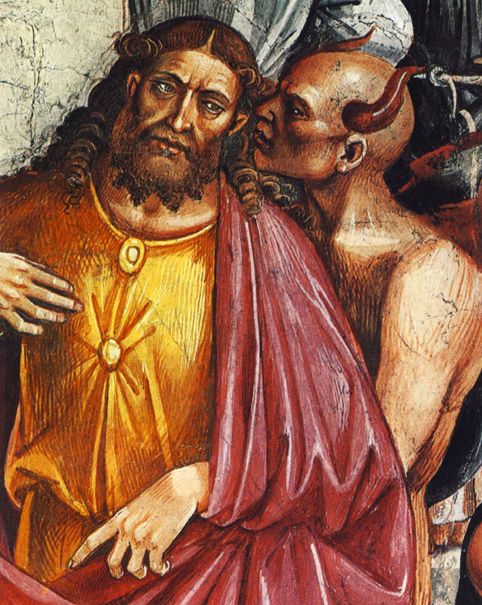
Luca Signorelli. The Deeds of the Antichrist (1499-1504). Signorelli portrays the devil counseling the Antichrist. With an American Presidential election coming around the corner, I wonder who so-called "prophecy experts" might be pick as the one and only Antichrist?

Luca Signorelli. The Deeds of the Antichrist (1499-1504). Signorelli portrays the devil counseling the Antichrist. With an American Presidential election coming around the corner, I wonder who so-called “prophecy experts” might pick as the one and only Antichrist in our day?

So, who exactly is “the” antichrist?

Back in high school, I knew someone who was convinced that President Jimmy Carter was the antichrist. Carter was a very convincing orator in the 1970s, connecting extremely well with voters frustrated with the then current political situation. Carter even said that he was a “born again” Christian. But by negotiating a peace treaty in the Middle East between Israel and her enemies, was Carter fulfilling the prophecy of Daniel 9:27, the antichrist who would “confirm the covenant with many?”

Okay, let us fast-forward some 35 plus years. He may not have been the best President we have ever had…. but the antichrist?

A lot of people speculate on who this antichrist might be. From military dictators to American presidents, the list of possible candidates seems about as endless as the human imagination (some folks even vote for their favorite picks). Most people get their information about the antichrist from books, movies, late-night cable TV, neighbors and friends.

But how many people know what the Bible actually teaches about the antichrist?  You might be surprised to discover that a lot of popular ideas about antichrist owe more to overly fertile imaginations than the clear teaching of Scripture.
Continue reading


How to Have a Good Conversation About the Rapture

The topic of the “Rapture” is sure to generate rather vibrant discussion among Christians with diverse backgrounds. I worship in a community of faith where we have “pretrib” Rapture people, “midtrib” Rapture people, and “posttrib” Rapture people. I have even learned recently that there is now a “prewrath” view of the Rapture, though I am not completely sure what that is. In some corners of the global church, the late Tim LaHaye’s Left Behind novels are regarded as inerrant theology, while others dismiss “Rapture theology” as a modernistic innovation clashing with 18 centuries of Christian teaching! It can get so touchy with people that sometimes folks wonder if there is any way possible to have good conversation about this topic with fellow believers, without someone walking away mad.

My church this summer is promoting a Summer Reading Challenge, encouraging our community of faith to read through all of the letters of Paul, including the famous “Rapture” passage from 1 Thessalonians. A new friend of mine, Hunter Ruch, is also a new member of the pastoral staff at my church. In the following video clip, Hunter models for me what a good conversation looks and sounds like when discussing difficult issues like this. Whether you agree or not with Hunter about what he believes about the Rapture, I hope you will agree that he takes the right posture on how to talk about the Rapture.

Previous Veracity posts about the Rapture include:


More Bad Blood Moon Rising?

A year ago on Veracity, we covered the story of the popular “Four Blood Moons” prophecy being promoted by pastors Mark Biltz and John Hagee.  But in a story that has become even more bizarre a year later, it appears that John Hagee has released a movie to be shown in theatres across America as we near the third of the four lunar eclipse events coming early (briefly) Saturday morning, April 3rd, 2015, on the North American east coast.

It appears that the producer of a Mark Biltz book about the same subject, World Net Daily’s Joseph Farah, on behalf of Biltz, has threatened some sort of potential legal action against Hagee for the claim made in Hagee’s movie that the San Antonio, Texas megachurch pastor made the “discovery” of the prophecy himself. Biltz, who also made a relatively smaller movie in comparison on the same topic, was actually the one who supposedly made the “discovery” of the prophecy by looking at information from NASA.

I find it strangely odd that two men and their representatives would be quarreling about which one of them speculated on this rather convoluted, supposed “prophecy” first.

(…Placing palm on forehead…)

If someone can enlighten me on how this whole affair can possibly preserve the integrity of Christian witness and bring honor to our Lord, I am all ears.

Some wisdom from the words of Jesus are appropriate here to encourage responsible Christians not to wander into such territory: “It is not for you to know times or seasons that the Father has fixed by his own authority.” (Acts 1:7 ESV)

At least to his credit, pastor Hagee did invite astrophysicist Dr. Hugh Ross to interact with him in the movie and express some scientific and biblical criticisms.  Here is a two part analysis by Hugh Ross concerning the blood moon theory (#1 and #2).

If you are still curious but have no interest in going back to read the original post from last year for more detail, I would encourage you at the very least to view this video critique of the blood moon theory: