Tag Archives: Christianity

Matthew 23, Progressive Pictures of Jesus

Christ by Odilon Redon

Christ by Odilon Redon, 1887

What do you see when you visualize Jesus Christ?

The stained glass Tiffany windows in  the sanctuary of my childhood church (First Presbyterian, Newport News) depicted Jesus in pastoral settings.   One image showed Jesus at the home of Mary and Martha (Luke 10:38-42) with a dog under his chair.  “The dog was a favorite artist’s device for representing a household of peace and harmony,” according to First Presbyterian historian Ed Peeples.

Chapel Mural

Mural in the Children’s Wing, Williamsburg Community Chapel

There is no stained-glass Jesus where I worship now, but we do have a mural in the Children’s wing showing Jesus in Williamsburg, helping a little boy with leg braces to stand in a wheelchair.  With a dog.  The mural was painted by one of the gifted staff artists from Busch Gardens.  Many of us conjure up these types of pastoral pictures when we think about Jesus.

While these are indeed beautiful images, Isaiah painted a more accurate picture—700 years before Jesus appeared on earth. Continue reading


Wideness of God’s Mercy: Pluralism #4

I like playing soccer. But playing pick-up soccer is pretty difficult when you do not have any goals. Sometimes you have to improvise with a pair of shoes, a few backpacks, or if you are really lucky, a set of orange highway department cones.

Mmmm…. those look like some mighty fine cones ….. perfect soccer goals!

If you want to mess with the opposing soccer team, just move those improvised goals when they are not looking. When on the opponent’s side of the field, sneak that one cone farther apart from the other one to make that goal wider. Then just wait a few minutes. Pretty soon, you’ll be hearing, “Morledge! What are you doing messing around with the goals?! You can not make the goals wider for you!”

There is always a temptation to try to widen the goals. But it does not just happen in soccer. It also happens when we think about God and salvation. How wide is God’s mercy when we consider who will be saved and who will not be saved? What a troublesome question! In an age drawn more to the love of God as opposed to His justice, does human sentimentality confuse us in our understanding of the parameters God has set for salvation?

Continue reading


Bible Genome

Bible Genome

Map of Direct Citations in the Bible

What Scriptures were most influential to the writers of the Bible?  Who cited whom? Which writers were most schooled in Scripture?  Which Gospel writer referred the most to other Scriptures?  How big a role did Revelation play in their thinking and teaching?  How about Genesis and Job?  How are the parts of the Bible connected?  Which books appear to have been written at the same time?

From God To Us Revised and Expanded: How We Got Our Bible by Norman Geisler and William Nix is a foundational text for those interested in the topic, and I can highly recommend pretty much anything by Dr. Geisler (more on that in a future post).

“Jesus and New Testament writers amply illustrate their belief in the full and complete inspiration of the Old Testament by quoting from every part of the Scriptures as authoritative, including some of its most disputed teachings. The creation of Adam and Eve (Matt. 19:4–6), the destruction of the world by a flood, the miracle of Jonah and the great fish (Matt. 12:39–40), and many other incidents are quoted authoritatively by Jesus. No part of Sacred Writ claims less than full and complete authority. Biblical inspiration is plenary.”
Geisler, Norman L.; Nix, William E. From God To Us Revised and Expanded: How We Got Our Bible. Moody Publishers.

Continue reading


Daniel WallaceDr. Dan Wallace has another outstanding post on Bible translation. His work and research are refreshingly real, and he clearly communicates what the Scripture tells us—and what it does not.

Daniel B. Wallace's avatarDaniel B. Wallace

There’s an old Italian proverb that warns translators about jumping in to the task: “Traduttori? Traditori!” Translation: “Translators? Traitors!” The English proverb, “Something’s always lost in the translation,” is clearly illustrated in this instance. In Italian the two words are virtually identical, both in spelling and pronunciation. They thus involve a play on words. But when translated into other languages, the word-play vanishes. The meaning, on one level, is the same, but on another level it is quite different. Precisely because it is no longer a word-play, the translation doesn’t linger in the mind as much as it does in Italian. There’s always something lost in translation. It’s like saying in French, “don’t eat the fish; it’s poison.” The word ‘fish’ in French is poisson, while the word ‘poison’ is, well, poison. There’s always something lost in translation.

But how much is lost? Here I want to explore…

View original post 1,508 more words


Habits of the Hobbit Heart

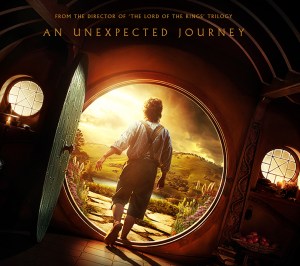
J. R. R. Tolkien wrote his first children's book about Middle Earth in 1937.  Popular film director Peter Jackson adapted a modern retelling of the tale to the big screen in 2012.

J. R. R. Tolkien wrote his first children’s book about Middle Earth in 1937. Popular film director Peter Jackson adapted a modern retelling of the tale to the big screen in 2012.

J.R.R. Tolkien wrote the books, and film director Peter Jackson has put them on the big screen. The Lord of the Rings trilogy and now The Hobbit have made a huge mark at the box office. But did you know that Tolkien was instrumental in the conversion of C. S. Lewis to the Christian faith?

Tolkien, a Roman Catholic,  and Lewis, an atheist, were both veterans of World War One and eventually colleagues at Oxford. Tolkien took a late night walk with Lewis and another friend, during a period in 1931 when Lewis was questioning his atheism. Lewis had a great deal of interest in ancient myths and the truth hidden in such stories. Within days, Lewis committed his life to Jesus Christ, owing much of his conversion to his conversation with his friends.
Continue reading