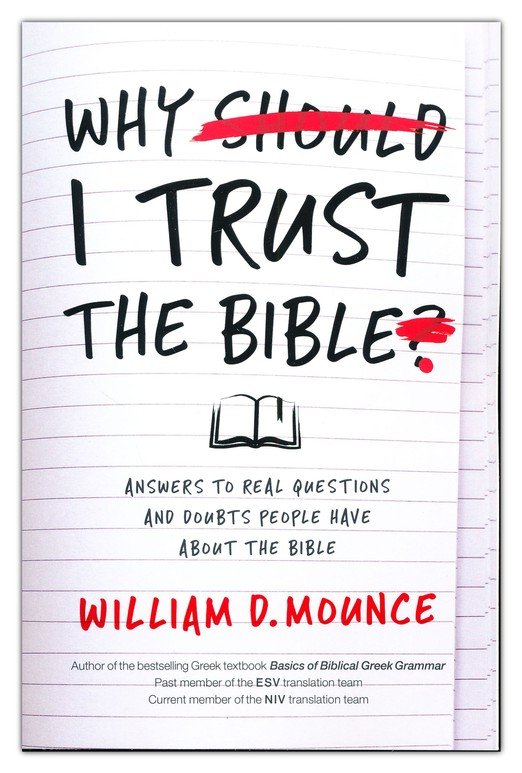
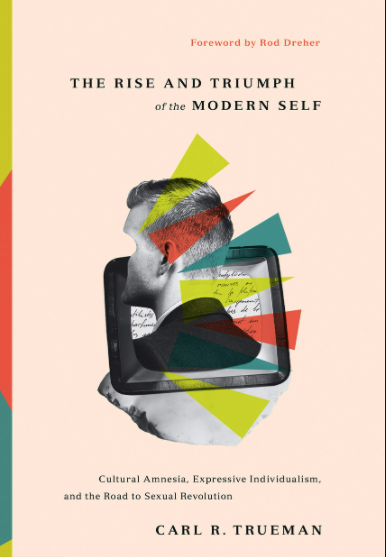
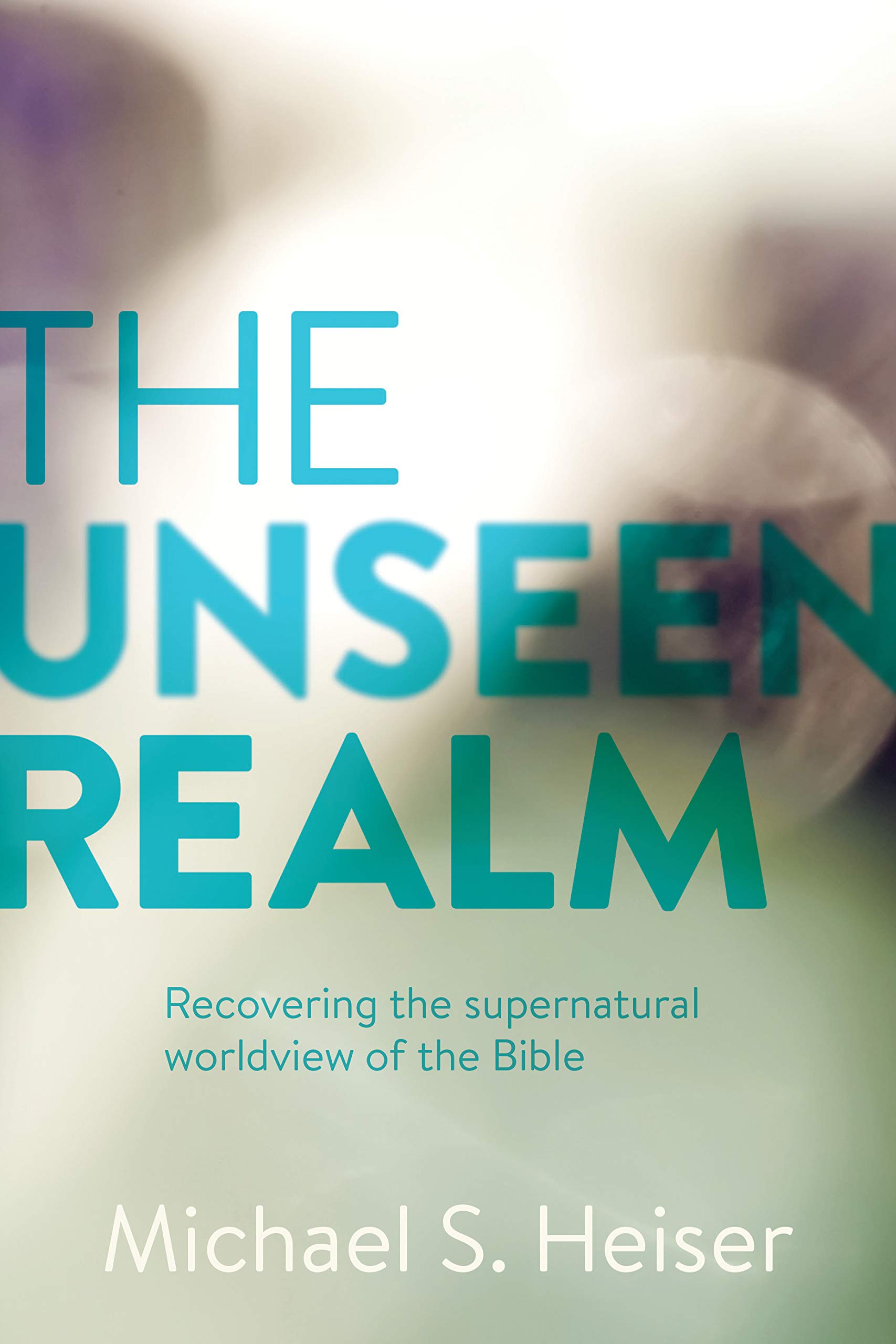
Tag Archives: books

2024 Year in Review

Here are some highlights from the Veracity blog for 2024, as the year winds down to a close…..

But before I jump into that, here is a quick meditation on why Veracity exists. Veracity is all about learning, knowing, and defending what the truth is. Sadly, we live in a world where truth gets set off to the side. Sometimes, even those of us with the best of intentions get sidetracked and mislead by those who live by lies.

Here is a recent example. One of biggest news stories of 2024 has been the fall of the Bashar al-Assad regime in Syria. Veteran news reporter, Clarissa Ward, was in Syria investigating some of the prisons ran by the former Syrian president Bashar al-Assad. In one of the cells Ms. Ward went into with her guide, they found a man saying that he had been in the prison several months. It was a griping scene. Ward offered the man some water, and some food, before he eventually boarded an ambulance. It was horrifying to witness the state of this man who had been imprisoned by al-Assad…… or so it seemed.

A few days after this stunning report, it became known that the story about this man was a hoax. Apparently, Clarissa Ward and her camera team had been duped. This man whom they “rescued” from this prison cell was none other than Salama Mohammad Salama, a first lieutenant in the Syrian Air Force Intelligence, one of al-Assad’s cronies who himself had a record of torturing opponents of al-Assad.

I have to admit, when I first heard and saw the story, I bought into it hook, line, and sinker. On the surface, the story sounded convincing. My heartstrings were pulled, as I sympathized with the man’s plight, narrated by a stunned veteran journalist. But it did seem odd that the man went off with the ambulance without giving Clarissa Ward a phone number to call someone in his family, to tell them he was free from the prison. Clarissa Ward had been duped. CNN had been duped. I had been duped.

It is a terrible feeling to know that you have been lied to. Unfortunately, too often well-meaning Christians will get duped by misinformation about their faith. There are plenty of critics of Christianity who see right through the misinformation that gets propagated in certain Christian circles. Some of this misinformation comes in the form of rather benign Christian urban legends, or genuine conversations of disagreement regarding topics where we have incomplete data to work with. However, other pieces of misinformation can be highly damaging, triggering sentiments of mistrust towards Christian spokespersons or other Christians more generally. If those lies do not get exposed by Christians willing to think deeper about their faith, then it only increases the cynicism of the skeptic and prompts unprepared Christians to go through a process of faith deconstruction, which in some cases can lead to outright deconversion.

Veracity exists to expose those lies and get at the truth of what makes Christianity true. Hopefully, if you have been reading the Veracity blog for awhile, you have been helped at least somewhat to ask curious questions which might lead to a deeper and more genuine commitment to know and love Jesus Christ. Thanks for sticking around and reading.

Reflections on the Year 2024

I lost some good friends this year, as friends get older. These were men who walked humbly with God, and it showed in their lives.

More in the public eye, there are those who are still with us, but who are living in times of twilight. D. A. Carson, one of founders of the Gospel Coalition and one of the finest exegetical theologians living today has withdrawn from speaking due to his Parkinson’s disease. Richard B. Hays, a veteran New Testament American theologian, who recently co-wrote a very controversial book with his son, a controversy covered here on Veracityer, has gone into hospice care.

Yet there are others in the greater public eye who have died, and a few of their stories are worth noting, but for different reasons.
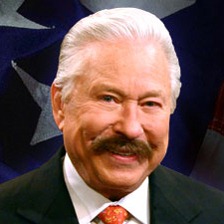
Before there was Nicholas Cage in the Left Behind movie, there was Hal Lindsey, the great popularizer of EndTimes scenarious based on a dispensationlist interpretation of the Book of Revelation.


The Late Great Hal Lindsey

In late November, I learned of the death of Hal Lindsey, the author of the 1970’s blockbuster book, The Late Great Planet Earth. That book was the best selling book in America in that whole decade, behind the Bible. Lindsey was a popular Christian speaker among college student audiences, particularly through Campus Crusade for Christ (now known as CRU). An extended family member of mine was convinced in reading that book that Jesus would return sometime in the 1980’s, probably by 1988, some 40 years after the founding of the modern national state of Israel 1948. Some famous Christians still think that Jesus will return before everyone living in 1948 dies, based on their interpretation of the Bible, and tweaking Hal Lindsey’s timeline.

Jesus could still return at any time, but I am not waiting to hold my breath that the year 1948 holds the definitive key to unlocking this biblical prophecy.

Lindsey was a bit fuzzy about the exact date of Christ’s return, but the conflict between the U.S. and the Soviet Union had many concerned. Back then, the threat of the Cold War and the USSR had me thinking that Lindsey might be right. Maybe??? I was not a geeky student of the Bible then, yet I had Christian friends whom I respected who were enamored with Lindsey’s book. But the fall of the Soviet Union by 1989 pretty much dissolved Lindsey’s reputation.

Not only did Lindsey miss the target on the date of Christ’s return, he also had questionable personal integrity with respect to marriage, being married four times going through several divorces.

Even within the last decade or so, back in the days before the iPhone and when watching television was still a thing, Lindsey was prominent on late-night cable TV, offering his analysis of world events that might impact the future. The Left Behind series of novels and movies owe a tremendous debt to Hal Lindsey. Mmmph.

Perhaps the larger scope of Lindsey’s Bible interpretive method, what theologians call “dispensationalism,” might prove to be correct in the long run, but the date-setting proclivities embedded in The Late Great Planet Earth have proven to fall woefully short in retrospect. With all due respect, I would argue that there is a better way to read the Bible concerning the “End Times.” For a similar approach, British theologian Ian Paul offers his perspective.

Frankly, I am glad I have never bothered with late-night cable TV. I was not missing much!

“Red Letter” Christianity??

Then there was the death of evangelist Tony Campolo. Years ago I read his Partly Right: Learning from the Critics of Christianity. Campolo helped many to listen to non-believers with a sympathetic ear, a virtue which I hopefully have tried to learn from, and emulate in Veracity blog posts.

About 35 years ago, I attended a Christian youth conference in Pittsburgh where Campolo was headlined as the primary speaker. Afterwards a couple of friends and I were tasked to take Campolo back to the airport to catch a flight back to his home in Philadelphia, where he was a professor at Eastern University. He was a great conversationalist, with an amazing knack for helping others to think outside of the box. Campolo impressed me as a radical Christian, which was cool. Below is one of my favorite Tony Campolo sermons:

Over the decades, this quality also made him controversial. He kept pushing boundaries. He was the spiritual advisor to President Bill Clinton during the 1990s, through the period of Clinton’s sexuality scandal. Though pro-life with respect to abortion, he was otherwise very involved in progressive politics. At one point, he refused to identify himself as an “evangelical,” as in his view, the term had become hopelessly hijacked with its connection to right-wing politics.

But he kept pushing boundaries further than necessary. He became edgy in ways I ultimately could not endorse, popularizing the concept of a “Red-Letter Christian,” elevating the words of Jesus above other teachings in Scripture. As I have shown before (see the following hyperlinks), this hermeneutic is really an example of wishful thinking that fashions the ministry of the earthly Jesus into something that reflects the embedded cultural values of the Bible reader and not what is actually in the text of Scripture.  In this way of thinking, the words/teachings of Jesus are prioritized over other teachings in the Bible, particularly the letters of Paul.

Contrary to the claim made by certain skeptical scholars that the New Testament is an inherently contradictory mish-mash of attitudes towards the Law of Moses, and ethics in general, the way the New Testament actually works is a really good example of progressive revelation in action. Progressive revelation demonstrates that God reveals truth in the Bible over time, later revelatory teachings built on top of and refining earlier teachings. For example, the New Testament itself completes the message that unfolds over centuries of Old Testament texts and teachings.

Jesus is not the only one speaking in the New Testament, for he also uses the words of Paul, but that only comes out over time. For example, Jesus’ earthly ministry was focused primarily on the Jews living in and around Jerusalem and Galilee, despite a few forays into Samaritan territory and contact with “God-fearing” Romans. In the “red letters,” Jesus tells us that he only came for the lost sheep of Israel (Matthew 15:24). It is not until AFTER the ascension of Jesus that the Gospel’s progress extends in full force to go outside of Israel and impact the whole world. Paul, who knew nothing of the earthly Jesus, received his commission on the road to Damascus by the Risen Jesus to be the Apostle to the Gentiles.

In other words, the full inclusive message of the Gospel is articulated by Jesus through the words of the Apostle Paul, not through the actual “red letters” of Jesus alone. If you are looking for an antidote to xenophobia, you need to look more to the words of Paul and not the words of the earthly Jesus in comparison. This is NOT to say that Jesus was xenophobic. Of course not. But it is to say that the Gospel’s message of welcoming and embracing those who are different from ourselves comes out more clearly through Paul, as the message of progressive revelation expands out through the pages of the entire New Testament.

The Christian faith today would look a whole lot different if Jesus had not tapped Paul to be his prime emissary to the Gentile world. Otherwise, Christianity would probably only remain a smaller sect within Judaism, and not the worldwide, universal faith of billions today.

The New Testament does not offer a full throated attack against slavery, but you do get at least a modest, indirect attack against the institution of slavery in the teachings of Paul. In comparison, the “red letters” of Jesus in the Gospels never challenge the institution of slavery, even in any indirect way. If all we had were the “red letters”of Jesus to go on, we would have never had a Christian abolitionist movement to end slavery in the United State. Think about that.

If you looking for a message of non-violence in the New Testament, and you are willing to lay aside the whole concept of judgment coming at the end of time momentarily, the words of Paul help you out better than the “red letters” of Jesus. For while the “red letters” of Jesus in the Gospels do promote non-violence, the “red letters” of Jesus in the Book of Revelation tell a very different story. In Revelation, we have Jesus going around wielding a sword and not afraid to use it. Even if you take Jesus’ words in Revelation more non-metaphorically (a wise thing to do), Jesus’ words are still more harsh than anything we find in Paul. In comparison, Paul never says an explicit word about endorsing the use of violence. Think about that one, too, for a moment.

Then finally, when it comes to the doctrine of hell, even if you leave the Book of Revelation out of the picture, Jesus talks about hell, or images related to hell, more in his “red letters” than what we find in the words of Paul. Paul never even mentions any word corresponding to “hell” once in his letters, and he only talks about “eternal destruction” in one verse, 2 Thessalonians 1:9. The differences are real, if we only take the time to actually read the New Testament.

The theological trajectory that Tony Campolo took has grieved me.

“Red Letter” Christianity sounds great on the surface, until you actually start to read the “red letters” of Jesus in comparison to other texts in the Bible. At the risk of some overstatement, in Campolo’s way of wishful thinking he wanted to equate the words of Jesus, written in red in some Bibles, with social justice efforts. Much of this was all  well-intended, as I have seen it. But it seemed to also follow in a murky way and track along with what Elon Musk has called a secular “woke mind virus,” whereby everything in reality is measured through the lens of an oppressor/oppressed matrix, viewing Dr. Martin Luther King, Jr.’s vision of a “color-blind” society as a deficiency and not a goal for real social change. Campolo even flipped his position on homosexuality, eventually embracing same-sex marriage as a viable Christian option.

His son, Bart Campolo, went even further, going through a period of deconstruction of his own faith, ultimately deconverting and renouncing Christian faith altogether, becoming a “humanist” chaplain. In my view, Bart took his father’s theological trajectory to its logical conclusion. I commend Bart’s honesty, though I can not follow that path either.

A contrarian in many ways, Tony Campolo nevertheless set a very good example in encouraging conservative Christians to fight against racism and ending poverty, and not getting caught up in fantasies about “Christian Nationalism.” Despite many of the positive contributions like this he made, Tony Campolo regretfully drifted away from historic orthodoxy, in a way that is not theologically sustainable over the long run across the generations (as evident with his son, Bart), but he did not drift far enough to ultimately escape God’s grace, at least in my estimation.


Another Dietrich Bonhoeffer Movie

On a somewhat related note, my wife and I and some friends did get a chance to see the new Bonhoeffer movie, over the Thanksgiving weekend.  Dietrich Bonhoeffer grew up in the world of German theological liberalism in the early 20th century, but then embraced a vision of neo-orthodoxy, a broad counter-movement to liberalism, a kind of theological half-brother to evangelicalism, that sought to restore the faith, particularly as a response to the widespread embrace of Hitler’s Nazism, which entered the void left by German theological liberalism.

Having read a few biographies about Dietrich Bonhoeffer, it was slightly painful to see how the film mangled some of the chronology of Bonhoeffer’s life. For example, Bonhoeffer confusingly placed Dietrich’s last trip to New York sometime presumably after Hitler’s invasion to Poland, after Dietrich had joined the Abwehr , the German military intelligence unit. The more historically accurate chronology has Dietrich going to New York for the last time in the early summer of 1939, realizing that he had made a mistake in going to America, and then returning to Germany to face his fate. Within a few months of his return to Germany, he then joins the Abwehr, in a subversive effort to bring down Hitler from the inside.  Hitler invades Poland that September.

But the film did highlight the key moments of the German theologian’s overall career, who died at the hand of the Nazis, after being implicated in a conspiracy that failed to assassinate Hitler. What more can you try to squeeze into a 2-hour movie? Bonhoeffer’s Christian courage is both inspiring and controversial, and the legacy of this pacifist-turned-political-traitor will continue to be examined and re-examined for some time to come.

What I found fascinating are the reviews that go all over the map regarding the kind of impression the Bonhoeffer movie was trying to make. For example, on one side, Slate magazine saysIn an age of rampant access to information but elusive truth, we are all searching for quick ways to categorize one another, and to claim the best heroes for our own personal camps. Such is also the case with Bonhoeffer, whose most popular biography was written not by a German theologian, but by American conservative radio host and prominent Trump supporter Eric Metaxas….. The movie is, then, yet another claim conservatives are making to Bonhoeffer’s legacy.”

On the other side, America: The Jesuit Review, took a completely different slant, suggesting that the film is actually a prophetic warning issued against Christian conservatives: “What separates “Bonhoeffer” from the myriad instructive Holocaust biographies and melodramas is its timing: American audiences have never before watched a movie about World War II-era Germany with the knowledge that a majority of their own electorate has voted in favor of fascism….Will Evangelical America be apologizing in five years?

I guess that is partly why I liked the film, and would recommend others see it, even with the strained and confusing chronology. When viewers on opposite sides of their ideological biases have quite contradictory takes on the same film, it generally indicates that the film at least got something right. The truth is probably somewhere in the balance between two extremes.

On my “to-be-read” list is Charles Marsh’s biography of Bonhoeffer, Strange Glory: A Life of Dietrich Bonhoeffer. Most people that I know who have read the Marsh book tell me that it is better than Eric Metaxas’ biography of Bonhoeffer.

 

The Book of the Year… Books and More Books

My book of year, hands down, is Michael Licona’s Jesus Contradicted.  More than any other book I have read in a long time, Licona’s work to reframe how we think about the inspiration of the Scripture, in view of the evidence, and see how the impact of Greco-Roman genres of literature helps us to make better sense of the differences/discrepancies we read in the Gospels. While I do not think Licona’s call for an updated revision of the Chicago Statement on Biblical Inerrancy will gain much traction, I do think Licona’s flexible view of biblical inerrancy is the most defensible way to think about the reliability of the Bible.

We do not need to try to torture the Bible to make it say what we want it to say. God gave us the Bible the way we have it, so we simply need to trust that God knows exactly what he has done and what he continues to do (BONUS: here is a link to a video interview by a Roman Catholic scholar about the late Pope Benedict that says pretty much the same thing).
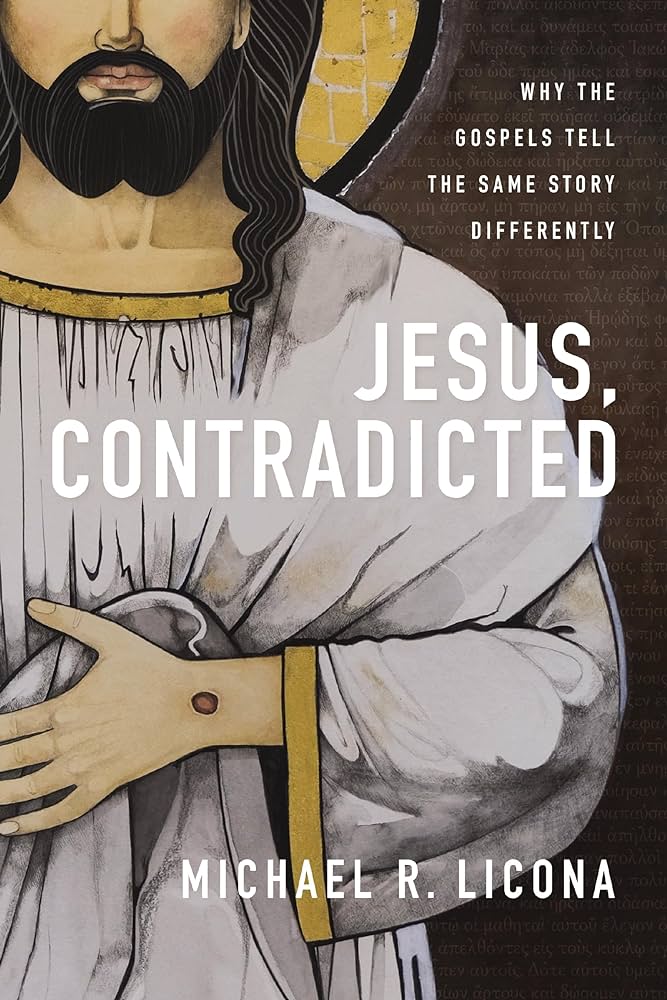
Jesus, Contradicted: Why The Gospels Tell The Same Story Differently, by Michael Licona, offers a more evidenced-based approach to handling differences in the Gospels, without resorting to tortured harmonization efforts.


My number two book of the year is the timely The Anxious Generation, by Jonathan Haidt, showing how social media has hijacked the mental health of a generation of children and other young people. The book is making an impact, and I encourage everyone to go read it…. like right now!!

In many ways, our culture has gone crazy with an “anything goes” attitude towards social media while punishing parents who allow their kids physical freedom to go out and explore the world on their own. This is insane.

The good news is that the message of this book is not only making in-roads into the church (though perhaps not enough), it is starting to have in impact in the wider culture. In late November, 2024, Australia took the bold and audacious move of banning social media for people under the age of 16. I am not sure how enforceable such a law could be, but it is a step in the right direction as it will hopefully stir up families to take a closer look at how children digest and consume social media.

So while Haidt’s book is not the number one book I read in 2024, it certainly is the most timely and important!

The Anxious Generation: How the Great Rewiring of Childhood is Causing an Epidemic of Mental Illness, by Jonathan Haidt

——————–

Odds-n-Ends

The other most profound theological book I read in 2024 was Matthew Thiessen’s A Jewish Paul.  I am not clear on what Thiessen’s exact theological commitments are, but in this book he explains Paul’s teaching about the “spirit,” in terms of “Pneumatic Gene Therapy,”  as an explanation which makes sense of what Paul had in mind regarding the dynamics of living the Christian life, as well as thinking about the future bodily resurrection of believers.

Following up on A Jewish Paul, I read and reviewed Kent Yinger’s The New Perspective on Paul, a very, very helpful and accessible introduction a topic that at least in some circles is very controversial. Read the review, or better yet, get a copy of the book to make sense of what the fuss is all about.

……………..

A couple of years ago, I decided to try to read at least one Bart Ehrman book a year, and offer a review. Ehrman is probably the world’s leading academic critic of evangelical Christianity, having a very loyal following of formerly evangelical Christians who have deconverted from Christianity, or otherwise deconstructed their faith in a more progressive direction. Ehrman’s podcast on YouTube has 180 thousand subscribers, so he is hard to miss.

Most Christians I know either do not know who Bart Ehrman is, which is odd, as he is probably the 21st century equivalent to Bertrand Russell, or the biblical scholar equivalent to the scientist Richard Dawkins. Or they just ignore Ehrman. I think that is a mistake. Faith deconstruction is fueled by social media these days, and Bart Ehrman stands at the head end driving a lot of it.

A lot of Christians think of Ehrman as “demon spawn,” or something like that. The problem is that Ehrman is actually an impressive, and in many ways, a winsome communicator and teacher, as evidenced by his podcasts. He considers the evidence carefully. He is a very engaging writer, too.

The problem with Ehrman ultimately, however, is one of method. The most formidable skeptics, like Ehrman, tend to think of themselves as “scholars” as opposed to being “apologists.” In this sense, “scholars” are those who do not descend to the level of apologetics. However, this is just a bunch of hogwash. Everyone is an apologist for whatever beliefs they have. Everyone has their biases, including Bart Ehrman, as well as Christians. Scholars like Ehrman bracket off the divine inspiration of the Bible to the side, which effectively undercuts the big-picture univocality of the Bible, thus reducing the Bible to a jumble of contradictory texts.

The key to appreciating Ehrman in the most irenic and charitable way is to acknowledge that he has many helpful insights, while being able to detect how the method he uses to do research is formed by the skeptical worldview he embraces, thus informing the kind of conclusions he arrives at, which are at odds with historic orthodox Christianity. There is no such thing as a completely unbiased scholar, despite what Bart Ehrman repeatedly suggests.

In 2022, I reviewed Ehrman’s Heaven and Hell: A History of the Afterlife. In 2023, I reviewed Ehrman’s Forgery and Counterforgery: The Use of Literary Deceit in Early Christian Polemics. In 2024, I wrote a two part review of his Armageddon: What the Bible Really Says about the End.

……….

Stephen De Young, in his The Religion of the Apostles, stands out as one of the most thought-provoking Eastern Orthodox writers, showing how an appreciation for the faith and practices of the early church dovetails with Christian apologetics, in a way that even non-Eastern Orthodox Christians should be able to appreciate. I liken Stephen De Young to be the Eastern Orthodox version of the late Old Testament scholar, Michael Heiser, who has influenced me greatly.

……………………………

To wrap up the year, I read three biographies about a single person, Elisabeth Elliot, perhaps the most prominent female evangelical intellectual and Bible teacher of the latter half of the 20th century. Lucy Austen and Ellen Vaughn wrote some great books, examining one of the most fascinating, complex, and controversial Christians of the past hundred years. The stories about her life were equally riveting, maddening, and entertaining. But my ultimate conclusion is that reading about Elisabeth Elliot’s life challenged me to think more about what it means to act in obedience to Christ, no matter what the cost.

I started a bunch of other fun books, but finished very few of them! Look for some Veracity book reviews in early 2025. On some roadtrips my wife and I took this year, I caught up with a bunch of The Rest is History podcast episodes (my favorite podcast), particular the series about the life and assassination of John F. Kennedy (what a womanizer!),  and the first half of the French Revolution history series. British historians Tom Holland and Dominic Sandbrook play off one another to do some great storytelling that I can listen to all day, if I could. Superb stuff!

If you like listening to British accents in podcasts and enjoy history like I do, another great podcast is Melvyn Bragg’s In Our Time, put out by the BBC.  Unlike The Rest is History, Melvyn Bragg brings in several experts (mainly from the UK), and he asks very attentive questions to his guests about the topic at hand. I am bit behind in listening to the episodes I want take in, but Baylor University historian Philip Jenkins has a blog post outlining kind of a “best of” selection of the best In Our Time episodes.

Right now, I am most excited about the year 2025 being the 1700th anniversary of the writing of the Nicene Creed. That’s right. 1700 years ago, the first and perhaps most important church council (after the Jerusalem council described in Acts 15) met to hammer out the first universal creed of the Christian faith.

If you like podcasts, you might want to look into the Passages podcast which covers the history and theology of the Nicene Creed, put out by the good folks at MereOrthodoxy.com, to get you primed for learning about this most important creed which unites billions of Christians together today.

Have a Happy New Year, and welcome in 2025!!


2023 in Review (…. and Book of the Year, Andrew Wilson’s Remaking the World )

We hit near the end of 2023….so, they canceled Christmas in Bethlehem this year….

Just when you thought that the world was trying to get past the COVID pandemic, all sorts of other craziness breaks loose and gets worse. The Ukraine/Russia conflict drags on into its second year, and in recent months, the Israel/Palestinian crisis just explodes.

The horribly inhumane October 7 attacks by Hamas upon Israeli civilians shock us, while Israel’s efforts to eradicate Hamas from Gaza has led to thousands of deaths of Palestinian non-combatants. Has Israel really done enough to avoid civilian casualties? Has there not been some better way to protect children and hospitals? How should we respond to the reports of abuse of Palestinian prisoners in Israeli jails? What about attacks from Israelis against Palestinians who continue to build illegal settlements?  Even the minority of Christians in Gaza have been targeted, caught in the crossfire,  or at least confused with being Hamas. When we learn that 19 of the remaining 1,000 Christians in Gaza have been killed since the beginning of the war, it can not be good.

On the other hand, what do we make of the pro-Palestinian protests chanting “From the river to the sea, Palestine will be free?” Do people really understand what that even means? Are there really that many people who seriously want the complete destruction of Israel? Has anti-semitism all of a sudden shot off the scale?

Maybe so. A December article in the Economist shows the upsetting results of a recent poll: one in five young Americans (between the ages of 18 and 29) believe that the Jewish holocaust in World War II was a myth. Almost no one in my age group or older dismisses the Holocaust as a non-event, but apparently nearly a quarter of American young people today believe that “the Holocaust has been exaggerated.” Seriously ??! Simply mind-blowingly sad how we are raising a generation of youth today who have no adequate comprehension about basic historical facts. Look at the Economist survey for yourself.

We apparently live in very crazy times.

In the background behind these political debates stands the complex history of the land in the Ukraine, and in the Middle East, and how people read the Bible. I spent approximately two years (2014-2016) blogging about the Israel/Palestine situation, and I walked away from that with some changes to my thinking (BONUS LINK: Read about the history of how the name “Palestine” got attached to this Middle Eastern land area).

However, I have no real “silver bullet” solution to something like the current Gaza crisis. But this should not be used as a excuse to stick one’s head into the sand. It is frankly impossible to understand anything about the Israeli/Gaza crisis without digging deep into the Bible. Part of my passion in writing on the Veracity blog is to prod myself to better learn about history and think more deeply about the Bible, in hopes that others might do so as well.

2023 Book of the Year: Andrew Wilson’s Remaking the World: How 1776 Created the Post-Christian West.

Continue reading


For Your Summer Listening Pleasure (in 2023)…..

As we head into the summer of 2023, I wanted to list out some of best video/audio that I have dabbled in so far this year. Most of these talks and videos I have only started, only wanting come back to them later. It seems like everybody has a podcast or YouTube channel theses days, but I mainly want to highlight some of the best stuff out there…. and there is some really good stuff!

So far in 2023, we have lost a number of Christian leaders who have had a worldwide impact. The most recent being Tim Keller. This reflective article by Collin Hansen about Tim Keller at Christianity Today is one of the best remembrances of Tim Keller. But I would also recommend Russell Moore’s survey of Tim Keller’s contribution to evangelicalism in the YouTube video/podcast below, highlighting Keller’s gentle yet firm approach to evangelism, and especially Keller’s Christ-honoring posture when faced by critics on the theological left and the theological right. As Molly Worthen (see below) writes in her article in The Atlantic, more progressive leaning Christians rejected Keller’s view of marriage as being only between a man and a woman, as well as his view that the Bible does not permit women to serve as elders in a local church, while more conservative leaning Christians rejected Keller’s “third way” approach to cultural disintegration as “compromising” with the world, calling for a more aggressive stance against secularism in the political sphere, as opposed to Keller’s more irenic, conversational approach.

These deaths fall on the heals of a few notable deaths in late 2022, including Gordon Fee and E. P. Sanders. Gordon Fee was one of the most well-regarded evangelical New Testament scholars of that last quarter century, a curious mix of a keen intellect that produced some of the most outstanding commentaries of various New Testament books that thousands of pastors weekly consult for their sermons, and controversially having a strongly charismatic, Pentecostal background, with egalitarian convictions regarding women in ministry. Here is an 8-minute interview with Dr. Fee a few years before he died:

Yet Fee’s great impact was eclipsed by E. P Sanders, who was widely regarded as the most influential New Testament scholar in the last quarter of the 20th century. Most conservative evangelical Christians have never heard of E. P. Sanders, as he tended to move around in more progressive circles, but his impact on how all scholars, theologically conservative and progressive, think about the New Testament is undeniable. Just as the German Rudolph Bultmann towered above everyone else in the mid-20th century, so did the American E.P. Sanders since the 1970s, following his landmark work Paul and Palestinian Judaism. E.P. Sanders, who in the late 1970s or early 1980s was once a visiting professor at the College of William and Mary, where I work on staff, will forever be connected with the so-called “New Perspective on Paul,” which has revolutionized New Testament understandings of the Apostle Paul. While the “New Perspective on Paul” is widely misunderstood, and even outright rejected by some, serious scholarship today can not afford to ignore the ideas articulated by E.P. Sanders. Sanders scholarship has permeated just about every study of Paul, notably through the popular New Testament British evangelical scholar, N.T. Wright.

The death of Jack Hayford, the well-known Pentecostal preacher and leader of the Foursquare Church, started off the year 2023. Hayford built bridges between Pentecostals and non-Pentecostals, a major force in the Promise Keepers men’s ministry in the 1990s, and wrote the popular worship song, “Majesty.” In college, I served as worship leader at a Foursquare Church, using a number of Hayford’s songs.

Then there is the death of George Verwer. After committing his life to Christ at a Billy Graham crusade in 1953 at Madison Square Garden, New York City, Verwer went onto being not only an evangelist himself, but one of the most outspoken promoters of global missions. Known for wearing his jacket with a map of the world printed on it, whenever he spoke at churches, Verwer founded Operation Mobilization, one of the most innovative and radical missionary agencies started in the 1960s, and going strong today. Here is a 5-minute video about George Verwer:

I have noted the death of Old Testament scholar Michael S. Heiser earlier this year, perhaps my favorite Old Testament teacher around. My upcoming blog post series this summer on “head coverings” is really inspired a lot by listening to and reading his teachings.

Yet I was also struck by the death of Atlanta Baptist pastor Charles Stanley. My first encounter with Charles Stanley’s ministry some 25 years ago was unfortunately not very positive (sorry Charles Stanley fans, but that is the truth). I had never heard of Charles Stanley before, and I was taken aback when one of Charles Stanley’s fans got really annoyed in one of my church history classes that I was teaching at my church. This woman rebuked me in front of the whole class, and sent me a stack of Charles Stanley tapes the next week, hoping that by listening to them they would straighten me out. She had somehow gotten the odd impression that I believed that the study of church history was more important than studying the Bible. The teaching on the tapes was actually pretty good. But I was still so bothered as to why this woman in my class felt that I needed to listen to Stanley, that I became pretty suspicious of him. Fast forward to about ten years later, I gained a more favorable appreciation of Charles Stanley when I went to hear him preach at the First Baptist Church of Atlanta.

After his recent death, I learned more about Charles Stanley’s life story, learning that he had a very difficult childhood, growing up for time with a single mom, and then enduring abuse from a step-father. I had no idea that his early life was so difficult, and how his relationship with Christ got him through very troubling times. His life story is worth listening to:

After the death of Queen Elizabeth, we now have a new King of England. Charles III was recently coronated as King of the United Kingdom. The ever delightful, contrarian, and indeed quirky atheist historian David Starkey remarks that the UK coronation ceremony is deeply rooted in Christian ritual. Starkey has a couple of videos that tell the history about the coronation down through the centuries, if you like that kind of stuff:

Probably some of the best listens I have had so far this year come from the Rest is History podcast. Everyone has probably heard about Dan Brown’s blockbuster novel, The Da Vinci Code, which became a Ron Howard movie starring Tom Hanks in 2006. In 2023, we stand at the 20th anniversary of when The Da Vinci Code was first written and took the world by storm. Brown’s book popularized a conspiracy theory that began in certain academic circles in the late 1970s, suggesting that Jesus Christ never went to the Cross, contrary to what you hear week after week in most church services across the globe. Instead, Jesus and Mary Magdalene got married, scuttled off to the other side of the Roman Empire, and their progeny had been living in Southern France for centuries, much to the consternation of the Roman Catholic Church who wanted to supposedly suppress the “truth.” If you could possibly pinpoint a date where “fake news” really began to take off in the 21st century, this might be the best candidate.

The Rest is History podcast creators, historians Tom Holland and Dominic Sandbrook, tell the story behind The Da Vinci Code, in Episode 301. But the tale is actually much bigger and more interesting than the narrative which filled Dan Brown’s pockets with a lot of money.

The story goes back to the Mystery of the Cathars, the mysterious group of heretics in the 12th to 14th century Southern France. In Episode 302, Holland and Sandbrook tell the background story of how the Cathars originated, and the controversy among historians still today who are trying to figure out what really happened, and how this heretical group might or might not be connected back to the Gnostic Christian heresy of the 2nd century. It is a mystery about mysteries, as spellbinding as any Agatha Christie novel.

The tragedy of the Cathars led to the Bloodiest Crusade in the Christian history, told in Episode 303, where Christians were pitted against other supposedly heretical Christians, the beginnings of the infamous Inquisition, which later became such a controversial part of Roman Catholic Church history. The surprise ending, best listened to those three episodes played back to back, will tell you a lot about why the current culture wars we are living through during the 2020s is so crazy….. and think this is all began with The DaVinci Code.

YouTube apologist Gavin Ortlund has some absolutely fantastic content that I need to listen to over again, just because it so rich. Ortlund has an interview with author Christopher Watkin, about his book Biblical Critical Theory, which is probably one of the most talked about books in the past year in evangelical circles.  Watkin offers a biblical critique of the so-called “critical race theory.” I already have too many books on my “to be read” list, but this interview with Watkins sure entices my interest:

The Pints with Aquinas channel has great debate featuring Gavin Ortlund defending the Protestant doctrine of sola scriptura with Roman Catholic apologist Trent Horn criticizing sola scriptura. This is an excellent example of how charitable debates should be held with believers who strongly disagree with one another.

Baptist preacher and YouTuber Matt Whitman has an informative video interviewing Ligonier Ministries’ Dr. Stephen Nichols about “What Was the Great Schism and Why Did It Happen?,” talking about when Western and Eastern Christianity parted ways with one another about 1,000 years ago:

Christianity is growing globally, where about 1/3 of the world’s population profess to be Christian, which is great news. But the story is not so rosy in the United States. According to the latest Pew research, by 2070 the number of professing Christians in America will drop to less than half of the country’s population. Professing Christians make up 64% of the population currently, but by 2070, according to current trends, this percentage will drop to around 46%. Christianity is on a decline in America, with more and more deconstructing and deconverting, just in case you never heard about this. Some of this decline is really about younger people getting disillusioned with large denominational institutions, like the Southern Baptists. But the shift away from Christianity in general is hard to ignore. In the last 30 years alone, 40 million Americans have “de-churched” making this one of the largest sociological shifts in American history. A Gospel Coalition podcast gives us a discussion with Ryan Burge, a political scientist, to talk about who are leaving evangelical churches and why:

Along those same lines about “deconstruction,” Lutheran YouTuber Dr. Jordan B. Cooper, host of the Just and Sinner podcast, has a talk about Jacques Derrida, one of the foundational thinkers of postmodernism. Derrida popularized the terminology of “deconstruction”:

A lot of great documentaries/films are showing up on YouTube now, that once belonged behind a paywall. One of them is Fragments of Truth, where New Testament scholar Dr. Craig Evan’s talks about the discoveries of the New Testament documents we have found over the past few centuries which bolster our confidence in the historical reliability of the Christian faith. This gives Christians good answers to those who have read Bart Ehrman’s New York Times bestseller Misquoting Jesus:

A book by Collin Hansen is out now discussing the life and thought of the late Timothy Keller: His Spiritual and Intellectual Formation, interviewed by Gavin Ortlund:

Next before last, there is the remarkable conversion story of historian Molly Worthen. Dr. Worthen wrote an historian analysis of the “crisis of authority” within American evangelicalism, a subject of a Veracity blog post from 2014. Since then, and particularly over the past year, Molly Worthen has moved from a position of skepticism about Christianity that she had held for decades to become a follower of Christ.  A most inspiring story, showing that even really, really smart people can have their lives transformed by the love of Jesus Christ!

…and FINALLY….. something a little fun, in honor of the late Tim Keller. How about “Carpool Karaoke with Tim Keller!”

ONE QUICK ADMINISTRATIVE NOTE: WordPress is no longer distributing blog post announcements via Twitter, so be sure to sign up via email by clicking the black “Follow” button on the right hand side of the Veracity page, if you want to receive announcements of new blog posts from Veracity, and stop using the “Follow” button for Twitter, which no longer works.


2022 Year in Review (A Trip to Europe, Books, …. and Concerns for the Church)

Iconic view of Prague Castle, in the Czech Republic, on a beautiful October day. The highlight for me in 2022!!

Towards the end of the year, I try to post a blog entry looking back over the past year in blogging, mainly to comment on some of the favorite books that I have read, looking back over some important issues in our world with respect to the Christian faith, and perhaps taking a glance into the future for the blog.

2022 turned out to be a special year because of a trip that my wife and I took to Europe, celebrating our 20th wedding anniversary. It was the absolute highlight of the year for me. Three weeks. Six countries: Germany, Austria, Slovakia, Czech Republic, and Italy. The trip really tapped into my love of church history, and I particularly enjoying meeting up with some good friends who live in Sicily. I will have a few extra posts to come out in 2023 that will chronicle a bit more of our trip.

Some Favorite Podcasts… (To Catch Up On)

OKay, this might all sound a bit rambling, as it is a hodge-podge of things I have been thinking through towards the end of 2022, but I will go with it anyway…. (otherwise, please feel free to skip this post and go about the rest of your day:  Happy New Year!)….

First, let us talk about a podcast update: In 2022 I decided to take on some European history audiobooks to get me primed for our trip this past fall, on my work commute. I am still listening through some of them to finish them up! But it meant that I had to postpone listening to some of my favorite podcasts, to be picked up (hopefully) in 2023. I will just list five here:

  • The Rest is History:  Tom Holland and Dominic Sandbrook are fascinating British historians to listen to, as they are wonderful story tellers of world history. They did a whole set of episodes covering the histories of various nations that competed in the 2022 World Cup. These historians are not professing Christians (Evangelical scholar Peter Williams offers a critique of Tom Holland’s view of the Christmas story, from a podcast episode posted near the end of the year…. plus here is another resource at Triablogue that might offer some additional help.), but they do try to treat Christians fairly, with respect, and even with admiration. Quite refreshing and enjoyable.
  • Theology in the Raw. Evangelical theologian Preston Sprinkle has done some great interviews with people who are having an impact on what thoughtful Christians wrestle with in the 2020’s.
  • Sean McDowell YouTube. The son of pioneer evangelical apologist, Josh McDowell, has great interviews with scholars concerning issues of Christian apologetics.  Excellent stuff on YouTube.
  • Naked Bible Podcast. Dr. Michael Heiser is top notch at doing in-depth Scripture study. Not exactly verse-by-verse exposition, but pretty close to it. Heiser is struggling with cancer right now, but he still manages to pump out great content every week. He is currently in 1 Samuel.
  • Bad Books of the Bible. Eastern Orthodox scholars Joel Miller and Jamie Bennett took a hiatus for much of 2022 in this podcast on the Old Testament Apocrypha, after looking at 1 Maccabees. But towards the end of 2022, they jumped into the “Wisdom of Solomon.” My fellow Protestants miss this, because we do not have these books in our Protestant Bibles, but even the leaders of the magisterial Reformation, like John Calvin and Martin Luther, suggested that Christians read these books, not so much for establishing Christian doctrine, but rather to be edified by Jewish writings written between the Old Testament and New Testament periods. Offbeat for Protestants, yes, but very helpful for understanding the background of the New Testament.

There are a couple of new podcasts out, that do verse-by-verse exposition, that have been recommended to me, but I honestly have not had time to check out myself…. but hopefully in 2023…. if someone knows about these, I would love to hear a review!:


A Little Dialogue with ChatGPT: Will Artificial Intelligence “Replace” the Bible?

Second, let us have a little fun with ChatGPT, the AI application that is all the rage right now at the end of 2022. I wonder what ChatGPT thinks about some of the topics we discuss here on Veracity:

Is the Bible the Word of God?”

Here is ChatGPT’s answer:

“The Bible is a religious text that is revered by many people, particularly Christians, as a sacred and divinely inspired work. Some people believe that the Bible is the word of God and that it contains teachings and wisdom that can guide and inform their daily lives. Others may view the Bible as an important historical and cultural document, but do not necessarily believe that it is divinely inspired. Ultimately, whether or not one believes that the Bible is the word of God is a matter of personal belief and interpretation. It is important to approach the Bible, or any other religious text, with an open mind and to consider it thoughtfully and critically, rather than simply accepting it as true without questioning or examining it.”

There is a lot insight to ChatGPT’s answer, that anticipates some of the concerns for the church I will address later in this blog post….. How about another question:

Is Christianity true?

Here is the first part of ChatGPT’s response:

“It is not possible for me to determine the truth or falsehood of any particular religious belief, as truth is a subjective concept that can vary from person to person……”

Mmmm. Is that really the best answer?  “Truth is a subjective concept that can vary from person to person?” Sure, there is a subjective element, but does ChatGPT not believe in objective truth at all? What do you think, dear Veracity reader?

OK. Here is another question, but let us try something else that is not theologically-oriented:

Who is the best soccer/football player in the world? Is it Lionel Messi?

ChatGPT’s answer:

“It is difficult to definitively say who the best soccer player in the world is, as this is a subjective question and opinions on the matter can vary widely. Many people consider various players to be the best at different times and for different reasons. Lionel Messi is certainly one of the most highly regarded and successful soccer players of all time, and he has consistently been mentioned as one of the best players in the world. He has won numerous awards and accolades, including six Ballon d’Or awards, which are given to the best player in the world as voted on by international journalists. However, other players, such as Cristiano Ronaldo and Pelé, have also been widely regarded as some of the best soccer players of all time, and it is ultimately up to each individual to decide who they believe is the best based on their own criteria and perspectives.”

Ah. This answer goes a long way to explain why ChatGPT’s partial answer to the previous question was so non-committal.

Let us go for one more question. A simply “yes” or “no” might do for some, but my guess is that ChatGPT’s answer will be nuanced….. perhaps a bit too-nuanced. What do you think about this? Here we go:

Did Jesus of Nazareth physically rise from the dead?

ChatGPT’s answer:

“The belief in the resurrection of Jesus, or the belief that Jesus physically rose from the dead after his death, is a central tenet of the Christian faith. According to the biblical accounts, Jesus was crucified by the Romans and died on the cross, but he rose from the dead on the third day after his death and appeared to his followers. The belief in Jesus’ resurrection is thought to be a key aspect of the Christian faith, as it is seen as a sign of Jesus’ divinity and a fulfillment of biblical prophecies.

However, the truth of Jesus’ resurrection is a matter of faith and belief, and it is not something that can be proven or disproven through empirical evidence. Different people may hold different beliefs about the resurrection, and it is up to each individual to decide what they believe to be true based on their own experiences, knowledge, and perspective.”

ChatGPT is respectful of Christian belief, but I can still tell that the minds that created ChatGPT hold Christian truth claims at arm’s length. The moral to this lesson is this: If the only source for getting answers to the big questions of life is from the Internet, then the answers you might be looking for from ChatGPT might come up rather short.

Well, I hope that was fun!! ….. Now onto more serious matters….


Me with my longtime friend, Thomas Coyner: 1963-2022

A Brief Remembrance…

Though I experienced a lot of joy in 2022, I also had times of sadness. Just now on the last week of the year, my last remaining uncle died, which I am still reeling from right now, so I will not write about it more… therefore, I will move onto the next difficult moment…..

The toughest part of 2022 was perhaps losing a dear teenage friend of mine, Thomas Coyner. We met in high school, and we really bonded together as friends on a two-week wilderness Christian camping trip. Though I had grown up in a pretty liberal mainline Protestant church, I knew very little about the Bible, and less about having a personal relationship with Jesus. Thomas really helped me out, coming from a family background where so many of his family members were strong, well-grounded followers of Jesus.

Thomas drifted away from me after I went off to college, getting mixed up with the wrong friends, where drugs wrecked havoc in his life. It took a drug-related arrest and felony prison sentence to final bring him back around, and restore our friendship. Sadly, a genetic muscular disease started to degrade his life over several decades, even while he took upon himself the task of caring for his aging parents, who had their own serious health difficulties. Eventually, Thomas was unable to effectively care for himself beyond rudimentary tasks. The disease impacted his ability to speak, but it did not diminish his cheerful attitude. He never complained about his ailing condition.

I was able to spend an afternoon with him, and his immediate family, a few days before his death, where we got the photograph above together. I will miss my high school friend, Thomas Coyner.

Some End of Year Reflections…

Earlier this year, Queen Elizabeth II died, one of the world’s most devout Christian leaders, with a very evangelical faith clearly evident in all of her Christmas messages.. Interestingly, her son, Charles III gave his first Christmas message towards the end of 2022.

If you listen carefully, Charles gives a message similar to his mother’s, but with a slight twist. As noted by The Washington Post, Charles thinks of himself more as a “defender of faith” versus “defender of the faith.”  Can you tell the difference?

“The Chosen” Mormon Controversy

I need to add some balance to what I am going to say next….I am not a big television watcher at all, but I know that many of my Christian friends have enjoyed the hit multi-season series, “The Chosen.” an in-depth dramatic presentation of the life of Christ, that has been viewed by millions.

The series is the brain child of Dallas Jenkins, son of the popular novelist Jerry Jenkins, who co-authored with the late Tim Lahaye the previously popular film series, Left Behind. Dallas Jenkins is a film-maker himself, and The Chosen has become the most successful crowd-funded film project of all time.

I have to admit that I have only seen one or two episodes myself. Not knowing much more than that, I have to say that I am glad that something like The Chosen is available, as an alternative to much of what is being pumped out rather frequently by traditional television media, the revamped Disney corporation, and Netflix. If The Chosen does nothing more than to encourage people to dig into the study of the Bible, then I think that it is worth it, despite any criticisms.

Nevertheless, Dallas Jenkins has been in trouble with a lot of Christians because of concerns about Mormon influence in “The Chosen” project. In fact, a number of Christians are now urging their Christian friends to boycott watching “The Chosen,” because of concerns that Mormonism is having a deceptive influence in the making of the film series.

I head went “tilt” when I first heard this….

Frankly, a lot of the criticisms and calls for a boycott seem way over the top for me. Yes, VidAngel, the distributor for the show, and who helped to build Android and iPhone apps for watching The Chosen, was started by some Mormons. And yes, various scenes in the films, depicting the city of Jerusalem, were filmed on property owned by the LDS (Latter Day Saints).  And furthermore, yes, Dallas Jenkins has become friends with a number of Mormons who have expressed great interest in making The Chosen a success.

I have written extensively about various problems with Mormonism, such as when Liberty University platformed conservative political commentator and Mormon supporter Glenn Beck, on their campus a few years ago, where Beck was claiming that Mormonism was just another Christian denomination (!!!!), and a broader look at how Mormonism in the 21st century is trying to reinvent itself, in an attempt to try to fit within the Christian mainstream, while trying to reckon with the movement’s history, (plus John Paine’s post on Mormonism from several years ago), so there is no need to rehearse this again here.

But just because Mormons have been involved in the distribution and set creation for the project does not necessarily mean that “The Chosen” is actively promoting Mormon doctrine about God. You have to actually look at the script for the film series and examine what is being said to figure that out.

For that matter, my car was probably built in Japan, with at least some part of that car having been installed by someone who was an active adherent to the Shinto religion, which is completely different from the Christian faith. Should I stop driving my car now??

Guilt by association is never a sufficient reason alone to condemn something.

If you think I am just being rather unconcerned about the importance of true doctrine, just take a few minutes to listen to this following interview that Christian apologist Melissa Dougherty had with Dallas Jenkins. Melissa is a former New Ager, who became a Christian a few years ago, and she has a very helpful YouTube channel, that would be of benefit for someone wrestling with beliefs associated with the New Age Movement. Melissa asks Dallas some tough questions, which is good! This all being said, The Chosen is clearly introducing material into the screenplay, as the Gospels themselves are highly selective, and do not neatly translate well to film without some adaptation. In other words, viewing the The Chosen is no substitute for actually reading and studying the Bible for yourself. If you think my fairly positive and tentative support for “The Chosen,” given what knowledge I do have, is not adequately based, then I would like to know.


Retired pastor and author Brian McLaren identifies with being a “progressive Christian,” but just barely. McLaren was once one of the most influential leaders in American Evangelicalism nearly 20 years ago. Times have changed.

Brian McLaren:  The Theological Driftings of a Former “Emergent” Evangelical Leader Turned “Progressive Christian” Turned ????

With that out of the way, and yet before I launch into my primary focus of my “year in review,” I would like to share a sobering story to frame what I will say next….. For a number of years, I have had a book on my shelf by Brian D. McLaren, a now-retired “non-denominational” pastor, entitled A Generous Orthodoxy. This is a book I had been meaning to read, for two main reasons:  (1) the book came highly recommended to me, and (2) I loved the title. The title conjures up the idea that Christians need to get past all of the denominational bickering of the past and move on towards a “generous orthodoxy” that simply focuses on the ethics of Jesus.

Who could argue with that?  Well, … read on…. I really resonated with that type of message (or a least I thought I did), but I just never got around to reading the book, despite the urging of other friends who suggested that I read it. As I write this, the book still sits in my bookshelf, occasionally drawing me in to dip in and read it…. but I am not sure if I really want to anymore.

Back in 2004, when McLaren wrote A Generous Orthodoxy, he was considered a leader of the so-called emergent church movement…. something that you rarely ever hear about these days. Other prominent emergent church leaders have included Rob Bell (author of Velvet Elvis and the very controversial Love Wins), Donald Miller (author of Blue Like Jazz), William Paul Young (author of The Shack and Lies We Believe About God), and the late Rachel Held Evans.

One evening about ten years ago, some eight years after A Generous Orthodoxy was initially released, I was sitting in a church meeting, to receive some training to become a better small group leader in my church. I was given some paper handouts, including an article written by Brian McLaren. The article itself was actually pretty good. But that was not what bothered me. What bothered me was that within a few months prior to that evening meeting, the word on the street was that Brian McLaren had shifted on his view of marriage between one man and one woman, to say that it was perfectly fine for evangelical church pastors like him to bless same-sex marriages. In fact, McLaren had actually officiated at the same-sex wedding for his own son.

That made me go “tilt,” but I need to carefully explain this, as a lot of these kinds of conversations generate more heat than light…..

Should A Christian Attend a “Gay Wedding”?  Did Brian McLaren Cross a Line Here?

To this day, I can appreciate the difficult situation McLaren had in trying to know how to best love and support his own son. Even among historically orthodox Christians, like myself, who do not believe that the Bible affirms same-sex marriage, there is no uniform consensus on how to respond to such a situation. After all, if someone receives an invitation to attend a same-sex wedding, whether it be a family member or not, there is no explicit text in Scripture that addresses this.

The Gospel Coalition posts an article saying that attendance at a same-sex wedding inherently communicates that the attendee is endorsing the union, and thus advises the Christian to respectfully decline such invitations, even for a family member. Instead, a Christian should suggest an alternative, such as inviting the friend (or family member) and the significant other over for dinner, as a meaningful gesture of friendship, or something along those lines. But attending a same-sex wedding should be off-limits for the committed believer in Jesus.

LivingOut.org, a ministry in the U.K. that seeks to encourage LGBTQ persons in adhering to the historic sexual ethic of marriage, between one man and one woman, does not agree that attendance at a same-sex wedding inherently implies an endorsement, though it could be understood and interpreted that way. For example, attendance at a same-sex wedding for those who are not professing Christians might be a profound witness, encouraging the bonds of friendship, that might lead to Gospel fruit down the road. But if a professing Christian is having a same-sex wedding, one should probably decline the invitation, unless perhaps there is a family member involved, for the sake of preserving a positive family relationship.

These are tough decisions and questions to deal with, issues of conscience, where believers in good faith will indeed disagree, and arrive and different conclusions.

Sometimes Christians in our churches, and those who are investigating Christianity, have questions, looking for a place where such questions can be discussed, but they do not always sense the freedom for having such an open dialogue. Quite often, conversations are shut down before they even get a chance to start, such that those who are looking to have those conversations begin to look elsewhere.

Then there is the recent controversy regarding Amy Grant……I have not kept up with the whole story, but the recent news that Christian contemporary music mega-star Amy Grant will be hosting her niece’s lesbian wedding on Grant’s farm tells us that even the most applauded Christian celebrities are not far from being faced with such a difficult dilemma.

Here is my approach, and I would think that Brian McLaren would support this: When those deeply close to you make decisions you do not agree with, I would want to carefully navigate how to keep a friendship or family relationship growing, and maintain a listening posture, without feeling like I was betraying my own deeply held convictions or dishonoring the Lord, trusting that God would impart wisdom to me and allow the Holy Spirit to do the work to reach someone’s heart, for the sake of the Gospel.

I have never been to a same-sex wedding, nor have I been invited, but I have been to other kinds of weddings for non-believing friends of mine, who do not view marriage the same way as I see it taught in the Bible. I went to those weddings not as an endorsement of the couple’s view of marriage, but because I wanted to maintain the friendship. In some cases, my going to the wedding served as an entry-point for a deeper, spiritual conversation after the wedding, for which I was grateful, that I probably might not have had otherwise. On the other hand, I can think of other kinds of supposedly “traditional” weddings where I simply could not attend, as I knew that my presence there would have been an implied endorsement.

Yet while I want to be as “generous” as I can be with Brian McLaren, nevertheless I find some serious, serious problems here. I agree with McLaren that Christians need to more proactively, intentionally walk with LGBTQ folks through their journeys. However, actually performing a same-sex wedding, and trying to do so within a Christian context, goes far, far beyond the category of Scriptural faithfulness.

In other words, to answer the question posed in the subheading above, yes, I do believe that Brian McLaren crossed a line here…. and it is rather blatant.

Like others like him, Brian McLaren sought to justify his position by finding all sorts of examples where Christian leaders, or even ordinary Christians, have fostered some type of abuse, inflicting harm on those should have instead received support from God’s people. Sadly, this is not that hard to do. But just because some Christians have used the Bible as a weapon does not give us permission to undermine or redefine 2,000 years of consistent, received church teaching, thus stretching the boundaries of a “generous orthodoxy” to its uttermost limit, and even beyond.

I am pretty sure that our church leaders who prepared the teaching handouts for that training class did not know that much about Brian McLaren’s backstory. They just liked the article that McLaren wrote as offering excellent wisdom for a church small group leader. But it did make me wonder, “What was the process for vetting material to be used for training small group leaders in our church? Who is really responsible for that?”

McLaren’s new position on same-sex marriage was not consistent with the traditional perspective on marriage described in the membership covenant of our church. My question was simply this: Even though McLaren’s views on marriage were not part of the training materials that I received that evening in our church, I wondered if it really was the wisest thing to be distributing such written material authored by McLaren in our church meeting. Were we inadvertently platforming McLaren’s teachings, even though his stated position on marriage went contrary to the views of marriage held by our church’s members? Could we not have used similar teaching material written by a different author, who was more orthodox in their thinking?

Since then, Brian McLaren dropped off of my radar. No more Brian McLaren article handouts were being handed out at small group leader training sessions. Perhaps leaders in my church picked up on the story about Brian McLaren and wisely chose not to distribute his teaching materials any more, in an effort to avoid some type of endorsement conflicting with our church covenant. That was years ago, so I can only guess.

Brian McLaren Now in 2022….

Flash forward to the night that I am writing this blog post, in December 2022. I was curious to learn about where Brian McLaren, listed back in 2005 as one of America’s 25 most influential evangelical leaders, by Time magazine, was at in 2022, some 18 years after he first wrote A Generous Orthodoxy.  As it turns out, McLaren had written a new book in early 2022, entitled Do I Stay Christian?: A Guide for the Doubters, the Disappointed, and the Disillusioned. An evangelical apologist, Randal Rauser, leaning on the more progressive side of the evangelical spectrum, though way more traditional and orthodox than McLaren, wrote a review for the book, that I found both enlightening and disturbing. In his review, Rauser concludes:

To sum up, it seems to me that McLaren has journeyed far from the comparatively modest explorations of his works of twenty plus years ago. At this point, he seems to have adopted a process metaphysic coupled with a metaphorical view of theology that ranks the value of doctrines as forms of life that spur pro-individual, social, and environmental behaviors….. in keeping with [McLaren’s] pragmatic orientation, he is not particularly troubled if others achieve those same ends wholly outside a Christian form of life. Indeed, one might say that on McLaren’s view Christianity is an incidental husk, one that is useful insofar and only as it aids us in loving one another…..

…. So is McLaren a Christian? No doubt, his many fans will give a hearty yes while his many conservative evangelical critics will respond with an equally hearty no! …. I submit that McLaren … [has adopted] a sweeping skepticism about the truth status of Christian doctrine but who nonetheless advocates remaining in the Christian form of life so as to increase love of neighbor and the mystery that stands behind it all. 

Frankly, I do not see a whole lot of difference between McLaren’s attempt to redefine Christianity and outright disbelief in the Christian faith. For if McLaren had simply stated that he was no longer a Christian, then it would sadden me, but it would have come across to me as being way more honest.

There are a number of secular intellectuals, styling themselves as “Christian atheists,” like the British historian and atheist, Tom Holland, who reject the ultimate truth claims of Christianity, but who nevertheless acknowledge a kind of indebtedness to how Christianity has shaped their world and moral values. Though I disagree with him, I respect Tom Holland in that he comes across as being very honest about his hesitations about Christianity.

Instead, Brian McLaren’s thinking these days comes across as though he has embraced the “Gospel of Wishful Thinking” more than the historical Gospel of Jesus. If Rauser’s assessment of McLaren’s latest book is correct, then I must confess that I am both grieved and bothered by where McLaren is at now. Does it grieve and bother you?

Is there such a thing as an inevitable “slippery slope?” I would argue that going down a “slippery slope” is indeed a logical fallacy, as not everyone who embraces one particular “progressive” expression of Christianity necessarily is on their way down to apostasy. It would be going too far to say that Dallas Jenkins is sliding down a slope towards Mormonism and away from orthodox Christianity. However, in the case of a Brian McLaren, the slope away from historic, orthodox Christianity appears to be well-lubricated for him.

Some people are drawn to folks like Brian McLaren, because they resonate with McLaren’s on-going concerns about doubt and disillusionment, as they wrestle with their own doubts. However, I would pushback on this to say that there are also those who are drawn to progressive Christians like McLaren, only to be driven deeper into their doubts, and abandon their faith.

Did Jesus “Change His Mind” Because of “Mistakes” That He Made?…. Brian McLaren’s New Reading of a Somewhat Difficult Text

If you think I am misrepresenting Brian McLaren, or being too hard on him, let me share with you something that McLaren said in a recent interview, promoting Do I Stay Christian? In that interview, McLaren commented on Jesus’ first miracle, as recorded in the Gospel of John, at the wedding of Cana (John 2:1-12 ESV). When Mary, Jesus’ mother, comes to Jesus saying that the wedding party had run out of wine, Jesus gives what appears to be a rather stiff rebuke (v.4):

“Woman, what does this have to do with me? My hour has not yet come.”

Interestingly, Mary then speaks to the servants, “Do whatever he tells you.” Oddly, at first glance, Jesus then proceeds to turn the water into wine. Admittedly, it is a rather strange passage. I mean, would you ever talk to your mother like that?

Sadly, a lot of church sermons will simply brush that issue aside and move on to talk about Jesus’ power that turns water into wine. So, kudos to Brian McLaren for not side-stepping the obvious. But a careful exploration of a good study Bible, like the ESV Study Bible, the NIV Zondervan Study Bible, or the Christian Standard Bible Apologetics Study Bible, three sources that I consulted and highly recommend, might help illuminate what is going on.

Evangelical scholarship on John 2:4 broadly indicates that Jesus is warning his mother not to try to press in too hard and insist that Jesus inaugurate the full coming of the Kingdom of God, right there and then. Instead, Jesus performs the miracle as a sign that points towards the future coming of the Kingdom, a good example of typological interpretation of biblical prophecy at work within the Gospels themselves, whereby the miracle at the wedding at Cana is a “type” that looks forward to the full revelation of the heavenly wedding banquet, where Christ the bridegroom is united with his bride, the Church. The messianic times were breaking through into human history at the wedding of Cana, but it would not be until Jesus’ sacrificial death on the cross that the full impact of the Messiah’s coming would be felt.

The NET (New English Translation) notes that the verse here is actually using an idiomatic expression common in first century Greek, “Woman, what to me and to you.” This idiom suggests that the speaker is saying that the matter at hand is simply none of his or her business. In other words, Jesus is saying to Mary, “That is your business, how am I involved? My hour has not yet come.

McLaren begs to differ with all of this, suggesting that in verse 4 Jesus is being “a little bit cheeky” saying to his mother that he will not perform the miracle. However, later, upon seeing his mother’s insistence for Jesus to do something, Jesus gives into his mother’s wishes and performs the miracle anyway. In a sense, McLaren is saying that Jesus has made a mistake, then realizes his error, and then “changes his mind” and acts differently. For McLaren, this incident shows him just how human Jesus really was; that is, Jesus made “mistakes” and learns from them.

What exactly does McLaren mean by “mistakes” here? It is one thing to say that Jesus did not know everything. Mark 13:12 tells us explicitly that Jesus did not know exactly when the Kingdom would arrive in its fullness. In his humanity, Jesus set aside the divine attribute of omniscience, which explains how Jesus was able to learn, and increase “in wisdom and in stature and in favor with God and man” (Luke 2:52 ESV).

However, the problem here is the kind of “mistake” McLaren believes Jesus is making at the wedding of Cana. It implies, at least in my mind, that Jesus is at first a bit abrupt with his mother, then he realizes how he was in the wrong in doing so, and therefore he then rectifies the situation by performing the miracle anyway, as though Jesus was acting out some form of repentance.

Dear reader: Do you think Jesus, as the Son of God, who is without sin, would really behave this way?

Ponder that a bit before you read on about my year in review……

Clarke’s Blogging Year in Review…. a Series on “Historical Criticism” of the Bible

My primary focus in early 2022 was writing a multipart blog series on the “historical criticism” of the Bible. Simply put, “historical criticism” is about getting at the story “behind the text” of Scripture. Two current cultural trends prompted me to address this topic. First, the stunning decline of the mainline liberal Protestant church has created a new crisis in evangelical Christianity. Many mainline liberal Protestant churches, that stood on the corners of 20th century Main Street, are simply dying today, with rapidly aging congregations. Unless something disrupts the current trend, a number of the formerly largest Protestant denominations will cease to exist within the next few decades, or they will become minor cultural oddities.

As a result, more and more people who once populated the Protestant mainline are making their way into evangelical non-denominational and interdenominational churches.  While this may appear to be a boon for evangelicalism, in many ways the same problems that have taken down the Protestant mainline (and put them on the “sideline”) are now entering the evangelical megachurch world. Sociologists often associate this as a consequence of the rise of the “nones” and the “dones.

This ties into the second cultural trend, associated with the rise of social media. The current fascination with stories of “deconstruction” within evangelical Christianity showing up on Facebook, Instagram, etc., reveals the shallowness of much of American megachurch Christianity, and the failure to address the challenge posed by the “historical criticism” of the Bible, that is shaking many folks’ confidence in Scripture as God’s Word. Briefly stated, “deconstruction” refers to the experience of those raised in our churches, some of whom are simply asking good yet tough questions about Christianity. Admittedly, there are those who have been “deconstructing” , who yet remain in the faith. They find their Gospel footing again, and have a renewed confidence in the God of the Bible. We should be grateful for that.

However, there are others who are either walking away from the faith altogether, or redefining faith with meanings that differ significantly from any form of historic orthodox faith. Some call the latter challenge, of redefining faith, as part of the progressive Christianity movement.  The first post in the series begins here.

If the label “progressive Christianity” sounds unfamiliar or confusing to you, then I would recommend the following YouTube video dialogue between evangelical apologist Sean McDowell and self-described progressive Christian Brandan Robertson. McDowell is well-known in that he is a professor at Biola University and son of Josh McDowell. Brandan Robertson is less well-known, but he is a longtime progressive Christian blogger, who now looks up to a scholar like John Dominic Crossan as his mentor. Crossan was one of the popular scholars who participated in the Jesus Seminar of the 1990s (If you are not familiar with Crossan and his brand of “progressive Christianity,” I would recommend a YouTube video, on an atheist channel, MythVision, where Dr. Crossan is interviewed).

What is most interesting about this interview with Brandan Robertson is in how he redefines faith with meanings far afield from historic orthodox Christianity. He redefines terminology, such as “the Bible is inspired,” to mean something completely different from how evangelical and other historically orthodox Christians think about the inspiration of the Bible. While not all “progressive Christians” can be easily lumped into the same category, such as what Brandan Robertson describes about himself, a common feature in progressive Christianity is the redefining of classic Christian terminology, also including “resurrection,” “atonement,” “sin,” “hell,” “Jesus’ divine nature,” “second coming of Jesus,” “marriage,” “male,” “female,” etc., this list goes on, to mean things radically different from how historically orthodox Christians have viewed these things for 2000 years. For example, Brandan Robertson believes that when Luke 2:52 says that Jesus as a young boy “increased in wisdom and in stature and in favor with God and man,” that this means that Jesus “made mistakes.” As in the story above about Brian McLaren, does this suggest that Brandan Robertson believes that Jesus sinned? Watch the video and decide for yourself:

While some efforts towards “progressive Christianity” can be positive, healthy reactions against a wooden, fear-based fundamentalism, other expressions of “progressive Christianity” are not.

What is new about this “progressive Christianity” movement is that it is not simply taking place in the dying liberal Protestant mainline. Rather, it is taking place right in the heart of evangelical megachurch Christianity. Brandan Robertson did not grow up in a mainline Protestant church, but rather, he is a graduate of Moody Bible College, a leading evangelical institution of higher education, and he has served as a pastor at a “nondenominational” or “interdenominational” church that markets itself as being “evangelical in style but radically progressive in the message.” This is not your grandmother’s fundamentalist church!!

I read several books in 2022 that dived into the story of “historical criticism” of the Bible, and various aspects of the “deconstruction” phenomena, and the progressive Christianity movement, which I blogged about in the “historical criticism” series:

  • A Book Forged in Hell: Spinoza’s Scandalous Treatise and the Birth of the Secular Age, by Steven Nadler. A look at the impact of a book written by Baruch Spinoza, which launched the modern study of “historical criticism.”
  • Three Skeptics and the Bible: La Peyrère, Hobbes, Spinoza, and the Reception of Modern Biblical Criticismby Jeffrey Murrow. Offers an excellent intellectual history of how “historical criticism” arose since the Protestant Reformation.
  • A History of the Bible: The Book and Its Faiths, by John Barton. Barton is a liberal Anglican scholar at Oxford who wrote a very readable summary of how mainline liberal Protestants look at the Bible. Barton’s views are now becoming a common feature of progressive Christianity, that is seeping into evangelical megachurch Christianity today.
  • Heaven and Hell: A History of the Afterlife, by Bart Ehrman.  Ehrman is probably the most well-known critic of evangelical Christian faith writing today. My review of his book about the afterlife was by the far the longest and most detailed book review I wrote this past year…. and probably the most important.
  • Tradition and Apocalypse: An Essay on the Future of Christian Beliefby David Bentley Hart. D.B. Hart is perhaps one of most influential theologians living today (and one of the most entertaining writers I have ever read!). Some fifteen years ago, Hart was a champion of a Christian critique of the New Atheist movement in his Atheist Delusions, a book that was recommended to me by many evangelical friends of mine. Now Hart is an emboldened, and down-right dogmatic proponent of a Christian universalism. Despite his Eastern Orthodox background, the story of David Bentley Hart is the story of someone who started off on the right foot but who now has gone into a fully progressive Christianity direction.
  • Paul: The Pagan’s Apostle, by Paula Fredriksen. Paula Fredriksen, a world-class New Testament scholar, argues that Paul did not convert to Christianity such that he left his Judaism behind. Instead, Paul saw Christianity as the fulfillment of Old Testament Jewish promises. Even though Dr. Fredriksen does not share my evangelical Christian theological convictions, I contend that historically orthodox Christians can still learn something from her insights into Paul.

In 2023, I plan on digging into some more pressing issues related to “historical criticism” of the Bible. I wish more evangelically-minded churches would take this challenge more seriously. The future of the church, and the faith of our children depends on it.

More on the Debate about How Men and Women Can Flourish Together in Both the Church and in the Family

In 2022, I also did a two part series on the ever-present complementarian-egalitarian issue; i.e. about the role of women in the church and family, focusing on two different books:

In 2023, I plan on reading one more book on this topic and blog about it, as well as writing a blog series on the related topic of head coverings, as discussed in 1 Corinthians 11, which is a challenge for any Christian, complementarian or egalitarian. Then I want to move on to something else.

I would recommend Mike Winger’s YouTube series that covers the complementarian/egalitarian debate in-depth. Mike is a Christian apologist and a pastor, so he is not an academic by profession, which some critics fault him for. But he does a decent job covering the different views. He lands on the “moderate complementarian” side of the debate, not taking an extreme complementarian approach (like DeYoung), but he does not embrace egalitarianism (Peppiatt). Just a warning: many of Mike’s videos are long, but he is a good presenter, even if you do not agree with his conclusions, and I have listened to him for hours at a stretch.

Some egalitarian scholars have written some responses to his videos. I have not seen that many rebuttals from the more extreme complementarian direction yet, but I am sure that they will come, too. The debate just seems to go on… and on…. and on….and on…….. Some complementarian arguments I find are not very convincing, but on the other side, a number of egalitarian arguments are just as unconvincing, if not worse. I tend to land near Mike Winger, but I am more moderate than he is. A lot of extreme complementarians seem like they just want to double-down against any reasonably egalitarian argument that is actually pretty good. Like Mike, I really wanted to be convinced of egalitarianism, but I simply could not get there without thinking that the data was being distorted to an unfair degree by some egalitarian authors. I want to try to find some middle ground in this debate, but it just seems to be getting harder and harder as time goes on….. *SIGH*.

On the other hand, the controversy over gender in the church today has helped me to dig deeper into the Scriptures, in order to explore the answers found in God’s Word.

Back in the early 1990s, I heard an Eastern Orthodox bishop predict that the debate about gender within the church would be the defining theological debate for the next fifty years, paralleling the debate over the deity of Christ that eventually gave us the Nicene Creed in the 4th century. That was twenty years before public opinion in the West shifted dramatically on the question of same-sex marriage and before most people began to think seriously about transgender issues. Almost thirty years after hearing that prediction I have come to believe that this Eastern Orthodox bishop was 100% correct!!

Final Wrap-Up for 2022

In addition to what I described in my “end of the summer review“, I have a few more random book reviews:

Aside from listening to Audible and ChristianAudio.com books on my work commute, I have to say that YouTube is still where it is at to get excellent content regarding Christians apologetics.

Interestingly, one of the most well-known Christian apologists out there on YouTube, Cameron Bertuzzi, of Capturing Christianity, recently announced his conversion to Roman Catholicism, after having grown up in a Protestant charismatic church. It will be interesting to see where his spiritual journey takes him.

Now, the drumroll….. please…….


FINALLY, here is my book of the year, that I can recommend to every Christian who reads Veracity:

  • Why I Trust the Bible: Answers to Real Questions and Doubts People Have about the Bible, by Bill Mounce. Readable and practical. Dr. Mounce is a senior Bible translator, who has had an enormous impact on both the NIV and ESV bible translations, which are two of the most popular Bible translations available today. This is perhaps the best single volume you can get that addresses common issues faced by Christians today when sharing their faith and their confidence in the Bible.
Odds-and-Ends

Now a few more little “odds-and-ends”…. I have been enjoying the PourOver, a Christian summary of the news, without all of the vitriol of the 24-hour news cycle and social media madness. Recently, they recommended a new Bible app, Dwell, that I might try out for 2023.

Speaking of news, for years I was one of those loyal NPR (National Public Radio) listeners, who faithfully listened to NPR’s All Things Considered radio program almost every evening on my commute home from work. More than a few times I would have one of those “driveway moments,” as I continued to listen spellbound to one of NPR’s stories. I always knew that there was a bit of liberal bias in their reporting, but I thought they did at least a decent job interviewing someone on the “other side” of the issue.

That was quite a few years ago. My wife gave up on NPR before me and she still enjoys listening to World News Group’s The World and Everything In it. (I have had my concerns with World News Group, and still have some of them, but I must confess that their journalistic quality has managed to improve).

I gave up on NPR for two reasons, the main one because I started to shift to podcasts and audiobooks for my commute. The other reason was that I kept getting the sense that NPR stopped trying as much to enter into dialogue with diverse points of view. But this year, I learned that a whole cross-section of former NPR supporters, not just evangelical Christians like me, have given up on NPR, particularly over the past 5-7 years.

What amazes me is that the vast majority of this “I stopped listening to NPR when….” group are actually secular-minded or others with a liberal political bent. Apparently, NPR has gone so far to the cultural left that not even someone like my mother, who was a life-long political liberal, would be able to stand what has happened to NPR. Author and public-intellectual, Peter Boghossian, who would describe himself as a classic liberal and an atheist, put out a multi-episode podcast, All Things Re-Considered, featuring interviews with such former NPR listeners, and even former NPR employees, who have become disillusioned with NPR. The days of a widely trusted news journalist, like a Walter Cronkite, are sadly far behind us.

My book reading (or should I say, “listening”) list keeps growing, as we head into the New Year. But there are some really important issues found in these books that I believe will be of help to fellow Christians, that I hope to blog about further.

Well, that is my rambling update for 2022. Onwards to 2023!! Happy New Year!!

Oh, if you are still in the Christmas mood (or you are Eastern Orthodox, and just getting into it!), you might enjoy this bluegrass version of “O Come, O Come, Emmanuel” & “Come Thou Long Expected Jesus” by the Petersons…… or if you are tired of winter, the Peterson’s have a new version of “Wayfaring Stranger”:


Best (and Bittersweet) Wrapup of 2021 … Books and More

At the end of each year, I like to take some time looking back over some of best things I have learned, mainly from books (and podcasts), with a wrap-up of some of the biggest stories hitting the Christian world. But before I do that, I would like to report on the most bittersweet moment this past year.

It was the loss of our Italian greyhound, Digby. He was a rescue dog that we adopted, near the time when I learned that my mother was dying of cancer, back starting in 2014. He had been pulled out of a burning house, engulfed by a fire, and he needed a home. Friends who were traveling through Indiana picked him up for us, that we might give him a “forever home”. This sweet little guy gave my wife and I much joy for seven years.

He was in many ways a much better dog than Dooty, another Italian greyhound, whom we lost in 2013. In September, 2020, our newest “family member” was sadly diagnosed with chronic kidney failure. Dogs typically do not recover from this disease, but with certain types of medical treatment, they can live months, or even years after the initial diagnosis, with a good quality of life. Fourteen months later, though, in early November, it became apparent that the condition of this Italian greyhound was rapidly deteriorating. What made his death so much the more difficult was his genuinely sweet disposition to the very end. I marvel at the glory of God that was on full display by this creature.

We will miss this little guy. Hopefully, we will meet someone just like Digby in the New Heavens and New Earth (The first two following pics were from late 2020. The third was from September, 2021. The last one was from November, 2021).


Speaking of bittersweet, here is a remarkable story of forgiveness, displaying the power of the Gospel.  A Christian friend of mine, Debbie Smith, was sexually attacked in 1989, when a man entered her home and dragged her into the woods. He was eventually caught and convicted, after DNA evidence provided a positive match for the suspect. Earlier this year, Debbie spent five hours visiting this man, still in prison, where she told him that she had forgiven him.


Here is my wrap-up for 2021….

This will really show my age here, but just few weeks ago I learned that Michael Nesmith, the lead guitar player and primary songwriter for the 1960’s television pop-group, the Monkees, died at age 78. As a kid, I watched re-runs of that show, and I was drawn to Nesmith’s character, always wearing a wool hat, and who came across as the most pensive member of the band…. Just one little interesting factoid about Nesmith I recently learned: His mother invented Liquid Paper, the typewriter correction fluid, in 1954, as a divorced single mother, trying to raise her son Michael ….  Here is one of Nesmith’s musical creations, that he introduces in this silly video for the television show, “You Just May Be The One.” Mickey Dolenz, the drummer, is the only surviving member of the band:

—————————————————————————–

Onto some things of a more serious nature….

On the bright side, in the midst of disaster, it is really encouraging to see how Christians are working together to help the folks impacted by tornadoes in Kentucky, back in early December…. My wife and I visited family over this Christmas near where the worst tornado, which reached up to EF-4 strength, devastated the towns of Dawson Springs and Mayfield, Kentucky. You could see the damaged inflicted along the path the tornado took crossing Interstate 69 in several places. It made me appreciate the power of nature to inflict terrible damage, and impact many lives, as we could see debris for miles scattered over rural Kentucky…..

On the more problematic side of the church…..

One of the most significant developments that I have been seeing in the American church is the development of what might best be called “progressive Christianity,” as a contrast to “historically orthodox Christianity.” A generation or so ago, this distinction was primarily seen as the difference between “mainline Protestant Christianity” and “evangelicalism.” But with the looming collapse of the Protestant mainline, and the emergence of other churches that do not fit the older Protestant mainline mold, the category of “progressive Christianity” seems like a much more appropriate designation. Unlike in previous generations, when so-called “liberal Christians” went to “mainline churches” (with a few conservatives mixed in, here and there), and “conservative Christians” went to “conservative evangelical” churches, many churches today are a blended mix of everything, that defies easy boundary markers.

As some have said, this blending is an invitation to shallowness…..

We are now living in an age where the specific boundary between “progressive Christianity” and “historically orthodox Christianity” (certainly of the Protestant sort) can become slippery and elusive. On the one side, some doctrinal controversies can cause unnecessary division, and harm the unity of Christ’s body. Yet at the same time, the category of “disputable matters” can also become so broadly and loosely defined that the concept of knowable, absolute Christian truth becomes a meaningless enterprise. Some differences in belief and practice are simply stark and distinctive, and difficult to ignore. The following video dialogue between Sean McDowell (historically orthodox Christian) and Colby Martin (progressive Christian) provides an informative illustration as to what this chasm in the church looks like:


Speaking of controversy 😦   …..  When COVID started to emerge in the U.S., a little under two years ago, I first thought that this crisis might be the spark that would lead to a spiritual revival. Having people crammed up in their homes for weeks on end might encourage a massive wave of interest in spiritual things. But such was not the case. In fact, things have pretty much devolved into an unparalleled amount division in the culture… and 2021 was pretty much the wearisome ballooning of the same craziness that engulfed people in 2020!!

So much of this spirit of division is driven by the flood of post-modernism throughout the Western world. The shady world of fake news and deepfake technology has not helped matters, that is for sure (listen to this Holy Post podcast, if you are unsure what “fake news” and “deepfake technology” is)….. and our American educational system has pretty much robbed a whole generation of a vibrant appreciation of history, a situation that we have managed to export to places outside of the U.S., like the U.K, according to historian and The Rest is History podcaster, Dominic Sandbrook.

This state of affairs is pretty depressing, but there are signs of change in the air. Positive change. Even a gay atheist, like the venerable British historian, David Starkey, who last year ran afoul of the U.K.’s extreme “social justice warrior” movement and virtue-signaling “woke” crowd, laments our culture’s failure to pursue truth. What if every Christian possessed this type of desire to pursue truth?


Sadly, this depressing state of affairs permeates the church as well. Consider the case of Eric Metaxas. A few years ago, despite some earlier misgivings about some of his writings, I imagined that Eric was becoming the type of evangelical public intellectual who could soundly speak for the conservative evangelical movement as a whole. After reading his book on Dietrich Bonhoeffer, I was pretty excited about Eric Metaxas’ prospects as a popular-style, evangelical public intellectual. I was very hopeful about Eric, and here on Veracity I have linked to perhaps a good half dozen episodes of his talk show from YouTube (which have all since mysteriously vanished)…

…. and then 2020 came. …  Eric appeared to go off the deep end, uncritically embracing various conspiracy theories (as it would appear). WORLD News Group did an interview with Eric Metaxas in November, 2021, primarily regarding a new book authored by Metaxas, but also to ask the question that keeps popping up in my mind, “Whatever happened to Eric Metaxas?Give it a listen and make up your own mind.

Speaking of WORLD News Group, that sponsors the daily news podcast, The World and Everything In It, that my wife enjoys listening to daily, a shakeup there has everyone scratching their heads. WORLD has historically been on the more conservative side of conservative evangelicalism, under the editorial leadership of Marvin Olasky. I have had issues with some of WORLD’s reporting over the years, but I have also been grateful for WORLD taking controversial stands, in exposing various scandals inside the evangelical world, and Marvin Olasky was largely responsible for that type of journalism. Now, however, Olasky has announced his resignation from WORLD magazine, since a decision at WORLD was made to take editorial control of the magazine away from Olasky.

Olasky has his concerns about the future of Christian journalism: “The trend in journalism these days is to emphasize opinion, not reporting. Reporting is costly; opining is relatively cheap. It can lead to more ‘reader engagement’ in terms of clicks, likes, shares—and subscriptions. Challenging readers or donors can be costly: Supporting proclivities and prejudices is better at cementing loyalty. These days it makes a certain kind of economic and political sense to abandon Biblical objectivity and become known as a liberal or conservative organ.” For someone who is such a resolute conservative evangelical to make such a statement does not bode well for the state of the church.

I am continually being challenged to learn How to Have Impossible Conversations in a digital world where the social media algorithms steer us all into ideological corners, on both the right and the left, and thus facilitating outrage fatigue. Thoughtful, intelligent nonbelievers employ such conservational strategies, to avoid nonsense, but Christians would do well to do the same. Probably the best summary of this problem, from a pastor’s point of view, comes from this interview of pastor Matt Chandler by theologian Preston Sprinkle:

To get a feel for how difficult the situation is, just recently in December, 2021, the Pew Research Forum released an updated report chronicling the rise of the “Nones,” those who say that they no longer have a religious affiliation.  In 2007, the survey indicated that the “Nones” made up 16% of the American population, rising to 26% by 2019.  Now, just a few years later, we are at 29% for the “Nones.” That is almost 1 out of 3 Americans (about 3 out of 10, to be more exact), whereas this was just at 1 out of 6 Americans (about 3 out of 20), a little more than a decade ago.

On the whole, American Christianity does not seem to know what to do about this situation….


Now onto better things….

Before I hit the book review summaries, I like to put another plug in before the end of 2021 for the Cambridge House at the College of William & Mary. I am super-excited about what is going on there!!.This is a great effort to try to put a dent into the growing “Nones” trend, on just one local college campus, here in the United States.

Now, this is perhaps the most exhilarating story of the year… just in time for Christmas. The group of conservative Anabaptist missionaries that were held captive by gang members in Haiti for weeks made a daring escape away from their captors. Wow!! (One of the captive missionaries gives a one-hour testimony of his experience).


Some Book Reviews…..

If there is one thing I appreciate about bike commuting is the ability to listen to audiobooks (and podcasts) while I ride. Not only am I trying to get my body in shape, I am working on getting my mind (and hopefully, my heart) in shape as well. As we are s-l-o-w-l-y emerging out of the COVID pandemic, I have been able to sneak in some great listens during 2021.

First, let me say that I am trying to stay off the 24-hour news cycle, that I believe has been a detriment to the spiritual health of millions of people. We live in an age where evidence-based reasoning takes a backseat to whoever successfully can take advantage of the attention-getting algorithms propagated by social media networks like Facebook. I am thankful for a site like Ground News that takes the current headlines, and simply summarizes the stories, and organizes the reporting media based on an organization’s ideological bias. Another site, AllSides.com, does pretty much the same thing. Websites like these help to quickly cut through all of the garbage.

I want to next list off a few of my favorite podcasts. When it comes to Bible study, nothing else beats Dr. Michael Heiser’s Naked Bible Podcast. This is some of the best Bible teaching out there today, a combination of verse-by-verse exposition, apologetics, and an appreciation of current biblical scholarship, all wrapped up into one. If you think studying the Bible might be “boring,” then the Naked Bible Podcast is your antidote.

Preston Sprinkle has a wide variety of fantastic interviews on his Theology in the Raw podcast. Beyond theological topics, focusing on history, I have become a follower of The Rest is History, by British historians Tom Holland and Dominic Sandbrook, which is a lot of fun, as well as being educational. Premier Christian Radio’s C.S. Lewis podcast is a wonderful introduction to the great Oxford Don, Christian apologist, and children’s book author, featuring interviews with scientist/theologian Alister McGrath. Plus, if you have ever wondered what the whole Old Testament Apocrypha was all about, you should try the Bad Books of the Bible podcast, put out by Ancient Faith Radio.

Then there is a whole slew of YouTube channels, such as Sean McDowell’s channel, for great apologetics content; Gavin Ortlund’s Truth Unites, for an evangelical Protestant engagement with Roman Catholicism and Eastern Orthodoxy, and Matt Whitman’s Ten Minute Bible Hour, a Baptist look at the richness of different Christian traditions.

But hands-down, the most provocative podcast I have listened to this year has been Christianity Today’s The Rise and Fall of Mars Hill…. It is eye-opening, intense, soul-searching, spiritually challenging, and controversial, all at the same time…. In the wake of Ravi Zacharias scandals, The Rise and Fall of Mars Hill gave me a lot to think about how Christians have not handled celebrity pastor Christianity that well…..After just finishing listening to the whole series, with my small-letter “c” complementarianism in view, I confess that I am still drawn to the power, penetration, and conviction of Mark Driscoll’s message. But it is quite clear that Pastor Mark’s theological vision got hijacked by a type of control-freakish machismo that ultimately took down Mars Hill Church from the inside.

It would appear that the greatest threat to Christianity lies not in the surrounding culture, but right in the backyard of the church.

Who needs television and the 24-hour news cycle when you’ve got stuff like this to listen to?

But now for the books….

The Rise and Triumph of the Modern Self, by Carl Trueman. Best book of the year.

  • The Unseen Realm, by Michael Heiser. Trueman’s book only beat this Heiser book, because of the timeliness. But Michael Heiser’s research into the supernatural world of the Bible has completely shifted the way I read the Bible. The Unseen Realm, and its less-academic version, Supernatural, are destined to become classics in Biblical studies, revolutionizing how to approach the Bible as a whole, shaped by the historical context of Second Temple Judaism. I hope to be writing a lot about Dr. Heiser’s work in future blog posts. This has motivated me to dig into the Scriptures, with greater enthusiasm, than anything else I have read in the past 5 or 6 years. In my view, if we are praying for revival in the church, that might explode into a new “Great Awakening” in our culture, I believe it will start by grappling with some of the ideas and thoughts found Dr. Heiser’s books. Review here at Veracity.
  • Embodied, by Preston Sprinkle. This is the “go-to” book I would recommend to understand the crisis of gender identity overtaking the culture today, and its impact on the church, based on solid scientific research and biblical wisdom. However, unlike Trueman’s The Rise and Triumph of the Modern Self, Sprinkle’s Embodied is more focused on how to care for people wrestling with these deeply personal issues, instead dealing with the culture war questions. Embodied was also a very important personal book for me, too. Review here at Veracity.
  • The Two Popes, by Anthony McCarten. A provocative look at the relationship between the current pope, Francis, and the previous pope, Benedict. It is a great movie, too. Review here at Veracity.
  • Welcoming Justice, by Charles Marsh and John Perkins. A short but helpful book that sidesteps around the unhelpful categories of critical race theory and “wokeness” to get at the real story of how the church can effectively combat racism. Review here at Veracity.
  • The Bible With and Without Jesus, by Amy-Jill Levine and Marc Zvi Brettler. Two Jewish scholars help both Christians and Jews understand why both groups read the Bible, and particularly, the New Testament, so differently.  Review here at Veracity.
  • Finding the Right Hills to Die On, by Gavin Ortlund. When theological controversial erupts in your small group or church, Ortlund’s book is great resource to try to frame what is important and unimportant regarding how to navigate theological controversy. I found this book immensely helpful in trying to navigate a theological debate that has been tearing at my home church, for the past couple of years, and its impact on personal relationships. Review here at Veracity.
  • The Making of Biblical Womanhood: How the Subjugation of Women Became Gospel Truth, by Beth Allison Barr. An otherwise brilliant and illuminating study of the history of women in the church, making an important case for affirming the gifts of women in the life of the church, nevertheless comes up short when it comes to offering a cogent, exegetically compelling interpretation of the Bible concerning women in church leadership. To use a manner of speaking going back to J. I. Packer, Beth Allison Barr’s efforts are well-meaning, positively enlightening, challengingly corrective on certain matters… and yet still “wrong-headed” at certain crucial points. Review here at Veracity.
  • Judaism Before Jesus, by Anthony Tomasino. The best book that I have read that gives you an historical introduction to the “Time Between the Testaments,” between the Old and New Testament, otherwise known as the period of “Second Temple Judaism.”  Review here at Veracity.
  • Paul Among the People, by Sarah Ruden. A classicist scholar examines the writings of the Apostle Paul, and surprisingly concludes that Paul is not the “bad guy” that so many skeptics, and even liberal-minded Christians, think he is. Review here at Veracity.
  • Still Time to Care, by Greg Johnson. A history of the “Ex-Gay” movement, with a positive challenge for Christians to return to an ethic of care for those who experience unwanted sexual attractions, as opposed to an ethic of cure. Review here at Veracity.
  • To Think Christianly: A History of the L’Abri, Regent College, and the Christian Study Center Movement, by Charles Cotherman. An insightful history into the concept of a “Christian Study Center,” from Francis Schaeffer, to James Houston, to R.C. Sproul, and even to anticipating the new Cambridge House, near the College of William and Mary. Review here at Veracity.
  • Founding Brothers, by Joseph Ellis. A history of some significant moments in the lives of America’s Founding Fathers, and their relationships with one another. Review here at Veracity.
  • A Parent’s Guide to Smartphones (Axis Parent’s Guide). David C. Cook publishers has been putting a great little series of books, aimed at Christian parents, to help them raise their kids. Each book is short, and can be read in perhaps under an hour. I picked up one these via Kindle, A Parent’s Guide to Smartphones, and the material was brief, but entirely helpful. Other books in the series address topics ranging from “Internet Filtering & Monitoring”, to “Vaping”, to the television show “Stranger Things.” If you know of a parent who is swamped with the pressures of raising children in a digital age, books in this series would be a great gift for them.
  • Urban Legends of the Church History, Urban Legends of the Old Testament, and Urban Legends of the New Testament, respectively by John Adair and Svigel, by David A. Croteau and Gary Yates, and by David A. Croteau. These three books in the “Urban Legends” series, published by B&H Academic, do a great job dispelling a lot of the common “fake news” stories surrounding church history and the Bible. Hopefully, this book series will encourage the death of at least some of these fictions that afflict the church. Review here at Veracity.
  • Unbelievers: An Emotional History of Doubt, by Alec Ryrie. An historical study in how believers wrestle with doubt. For a “second guesser” like myself, Ryrie’s book has been exceedingly helpful on a personal level. Review here at Veracity.
  • The Legacy Standard Bible. As of December, 2021, the finishing touches have just been put on a new Bible translation (more background here), that has a good deal of momentum behind it, in some circles. The New American Standard Bible has been a favorite of many for decades, along with its cousin, The Amplified Bible, as developed by the Lockman Foundation (These translations are fine translations, but I tend to lean more towards the English Standard Version myself). Pastor John MacArthur, and the faculty at The Master’s Seminary, in Southern California, have taken the 1995 edition of the New American Standard Bible, and have modified it in a way that they hope will emphasize a very traditional outlook on English Bible translation. I have not read through the whole Legacy Standard version (available online), but looking at it so far, the LSB is for those who find themselves frustrated with all of the newer Bible translations. YouTuber Timothy Frisch has a helpful video describing the Legacy Standard, in more detail.

Michael Heiser’s Unseen Realm: Recovering the Supernatural Worldview of the Bible.  The Carl Trueman book was more timely, but Heiser’s book will probably have a deeper, longer lasting impact on me.  The second best book of the year I read in 2021.


I have already started on Allen Guelzo’s new biography of Robert E. Lee, and the first chapter or so is simply fantastic. I am looking forward to more good listens on my bicycle commutes in 2022!

For other reflections on the year 2021, see my post from the end of the summer.  Ah, now we await a new year, in 2022! Let us pray that God does a work in the hearts of his people for the sake of the Gospel!!

Before I sign off for 2021, why not another fun tribute to the Monkees, this time with Colt Clark and the Quarantine Kids playing “I’m a Believer”…. and to top it all off, here is the Queen of the United Kingdom, Elizabeth II, with her Christmas greeting. She is like the world’s grandmother.